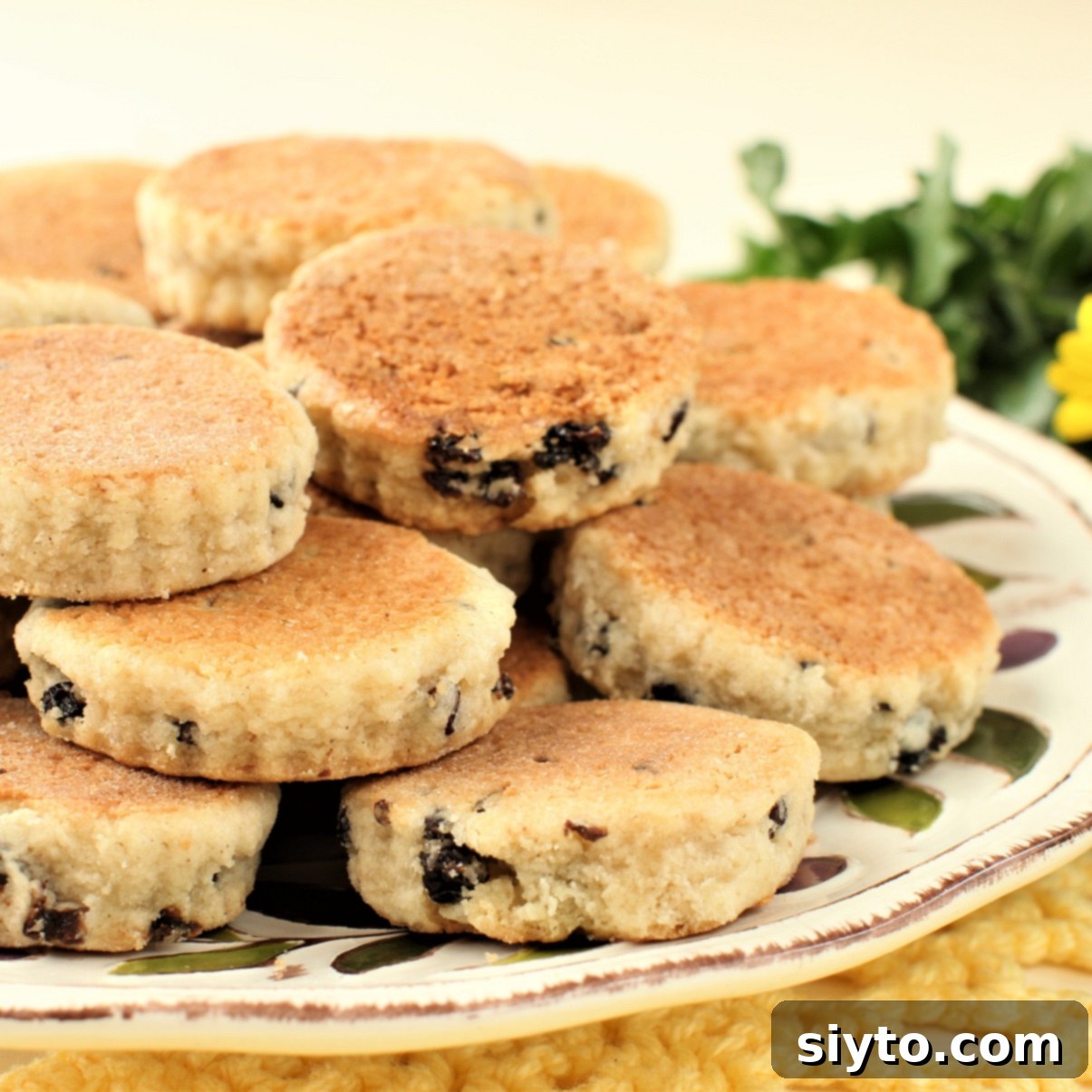
Welsh Cakes: Authentic Skillet-Cooked Currant Cookies for a Taste of Wales
Delightful Welsh Cakes, also known as griddle cakes or bakestones, are an enchanting treat originating from the heart of Wales. These small, pancake-like cookies offer a unique culinary experience, combining the best qualities of a biscuit and a scone, all cooked to perfection on a stovetop skillet. With a wonderfully crisp exterior that gives way to a soft, tender interior, each bite is bursting with the sweetness of currants and the warm, comforting aroma of nutmeg. They are truly the quintessential accompaniment to a soothing cup of tea, inviting you to slow down and savor a moment of pure bliss.
Embarking on a Culinary Journey to Wales
This month, our “Eat the World” recipe challenge transports us to Wales, a land of breathtaking natural beauty and rich, ancient history. Nestled in the southwest corner of Great Britain, this ruggedly beautiful country is a constituent part of the United Kingdom, known for its dramatic landscapes, verdant valleys, and a vibrant cultural heritage that echoes through its castles, legends, and language. Though I have yet to experience its charm firsthand, I often find myself captivated by travel videos showcasing its idyllic corners, where wild, untamed nature meets centuries of tradition.
As soon as I learned of our virtual destination, my mind immediately turned to Welsh Cakes – a beloved recipe I’ve cherished and baked for many years. These delightful teatime treats hold a special place in my heart, bridging the gap between a cookie, a scone, and a pancake, yet possessing a distinct texture all their own. They are melt-in-your-mouth tender on the inside, complemented by a satisfyingly crunchy crust. Their flavor profile is delicately sweet, enhanced by the aromatic kiss of nutmeg and delightful bursts of chewy currants. Catch them warm, fresh from the skillet, and you’ll understand their magic. Each bite transports you to a picturesque stone cottage in Wales, where you might imagine yourself sitting by a window, sipping tea, and gazing out at a country garden leading to the misty, wild hills. The scent of a smoky peat fire lingers softly, and a plate of warm Welsh Cakes sits beside your teapot, offering perfect companionship.
The Rich History of Skillet Baking: Welsh Cakes and the Bakestone
Welsh Cakes have been a cherished part of Welsh culinary tradition since the late 1800s, gaining widespread popularity as sugar and dried fruits became more readily available to the general populace. In Wales, they are often referred to as “bakestones” or “griddle cakes,” names that pay homage to their traditional cooking method. Historically, these delightful treats were baked on a “bakestone” – a thick, flat cast-iron griddle placed directly over an open fire or stovetop. This method of cooking allowed for a uniquely tender interior and a beautifully crisp exterior, a characteristic that defines the authentic Welsh Cake.
The bakestone was an essential piece of kitchen equipment in Welsh homes, enabling families to create quick, satisfying baked goods without needing an oven, which was often a luxury or a less efficient heating method for smaller items. This practicality, combined with their irresistible taste, cemented Welsh Cakes as a staple in Welsh households, perfect for everyday enjoyment or special occasions. Even today, the legacy of the bakestone lives on, as many enthusiasts still prefer to cook these cakes on a heavy cast-iron skillet, recreating that traditional taste and texture.
Beyond the Kitchen: Campfire Welsh Cakes
Given their origins on a bakestone over an open fire, Welsh Cakes are surprisingly versatile and make an excellent campfire treat! Imagine the aroma of sweet nutmeg and currants mingling with the scent of woodsmoke under a starlit sky. The preparation is wonderfully simple for outdoor adventures. Just pre-mix your dry ingredients with the butter at home, creating a convenient “dry mix” that you can easily pack into a bag. When you’re ready to cook, simply bring along an egg and some milk to combine with your dry mix, form the cakes, and cook them directly on a cast-iron skillet or griddle set over the glowing embers of a campfire. It’s a fantastic way to create new memories and enjoy a taste of Welsh tradition in the great outdoors. (For another example of campfire dessert innovation, check out how we crafted a dessert with Welsh Cakes in this post.)
Crafting Your Own Welsh Cakes: A Simple Pleasure
Making Welsh Cakes is not only incredibly rewarding but also remarkably fun and straightforward. The dough comes together quickly with just a few stirs, requiring minimal effort. Once your dough is ready, you simply pat it out with your fingers or roll it gently into a thick disc, aiming for about 9 inches (23cm) in diameter and just under half an inch (1cm) thick. Then, use a cookie cutter or even a small glass to cut out charming circles. The beauty of these cakes lies in their rustic appeal, so don’t worry too much about absolute perfection – each one will be uniquely delicious.
One of the greatest advantages of Welsh Cakes is that there’s no need to even preheat your oven. These little gems are cooked right on the stovetop in a lightly greased skillet – whether you prefer cast iron for traditional flavor or a non-stick pan for convenience. Maintain a steady medium-low heat, cooking them for approximately 10 minutes per side. This gentle cooking ensures they develop that irresistible golden-brown hue and perfectly crunchy exterior, while the inside remains meltingly tender and flavorful. The stovetop method makes these cookies accessible for any kitchen, even those without an oven, and offers a hands-on, interactive baking experience.
Once they’re beautifully cooked, transfer them to a wire rack to cool slightly. The hardest part is waiting! These cookies are absolutely divine when enjoyed fresh and still slightly warm. The crispy, flaky texture, combined with the comforting scent of warm nutmeg and those sweet, tender pops of currants, makes them utterly irresistible. Serve them with a classic cup of tea or a cold glass of milk for a truly satisfying treat. They’re so good, you might find it hard to save them!
A Gluten-Free Option for Everyone
One of the best features of this Welsh Cake recipe is how easily it adapts to a gluten-free diet, ensuring that everyone can enjoy these traditional treats. The ingredient list specifically calls for either a gluten-free flour blend or all-purpose flour, making the substitution seamless. When using a high-quality gluten-free flour blend, you’ll find that the texture and flavor of the Welsh Cakes remain remarkably consistent with the traditional version. This makes them an ideal choice for those with dietary restrictions who still wish to savor authentic Welsh baking. Simply follow the recipe as written, opting for your preferred gluten-free flour blend, and you’ll achieve delicious results that are just as crispy, tender, and flavorful as their gluten-containing counterparts.
Serving Suggestions: Elevate Your Welsh Cake Experience
While Welsh Cakes are undoubtedly perfect on their own, especially when warm, there are many ways to enhance their enjoyment. A simple dusting of powdered sugar is a classic touch, adding a delicate sweetness and elegant finish. For a more decadent treat, consider serving them with a dollop of clotted cream and a spoonful of your favorite jam or preserves – a nod to their scone-like qualities. Honey or maple syrup can also be a delightful addition, particularly if you enjoy a richer sweetness. Beyond tea, these versatile cookies pair wonderfully with coffee, hot chocolate, or even a glass of sparkling cider. They also make a fantastic addition to a brunch spread or a casual dessert platter. Whatever your preference, these crispy, flaky, and aromatic delights are sure to become a cherished part of your culinary repertoire. Indeed, a plate of Welsh Cakes is something everyone needs in their life.
* * * * *
Check out all the wonderful Welsh dishes prepared by fellow Eat the World members and share with #eattheworld. Click here to find out how to join and have fun exploring a country a month in the kitchen with us!
Amy’s Cooking Adventures: Cawl Cennin (Welsh-Style Leek & Potato Soup)
Pandemonium Noshery: Welsh Onion Cake
Sneha’s Recipe: Snowdon Pudding
Culinary Adventures with Camilla: Ŵyau Ynys Môn, Welsh Anglesey Eggs
Sugarlovespices: Welsh Anglesey egg and mashed potato casserole
A Day in the Life on the Farm: Teison Nionod
Kitchen Frau: Welsh Cakes (Skillet-Baked Currant Cookies)
Guten Appetit!
* * * * *

Welsh Cakes
Margaret Bose Johnson
Save to Pinterest
Ingredients
- 1½ cups (210gms) gluten-free flour blend or all-purpose flour for non-gluten-free
- ¼ cup + 2 tablespoons (75gms) sugar preferably natural evaporated cane sugar
- 1 teaspoon baking powder
- ¾ teaspoon nutmeg
- ¼ teaspoon fine sea salt
- ½ cup (115gms) butter, salted (if using unsalted butter, increase salt to ½ teaspoon)
- 1 large egg
- ½ cup (70gms) dried currants or substitute chopped raisins
- 1 large egg
- 3 tablespoons (45ml) milk
Instructions
- Stir together the flour, sugar, baking powder, nutmeg, and salt in a large bowl.
- Cut in the butter with a pastry blender or 2 butter knives until it is the size of peas.
- Add the currants.
- Beat the egg and milk together with a fork and add them to the dry ingredients.
- Mix just enough to form the dough into a ball.
- Turn the dough out onto a lightly floured work surface and pat or roll it into a thick disk that is about 9 inches (23cm) in diameter and just under a ½-inch thick (1cm).
- Cut out small circles (1½-inch diameter), but you can also make them a bit larger if you don’t have a small cookie cutter.
- Heat a heavy skillet over medium-low heat and lightly grease it (with cooking oil spray or oil).
- Arrange the cookies in the skillet with a little bit of space between them (you will have to do them in 2 batches or use 2 skillets).
- Cook them for 10 minutes on each side, until they are a light brown colour. Readjust the heat level if needed to make sure they cook slowly enough to be nicely browned on one side after 10 minutes. Flip them with a small spatula or offset spatula and cook them for 10 minutes on the second side. If some of them are lighter than others, you can flip them over again to cook them some more on the lighter side.
- Set the cookies onto a rack to cool. They are delicious when freshly cooked, but will keep well in a covered container at room temperature for up to a week.
- Makes 36 small (1½-inch.3.8cm) cookies (or fewer cookies if larger).
Notes
Chopped raisins can be substituted for the currants.
Want to receive new Kitchen Frau recipes directly to your email? Sign up here and you’ll get a handy and useful kitchen tip along with each recipe, too. (No spam ever.)
If you like my recipes, follow me on Instagram, Pinterest, Twitter, and Facebook. You’d make my day!
PIN IT HERE to save the recipe for later:
Check out my past ‘Eat the World’ Recipe Challenge posts:
(in alphabetical order)
- Argentina: Red Chimichurri Sauce
- Australia: Anzac Biscuits (Crispy Oatmeal Cookies)
- Bangladesh: Chingri Masala (Shrimp Curry)
- Bulgaria: Patatnik (Savoury Potato and Cheese Pie)
- Cambodia: Noum Kong (Cambodian Rice Flour Doughnuts)
- China: Kung Pao Chicken
- Colombia: Pan de Yuca (Warm Cheese Buns)
- Dominican Republic: Empanaditas de Yuca (Cassava Empanadas)
- Ecuador: Pescado Encocado (Fish in Coconut Sauce)
- Egypt: Fava Beans and Feta
- England: Gluten Free Fish and Chips and Mushy Peas
- Ethiopia: Four Ethiopian Recipes for a Fantastic Feast
- Fiji: Spiced Sweet Potato and Banana Salad
- Finland: Lohikeitto (Creamy Salmon, Potato, and Dill Soup)
- France: Axoa d’Espelette (A Simple Stew from the Basque Country)
- Georgia: Charkhlis Chogi (Beets with Sour Cherry Sauce)
- Greece: Moussaka
- Guyana: Fried Tilapia in Oil & Vinegar Sauce (fish dish)
- Hungary: Túrós Csusza (Pasta Scraps with Cottage Cheese)
- India: Kerala Upma (Fluffy, Kerala Style Breakfast Upma Recipe)
- Iraq: Tepsi Baytinijan (Eggplant & Meatball Casserole)
- Ireland: Dublin Coddle (A tasty Sausage and Potato Stew)
- Israel: Cucumber, Feta, and Watermelon Salad
- Jamaica: Rice and Peas (Coconut Rice and Red Beans)
- Japan: Chawanmushi (Steamed Savoury Egg Custard)
- Kenya:Maharagwe with Ugali (Red Beans with Cornmeal Slice)
- Laos: Ping Gai (Lao Grilled Chicken Wings)
- Lesotho: Chakalaka & Pap (Veggie & Bean Stew with Cornmeal Polenta)
- Libya: Kufta bil Batinjal (Eggplant & Meat Rolls in Tomato Sauce)
- Luxembourg: Stäerzelen (Buckwheat Dumplings)
- Malta: Ross il Forn (Baked Tomato Rice)
- Mexico: Cochinita Pibil Tacos (Pit Barbecued Pig to Make in Your Oven)
- Netherlands: Boerenkool Stamppot (Kale-Potato Mash with Sausages & Pears)
- New Zealand: Classic Pavlova
- Poland: Polish Honey Cake
- Portugal: Tuna and Sardine Pâtés
- Puerto Rico: Piña Colada Cocktail
- Scotland: Cranachan (Raspberry, Whisky & Oat Cream Parfaits)
- Senegal: Mafé (Beef and Peanut Stew)
- Slovakia: Bryndzové Halušky (Potato Dumplings with Cheese & Bacon)
- Sudan: Peanut Butter Creamed Spinach & Peanut Meringue Cookies
- Sweden: Swedish Meatballs with Cream Gravy
- Switzerland (Christmas): Basler Leckerli Cookies
- Thailand: Shrimp Laksa (Khung)
- Trinidad & Tobago: Peanut Butter Prunes
- Turkey: Çilbir (Scrambled Eggs with Garlic Yogurt)
- Ukraine: Buckwheat Kasha with Beef
- United States (Soul Food): Smothered Pork Chops
- Uruguay: Torta de Fiambre (Baked Ham & Cheese Sandwiches)
- Vietnam: Caramelized Pork Rice Bowls