The Ultimate Guide to Homemade Jellied Easter Eggs: A Fun & Wobbly Surprise for Your Easter Celebration
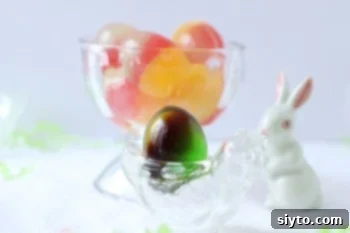
Kids love peeling these eggs to find the colourful jellied Easter eggs hiding inside – a surprise for Easter! (Jump to recipe.)
Easter is a time for joy, renewal, and delightful surprises, and what could be more surprising than cracking open an egg to discover a hidden treasure of wobbly, vibrantly colored jelly stripes? These homemade jellied Easter eggs are a unique and incredibly fun project that will captivate both children and adults alike. Imagine the excitement as little hands carefully peel away the shell to reveal a glistening, edible jewel within – it’s an experience that transcends the ordinary Easter egg hunt, turning a simple treat into a memorable culinary adventure.
The Joy of Crafting: A Delightful Project for Kids and Adults
What an absolute delight it is to crack an egg and peel away its unassuming shell, only to reveal a glistening, wobbly treasure of soft, spring-colored jellied stripes! It makes you want to embrace your inner child and dive right into the fun. This project, which I recently enjoyed with Meredith, was just as much fun to create as it was to eat. The tart and tangy insides offer a unique, wiggly treat that’s both refreshing and playful.
I used to make these delightful eggs for our children when they were younger. Back then, I relied on commercial, pre-flavored jelly powder packets. However, Meredith and I experimented with using lemonade and various fruit juices for the jiggly fillings, and the results were equally fantastic! In fact, we found that the softer, more natural colors achieved with juices are even more fitting for the gentle hues of Easter. This guide provides instructions for both methods, allowing you to choose the approach that best suits your taste and convenience.
Why Jellied Eggs Are an Easter Must-Have
These jellied Easter eggs aren’t just a dessert; they’re an experience. They bring an element of playful deception and wonder to your Easter table. Imagine placing a bowl of these seemingly ordinary eggs in the center, with their filling holes carefully hidden facing down. Then, watch as everyone’s faces light up with surprise and delight when they crack open an egg to find these vibrant, glistening jewels hidden inside! It’s a truly memorable moment that adds a touch of magic to any Easter brunch or dinner.
The beauty of this project also lies in its versatility. You can lay the eggs on their sides as each jelly layer sets, allowing you to create different kinds of patterns and artistic stripes. This adds another layer of creativity to the process, making each jellied egg a unique masterpiece.
Preparing Your Egg Shells: The Foundation of Your Edible Art
The most laborious part of this delightful project is undoubtedly preparing the eggshells. But fear not, for this is also where resourcefulness comes in handy! We ended up with several delicious meals of scrambled eggs to use up the insides, so it’s hardly a hardship. In fact, it’s a great way to avoid food waste and enjoy some extra protein. For the best results, it’s ideal to clean out your eggs a few days ahead of time, allowing them ample opportunity to dry thoroughly.
Mastering the Egg Shell Opening
Poking a hole in the top of each egg can be a little tricky, but with the right technique, it becomes much easier. Hold the egg firmly but gently in your hand, being careful not to crush it. Use a sturdy metal skewer to make a small, initial start hole. Alternatively, a clean metal screw or a large, sharp needle can also work effectively. Once you have that initial opening, use the skewer to carefully poke under the edge of the shell and gently lift, breaking out small pieces of the shell. You can also use your fingers to carefully break off tiny pieces until you achieve a hole that is approximately ½ inch (1 cm) in diameter. The goal is to create an opening large enough to pour the jelly mixture in, but not so large that it compromises the egg’s structural integrity.
Once the hole is made, insert the skewer into the egg and stir it around vigorously to break the yolk and mix the egg white. Hold the egg directly over a bowl to catch the contents, then shake it vigorously straight up and down until all the egg liquid has been completely emptied out. This shaking motion is key to ensuring no remnants are left inside.
The Essential Cleaning and Drying Process
Rinsing the eggs thoroughly is crucial for hygiene and to prevent any lingering egg odor. To do this, fill each eggshell with water, then tip it and shake it vigorously straight up and down until all the water is completely shaken out. This vigorous shaking helps to dislodge any internal residue. Repeat this rinsing process four or five times, or until the water runs completely clear, indicating a thoroughly cleaned shell.
After rinsing, set the eggs hole-side-down in an egg carton to drain for about 15 minutes. This allows the majority of the water to escape. Then, turn them right-side-up so that any remaining moisture can evaporate completely. It’s essential to leave them to dry like this for at least 24 hours to ensure they are completely dry before filling. This meticulous preparation ensures your jellied eggs are perfect and safe to eat. Once your shells are ready, the real fun of filling them can begin!
Happy Easter and happy-egg-hunting, whether you’re finding them or making them!
* * * * *
Crafting Your Jellied Fillings: Natural Juices vs. Classic Jello
Kitchen Frau Notes: When making the natural juice variation, we opted for double-strength lemonade, limeade, and a 5-citrus juice derived from frozen concentrates, without adding any additional sugar. The general consensus was that the lemonade eggs could have benefited from a touch more sweetness—after all, they are a treat! Therefore, you might consider adding one or two tablespoons of sugar, or a tablespoon of honey, to each juice mixture if you prefer a sweeter jelly. It’s important to remember that once juice has gelled, its flavor intensity often diminishes slightly compared to its liquid form, so it will taste less sweet once set. If you’re preparing your own lemonade or limeade from scratch, aim to make a batch using the full amount of lemon juice and sugar, but only half the water typically called for. Measure out the concentrated amount you need for this recipe, then add the remaining water to the leftover lemonade for drinking.
*To simplify the process, especially if working with very young children, you could simply fill each egg with juice of a single color, foregoing the layered effect. This makes for an equally fun, albeit less striped, treat.
Surprise Jellied Easter Eggs
Ingredients for Natural Juice Variation:
- 1 dozen emptied large egg shells, thoroughly rinsed out and dried
- 1 cup concentrated lemonade, prepared with half the amount of water the recipe or concentrate instructions suggest
- 1 cup concentrated limeade, prepared with half the amount of water the recipe or concentrate instructions suggest
- 1 cup concentrated orange juice, prepared with half the amount of water, or use regular strength freshly squeezed orange juice
- 2 tablespoons fresh raspberry juice (easily drained from defrosted frozen raspberries)
- 6 packets powdered, unflavored gelatin (each packet typically contains 7 grams or 2¼ teaspoons) or ¼ cup + 1½ teaspoons loose powdered gelatin
- 3 to 6 tablespoons natural evaporated cane sugar or 3 tablespoons honey, optional, to adjust sweetness
Preparation of Juice Mixtures:
- To make the vibrant pink mixture: Remove 2 tablespoons of the prepared lemonade and set aside. Replace it with 2 tablespoons of the fresh raspberry juice to create a total of 1 cup of lovely pink juice.
- For the sunny orange mixture: If your orange juice isn’t quite yellow enough for a bright Easter hue, add a tiny pinch of turmeric. Be careful not to add too much, as a little goes a long way in enhancing the color without affecting flavor.
- For the refreshing light green mixture: Simply use the concentrated limeade.
Always taste each juice mixture for sweetness and adjust as desired with a tablespoon of honey or one to two tablespoons of sugar. Alternatively, leave them tart for a refreshing zing.
Layering and Setting Instructions:
- Set out three separate bowls. Pour ½ cup of each of your concentrated, pre-mixed juices into these bowls, ensuring one type of juice per bowl.
- Evenly sprinkle each bowl with 2 packets (or 4½ teaspoons) of the powdered unflavored gelatin. Stir gently with a fork until all the gelatin powder is moistened and absorbed into the juice. Allow this mixture to sit and ‘bloom’ for 10 minutes, which helps the gelatin dissolve smoothly later.
- Begin with the color you wish to use for your first layer. Heat the remaining half cup (120ml) of the matching color juice until it is hot (but not boiling). This can be done in the microwave or a small saucepan on the stove.
- Pour the hot juice directly over the softened gelatin mixture of the same color. Stir continuously with a fork until the gelatin is completely dissolved and no lumps remain. Transfer this liquid to a spouted cup or a small pitcher, which will make pouring into the eggshells much easier. (Remember to cover the remaining two bowls of gelled juice with plastic wrap to prevent them from setting too much before their turn.)
- Carefully pour 1 to 1½ tablespoons of the gelatin mixture into each prepared eggshell. A small funnel can be incredibly helpful here to minimize spills. Promptly wipe off any drips on the outside of the eggshells to keep them clean.
- For creative slanted stripes, gently tilt some of the eggs onto their sides as the gelatin sets. You can support these angled eggs within the lid of an egg carton or by using wadded-up paper towels to maintain their position.
- Allow the first layer of gelatin to set. This can be done by carefully placing the eggs in the freezer for about 15 minutes (be sure not to forget them!) or in the refrigerator for 30 minutes or longer. Check for firmness by gently poking into the hole with the end of a chopstick or straw.
- Once the first layer is set, heat up the half cup of the next juice color you wish to use and repeat the entire process, allowing this new layer to set completely before moving on.
- Repeat with the final color, filling the eggs to the very top to create a full, vibrant surprise inside.
- Troubleshooting Tip: If at any point the gelatin mixture starts to set before you’ve finished using it, it can be gently rewarmed in the microwave for a few seconds or by placing the cup into a bowl of simmering water to re-liquify it.
- If you have any bits of remaining gelatin mixture, don’t let them go to waste! Re-liquify them and pour into a small glass or container to make delightful sample jellies.
- Finally, allow the jellied Easter eggs to chill for several hours or, ideally, overnight, to ensure the gelatin is fully set and firm. These beautiful treats can be kept refrigerated in their shells for up to a week, ready to surprise and delight at a moment’s notice.
*Optional Variation: Using Jello Powder (for darker, bolder-colored eggs)
Ingredients for Jello Powder Variation:
- 1 dozen emptied large egg shells, thoroughly washed and dried
- 3 packets of different colored Jello powders (standard 85-gram or 4-serving size)
- 1½ cups (360ml) cold water, divided
- 1½ cups (360ml) boiling water, divided
- 3 packages powdered unflavored gelatin (each packet containing 7 grams or 2¼ teaspoons) or 2 tablespoons + ¾ teaspoon loose powdered gelatin
Instructions for Jello Powder Variation:
- Pour ½ cup (120ml) of cold water into a small bowl. Sprinkle one package (2¼ teaspoons) of the unflavored gelatin powder evenly over the cold water. Let it sit undisturbed for 10 minutes to allow the gelatin to ‘bloom’ and soften.
- In a separate bowl, empty one packet of your chosen Jello powder mix. Pour ½ cup (120ml) of boiling water over the powder. Stir vigorously until all the Jello granules are completely dissolved.
- Now, add the clear, softened unflavored gelatin mixture to the dissolved Jello. Stir again until the unflavored gelatin granules are also fully dissolved, creating a smooth, vibrant liquid.
- Transfer this liquid to a spouted measuring cup or a small pitcher, which will facilitate easy and precise pouring into the eggshells.
- Proceed to fill the eggshells by carefully pouring 1 to 1½ tablespoons of this mixture into each, following the same layering and setting instructions as detailed above for the natural juice variation.
- Repeat this process with the next Jello color once the first layer has firmly set, and then again with the last color, ensuring each layer is fully set before adding the next.
Guten Appetit!
Want to receive new Kitchen Frau recipes directly to your email? Sign up here and you’ll get a handy and useful kitchen tip along with each recipe, too. (No spam ever.)
If you like my recipes, follow me on Instagram, Pinterest, Twitter, and Facebook. You’d make my day!
For more fun kitchen projects to make with kids, see the ‘Cooking With Kids’ series.
You might also like:
Cooking with Kids: Rice Krispie Easter Egg Nests
Creamy Mustard, Egg, and Quinoa Bake (or How to Turn Easter Eggs into Dinner)
Ham ‘n Egg Salad, Hazelnut-Flax Crackers, and Asparagus with Hazelnut Vinaigrette
Curried Chicken Luncheon Salad