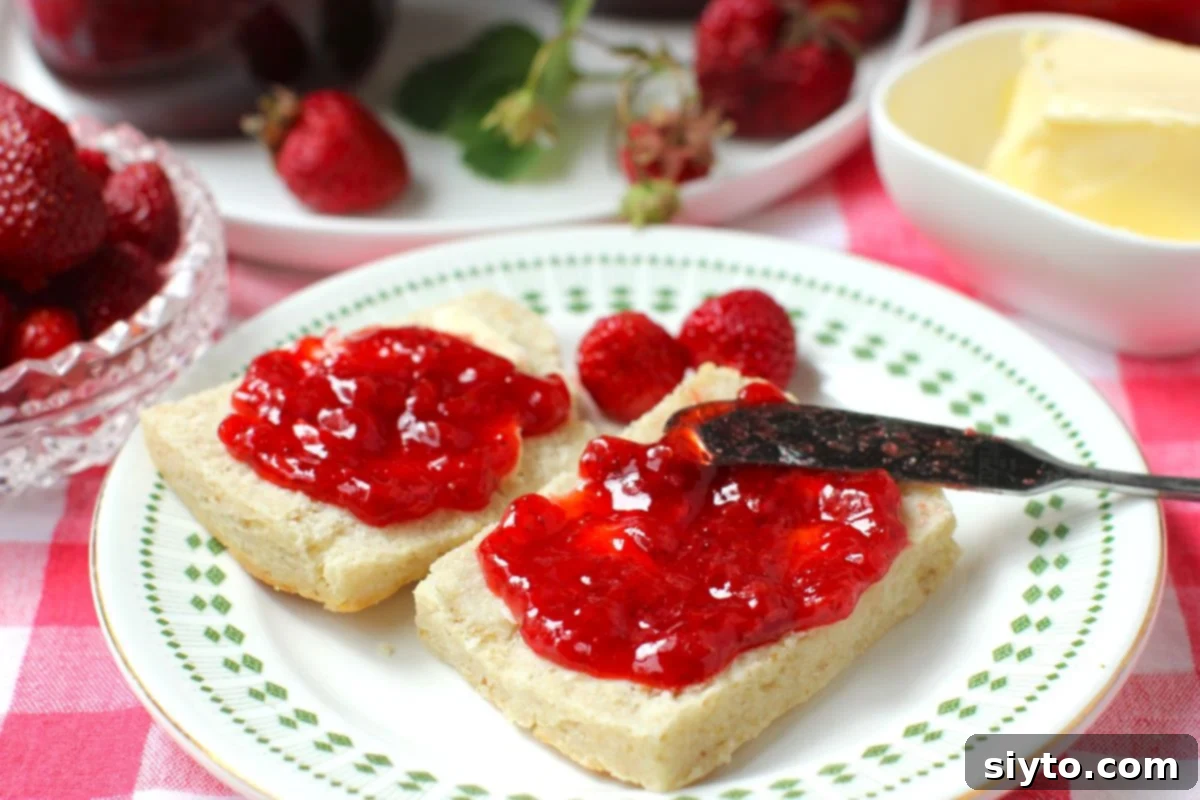
Homemade Low Sugar Strawberry Jam: Capture Summer’s Sweetness in Every Jar
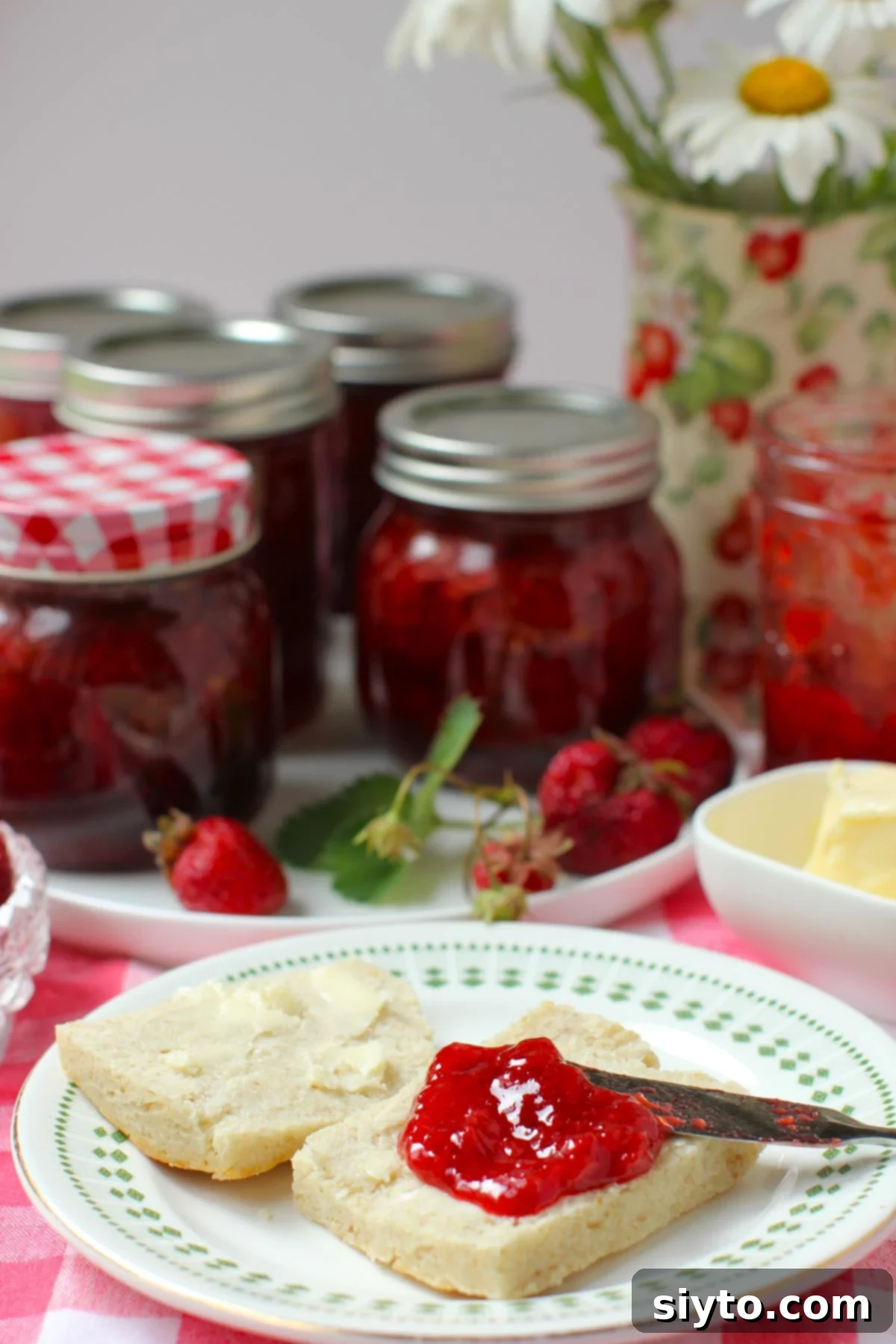
Unlock the pure essence of summer with this incredible low-sugar strawberry jam recipe. By using a significantly lesser amount of sugar than traditional jams, the vibrant, fresh taste of the berries takes center stage, creating a light, luscious, and intensely fruity spread. It’s surprisingly easy to make, requiring just four simple ingredients, making it a perfect project for both novice and experienced home canners. This exquisite jam is the ideal companion for almost anything – from slathering generously on warm toast and fluffy biscuits to topping pancakes, waffles, and even ice cream. Prepare to elevate your breakfast, desserts, and snack times with this homemade delight!
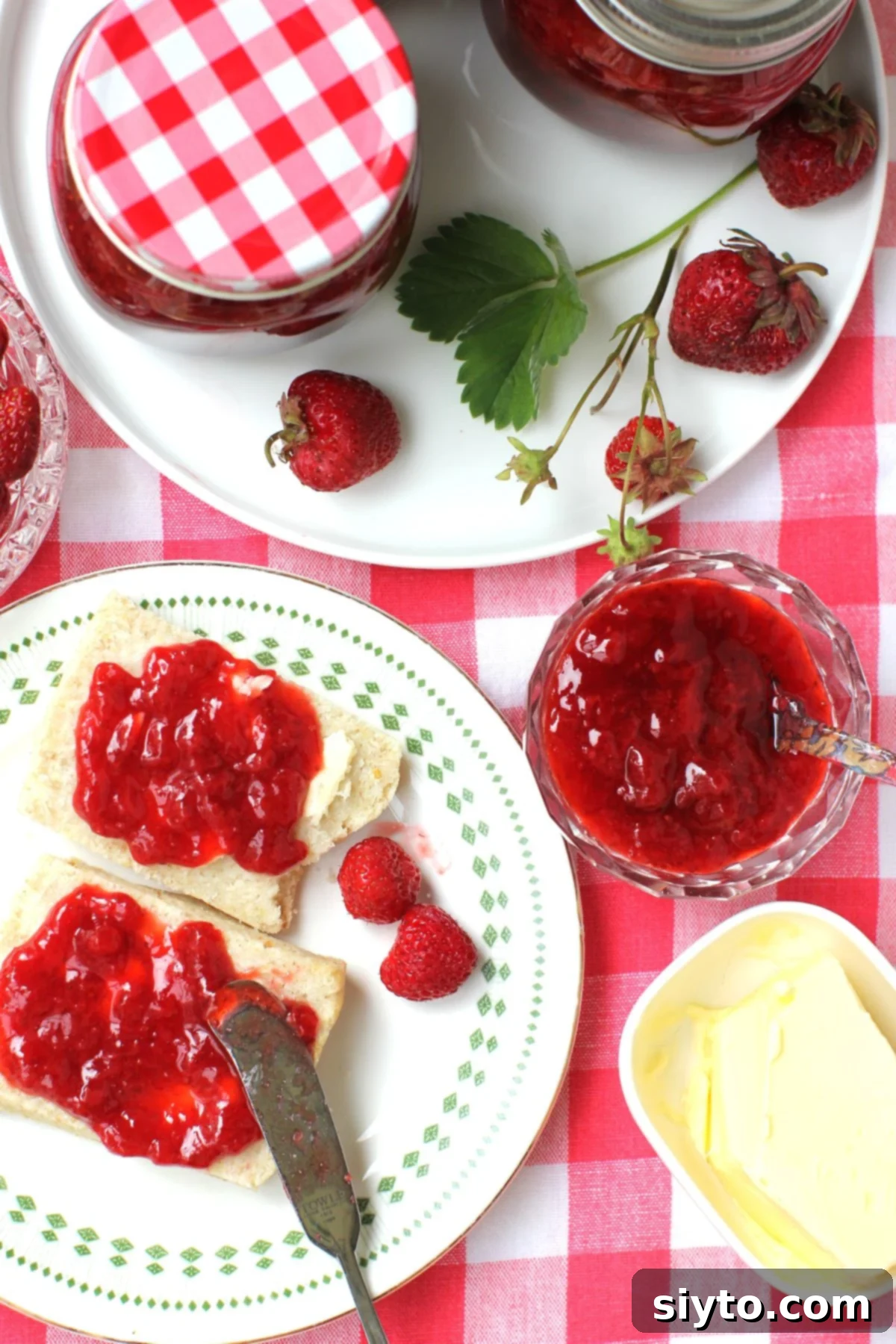
Why Choose Low Sugar Strawberry Jam?
There’s nothing quite like the taste of fresh strawberries, especially when they’re in season. Their natural sweetness and vibrant acidity create an unparalleled flavor profile. This recipe harnesses that natural goodness by reducing the sugar content typically found in conventional jam recipes. The result is a jam where the authentic, bright flavor of the strawberries truly shines through, rather than being overshadowed by excessive sweetness. Not only does this offer a more intense berry experience, but it also caters to a healthier lifestyle by lowering the overall sugar intake, without compromising on taste or texture.
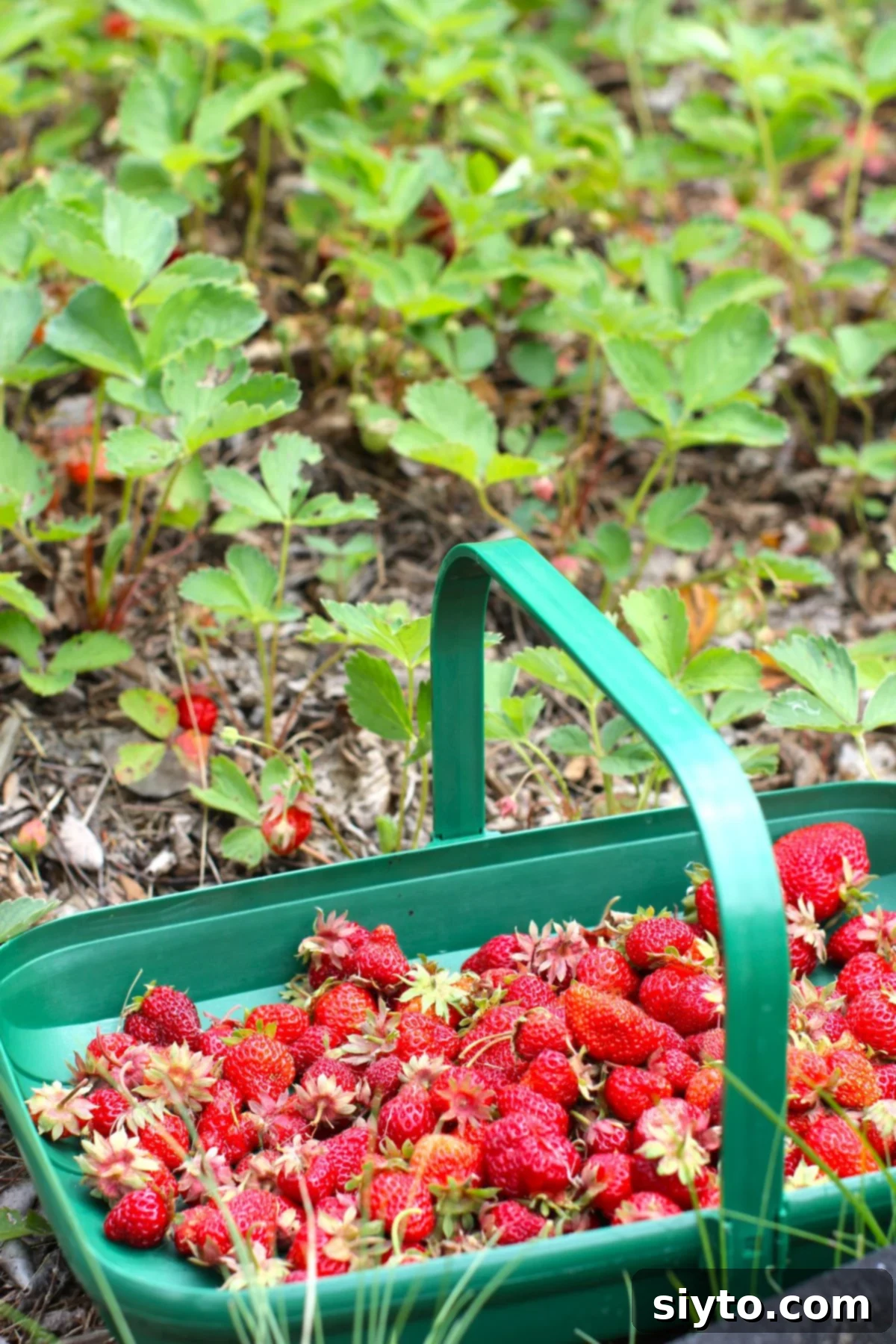
Our strawberry patch is currently in its prime, and with the warm weather we’ve been enjoying, the berries are exceptionally sweet, juicy, and bursting with flavor. These perfectly ripened strawberries are destined to become a truly wonderful jam – a sparkling, ruby-red jewel that captures the essence of summer in every spoonful. Making homemade jam is not just about preserving fruit; it’s about preserving memories and flavors, allowing you to enjoy the bounty of the season long after it’s passed. Choosing low sugar doesn’t mean sacrificing flavor; it means enhancing the natural deliciousness of the fruit itself.
The Essential Role of Pectin in Low Sugar Jam
Strawberries, while undeniably delicious, are naturally quite low in pectin, the complex carbohydrate that acts as a natural gelling agent in fruits and gives jam its characteristic set. This inherent low pectin content means that without careful intervention, achieving that perfect, softly-set jam consistency can be a significant challenge, especially when you’re aiming for a reduced sugar content. For this reason, I find that incorporating a commercial pectin product yields the most consistent, reliable, and satisfying results for low sugar strawberry jam. You have a couple of excellent options for pectin: either a ‘no-sugar-needed’ pectin, specifically formulated to gel with less sugar, or a natural brand like ‘Pomona Universal Pectin’, which also works independently of sugar levels.
These specialized pectins are designed to activate and create a gel effectively even with significantly reduced amounts of sugar, or with alternative sweeteners. This crucial feature allows the true, unadulterated strawberry flavor to shine through, rather than being masked by the high sugar levels often required by traditional pectins. While it’s theoretically possible to make strawberry jam without any added commercial pectin, doing so typically demands substantial adjustments. You might need to add a considerable amount of lemon juice and even include lemon peel to boost the natural pectin content. However, this often alters the pure, delicate taste of the strawberries, introducing a pronounced citrusy note that can overpower the berry’s natural sweetness. Alternatively, you would have to cook the jam for an extended period, sometimes up to an hour or more, to achieve a thicker consistency. This prolonged cooking can caramelize the sugars and change the fresh, vibrant flavor of the fruit, often resulting in a darker, denser, and less “fresh-tasting” jam. With a ‘no-sugar-needed’ pectin (brands like Bernardin® or Sure-Jell® for Less or No Sugar Needed Recipes are excellent choices), you gain the flexibility to tailor the sugar amount precisely to your personal taste preferences. This method consistently produces a beautiful, softly-set jam that is intensely loaded with pure, unadulterated strawberry flavor, making it the superior choice for a truly fruity, low sugar experience without the guesswork or compromise on quality.
Versatile Ways to Enjoy Your Homemade Jam
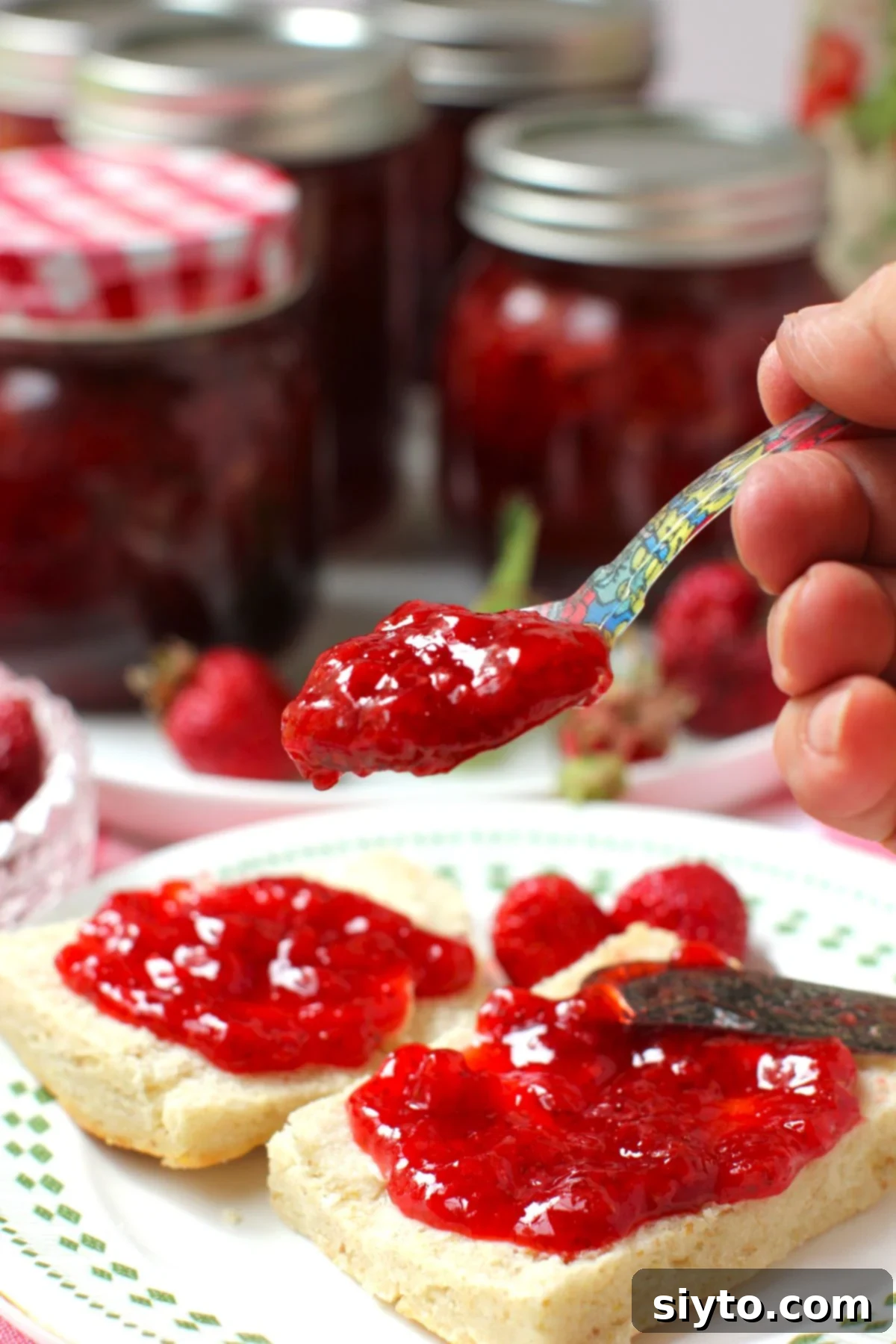
This delightful low sugar strawberry jam isn’t just for breakfast toast; its bright, fresh flavor and perfect consistency make it incredibly versatile for a wide array of culinary applications. It’s the very jam I lovingly use to fill a mouthwatering Victoria Sponge Cake, transforming a simple dessert into an elegant treat perfect for an afternoon tea or special gathering. Beyond that, it’s absolutely fantastic slathered generously on warm, flaky biscuits, or drizzled over stacks of fluffy pancakes and golden waffles. Consider it as a sweet, fruity filling for these delicious Jammy Berry Bars, where its intense berry flavor truly shines. It’s also wonderful stirred into your morning yogurt or oatmeal for a burst of fresh flavor, or even as a decadent topping for creamy ice cream, creating a simple yet sophisticated dessert. Its pure strawberry essence also makes it an excellent choice for thumbprint cookies, as a vibrant glaze for savory dishes like roasted pork tenderloin or grilled chicken, or stirred into homemade vinaigrettes for a fruity twist. Don’t limit your imagination – this homemade low sugar strawberry jam is a true kitchen MVP, ready to elevate any meal or snack with its wholesome, fresh taste!
What You’ll Need for a Luscious Batch of Low Sugar Strawberry Jam
Before you embark on your jam-making adventure, gathering all your ingredients and equipment beforehand is a surefire way to ensure a smooth and enjoyable process. For this particular low sugar strawberry jam recipe, you’ll need a handful of fresh, ripe strawberries, a package of ‘no-sugar-needed’ pectin (which is key to its successful low-sugar set), granulated sugar (or your chosen natural or low-calorie sweetener), and a touch of fresh lemon juice or rosewater for brightness. In terms of equipment, essential items include a large, heavy-bottomed pot to prevent scorching and accommodate the jam as it boils, canning jars and their corresponding lids, a canning funnel to minimize mess and ensure proper filling, a sturdy ladle, and basic measuring tools like cups and spoons. Having everything meticulously laid out and ready ensures you can work efficiently and safely, especially during the crucial boiling and jarring phases. It also helps in maintaining the correct temperature and timing for optimal jam setting and food safety.
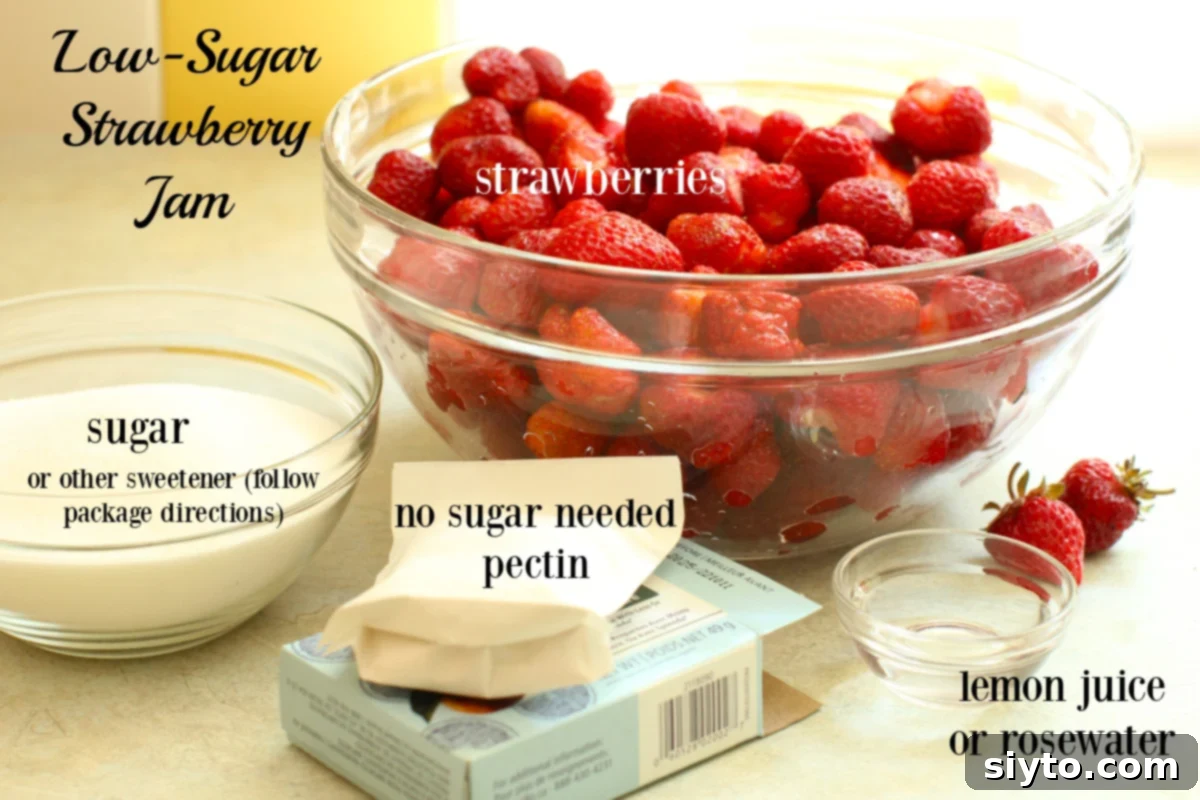
How to Make Low Sugar Strawberry Jam
Making low sugar strawberry jam is a surprisingly straightforward process, and I’ve developed a method that truly prioritizes the pure, intense strawberry flavor. While many pectin package directions might suggest incorporating fruit juice, I intentionally opt for using extra strawberries instead. This simple but significant substitution amplifies the natural fruitiness, resulting in a jam with a more intense, authentic, and vibrant strawberry taste in every single bite. Additionally, to streamline the preparation, I’ve found great success by combining all the main ingredients – the mashed berries, sugar, pectin, and lemon juice – directly into the pot at once, which makes the process incredibly efficient without compromising the delicious final product.
When working with ‘no-sugar-needed’ pectin, you gain remarkable flexibility to use a variety of sweeteners beyond traditional granulated sugar. This opens the door to options such as honey, maple syrup, or various sugar substitutes, allowing you to tailor the jam to your dietary preferences. If you choose to use alternative sweeteners, it is absolutely crucial to consult the specific instructions provided on your chosen pectin package, as substitution ratios and preparation methods can vary significantly between brands and types of sweeteners. From my extensive experience, a ratio of 2 cups of sugar to 5 cups of mashed berries consistently hits the sweet spot perfectly for this recipe. This careful balance provides just enough sweetness to evoke that classic, comforting jam flavor, while retaining a delightful, slightly tart edge that truly allows the pure, vibrant strawberry flavor to shine through beautifully. This creates a jam that is both satisfyingly sweet and refreshingly fruity.
Step 1: Prepare the Strawberries
The first crucial step in making this delectable jam is the proper preparation of your strawberries. Begin by thoroughly washing your fresh strawberries under cool running water to remove any dirt or debris. Next, hull the strawberries – this means carefully removing the green leafy caps and the tough, white fibrous core. A small paring knife or a specialized hulling tool works best for this. If your strawberries are particularly large, quartering them after hulling will help them break down more easily and contribute to a more uniform and desirable texture in the final jam. Once hulled and quartered (if necessary), mash the strawberries. It’s best to mash them in single layers in a shallow dish or pan, using a potato masher or a sturdy fork. Mashing them in smaller batches and single layers helps ensure an even consistency, preventing large chunks from remaining while others are overly mashed. After mashing, carefully measure out the required amount of mashed berries, making sure to include any delicious juices that the berries have naturally released. This precise measurement is absolutely crucial for the jam to set correctly when combined with the pectin, ensuring a perfect consistency every time.
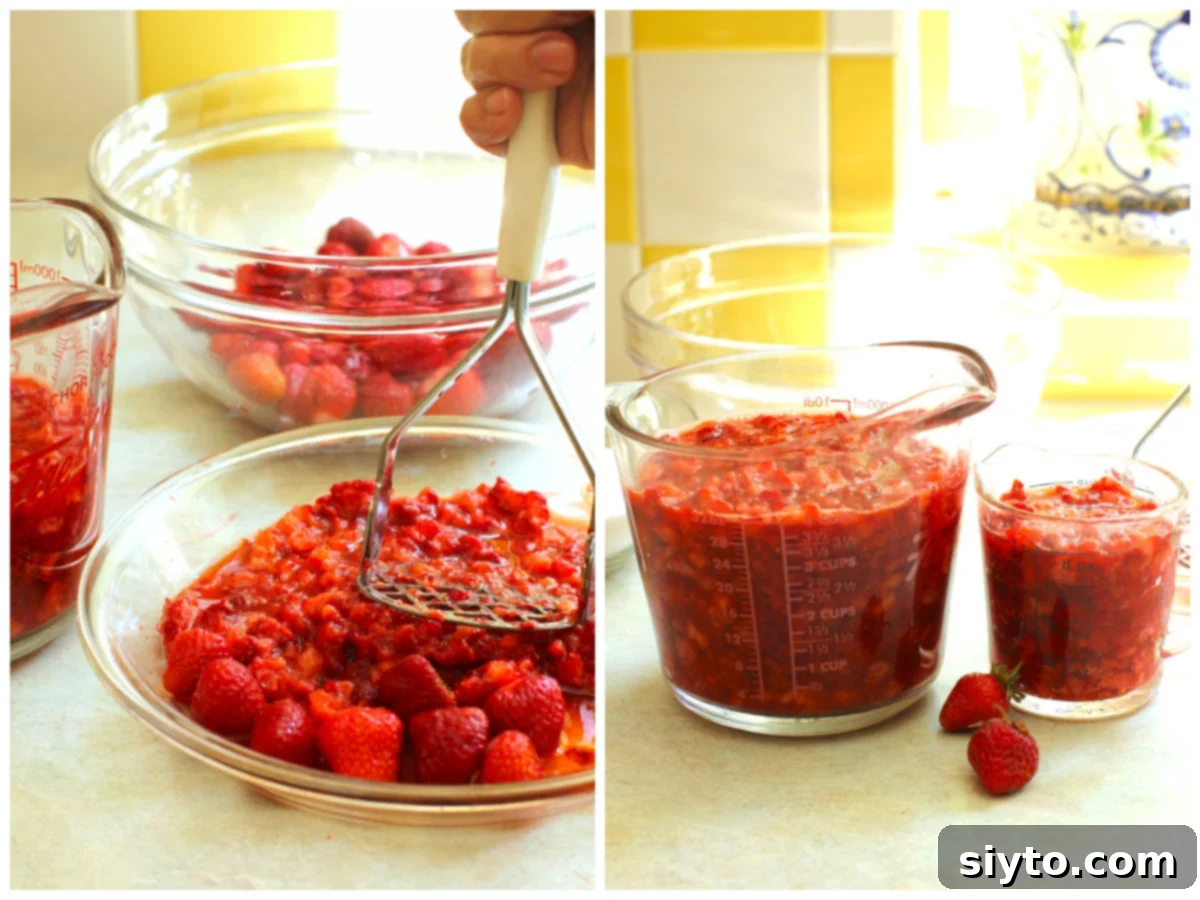
Step 2: Combine and Boil
With your berries meticulously prepped and measured, the next exciting step is to combine all the ingredients and bring them to a boil. Carefully dump the mashed berries (including their juices), your chosen amount of sugar, the pectin powder, and the lemon juice or rosewater into a large, heavy-bottomed pot. The “heavy-bottomed” aspect of the pot is incredibly important here, as it helps to distribute heat evenly across the base, significantly preventing the jam from scorching and sticking to the bottom, which can easily happen with thinner pots. Furthermore, ensure that your pot is sufficiently large to comfortably accommodate the jam as it boils and bubbles vigorously; jam tends to expand and rise quite a bit during the cooking process. Stir all the ingredients exceptionally well to ensure that the sugar and pectin are thoroughly dissolved and evenly distributed throughout the berry mixture. This prevents lumps and ensures the pectin activates correctly. Now, bring the berry mixture to a full, rolling boil. This is not just a gentle simmer; it’s a boil so vigorous that you cannot stir it down – meaning the bubbles continue to rise rapidly and continuously even as you stir. Once this full rolling boil is achieved, adjust the heat slightly to maintain this intense, vigorous boil, and cook for precisely three minutes, stirring constantly to prevent sticking, ensure even cooking, and encourage proper pectin activation. This short, intense boiling period is absolutely critical for activating the pectin and achieving the perfect set for your jam.
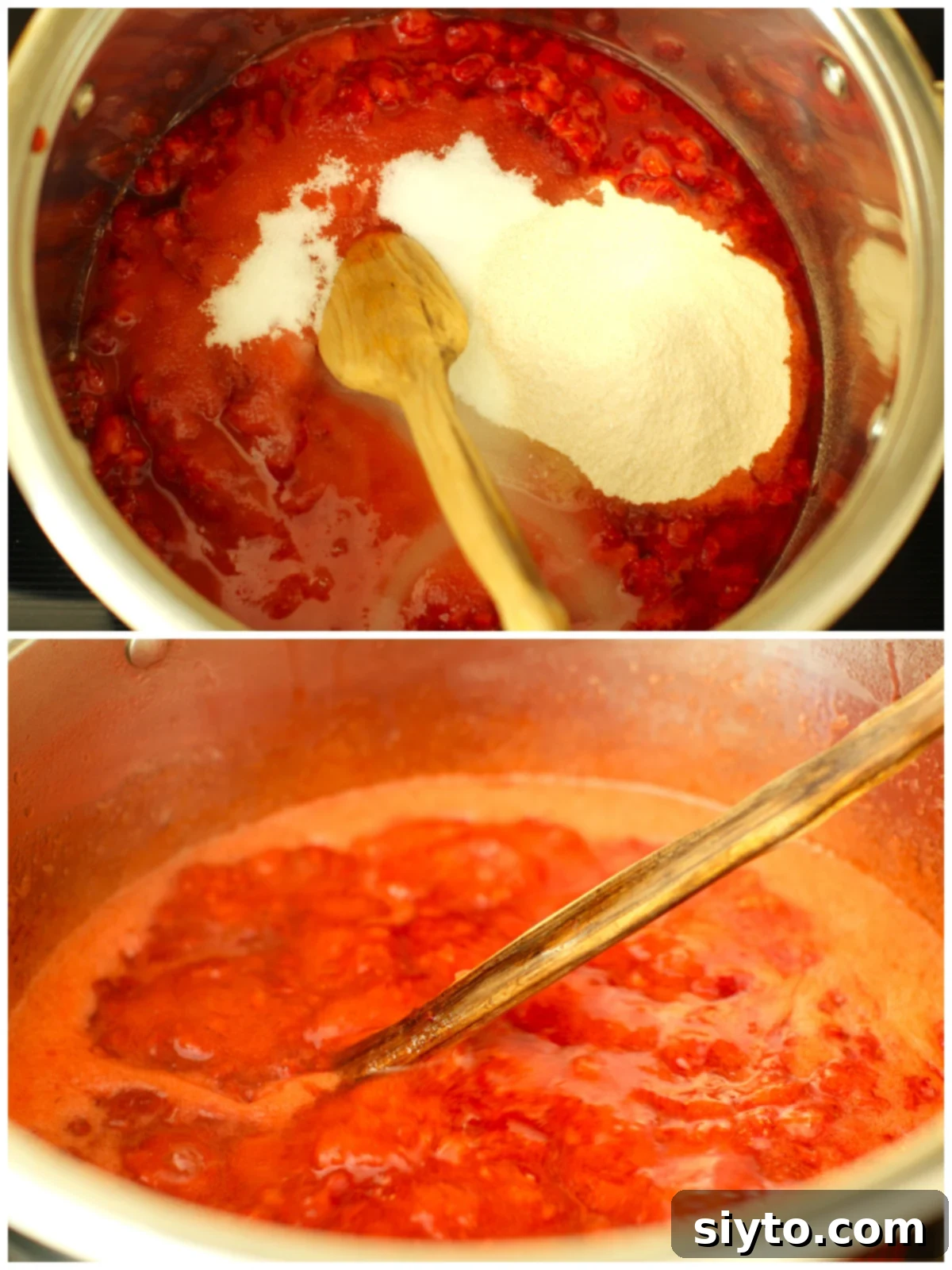
Step 3: Ladle and Seal
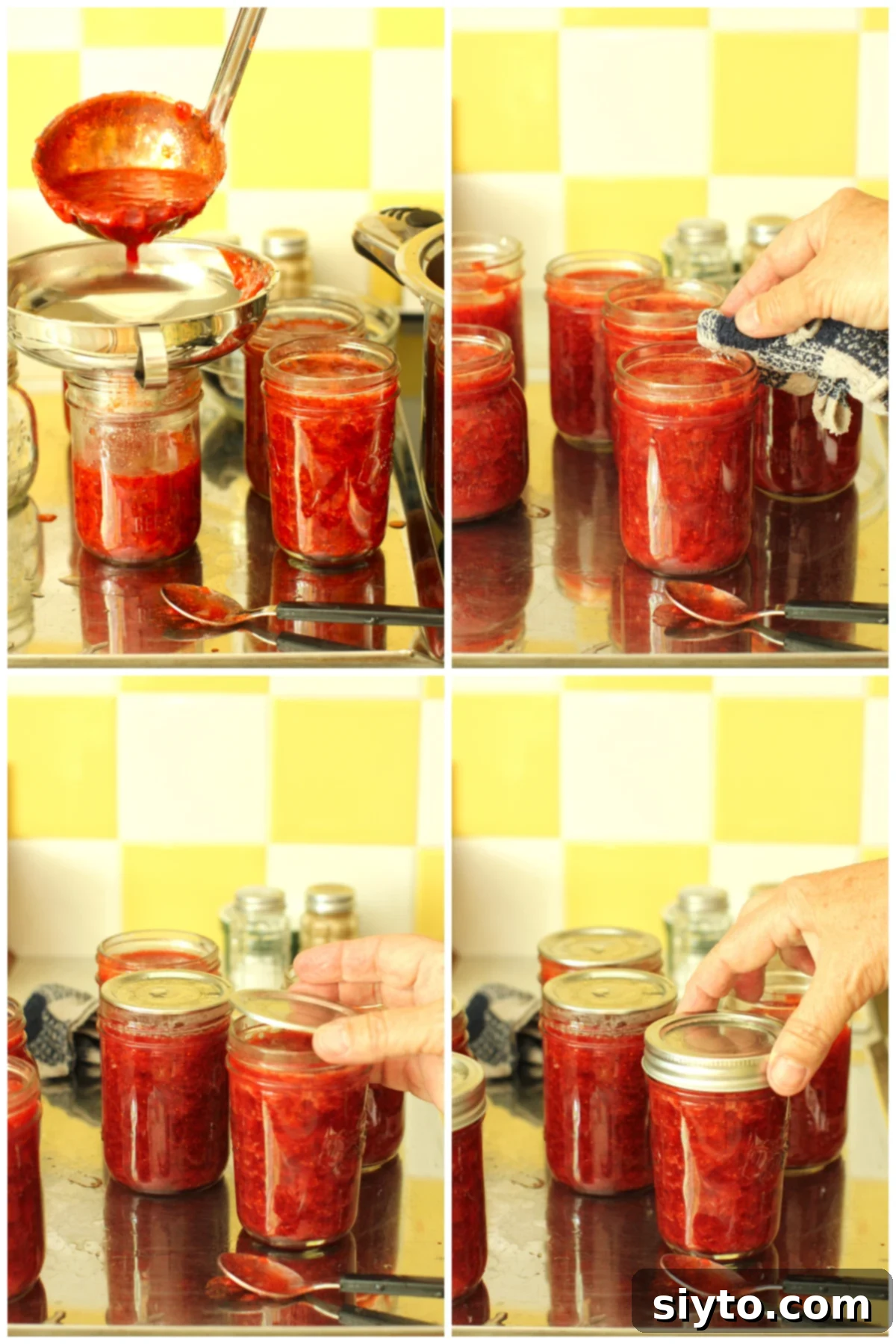
And just like that, your delicious low sugar strawberry jam is ready to be jarred! Immediately remove the pot from the heat. At this stage, you might observe a thin layer of foam gathered on the surface of the jam; gently skim this off with a spoon. While this foam is entirely harmless, it can detract from the jam’s aesthetic appeal once it’s in the jar. Don’t discard this flavorful foam – it’s absolutely delicious on toast or a scone! Now, working quickly and carefully, ladle the hot jam into your hot, sterilized canning jars. It’s paramount that both the jam and the jars are hot; this prevents thermal shock, which could cause the jars to crack, and also ensures a proper vacuum seal. Make sure to leave approximately ¼-inch (.6 cm) headspace from the top of each jar. This critical space is essential for creating the necessary vacuum seal as the jam cools. After filling each jar, meticulously wipe the rims thoroughly with a clean, damp cloth. Any jam residue on the rim could interfere with the seal, leading to spoilage. Place a warm, sterilized snap lid on top of each jar and then screw on the bands until they are “finger-tight” – meaning as tight as you can get them using just your thumb and forefinger, without exerting excessive force. Over-tightening can actually prevent proper sealing. Let the filled and sealed jars cool completely and undisturbed on a towel laid on your counter. The towel acts as an insulator, preventing temperature shock. As they cool, you should hear a satisfying “pop” sound as the lids seal, indicating a successful vacuum. Once completely cooled (this can take 12-24 hours), check the seals: a properly sealed lid will be concave (curved inwards) and will not move or flex when you press a finger into its center. If a lid is still slightly bulged upward or moves when pressed, it indicates that it did not seal correctly. Unsealed jars should be stored immediately in the refrigerator and consumed within the next month or two to ensure freshness and safety.
HOW TO STERILIZE CANNING JARS (4 different methods):
Sterilizing your canning jars is an absolutely critical step for ensuring food safety and guaranteeing that your homemade jam has a long and stable shelf life. This vital process effectively eliminates any bacteria, yeasts, or molds that could potentially contaminate your jam and lead to spoilage. Always ensure your jars are thoroughly clean before commencing the sterilization process. Here are four effective methods:
- Dishwasher Method: A remarkably convenient way to sterilize multiple clean jars is to run them through the hottest possible cycle of your dishwasher, ideally one that includes a heated dry setting. Once the cycle is complete, leave the jars inside the warm dishwasher, with the door slightly ajar, until you are fully ready to fill them. This keeps them hot and sterile. Remove only a few jars at a time just before filling to ensure they remain at an optimal hot temperature, preventing any thermal shock when the hot jam is introduced.
- Boiling Water Method: Begin by washing your jars thoroughly in hot, soapy water, then rinse them completely clean. Place a clean dish cloth at the bottom of a large stockpot or a dedicated canner – this is essential to prevent the jars from rattling against each other or the pot’s bottom and potentially breaking during boiling. Carefully arrange the clean jars into the pot, ensuring they are completely submerged in water. Bring the water to a full, rolling boil and continue to boil the jars for a minimum of 10 minutes. Keep them immersed in the hot water until the moment you are ready to fill them.
- Oven Method: After washing and rinsing your jars, place them, still slightly wet, upright onto a clean baking sheet. Transfer the baking sheet to an oven preheated to 225°F (110°C) and heat for 20 minutes or longer. Similar to the dishwasher method, keep the jars in the warm oven until you’re ready to fill them, removing them one by one to maintain their heat and sterility.
- Microwave Method (for individual jars): For quickly sterilizing individual jars, especially useful for smaller batches or if you need an extra jar, wash them in hot soapy water and rinse them very well. While still wet, place one jar at a time into the microwave oven and heat on high power for 60 seconds. This method is effective for smaller containers but requires careful handling as the jars will be extremely hot immediately after microwaving.
HOW TO PROCESS JARS IN A BOILING WATER BATH:
For an added layer of insurance against spoilage and to significantly extend the unrefrigerated shelf life of your delicious low sugar strawberry jam, processing the filled and sealed jars in a boiling water bath is highly recommended. This crucial method creates a strong, reliable vacuum seal and further sterilizes the contents, ensuring your homemade jam remains safe and flavorful for a longer period.
To begin the water bath processing, carefully set your filled and finger-tightened jars into a canner equipped with a rack, or into a large, deep stock pot with a clean dishcloth laid flat in the bottom. This rack or cloth is vital as it prevents the glass jars from touching the bottom of the hot pot and potentially cracking or breaking. Place only as many jars as will fit comfortably in the canner without touching each other, allowing for proper water circulation. You may need to process your jam in several batches depending on the size of your pot. Next, pour hot water into the pot until it covers the tops of all the jars by at least 1 inch (2.5 cm). Bring the water to a full, vigorous boil. Once a strong boil has been achieved, cover the pot with its lid and adjust the heat downwards slightly to maintain a strong, steady boil without causing the water to boil over. Boil them for the required time, which is typically 10 minutes for jam at sea level. When the processing time is complete, carefully remove the hot jars from the canner using specialized canning tongs, ensuring you keep them upright to avoid disturbing the seals. Place the hot jars onto a clean tea towel or a wooden cutting board on your counter; this towel acts as an insulator, preventing temperature shock from the hot glass meeting a cold surface, which could cause breakage. It is absolutely crucial not to disturb the jars, tighten the bands further, or touch the lids until they are completely cool, which can take up to 12-24 hours. After they have cooled thoroughly, check the seals: a properly sealed lid will be concave (curved inwards) and will not move or flex when you press a finger into its center. If a lid is still slightly bulged upward or moves when pressed, it indicates that it did not seal correctly. Unsealed jars should be stored immediately in the refrigerator and consumed within the next month or two for optimal freshness and safety. Remember to always adjust your processing time for altitude: for every 1000 feet (300 meters) above sea level, add an additional 1 minute to the boiling water bath processing time to ensure proper preservation.
Stay Connected for More Delicious Recipes!
Want to receive new Kitchen Frau recipes directly to your email as soon as they’re posted? Sign up here and you’ll get bits of news updates on what’s happening in my kitchen and garden, plus a handy and useful kitchen tip along with each recipe, too. (No spam ever.)
If you like my recipes, follow me on Instagram, Pinterest, Twitter, and Facebook. You’d make my day. 😊

Low Sugar Strawberry Jam
Margaret Bose Johnson
Save to Pinterest
Ingredients
- 5 cups (1.2 kg) mashed strawberries (9-11 cups hulled, quartered strawberries)
- 1 package (49 g) no-sugar-needed pectin (powdered)
- 2 cups (400 g) sugar
- 1 tablespoon lemon juice or rosewater
Instructions
- Prepare 6 half-pint (250 ml) canning jars (or 3 pint/500 ml jars) – see instructions in the recipe post above. Heat the snap lids in a pot of water set over low heat on the stove.
- Mash the berries in batches in single layers in a shallow pan using a potato masher or fork. Measure out 5 cups (1.2 kg) of the mashed berries with their juices.
- Place the mashed berries in a large, heavy-bottomed stock pot or soup pot together with the sugar, pectin powder, and lemon juice or rosewater. Stir to dissolve the sugar and pectin.
- Bring the jam to a rolling boil that can’t be stirred down. Boil it hard for 3 minutes, stirring constantly. Remove from the heat and skim off any foam that has accumulated around the edges of the pot (save this and use it for your toast tomorrow morning).
- Fill the sterilized jars to within ¼-inch (.6 cm) from the top – use a canning funnel and soup ladle, if you have them. Wipe the top rims of the jars with a clean, damp cloth. Add a snap lid to the top of each jar and screw on the bands until they’re finger tight (as tight as you can get them only using your thumb and forefinger).
- Set the jars to cool on a tea towel laid on the counter. Once cooled, check to make sure the lids have been sucked down (they don’t move when you press on them). They will keep for up to a year. If any jars don’t seal, keep them in the refrigerator and use them within 2 months.
- For added insurance against spoilage and for a longer shelf-life (unrefrigerated), process the jars in a boiling water bath for 10 minutes (add one minute for every 1000 feet/300 metres above sea level). See instructions in the recipe post, above.
Notes
Do not double the recipe, as it can cause the jam not to set (less evaporation over a smaller surface area ratio to jam). Make single batches at a time.