Peas on Earth: Cultivating Organic Produce and Sustainable Living in Alberta
Step into the vibrant world of Peas on Earth, where Eric and Ruby Chen, Alberta’s dedicated organic producers, cultivate exceptional produce with profound passion and love. Their farm is a testament to sustainable living and the joy of wholesome food. Join us on a journey to discover their unique approach to farming and savor the flavors of Ruby’s fantastic Basil Beet Salad or a delightful nibble of Sauteed Garlicky Green Beans. (Skip to recipes.)
The Heart of Peas on Earth: Passion and Love for the Land
The moment you engage with Ruby and Eric Chen, the visionaries behind Peas on Earth Organic Garden in Sturgeon County, two powerful emotions immediately surface: unyielding passion and deep love. Their passion fuels their mission to supply customers with the healthiest, most nourishing food possible, while their love extends to the very earth they tend, committing themselves to its sustained health and vitality. This dual commitment forms the bedrock of their farming philosophy, transforming their land into a thriving ecosystem that benefits both people and the planet, ensuring a legacy of pure, wholesome produce for generations.
Hidden amidst Alberta’s rolling countryside, dotted with luxury homes and sprawling acreages, Peas on Earth is truly a hidden gem of organic cultivation. The journey to the farm itself is part of the experience. As you drive up the gently curving driveway, greeted by a vibrant line of cheerful sunflowers, an immediate sense of peace and happiness washes over you. Ahead, meticulously tended rows of organic vegetables stretch across the fields, a testament to diligent care and thoughtful planning. In the distance, a small team of dedicated workers can be seen hand-picking crops, ensuring each piece of produce meets the highest standards of quality and freshness. Boxes brimming with freshly harvested greens and roots are stacked neatly in the shade, ready for their journey to local markets, while Eric and Ruby themselves welcome you with genuine, warm smiles, embodying the spirit of their farm and its welcoming atmosphere.
A Family Endeavor: Nurturing the Land and Its Bounty
The Chen family farm is a true labor of love and a remarkable team effort. While Eric and Ruby steer the daily operations, their vision is supported by an extended network of family, including their two teenage children, Eric’s parents, and a dedicated staff of employees and relatives who step in during peak harvest times, affectionately known as ‘crunch time’. Out of their 65 acres of land, a substantial 25 acres are meticulously planted with an impressive array of Alberta-hardy vegetables and herbs. This includes over 30 distinct crops, with many featuring several different varieties, showcasing a deep commitment to biodiversity and a rich, varied harvest that caters to diverse tastes and needs.
What truly sets Peas on Earth apart is their unwavering dedication to quality, exemplified by their harvesting methods. Almost all of these diverse crops are painstakingly, carefully, and precisely hand-harvested and hand-processed. This is no small feat in modern agriculture, where machinery often dominates. However, Eric and Ruby understand that delicate organic vegetables, from robust root crops to the most fragile herbs and tender leafy baby greens, cannot be trusted to machines without the risk of damage. Their absolute commitment is to deliver only the finest produce to their customers, ensuring every item maintains its pristine condition and nutritional integrity from field to table, reflecting the true value of organic farming.
Ruby candidly shares that the most significant challenge lies in the post-harvest process: the meticulous sorting, washing, and packing. This phase is incredibly labor-intensive and must be executed as close to market time as possible to guarantee unparalleled freshness for their clientele. Consequently, Eric and Ruby often work tirelessly, staying up late into the early morning hours on the eve of farmers’ market days, meticulously preparing the produce. This dedication ensures that customers receive their vegetables at the peak of freshness, a tangible reflection of the immense care and effort invested in every single harvest, demonstrating their deep respect for both their produce and their customers.
A Philosophy of Health, Sustainability, and Resilience
Beyond providing fresh produce, Eric and Ruby are driven by a profound commitment to health and sustainability, both for people and for the earth. They firmly believe that in a society increasingly grappling with illness and disease, their small but significant contribution can be to supply healthy, chemical-free, and pesticide-free food. This not only nourishes their own family but also empowers their customers to pursue a healthier future. Their motto, “Growing for our children,” encapsulates this ethos beautifully, highlighting their long-term vision. The clever wordplay in their farm’s name, Peas on Earth, perfectly embodies their core beliefs. Eric thoughtfully explains, “Peace on Earth, that’s what sustainability means to me, taking care of the land.” This philosophy is not just rhetoric; the farm is fully certified organic, a testament to Eric and Ruby’s passionate and unwavering commitment to growing good, healthy produce in harmony with nature, and a model for ecological responsibility.
Their balanced perspective on the unpredictable nature of farming is equally striking. Eric reflects, “Every year has been different, and there is a reason and a blessing in everything. Every weed that grows, there is a purpose for it.” This philosophical outlook allows them to embrace the inherent uncertainties of agriculture. Some years, like the one of our visit, bring extreme dryness, necessitating increased irrigation efforts. Other years present different insect challenges, unique weather patterns, and unforeseen problems. For instance, this year brought an aphid infestation to their kale crop for the first time. This meant that every single kale leaf had to be painstakingly inspected and fastidiously washed by hand before reaching the customer. Eric, with a philosophical shrug and a smile, accepts these challenges as an integral part of farming, viewing them not as setbacks but as natural occurrences within the agricultural cycle, teaching resilience and adaptability.
A core tenet of Eric’s farming philosophy is the rejection of waste. If a crop fails or cannot be fully utilized, it is never considered lost. Instead, as Eric states, “What comes from the soil, goes back to the soil.” These unharvested or leftover plants are carefully cultivated back into the land, enriching the soil and providing vital nourishment for future crops. This practice exemplifies a natural, closed-loop cycle, where every element plays a crucial role in sustaining the fertility and health of their precious organic soil, minimizing external inputs and maximizing natural processes. This approach not only benefits the environment but also enhances the long-term viability of their farm.
Diverse Backgrounds, Unified Vision: The Chen Team
Good, sound farming practices form the very backbone of this thriving family business. Eric, with his academic foundation in agriculture from the University of Alberta (where he first met Ruby during their student days), brings scientific knowledge and practical experience directly to the fields. Ruby, originally from Hong Kong, masterfully manages the majority of the day-to-day business operations and administration of Peas on Earth, leveraging her sharp organizational skills. Their diverse backgrounds and distinct skill sets complement each other perfectly, forming a robust and unified team. Together, they are committed to making their organic garden the absolute best it can be, blending traditional farming wisdom with modern organizational efficiency to create a truly sustainable and successful enterprise that continuously adapts and flourishes.
Farming in Alberta’s harsh northern climate presents unique challenges, as most crops enjoy only a vigorous two to three months of optimal growing season. To ensure a continuous supply of fresh produce throughout the year, many of Peas on Earth’s vegetables are planted weekly in succession. During my visit, I observed young, new plantings of hardier greens, their tiny shoots just emerging from the nutrient-rich soil, promising future harvests. Eric candidly admits that they often “gamble on the weather” – if the region experiences longer-than-expected frost-free days, they might be rewarded with an additional harvest. If not, the plants are simply worked back into the soil, replenishing it for future growth, a decision met with Eric’s characteristic smile and shrug, emblematic of their adaptive and resilient approach to farming, always working in harmony with nature’s whims.
Eric and Ruby maintain an incredibly busy schedule, commencing with starting seedlings in their expansive 5000 square-foot greenhouse facility in early spring and continuing well into late fall. Their harvested bounty is distributed to several bustling local farmers’ markets and supplies various discerning local restaurants, building strong community ties. Furthermore, Peas on Earth boasts state-of-the-art temperature-controlled storage facilities. These allow them to expertly preserve long-season and root crops throughout the harsh winter months, ensuring a consistent supply of fresh, organic vegetables for the Organic Box Home Delivery Program year-round. This extensive distribution network highlights their commitment to making fresh, healthy produce accessible to the wider community, regardless of the season.
Where to Find Peas on Earth’s Exceptional Organic Produce
While Peas on Earth no longer sells directly from their garden location, their fantastic fresh organic vegetables are readily available at several key locations throughout Alberta. You can find their seasonal offerings at the St. Albert Outdoor Farmers’ Market (operating from June to Thanksgiving), the Callingwood Market (Sundays until October 11) or, most conveniently, at the Old Strathcona Farmers’ Marketall year round, ensuring a constant supply of fresh, high-quality organic produce. For the most up-to-date information on what specific produce is currently available, be sure to peek into the Peas on Earth website, which offers a comprehensive and regularly updated guide to their seasonal bounty and availability.
* * * * *
Recipes from the Garden: Savoring Peas on Earth’s Bounty
Beets, Basil, Balsamic, Bocconcini, Beans (it’s a Happy B day!)
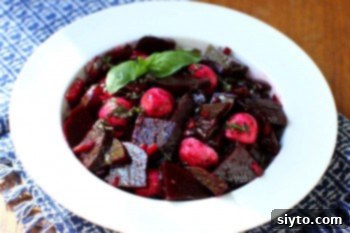
To give you a delightful taste of what can be created with such exquisite, fresh organic Alberta produce, we’re sharing one of the Chen family’s cherished salads. This recipe masterfully highlights the earthy sweetness of beets, which finds a beautiful complement in the robust, aromatic sweetness of fresh basil and the tangy depth of balsamic vinegar. It’s a simple yet elegant dish that truly lets the quality of the ingredients shine, perfect for a light lunch or a vibrant side dish.
Kitchen Frau Notes for Basil and Balsamic Beet Salad:
- This versatile salad is utterly delicious even with just the core ingredients of beets and basil. However, if you’re looking to elevate the protein content or transform it into a more substantial light lunch, consider tossing in a handful of small bocconcini cheese balls. These unripened mozzarella spheres add bright, creamy pops that beautifully contrast the beets’ vibrant pink, adding a delightful textural element. For those who prefer a more intense flavor profile and a touch of tang, cubed feta cheese makes an excellent alternative, offering a savory counterpoint to the sweetness.
- To streamline your preparation, roast or boil the beets the day before. Roasting yields a more concentrated, deeper flavor, enhancing the salad’s overall taste with a rich, caramelized note. I often roast a large batch of beets at once, keeping them on hand for quick dinner side dishes or for assembling refreshing salads like this one whenever inspiration strikes, making meal prep a breeze.
- For basil enthusiasts, feel free to be generous! If you adore the fresh, peppery aroma of basil, don’t hesitate to add even more than the amount specified in the recipe. Its vibrant flavor only enriches the salad, contributing to its aromatic complexity and making it truly sing.
- Patience is a virtue with this salad; it tastes even better the next day. Allowing the flavors ample time to mingle and “get cozy” in the refrigerator results in a more harmonious and developed taste profile, as the dressing fully infuses the beets and basil, creating a truly spectacular dish.
Basil and Balsamic Beet Salad
adapted from Ruby Chen
Ingredients:
- 1½ lbs (700gms) medium-sized beets (yields approximately 4 cups cooked and sliced)
- ¼ cup finely diced onion
- 1 small clove garlic, finely minced or crushed (optional, but highly recommended for an added layer of flavor)
- 2 tablespoons balsamic vinegar
- 4 stems fresh basil leaves (yielding about ¼ cup, lightly packed, chiffonaded for best results)
- 2 tablespoons grapeseed oil, or another mild, neutral-flavored oil such as canola or sunflower oil
- ¼ teaspoon salt
- ¼ – ½ teaspoon freshly ground black pepper (adjust to your personal preference for spice)
- Optional: 1 cup halved small bocconcini balls (unripened mozzarella, typically packed in water), or torn bits of larger bocconcini, or diced feta cheese for a tangier, saltier kick
Instructions:
- Cook the Beets: You can either roast or boil the beets, each method offering a slightly different flavor profile.
- To Roast: Thoroughly wash the beets, trimming any greens, but leaving the root end intact to prevent bleeding. Place them on a large square of heavy-duty aluminum foil, or use a double layer of regular foil. Seal the package tightly to create a steaming environment. Roast in an oven preheated to 400°F (200°C) for 45 minutes to an hour, or until they are tender when pierced through the foil with a fork. Roasting concentrates their natural sweetness, offering a deeper, more earthy flavor.
- To Boil: Place the washed beets in a large saucepan, cover them completely with cold water, and bring to a rolling boil. Reduce the heat to a gentle simmer, cover the pan, and simmer until the beets are tender when pierced. This typically takes 30-60 minutes depending on size.
- Peel and Chill: Once the cooked beets are cool enough to handle comfortably, remove the outer skin. If roasted, the skin should scrape off easily with a knife or even rub off with your fingers. If boiled, you can set a colander in the sink and gently slip off the skins with your hands while holding the beets under cool running water over the colander; this helps to rinse away any lingering skin bits. Allow the peeled beets to cool completely to room temperature, then refrigerate them until thoroughly chilled. This firming up makes them much easier to slice neatly and helps the salad maintain its structure.
- Prepare the Beets: Once chilled, cut the beets into quarters. Then, slice each quarter into even, bite-sized pieces, aiming for consistent thickness for uniform texture in the salad.
- Macerate Onions: In the bottom of a large mixing bowl, combine the finely diced onions, the minced garlic (if using), and the balsamic vinegar. Allow this mixture to macerate for at least 15 minutes, or longer if time permits. This gentle “pickling” process softens the raw onions, mellows their pungency, and infuses them with the tangy, sweet balsamic flavor.
- Combine Beets: Add the sliced beets to the bowl with the macerated onion mixture. Toss well, using gentle motions, until all the beet slices are thoroughly coated in the fragrant vinegar dressing.
- Prepare Basil: Stack 5 or 6 fresh basil leaves on top of each other. Roll them tightly into a cylinder (this technique is known as chiffonade), then slice them very finely across the roll to create delicate, beautiful ribbons of basil. This method releases their aromatic oils beautifully.
- Final Assembly: Add the prepared sliced basil leaves, grapeseed oil, salt, and freshly ground black pepper to taste. If using, gently fold in the halved bocconcini balls or crumbled feta cheese. Toss all ingredients gently together to combine the flavors without mashing the delicate beets or cheese.
- Rest and Serve: For optimal flavor development, allow the salad to rest for at least 30 minutes before serving. This allows the flavors to meld and deepen beautifully. Serve the salad at room temperature, as the flavors are most vibrant when not overly chilled.
The visual appeal of this salad is remarkable; its beautiful pink color becomes even more pronounced if allowed to rest for a while, as the beets gradually release their vibrant, natural juices into the dressing, creating an even richer hue.
This delightful salad keeps exceptionally well for several days when stored in an airtight container in the refrigerator, making it an ideal make-ahead dish for meal prepping or entertaining guests with minimal last-minute fuss.
Serves 6.
* * * * *
During my inspiring visit to Peas on Earth, I was fortunate to bring back some exquisite fresh green and yellow beans. Although their season, sadly, was drawing to a close due to the impending frost, their vibrant freshness immediately sparked culinary creativity. That very evening, I was inspired to create this lovely bean dish for dinner, and it proved incredibly tasty and satisfying, a true highlight of the fresh harvest. What’s more, by adding a perfectly poached egg the following day, it transformed into a wonderfully wholesome and flavorful lunch, showcasing the versatility and quality of Peas on Earth’s produce, even in a simple preparation.
Kitchen Frau Notes for Garlicky Green Beans:
- The addition of turmeric in this recipe is not just for color; it imparts a subtle hint of earthiness that beautifully complements the fresh beans, along with a warm, golden hue that makes the dish visually appealing and adds an interesting depth of flavor without overpowering.
- A crucial finishing touch, the splash of white wine vinegar at the very end of the cooking process, serves to brighten and enliven all the flavors. It cuts through the richness and adds a delightful tang that elevates the entire dish, creating a more balanced and complex taste experience.
Garlicky Green Beans with Spinach and Toasted Hazelnuts
Ingredients:
- 1 tablespoon olive oil
- 1 tablespoon unsalted butter
- ½ medium onion, finely diced
- 3 cloves garlic, freshly minced
- ½ teaspoon ground turmeric
- 1 lb (450gms) fresh green beans, yellow beans, or a vibrant combination of both, trimmed and halved
- ¼ cup (60ml) water
- ½ teaspoon salt
- 6 – 8 oz (175-200gms) fresh spinach, equating to about 3 – 4 large handfuls, roughly chopped if leaves are large
- A generous grinding of fresh black pepper
- 1 teaspoon white wine vinegar
- A small handful of toasted hazelnuts, roughly ⅓ of a cup, coarsely chopped
- Optional: Poached eggs to top the beans, one per person, if desired, for a more complete and satisfying meal
Instructions:
- Toast Hazelnuts (if not already toasted): Preheat your oven to 350°F (175°C). Spread the hazelnuts in a single layer on a baking sheet. Roast for 8 to 10 minutes, or until they become wonderfully fragrant and turn a light golden brown. Immediately transfer the hot nuts into a clean tea towel. Vigorously rub them together for a minute or two; this helps remove as many skins as possible, though don’t worry if a few stubborn bits remain. Roughly chop the cooled, toasted hazelnuts and set aside.
- Prepare Beans: Trim the tough stem ends off the fresh beans. For easier eating and a more appealing presentation, cut each bean in half, or leave whole if preferred.
- Sauté Aromatics: In a large, deep skillet or Dutch oven, heat the olive oil and butter over medium heat until the butter is bubbling and melted. Add the finely chopped onion, minced garlic, and ground turmeric. Sauté for about 2 minutes, stirring frequently, until the onion becomes translucent and fragrant, and the turmeric is well distributed, releasing its aroma.
- Cook Beans: Add the trimmed beans, ¼ cup of water, and salt to the skillet. Continue to sauté for approximately 5 minutes, stirring often. Cook until the water has evaporated and the beans are just crisp-tender, retaining a slight bite and vibrant color.
- Wilt Spinach: If you have large spinach leaves, tear them into smaller, more manageable pieces. Add the spinach to the skillet a handful at a time, gently stirring them underneath the beans until the leaves are just wilted. This ensures the spinach cooks evenly without becoming overcooked and retains its nutritional value.
- Season and Finish: Add a good grinding of fresh black pepper to taste. Sprinkle the white wine vinegar evenly over the vegetables. Toss everything once more to combine the flavors thoroughly and distribute the vinegar’s brightening effect. Immediately tip the vibrant vegetables into a warm serving bowl.
- Serve: Generously strew the roughly chopped toasted hazelnuts over the top of the beans for added crunch and nutty flavor.
- Optional Poached Egg: For a heartier meal, top each serving with a perfectly soft poached egg. Breaking the yolk allows its rich creaminess to meld wonderfully with the savory beans, creating an even more delightful and nourishing experience.
Serves 4 to 6 as a side dish, or 2-3 as a light meal with poached eggs.
Guten Appetit!
Want to receive new Kitchen Frau recipes directly to your email inbox? Sign up here and you’ll also receive a handy and useful kitchen tip along with each recipe. Rest assured, your inbox will never be spammed, only filled with delicious inspiration.
If you enjoy my recipes and culinary insights, I invite you to follow me on Instagram, Pinterest, Twitter, and Facebook. Your support truly makes my day and helps share the joy of cooking!
You might also like:
An Experimental Canadian Quinoa Harvest and Recipes
Bison Farming in Northern Alberta: A Sustainable Approach
Pickled Beets and a Canadian Food Hero: A Culinary Journey
Georgian Charkhlis Chogi (Beets with Sour Cherry Sauce): An Exotic Delight