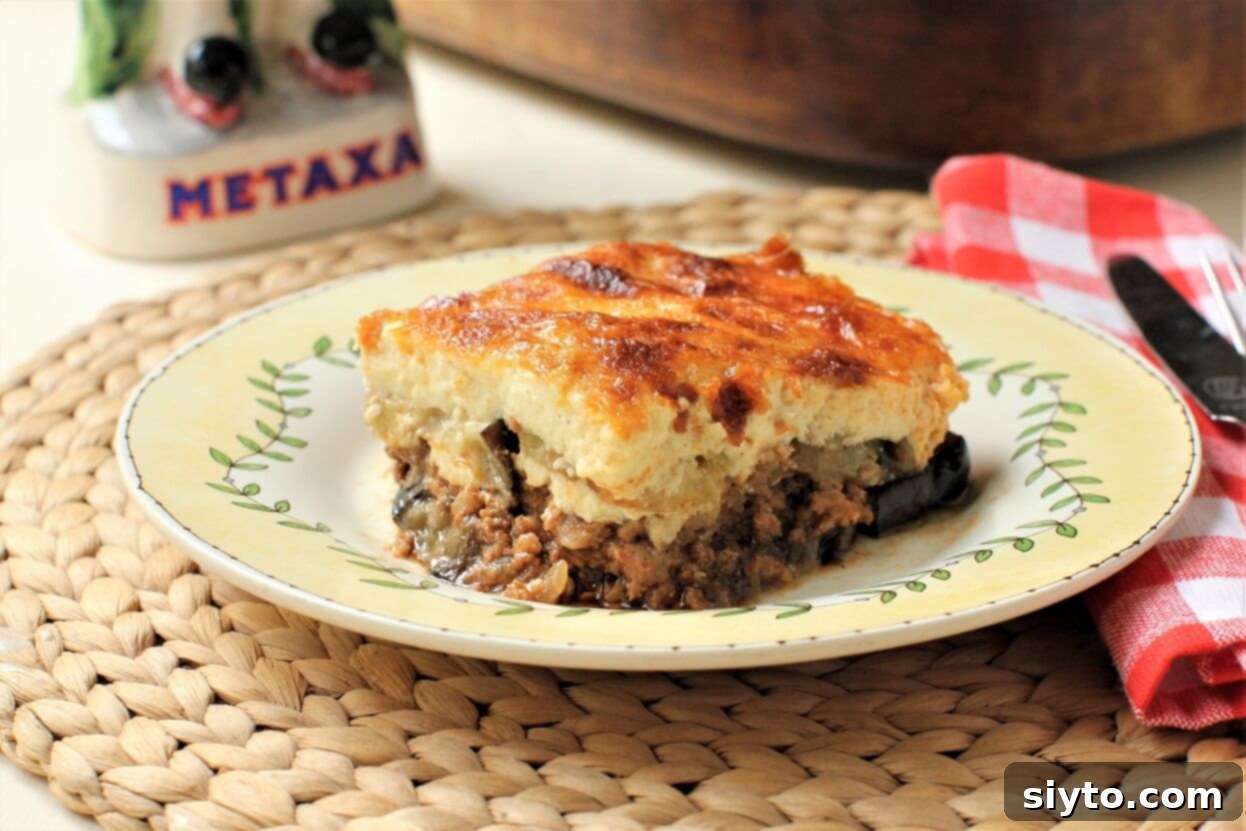
Authentic Greek Moussaka Recipe: Layers of Rich Flavor and Creamy Perfection
Prepare for a culinary journey with classic Greek moussaka, a dish that truly exemplifies comfort and sophistication. This beloved casserole features luscious layers of tender eggplant and a savory, cinnamon-infused meat sauce, forming a deeply flavorful foundation. Crowned with a luxurious, cheesy béchamel sauce that simply melts in your mouth, moussaka is a culinary masterpiece. It’s an ideal choice for special occasions when you want to impress your guests, yet it’s also practical enough to prepare in a large batch, providing delicious leftovers for easy weekday meals. Dive into this guide to create a memorable moussaka that will transport your taste buds straight to the heart of Greece.
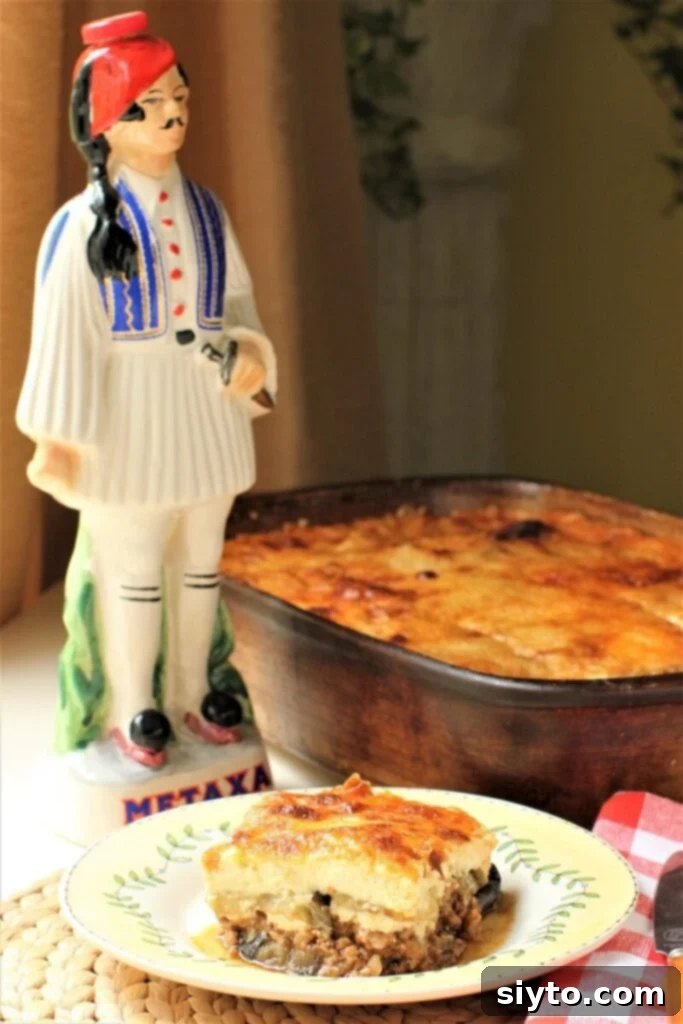
This month, our “Eat the World” recipe challenge takes us to the captivating, sun-drenched shores of Greece. A land steeped in ancient history, rich mythology, and unparalleled natural beauty, Greece holds a deeply personal significance for me. It was the very first European country I had the privilege to visit, many years ago. My partner, Raymond, and I embarked on our initial grand adventure with nothing but large traveler’s backpacks, rolled-up sleeping bags, and a few essentials. The vibrant experiences of that trip remain etched vividly in my memory. Despite all the incredible places we’ve explored since, nothing quite compares to the profound sense of wonder and discovery ignited by that journey, which opened my eyes to the countless mysteries awaiting in foreign lands.
The breathtaking beauty of Greece continues to call to me, a siren song tempting me back to its enchanting embrace. Imagine brilliant blue oceans mirroring an even brighter blue sky, dazzling white houses adorned with aquamarine trim, cheerful pots of bright red geraniums, and endless silvery olive groves. The landscape is dotted with stunning ancient ruins, while donkeys laden with baskets wander leisurely, and smiling old men play cards in the cool shade. You’ll see smiling old women guiding their donkeys home from the fields, all set against the constant, soothing hum of cicadas under the hot, benevolent sun. Cooling dips in that inviting blue sea provide refreshment, followed by wonderful meals in every village, prepared with the same timeless traditions passed down through centuries.
During that first trip, we traveled on a modest budget, which led us to discover the simple, authentic peasant food that was not only affordable but, unknowingly, the best we could have found. We sought out little, off-the-beaten-path tavernas where local fishermen and farmers gathered, tucked away at the edges of olive groves or nestled in winding, cobbled back streets. The gentle strumming of bouzouki music and the heavenly aromas would guide us, leading our noses to the promise of a feast for both our stomachs and our senses. We savored large pots of meltingly tender meats and vegetables, slow-cooked with generous amounts of olive oil and aromatic Mediterranean herbs. These dishes, though simple, were incredibly rich in flavor, lovingly prepared by the mamas and grandmas who followed the recipes of their own mothers and grandmothers before them.
We would settle ourselves at a small table, typically adorned with a cheerful checkered plastic cloth, a stubby, half-burned candle, and decanters filled with red wine vinegar and fragrant green olive oil. Every meal traditionally began with a Greek salad, a rendition far simpler and more authentic than the versions often found in North America. It consisted of a side plate with a few slices of fresh, sweet cucumber, a generous pile of sun-riripened tomato chunks, perhaps a touch of raw onion, all generously topped with a handful of salty black olives and large, crumbled pieces of creamy feta cheese. The plate would either arrive already dressed with a splash of vinegar and a liberal dousing of olive oil, or you’d be invited to dress it yourself. Crucially, there was no lettuce, no green peppers, no oregano, and nothing else. Just cucumbers, tomatoes, olives, and feta. Simple. Yet, so incredibly memorable. To this day, I prefer my Greek salads prepared in precisely that way.
And then, this perfect appetizer would often be followed by moussaka.
In Greece, two staple dishes, often the equivalent of local fast food, were consistently offered in every taverna: a large tray of rice-stuffed baked tomatoes and a massive pan of moussaka. Oh, that moussaka! It was an intoxicating meal I simply couldn’t get enough of. Rich ground lamb (or sometimes beef) layered with lusciously silky eggplant, fragrant with that exotic hint of cinnamon, all enveloped beneath a dreamy blanket of creamy white custard. I’m certain we ate it almost every day, and the fact that it was so affordable certainly didn’t hurt. The combination of flavors and textures was so novel and exciting to my palate then.
Fast forward a few decades, and my love for moussaka remains just as strong. Yes, it does require a bit of effort and some time to prepare, but it becomes much more manageable when broken down into its individual components. The payoff, undoubtedly, is always worth every moment spent.
Crafting moussaka is truly a labor of love, involving several distinct components. While each step is straightforward, they can be prepared in advance to streamline the process. Since you’re already going through the effort, it’s highly recommended to make a full batch – perfect for feeding a crowd or for entertaining. Alternatively, divide the recipe into two smaller pans: serve one to your family or a smaller group of friends, and freeze the second pan for a convenient and delicious meal at a later date. This foresight makes the initial effort even more rewarding.
Can You Prepare Moussaka Ahead of Time?
Absolutely! Moussaka is an exceptional dish for entertaining, as it lends itself beautifully to advance preparation. You can make it ahead and refrigerate or even freeze it, and your guests will never guess it wasn’t freshly made just before their arrival. These flexible options make your life considerably easier:
- You can prepare the eggplant slices and the rich meat sauce 1 to 2 days in advance. Store them separately in the refrigerator. On the day you plan to serve, simply make the béchamel sauce, then assemble and bake the moussaka.
- For maximum convenience, you can assemble the entire moussaka 1 to 2 days ahead of time. Cover it tightly with plastic wrap and refrigerate. On the day you need it, simply bake it until golden and bubbly, then serve.
- To extend its shelf life, prepare and assemble the whole moussaka, cover it exceptionally well with several layers of plastic wrap and foil, and freeze it for up to 3 months. When ready to enjoy, remove the plastic and place the frozen moussaka directly into a preheated oven. It will require an additional 20 to 25 minutes of cooking time compared to an unfrozen moussaka.
- For ultimate meal prep, fully bake the moussaka, let it cool completely, then cut it into individual portions. Wrap each portion tightly in plastic food wrap and freeze them on a baking sheet until solid. Once frozen, transfer them to a large zip-top freezer bag. This allows you to remove individual portions as needed for quick and easy meals or lunches. Simply thaw and reheat in the oven until warmed through, or bake from frozen for approximately 25 to 30 minutes.
How to Create a Delicious Moussaka
To assemble a classic moussaka, you will need three distinct and flavorful components, layered together to create this iconic Greek dish. Think of it as a savory Greek eggplant lasagna, but with its own unique character:
- **Tender, Silky Eggplant Slices**: Traditionally, these are fried in olive oil, a method that gives moussaka its distinctive texture. However, to simplify the process and achieve a lighter, less oily dish without sacrificing flavor, we will opt to broil or grill them until beautifully browned and tender.
- **A Rich, Aromatic Meat Sauce**: This layer is characterized by the quintessential Greek flavors of cinnamon, oregano, and bay leaf, which infuse the sauce with a complex and utterly delicious taste. It’s heartier and thicker than a typical pasta sauce, designed to complement the eggplant perfectly.
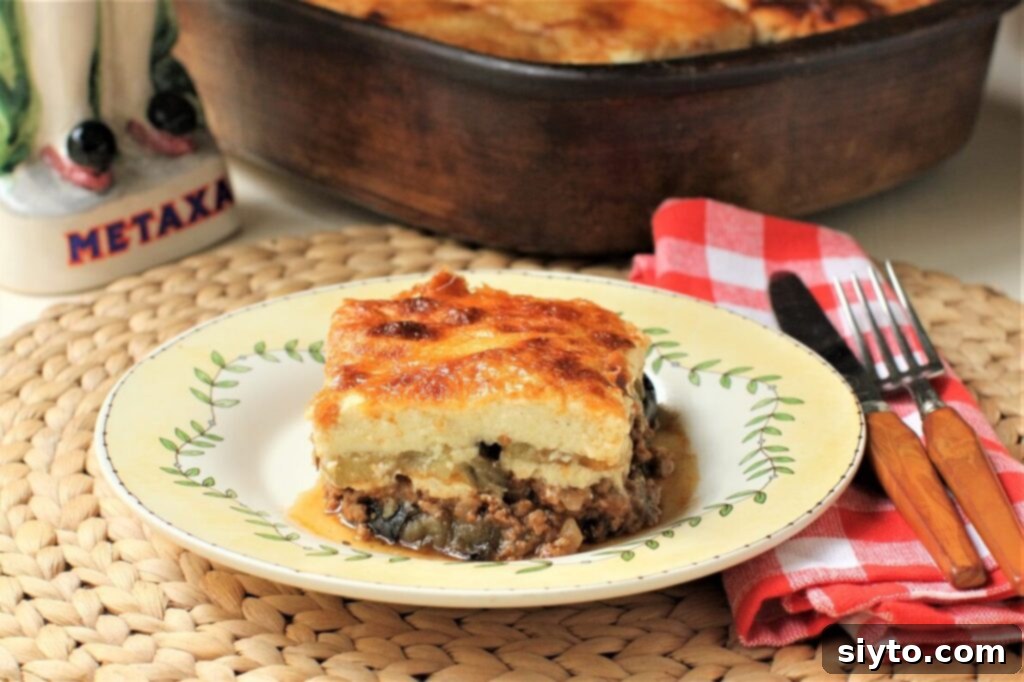
- **Thick, Luscious Cheesy Custard Topping**: The final flourish is a generous, creamy layer made from a classic white sauce (béchamel) enriched with cheese and beaten eggs. The eggs help the béchamel set beautifully when baked, allowing it to be sliced into rich, golden squares. The top of this béchamel becomes wonderfully caramelized and slightly crisp in the oven, creating a stunning presentation that is sure to wow your guests.
Preparing the Eggplant Layers
Instead of traditional lasagna noodles, moussaka features four plump eggplants, sliced and browned to perfection. This not only makes the dish healthier but also adds a fantastic flavor and texture. Historically, eggplants were known for their bitterness and required salting to draw out this unwanted taste. However, modern eggplant varieties have largely been bred to eliminate this bitterness, so salting is often no longer a necessity. Some still choose to salt and rinse the eggplant slices to remove excess moisture, which can be beneficial. However, I’ve found that this step can be skipped if you ensure your meat sauce is cooked down sufficiently to be quite thick, preventing any additional moisture from making the moussaka watery.
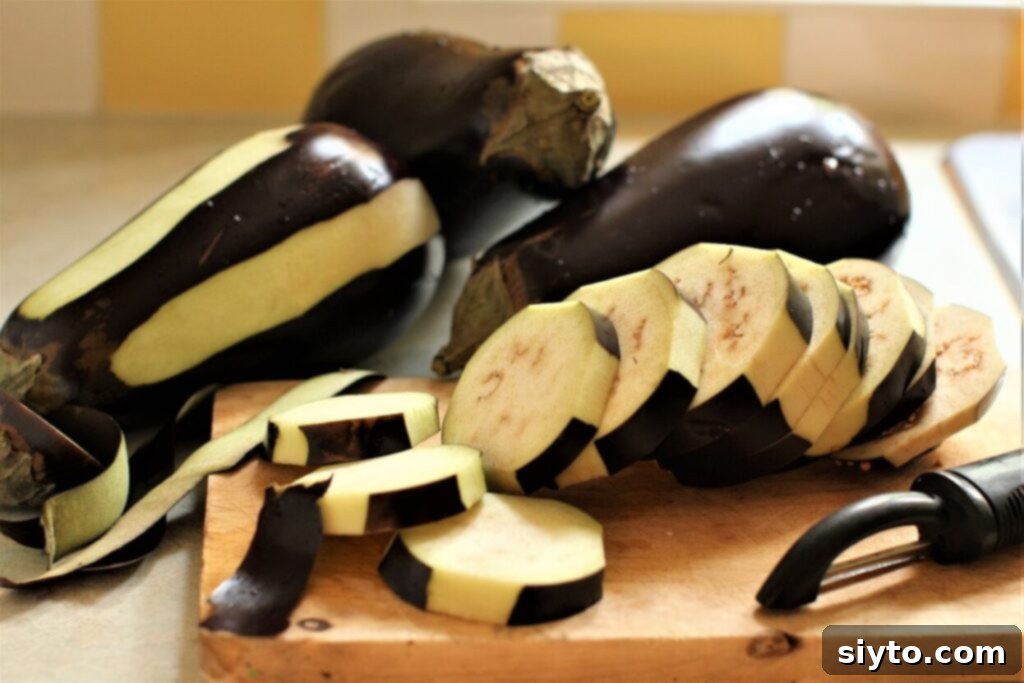
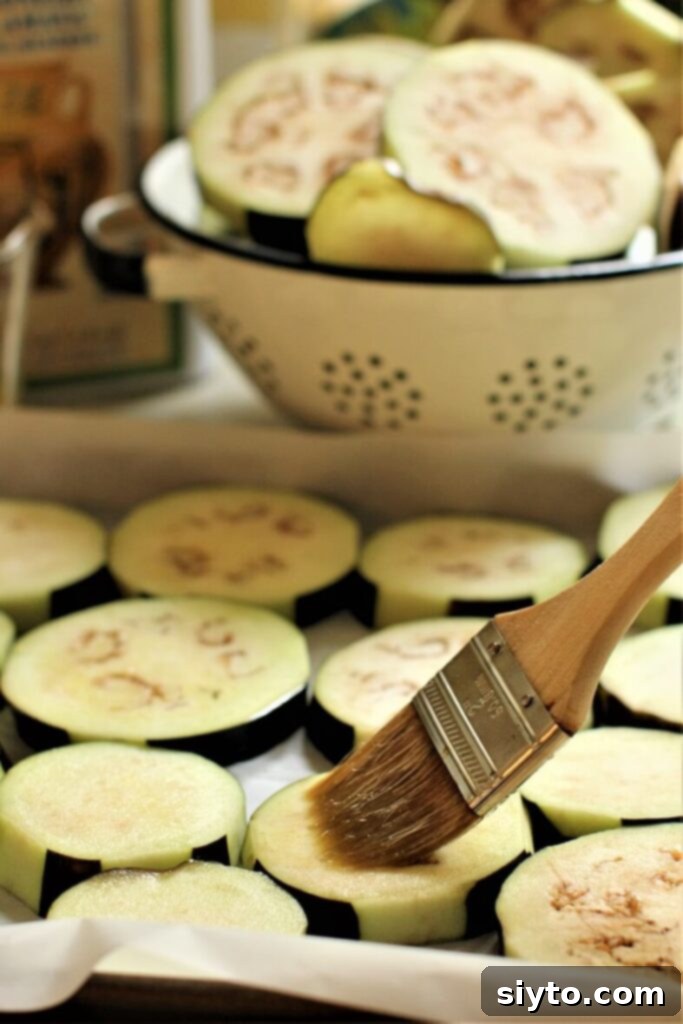
Traditionally, salted eggplant slices are pan-fried in oil, but eggplants are notoriously like sponges for oil. I’ve discovered that simply broiling the eggplant slices yields a much lighter moussaka without compromising any of that essential flavor. Plus, it’s a far less messy cooking method! Once the eggplant is layered into the moussaka, you won’t be able to tell if the slices were broiled or fried. For an even simpler approach, consider grilling the eggplant slices on the barbecue, which allows you to cook a larger batch simultaneously and efficiently.
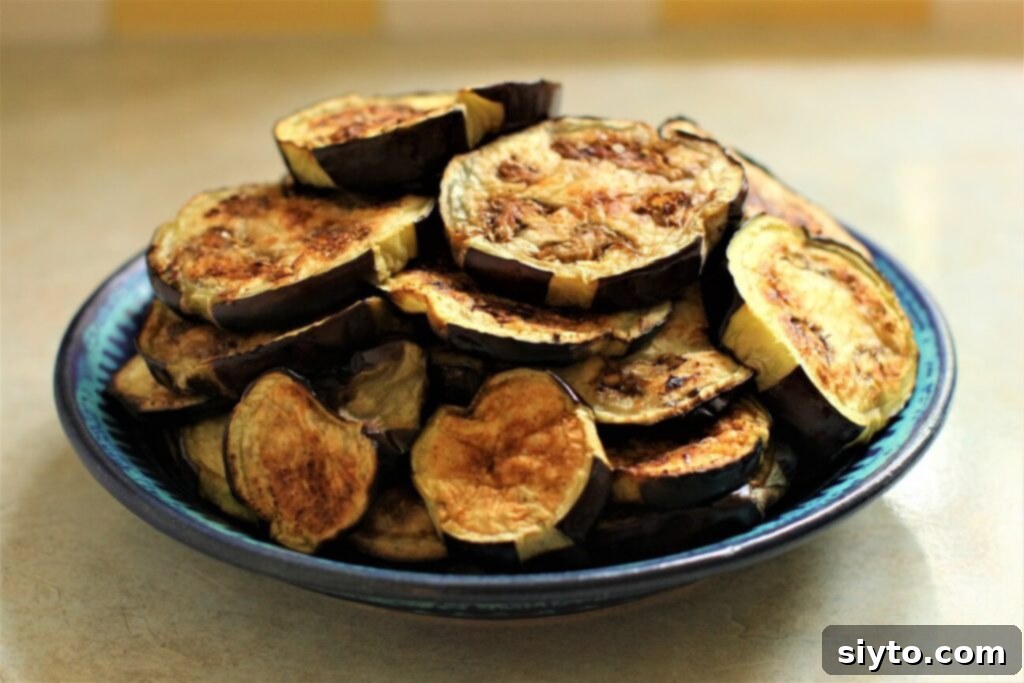
Crafting the Hearty Meat Sauce
The meat sauce for moussaka shares some similarities with a classic bolognese, but it stands apart with distinct characteristics. It features a reduced amount of tomato, is cooked until much thicker, and is deeply flavored with traditional Greek seasonings such as oregano, warming cinnamon, and aromatic bay leaves. This combination results in an incredibly rich and hearty sauce, further enhanced by the addition of sautéed onions, fragrant garlic, and a splash of red wine.
While ground lamb is the traditional choice for moussaka, offering a robust and authentic flavor, many contemporary versions opt for ground beef. If you prefer a milder taste or simply find lamb less appealing, ground beef makes an excellent and equally delicious alternative, ensuring a superb moussaka every time.
Preparing the Luxurious Béchamel Sauce
Béchamel sauce, despite its fancy French name, is essentially a creamy white sauce. For moussaka, however, you’ll need a generous quantity of it, because the hallmark of a truly luscious moussaka is that thick, silky, and cheesy custard layer crowning the dish. This particular béchamel is a bit different from a standard version; it’s enriched and set with eggs, which are carefully tempered with a small amount of the hot sauce before being fully incorporated to prevent curdling. Additionally, a touch of grated cheese is often stirred in, enhancing its flavor and richness.
Assembling Your Moussaka: Layer by Layer
Once your eggplant slices, meat sauce, and béchamel are ready, it’s time for the exciting assembly! Begin by carefully placing half of your browned eggplant slices in a single layer at the bottom of your chosen baking dish. This could be a large roasting pan, an extra-deep 9×13-inch pan, or if you’re making a smaller quantity or planning to freeze half, two 9×9-inch baking pans. Ensure the eggplant covers the base evenly, overlapping slightly if necessary to create a solid foundation.
Next, spoon half of the rich, aromatic meat sauce evenly over the eggplant layer, spreading it out to cover completely. Follow this with the remaining half of the eggplant slices, carefully arranging them over the meat. Finally, top with the rest of the savory meat sauce, ensuring it’s spread smoothly and evenly across the entire surface. This creates a balanced, flavorful core for your moussaka.
Now for the crowning glory: pour the creamy béchamel sauce generously over the top of the meat layer, spreading it gently to create a smooth, even coating. Finish by sprinkling a handful of grated Parmesan cheese (or traditional Greek kefalotyri cheese if you can find it) over the béchamel. This will melt and form a beautiful golden crust as it bakes.
Finally, bake your masterpiece to a burnished golden deliciousness. The aroma alone will fill your kitchen with the promise of a mouthwatering dish of Greek comfort food, ready to be savored.
Now, pour yourself a glass of robust red wine, put on a captivating Greek music soundtrack, and with a spirited “Opa!”, dig your fork through that creamy, subtly nutmeg-scented top layer. Experience the tender, silky eggplant intertwined with the rich, savory meat layer beneath. The harmonious blend of rich tomato, aromatic oregano, and that distinctive hint of cinnamon will instantly transport you to a sun-kissed Greek island, surrounded by gnarled olive trees and ancient ruins. In the distance, you can almost hear the gentle strains of joyous bouzouki music wafting from a charming little taverna, beckoning you to pull up a chair and savor this culinary delight.
* * * * *
Classic Greek Moussaka
Margaret Bose Johnson
Save to Pinterest
Equipment
- An 11 x 14-inch baking pan (28 x 35.5 cm), a large roasting pan, an extra-deep 9 x 13 inch pan (2½ or 3 inches deep – inside measurement), or two 9 x 9 inch square pans (23 x 23 cm). Choose one that suits your batch size.
- A large cookie sheet for broiling the eggplants, along with parchment paper cut to fit the bottom of the pan.
Ingredients
For the Eggplant Layer:
- 4 medium eggplants about 1 lb (454 gms) each, totaling 4 pounds (1.8 kg)
- ¼ cup (60 ml) olive oil
For the Meat Sauce Layer:
- ¼ cup (60 ml) olive oil
- 2 medium onions, finely minced (approximately 2 cups)
- 4 large cloves garlic, finely minced
- 2 lbs (900 gms) lean ground meat (lamb, beef, or a combination of both)
- 2 teaspoons dried oregano
- 1½ teaspoons fine sea salt
- 1 teaspoon cinnamon
- ½ teaspoon black pepper
- ¼ teaspoon nutmeg
- 2 bay leaves
- 3 tablespoons tomato paste
- 1 large can (800 gms / 28 oz) peeled whole tomatoes, or 4 packed cups of peeled, diced fresh tomatoes
- 1 cup (240 ml) red wine
For the Béchamel Layer:
- ½ cup (115 gms) butter or ½ cup (120 ml) olive oil
- ¾ cup (105 gms) sweet rice flour (or all-purpose flour for non gluten-free preparation)
- 5 cups (1.2 litres) milk 2% fat is perfectly suitable
- 1 teaspoon fine sea salt
- ½ teaspoon nutmeg
- ¼ teaspoon white pepper
- 1 cup (100 gms) grated Parmesan cheese, divided ideally, use Greek kefalotyri cheese if available for an authentic touch
- 2 large eggs
Instructions
Prepare the Eggplants:
- These eggplant slices can be prepared and broiled 2 to 3 days in advance. Once cooked, store them in the refrigerator until you’re ready to assemble the moussaka. Remember to bring them back to room temperature before layering.
- Preheat your oven broiler and position an oven rack in the top position, ensuring it’s approximately 4 inches (10 cm) from the heating element.
- Begin by trimming off the stem end of each eggplant. Using a vegetable peeler or paring knife, peel away 4 or 5 lengthwise strips from each eggplant. This step helps make the moussaka easier to cut when serving, as eggplant peels can sometimes be tough. Slice one eggplant into half-inch (1 cm) thick rounds. Only slice enough eggplant to fill the pan you’ll use for broiling, as pre-sliced eggplant can brown if left out too long.
- Line a large cookie sheet with parchment paper, trimming any excess edges so it fits flat. Arrange a single layer of eggplant slices onto the paper. Continue slicing from the second eggplant as needed to fill the pan. Pour ¼ cup of olive oil into a small bowl or cup, and use a pastry brush to lightly coat the tops of the eggplant slices. Broil the eggplants until they are nicely browned, which typically takes 3 to 5 minutes (cooking time will vary depending on your oven). **SET A TIMER!** It’s easy to overlook them. Once sufficiently browned, remove the pan, flip the slices, and lightly brush the second side with olive oil. Return to the broiler and cook for another 3 to 5 minutes until browned.
- Repeat this process until all the eggplant slices have been beautifully broiled on both sides. If you use the olive oil sparingly, the initial ¼ cup should be sufficient. If you run out, feel free to use a little extra.
- *Alternatively, you can pan-fry the eggplant slices in a skillet, using a small amount of oil for each batch. This method may require more than ¼ cup of oil. Once fried, place the eggplant slices on paper towels to absorb any excess oil.
Prepare the Meat Mixture:
- This savory meat sauce can be prepared 2 to 3 days in advance and kept refrigerated until you are ready to assemble the moussaka. Before layering, ensure it’s brought back to room temperature, or gently warmed so that any solidified oil melts.
- Finely chop the onions and garlic (a mini-chopper works wonderfully for this). Heat the olive oil in a heavy-bottomed, wide Dutch oven or a deep skillet over medium heat. Add the chopped onions and garlic, and cook until they become translucent and develop a golden hue, typically 5 to 8 minutes.
- Add the ground meat to the pot. Cook thoroughly, breaking up any large chunks with a spatula as it browns, until no pink remains.
- If you are using canned whole tomatoes, crush each tomato in your hands to break them up before incorporating them into the meat mixture. This ensures a smoother sauce texture.
- Add all the remaining ingredients for the meat layer to the pot and bring the mixture to a boil. Reduce the heat to medium and allow it to simmer, uncovered, for 30 to 45 minutes, stirring occasionally. Continue cooking until the mixture becomes beautifully thick. You’ll know it’s ready when most of the liquid has evaporated, leaving only oil gently bubbling at the bottom. A good test: if you draw a trail through the mixture with a spatula, it should create an open track that doesn’t quickly fill back in with meat; only the oil will slowly seep into the path. Once done, remove and discard the bay leaves.
Prepare the Béchamel Layer:
- Melt the butter (or olive oil, if using) in a large saucepan over medium heat. Add the sweet rice flour (or regular all-purpose flour) and stir continuously until all the flour is moistened by the fat. At this stage, it will appear dry and clumpy. Gradually add about a quarter cup (50 to 60 ml) of milk at a time, cooking and stirring after each addition until it is fully incorporated and smooth. After a few additions of milk, switch to using a whisk and whisk constantly as you continue to add the milk in small increments. By whisking continuously and incorporating the milk gradually, you will achieve a beautifully smooth and lump-free béchamel (white sauce).
- Once the sauce is smooth, stir in the salt, nutmeg, and white pepper, whisking until fully combined. Allow the sauce to cook and gently bubble for 1 minute, ensuring you stir constantly to prevent scorching.
- Remove the béchamel sauce from the heat. Stir in half of the grated Parmesan cheese until it’s fully melted and incorporated. Let the sauce cool for about 5 minutes.
- In a separate bowl, whisk the eggs. To temper the eggs and prevent them from curdling, gradually add a large ladleful of the hot béchamel sauce to the eggs, a little at a time, while whisking constantly. Continue adding until you’ve incorporated approximately one cup of the sauce into the eggs. This process slowly warms and dilutes the eggs, preparing them for the hotter béchamel.
- Now, slowly pour the tempered egg mixture into the remaining béchamel sauce in a thin stream, whisking constantly as you add it. Once fully incorporated, cover the béchamel and set it aside until you are ready to assemble the moussaka.
To Assemble the Moussaka:
- Preheat your oven to 350°F (180°C). Lightly grease the bottom of your chosen baking pan with a little olive oil. (Refer to the EQUIPMENT section above for pan size recommendations.)
- Arrange half of the browned eggplant slices in a single layer across the bottom of the prepared pan. Overlap them slightly if necessary to ensure the entire base is covered.
- Next, evenly spread half of the flavorful meat mixture over the eggplant layer, creating a smooth and consistent layer.
- Layer the remaining half of the eggplant slices carefully on top of the meat mixture.
- Add the remaining half of the meat mixture, gently packing it down and spreading the top to create an even, smooth surface. This provides an ideal base for the béchamel sauce.
- Generously pour the prepared béchamel sauce over the top layer of meat, spreading it evenly to cover the entire surface. Sprinkle with the remaining half cup of Parmesan cheese.
- Bake the moussaka for approximately 45 minutes, or until the top is bubbling, golden brown, and beautifully set. (If you are using two smaller pans, they will typically require a shorter baking time, around 35 minutes.)
- It’s crucial to allow the moussaka to cool for at least 30 minutes (preferably 45 minutes if baked in one large pan) after removing it from the oven. This resting time allows the béchamel topping to fully set, ensuring that it slices neatly and evenly into perfect squares.
- This recipe yields generous servings for 8 to 10 people.
Notes
The choice of pan size is important for this recipe. This is a substantial dish designed to serve 8 to 10 people. It’s best prepared in a large 11 x 14-inch baking pan or a deep roasting pan with elevated sides. If you opt for a standard-height 9 x 13-inch pan, it may not be deep enough, risking the moussaka bubbling over during baking. Alternatively, you can divide the recipe between two 9-inch square pans, allowing you to easily bake one and freeze the other (either baked or unbaked) for later enjoyment.
While the recipe is easy to halve, considering the effort involved, I highly recommend making the full batch. You can then bake it in two smaller pans and freeze half, or prepare it in a single large pan and freeze leftover portions for convenient future meals. If baking directly from frozen, add an extra 30 minutes to the total baking time, keeping the moussaka covered initially, then uncovering it for the final 30 minutes to achieve a golden crust.
Ensure you plan for adequate cooling time. Allowing the moussaka to rest for 30 to 45 minutes after baking is crucial. This cooling period allows the béchamel topping to set properly, ensuring that your moussaka can be cut into smooth, clean slices.
kalí̱ órexi̱ (Enjoy your meal!)
Explore the wonderful array of Greek dishes prepared by fellow “Eat the World” members and share your culinary adventures using #eattheworld. Click here to discover how to join and embark on a fun journey exploring a different country’s cuisine each month with us!
Palatable Pastime: Spanakopita Bites
Magical Ingredients: Spanakorizo
Amy’s Cooking Adventures: Greek Cabbage Roll Rice Bowls
A Day in the Life on the Farm: Makaronia me Yiaourti
Pandemonium Noshery: Aginares a la Polita – Greek Artichoke Stew
Sneha’s Recipe: Greek Hot Dogs
Culinary Adventures with Camilla: Skordalia
Sugarlovespices: Greek Spinach and Feta Pie with filo pastry (Spanakopita)
Kitchen Frau: Classic Moussaka
Want to receive new Kitchen Frau recipes directly to your email? Sign up here and you’ll get a handy and useful kitchen tip along with each recipe, too. (No spam ever.)
If you like my recipes, follow me on Instagram, Pinterest, Twitter, and Facebook. You’d make my day!
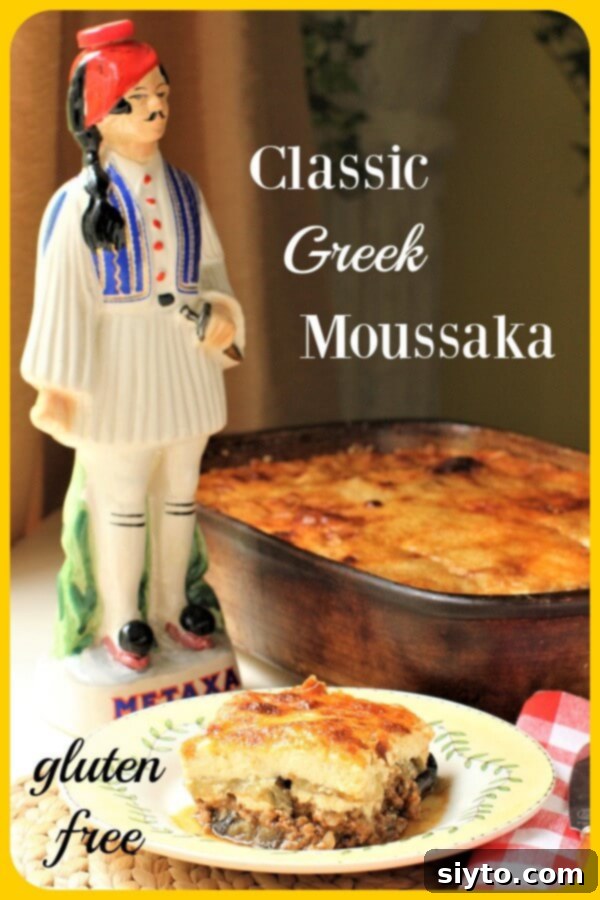
PIN IT HERE to save the recipe for later:
Explore My Past ‘Eat the World’ Recipe Challenge Posts:
(in alphabetical order)
- Argentina: Red Chimichurri Sauce
- Bangladesh: Chingri Masala (Shrimp Curry)
- Bulgaria: Patatnik (Savoury Potato and Cheese Pie)
- Cambodia: Noum Kong (Cambodian Rice Flour Doughnuts)
- China: Kung Pao Chicken
- Colombia: Pan de Yuca (Warm Cheese Buns)
- Egypt: Fava Beans and Feta
- England: Gluten Free Fish and Chips and Mushy Peas
- Ethiopia: Four Ethiopian Recipes for a Fantastic Feast
- Fiji: Spiced Sweet Potato and Banana Salad
- Finland: Lohikeitto (Creamy Salmon, Potato, and Dill Soup)
- France: Axoa d’Espelette (A Simple Stew from the Basque Country)
- Georgia: Charkhlis Chogi (Beets with Sour Cherry Sauce)
- Guyana: Fried Tilapia in Oil & Vinegar Sauce (fish dish)
- Hungary: Túrós Csusza (Pasta Scraps with Cottage Cheese)
- India: Kerala Upma (Fluffy, Kerala Style Breakfast Upma Recipe)
- Iraq: Tepsi Baytinijan (Eggplant & Meatball Casserole)
- Ireland: Dublin Coddle (A tasty Sausage and Potato Stew)
- Israel: Cucumber, Feta, and Watermelon Salad
- Jamaica: Rice and Peas (Coconut Rice and Red Beans)
- Kenya:Maharagwe with Ugali (Red Beans with Cornmeal Slice)
- Laos: Ping Gai (Lao Grilled Chicken Wings)
- Lesotho: Chakalaka & Pap (Veggie & Bean Stew with Cornmeal Polenta)
- Luxembourg: Stäerzelen (Buckwheat Dumplings)
- Mexico: Cochinita Pibil Tacos (Pit Barbecued Pig to Make in Your Oven)
- Netherlands: Boerenkool Stamppot (Kale-Potato Mash with Sausages & Pears)
- New Zealand: Classic Pavlova
- Poland: Polish Honey Cake
- Portugal: Tuna and Sardine Pâtés
- Puerto Rico: Piña Colada Cocktail
- Scotland: Cranachan (Raspberry, Whisky & Oat Cream Parfaits)
- Senegal: Mafé (Beef and Peanut Stew)
- Sudan: Peanut Butter Creamed Spinach & Peanut Meringue Cookies
- Sweden: Swedish Meatballs with Cream Gravy
- Switzerland (Christmas): Basler Leckerli Cookies
- Thailand: Shrimp Laksa (Khung)
- Trinidad & Tobago: Peanut Butter Prunes
- Ukraine: Buckwheat Kasha with Beef
- United States (Soul Food): Smothered Pork Chops
- Uruguay: Torta de Fiambre (Baked Ham & Cheese Sandwiches)
- Vietnam: Caramelized Pork Rice Bowls