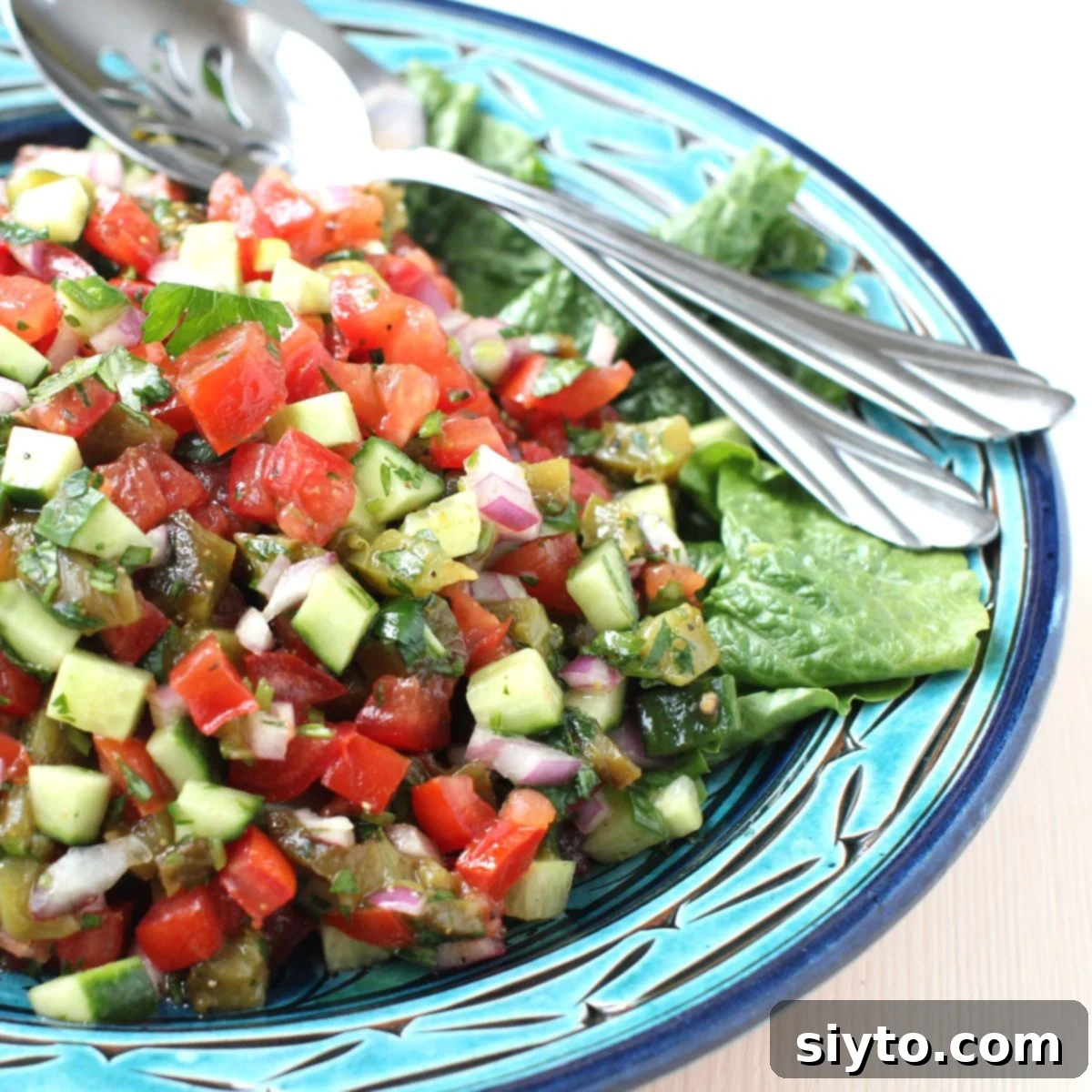
Authentic Moroccan Salad with Zesty Cumin Dressing: Your Passport to North African Flavors
Light, incredibly fresh, and bursting with a delightful crunch, a classic Moroccan salad is truly a revelation that will revitalize your culinary repertoire. Whether you prefer a simpler version with crisp tomatoes, cooling cucumbers, pungent onions, and aromatic herbs, or desire an extra layer of depth with the addition of a smoky roasted green pepper, this salad promises an unforgettable experience. What truly elevates this dish, making it uniquely Moroccan and irresistibly appealing, is its vibrant, zippy dressing – a simple yet potent blend of fresh lemon and earthy cumin. Beyond its incredible flavor, this salad is remarkably practical for busy schedules; prepare a generous batch, and you’ll have a delicious, healthy side dish or light meal ready to enjoy for several days, proving that wholesome food can also be convenient.
If you’re a fan of the vibrant flavors and crisp textures found in a traditional Greek salad, then prepare to be utterly charmed by this simple yet sensational Moroccan Salad. It shares that same satisfying, toothsome crunch, but offers an even easier preparation and an irresistible, distinctively fresh flavor profile that transports your taste buds straight to North Africa. This salad isn’t just a side dish; it’s a celebration of simplicity and bold, natural ingredients, making it a perfect addition to any meal, from a casual weekday lunch to a festive dinner spread.
My recent journey to Morocco over the Christmas holidays was nothing short of a magical and unforgettable adventure, a childhood dream finally realized. For several glorious weeks, my husband Raymond and I immersed ourselves in the captivating beauty and vibrant culture of this wildly exotic country situated on the northwest coast of Africa. Even now, the vivid colours, tantalizing flavours, and enchanting sounds linger vividly in my mind, a kaleidoscope of sensory impressions that I’m still trying to fully comprehend. The experience profoundly influenced my appreciation for Moroccan cuisine, inspiring me to recreate some of its simple yet profound dishes, much like this Moroccan Carrot Salad I previously shared.
That dream, nourished since childhood, finally became a breathtaking reality!
Raymond and I embarked on an “Intrepid” adventure, joining a group of ten fellow travelers for the “Morocco Uncovered” tour. Under the expert guidance of our amazing local guide, Mohamed, and with the constant good humor of our smiling driver, Musa, we journeyed into some of the most spectacular and unique corners of this richly varied country. From the bustling imperial cities to the tranquil desert landscapes and the majestic Atlas Mountains, every day brought a new and enriching experience.
Each memory of our Moroccan escapade is vividly etched into my mind, a continuous kaleidoscope of sensory impressions. We experienced the thrill of riding camels across vast dunes and sleeping under a blanket of stars in a desert camp, a truly primal and awe-inspiring experience. We hiked high into the breathtaking Atlas Mountains, witnessing landscapes of dramatic beauty, and got lost (in the best way) wandering through the crowded, fragrant souks deep inside ancient walled cities. Perhaps most memorable were the moments shared with locals – partaking in meals and sipping traditional mint tea in their simple, welcoming, clay-walled homes. These intimate encounters offered a profound insight into the warmth and hospitality that define Moroccan culture, deeply connecting us to the heart of this incredible nation.
I am eager to share even more vivid photos and captivating stories from our stunning Moroccan trip in future posts, delving deeper into the diverse landscapes and rich cultural experiences.
The food of Morocco, much like its people, is flavourful, comforting, and deeply rooted in tradition. Breakfasts were typically simple yet nourishing, featuring an array of freshly baked breads, sometimes delicate pastries, homemade jams, hard-boiled eggs, a selection of olives, and often refreshing slices of cucumbers and tomatoes. These were always accompanied by strong, aromatic coffee and freshly squeezed orange juice, bursting with the sweetness of local citrus. Lunches and dinners consistently revolved around tagines – a culinary cornerstone, referring both to the distinctive conical earthenware pot and the slow-cooked, aromatic meal prepared within it – alongside hearty couscous dishes. The flavors were always rich, often spiced with a blend of regional herbs and spices that make Moroccan cuisine so distinctive. Dessert was invariably a generous platter of fresh, seasonal fruit, usually including sweet little bananas, unbelievably fantastic and sweet oranges (when in season), and crisp yellow apples, the classic winter fruits of the region. This emphasis on fresh, wholesome ingredients underscores the healthy and vibrant nature of Moroccan cooking.
As a key part of any main meal in Morocco, the first course generally begins with either a deeply comforting soup, served alongside fresh bread and dates, or one of a delightful variety of salads. The recipe I’m sharing today for a classic Moroccan Salad is by far the most popular and universally available. It’s a staple you’ll find everywhere, from humble eateries to grand restaurants. This particular preparation is one that Raymond and I had the privilege of learning to create firsthand in one of the two immersive cooking classes we enthusiastically participated in during our travels. It’s an authentic taste of Morocco, simplified for your kitchen.
Moroccan Salads are celebrated for their incredible flexibility and versatility. In Morocco, they are traditionally prepared with a wide array of both cooked and raw vegetables, showcasing the bounty of the land. It’s common to see variations featuring tender cooked carrots, vibrant beets, hearty dried beans, or perfectly roasted eggplant cubes, all brought to life with the same simple yet potent dressing. Often, these salads are presented with each vegetable prepared and dressed separately, creating a mosaic of individual flavors and textures on the plate, inviting diners to mix and match as they please. This recipe, however, brings several key elements together for a harmonious and incredibly delicious combination.
Classic Moroccan Salad: A Symphony of Fresh Flavors
This vibrant classic Moroccan salad is a harmonious blend of textures and tastes: juicy, ripe tomatoes, crisp, refreshing cucumbers, the sweet and smoky essence of savory roasted peppers, and the piquant bite of finely diced onions. All these fresh ingredients mingle together beautifully, enveloped in a delightfully simple yet profoundly flavorful vinaigrette crafted from freshly squeezed lemon juice, rich olive oil, and the quintessential Moroccan spice, ground cumin. This salad offers wonderful adaptability; you can prepare it with just tomatoes and cucumbers for a lighter touch, combine tomatoes with roasted green peppers for added depth, or, as featured in this recipe, include all three for a truly comprehensive flavor profile. Fresh flat-leaf parsley and cilantro provide a burst of verdant brightness and herbaceous notes, but it’s undoubtedly that wonderful cumin vinaigrette that imbues the salad with its characteristic Moroccan taste – subtly earthy, warmly aromatic, and utterly compelling.
Cumin holds a place of immense popularity and significance in Moroccan cuisine, often considered one of its foundational spices. It’s such an integral part of daily meals that you’ll commonly find it as part of a classic trio of seasonings – salt, pepper, and ground cumin – readily available on virtually every restaurant table or in every home across the country, presented either in shakers or traditional pinch bowls. We discovered during our travels that a simple pinch of cumin, dusted over almost any dish, instantly imparts an exotic earthiness and depth of flavor that became utterly addictive. Even after returning home, my palate continues to crave that distinctive, warm aroma and taste that cumin so effortlessly adds, bringing a piece of Morocco back to my kitchen.
Essential Ingredients for Your Moroccan Salad
Crafting this simple Moroccan salad requires just a handful of fresh, quality ingredients. The beauty lies in their natural flavors coming together with minimal fuss. When selecting your produce, aim for the freshest possible; ripe, firm tomatoes, crisp cucumbers, and vibrant green peppers will make all the difference in the final taste and texture of your salad. Here’s a quick overview of what you’ll need to gather:
- Tomatoes: Choose ripe, firm tomatoes. Seeding and dicing them is key for texture.
- Cucumbers: Long English or Persian cucumbers work best for their mild flavor and fewer seeds.
- Roasted Green Peppers: This ingredient is optional but highly recommended for its smoky depth. Instructions for roasting are provided below.
- Onion: Red onion is traditionally used for its color and milder bite when lightly pickled, but any variety will do.
- Fresh Parsley: Flat-leaf parsley is preferred for its robust flavor.
- Fresh Cilantro: Adds a bright, citrusy note that is characteristic of Moroccan cuisine.
- Fresh Lemon Juice: Essential for the zesty dressing; fresh is always best.
- Good Olive Oil: A high-quality extra virgin olive oil will enhance the dressing’s richness.
- Salt, Pepper, Ground Cumin: These foundational spices tie all the flavors together, with cumin being the star of the show.
Crafting Your Authentic Moroccan Salad: Tips and Techniques
Preparing a truly great Moroccan Salad that maintains its fresh appeal and delightful crunch for several days in the refrigerator involves two clever tricks, both of which we learned in a traditional Moroccan cooking class. These small steps make a significant difference in the salad’s longevity and overall quality.
The first trick is to thoroughly seed the tomatoes. This process is surprisingly quick and straightforward: simply cut your tomatoes in half crosswise (across their “equator”) and, using your fingers or a small spoon, gently scoop out the seeds and any excess gelatinous juices. While this step adds only a couple of extra minutes to your preparation time, it is incredibly worthwhile. Removing the watery core prevents the salad from becoming soggy or watery as it sits, ensuring each bite remains crisp and flavorful, even after a day or two in the fridge.
The second essential tip involves the onions. Once finely chopped, they are layered at the bottom of your salad bowl and immediately tossed with fresh lemon juice or vinegar. Allowing the onions to macerate in the acid for a short while works wonders. This light pickling process effectively mellows their sharp, pungent harshness, transforming them into a more subtle, sweet, and palatable element that integrates beautifully with the other vegetables without overpowering them. It’s a simple technique that truly refines the salad’s flavor profile.
For those who like to plan ahead, this salad can be easily prepared a couple of hours in advance without losing its fresh appeal. The key is in the layering technique: place the onions and lemon juice first, then add the other vegetables, and sprinkle the salt only on top, over the chopped fresh herbs. By doing so, you prevent the salt from coming into direct contact with the cucumbers or tomatoes prematurely, which would draw out their precious liquids and make the salad watery. When it’s time to serve, a quick toss is all it takes, and your salad will taste as though it was just freshly made, vibrant and perfectly crisp.
While you can certainly dice fresh green peppers if you’re short on time, taking the extra step to roast the pepper will impart a truly authentic Moroccan touch to your salad. Roasting brings out a deeper, sweeter flavor from the pepper and gives it a wonderfully silky, tender texture that contrasts beautifully with the crispness of the other vegetables. It’s a small effort that yields a significant enhancement in taste and mouthfeel, adding a layer of smoky complexity that is characteristic of many Moroccan dishes.
Versatile Substitutions and Serving Suggestions
This Moroccan salad recipe is wonderfully adaptable, allowing you to tailor it to your preferences or whatever fresh ingredients you have on hand. Don’t hesitate to get creative with these delicious variations and serving ideas:
- Vegetable Combinations: Feel free to customize the main vegetables. You can make a delicious Moroccan Salad with just tomatoes and cucumbers, or combine tomatoes and roasted peppers for a smoky twist, or enjoy the full triumvirate of all three.
- Herb Options: If you don’t have both fresh parsley and cilantro available, simply use just one of them. The salad will still be wonderfully aromatic and flavorful.
- Citrus Alternatives: No fresh lemons on hand? No problem! Use a good quality white wine vinegar or apple cider vinegar as a suitable substitute for the lemon juice in the dressing.
- Add-ins: For an extra layer of briny flavor, consider adding some green or black olives to your salad. Their saltiness complements the fresh vegetables beautifully.
- Make-Ahead Roasted Peppers: To streamline your meal prep, roast the green peppers up to 5 days in advance and store them in an airtight container in the fridge. You can also roast a larger batch of extra peppers, peel, dice them, and pack them into small sandwich baggies (removing all the air) before freezing for up to 3 months. Simply defrost when needed for your Moroccan salad or other dishes.
- Fresh Pepper Option: If you’re really pressed for time, you can skip the roasting step entirely and simply dice a fresh green pepper and add it to the salad. It will still provide a nice crunch and a different, more vibrant peppery flavor.
- Serving Suggestions: This versatile salad shines as a refreshing first course, especially when served alongside warm, fresh bread, perfect for soaking up the flavorful dressing. For a more elegant presentation, you can even pack it into a ring mold before plating, a technique we learned in our cooking class! Alternatively, it makes an excellent and healthy side dish to any main course, complementing grilled meats, tagines, or other Mediterranean-inspired meals.
Want to receive new Kitchen Frau recipes directly to your email as soon as they’re posted? Sign up here and you’ll get bits of news updates on what’s happening in my kitchen and garden, plus a handy and useful kitchen tip along with each recipe, too. (No spam ever.)
If you like my recipes, follow me on Instagram, Pinterest, X, and Facebook. You’d make my day. 😊
B’saha! (To your health, in Moroccan Arabic – similar to Guten Appetit!)

Moroccan Salad
Margaret Bose Johnson
Save to Pinterest
Ingredients
- 2 green bell peppers, roasted optional
- 1 small red onion, finely diced
- juice of half a lemon (1½-2 tablespoons) or use vinegar
- 1 lb. (454gms) tomatoes 4-5 medium tomatoes/2 cups seeded & diced
- ½ (150gms) of a long English cucumber (1 cup, diced) if you omit the green pepper, use a whole cucumber instead
- 2 tablespoons chopped fresh parsley
- 2 tablespoons chopped fresh cilantro
- ½ teaspoon ground cumin
- ½ teaspoon fine sea salt
- ¼ teaspoon freshly ground black pepper
- 3 tablespoons extra virgin olive oil
Instructions
- Roast the peppers: If you are including the green bell peppers for that wonderful smoky flavor and silky texture, begin by roasting them. You can achieve this by blistering the peppers black on all sides either on a barbecue grill or directly over a gas flame. Alternatively, to roast them under a broiler, preheat your broiler and position the top oven rack approximately 6 inches (15cm) below the top heating element. Cut the peppers in half through the core, carefully remove the core and all seeds, then place the pepper halves cut-side-down onto a metal baking sheet. Broil for about 15 minutes, or until the skins are thoroughly blackened and blistered. Immediately transfer the roasted halves into a small saucepan with a lid or a sealed plastic bag and allow them to steam as they cool. Once cool enough to handle, peel off most of the outer blackened skin. (Avoid rinsing the peppers, as this removes valuable flavor; a few small flecks of char are perfectly fine and add to the character.) Finally, cut the peeled halves into neat strips, then dice them into ½-inch squares.
- Finely dice the onion and place it into the bottom of your salad bowl. Squeeze the fresh lemon juice over the diced onion, tossing it gently to ensure the onion pieces are well coated in the juice. Allow the onion to macerate in the lemon juice while you prepare the remaining salad ingredients. This crucial step helps to significantly reduce the raw ‘bite’ of the onions by lightly pickling them, resulting in a much milder and more integrated flavor in the final salad.
- Prepare the tomatoes by cutting them in half ‘across the equator.’ Using your finger or a small spoon, carefully scoop out the seeds and any excess gelatinous juices from each section, discarding them. Place each seeded tomato half cut-side-down on a clean surface to drain any remaining liquid while you continue seeding the rest. Once all tomatoes are seeded, cut them into uniform ½-inch (1cm) dice. Gently layer the diced tomatoes on top of the marinating onions in the salad bowl, but resist the urge to stir them yet.
- Dice the cucumber into small, consistent cubes (ranging from ¼-inch to ½-inch, depending on your preference for texture), and carefully layer them on top of the tomatoes.
- If you are using the diced roasted peppers, gently layer them on top of the cucumbers, creating another distinct layer of flavor and color.
- Generously sprinkle the chopped fresh parsley and cilantro over the layered vegetables. These herbs add a crucial burst of freshness and vibrant aroma.
- Evenly sprinkle the ground cumin, fine sea salt, and freshly ground black pepper on top of the fresh herbs. This layering prevents the salt from drawing out moisture from the other vegetables too quickly if preparing ahead.
- Carefully drizzle the extra virgin olive oil down the sides of the bowl. This method allows the oil to gently coat the ingredients as it settles, rather than pouring it directly onto one spot.
- At this point, you can either toss and serve the salad immediately for the freshest experience, or cover it and refrigerate until serving time. If preparing ahead, ensure to toss the salad thoroughly just before serving to distribute all the flavors and dressing evenly. Always taste and adjust with more lemon juice, salt, or pepper, if desired, to perfectly suit your palate.
Notes
For the fastest version of this salad, you can either omit the roasted peppers entirely or simply use diced fresh green bell pepper instead of roasting it.
If you only have one type of fresh herb, feel free to use 4 tablespoons of either parsley or cilantro, as desired.
To save time on the day you plan to serve the salad, you can roast the green bell pepper up to 5 days in advance and store it in the refrigerator. Alternatively, roast extra peppers, peel, dice them, and pack each roasted pepper into individual sandwich baggies (removing all the air) before freezing for up to 3 months. Simply defrost when you are ready to use them in your Moroccan salad or other recipes.