Cultivating Resilience: Zone 3 Gardening in Northern Alberta & a Versatile Minted Green Pea Hummus Recipe
The Canadian Food Experience Project, active since June 7, 2013, invites participants like us to share our regional food experiences, aiming to bring global clarity to Canada’s diverse culinary identity. This month’s captivating theme is “The Canadian Garden,” a topic particularly close to the hearts of those of us gardening in challenging climates, like the resilient souls of northern Alberta. This journey through our unique gardening season culminates in a celebration of fresh produce, exemplified by a truly versatile and delicious minted green pea hummus recipe – a dish that embodies the fresh tastes of a short but bountiful Canadian summer.
For those of us participating in the Canadian Food Experience Project, sharing our collective stories across the vastness of our Canadian landscape through regional food experiences is a passion. We hope to illuminate our Canadian culinary identity through the cadence of our concerted Canadian voice. This month, we delve into the heart of our food culture: The Canadian Garden.
The Optimism of Northern Alberta Gardening: Thriving in Zone 3
To successfully cultivate a garden in northern Alberta, one must possess an unwavering spirit of optimism. Our region, predominantly classified as Zone 3, presents unique challenges and rewards that shape every aspect of our gardening endeavors. The season is notoriously short, the springs can be deceptively cold, and late-season snowfalls are not uncommon, even into May.
This is precisely what our yard resembled just this past weekend:
A beautiful blanket of white, isn’t it? It’s only the beginning of May, after all, so perhaps I shouldn’t be expecting much more. Thoughts of glorious sunshine, verdant green grass, unfurling buds, and cheerful blossoms are often reserved for those fortunate enough to garden in warmer climes south of us, or along Canada’s temperate coastal regions. But for us intrepid gardeners on the Canadian prairies, this sight is merely a signal to intensify our preparations and unwavering hope.
While the snow still clings stubbornly to the ground, we’re busy buying our seeds, washing out last year’s gardening gloves, and meticulously organizing our garden tools, often unearthed from beneath sleds and toboggans in the garage. We clean out winter’s wet leaves from the wheelbarrow, pour over detailed weather forecasts with a keen eye, and impatiently twiddle our metaphorical green thumbs. Every cloud, every ray of sun, every subtle shift in temperature is scrutinized.
We fervently wish that this latest snowfall might truly be the last of the season, and that the nights will finally warm up enough to begin thawing the stubbornly frozen winter soil. It’s nearly impossible to concentrate on indoor chores at this time of year; our minds are perpetually drawn to the windows, yearning for the moment we can finally step out into the garden again. (I confess, this is my primary excuse for any lack of enthusiasm for housework during this transition period!)
This is where our inherent optimism truly comes into play. We know, with absolute certainty, that spring will eventually and inevitably arrive. It always does, bursting forth with an undeniable vitality that makes all the waiting worthwhile.
The Swift Burst of a Prairie Spring: From Frost to Flourish
And when spring finally arrives in the Edmonton area, it doesn’t merely tiptoe in; it explodes in a glorious, compressed wave. Both spring and fall here are nothing short of spectacular, cramming all the exhilarating thrills of a full season into a remarkably brief two-week period. It’s no exaggeration – we can transition from freezing winter temperatures, lingering snow, and muddy terrain to trees with fully-opened leaves, birds singing melodiously, flowers blooming profusely, and vibrant green growth erupting everywhere, all within an astonishingly short timeframe. This rapid transformation is a testament to nature’s power and the driving force behind our passion for gardening.
This rapid onset of spring is precisely why we gardeners in Zone 3 must always be prepared. The snow may still be swirling in unexpected flurries one week, but the very next, we could find ourselves eagerly planting our gardens. Our indoor seed-starting efforts pay off, and the carefully chosen seeds and seedlings are ready to make their way into the thawed earth.
And in what feels like the blink of an eye, just two weeks after planting, we could be harvesting the first tender shoots of rhubarb and crisp, fresh asparagus. These early harvests are a sweet reward for our patience and hard work, offering the distinct flavors of the season.
Soon after, the aromatic lovage will be knee-high, and the tangy sorrel will be ready to leap into the soup pot. I can practically feel my (green) thumb muscles flexing in eager anticipation, ready for the intense but rewarding work ahead.
From Garden Bounty to Culinary Delight
Once these early heralds of spring emerge, things truly start to happen with remarkable speed in the garden. The growing season, though short, is intensely productive.
Strawberries will ripen swiftly, their sweet fragrance filling the air and promising delicious pies and preserves.
One of our essential practices in the garden is mulching with grass clippings. This simple yet effective method works wonders to suppress weeds, significantly reducing the amount of manual weeding required. Furthermore, it helps retain soil moisture, meaning we rarely have to water, even during drier spells. This sustainable approach allows the plants to thrive while conserving precious resources.
From the notoriously prolific zucchini to a kaleidoscope of flowers and a continuous supply of aromatic herbs, our garden produces a bounty so immense we can sometimes hardly keep up with it. Preserving, sharing, and cooking become daily rituals, each a testament to the garden’s generosity.
Indeed, the busy gardening summer, though incredibly fruitful, flies by in what seems like a moment. The shift from vibrant growth to the crisp air of autumn signals that harvest time is truly here.
…and then, almost before we know it, it’s already time for the final, abundant harvest. Our trees are laden with crisp apples,
…and our bushes are bursting with tart cherries.
There are always wheelbarrows overflowing with weeds to transport to the compost pile, a final act of tidiness before winter’s embrace. This ensures the garden is clean and ready for rejuvenation in the spring.
…and, of course, there’s always time for a bit of playful goofing-off with the dog while washing the newly unearthed carrots and hearty potatoes. These moments of simple joy are as much a part of the gardening experience as the hard work itself.
And then, with the last of the bounty safely stored and the final tasks completed, it’s time to lovingly put the garden to bed for the long winter once again, dreaming of the next season’s growth.
But I don’t want to dwell on that just yet. My mind is firmly fixed on the anticipation of spring, and those wonderfully fresh, vibrant spring tastes – like the delicate sweetness of the first green peas and the refreshing aroma of the fragrant mint that inevitably pops up everywhere. These are the flavors that truly define the beginning of our culinary year.
Minted Green Pea Hummus: A Three-Way Culinary Wonder
The true beauty of this light, fresh, and incredibly flavourful minted green pea hummus lies not just in its taste, but in its exceptional versatility. This single, simple recipe yields a generous amount, which is a delicious and time-saving bonus, as it can be ingeniously served in three fantastic ways. This makes it an ideal staple for quick meals, entertaining, or simply enjoying the garden’s early offerings.
- As a Fresh & Tasty Dip: Enjoy it as a vibrant and refreshing dip, perfectly paired with crunchy corn chips, warm pita triangles, or an assortment of crisp fresh vegetables. It’s a wonderful appetizer, especially before a casual spring barbecue meal. Prepare for your guests to rave about its unique flavor and bright color.
- Elegant Luncheon Tartines: Utilize any leftover hummus by slathering it generously onto lightly toasted slices of rustic bread (gluten-free options work beautifully). Then, top these open-faced sandwiches, known elegantly as tartines, with a wide variety of yummy ingredients. Think sliced boiled eggs, delicate smoked salmon, savory ham, refreshing cucumber slices, thinly sliced radishes, or even pickled peppers. Let your inner artist shine and create colorful, edible still-lifes that are almost too pretty to eat, transforming a simple lunch into a gourmet experience.
- Quick & Divine Pasta Sauce: For a super-fast and absolutely divine dinner, thin any remaining green pea hummus with a bit of chicken or vegetable stock. Toss it through al dente pasta with plump cooked shrimp, diced ham, or even some sautéed mushrooms for a vegetarian option. This transforms humble leftovers into a sophisticated, satisfying meal in minutes.
* * * * *
Recipe: Minted Green Pea Hummus
This recipe celebrates the fresh, sweet flavor of green peas, uplifted by zesty lemon and aromatic mint. It’s a healthy, vibrant twist on traditional hummus that will become a go-to favorite.
- 3 cups (450gms) fresh or frozen sweet young peas (look for sweetlets or petits pois for the best flavor and texture)
- 2 cloves garlic, peeled and roughly chopped
- 3 tablespoons (40gms) tahini paste, ensuring it’s well-stirred before measuring
- Grated zest of one large, fresh lemon (adding a bright, citrusy perfume)
- ¼ cup (60ml) fresh lemon juice, ensuring a lively tang
- ¼ cup (20gms) tightly packed fresh mint leaves, stems removed (for that refreshing kick)
- 2 tablespoons good quality olive oil, plus extra for drizzling if desired
- 1 teaspoon sea salt, or to taste
- ¼ teaspoon freshly ground black pepper, or to taste
Instructions:
- Prepare the Peas: If you are using fresh peas, bring a pot of water to a rolling boil. Blanch the peas in the boiling water for just 1 minute to retain their vibrant color and delicate sweetness. Immediately drain them and plunge them into a bowl of ice water to halt the cooking process. If you’re opting for frozen peas (a perfectly acceptable and convenient choice), place them in a strainer under cold running water until they are thoroughly thawed, which usually takes about 1 minute. Ensure both fresh and frozen peas are very well drained before proceeding.
- Process the Hummus: Transfer the well-drained peas, along with all the other ingredients (garlic, tahini, lemon zest, lemon juice, mint leaves, olive oil, salt, and pepper) into the bowl of a food processor.
- Blend to Perfection: Process the mixture until it is almost completely smooth, but still retains a lovely, slightly textured consistency. Avoid over-processing, as a little texture adds character. Scrape down the sides of the bowl as needed to ensure everything is incorporated evenly.
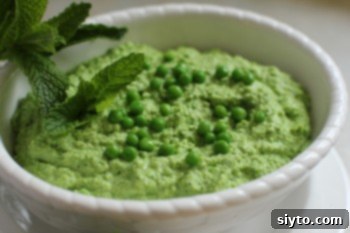
- Serve and Garnish: Spoon the minted green pea hummus into a serving bowl. For an appealing presentation, garnish with a few whole peas and a fresh sprig of mint. Serve immediately with a selection of crispy tortilla chips, warm toasted pita triangles, or an array of fresh vegetable sticks like carrots, celery, and bell peppers for dipping.
This recipe yields approximately 2½ cups of delicious hummus, perfect for sharing or enjoying in its various forms.
* * * * *
Don’t let any of this delicious creation go to waste! Use the delightful leftovers to effortlessly make:
Creative Leftovers: Green Pea Tartines
Transform your leftover green pea hummus into elegant and satisfying tartines, perfect for a light lunch or sophisticated appetizer.
- Leftover green pea hummus
- Rustic bread slices (opt for a hearty sourdough or multigrain; gluten-free if necessary), lightly toasted to a golden crisp.
- Suggested Toppings (mix and match for endless variations):
- Sliced boiled eggs for a protein boost
- Delicate smoked salmon or thinly sliced smoked trout
- Shaved ham or prosciutto for a savory touch
- Thinly sliced cucumber for freshness and crunch
- Vibrant, thinly sliced radishes for a peppery bite
- Roasted red peppers or sun-dried tomatoes
- Fresh avocado slices
- Crumbled goat cheese or feta
- Suggested Garnishes (to add flavor and visual appeal):
- Finely chopped or thinly sliced red onion
- Crumbled feta cheese (adds a salty tang)
- Fresh mint leaves or delicate dill sprigs
- A generous grind of fresh black pepper
- Thin strips of red or yellow bell peppers for color
- Sliced pickled peppers for a zesty kick
- A scattering of cooked green peas for texture
- A drizzle of your finest olive oil
Let your culinary imagination run wild! The beauty of these tartines is that almost anything tastes fantastic piled high on that delectable green pea hummus. Experiment with different flavor combinations to discover your favorites.
* * * * *
Kitchen Frau Notes: If you’re looking for an alternative to shrimp, about 2 cups of diced cooked ham makes a fantastic substitute. Just remember, if you’re using ham, don’t salt the water when cooking the pasta to avoid excessive saltiness. A sprinkle of crumbled feta cheese makes a wonderful garnish when using shrimp, adding a pleasant salty counterpoint. However, it might be too salty if added on top of the ham.
Quick & Divine: Green Pea Pasta and Shrimp
This recipe transforms leftover green pea hummus into a creamy, flavorful pasta sauce, creating a quick and elegant meal that’s perfect for a busy weeknight.
- 1 lb (454gms) spiral-shaped pasta (fusilli, rotini, or cavatappi work wonderfully for catching the sauce; gluten-free if necessary)
- 1 tablespoon olive oil
- 1 medium onion, finely chopped
- 1 lb (450gms) fresh or frozen shrimp, raw or precooked (peeled and deveined)
- ½ cup fresh or frozen small sweet peas (petits pois are ideal)
- 1 cup (240ml) chicken stock (or vegetable stock for a vegetarian option)
- 1 to 1½ cups (240-360ml) leftover green pea hummus, depending on desired creaminess
Instructions:
- Cook the Pasta: Bring a large pot of lightly salted water to a boil. Add the pasta and cook according to package directions until it reaches a perfect al dente texture. Drain thoroughly, reserving about ½ cup of the pasta water, though you might not need it if the hummus and stock create enough sauce.
- Sauté Aromatics and Shrimp: While the pasta is cooking, heat the olive oil in a large skillet or deep pan over medium heat. Add the chopped onion and sauté for about 5 minutes, until it becomes translucent and softened.
- Add Shrimp and Peas: Stir in the shrimp. If using raw shrimp, cook until they turn just pink and opaque, which typically takes about 3-5 minutes. If using precooked shrimp, simply heat them through for a minute or two. If using fresh peas, add them at the same time as the shrimp. If using frozen peas, they will be added later with the stock.
- Form the Sauce: Pour in the chicken stock. If using frozen peas, add them now. Bring the mixture just to a boil, then reduce the heat to low. Stir in the leftover green pea hummus, mixing until it is smoothly incorporated and warmed through. Do not let it boil vigorously once the hummus is added, as this can alter its texture.
- Combine and Serve: Add the drained cooked pasta to the skillet with the sauce. Toss everything quickly and thoroughly, ensuring the pasta is evenly coated with the vibrant green pea sauce. If the sauce seems a little too thick, add a splash of the reserved pasta water to reach your desired consistency.
- Garnish: Garnish generously with freshly chopped mint, if desired, to enhance the fresh flavors. Serve immediately and enjoy this quick, flavorful, and incredibly satisfying meal.
This delightful dish serves approximately 5 people, making it perfect for a family dinner or entertaining guests.