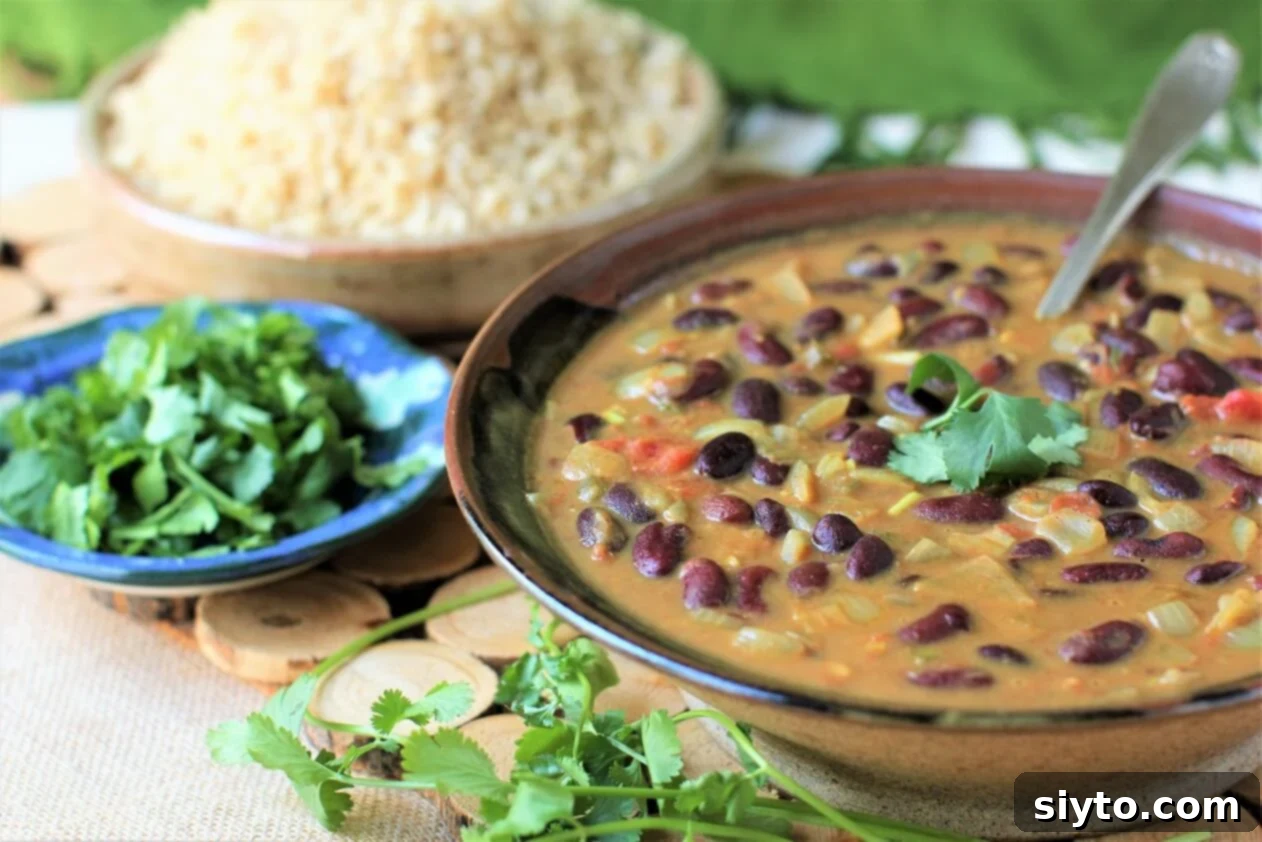
Authentic Kenyan Maharagwe Recipe: Creamy Coconut Red Beans with Ugali
Experience the rich, vibrant flavors of Kenya with Maharagwe, a truly exquisite bean dish that will transport your taste buds to East Africa. Buttery red beans are lovingly simmered in a luscious, spice-infused broth of creamy coconut milk and ripe tomatoes, creating a harmonious blend of sweet, savory, and subtly spicy notes. This delightful, saucy bean stew is a staple in Kenyan homes, often served alongside fluffy rice, various flatbreads, or the beloved national accompaniment, ugali. With most ingredients being pantry staples, you can whip up an incredible Maharagwe dinner in under an hour, making it perfect for a weeknight meal or a special culinary adventure.
Embark on a Culinary Journey to Kenya with Maharagwe
This month, our “Eat the World” recipe challenge takes us on an unforgettable culinary journey to the magnificent continent of Africa. Picture this: the rhythmic beat of jungle drums echoes in the distance as you settle down to a comforting meal of Maharagwe, a dish so exquisitely rich and creamy, bursting with aromatic spices. Imagine it generously ladled over a generous portion of Kenya’s revered staple, ugali. In your mind’s eye, a family of graceful giraffes flutters around a colossal acacia tree, delicately nibbling at the highest, most tender branches. Nearby, a herd of zebras quenches its thirst lazily at a waterhole, while the golden sun dips below the horizon in this breathtaking safari paradise.
Then, you open your eyes. You’re back at your kitchen table, a sink full of dishes grounding you in reality. The only ‘wildlife’ is your furry companion, making delightful ‘nose art’ against the window. Yet, right there in front of you, is this fantastic bowl of Kenyan beans. With a single spoonful, you can close your eyes again and be instantly transported back to that magical, culinary dreamscape, savoring every last bite.
Discovering Kenya: Land of Diverse Landscapes and Rich Cuisine
Kenya, a jewel on the east coast of Africa, is strategically located halfway down the continent, straddling the equator. It’s a country renowned for its breathtakingly diverse landscapes, ranging from pristine white-sand beaches along its coastline to the cooler, expansive savannah grasslands of its interior. Home to over 45 national parks and reserves, Kenya offers unparalleled safari experiences, where you can witness an abundance of majestic wild animals in their natural habitat. Beyond its natural wonders, you can explore bustling metropolitan cities like the capital, Nairobi, which pulsates with modern African energy. And looking south, the awe-inspiring, snow-capped peak of Mount Kilimanjaro in neighboring Tanzania provides a stunning backdrop, completing a truly unforgettable vista.
The traditional food of Kenya is as wonderfully diverse as its myriad tribes, varied landscapes, and the rich tapestry of cultural influences woven by different nationalities who have settled this land throughout its long and storied history. However, one culinary constant reigns supreme: Ugali. This thick-cooked cornmeal mush is unequivocally the most commonly eaten food, serving as a thrifty, filling, and beloved side dish for both lunch and dinner. It acts as the perfect accompaniment to hearty stews and saucy meals, soaking up every drop of deliciousness. Among the many dishes served with ugali, Maharagwe stands out as a particular favorite. This delightful stew features tender red beans and sautéed onions simmered in a velvety, luxurious sauce made from rich coconut milk. Tomatoes add just the right touch of acidity, balancing the richness, while a blend of aromatic spices elevates this seemingly simple bean stew into a culinary experience you’ll savor and remember long after the last bite.
Crafting the Perfect Maharagwe: A Blend of Tradition and Personal Touch
During my research into this beloved Kenyan dish, I encountered a fascinating array of Maharagwe variations. Some recipes were incredibly simple, featuring minimal spice, while others incorporated additional vegetables or even a touch of sweetness from sugar. My aim was to capture the essence of this traditional dish, so I’ve taken the core elements common to almost all versions – the beans, onions, coconut milk, and tomatoes – and combined them with the most frequently used spices to offer you a rendition that is as authentic as possible. Remember, Maharagwe, which simply means “beans” in Swahili, is often a reflection of the cook’s individual touch.
Don’t fret if your spice cabinet isn’t fully stocked with every single spice listed. While a blend of mild curry powder, cumin, turmeric, cardamom, and coriander creates a wonderful depth of flavor, you don’t need to rush out and buy them all. Feel free to use whichever spices you have on hand; the beauty of home cooking, especially with traditional recipes like Maharagwe, lies in its adaptability. Every Kenyan cook prepares her Maharagwe with a slightly unique twist. However, the essential foundation of this dish remains consistent: always use beans, onions, rich coconut milk, and fresh or canned tomatoes as your base. These ingredients form the heart of the stew, around which you can build your own delicious symphony of flavors.
Serving Maharagwe: The Perfect Accompaniments
Maharagwe is incredibly versatile when it comes to serving. It pairs beautifully with a bowl of perfectly cooked rice, any variety of your favorite flatbreads, or, for the most authentic experience, with the traditional cornmeal staple, Ugali. To prepare ugali, fine cornmeal is cooked until it forms a very thick, firm mush, which is then typically shaped into small balls or a large disk before being cut into slices or wedges. While white cornmeal is traditionally used in Kenya, white cornmeal can be a little harder to find in North America. The readily available yellow cornmeal works just as well and tastes identical; the only difference is its golden hue, derived from yellow corn rather than white. So, don’t hesitate to use whatever cornmeal you can most easily find to make your ugali.
I genuinely can’t decide if I prefer Maharagwe with rice or with ugali – both offer such a unique and satisfying experience. And I haven’t even had the chance to try it with flatbread yet, which I’m sure would be equally delightful! This comforting and exquisitely flavorful dish has quickly become a firm favorite in our household, and I can assure you it will be gracing our dinner table often from now on. I wholeheartedly encourage you to prepare it and taste for yourself just how fantastic it truly is – it’s so much more than its simple appearance and humble ingredients would suggest. Keeping canned beans, diced tomatoes, and coconut milk stocked in your pantry means whipping up a pot of Maharagwe is an effortless pantry meal. It’s wonderfully quick to prepare, allowing you to come home from work and have a delicious, nourishing, and deeply satisfying dinner on the table in no time at all.
I’m heading back to enjoy another bowl of these incredible Kenyan beans, closing my eyes to imagine I’m once again beneath that majestic acacia tree, watching the giraffes. Won’t you come and join me on this delightful culinary escape?
* * * * *
Essential Tips for Cooking Perfect Maharagwe
Kitchen Frau Notes: This delectable dish comes together remarkably quickly, in under 30 minutes, especially when you opt for convenient canned beans. However, if you prefer to cook your own beans from scratch, a helpful tip is to prepare them a day ahead or in the morning. Allowing them to cool in their cooking liquid helps prevent the skins from splitting, ensuring beautifully intact beans for your stew.
For a more economical approach than buying canned beans, consider cooking a large batch of raw beans and freezing them for future use. You can measure out the precise amount of cooked and drained beans needed for this recipe and freeze them in freezer bags. Alternatively, to ensure they defrost faster and prevent clumping, spread the measured beans in a single layer on parchment-lined cookie sheets and freeze them individually before transferring them to freezer bags.
Spice Customization: While the blend of spices (curry powder, cumin, turmeric, cardamom, coriander) creates a wonderfully authentic flavor, don’t hesitate to adjust based on what you have. If you don’t have cardamom or coriander, you can certainly omit one or both; some traditional recipes are indeed very simple, without these extra spices. The core flavor profile of beans, coconut milk, and tomato will still shine through beautifully.
Adjusting the Heat Level: The heat in Maharagwe is entirely customizable to your preference. I find that one seedless jalapeño pepper, combined with an additional pinch of cayenne pepper, provides just the right amount of warmth for our tastes. For those who enjoy a spicier kick, you can always pass extra cayenne pepper or dried chili flakes at the table, allowing everyone to season their dish to their liking.
Maharagwe (Kenyan Red Beans with Tomato and Coconut Milk) Recipe
This rich and creamy stew is naturally gluten-free, dairy-free, vegetarian, and vegan.
Ingredients:
- 4½ cups cooked red kidney beans or other red beans (this equals approximately 350 grams or 1½ cups raw beans, soaked and cooked until tender; or two 19 oz/540 gram cans of beans; or three 14 oz/400 gram cans of beans). *See below for detailed instructions on how to cook raw beans.
- 2 tablespoons oil (peanut oil is often used for an authentic flavor, but any neutral oil works well)
- 2 medium onions, finely chopped (yielding about 2 to 2½ cups)
- 1 jalapeño or other hot pepper, seeded and minced (leave seeds in if you prefer a spicier dish), or ¼ to ½ teaspoon ground cayenne pepper, adjusted to your taste preference
- 2 cloves garlic, minced
- 1 teaspoon mild curry powder
- ½ teaspoon ground cumin
- ½ teaspoon ground turmeric
- ½ teaspoon ground cardamom
- ½ teaspoon ground coriander
- 1 teaspoon salt, plus additional to taste (you may need more if using home-cooked beans that weren’t salted during cooking)
- 1 can (14 oz/400ml) diced tomatoes (or 2 cups diced fresh, ripe tomatoes)
- 1 can (14oz/400ml) full-fat premium coconut milk (avoid ‘light’ versions for the best creamy texture)
- Freshly chopped cilantro for garnish (optional, but highly recommended for freshness)
- Cooked rice, various flatbreads, or ugali (see recipe below) as a perfect accompaniment to the beans
Instructions:
*To cook raw beans (if not using canned):
- Carefully pick over the raw beans to remove any small bits of rock or broken beans.
- Place the beans in a large bowl and cover them with about two inches of water. Allow them to soak for 6 to 8 hours, or even longer (overnight is ideal).
- Once soaked, drain the soaking water completely. Transfer the beans to a large saucepan and cover them again with two inches of fresh water.
- Cook the beans for 1 to 2 hours, or until they are tender and soft throughout. The exact cooking time will vary depending on the age and size of your beans.
- To prevent the skins from splitting, allow the cooked beans to cool completely in their cooking liquid before draining. Then, drain thoroughly.
If using canned beans: simply drain and rinse them well before proceeding with the recipe.
To make the Maharagwe:
- Heat the oil in a large, heavy-bottomed pot or skillet over medium heat.
- Add the diced onions and the minced hot pepper (jalapeño or cayenne) to the pot. Sauté for about five minutes, stirring occasionally, until the onions become translucent and soft.
- Stir in the minced garlic, curry powder, cumin, turmeric, cardamom, coriander, and the initial teaspoon of salt. Cook for one minute more, stirring constantly, to allow the spices to bloom and release their aromas.
- Add the drained cooked beans to the onion and spice mixture. Pour in the diced tomatoes (along with their juices) and the full-fat coconut milk.
- Bring the mixture to a gentle boil, then reduce the heat to low. Simmer the Maharagwe, uncovered, for about 15 minutes, allowing the coconut milk to thicken slightly and the flavors to meld beautifully. The sauce level should just cover the beans. If the sauce appears too thick or there isn’t enough liquid, add a small amount of water (¼ to ½ cup) and cook for another minute or two.
- Taste the Maharagwe and adjust seasoning as needed. Add more salt if it requires it, or an extra pinch of cayenne pepper if you desire more heat. Remember that the sauce will continue to thicken slightly as it cools.
- Serve the Maharagwe hot, garnished with fresh chopped cilantro if desired. It pairs perfectly with cooked rice, a traditional disk or wedges of ugali (recipe below), or with your choice of flatbreads such as naan, pita, chapati, roti, or even tortillas, which are excellent for scooping up the rich, flavorful beans.
Serves 4 to 5 people generously, yielding approximately 7 cups of delicious Maharagwe.
* * * * *
Ugali (Kenyan Cornmeal Staple) Recipe
While traditionally made with white cornmeal in Kenya, yellow cornmeal is a perfectly acceptable and delicious substitute, especially if white is hard to find. The taste remains the same, only the color differs!
Ingredients:
- 4 cups (960 ml) water
- ½ to 1 teaspoon salt (adjust to your preference)
- 2 cups (approximately 350 grams) fine cornmeal (white is traditional, but yellow works just as well and is more commonly available in many regions)
Instructions:
- In a large, heavy-bottomed saucepan, bring the water and salt to a rolling boil over high heat.
- Once boiling, slowly pour the cornmeal into the boiling water in a steady stream with one hand, while continuously stirring vigorously with a sturdy wooden spoon or whisk in your other hand. This constant stirring is crucial to prevent lumps from forming.
- Continue stirring, smashing any small lumps that do appear against the side of the pot with your spoon, as the mixture will thicken very quickly.
- Once thickened, reduce the heat to medium and continue to stir and cook the mixture for about 5 minutes, until it forms a very thick, cohesive ball.
- Turn the heat down to low, cover the saucepan, and allow the ugali to cook for another 10 minutes, stirring occasionally to prevent sticking and ensure even cooking.
- Once cooked, scrape the entire mass of hot ugali onto a clean plate. Quickly shape it into a thick, firm disk using a silicone spatula or a damp spoon.
- Cut the ugali disk into slices or wedges and serve it immediately with your warm Maharagwe.
Alternatively for individual portions: You can also use an ice cream scoop to portion out small balls of ugali and arrange them on a plate, ensuring they don’t touch each other, for easier individual servings.
{For a truly traditional Kenyan eating experience: Place the entire plate of ugali in the center of the table. Guests then pinch off small balls of ugali, using their thumb to create an indent in the center of the ball. This small depression acts as a perfect scoop for the rich Maharagwe, allowing you to enjoy your meal without the need for cutlery! It’s a wonderfully communal and hands-on way to dine. 🙂 }
Serves 4 to 5.
Guten Appetit! (Enjoy your meal!)
Explore more global flavors by checking out all the wonderful Kenyan dishes prepared by fellow Eat the World members and share your culinary adventures with #eattheworld. Click here to find out how to join our exciting challenge and have fun exploring a new country’s cuisine each month in your kitchen!
Here are some other fantastic Kenyan recipes from the “Eat the World” challenge:
- Wendy: Kenyan Pilau
- Camilla: Kuku Paka + Irio
- Tara: Chapati Za Ngozi (Kenyan Soft-Layered Chapati)
- Margaret: Maharagwe & Ugali (Red Beans in Creamy Coconut Sauce with Cornmeal Slices)
- Amy: Crunchy N’Dizi
- Heather: Irio
- Juli: Nyama Choma
- Loreto and Nicoletta: Mango Ice Cream with Pineapple Rum Sauce (Coupe Mount Kenya)
- Evelyne: Uji, a Kenyan Fermented Porridge
* * * * *
Sign up here to receive exciting new Kitchen Frau recipes directly to your email inbox, and get a handy and useful kitchen tip with each delicious recipe.
If you enjoy my culinary creations, make sure to follow me on Instagram, Pinterest, Twitter, and Facebook. Your support truly makes my day!
Don’t forget to PIN IT to save this incredible recipe for later:
Explore More “Eat the World” Recipe Challenge Posts from Around the Globe:
(In alphabetical order, discover more international culinary delights!)
- Argentina: Red Chimichurri Sauce – A vibrant, zesty sauce perfect for grilled meats.
- Australia: Anzac Biscuits (Crispy Oatmeal Cookies) – A beloved classic with a history.
- Bangladesh: Chingri Masala (Shrimp Curry) – A fragrant and flavorful shrimp curry.
- Bulgaria: Patatnik (Savoury Potato and Cheese Pie) – A rustic and comforting potato dish.
- Cambodia: Noum Kong (Cambodian Rice Flour Doughnuts) – Delightful, chewy rice flour doughnuts.
- China: Kung Pao Chicken – A spicy, savory, and sweet Chinese stir-fry classic.
- Colombia: Pan de Yuca (Warm Cheese Buns) – Irresistibly cheesy, gluten-free bread rolls.
- Egypt: Fava Beans and Feta – A simple yet satisfying Mediterranean combination.
- England: Gluten Free Fish and Chips and Mushy Peas – A British takeaway favorite, made gluten-free.
- Ethiopia: Four Ethiopian Recipes for a Fantastic Feast – Dive into a spread of rich Ethiopian flavors.
- Fiji: Spiced Sweet Potato and Banana Salad – A unique and flavorful island salad.
- Finland: Lohikeitto (Creamy Salmon, Potato, and Dill Soup) – A comforting Nordic soup.
- France: Axoa d’Espelette (A Simple Stew from the Basque Country) – A rustic and flavorful French Basque stew.
- Georgia: Charkhlis Chogi (Beets with Sour Cherry Sauce) – A vibrant and tangy beet dish.
- Greece: Moussaka – The iconic layered Greek casserole.
- Guyana: Fried Tilapia in Oil & Vinegar Sauce (fish dish) – A zesty and flavorful fish preparation.
- Hungary: Túrós Csusza (Pasta Scraps with Cottage Cheese) – A unique and comforting Hungarian pasta dish.
- India: Kerala Upma (Fluffy, Kerala Style Breakfast Upma Recipe) – A light and savory Indian breakfast.
- Iraq: Tepsi Baytinijan (Eggplant & Meatball Casserole) – A hearty and flavorful Middle Eastern casserole.
- Ireland: Dublin Coddle (A tasty Sausage and Potato Stew) – A traditional Irish comfort food.
- Israel: Cucumber, Feta, and Watermelon Salad – A refreshing and vibrant salad.
- Jamaica: Rice and Peas (Coconut Rice and Red Beans) – The quintessential Jamaican side dish.
- Japan: Chawanmushi (Steamed Savoury Egg Custard) – A delicate and elegant Japanese dish.
- Kenya:Maharagwe with Ugali (Red Beans with Cornmeal Slice) – Our very own featured Kenyan delight!
- Laos: Ping Gai (Lao Grilled Chicken Wings) – Deliciously marinated and grilled chicken wings.
- Lesotho: Chakalaka & Pap (Veggie & Bean Stew with Cornmeal Polenta) – A vibrant South African-inspired stew.
- Luxembourg: Stäerzelen (Buckwheat Dumplings) – Hearty and traditional Luxembourgish dumplings.
- Mexico: Cochinita Pibil Tacos (Pit Barbecued Pig to Make in Your Oven) – Flavorful slow-roasted Mexican pork.
- Netherlands: Boerenkool Stamppot (Kale-Potato Mash with Sausages & Pears) – A hearty Dutch winter dish.
- New Zealand: Classic Pavlova – A stunning meringue dessert, light and fruity.
- Poland: Polish Honey Cake – A delightful, spiced layer cake.
- Portugal: Tuna and Sardine Pâtés – Savory seafood spreads, perfect for appetizers.
- Puerto Rico: Piña Colada Cocktail – The iconic tropical drink.
- Scotland: Cranachan (Raspberry, Whisky & Oat Cream Parfaits) – A luxurious Scottish dessert.
- Senegal: Mafé (Beef and Peanut Stew) – A rich and comforting West African stew.
- Sudan: Peanut Butter Creamed Spinach & Peanut Meringue Cookies – Unique and intriguing Sudanese dishes.
- Sweden: Swedish Meatballs with Cream Gravy – The world-famous comfort food.
- Switzerland (Christmas): Basler Leckerli Cookies – Traditional spiced Swiss Christmas cookies.
- Thailand: Shrimp Laksa (Khung) – A fragrant and spicy Thai noodle soup.
- Trinidad & Tobago: Peanut Butter Prunes – An unexpected but delightful snack.
- Ukraine: Buckwheat Kasha with Beef – A hearty and wholesome Eastern European dish.
- United States (Soul Food): Smothered Pork Chops – A soulful and tender American classic.
- Uruguay: Torta de Fiambre (Baked Ham & Cheese Sandwiches) – A delicious, layered baked sandwich.
- Vietnam: Caramelized Pork Rice Bowls – Sweet, savory, and satisfying Vietnamese meal.