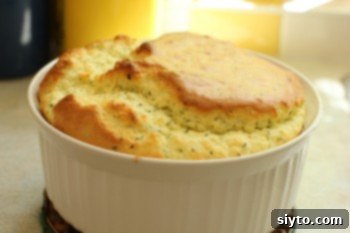
Discover Lovage: Cultivate This Versatile Herb & Master the Fluffy Cheese Soufflé
An airy, exquisitely fluffy, and richly cheesy soufflé serves as a truly delightful canvas for showcasing the remarkably versatile lovage plant. This incredible perennial herb, often likened to celery but with an intensified, more complex flavor profile, is surprisingly easy to grow and maintain in almost any garden. Its distinctive taste forms a fantastic pairing with rich cheeses, creating an unforgettable experience in a light, eggy lovage soufflé. (Jump straight to the recipe.)
Why Lovage Deserves a Spot in Your Garden
Let’s be direct: if you don’t already have a lovage plant thriving in your yard, you’re missing out on one of nature’s most rewarding culinary herbs. This isn’t just a suggestion; it’s a gentle nudge towards gardening greatness. Lovage is a hardy, resilient herb that flourishes in a vast array of conditions, making it an ideal choice for both seasoned gardeners and beginners alike. In fact, I often recommend planting it in a spot where other delicate herbs might struggle, because if it receives the full “herb-loving” treatment – rich soil, abundant sunshine, and regular watering – you might just find yourself with an impressively large specimen on your hands. And when it comes to lovage, a little truly goes a long way in terms of flavor impact.
The Distinctive Flavor and Culinary Versatility of Lovage
The flavor of lovage is simply magnificent and incredibly unique. Imagine the crisp, fresh notes of celery combined with the bright, herbaceous undertones of parsley, but then amplify that by a hundredfold, infusing it with a richer, more profound, and distinctly savory kick. It’s a flavor that demands attention and elevates any dish it graces. Once you experience it, you’ll undoubtedly want this powerhouse herb in your garden.
Its culinary applications are incredibly diverse. A few finely chopped leaves can transform a simple soup, stock, or stew, adding a complex depth and intensity that belies its humble appearance. For a delightful Scandinavian twist, incorporate some chopped lovage leaves into your next chicken salad. Consider using a generous handful of lovage stalks, complete with their aromatic leaves, to create a savory bed for a roasted chicken or beef roast; this will subtly perfume the entire dish with its wonderful essence. Alternatively, for a wonderfully moist and intensely flavorful meal, stuff a salmon with lovage before baking. It also shines when finely chopped into an egg salad, scrambled eggs, or a fresh green salad, providing an unexpected burst of herbaceous goodness. And, of course, there’s the heavenly soufflé recipe featured at the conclusion of this article, which truly highlights its potential.
Lovage Across Cultures: A European Culinary Secret
Lovage is a highly regarded and extensively used herb in traditional European cooking, yet it remains relatively unknown to many in North America. Its rich history and widespread use across the continent speak volumes about its culinary value. In Germany, it’s endearingly called Liebstöckel, which charmingly translates to “little love stick,” a testament to its cherished status. It’s also known as Maggikraut, or “Maggi herb,” a name derived from its striking flavor resemblance to the popular Maggi brand seasoning. This seasoning, a staple in many European kitchens, was a constant in my own mother’s cooking, used to impart deep, savory notes to countless soups and stews. This cultural connection underscores its powerful, umami-rich character.
Beyond its flavor, lovage is a gardener’s dream. It grows effortlessly in a variety of conditions and is a true perennial, meaning it will thrive year after year in the same spot with minimal care. Its vibrant, leafy greenness is so attractive that it wouldn’t look out of place even in a formal flower bed. However, be mindful of its size; plant it towards the back, as in optimal growing conditions, it can reach an impressive height of up to 2 meters (6 feet). Every year, usually by July, my husband Andreas embraces the task of “hacking” our robust lovage plant back down to a more manageable size with a machete. Despite this vigorous pruning, it still regrows to approximately 1 meter (3 feet) by the end of the summer, even in our Zone 3 climate here in the Edmonton area of northern Alberta, Canada. This demonstrates its incredible resilience and vigorous growth habit.
Cultivating and Preserving Your Own Lovage
My own lovage plant has flourished in the same spot for many years, gradually expanding its footprint each season. It develops a tough, woody root system, much like a rhubarb plant, allowing it to withstand harsh conditions. My mother has a lovage plant growing wild at their cabin in northern British Columbia, directly in the grass, and it consistently survives the region’s notoriously tough winters. While hers only reaches about half the height of mine, it still provides an abundant supply of leaves perfect for cooking.
I wholeheartedly encourage you to carve out a space in your garden for a lovage plant. You’ll be richly rewarded with an exceptionally easy-care herb that will effortlessly flavor your meals for many years to come. You can typically find young lovage plants at reputable greenhouses during the spring season. Alternatively, if you know someone who already cultivates this wonderful herb, don’t hesitate to “beg” a piece off them – it propagates quite readily. While patience allows you to start your own from seeds, given that you’ll realistically only need one plant for personal use, purchasing a young plant or obtaining a cutting is often the most straightforward approach.
For year-round enjoyment, I make it a point to dry the leaves every fall. The process is simple: just lay them in a single layer on cookie sheets and leave them in a warm, dry place until they are completely brittle. Once dried, crumble them into an airtight jar. These preserved leaves perform admirably throughout the winter months, continuing to impart their unique, savory flavor to cooked dishes, ensuring that even in the coldest season, the taste of summer is always within reach.
I’ve been utterly thrilled to witness my lovage plant shoot forth from the earth this spring. The vibrant green shoots are always one of the first signs of the gardening season for me, and I could hardly wait for it to grow large enough to pinch off a few tender leaves. While my rhubarb is still too young for harvest, my beloved lovage is here and ready! This annual emergence fills me with anticipation; it truly is the first garden signal that summer is joyfully on its way.
I love, love, love my lovage plant. And with just one spoonful of this soft, fluffy, melt-in-your-mouth soufflé, I’m confident you’ll fall in love with lovage, too.
* * * * *
Mastering the Lovage Cheese Soufflé: Tips for Success
Kitchen Frau Notes: The flavor of fresh lovage is notably intense, though it does mellow beautifully during the cooking process. Therefore, it’s always wise to begin with a smaller quantity and adjust by adding more to taste, ensuring you achieve the perfect balance without overpowering your dish.
For the best results, I highly recommend using an aged, sharp cheddar cheese. Its robust flavor truly complements the unique notes of lovage. However, if sharp cheddar isn’t available, a good quality medium cheddar will also yield delicious results. The key is to opt for natural cheese and avoid artificially orange-colored varieties, as these often lack the depth of flavor needed. If you find yourself using a very mild cheese, you might need to introduce a small pinch of salt to the recipe. Conversely, if you’re using an aged or sharp cheddar, you’ll likely find that no additional salt is necessary, as these cheeses are naturally quite salty, and lovage itself has a remarkable ability to enhance the inherent saltiness in foods.
Don’t let the word “soufflé” intimidate you! While soufflés often carry a reputation for being finicky, this particular recipe is remarkably foolproof and forgiving. I’ve often successfully doubled the recipe and baked it in a larger 9×13 inch casserole pan, and it still turns out wonderfully airy and delicious. Every last morsel is always eagerly devoured. Like all soufflés, it is undeniably at its peak when served immediately, fresh from the oven, offering that iconic rise and delicate texture. However, even if it settles a bit after cooling, rest assured that its flavor remains absolutely fantastic.
Wingin’ It: And if you don’t happen to have a lovage plant in your garden yet – a situation I strongly encourage you to remedy! – you can still create a delightful cheese soufflé. Simply substitute the lovage with a mixture of other fresh herbs you might have on hand. Even finely chopped green onions can work wonders, though you’ll miss that distinctive, unparalleled lovage flavor. What you will achieve, however, is a very tasty cheese soufflé. In this case, remember to add about ¼ teaspoon of salt, as the other herbs won’t naturally bring out the saltiness in the cheese in the same way lovage does.
Irresistible Lovage Cheese Soufflé
adapted slightly from Summer Delights, Growing and Cooking Fresh Herbs, by Noël Richardson
Ingredients:
- 3 tablespoons unsalted butter
- 4 tablespoons sweet rice flour or 3 tablespoons all-purpose flour
- 1 cup (240ml) fresh milk
- ¼ teaspoon dry mustard powder
- ¼ teaspoon hot pepper sauce or ⅛ teaspoon cayenne pepper
- 4 tablespoons (¼ cup) finely chopped fresh lovage leaves
- 1 cup (110gms) grated aged, sharp cheddar cheese
- 5 large eggs, separated
Instructions:
- Preheat your oven to 375° F (190° C). Generously butter a 1½ quart soufflé dish or a comparable casserole dish, ensuring good coverage to help the soufflé rise.
Over medium heat, melt the butter in a large, heavy-bottomed saucepan. Once melted, stir in the flour, whisking continuously until it is fully incorporated into the butter and begins to bubble gently, forming a smooth roux.
- Gradually pour in the milk, adding about ¼ of it at a time. Whisk thoroughly after each addition until the mixture is completely smooth and free of lumps.
- Stir in the dry mustard, hot pepper sauce (or cayenne pepper), and the finely chopped lovage leaves. Continue to cook for another 2 to 3 minutes, whisking constantly to prevent sticking and ensure the flavors meld.
- Add the shredded cheddar cheese to the sauce. Whisk until the cheese is completely melted and the sauce is smooth and creamy.
- Remove the saucepan from the heat. Immediately add the 5 egg yolks, whisking them in vigorously until they are fully incorporated and the mixture is uniform. Set this base aside.
In a separate, clean bowl, beat the 5 egg whites until they form stiff peaks. They should hold their shape when the whisk is removed.
- Carefully add about ¼ of the beaten egg whites to the cheese sauce mixture and stir them in lightly. This step helps to lighten the base and make it easier to fold in the remaining whites.
Gently fold in the rest of the beaten whites. Use a spatula to carefully incorporate them, cutting through the mixture and folding it over, until there are no visible lumps of egg white larger than a pea. Be careful not to overmix, as you want to preserve as much air as possible to ensure a light and fluffy soufflé.
Pour the prepared soufflé mixture into the buttered soufflé dish.
- Bake for 35 minutes without opening the oven door, as this can cause the soufflé to fall. The soufflé should be gloriously puffed and golden brown on top.
Serve immediately, using a large serving spoon to scoop out individual portions, savoring its delicate texture and rich flavor.
Serves 4 generously.
This exquisite soufflé makes for a perfect light lunch when paired with a fresh salad, or it can serve as an elegant and flavorful side dish for dinner.
Guten Appetit! Enjoy your meal!
Want to receive new Kitchen Frau recipes directly to your email? Sign up here and you’ll get a handy and useful kitchen tip along with each recipe, too. (No spam ever.)
If you like my recipes, follow me on Instagram, Pinterest, Twitter, and Facebook. You’d make my day!
You might want to serve it with these delicious accompaniments:
Quinoa Crunch Salad
Chili-Lime Jicama Salad
German Potato Salad
Purple Salad
Fennel and Beet Salad