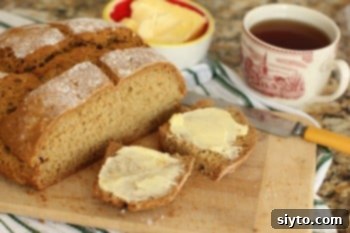
Gluten-Free Irish Soda Bread: Bake a Taste of Ireland & Journey Through the Emerald Isle
Discover the warmth of Irish hospitality and culinary tradition with our gluten-free take on classic Irish Soda Bread. Perfect for St. Patrick’s Day celebrations, or simply to bring a touch of the Emerald Isle to your table any day of the year. (Jump straight to the recipe.)
There’s a certain enchantment that surrounds March 17th, St. Patrick’s Day, inspiring many of us to wish for even “a wee bit of Irish” in our heritage. Imagine being part of a vibrant culture that conjures images of mischievous leprechauns and iconic shamrocks, the energetic steps of Riverdance and lively jigs, the breathtaking beauty of misty green glens, and the stoic grandeur of moss-covered ancient castles. And, of course, a culture renowned for its hearty Irish bread, rich cheeses, smooth whiskey, the charming gift of blarney, and witty limericks. It’s a land brimming with character, history, and an infectious spirit.
An Enduring Fascination with Ireland
My fascination with Ireland began in childhood, fueled by countless hours lost in books that transported me to distant lands. Ireland, with its rich folklore and stunning landscapes, always held a special place in my imagination. This pull grew even stronger when I discovered that my husband Raymond’s family has a significant Irish lineage, meaning our children proudly carry a piece of Ireland within them. The desire to visit this spectacularly beautiful country became an undeniable yearning, a dream I cherished for many years.
My dream finally came true five years ago when I had the incredible opportunity to spend a month exploring the British Isles. During this time, I visited our daughter Olivia, who was living in Ireland for a year as a nanny to three young children. It was the perfect excuse to immerse myself in Irish culture and experience the country firsthand.
Dublin and the East Coast: A Warm Welcome
Based in Dún Laoghaire (pronounced Dun Leary, a delightful lesson in the wonderful and sometimes confusing nuances of the Irish language), Olivia and I embarked on numerous walks, exploring her local haunts. On my very first day, I took a long, invigorating walk along the sea wall overlooking Dublin Bay, inhaling deep breaths of the fresh, crisp sea air. The coastal scenery, with its expansive views and the distant outline of Howth Island, was simply mesmerizing and set the tone for a truly unforgettable trip.
Our explorations also took us to the breathtaking Powerscourt Estate, a grand testament to Irish heritage. Originally a 13th-century castle, the estate now boasts spectacular gardens that we delighted in strolling through, admiring the meticulous landscaping and serene beauty of the grounds. It’s a place where history and nature intertwine seamlessly.
Across the Island: From East to West
A memorable bus journey took us across the heart of Ireland, from the bustling east coast to the wilder west. The landscape unfolded before us, a tapestry of ancient castles, thriving farms, and quaint villages, each telling a story of this ancient land. Our destination was the rugged beauty of County Clare, on the west coast, where we spent several days exploring.
Our first stop on the west was Galway, a city renowned for its bohemian charm and coastal allure. The streets, paved with cobblestones, weave through buildings brimming with character, while the invigorating sea air sweeps breezily through the town. We found respite in the traditional pubs, with their cozy, dim lighting, thick old wooden beams, and sturdy tables. Galway is particularly famous for its remarkably fresh oysters, harvested directly from its bay – a culinary delight not to be missed.
From Galway, we ventured south to The Burren, a truly unique geological landscape. This desolate yet captivating region is characterized by rolling hills of grey limestone, intricately paved with deep cracks and scattered boulders. It’s an almost lunar landscape, yet surprisingly rich in unique flora and ancient archaeological sites, a stark contrast to the lush green of other parts of Ireland.
Our journey continued to the awe-inspiring Cliffs of Moher, one of Ireland’s most iconic natural wonders. Standing on these dramatic heights, gazing out at the vast expanse of the Atlantic Ocean crashing against sheer rock faces, is an experience that humbles and exhilarates. A word of caution: always walk carefully near the edges to fully appreciate their majestic beauty safely.
Dublin Revisited: City Charms and Coastal Walks
After our adventure out west, we returned to Dún Laoghaire, using it as a base for day trips on the speedy Dart train. This allowed us to effortlessly explore Dublin’s bustling shops, discover cozy little restaurants, and admire the city’s many lovely sights. Dublin’s vibrant energy and historic charm truly make it a city that captures the heart.
We also took the opportunity to explore the stunning natural beauty surrounding the city. A highlight was climbing to the top of Bray Head, in the coastal town of Bray. From its summit, we were rewarded with spectacular panoramic views of the vast ocean stretching to the horizon and the verdant Irish countryside unfurling below – a truly invigorating experience.
One particularly poignant day, I embarked on a solo trip to Glendalough in County Wicklow, to visit the ancient ruined monastery. Set amidst two serene lakes and surrounded by mountains, these ruins exude a profound sense of history and spirituality. The tranquility of the valley and the palpable presence of centuries past made it an incredibly moving experience.
St. Patrick’s Day in Dublin: A Celebration Like No Other
The timing of my unforgettable Irish adventure could not have been more perfect – I was fortunate enough to be in Dublin for St. Patrick’s Day! If you ever wish to witness an entire city transformed into a sea of green-bedecked revelers, all thronging the streets to witness the magnificent St. Patrick’s Day parade, then Dublin is undeniably the place to be. The festive atmosphere is palpable, and a joyful Irish spirit swirls from person to person, old and young alike, metamorphosing the entire city into one colossal, enchanting leprechaun party.
Music, dancing, singing, and laughter weave through the jubilant crowds, creating an intoxicating atmosphere. The merriment, fueled by the free-flowing Guinness, lasts long into the evening as revelers pack shoulder-to-shoulder into every pub across Ireland. It’s an unparalleled display of national pride and joyous celebration.
Indeed, St. Patrick’s Day is celebrated with unmatched gusto and infectious abandon in its country of origin, a truly unforgettable cultural experience.
Bake Your Own Piece of Ireland: Gluten-Free Irish Soda Bread
Inspired by these cherished memories and the rich culinary traditions of Ireland, I’m thrilled to share a recipe for a little taste of the Emerald Isle that everyone can enjoy: a delicious Gluten-Free Irish Soda Bread. This hearty, rustic bread is simple to make and perfect for slathering with butter. Enjoy a generous slice on St. Paddy’s Day, or any day you crave a comforting treat. Who knows, perhaps a little leprechaun will grant you a wish when you do!
* * * * *
Kitchen Frau Notes: Crafting a gluten-free version of traditional Irish Soda Bread requires a careful selection of flours to achieve the perfect texture and flavor. This recipe uses a blend of gluten-free oat flour, sorghum flour, potato starch, and sweet rice flour to mimic the properties of conventional wheat flour. Sweet rice flour, often called ‘Mochiko’, is derived from glutinous rice – despite its name, it contains no gluten but is prized for its sticky, binding qualities, which are essential in gluten-free baking. Potato starch, distinct from potato flour, provides a light, airy crumb. Xanthan gum acts as a crucial binder, replicating gluten’s elasticity and structure.
For those following a vegan diet, this recipe is wonderfully adaptable. Simply substitute the egg with a chia egg (mix 1 tablespoon ground chia seeds with ¼ cup water and let soak for 5 minutes). Replace dairy butter with melted coconut oil and honey with raw agave nectar. For the wet ingredients, use a vegan yogurt and your preferred plant-based milk instead of dairy products. I’ve personally made these substitutions, and the bread turns out beautifully, maintaining its delightful texture and taste.
Gluten Free Irish Soda Bread Recipe
Ingredients:
- 2 cups (210gms) gluten-free oat flour
- ½ cup (60gms) sorghum flour
- ½ cup + 2 tablespoons (100gms) potato starch (ensure it’s starch, not potato flour)
- ½ cup (80gms) sweet rice flour
- 1½ teaspoons baking soda
- 1 teaspoon xanthan gum
- 1 teaspoon salt
- 1 large egg (or 1 chia egg for vegan)
- 2 tablespoons melted butter (or melted coconut oil for vegan)
- 1 tablespoon honey (or raw agave nectar for vegan)
- 1 cup (240ml) natural yogurt (or vegan yogurt)
- ⅔ cup (160ml) milk (or plant-based milk)
- Optional add-ins: 2 teaspoons caraway seeds or ½ cup dried currants for a traditional touch.
Instructions:
- Preheat your oven to 400°F (200°C). Lightly grease a 7-inch or 8-inch (18-20cm) round cake pan.
- In a large mixing bowl, thoroughly combine all the dry ingredients: gluten-free oat flour, sorghum flour, potato starch, sweet rice flour, baking soda, xanthan gum, and salt. If using caraway seeds or currants, stir them in now.
- In a separate bowl, lightly beat the egg. Then, add the melted butter (or coconut oil), honey (or agave nectar), natural yogurt (or vegan yogurt), and milk (or plant-based milk). Whisk these wet ingredients together until well combined.
- Pour the wet mixture into the dry ingredients. Stir gently until all ingredients are just combined and no dry streaks of flour remain. The dough should be soft and quite sticky, but firm enough to be shaped into a rough ball using a silicone spatula. If the dough feels overly soft or too wet, add an additional tablespoon or two of potato starch until it reaches a manageable consistency.
- Lightly wet your hands to prevent sticking. Carefully lift the dough ball out of the bowl and gently shape it into a smooth, round 7-inch (18cm) ball. Place it into your prepared cake pan. Use your wet fingers to smooth out any uneven spots on the surface.
- Dust the top of the loaf lightly with a pinch of potato starch. Then, using a sharp knife, carefully cut a shallow cross shape into the top of the dough. This traditional cross is not just decorative; it’s believed to help the bread bake evenly and allows wishes to escape!
- Bake for 50 to 60 minutes. The bread is ready when it has a rich golden-brown crust and sounds hollow when tapped gently on the bottom.
- Once baked, remove the bread from the oven and carefully transfer it to a wire rack. Allow it to cool completely before slicing. This helps the crumb set and prevents it from becoming gummy.
This recipe yields one delicious 8-inch round loaf of gluten-free Irish Soda Bread, perfect for sharing with family and friends, especially with a generous spread of butter or jam!
Guten Appetit!
You might also enjoy these related recipes (please excuse the quality of these older posts – I’ve learned a lot since then!):
Irish Cheese Toasties
A Rainy Day and Bread