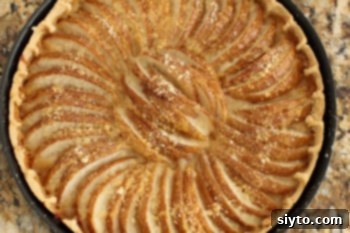
Irresistible Ginger Pear Tart: An Easy Recipe for a Luscious, Flavorful Dessert (Gluten-Free Option Included)
Discover the magic of perfectly soft, juicy pear slices infused with a delicate whisper of ginger and the nutty warmth of almond. This Ginger Pear Tart transforms simple ingredients into an absolutely luscious treat, perfect for any occasion. Whether you prefer a classic pastry or a gluten-free alternative, our easy-to-follow recipe ensures a delightful baking experience and an unforgettable dessert. (Jump straight to the recipes.)
Sometimes, only a freshly baked tart will do. There’s a particular comfort, a deep satisfaction, that comes from slicing into a warm, fruit-filled pastry, especially when it carries the promise of sweet, spiced pears. For me, the journey to embracing pie and tarts has been a delightful evolution, rooted in a childhood filled with different kinds of baked goods.
Growing up in a German household on the Canadian prairies, our dessert repertoire was vast and wonderful, but “pie” as many North Americans know it was conspicuously absent. My culinary landscape was painted with the vibrant hues of plummy streusel cakes, delicate fruit strudels, rich nut strudels, and elegant buttercreamy torten. Poppy seed cakes, luscious quark cheesecakes, and dense, honeyed cakes were staples – each offering a unique textural and flavor experience. Yet, the classic American or Canadian pie remained an enigma.
Pie was something glimpsed in the rotating glass cases of diners, establishments we rarely frequented. It was a dessert that appeared on television screens, a topic of folk songs like “Can she bake a cherry pie, Billy Boy, Billy Boy?” But despite its cultural prominence elsewhere, pie simply wasn’t a part of our traditional German dessert offerings. Our sweet traditions leaned heavily towards cakes, pastries, and strudels, each meticulously prepared and deeply cherished.
It wasn’t until I met my husband that the true world of pie unfolded before me. His family’s home presented a seemingly never-ending smorgasbord of pies. Every weekend, without fail, my mother-in-law would bake an incredible assortment of luscious pies – a tradition she joyfully continues to this day. Imagine: classic apple pie, creamy pumpkin pie, tangy lemon meringue, unique flapper pie, sweet plum pie, rich pecan pie, zesty lemon coconut, indulgent banana cream, and, of course, the quintessential cherry pie, to name just a few. There were always at least six or seven varieties to choose from, in an ever-changing, mouthwatering rotation. She is a true master, crafting the most crisp and delicate crusts with an innate intuition, never needing to measure a single ingredient. Her fillings are always bursting with rich, irresistible flavor, making every bite a pure delight.
Naturally, my children have grown up with a profound understanding of what pie is. They’ve been wonderfully spoiled with an abundance of Granny and Grandpa’s homemade pies over the years. While homemade pie at our own house remains a rare treat (after all, why compete with Granny’s perfection?), every now and then, I feel an undeniable urge to bake a pie or two. This craving is especially strong when it’s been a while since our last visit to Granny’s kitchen, her home being a bit too far for a spontaneous weekly pie fix. It’s during these times that my own baking instincts kick in, prompting me to create something equally comforting and delicious.
When I do embark on a pie-making adventure, I often turn to the trusty pastry crust recipe from my old Fanny Farmer Cookbook – it’s practically fail-safe. However, in recent years, I’ve dedicated time to developing a gluten-free version that performs just as beautifully. This gluten-free crust is wonderfully crispy and tender, providing the perfect foundation for this lovely pear tart. This particular recipe came to life when we found ourselves with bowls of juicy, ripe pears ripening on our counter faster than we could possibly eat them. It was the ideal opportunity to transform them into something truly special.
This Ginger Pear Tart represents my personal interpretation of “pie” – a harmonious amalgamation of the elegant fruit tortes of my childhood and the beloved, luscious fruit pies from Granny’s kitchen. It’s a bridge between two worlds, creating a dessert that is both familiar and exciting, comforting and sophisticated.
* * * * *
Kitchen Frau Note: While crafting this Ginger Pear Tart involves a few delightful steps, the exquisite result truly makes it worth every moment of effort. This is the kind of special dessert you pull out for a cherished occasion, or simply to elevate a lovely afternoon tea into something extraordinary. For many, the true joy lies in the process itself – the rhythmic fiddling and creative outlet of baking a dessert like this. As you roll the dough, precisely slice the pears, and meticulously arrange each component, the everyday cares of the world can wonderfully melt away. It becomes a mindful practice, a delicious form of meditation where creativity flows. The end result is a delectable masterpiece: honeyed and golden, rich with the warmth of ginger, and filled with meltingly sweet, tender pears. Each bite offers a symphony of flavors and textures, making it a truly memorable culinary experience that delights both the baker and the diner. Don’t rush it; savor the preparation, and revel in the beautiful outcome of this aromatic Ginger Pear Tart.
Ginger Pear Tart Recipe
- One recipe Basic Pastry Formula or Gluten Free Pie Crust (see recipes & instructions below)
- 1 large egg yolk
- ¼ cup (30gms) almond meal/flour
- 2 tablespoons natural cane sugar
- 1 teaspoon powdered ginger
- 3 large or 4 medium-sized ripe pears (any variety will work beautifully, such as Bosc, Anjou, or Bartlett)
- 2 tablespoons liquid honey
- 1 tablespoon white wine or rum (or water, for an alcohol-free option)
- 1 tablespoon coarse decorating sugar (or regular granulated sugar for a subtle sparkle)
- A few pinches of almond meal/flour for garnish
Preheat your oven to 375°F (190°C). Prepare your tart pans:
Carefully fit the prepared pastry into six 4½ inch individual tart tins, or one larger 11 or 12 inch tart pan. A 10-inch pie plate will also work perfectly if you don’t have tart pans. In a small bowl, lightly beat the egg yolk with a fork until it is smooth and uniform. Using a pastry brush, gently coat the bottom of the pastry in each tart tin, or the entire surface of the larger tart shell. This creates a protective layer and adds richness.
In another small bowl, thoroughly mix together the almond meal, natural cane sugar, and powdered ginger. This mixture will form a fragrant, subtly spiced layer beneath the pears.
Divide the almond-ginger mixture evenly among the yolk-coated tart shells, spreading it out lightly with your fingertips (aim for about 1 slightly heaped tablespoon per individual shell). If using a large tart shell, sprinkle the mixture evenly over the entire surface.
Prepare your pears: Cut the pears in half lengthwise, carefully remove the core, and then slice them into very thin wedges. The thinner the slices, the more elegantly they will arrange and the more tender they will become during baking. Arrange these pear wedges artfully in the tart shells. For individual tarts, try alternating the direction of the slices for the best fit and a beautiful presentation. For a larger tart, fan them around the shell in an attractive circular pattern.
In a small bowl, combine the liquid honey and white wine or rum (or water). Whisk until the mixture is smooth and well blended. Using a pastry brush, gently brush the tops of the arranged pear slices, ensuring all the mixture is used and distributed evenly. This honey glaze will caramelize beautifully and add a lovely sheen. Finish by sprinkling with the coarse decorating sugar (approximately ½ teaspoon per each individual tart shell) and a few delicate pinches of almond meal. This adds texture and a professional finish.
Bake the individual tart shells for 35 to 45 minutes. For a large tart pan, bake for 45 to 55 minutes. The tart is ready when the juices in the center are visibly bubbling, the pears are wonderfully tender when gently pricked with a fork, and the crust has achieved a beautiful, golden-brown hue around the edges. Allow the tart to cool slightly before serving to allow the flavors to meld and the filling to set. Serve warm or at room temperature for the best experience.
This recipe yields 6 (4½ inch) individual tarts or one generous 11 or 12 inch large tart, perfect for sharing or savoring over several days.
Basic Pastry Formula (Classic Pie Crust)
This reliable recipe, borrowed from the trusted pages of the 1980 Fanny Farmer Cookbook, creates a wonderfully tender and flaky crust, serving as a perfect base for any tart or pie.
- 1½ cups (215gms) all-purpose flour
- ¼ teaspoon salt
- ½ cup (1 dL) shortening
- 3-4 tablespoons very cold water
In a medium-sized bowl, combine the flour and salt, whisking them together to ensure even distribution. Cut the shortening into the flour mixture using a pastry blender or two knives. Work quickly and lightly until the mixture resembles coarse meal with some pea-sized pieces of shortening still visible. This is key for a flaky crust. Gradually sprinkle the very cold water over the flour mixture, adding one tablespoon at a time. Mix lightly with a fork, incorporating just enough water so that the pastry gathers and holds together when gently pressed into a ball. Be careful not to overmix, as this can lead to a tough crust.
On a lightly floured surface, roll the dough out evenly into a circle, ensuring it is approximately 2 inches larger than your chosen pie or tart pan. Carefully transfer the rolled dough into the pan, fitting it loosely but firmly to avoid stretching. Trim any excess dough and then crimp or flute the edges beautifully, adding a decorative touch to your homemade tart.
* * *
Gluten Free Pie Crust or Tart Pastry (Kitchen Frau’s Adapted Recipe)
Developed in my own kitchen, this gluten-free pastry offers a fantastic alternative, yielding a tender yet sturdy crust that perfectly complements the Ginger Pear Tart.
- ½ cup (70gms) sorghum flour
- ½ cup (80gms) sweet rice flour
- ½ cup (65gms) tapioca flour/starch
- ½ teaspoon salt
- ½ cup (115gms) very cold unsalted butter
- 1 large egg white (remember to reserve the yolk for the tart filling!)
- 3 tablespoons very cold water
In a medium-sized bowl, thoroughly whisk together the sorghum flour, sweet rice flour, tapioca flour/starch, and salt. Cut the very cold butter into ½-inch (1cm) cubes and add them to the flour mixture. Using a pastry cutter or two knives, cut the butter into the flour until the mixture resembles coarse crumbs with pieces no larger than small peas. This step is crucial for achieving a tender, flaky gluten-free crust.
Add the egg white and the very cold water to the mixture. Stir with a fork until the ingredients are just combined. Then, using your fingertips, quickly and lightly rub the butter and flour together. The goal is to incorporate the butter without melting it too much from the warmth of your hands. The dough is mixed well enough when you can take up a handful and squeeze it, and it holds its shape firmly.
Gather and form the dough into a cohesive ball. Gently flatten it into a disk shape and wrap it tightly in plastic wrap. Chill the dough disk in the refrigerator for at least an hour, or for up to 24 hours. If you chill it for longer than an hour, remember to remove it from the refrigerator about ½ hour before you plan to use it. This will allow it to become more pliable and easier to work with without cracking excessively.
If you’re making individual tarts, divide the chilled dough into 6 equal wedges. Roll each wedge into a small ball, lightly working it with your fingers. Gluten-free dough can sometimes crack, but don’t worry – you can easily press any cracks back together, much like working with play dough. On a lightly floured surface (using sorghum or sweet rice flour to prevent sticking), roll each ball of dough out into a circle, approximately an inch larger than your tart shells. Alternatively, you can roll the dough between two sheets of wax paper or plastic wrap for easier handling. Carefully lift the rolled dough into each tart shell and gently press it into place, sealing any cracks that may form. This dough is wonderfully forgiving. Utilize any extra bits trimmed from the edges to press into thinner spots on the rim of each tart shell, ensuring an even thickness.
For a large tart, roll the entire dough disk into one large circle to fit an 11 or 12-inch tart shell. When working with gluten-free flours for a larger pastry, it is highly recommended to roll the dough between two sheets of wax paper or plastic wrap. Work your rolling pin from the center of the pastry outwards toward the edges, applying even pressure. Once rolled to the desired size, carefully peel off the top layer of wax paper or plastic. Invert the pastry into your tart pan or pie pan, then gently peel off the remaining sheet of wax paper. Ease the pastry carefully into the pan, ensuring it fits snugly without stretching. Finish by fluting and trimming the edges for a professional and attractive presentation.
This recipe for gluten-free tart pastry makes enough for six 4½ inch individual tart shells or one substantial 11 or 12 inch tart or pie shell.
Guten Appetit! Enjoy your delightful Ginger Pear Tart!
Want to receive new Kitchen Frau recipes directly to your email? Sign up here and you’ll get a handy and useful kitchen tip along with each recipe, too. (No spam ever.)
If you like my recipes, follow me on Instagram, the visual feast of Pinterest, the latest updates on Twitter, and connect with me on Facebook. Your support means the world to me!
You might also like these other delectable recipes from my kitchen:
Strawberry Meringue Pie: A Sweet and Tangy Classic
Wholesome Apple Buckwheat Crumble Cake
Cool & Creamy Homemade Ice Cream Cake
The Un-Cheesecake with Coconut Crust & Berry Sauce: A Unique Dessert