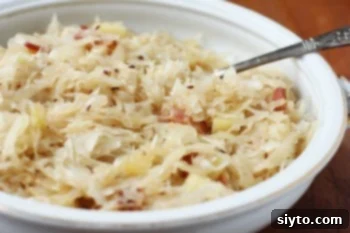
Authentic German Style Sauerkraut: A Zesty, Healthy Side Dish for Any Meal
A truly zesty serving of German Style Sauerkraut offers a delightful, healthy side dish that can effortlessly liven up almost any meal. It’s a versatile staple that perfectly complements a wide array of main courses. We particularly enjoy its tangy crunch alongside savory sausages, succulent ham, and any variety of roasted or barbecued meats. Beyond its incredible flavor, sauerkraut is celebrated for its probiotic benefits, making it not just a delicious addition, but also a fantastic boost for gut health. Prepare to discover how this humble cabbage dish can transform your dining experience. (Skip to recipe.)
I recently returned from a refreshing week-long visit to the coast, an area affectionately known as the ‘Lower Mainland’ in British Columbia. This vibrant region encompasses the bustling city of Vancouver and its charming surrounding communities. For someone accustomed to the deep winter chill of northern Alberta, it was an absolute joy to bask in the milder coastal climate. The contrast couldn’t be starker: while Alberta was blanketed in snow, the coast offered a verdant escape, a welcome change that truly invigorated the spirit.
Each visit to the coast invariably brings a bittersweet feeling, stirring up a profound sense of yearning and a gentle wave of nostalgia for my childhood. I was born in New Westminster and spent a significant portion of my early years in Aldergrove and Chilliwack until I was ten. While I’ve embraced Alberta as my home for most of my adult life, my deepest roots undeniably lie in British Columbia. With a large extended family of uncles, aunts, and cousins residing there, these visits are always packed with warmth, laughter, and cherished family moments. Many of my relatives are chicken farmers, living on picturesque rural properties that truly resemble something out of a storybook, providing a charming glimpse into agricultural life.
One such property belongs to my Uncle Adolf and Aunt Alice, who are fortunate to have an ancient cedar forest right on their land. Walking through this majestic woodland, surrounded by lush ferns, moss-covered logs, and the soothing rustle of a nearby creek, feels like stepping into a little slice of paradise. The air is fresh, carrying the scent of damp earth and cedar, creating an atmosphere of profound tranquility that allows one to truly connect with nature’s timeless beauty.
Despite the enchanting surroundings, thoughts of the snowy fields back home in Alberta occasionally crossed my mind, prompting a fleeting moment of sympathy for those enduring the harsh winter. However, the sheer beauty and mildness of the coast quickly dispelled any lingering pity, reminding me of the unique charms each region possesses. It’s hard to feel too sorry when surrounded by such vibrant life.
Indeed, it rained for most of my week-long stay, with the sun making a brief, ten-minute appearance just once. Yet, the constant rain contributed to the breathtaking vibrancy of the green landscape, making every moment worthwhile. I was amazed to see my aunt and uncle still harvesting fresh kale and parsnips from their winter garden, a testament to the mild climate. Adding to the enchantment, I spotted delicate crocuses and snowdrops already in bloom, offering a hint of spring amidst the winter rains.
One highlight of my trip was venturing into Vancouver to witness the spectacular Shen Yun performance at the Queen Elizabeth Theatre. It was a truly magical extravaganza of classical Chinese dance and song, leaving me captivated. However, I spent the majority of my time immersed in the peaceful countryside, reconnecting with family, which was incredibly fulfilling. My mom even flew down from Prince George to join me, making the reunion even more special. My relatives are all wonderfully fun-loving and full of life; we shared countless laughs, indulged in delicious food and fine wine, and created many unforgettable memories that I will cherish.
Whenever I gather with my relatives, I experience a profound sense of being grounded and deeply connected to my past. This connection helps me to better understand who I am and where I come from, as we all share a common history and heritage. These aunts, uncles, and cousins have known me since my earliest words, witnessed me running around shirtless as a toddler, and navigated the awkward phase of my gawky, pimply teenage years. Their unwavering love and acceptance, despite all these stages, is a truly comforting and wonderful feeling that reinforces the unbreakable bonds of family.
True to our German heritage, every family gathering revolves around the joy of eating together. It’s a cornerstone of our culture, where food isn’t just sustenance but a centerpiece for connection and celebration. Each evening of my visit, tables laden with lip-smacking dishes served as both entertainment and nourishment, accompanied by the lively chatter and laughter of my relatives. It was at one of these memorable dinners that my Auntie Irma unveiled her famous homemade sauerkraut, perfectly paired with succulent smoked turkey legs – a dish that embodies the heart of German comfort food.
Cooking together and sharing food is a powerful force that truly unites us, bridging generations and preserving our culinary heritage. My mom and her sister were both taught to cook by their mother, inheriting a foundation of traditional German techniques. However, over the years, their individual paths diverged, leading them to incorporate new influences and unique twists into their recipes. For instance, my Auntie Irma prepares her sauerkraut slightly differently than my mom; she often includes diced apple for a touch of sweetness and grates in a potato, a clever trick that adds body without altering the flavor profile significantly. Both prefer to include caraway seeds for their distinctive aroma, though they sometimes opt to leave them out. Juniper berries are another traditional addition when available, lending a subtle piney note. My mom, on occasion, enjoys adding a hint of chili pepper to her sauerkraut for a touch of unexpected warmth. Whether they cook the sauerkraut with hearty sausages or a rich smoked pork hock, their rendition is consistently delicious. It’s a beautiful example of how every German woman truly has her own special way to master this quintessential dish. I feel incredibly fortunate to have learned from my mom and all these remarkable women, absorbing not just recipes, but also the love and tradition infused into every meal.
And, of course, once all the cooking is joyfully completed, there’s always ample time to celebrate the delicious outcome with a refreshing drop of good German beer! It’s the perfect way to cap off a wonderful culinary experience.
For me, sauerkraut is more than just a side dish; it’s a true comfort food, and I often find myself craving its distinctive tangy zip. Its unique flavor profile and satisfying texture make it incredibly appealing. I recall one particular instance when I was pregnant with our first child, and that craving reached epic proportions. On that memorable occasion, I did consume an entire quart of sauerkraut in one sitting, spooning it directly from the jar. It was an intense experience, and I can confidently say I won’t ever be repeating that particular feat!
* * * * *
Expert Tips and Kitchen Frau Notes for Perfect German Style Sauerkraut
Achieving the perfect German Style Sauerkraut starts with selecting the right base ingredient. My family traditionally relies on either the homemade sauerkraut lovingly prepared by my mom for all her siblings and children, or the milder German wine sauerkraut, which is typically available in European import shops or specialty delicatessens. These options provide a wonderfully balanced flavor. If these are unavailable, you can certainly use regular jarred or canned sauerkraut. However, as these are often more sour, it’s best to drain them very well and add a splash of water or broth during cooking to mellow the intensity and ensure adequate liquid.
While bacon lends a fantastic smoky depth to this sauerkraut recipe, it’s not the only option. For a slightly different flavor or to adapt to dietary preferences, you can substitute the bacon with a handful of chopped ham, sautéing it in about a tablespoon of oil until lightly browned. For a vegetarian version, simply omit the meat entirely and use a neutral oil, such as canola or sunflower oil, to sauté the onions and apples. The sauerkraut will still be incredibly delicious, allowing its own vibrant flavors to shine through beautifully.
My Auntie Irma’s ingenious addition of a grated potato is a game-changer. This seemingly simple step works wonders to thicken the sauerkraut slightly and absorb any excess juices, resulting in a more cohesive and pleasing texture. The best part? You won’t even taste the potato itself, it simply acts as a natural thickener. This clever trick was one of my most cherished learnings from my recent family visit, demonstrating how small adjustments can elevate a classic dish.
Some people prefer to rinse their sauerkraut before cooking, a method that can reduce its natural tartness. While I personally believe rinsing diminishes too much of the authentic flavor – after all, the essence of sauerkraut is its sourness – there are instances when it might be beneficial. If you are new to eating sauerkraut, or if you’re serving it to guests who are unsure about its strong taste, a quick rinse can make it milder and more approachable, helping them gradually acclimate to its unique and healthy flavor profile.
Authentic German Style Sauerkraut Recipe
Ingredients:
- 2 to 3 slices lean bacon
- 1 small onion
- 1 small apple (or ½ of a large one, such as Honeycrisp or Gala)
- 1 bay leaf
- ½ teaspoon caraway seeds (optional, but highly recommended for authentic flavor)
- 3 to 4 juniper berries (optional, adds a subtle, earthy note)
- 400 – 500 grams (approximately 1 lb) mild sauerkraut [equivalent to 1 can (396 ml/14 oz.) or bag (500gm) of mild sauerkraut, or about 3 to 4 cups]
- 1 medium potato (optional, for thickening)
Instructions:
- Begin by preparing your aromatic base. Cut the bacon slices crosswise into ½ inch (1cm) pieces. Finely dice the onion, ensuring even pieces for consistent cooking. Peel, core, and then dice the apple into approximately ½ inch pieces.
- Heat a large, heavy-bottomed saucepan or a small Dutch oven over medium heat. Add the chopped bacon and sauté until the pieces are almost crisp, rendering out their delicious fat.
- Once the bacon is nearly crisp, add the diced onion and apple to the pan. Continue to cook for an additional 2 to 3 minutes, stirring occasionally, until the onion becomes translucent and the apple softens slightly.
- Stir in the bay leaf. If using, sprinkle on the caraway seeds and juniper berries, stirring them in to release their fragrances. These spices are key to that authentic German flavor profile.
- Now, it’s time for the sauerkraut. Dump the sauerkraut directly into the pan along with all its juices. (Important note: if you are using a very strong or particularly sour sauerkraut, it’s advisable to drain it first, then add about ¼ cup of water or vegetable broth to the pan.)
- If you’re opting for the potato trick, peel and grate the medium potato directly into the pan with the sauerkraut. Stir everything thoroughly to combine all the ingredients, ensuring the potato is well distributed.
- Check the liquid level. There should be enough liquid to cover the bottom of the pot by about ¼ inch (0.5cm). If it appears too dry, add a small splash more water or broth to ensure even simmering.
- Bring the sauerkraut mixture to a gentle boil. Once boiling, reduce the heat immediately to low, cover the saucepan tightly, and allow it to simmer for 15 to 20 minutes. This crucial simmering time allows all the wonderful flavors to meld and develop, creating a rich and complex taste.
- Before serving, carefully remove and discard the bay leaf and any visible juniper berries.
This recipe serves 4 to 6 people and yields approximately 4 cups of delicious, tangy sauerkraut. Enjoy this comforting and authentic side dish!
Guten Appetit!
You might also like these other hearty German-inspired dishes:
Classic German Potato Salad
Refreshing Sauerkraut Potato Salad for Barbecue Season
Hearty German Style Sweet & Sour Lentil Eintopf (One Pot)
Elegant Seed Crusted Pork Tenderloin with Creamy Parsnip Mashed Potatoes