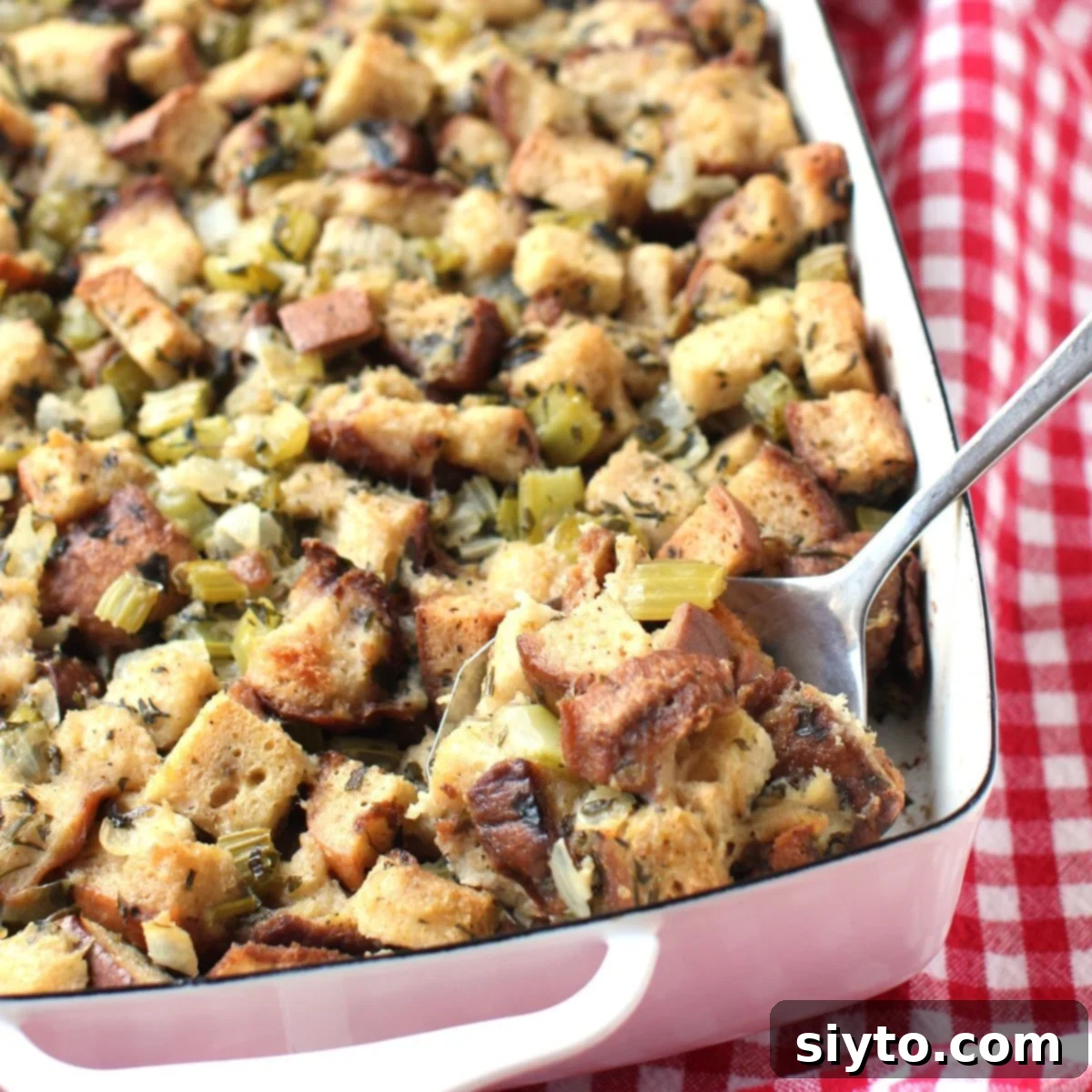
The Ultimate Guide to Classic Gluten-Free Stuffing: Your Holiday Table Essential
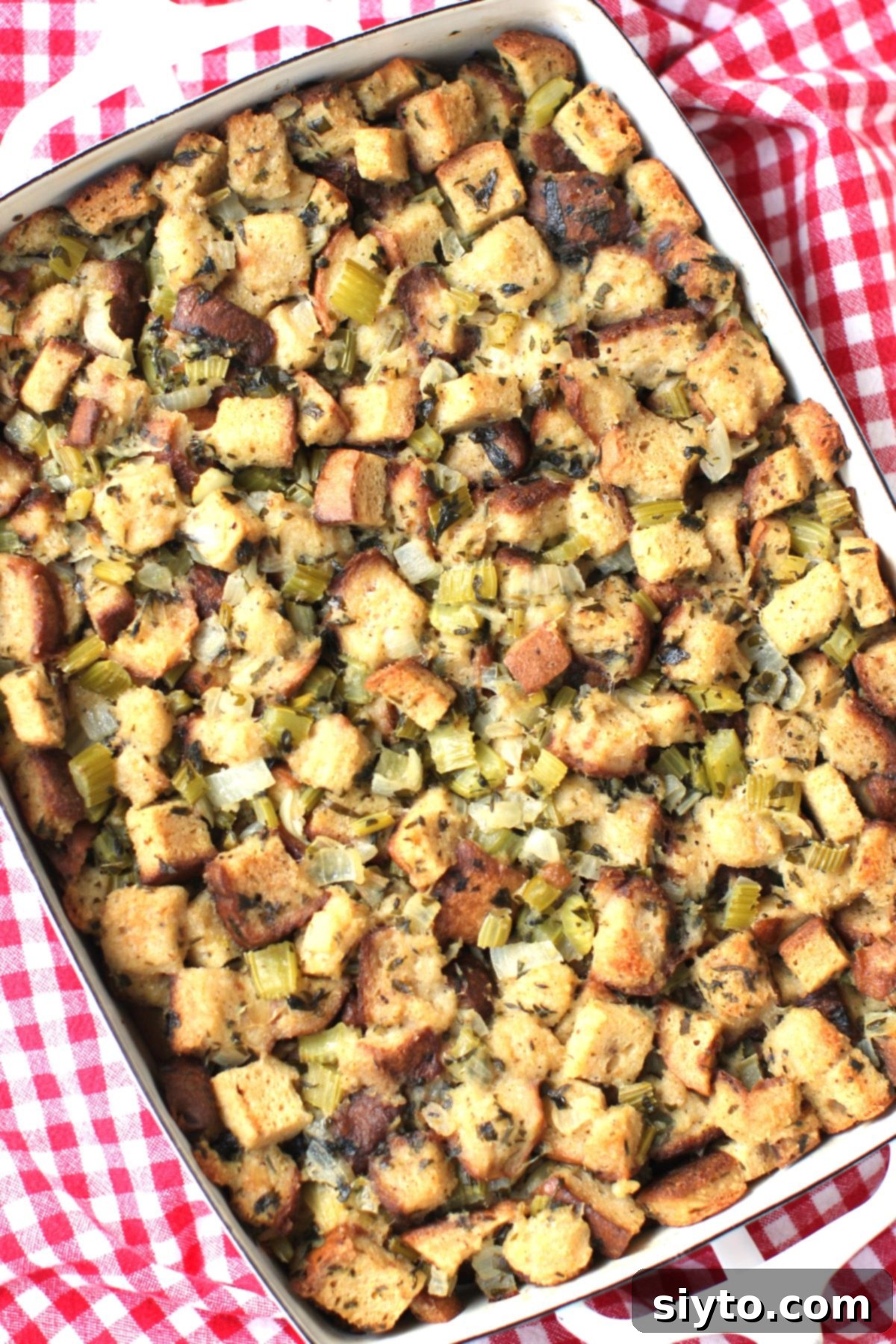
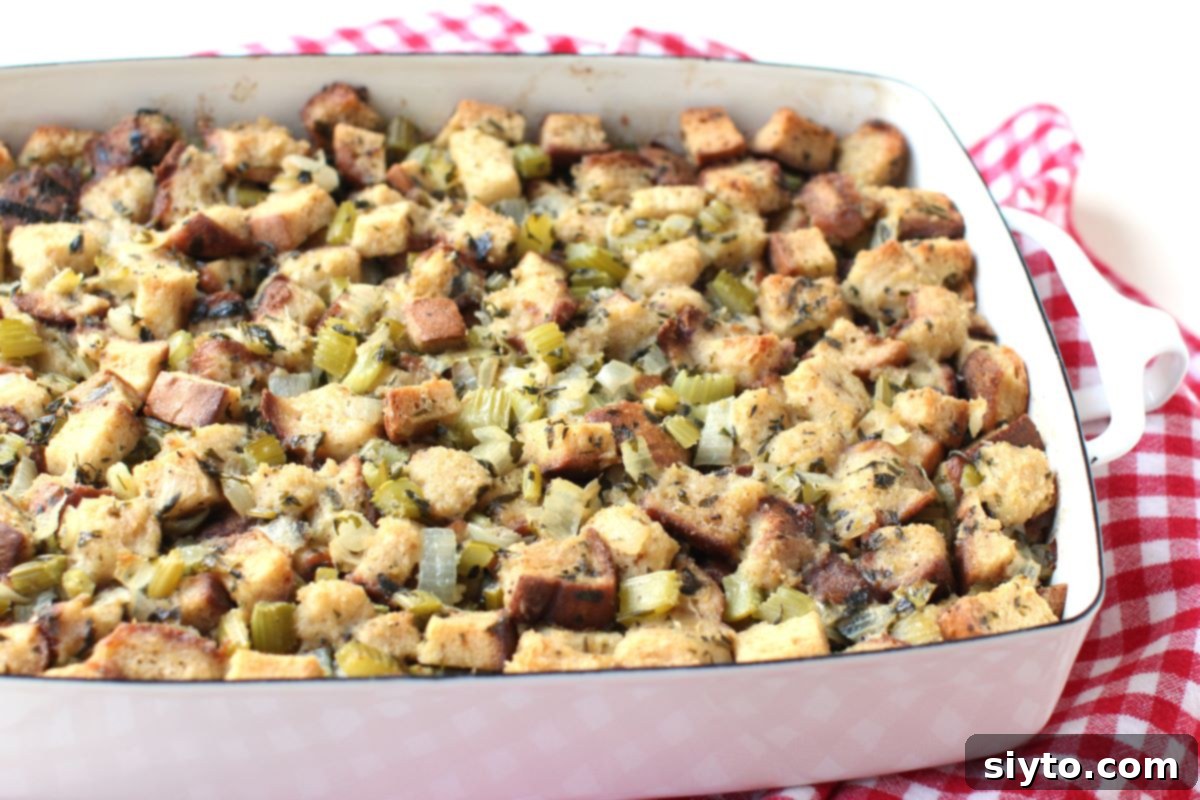
This simple, classic gluten-free stuffing recipe delivers everything you could possibly want in a holiday side dish. Imagine perfectly moist and buttery bread cubes, each with those irresistible crispy edges, infused with a familiar, aromatic blend of herbs that instantly evokes the warmth and joy of the holidays – any time of the year. Whether you’re navigating dietary restrictions or simply looking for an incredibly flavorful stuffing, this recipe is a guaranteed crowd-pleaser.
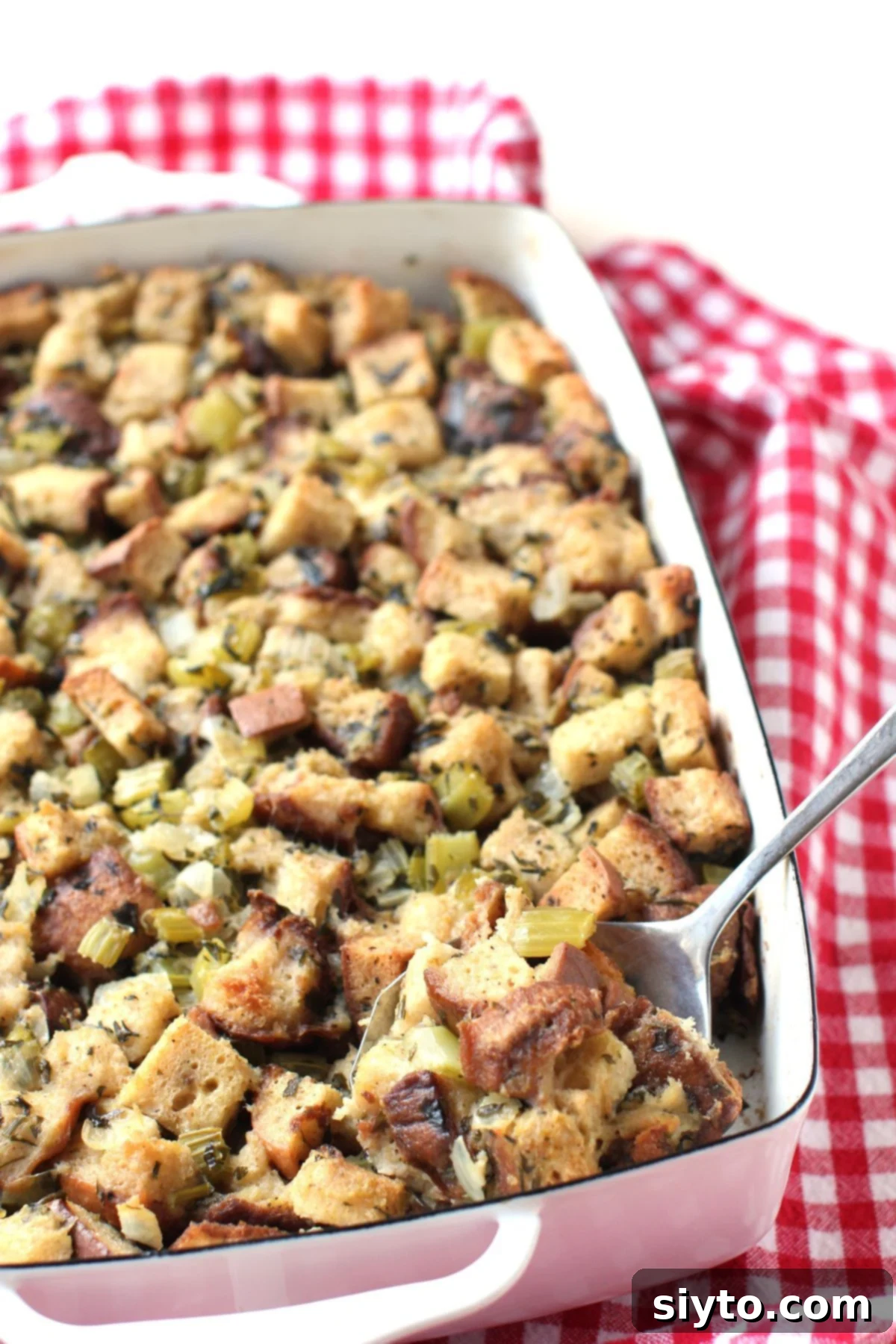
Raise your hand if stuffing, especially when drenched in rich, savory gravy, is your absolute favorite part of the holiday meal. Don’t be shy!
Yep, I thought so – I can practically see many hands shooting up. Mine is right there with yours, and the same goes for every member of my family. There’s something truly magical about stuffing. Perhaps it’s because we typically reserve it for special occasions, making it an anticipated treat. Forget the bland, boxed varieties; this homemade version transcends expectations.
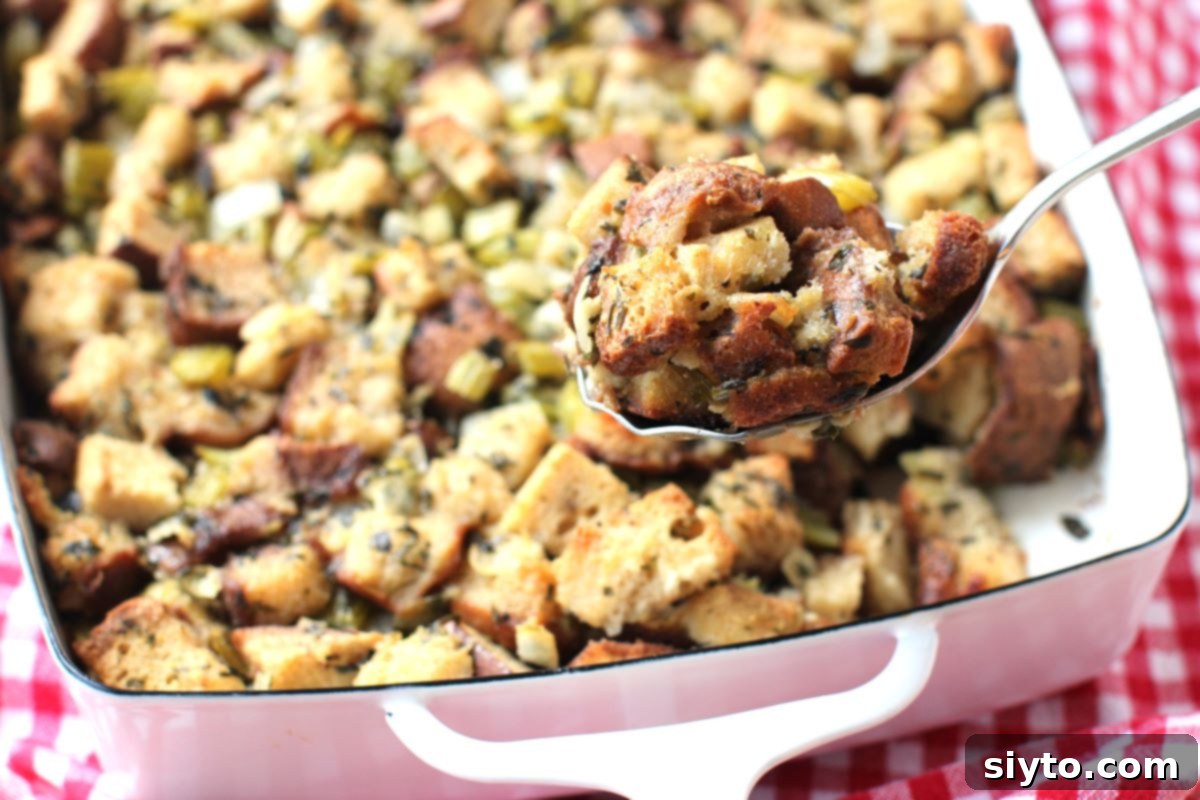
What makes stuffing so utterly delicious? It’s a symphony of textures and flavors: tender bread generously soaked in butter, a delicate sweetness from sautéed onions and celery, and that unforgettable aromatic blend of herbs. This creates a comforting, creamy base with an abundance of crispy, golden-brown edges – a sophisticated, dressed-up version of bread and butter that delights the senses. It’s the perfect balance of soft and crunchy, ensuring every bite is a culinary delight.
And let’s not even get started on leftover stuffing! Discovering a hidden stash in the fridge after the holiday festivities is like finding culinary gold. Reheating it and serving it with a generous pool of silky gravy, a few tender pieces of leftover turkey, and a dollop of tart cranberry sauce is pure heaven. It’s a delightful encore that extends the holiday joy, offering comfort long after the main event.
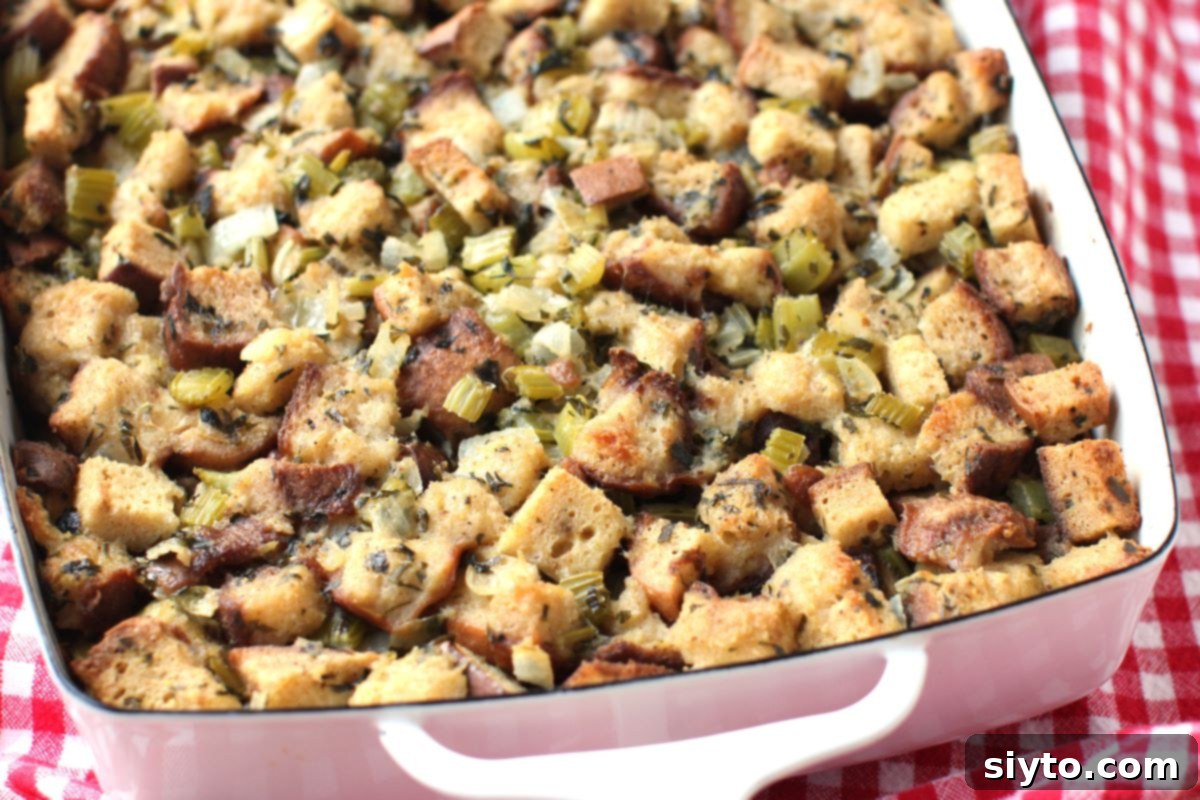
Crafting the Perfect Gluten-Free Stuffing
Making delicious gluten-free stuffing isn’t drastically different from its traditional counterpart, with the obvious exception of using gluten-free bread. This recipe is incredibly versatile; you can easily swap in regular wheat bread if gluten isn’t an issue for your guests. The key to a truly exceptional gluten-free stuffing lies in the bread choice. Opt for a lighter-textured gluten-free bread rather than the dense, heavy varieties that tend to crumble excessively. Many excellent gluten-free white and whole-grain loaves are now available, offering the ideal structure. Gluten-free hamburger buns, hot dog buns, or even rolls can also be cut into cubes for fantastic results. If quality gluten-free bread is hard to find, consider a creative alternative: gluten-free waffles make surprisingly excellent stuffing!
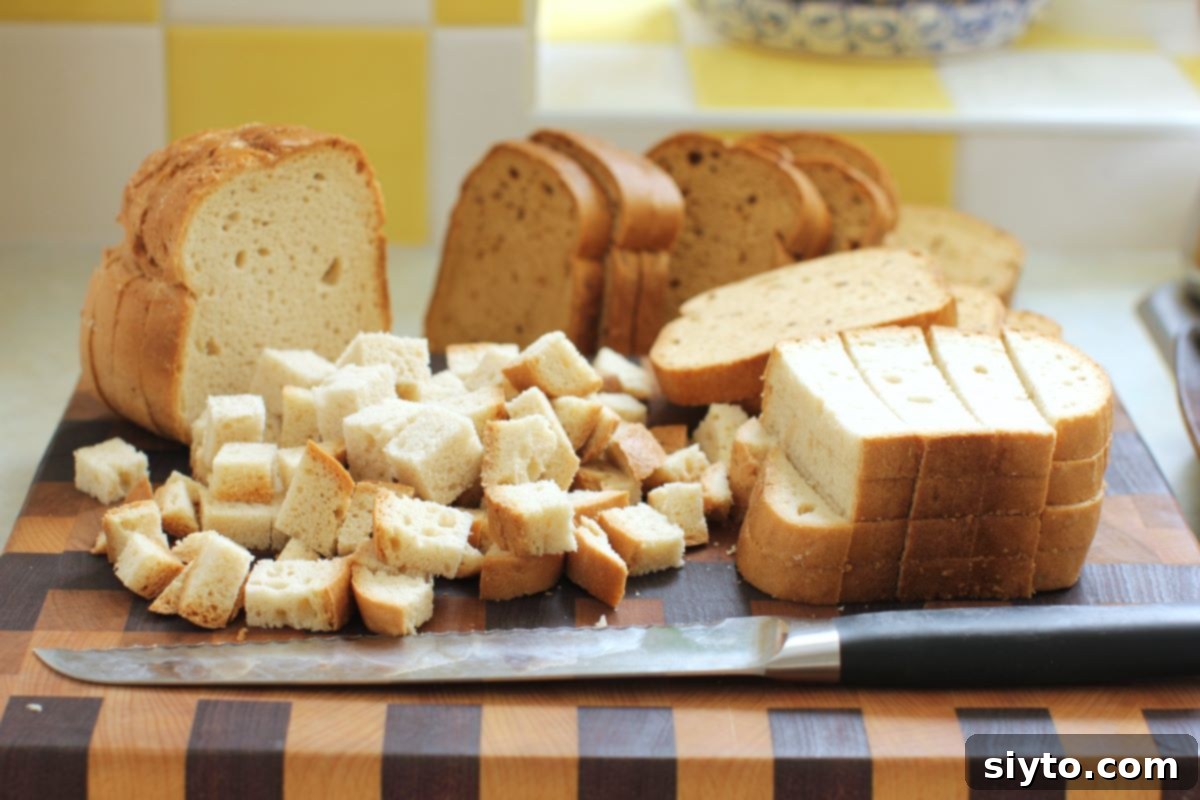
A crucial step for achieving the perfect stuffing texture and flavor is drying out the bread cubes. This process prevents sogginess and creates a porous structure that maximizes the absorption of that incredibly flavorful butter and broth. You have a couple of options for drying: spreading the cubes in a single layer across a few baking dishes and allowing them to air dry at room temperature for a few days (up to a week works perfectly), or for a quicker method, you can dry them in the oven. For oven-drying, simply spread the cubes on baking sheets and bake at 350°F (180°C) for 10-15 minutes until they are dry and slightly crisp but not yet browned. This ensures they soak up all the delicious liquids without turning mushy during baking.
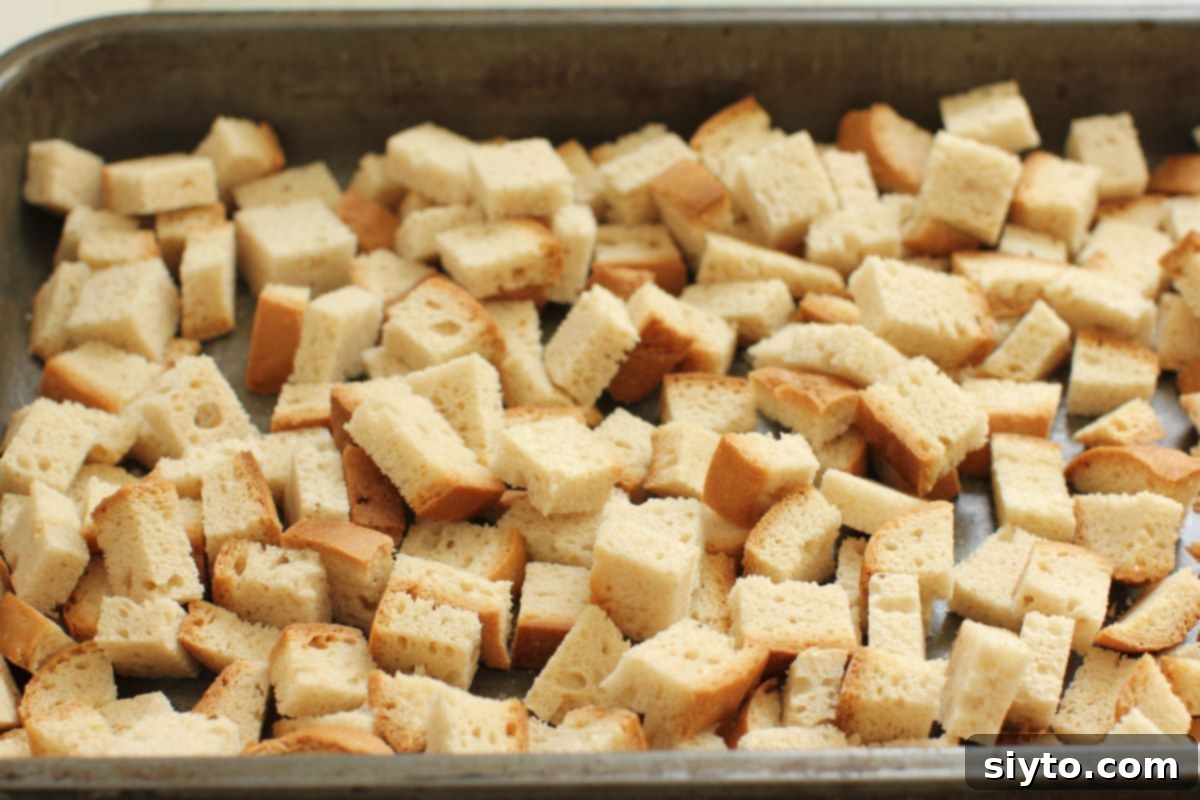
Another clever trick to prevent gluten-free bread cubes from becoming too soft or crumbly is the addition of an egg to the liquid mixture. While I used to make my stuffing without eggs, I’ve discovered that just one large egg provides just enough binding power to help the bread cubes maintain their shape and integrity without altering the texture too much. Many stuffing recipes call for two or even three eggs for this quantity of bread, which tends to create a denser, more “custardy” or “strata-like” stuffing. If you prefer that richer, more cohesive texture, feel free to add more eggs. However, for a looser, more traditional stuffing with distinct bread cubes and those coveted crispy edges, a single egg is often all you need.
Fresh herbs truly elevate gluten-free stuffing, imparting an incredible depth of flavor and aroma. Whenever I’m chopping them, the classic folk song ‘Scarborough Fair‘ with its iconic chorus of ‘Parsley, sage, rosemary, and thyme’ always comes to mind – a perfect reflection of the holiday herb medley! While fresh herbs offer the most vibrant taste, I’ve successfully made this stuffing many times using dried herbs, and it’s still absolutely delicious. If you opt for dried herbs, try to use crumbled varieties rather than powdered ones. Powdered herbs, while flavorful, can sometimes make the stuffing a darker color, which might not be as visually appealing, though the taste remains superb. A good rule of thumb for substituting dried for fresh is to use about one-third the amount of dried herbs since their flavor is more concentrated.
Essential Ingredients for Your Gluten-Free Stuffing
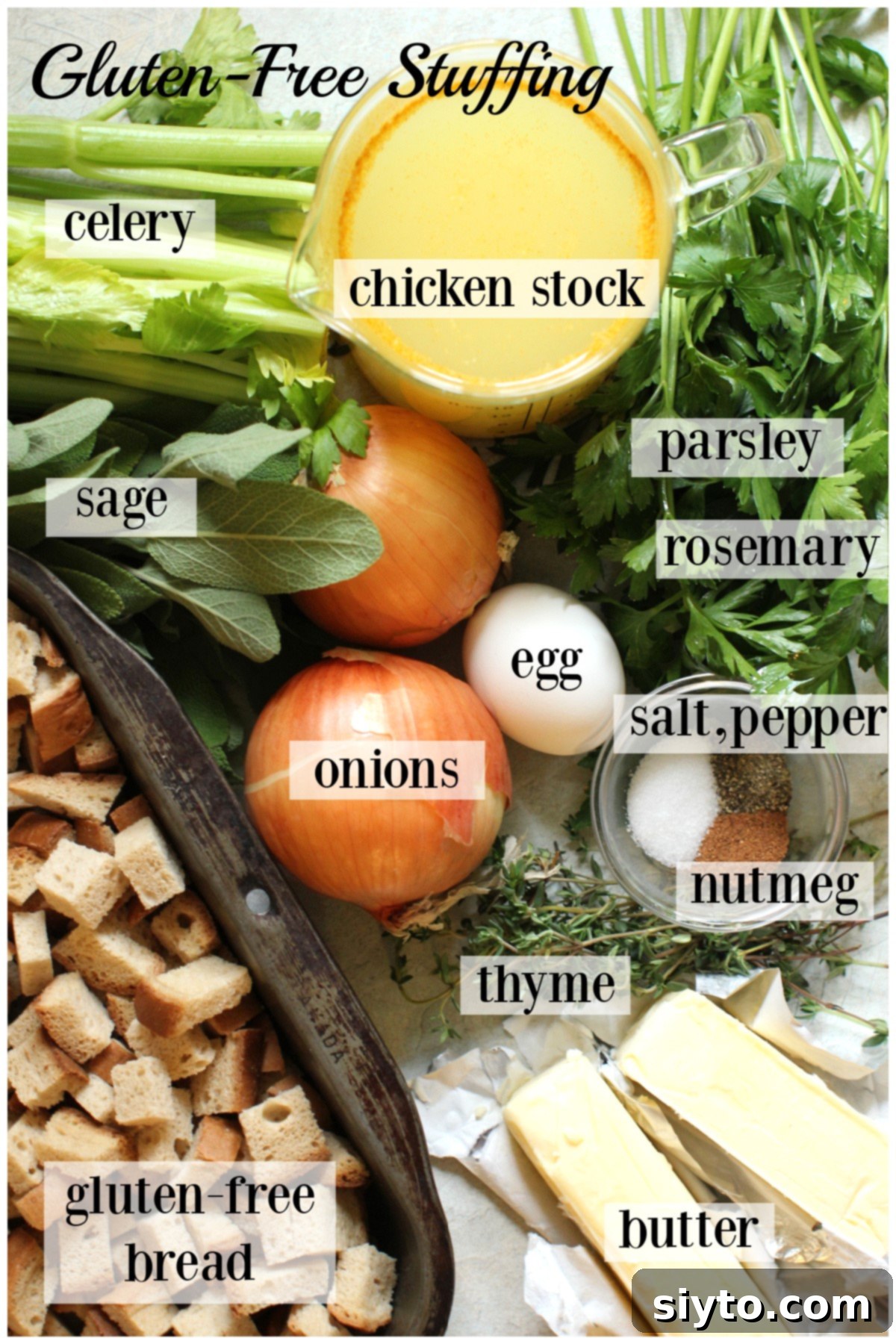
- Gluten-Free Bread: The foundation of your stuffing. Choose a bread with a lighter, airy texture rather than one that is overly dense or heavy, which can become gummy. A blend of white and whole-grain gluten-free bread often yields the most interesting flavor and texture. Don’t hesitate to use gluten-free hamburger or hot dog buns if you have them. The crucial step is to cube the bread and then dry it thoroughly – this creates a sponge-like texture that eagerly absorbs all the rich, buttery, savory liquids. Most gluten-free bread packages will list the weight, making measuring straightforward.
- Butter: This is a holiday, and butter is essential for that luxurious richness and incredible flavor! Don’t skimp on it; it contributes significantly to the stuffing’s moistness and crispy edges. However, if you are genuinely looking to reduce fat, you can trim the butter down to about ½ cup (115g), and your stuffing will still be delicious, just slightly less indulgent.
- Onions: Diced onions add a wonderful sweetness and savory depth as they caramelize slightly during cooking. Any variety works well – yellow, white, or even red onions will impart a lovely flavor.
- Celery: Beyond adding a bright, fresh crunch and subtle earthy flavor, diced celery, along with onions, helps create pockets of air and prevents the bread cubes from clumping together, ensuring a lighter texture.
- Sage, Thyme, and Rosemary: This classic triumvirate of herbs creates the quintessential holiday stuffing flavor profile. Sage is particularly dominant and distinctive, providing an earthy, slightly peppery note, while thyme offers a subtle, savory sweetness, and rosemary adds a piney, fragrant essence. Use fresh herbs for the best flavor, but crumbled dried herbs (not powdered) are a perfectly acceptable alternative.
- Parsley: Fresh parsley is a must for its vibrant, clean flavor that brightens the entire dish. Dried parsley, unfortunately, has very little flavor and offers minimal culinary benefit. Italian (flat-leaved) parsley is generally more flavorful than curly parsley, but either will work. If using curly parsley, pack it a bit tighter when measuring as it’s fluffier.
- Nutmeg: Just a touch of ground nutmeg helps to round out and deepen the classic savory herb flavors, adding a subtle warmth that enhances the overall profile without being overtly noticeable.
- Salt and Pepper: These fundamental seasonings are crucial for balancing and enhancing all the other flavors. Adjust to your taste preferences.
- Chicken or Turkey Stock: This is the primary source of moisture and savory depth, binding all the ingredients together. Using a high-quality stock is paramount; homemade chicken or turkey stock (like this one or an Instant Pot version) will provide the richest flavor. A good quality store-bought stock is also fine. Vegetable stock can be used for a vegetarian option.
- Egg: Beating one large egg into the chicken stock mixture helps to bind the gluten-free bread cubes, preventing them from breaking down into a mushy consistency. One egg provides enough structure to keep the cubes intact without creating a custardy texture. If you prefer a more cohesive, strata-like stuffing, you can increase it to two eggs.
Creative Add-Ins to Elevate Your Stuffing
Yes, absolutely! This gluten-free stuffing recipe is incredibly versatile and infinitely customizable. Feel free to unleash your culinary creativity by adding a variety of ingredients to suit your taste or complement your main course. Here are some popular and delicious suggestions to get you started:
- Dried Fruits: For a touch of sweetness and chewiness, add a small handful (¼ to ½ cup) of raisins, dried cranberries, chopped dried apricots, or even chopped prunes. These are best added when you toss all the ingredients together with the butter mixture.
- Nuts: To introduce a delightful crunch and nutty flavor, stir in a handful (½ to ¾ cup) of chopped pecans, walnuts, or even toasted pine nuts. Toasting the nuts lightly before adding them will enhance their flavor.
- Chestnuts: For a truly traditional and rich addition, replace 1-2 cups of the bread cubes with crumbled cooked chestnuts. You can buy pre-cooked, peeled chestnuts for convenience.
- Cornbread: For a Southern-inspired twist, substitute half of the bread cubes with cubed and dried gluten-free cornbread. This adds a unique texture and subtly sweet corn flavor.
- Meats: Make it heartier by adding some crumbled, cooked bacon or breakfast sausage. If using, you can replace some of the butter in the recipe with the rendered fat from cooking the bacon or sausage for extra flavor, and remember to omit or significantly reduce the added salt in the stuffing mixture.
- Vegetables: Boost the vegetable content and flavor by sautéing some mushrooms with the onions and celery. Other vegetables like partially roasted squash cubes (butternut, acorn) or sweet potato cubes can also be folded in for added sweetness and nutrition.
Freezing and Reheating Gluten-Free Stuffing
One of the best features of this gluten-free stuffing (and indeed, regular stuffing) is how well it freezes, whether before or after it’s baked. This makes holiday meal prep incredibly convenient!
To freeze **uncooked stuffing**: Prepare the stuffing fully, then transfer it into the baking dish you intend to use for baking and serving (ensure it’s freezer-safe). Cover the dish tightly with plastic wrap, then an additional layer of aluminum foil, and place the entire pan into a large sealed freezer bag. It can be frozen for up to 3 months.
To cook from frozen (if uncooked): Remove the plastic wrap, replace the aluminum foil (ensuring it’s tightly sealed), and bake according to the recipe instructions, but add an extra 15-20 minutes to the initial covered baking time. Then uncover and bake until golden and crispy.
For **leftover stuffing (fully cooked)**: Any remaining stuffing can be refrigerated in an airtight container for up to 5 days. For longer storage, freeze it in a heavy-duty freezer-safe container or ziptop bag for up to 3 months. To reheat, you can use the microwave for individual servings or warm larger portions in the oven. If reheating from frozen after being fully cooked, first defrost it completely in the refrigerator. Then, remove any plastic or foil, drizzle the stuffing with an additional 3-4 tablespoons of chicken stock or water to restore moisture, and bake at 350°F (180°C) for 20-30 minutes until heated through and lightly crisped.
Leftover stuffing is truly a gift that keeps on giving! It’s fantastic served with more gravy (this Make-Ahead Gluten-Free Turkey Gravy is divine), layered onto a turkey sandwich for a post-holiday feast, or transformed into crispy stuffing patties. To make patties, simply mix the leftover stuffing with a beaten egg, shape it into small discs, and pan-fry them in a little butter or oil until golden brown and heated through. Delicious!
Other Greats to Round Out Your Holiday Menu
Looking to create a truly unforgettable holiday feast? Complement your classic gluten-free stuffing with these other delectable dishes:
Main Dishes:
For the star of your meal, try this show-stopping Maple & Mustard Glazed Turkey with Killer Gravy.
Or, for an equally impressive but perhaps more manageable option, consider an elegant Stuffed Turkey Breast (Wrapped in Bacon).
Essential Sides:
No holiday meal is complete without Classic Mashed Potatoes – creamy, comforting, and always a hit.
Save time and stovetop space with this incredible Make-Ahead Gluten-Free Turkey Gravy – absolutely divine and stress-free.
A traditional pairing with turkey is cranberry sauce. You might enjoy this vibrant Spiced Pear Cranberry Sauce, or for something uniquely different this year, try Hot Curried Peaches to serve alongside your meat.
Interesting and Tasty Side Dishes:
- Creamy Baked Sweet Corn Pudding
- Visually stunning and flavorful Jeweled Roasted Cauliflower
- Sweet and savory Apple Cider Glazed Carrots
- Earthily delicious Ruby Cream Baked Beets
- A rich and comforting Rich, Creamy Succotash
- A delightful Warm Brussels Sprout Salad
- Fresh and flavorful Garlicky Green Beans with Spinach and Toasted Hazelnuts
Festive Salad Ideas:
- Crunchy and bright Shaved Brussels Sprout Slaw with Cranberries and Pumpkin Seeds
- A classic, reimagined Festive Waldorf Salad
- Elegant and sweet Poppyseed, Pomegranate, and Pear Salad
- Nutrient-packed Purple Power Slaw
- Exotically spiced Moroccan Carrot Salad with Oranges
- Healthy and satisfying Broccoli Lentil Salad
- Fresh and vibrant Basil Beet Salad with Bocconcini
- A refreshing Kale Salad with Cranberries, Pear, and Sesame Seeds
Irresistible Desserts (All Gluten-Free!):
- For a timeless classic, try Classic Pumpkin Pie or feed a crowd with Pumpkin Slab Pie.
- Or go for something fancy and impressive like a Pumpkin Spice Pavlova.
- Indulge in a towering Mile High Medjool Date Caramel Apple Pie.
- For a sophisticated treat, a Burnt Basque Cheesecake.
- A comforting classic, Bavarian Apple Cake.
- Decadent and rich, a Decadent Chocolate Tart with a Date & Nut Crust.
- A beautifully spiced Ginger Pear Tart.
- If it’s Christmas, delight with a traditional Bûche De Noël or some simple yet elegant Rice Krispie Trees.
Serve your holiday dessert with Stabilized Whipped Cream (which you can conveniently make ahead!) or for a delicious non-dairy option, try Maple Ginger Cashew Cream.
Let the holiday feasting begin!
Want to receive new Kitchen Frau recipes directly to your email as soon as they’re posted? Sign up here and you’ll get bits of news updates on what’s happening in my kitchen and garden, plus a handy and useful kitchen tip along with each recipe, too. (No spam ever.)
If you like my recipes, follow me on Instagram, Pinterest, X, and Facebook. You’d make my day. 😊
Guten Appetit!
Classic Gluten-Free Stuffing Recipe
Margaret Bose Johnson
Save to Pinterest
Ingredients
- 16 cups (600gms) cubed, gluten-free bread (about 12 cups/450gms when dried) (or regular bread for non-gluten-free)
- 2 cups (275gms) diced celery
- 2 cups (275gms) diced onion
- ¾ cup (170gms/1½ sticks) butter (salted)
- 2 packed tablespoons finely chopped fresh sage (or 2 teaspoons crumbled dried sage)
- 2 tablespoons fresh thyme leaves (or 2 teaspoons dried thyme)
- 1½ teaspoons chopped fresh rosemary (or ½ teaspoon crumbled dried rosemary)
- 1 teaspoon fine sea salt
- ½ teaspoon coarsely ground black pepper
- ½ teaspoon nutmeg
- ½ cup (30gms) chopped fresh parsley
- ¼ cup raisins, optional
- 2½-3 cups (600-720ml) chicken or turkey stock (or vegetable stock for vegetarian)
- 1 large egg
Instructions
- Begin by preparing your bread cubes. Cut the gluten-free bread into uniform 1-inch (2cm) cubes. It is crucial to dry them out for optimal texture and absorption. You can achieve this by spreading the cubes in a single layer on large baking sheets and allowing them to air dry at room temperature for 2 days, or up to a week. For a faster method, spread them on baking sheets and bake in a preheated oven at 350℉ (180℃) for 10-15 minutes, until they feel dry and slightly crispy, but ensure they don’t brown.
- Once your bread is dry, preheat your oven to 350℉ (180℃). Liberally grease a 9×13-inch (22x32cm) baking dish or a small roasting pan with butter to prevent sticking and encourage crispy edges.
- In a large skillet, melt the ¾ cup of butter over medium heat. Add the diced celery and onions, cooking for about 10 minutes, stirring occasionally, until the vegetables are soft, translucent, and the butter appears clear rather than milky. This step builds the aromatic base of your stuffing.
- Stir in the fresh or dried sage, thyme, rosemary, fine sea salt, coarsely ground black pepper, and nutmeg. Continue to cook for another 1-2 minutes, allowing the herbs and spices to release their fragrant oils.
- Transfer the dried bread cubes into a very large mixing bowl. Pour the sautéed vegetable and herb mixture over the bread, making sure to scrape all the buttery goodness from the pan with a rubber spatula. Add the chopped fresh parsley (and raisins, if you’re including them), then gently toss everything together until the bread cubes are evenly coated with the fragrant butter mixture.
- In a separate bowl, whisk the large egg with 2 cups (480 ml) of the chicken or turkey stock. Pour this liquid over the stuffing mixture in the large bowl. Toss very gently to moisten all the bread cubes evenly without crushing them. If your bread cubes are extremely dry or if you prefer a moister stuffing, gradually add some or all of the remaining 1 cup of chicken stock until the stuffing reaches your desired level of moistness. If you plan to stuff this mixture inside a turkey, you might need less liquid, as the turkey will contribute moisture during roasting.
- Carefully transfer the moistened stuffing to your prepared baking dish. Spread it out evenly into an even layer, then cover the dish tightly with aluminum foil or a heat-safe lid.
- Bake the covered stuffing for 30 minutes. After this time, remove the foil or lid and continue to bake for another 20 to 30 minutes, uncovered, or until the top of the stuffing is beautifully golden-brown and crisped to your liking. Serve hot and enjoy!
Notes
If you are cooking the stuffing inside a turkey, you will likely need less liquid, as there will be less evaporation and the turkey will release some moisture into the stuffing. You may only need 2 cups of chicken stock in this scenario.
Feel free to customize your stuffing with favorite add-ins like chopped nuts, crumbled cooked bacon, sautéed mushrooms, or dried fruits when you add the parsley (and raisins, if using them) in step 5.
Stuffing freezes exceptionally well, either fully cooked or uncooked, for up to 3 months. To freeze, cover the baking dish with plastic food wrap, then aluminum foil, and place the entire pan in a large plastic freezer bag. To cook uncooked stuffing from frozen: remove plastic wrap, replace foil, and bake as directed in the recipe, adding an additional 10-15 minutes to the initial covered baking time.
To reheat fully cooked and frozen stuffing: defrost it completely in the refrigerator. Then, remove any plastic and foil, drizzle the stuffing with an extra 3-4 tablespoons of chicken stock or water to restore moisture, and bake for 20-30 minutes at 350℉ (180℃) until thoroughly heated.
Leftover stuffing can be stored in a heavy-duty ziplock bag or freezer-safe container and reheated in the microwave or oven as desired for quick, comforting meals.