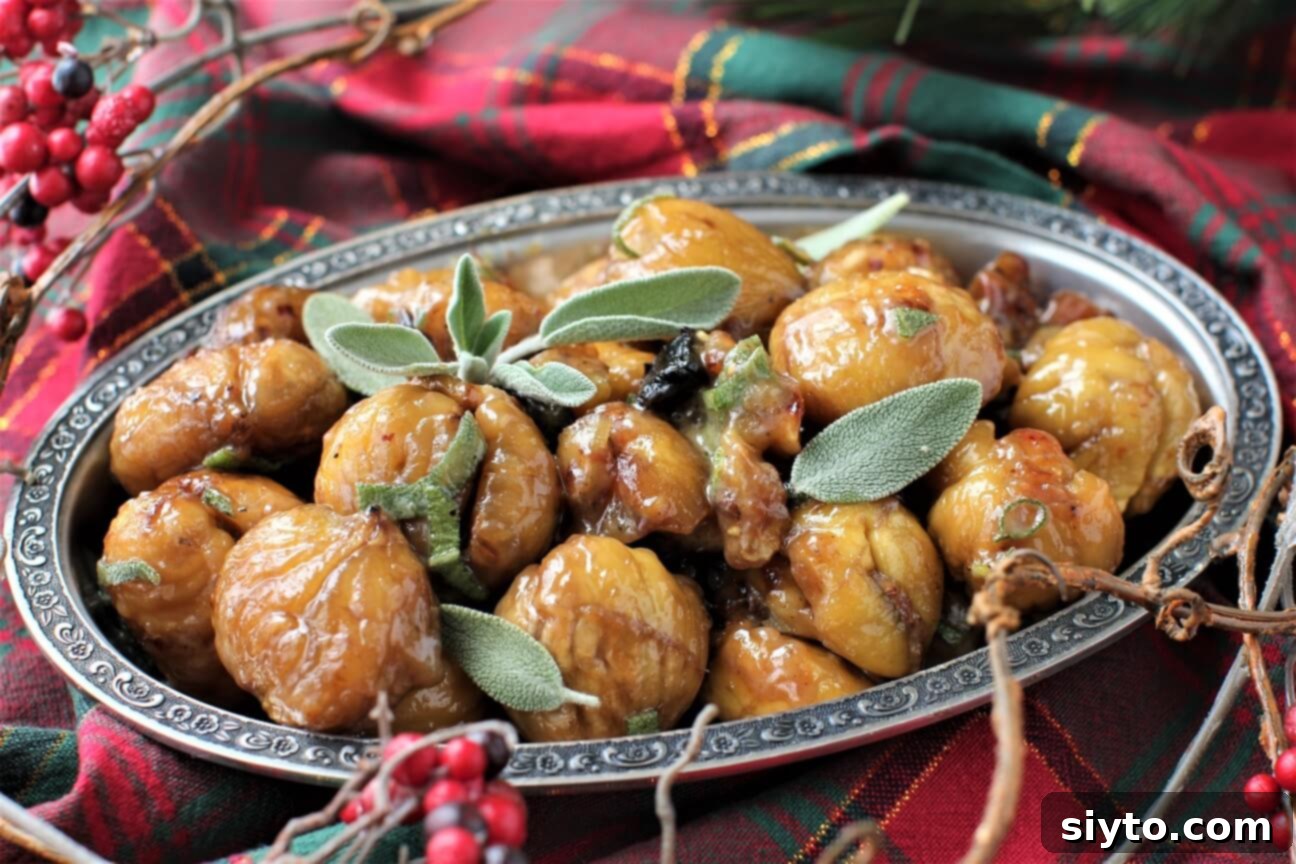
Glazed Chestnuts with Black Garlic & Sage: An Exquisite Side Dish for Festive Winter Campfire Feasts
Imagine a symphony of sweet, earthy, and savory notes dancing on your palate. That’s precisely what these glazed chestnuts offer – a truly special side dish destined to elevate any festive meal. Our roasted chestnuts are lovingly caramelized with just a hint of sugar and a luxurious splash of cream, then generously tossed with the deep, heady umami of black garlic and the vibrant freshness of sage. This unique combination creates an unforgettable flavor profile that is both comforting and sophisticated. Join us as we recount a memorable winter campfire cookout where this dish, among others, took center stage, proving that delicious gourmet food isn’t just for the kitchen. (Or you can skip straight to the recipe and get cooking!)
Here in Alberta, we’ve become accustomed to the wild and often dramatic swings of a northern winter. The old adage, “If you don’t like the weather, wait five minutes,” has never rung truer than in recent years. Our thermometer has been on a truly erratic journey, crazily zigzagging from bone-chilling -30°C to a surprisingly mild +10°C within a mere few days, only to plunge back into the deep freeze. One minute you’re bundling up in your warmest parka, the next you’re wondering if a light jacket or even a parasol might be more appropriate! These unpredictable shifts keep life interesting, but they also make us truly appreciate those rare, balmy winter days.
It was on one of those gloriously mild days, just a few weeks before Christmas last year, that we embarked on another one of our much-loved campfire cookouts. Life got busy, and I never quite got around to sharing the details before. However, as I gaze out my window at our world blanketed in pristine white snow, it feels like the perfect time to revisit that cozy memory and share this incredible recipe for glazed chestnuts. Even as the winter winds howl outside, the thought of bustling around a crackling campfire, surrounded by good food and company, truly warms me from the inside out.
A Delightful Winter Campfire Cookout Experience
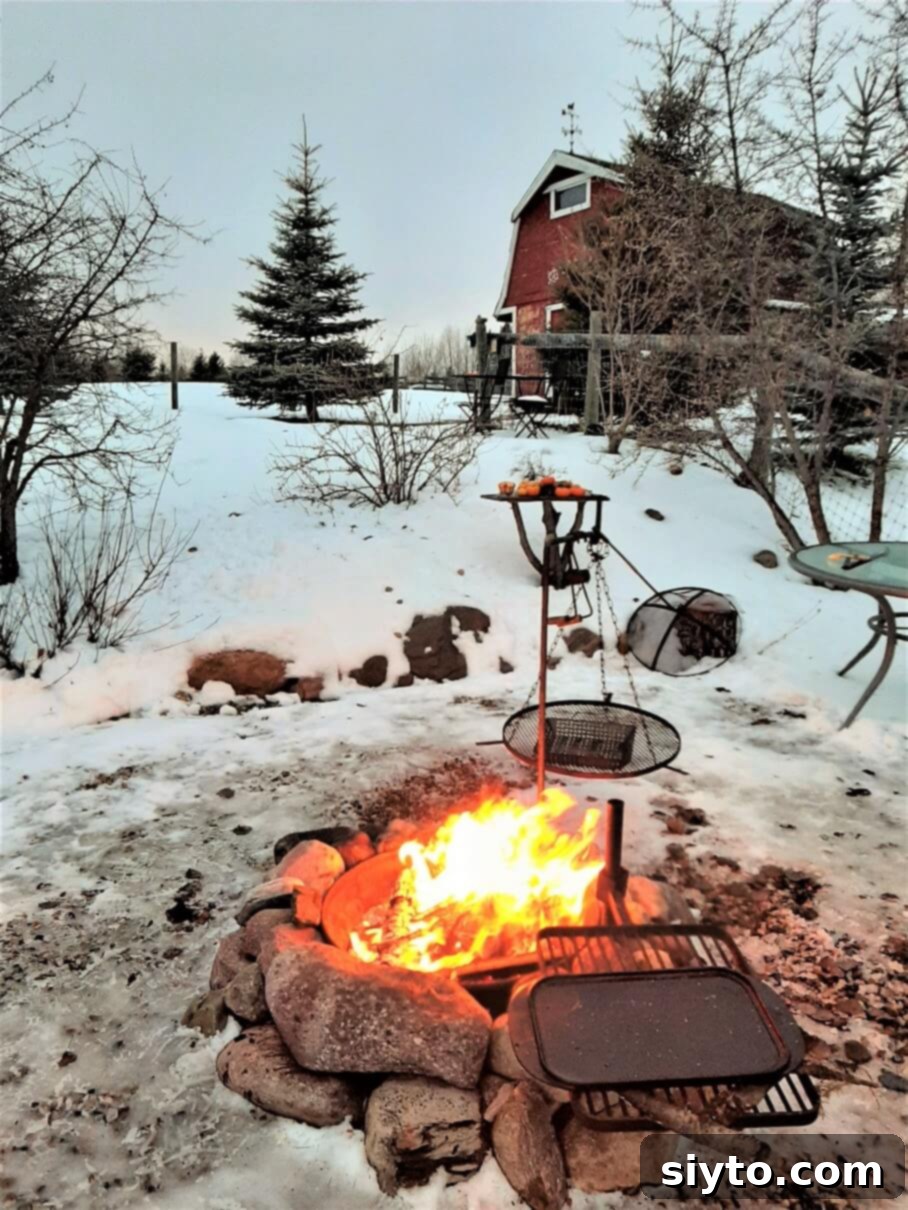
For this particular winter cookout, we meticulously picked a wonderfully warm day in early December. My trusty campfire cooking partner, Sabina, and I had to layer up – insulated boots and warm parkas were essential under our aprons – but the joy of cooking outdoors made it all worthwhile. The crisp air, the gentle crackle of the fire, and the anticipation of a delicious meal created an atmosphere of pure fun and adventure. There’s something uniquely invigorating about being outside in winter, feeling the bite of the air on your cheeks, yet being warmed by the radiant heat of a well-stoked fire.
Our culinary theme for this exceptional campfire meal was chestnuts. We began by roasting a generous skilletful of them directly over the hot, dancing flames. The sweet, earthy aroma filled the air, setting the stage for a truly immersive dining experience. These freshly roasted chestnuts then became the star ingredient, gracing every single course, from appetizers to a delightful dessert, showcasing their incredible versatility and rich flavor.
Our Inspiring Campfire Cooking: A Roasted Chestnut Menu Extravaganza
First Course
Chestnut and Buckwheat Blinis with Roasted Chestnuts, Leek, and Crispy Bacon
Entrée
Fire-Roasted Duck Breasts with Tangerine Madeira Sauce and Grilled Tangerines
Glazed Chestnuts with Black Garlic and Sage
Grilled Kale with Zesty Lemon
Dessert
Vermicelles (Traditional Swiss Chestnut Purée with Meringues and Chantilly Cream)
Rich Coffee with a touch of Kirsch and Whipped Cream
First Course: Fluffy Chestnut and Buckwheat Blinis
To begin our chestnut-themed feast, we whisked up a delightful batter for these remarkably light and fluffy blinis. The secret to their unique texture and flavor lay in the combination of finely milled chestnut flour and wholesome buckwheat flour. Cooking them over the campfire griddle added an irresistible subtle smokiness that you just can’t replicate indoors. As they puffed up golden and inviting, we prepared their accompaniments. We topped each warm blini with a generous dollop of cool, tangy sour cream, followed by savory leeks that had been sautéed until tender over the same crackling fire. Crispy bacon bits added a delightful textural contrast, and a final flourish of pan-fried, crumbled roasted chestnuts provided an extra layer of nutty depth. A drizzle of rich balsamic glaze completed this exquisite appetizer, setting a high standard for the meal to come.
Main Course Grandeur: Fire-Roasted Duck Breasts, Glazed Chestnuts, and Zesty Grilled Kale
The centerpiece of our main course was succulent duck breasts, imbued with an irresistible smoky flavor from the campfire. We cooked them meticulously on the griddle over the open flames until the skin was beautifully crispy and golden, while the meat remained perfectly pink and juicy in the center. The secret to this perfection lay in scoring the duck skins in a criss-cross pattern, then simply seasoning them with salt and pepper before cooking them skin-side down. This allowed the rich fat to render slowly, resulting in an exceptionally crisp skin. To complement the duck, we created a vibrant reduction sauce from freshly squeezed tangerine juice, a splash of aromatic Madeira wine, and a hint of piquant mustard, finished with a selection of seasonings. We even grilled tangerine halves alongside the duck, adding a delightful caramelized citrus note.
Alongside the duck, our star side dish of glazed chestnuts truly shone. After expertly roasting the chestnuts over the fire (a swift process that involved quick peeling while trying to avoid burning our fingers!), we brought them to life in a skillet. A touch of caramelized sugar imparted a rich sweetness, while a generous pour of cream created a velvety texture. Fresh sage leaves infused the chestnuts with their herbaceous aroma, and chunks of sweet, nutty black garlic added an unparalleled depth of umami. Black garlic, with its subtly sweet, balsamic, and date-like notes, is truly like nature’s candy and transforms this dish into something extraordinary. This simple yet elegant preparation resulted in chestnuts that were both comforting and sophisticated, perfectly balancing the richness of the duck.
To provide a bright, fresh counterpoint to the rich duck and chestnuts, we quickly sautéed vibrant green kale. A simple dressing of fresh lemon juice and zest brought out its natural peppery flavor, creating a delicious and visually appealing element on the plate. Each component of this main course was carefully balanced, creating a harmonious and utterly satisfying dining experience, all cooked under the vast winter sky.
As we savored our delightful dinner, the evening sun began its slow descent, painting the northern sky with hues of orange and purple. Winter days, especially in our northern latitude, are short, and by the time we were ready for dessert, darkness had fully enveloped us. Sitting around the warmth of the crackling fire, the world outside faded away, replaced by the intimate glow of the flames and the cozy camaraderie of good friends sharing an exceptional meal. It was a perfect transition from the lively cooking session to a serene, reflective dining experience.
Dessert: The Enchanting Vermicelles
To conclude our magnificent chestnut journey, we indulged in the traditional Swiss dessert known as Vermicelles. This exquisite treat begins with chestnuts, slowly simmered in milk until tender, then sweetened and infused with a fragrant splash of kirsch, a cherry brandy. The mixture is then transformed into a velvety purée, which is ingeniously pressed through a special tool (we used a potato ricer) to create delicate strands resembling spaghetti, hence the name. It’s typically served over a bed of crisp meringues or creamy ice cream and crowned with a generous cloud of Chantilly cream. What a truly luscious and sophisticated dessert, providing the perfect, grand finale to our chestnut extravaganza! The subtle sweetness of the chestnuts, the warmth of the kirsch, and the lightness of the cream created a dessert that was both elegant and deeply comforting.
We rounded off this glorious evening with steaming hot coffee, delightfully fortified with an extra splash of kirsch, and adorned with generous mounds of freshly whipped cream. There truly is something profoundly magical about sitting around a crackling fire in the deep dark of winter, wrapped in warm blankets, cradling a mug of something so warm and comforting. After having enjoyed a wonderful, multi-course meal cooked entirely outdoors, this final moment creates an unparalleled feeling of connection. It’s a connection to our past, to generations who cooked over open fires, to the primal beauty of nature, and most importantly, to each other, strengthening bonds under the starlit sky.
It was genuinely challenging to pinpoint the best part of this truly memorable meal – each dish was a triumph on its own. Yet, when combined, they orchestrated a culinary symphony that delighted the palate from the very first bite of blini to the last spoonful of Vermicelles. And beyond the food itself, the entire cooking experience was, as always, an absolute joy. Cooking outdoors over a crackling campfire transcends mere meal preparation; it’s a true culinary adventure. Engaging with the elements, feeling the heat of the fire, hearing the subtle sounds of nature – these sharpen our senses and forge a deeper connection to the food we create. The unique seasonings imparted by the smoke and the crisp, fresh air are nothing short of magical; every single bite becomes a treasured moment to savor, an experience richer than any indoor dining could offer.
Just a few days later, winter truly settled in again, blanketing our landscape in snow and ushering in colder temperatures. Our outdoor cooking experiences had to be put on hold, awaiting the return of warmer days. However, the memories, and indeed the taste, of that chestnut feast lingered. I found myself roasting more chestnuts in the oven, and the familiar warmth and comforting aroma made our kitchen feel just as cozy and wonderful, a delightful echo of our campfire adventure.
I simply couldn’t resist recreating those fantastic glazed chestnuts again for us to enjoy. Chestnuts themselves possess a wonderfully unique profile: sweet, buttery, nutty, and subtly starchy, making them a comforting food. They are incredibly delicious simply roasted and savored as a simple snack, but their true potential as a memorable side dish for a special dinner is undeniable. In this recipe, their natural sweetness is beautifully accented by the rich caramel notes from the browned sugar, which then harmonizes exquisitely with the savory depth of delicate black garlic and the fresh, herbaceous brightness of sage. This gourmet combination elevates the humble chestnut into an elegant and rich side dish, perfect for pairing with any roasted or grilled meats, from holiday roasts to a simple weeknight steak. It’s a versatile recipe that brings a touch of magic to any plate.
Mastering the Art of Roasting Fresh Chestnuts
If you’re eager to roast your own fresh chestnuts, you have the flexibility to do so over a lively campfire for that authentic smoky flavor, or in the comfort of your oven for a more controlled environment. While it involves a few simple steps, the process is far from difficult and yields wonderfully tender, flavorful nuts. The key to success begins with selecting the finest chestnuts: look for ones that are plump, heavy for their size, and free from blemishes, indicating freshness and quality.
- Score the Shells: First, and most importantly, cut a distinct slit into the shell of each chestnut. Make sure to cut across the center of the rounded side of each nut. A sharp serrated knife will make this task considerably easier and safer. The goal is to cut through the tough outer shell without slicing too deeply into the creamy flesh inside, if possible (though don’t worry if you occasionally nick the nut itself). This scoring prevents the chestnuts from exploding during roasting and allows steam to escape.
- Soak for Tenderness: Once scored, immerse the chestnuts in a bowl of cold water for 30 minutes to 2 hours. This crucial step allows a small amount of water to seep in under the shells. This moisture then helps to steam the nuts from within during cooking, resulting in a more tender texture and, more importantly, making them significantly easier to peel once roasted.
- Roast to Perfection: Arrange the scored, soaked chestnuts in a single layer on a baking sheet. Roast them in a preheated oven at 425°F (220°C) for approximately 15 to 20 minutes, or until the shells have split widely apart along the scored lines, indicating they are cooked through. Alternatively, for a campfire experience, place them in a cast iron skillet set directly into the hot coals or on a grill over the campfire. Roast them, shaking the skillet or stirring the nuts frequently to ensure even cooking, until they begin to open up.
- Peel While Warm: Once roasted, immediately remove the baking sheet or pan from the heat. Cover the chestnuts with a clean kitchen towel, aluminum foil, or a pot lid to trap the steam and keep them warm. This warmth is vital, as chestnuts are easiest to peel when hot. Work quickly, peeling a few at a time, using a small paring knife to assist you if needed, especially to remove any stubborn inner skins. Discard any nuts that appear too hard or shriveled.
Explore More of Our Campfire Cooking Adventures:
Spicy Ribs for Grilling or Oven-Roasting, Canadian-Style
Garlic Herb Butter and a Campfire Cooking Venison Dinner
A Herb-Themed Dinner with Artichoke Chicken
A Grilled Steak & Corn Dinner with Zucchini Stack Appetizers
A Mexican Campfire Fiesta with Carnitas Caseras Tacos
A Summer Solstice Menu with Bison Burgers and Bannock Buns
A Spring Menu with Creamy Fiddlehead Soup, Grilled Halibut with Herb Butter, and an Aperol Spritz Cocktail
Fall Dinner: Smoky Venison Stew with German Pickled Pumpkin
Harvest Feast: Lamb Kebabs, Roasted Beet Salad
Local Alberta Menu: Porterhouse Steak Cooked on the Coals, Kombucha Cocktail
Want to receive new Kitchen Frau recipes directly to your email as soon as they’re posted? Sign up here and you’ll get bits of news updates on what’s happening in my kitchen and garden, plus a handy and useful kitchen tip along with each recipe, too. (No spam ever.)
If you like my recipes, follow me on Instagram, Pinterest, X, and Facebook. You’d make my day. 😊
Guten Appetit!
Kitchen Frau Notes: If you’re using fresh chestnuts, refer to the detailed instructions above for roasting your own. This process ensures the freshest flavor and perfect texture. However, for convenience, you can certainly use good quality pre-cooked, vacuum-packed chestnuts available in most grocery stores. When it comes to black garlic, its unique, sweet, and savory umami flavor is truly distinct. If you don’t have black garlic on hand, a good substitute would be a few cloves of roasted garlic. To roast garlic, simply cut the top off a whole bulb, drizzle it with a little olive oil, wrap it securely in foil, and bake it in a preheated oven at 350°F/180°C for about 30 to 45 minutes, or until the cloves are wonderfully soft and tender. Once roasted, pop the caramelized cloves out of their skins and dice or mash them to add to this dish and many other recipes. Roasted garlic has a milder, sweeter flavor than raw garlic, bringing a depth that complements the chestnuts beautifully. As a bonus, you can even spread these soft, roasted garlic cloves onto toasted baguette slices, top with melted brie and a dollop of your favorite jam for a truly delicious and sophisticated appetizer!
Recipe: Glazed Chestnuts with Sage and Black Garlic
These sweet and savory glazed chestnuts are a delightful addition to any meal, offering a unique blend of flavors and a comforting texture. Perfect as a festive side dish or a gourmet accompaniment.
- 2 tablespoons unsalted butter
- 2 tablespoons sugar (preferably natural evaporated cane sugar for a richer caramel)
- 1 lb (454g) cooked or roasted peeled chestnuts (freshly roasted or good quality vacuum-packed)
- 1-2 cloves black garlic, finely chopped or mashed (*see notes above for roasted garlic substitution)
- 1 tablespoon fresh sage leaves, finely chopped (or 1 teaspoon crumbled dried sage for convenience)
- ¼ cup (60ml) heavy cream (also known as whipping cream, for richness)
- Salt and freshly ground black pepper, to taste
- Fresh sage leaves for garnish (optional, but adds a lovely visual touch and fresh aroma)
Instructions:
1. In a medium-sized skillet, combine the butter and sugar. Place the skillet over medium heat and cook, stirring occasionally, until the sugar has completely dissolved and begins to transform into a beautiful, light brown caramel. Be vigilant during this step, as caramel can burn quickly.
2. Add the prepared chestnuts to the skillet, ensuring they are evenly distributed. Cook them in the bubbling caramel for approximately 5 minutes, stirring frequently to ensure every chestnut is thoroughly coated and begins to develop a lovely golden-brown hue in spots. This step infuses the chestnuts with a wonderful sweetness and a hint of nutty caramelization.
3. Stir in the finely chopped black garlic (or roasted garlic substitute), the fresh or dried sage, and the heavy cream. Continue to cook and stir for another few minutes. The cream will gradually thicken, forming a luscious, shiny sauce that beautifully coats the glazed chestnuts.
4. Taste the glazed chestnuts and season generously with salt and freshly ground black pepper to your preference. The salt helps to balance the sweetness and enhance all the flavors. If desired, garnish with a few fresh sage leaves before serving to add an extra layer of aroma and an elegant visual appeal.
Serves 4 as a delicious side dish, complementing a variety of main courses.
PIN IT HERE to save this exquisite recipe for later and share it with friends:
You might also like these complementary recipes for your next meal:
Hearty Chestnut Soup with Stilton Toasts
Creamy Classic Mashed Potatoes
Invigorating Warm Brussels Sprout Salad
Sweet Apple Cider Glazed Carrots