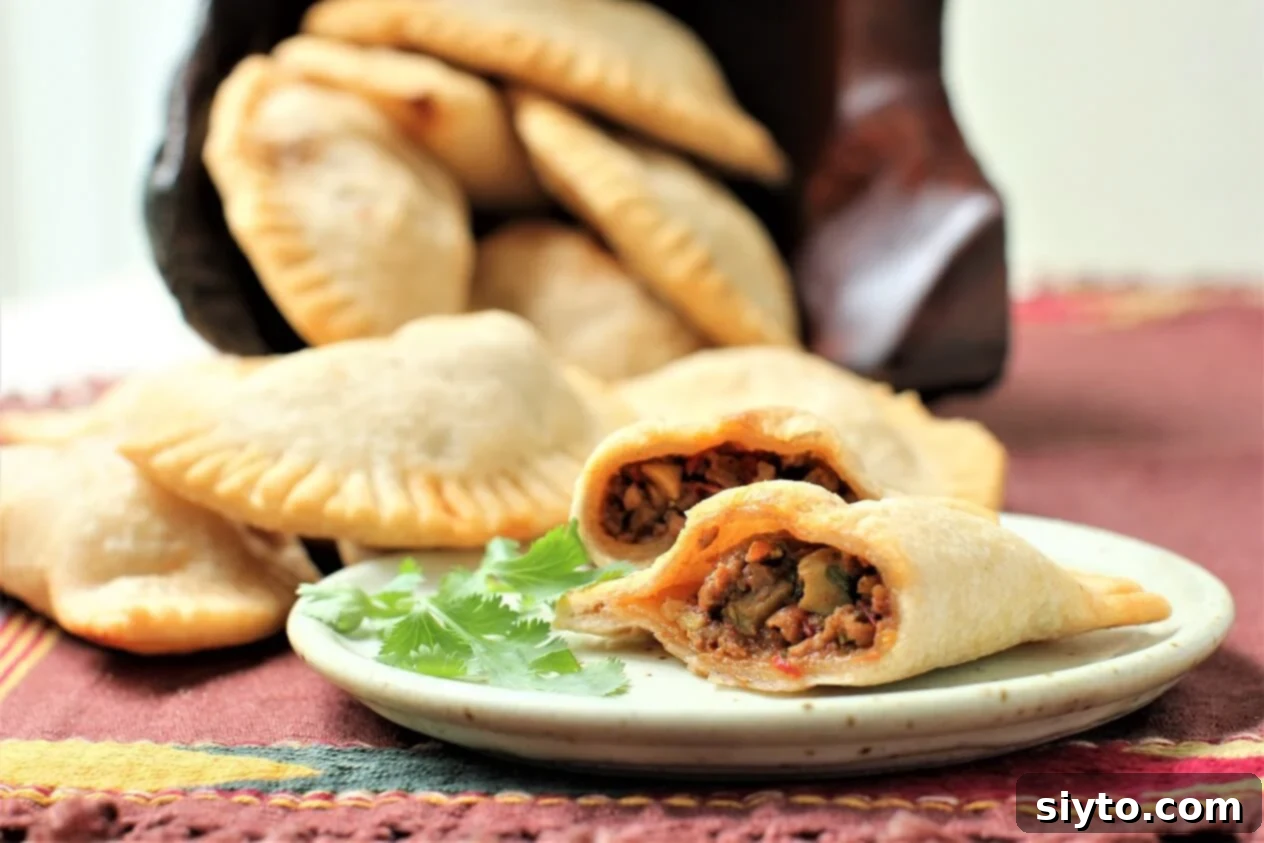
Authentic Dominican Catibías: Crispy Gluten-Free Cassava Empanadas (Empanaditas de Yuca)
Embark on a culinary journey to the vibrant streets of the Dominican Republic with these irresistible Catibías, also known as Empanaditas de Yuca or cassava empanadas. These savory hand pies are a beloved street food, cherished for their unique texture and flavorful fillings. Naturally gluten-free, the dough is crafted from cassava flour, offering a delightful combination of crispiness and chewiness when fried. Encasing a rich, seasoned ground beef filling, these empanadas are a fantastic snack or appetizer that promises a taste of Caribbean sunshine right in your kitchen.
Discovering the Dominican Republic’s Rich Gastronomy
For those eager to explore global flavors, our “Eat the World” recipe challenge brings us this month to the beautiful islands of the Caribbean, specifically the Dominican Republic. As the second-largest country in the Caribbean, the Dominican Republic offers more than just stunning beaches stretching over 250 miles; it’s a land brimming with diverse culture, a storied history, and breathtaking geography that includes mountains, caves, waterfalls, and lush jungles. Beyond its natural beauty, the Dominican Republic is a prime destination for experiencing a truly rich and varied gastronomy.
Dominican cuisine is characterized by its use of the freshest seafood and an impressive array of tropical fruits. However, it’s the vibrant street food scene that truly captures the heart of Dominican eating. From dawn till dusk, local vendors serve up a plethora of fried and filling snacks that are deeply woven into the daily lives and culinary traditions of Dominicans. These portable, delicious bites are perfect for enjoying on the go, whether you’re strolling through a bustling market or relaxing on a sun-drenched street corner.
Among these beloved street foods, catibías or empanaditas de yuca hold a special place. These delightful hand pies are distinct because their dough is made from cassava flour, making them naturally gluten-free. Traditionally stuffed with savory fillings like seasoned meat, chicken, or seafood, and then deep-fried to golden perfection, they are an absolute treat. The best part? These wonderfully authentic Dominican empanadas are surprisingly simple to recreate in your own kitchen, allowing you to bring a piece of Caribbean culinary tradition home.
Understanding Cassava Flour: The Secret to Perfect Catibías
The magic behind the unique texture of Dominican cassava empanadas lies in its star ingredient: cassava flour. Often confused with tapioca starch, it’s crucial to understand the difference. Cassava flour is derived from the entire tubular root of the yuca (also known as cassava or manioc) plant, which is then dried and finely ground. Because it utilizes the whole root, cassava flour retains all the natural vitamins, minerals, and fiber found in this staple plant, which is widely cultivated across South America, Asia, and Africa.
This remarkable flour is celebrated for being gluten-free, nut-free, grain-free, and suitable for paleo, vegetarian, and vegan diets. Its versatility makes it an excellent substitute for wheat flour in various dishes and baked goods, especially in regions where yuca is a dietary cornerstone. In contrast, tapioca flour (or tapioca starch) is a refined product, essentially the pure starch extracted from the cassava root. This means it lacks the fiber and nutrient content of whole cassava flour. You’ll notice the difference in appearance and texture too: cassava flour is typically creamy in color and has a slightly heavier consistency, while tapioca starch is pure white, light, and powdery. Tapioca starch is more commonly used as a thickener or in gluten-free blends to add elasticity to baked goods, whereas cassava flour provides a more robust and wholesome base.
Finding high-quality cassava flour has become easier with its growing popularity in health food stores, online retailers, and the natural food sections of many supermarkets. It’s an essential ingredient for authentic gluten-free baking and for recreating international dishes like these flavorful Dominican cassava empanadas. Our recipe is adapted from traditional Cativías, ensuring an authentic and delicious experience.
Mastering Empanaditas de Yuca at Home
Oh, the sheer deliciousness of these Empanaditas de Yuca! Yes, they are fried, and that’s precisely what elevates them to such a decadent treat. Frying not only imparts incredible flavor but also creates that signature crispy-chewy texture that makes them so addictive. While not an everyday meal, enjoying these authentic Dominican street food snacks occasionally is a fantastic way to indulge in something wonderfully different. Plus, making these gluten-free empanadas at home gives you complete control over the ingredients, allowing you to tailor them to your preference for a healthier option if desired.
Frying these empanadas can seem daunting, but it doesn’t have to be. By shallow-frying them in about an inch of oil in a small, heavy-bottomed pot, you avoid the complexities of managing vast quantities of bubbling oil. Simply cook three or four empanadas at a time, ensuring they have enough space to cook evenly and turn golden brown.
Traditional fillings often include various meats or seafood, with conch being a particularly popular choice in the Caribbean. For a simpler yet equally satisfying option, you can even tuck a few cubes of cheese inside the dough pockets to create delicious cheese empanadas. To streamline your cooking process, prepare the filling in advance—it can even be made a day ahead. This allows you to fry the empanaditas quickly when you’re ready to enjoy them. The cassava flour dough is incredibly easy to work with; it’s pliable and fun to roll, making the assembly process enjoyable. If you find yourself with leftover filling, don’t let it go to waste! You can make another half-batch of empanada dough and freeze some uncooked empanadas for future treats, or get creative and use the filling for tacos, quesadillas, scrambled eggs, nachos, fried potatoes, or even sandwiches. The possibilities are endless for repurposing this savory mixture.
Easy Steps for Making Gluten-Free Empanadas from Cassava Flour
Creating these delightful gluten-free cassava empanadas at home is simpler than you might think. Follow these straightforward steps for a delicious and authentic result:
1. Prepare the Flavorful Filling: Begin by cooking your ground beef filling in a skillet until it’s perfectly browned and all liquids have evaporated. Allow it to cool completely before assembling the empanadas. You can even prepare this step a day in advance to save time.
2. Craft the Pliable Cassava Dough: In a large bowl, combine the cassava flour with a pinch of salt and a touch of oil. Gradually add boiling water, stirring until a smooth, pliable dough forms. It should have a consistency similar to playdough—easy to handle and not too sticky. Be careful as the dough will be quite warm.
3. Portion and Roll: Divide the dough into 16 equal pieces. Roll each piece into a smooth ball. Next, using a rolling pin or a tortilla press, flatten each ball into a circular disc, about 4.5 inches (11-12 cm) in diameter. If the dough seems to stick, lightly dust your work surface or rolling pin with a little extra cassava flour.
4. Fill and Fold: Spoon a generous amount of the cooled meat filling onto one half of each dough circle. To ensure a perfect seal, moisten the outer edge of the dough circle by running a water-dipped finger along it. Then, carefully fold the other half of the dough over the filling, creating a classic half-moon shape. Gently press out any trapped air before sealing the edges firmly.
5. Seal and Crimp: To further secure the filling and add a decorative touch, use the tines of a fork to crimp the sealed edges of the empanada. This not only provides extra insurance against the filling escaping during frying but also gives them an appealing, rustic look. For a neat finish, you can trim off any ragged excess dough around the crimped border.
6. Fry to Golden Perfection: Heat about 1 inch (2.5 cm) of vegetable oil in a medium-sized, heavy-bottomed pot. The ideal temperature for frying is around 365°F (185°C). You can test the oil by inserting the dry handle of a wooden spoon; if small bubbles form around it after a few seconds, it’s ready. Carefully slip 2 or 3 empanadas into the hot oil at a time, ensuring not to overcrowd the pot. Fry them for about 3 minutes per side, or until they turn a beautiful light golden color and are wonderfully crisp. Remember that cassava flour empanadas won’t darken as much as those made with wheat flour.
Trim off any ragged edges of the dough, and your gluten free empanadas are ready to fry. Heat about 1-inch of oil in a pot, and slip in 2 or 3 empanadas at a time to fry until they are crisp and golden.
7. Drain and Serve Immediately: Once fried, remove the hot empanadas from the oil and place them on a plate lined with several layers of paper towels to drain any excess oil. Serve them immediately while they are still warm and at their peak crispiness for the best possible experience!
If a tropical holiday isn’t on your immediate horizon, these delectable Dominican cassava empanadas offer the perfect culinary escape. Pair them with a refreshing Piña Colada, put on some festive island music, and invite friends over for a mini-beach party right at home. These empanadas are more than just food; they’re an experience, a delightful bite of the Dominican Republic’s vibrant culture.
* * * * *
Explore the diverse flavors of the Dominican Republic with fellow “Eat the World” members! Don’t forget to share your culinary creations with #eattheworld. Click here to learn how to join our monthly adventure and discover new countries through food in your own kitchen!
Here are some other fantastic Dominican Republic dishes prepared by our community:
- Sneha’s Recipe: Locrio de Pollo (Dominican Chicken and Rice)
- Palatable Pastime: Spicy Plantains
- Amy’s Cooking Adventures: Taco Shepherd’s Pie (Pastelón de Papa)
- Kitchen Frau: Empanaditas de Yuca (Gluten Free Cassava Empanadas)
- Pandemonium Noshery: Habichuelas Guisadas
- Culinary Adventures with Camilla: Pastelón de Harina de Maíz
- A Day in the Life on the Farm: Chimi Burger
Guten Appetit!
* * * * *

Empanaditas de Yuca (Cassava Empanadas)
Margaret Bose Johnson
Save to Pinterest
Ingredients
Filling
- 1 tablespoon vegetable oil (I like avocado oil)
- 1 small onion finely diced
- 4 cloves garlic minced or pressed
- 1 lb (454gms) lean ground beef
- 1 sweet bell pepper, any colour finely diced
- 2 tablespoons finely chopped manzanilla olives (stuffed green Spanish olives)
- 1 tablespoon juice from the olive jar
- 1½ teaspoons fine sea salt
- 1 teaspoon pepper
- 1 cup (240ml) tomato sauce
- 2 tablespoons chopped fresh cilantro optional
Empanada Dough
- 2 cups (280gms) cassava flour (not tapioca starch)
- 1½-2 cups (360-480ml) boiling water
- 1 teaspoon fine sea salt
- 1 tablespoon vegetable oil
- vegetable oil for frying, 1″ deep (2.5cm) in small heavy-bottomed pot Use an oil with a high smoke point.
Instructions
Make the Filling First
- Heat the oil in a skillet over medium-high heat. Add the onion and cook until translucent (3-4 minutes). Add the garlic and cook for 1 more minute.
- Add the ground beef and cook until completely browned and the liquid has evaporated, stirring and breaking up any chunks as the meat cooks.
- Add the bell pepper, olives, olive juice, salt, and pepper. Stir in the tomato sauce and cook until all the liquid has evaporated and the meat mixture is fairly dry.
- Stir in the cilantro, if using, and leave the filling to cool completely.
Then Make the Empanada Dough
- Combine the cassava flour, salt, and 1 tablespoon of oil in a large bowl or the bowl of a stand mixer.
- Pour 2 cups (480ml) boiling water into a 2-cup measuring cup. Add about ½ cup (120ml) of the water at a time to the flour, mixing well after each addition, until you have a crumbly, slightly dry dough. This should only take about 1½ cups (360ml) of the water, but you may need a bit more, depending on how absorbent your cassava flour is. The dough will be quite hot. After you’ve added the 1½ cups of water, see if you can squeeze and knead the dough into a ball. If it’s still too crumbly, add a bit more water at a time until you can form a ball.
- Knead the dough into a smooth ball (it should be like playdough), then roll it into a thick log, 8-9 inches long (20-23cm). Cut the log in half and work with one half at a time, keeping the unused dough covered with plastic food wrap or a damp towel.
- Cut the log half into 8 equal pieces. Work with one piece at a time, keeping the others also under the wrap. Roll each dough piece into a ball, then use a rolling pin (or empty bottle) or a tortilla press, roll out the ball into a 4½-inch circle (11-12cm). If the dough sticks to the work surface or rolling pin, dust it lightly with cassava flour.
- Wet the edge of the circle all the way around using a finger dipped in water.
- Place a heaped tablespoon of the filling onto one half of the dough circle. Fold over the other half of dough and press the edges firmly together to form a half-moon shaped empanada, pressing out any air before completely sealing it.
- Press the tines of a fork over the sealed lip of dough around the curved side of the empanada. Trim off a thin strip of dough all around the crimped edge to make a neat border.
- Repeat the procedure with the rest of the dough pieces, and then the 8 pieces from the other half of the log, to make 16 empanadas.
- Heat 1-inch (2.5cm) of oil in a medium-sized heavy-bottomed pot (large enough to hold 3 or 4 empanadas without crowding). The oil is hot enough when it reaches 365°F (185°C) on a thermometer, or when you stick the dry handle of a wooden spoon into the oil and after a few seconds it starts to make lots of small bubbles around the handle. (If it doesn’t bubble, it’s not hot enough yet.)
- Add 3 or 4 empanadas to the hot oil – they should be able to float without touching each other. Fry for about 3 minutes, then flip them over and fry the other side for 3 minutes, or until they turn light golden at the crimped edges. Empanadas made with cassava flour are done when light golden (they don’t darken as much as flour empanadas).
- Remove the fried empanadas to a plate covered with several layers of paper towel to drain for a few minutes.
- Serve hot.
Notes
Cassava empanadas freeze very well. Lay the uncooked empanadas in a single layer on a parchment paper lined baking sheet. Freeze until solid, then put the frozen empanadas into a ziptop bag or sealed container and store in the freezer for up to 2 months. Defrost and fry as per the recipe, or fry them from frozen (cooking them for 1 minute longer on each side).
You can re-use your frying oil several times, as long as it hasn’t burnt. Allow it to cool, then strain it through a coffee filter or several layers of cheesecloth.
Want to receive new Kitchen Frau recipes directly to your email? Sign up here and you’ll get a handy and useful kitchen tip along with each recipe, too. (No spam ever.)
If you like my recipes, follow me on Instagram, Pinterest, Twitter, and Facebook. You’d make my day!
PIN IT HERE to save the recipe for later:
Check out my past ‘Eat the World’ Recipe Challenge posts:
(in alphabetical order)
- Argentina: Red Chimichurri Sauce
- Australia: Anzac Biscuits (Crispy Oatmeal Cookies)
- Bangladesh: Chingri Masala (Shrimp Curry)
- Bulgaria: Patatnik (Savoury Potato and Cheese Pie)
- Cambodia: Noum Kong (Cambodian Rice Flour Doughnuts)
- China: Kung Pao Chicken
- Colombia: Pan de Yuca (Warm Cheese Buns)
- Ecuador: Pescado Encocado (Fish in Coconut Sauce)
- Egypt: Fava Beans and Feta
- England: Gluten Free Fish and Chips and Mushy Peas
- Ethiopia: Four Ethiopian Recipes for a Fantastic Feast
- Fiji: Spiced Sweet Potato and Banana Salad
- Finland: Lohikeitto (Creamy Salmon, Potato, and Dill Soup)
- France: Axoa d’Espelette (A Simple Stew from the Basque Country)
- Georgia: Charkhlis Chogi (Beets with Sour Cherry Sauce)
- Greece: Moussaka
- Guyana: Fried Tilapia in Oil & Vinegar Sauce (fish dish)
- Hungary: Túrós Csusza (Pasta Scraps with Cottage Cheese)
- India: Kerala Upma (Fluffy, Kerala Style Breakfast Upma Recipe)
- Iraq: Tepsi Baytinijan (Eggplant & Meatball Casserole)
- Ireland: Dublin Coddle (A tasty Sausage and Potato Stew)
- Israel: Cucumber, Feta, and Watermelon Salad
- Jamaica: Rice and Peas (Coconut Rice and Red Beans)
- Japan: Chawanmushi (Steamed Savoury Egg Custard)
- Kenya:Maharagwe with Ugali (Red Beans with Cornmeal Slice)
- Laos: Ping Gai (Lao Grilled Chicken Wings)
- Lesotho: Chakalaka & Pap (Veggie & Bean Stew with Cornmeal Polenta)
- Luxembourg: Stäerzelen (Buckwheat Dumplings)
- Mexico: Cochinita Pibil Tacos (Pit Barbecued Pig to Make in Your Oven)
- Netherlands: Boerenkool Stamppot (Kale-Potato Mash with Sausages & Pears)
- New Zealand: Classic Pavlova
- Poland: Polish Honey Cake
- Portugal: Tuna and Sardine Pâtés
- Puerto Rico: Piña Colada Cocktail
- Scotland: Cranachan (Raspberry, Whisky & Oat Cream Parfaits)
- Senegal: Mafé (Beef and Peanut Stew)
- Slovakia: Bryndzové Halušky (Potato Dumplings with Cheese & Bacon)
- Sudan: Peanut Butter Creamed Spinach & Peanut Meringue Cookies
- Sweden: Swedish Meatballs with Cream Gravy
- Switzerland (Christmas): Basler Leckerli Cookies
- Thailand: Shrimp Laksa (Khung)
- Trinidad & Tobago: Peanut Butter Prunes
- Turkey: Çilbir (Scrambled Eggs with Garlic Yogurt)
- Ukraine: Buckwheat Kasha with Beef
- United States (Soul Food): Smothered Pork Chops
- Uruguay: Torta de Fiambre (Baked Ham & Cheese Sandwiches)
- Vietnam: Caramelized Pork Rice Bowls