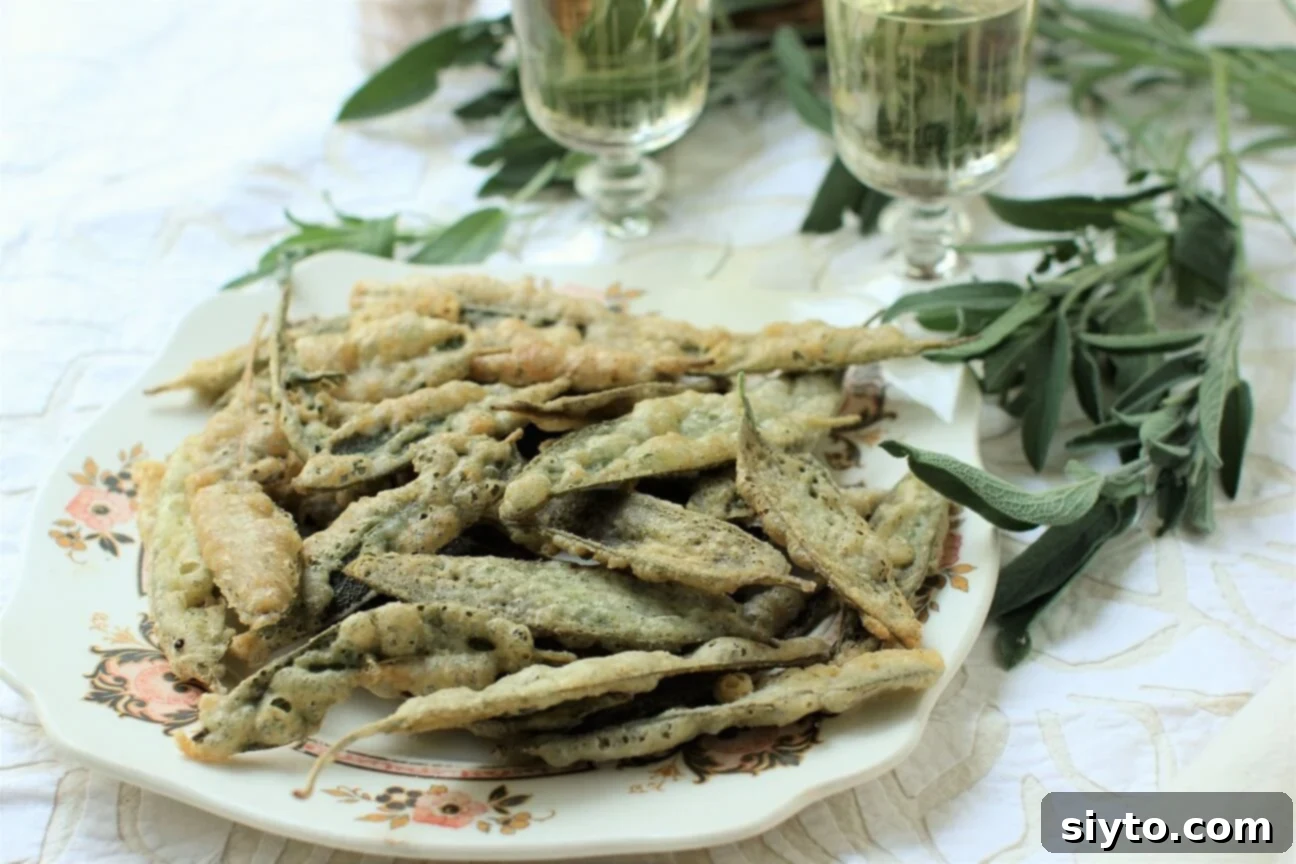
Crispy Fried Sage Fritters: A Gluten-Free Delight Inspired by Alberta’s Badlands
Imagine serving a platter of light, crunchy fried sage leaves, and instantly becoming the culinary star of any gathering. These delectable little bites are incredibly “more-ish”—you truly can’t stop at just one! Fresh sage leaves transform when quickly fried, either simply as a unique garnish or enveloped in this ultra-light, crackling batter to create exquisite, gluten-free fritters.

My inspiration for these delightful fritters came after a recent soul-refreshing journey through a truly unique corner of Alberta: the Badlands. Our trip offered a much-needed break from the everyday, immersing us in a landscape of astonishing variety. We encountered vast stretches of silver sage, thriving in the rugged, sparse terrain. Its distinct clean and spicy fragrance permeated the air, carried far and wide by the invigorating prairie winds. This vivid experience sparked a desire to return home and make the most of the sage leaves still flourishing in our garden beds.
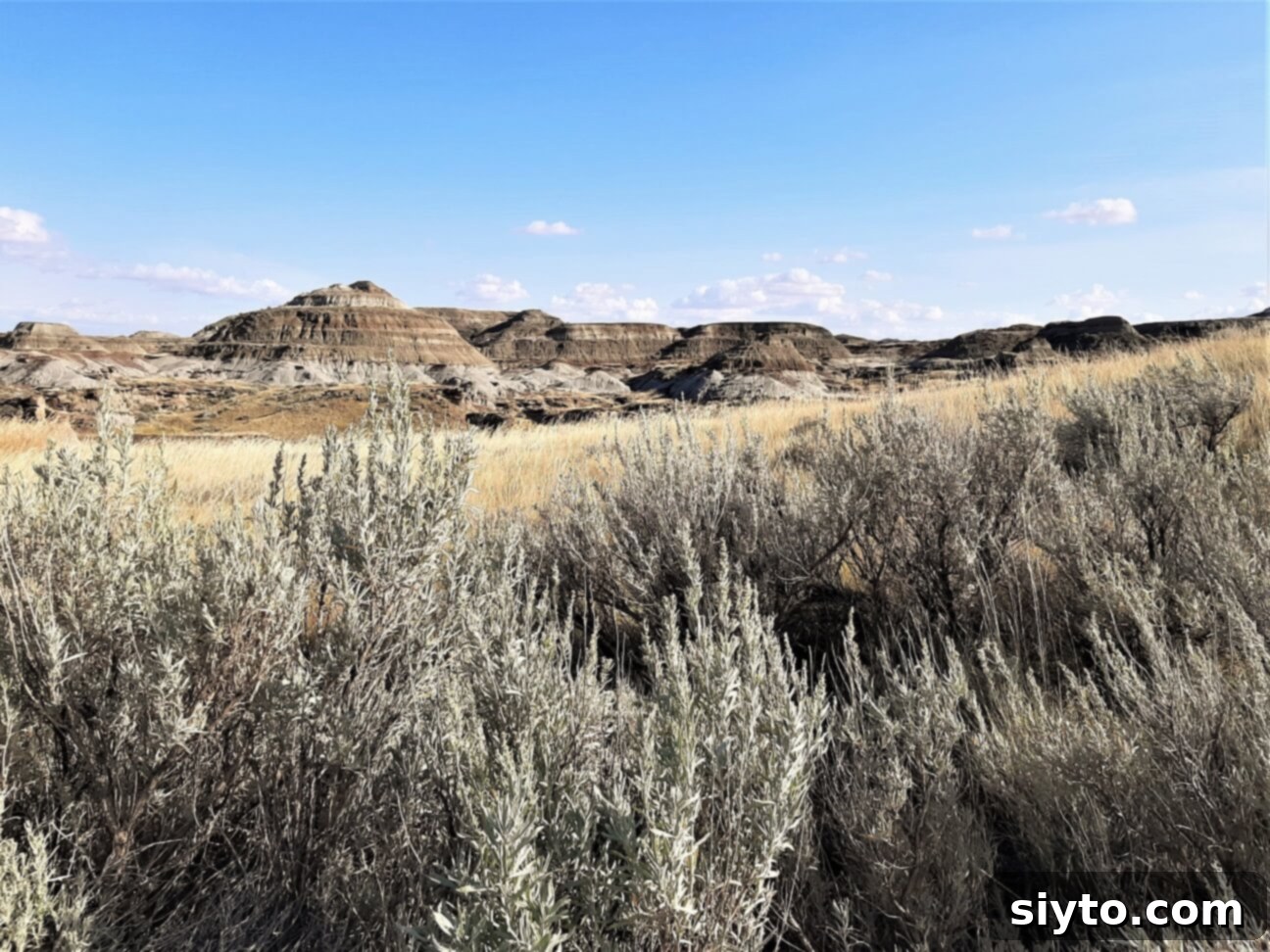
*For a full recap and stunning photos of our unforgettable journey through Alberta’s Badlands and Dinosaur Trail, scroll down past the recipes.
Crafting Crispy Fried Sage Leaf Fritters: A Culinary Adventure
These petite fritters are more than just a snack; they’re an experience. Each bite delivers a delicate, faintly herbal sage flavor, perfectly encased in a remarkably crispy crust. The secret to their incredible lightness and satisfying crunch lies in sweet rice flour, which gives them a delightful, shattering texture as you bite into them. To ensure the sage’s essence truly shines through, I’ve boosted the flavor profile by incorporating extra ground sage directly into the batter, compensating for the natural mildness that can occur when the leaves are fried.
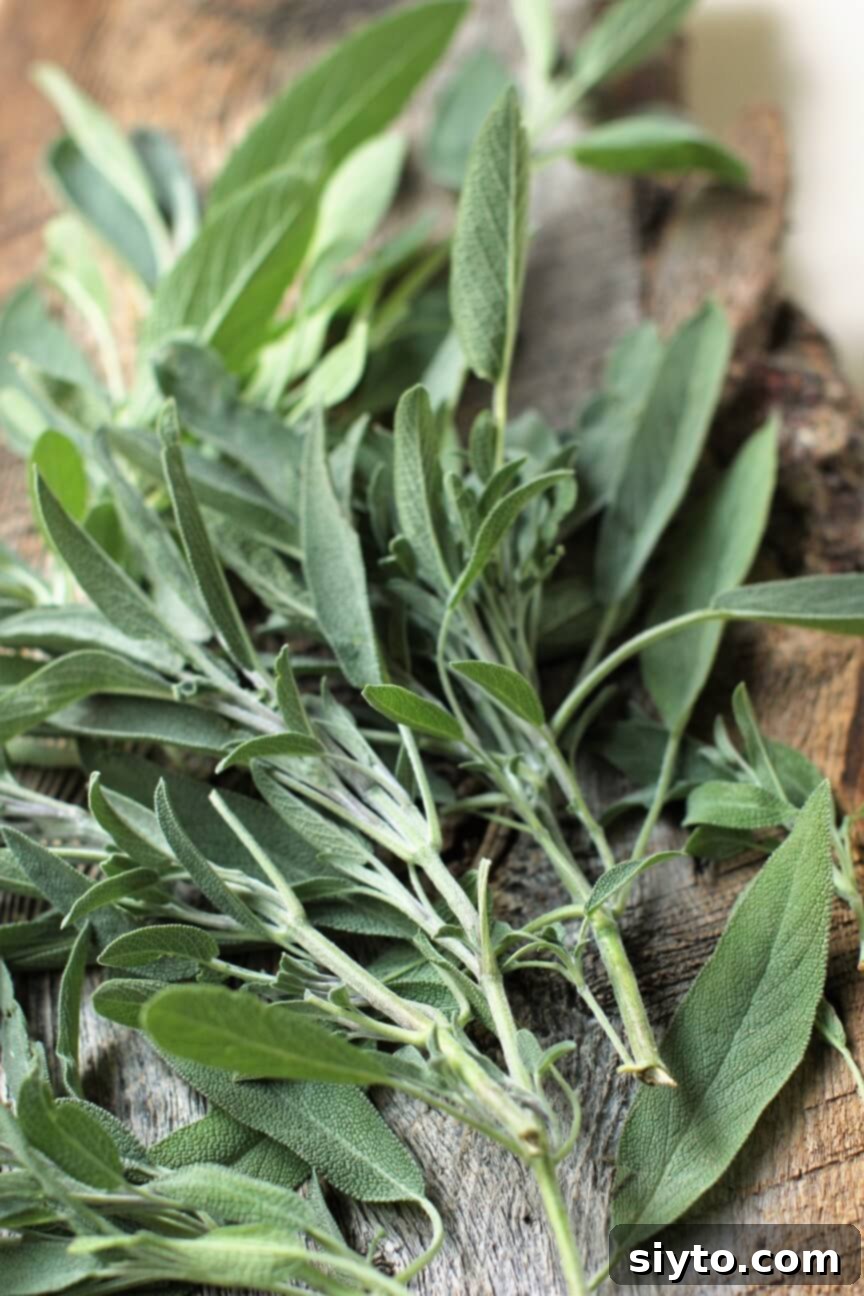
Begin by gathering fresh, aromatic sage leaves from your garden. If they are clean and organic, there’s no need to wash them. However, if rinsing is necessary, gently roll them in a clean dish towel, place the roll into a plastic bag, and refrigerate overnight. This crucial step ensures the leaves are thoroughly dry, which is key to achieving that perfect crispy texture when frying.
Next, prepare a simple yet effective batter. In a small bowl, combine sweet rice flour, an egg white, sparkling water, and a few other key ingredients. Whisk them together until you achieve a perfectly smooth consistency, free of any lumps. The sparkling water contributes to the batter’s airy lightness, resulting in an incredibly delicate and crispy coating.
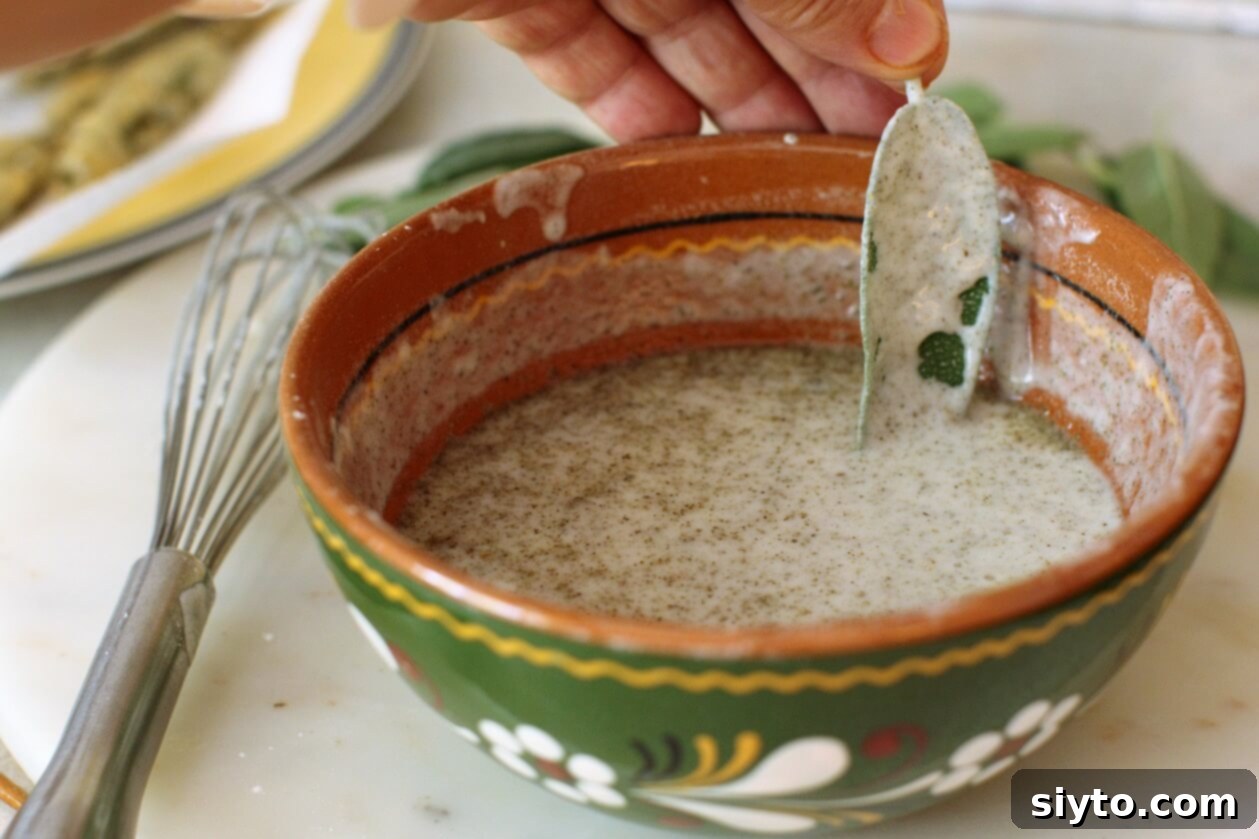
Once your batter is ready, it’s time for frying. Heat your preferred oil or beef tallow (tallow offers an exceptionally rich flavor) in a small skillet to a hot, rippling temperature. Dip each sage leaf into the batter, ensuring it’s fully coated by repeating the dipping process a few times and scraping off excess batter against the bowl’s edge. Then, carefully place the coated leaves into the hot fat. Fry them for just a few seconds on each side, until they turn a beautiful golden hue and become wonderfully crispy. Their delicate nature means they cook incredibly fast, so it’s best to fry only a few at a time to maintain control and achieve perfect results.
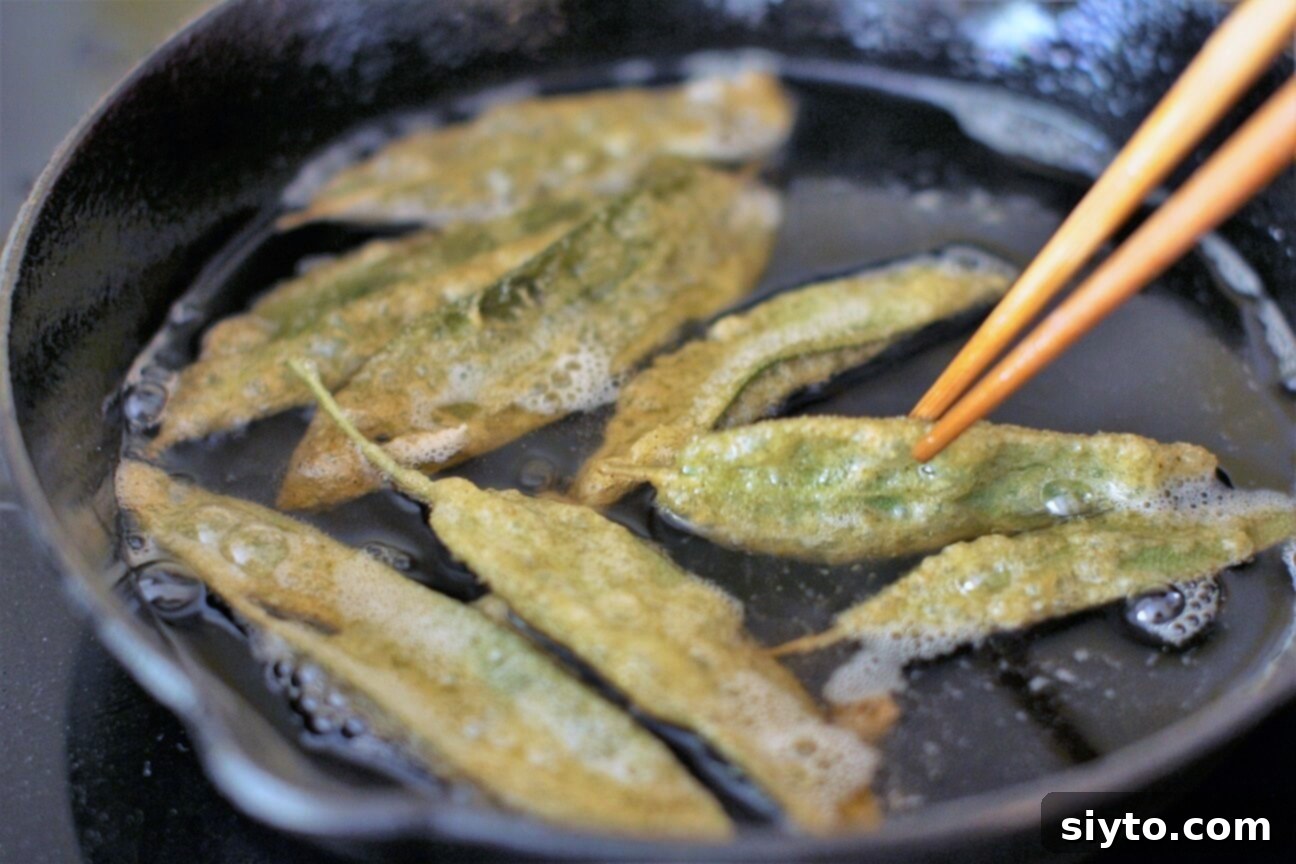
As each batch of fritters finishes, remove them with tongs or chopsticks and place them on a plate lined with paper towels to drain any excess oil. Immediately sprinkle them with a pinch of salt to enhance their flavor. For the best experience, serve these fantastic, crunchy little snacks immediately with your favorite drink, perhaps a crisp white wine or a refreshing sparkling water.
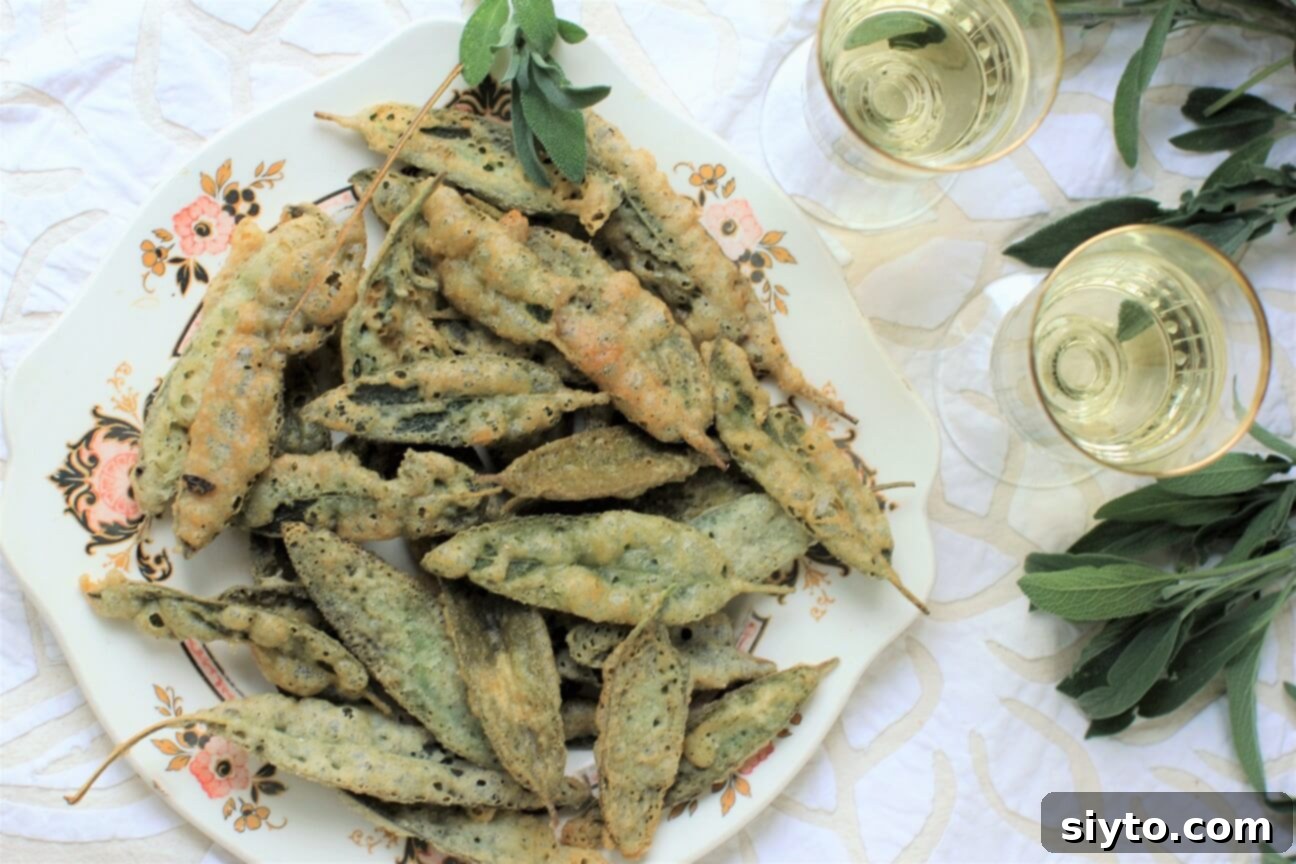
Embrace the opportunity to create these incredibly crispy fritters using fresh sage leaves. The delicate, tempura-style batter, made with rice flour, is not only inherently gluten-free but also wonderfully versatile. Don’t let any leftover batter go to waste; it’s perfect for frying other delicious items like thin slices of apple, butternut squash, green beans, or even onion rings!
These sage fritters are truly fun to eat and addictively delicious—a gourmet alternative that far surpasses ordinary chips!
* * * * *
Kitchen Frau Notes: Sweet rice flour, also known as glutinous rice flour or mochiko rice flour, is derived from sticky rice but contains no gluten. It is the secret ingredient for an exceptionally crispy batter. You can typically find it in health food sections, Asian grocery stores, or the international aisle of larger supermarkets.
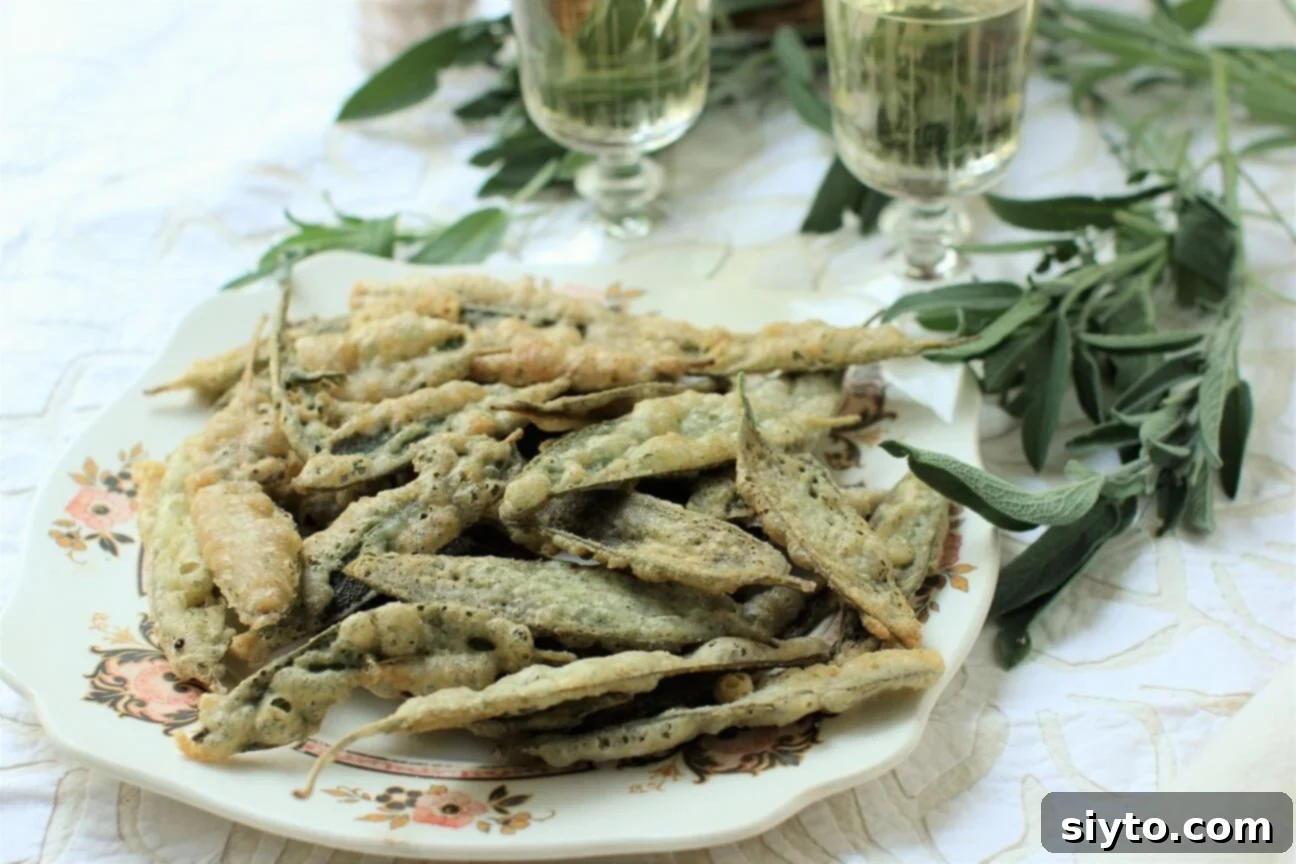
Crispy Fried Sage Leaf Fritters: The Recipe
A unique and delightful appetizer, perfect for serving with drinks or as a sophisticated snack.
- ½ cup (75gms) sweet rice flour (also called glutinous rice flour or mochiko rice flour)
- ¼ teaspoon baking powder
- ¼ teaspoon salt
- 1 teaspoon dried ground sage
- 1 large egg white
- ½ cup (120ml) sparkling water
- 20 to 30 large fresh sage leaves, unwashed (or rinsed and dried very thoroughly)
- Oil or beef tallow for frying, about ¼” deep in a small, heavy-duty skillet (cast iron is excellent)
- Fine sea salt for sprinkling
- Optional: Thin slices of apple or butternut squash to utilize any remaining batter for additional fritters
Instructions:
- In a small bowl, whisk together the sweet rice flour, baking powder, salt, and ground sage until well combined.
- Add the egg white and sparkling water to the dry ingredients. Whisk thoroughly until the batter is smooth and entirely free of lumps.
- Prepare a plate by lining it with a double thickness of paper towel and place it near your stove for easy access.
- Heat the oil or beef tallow in your chosen skillet over medium-high heat until it begins to ripple and is very hot.
- Hold a sage leaf by its stem and dip it into the batter. Gently drag the leaf against the edge of the bowl to remove excess batter. If there are any bare spots where the batter hasn’t adhered, quickly repeat the dipping and dragging process several times until both sides of the leaf are completely and evenly coated.
- Carefully place the coated leaf into the hot fat. Repeat with a few more leaves, ensuring they form a single layer in the pan and do not touch each other to prevent sticking and allow even cooking.
- As soon as one side of each fritter turns golden brown (this typically takes only 30 to 45 seconds), use a fork or chopsticks to flip it over and fry the other side until golden and crispy.
- Remove the fried sage leaves with tongs or chopsticks to the paper towel-lined plate. Immediately sprinkle them lightly with salt. Transfer each finished batch of fried sage leaves to a serving plate before frying the next batch to maintain their crispiness.
- Continue this process until all sage leaves are coated and fried.
- If you have any batter remaining, do not discard it! Use it to coat and fry thin slices of apple, squash, green beans, onion rings, or sweet potato for another delicious treat.
* * * * *
Kitchen Frau Notes: Simple fried sage leaves, without batter, are wonderfully crispy and perfect as an elegant garnish. They take mere minutes to prepare and add a special touch to a variety of dishes, including pasta, soups, stews, risottos, and roasted vegetables. Their intense, savory aroma and crisp texture provide a fantastic textural and flavor contrast.
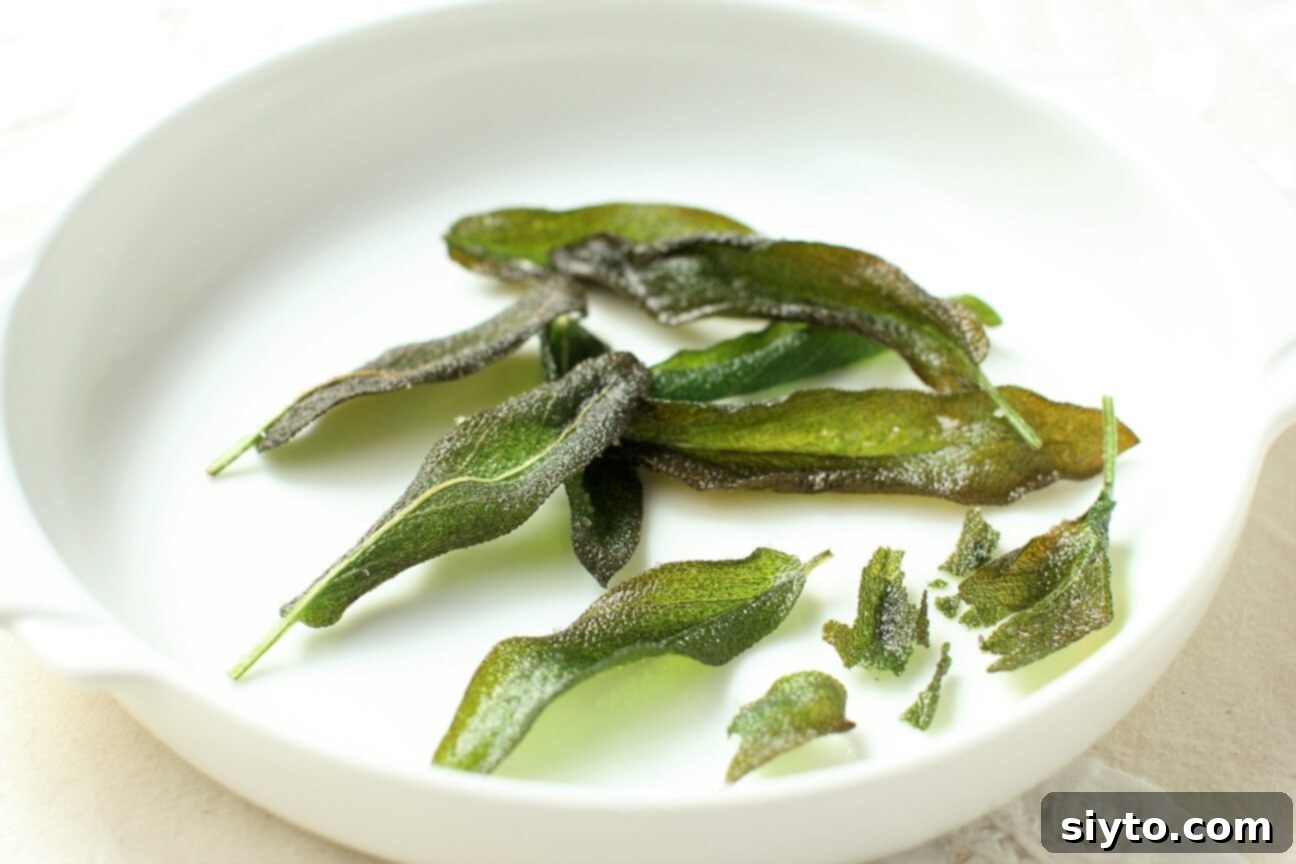
Fried Sage Leaves for Garnish: The Quick Method
- Large fresh sage leaves, completely dry
- Oil or beef tallow for frying, enough to be ¼ inch deep in a small, heavy skillet
- Fine sea salt
Instructions:
- Ensure your sage leaves are thoroughly dry. If you’ve rinsed them, give them ample time to air dry or gently pat them with a paper towel. Leaves from your own garden that appear clean usually don’t require rinsing.
- Prepare a plate lined with paper towel and keep it conveniently close to the stove.
- Heat the oil or tallow in a small, heavy-duty skillet (a cast iron skillet works beautifully) over medium-high heat until it shimmers, indicating it’s hot enough.
- Add a small handful of sage leaves to the hot oil, making sure they float in a single layer without overcrowding the pan.
- Fry them for a very brief period, typically 10 to 15 seconds, or just until they darken slightly and become visibly crisp. They will turn a deeper green and stiffen.
- Promptly remove the fried leaves using a slotted spoon or tongs and transfer them to the paper towel-lined plate. Immediately sprinkle them lightly with fine sea salt.
- Serve these crispy sage chips as an exquisite edible garnish for dishes like pasta, grilled meats, hearty stews, baked casseroles, or artfully arranged on charcuterie platters to add a touch of gourmet elegance.
Guten Appetit!
A Soul-Stirring Journey: Revisiting Alberta’s Majestic Badlands
For me, nothing quite rejuvenates the spirit like escaping to the vastness of the prairies. While some find solace in towering mountains, crashing ocean waves, or the dappled light of a dense forest, my soul finds its deepest peace amidst a boundless prairie grassland. There, with the wind orchestrating shimmering waves through wild grasses and an infinite blue sky arching overhead, I feel profoundly grounded yet utterly expanded. Inhaling vast gulps of that clean prairie air, I sense the restrictive bands of daily life releasing, my heart breathing freely and filling with the immensity around me. This is where I find my true home.
The prairie, in its grandeur and openness, is my ocean.
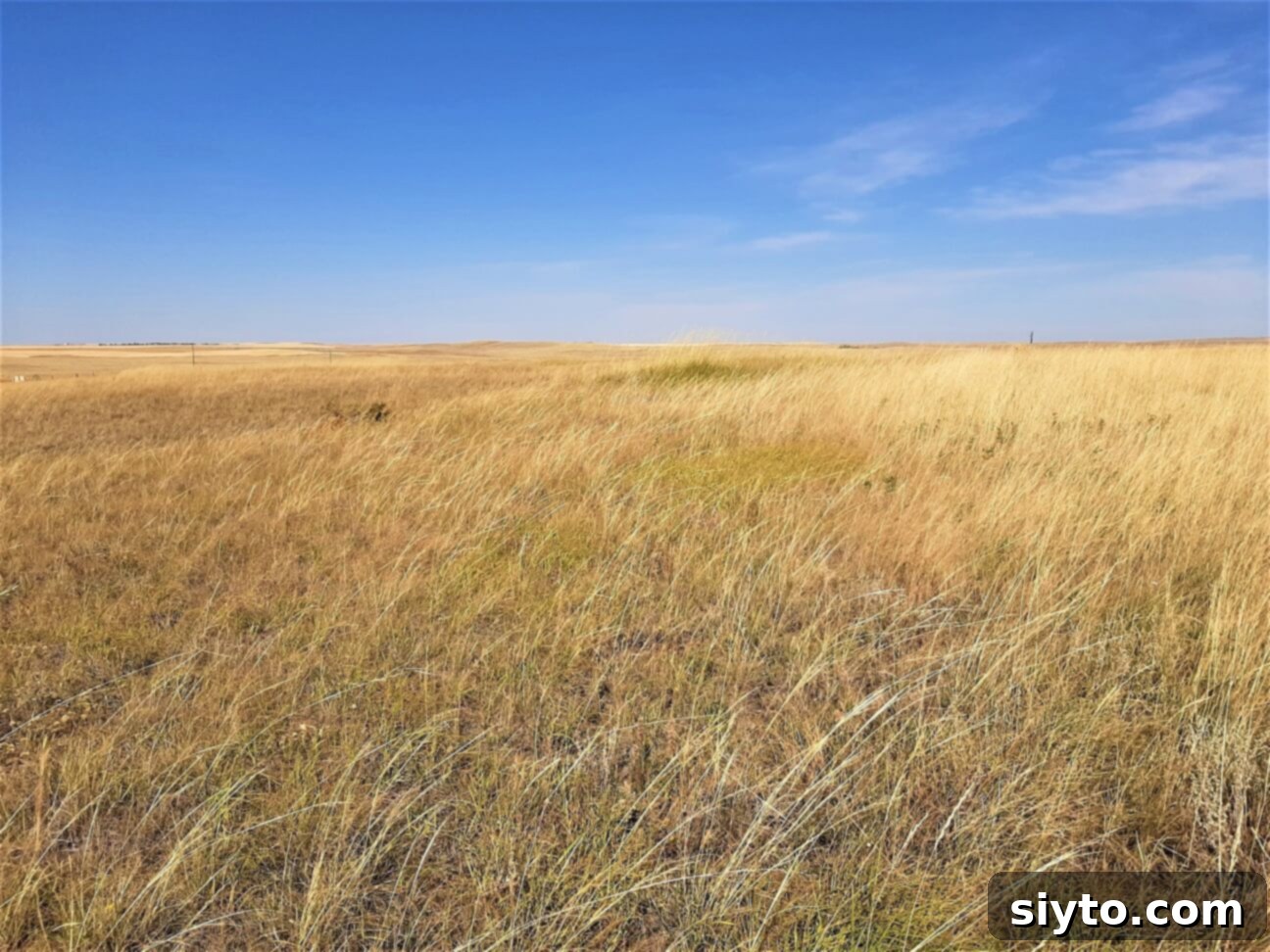
It’s an emotional connection more than just a physical landscape; it’s the profound feeling evoked by that boundless sky and the sweeping open spaces. My most formative years, from ages 10 to 15, were spent on the prairies, specifically on a sugar beet farm near Bow Island in Southern Alberta. It was during this time that this unique landscape imprinted itself upon my soul, fostering a love that has never waned.
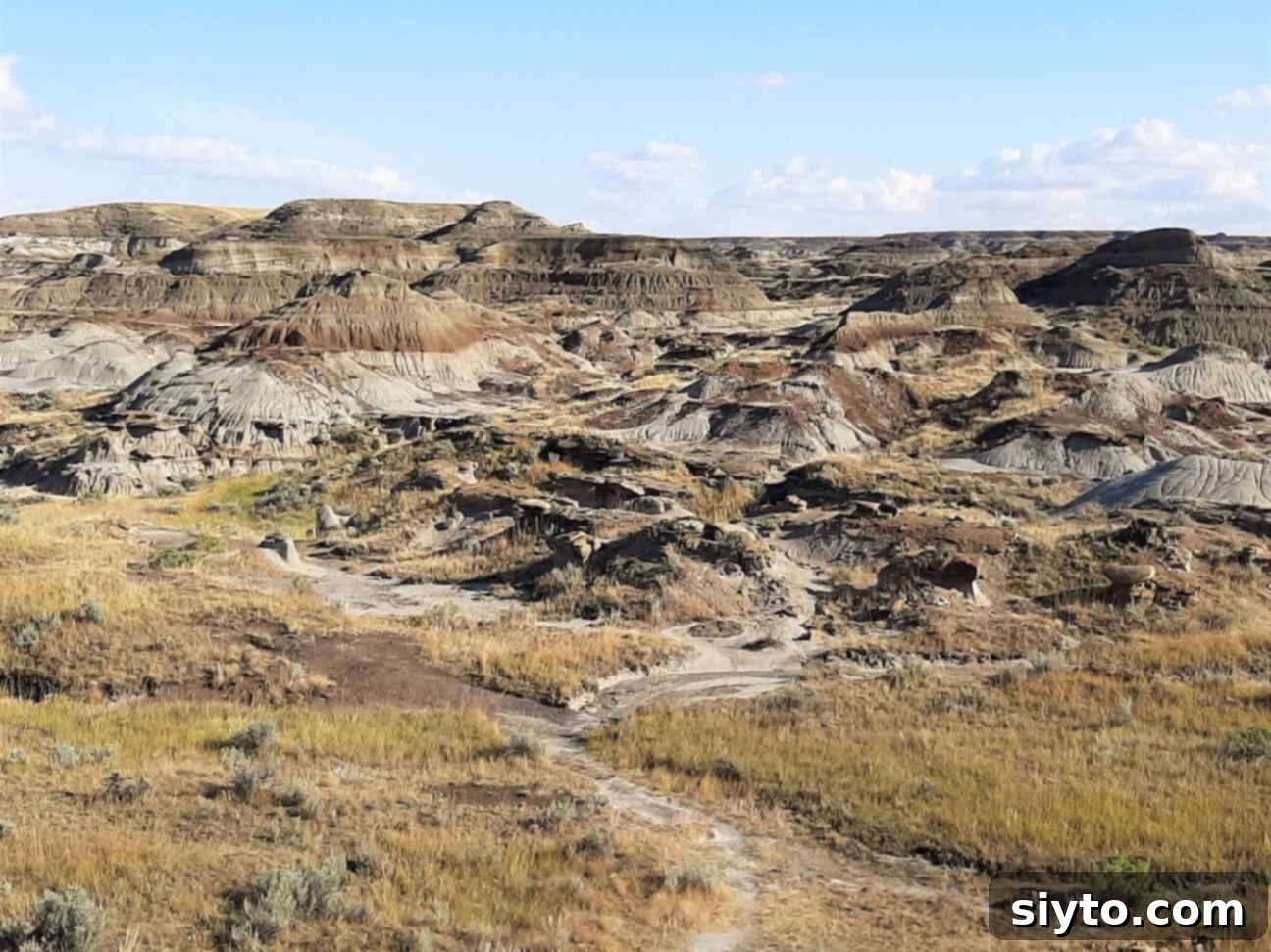
Our recent journey led us through hours of Alberta’s expansive prairies to the remarkable region known as The Badlands. This colossal area, spanning 35,000 square miles, is characterized by its dramatic land formations: deep channels, intricate gullies, and towering hoodoos that expose millions of years of sedimentary layers, sculpted by relentless wind and water erosion. The Badlands are internationally renowned for holding the world’s largest dinosaur bone deposits, with over 50 distinct species discovered and fossilized specimens representing more than 500 different prehistoric life forms. The region proudly hosts two UNESCO World Heritage sites: Dinosaur Provincial Park and Writing-on-Stone Provincial Park, testaments to its irreplaceable natural and cultural significance.
Our adventure began by meeting our son and daughter-in-law in Calgary before setting off on the celebrated Dinosaur Trail. We initiated our exploration at the southern end with a quick, awe-inspiring stop at Horseshoe Canyon. The initial view of the Badlands from this vantage point is always a breathtaking revelation, showcasing the sheer scale and geological wonder of the region.
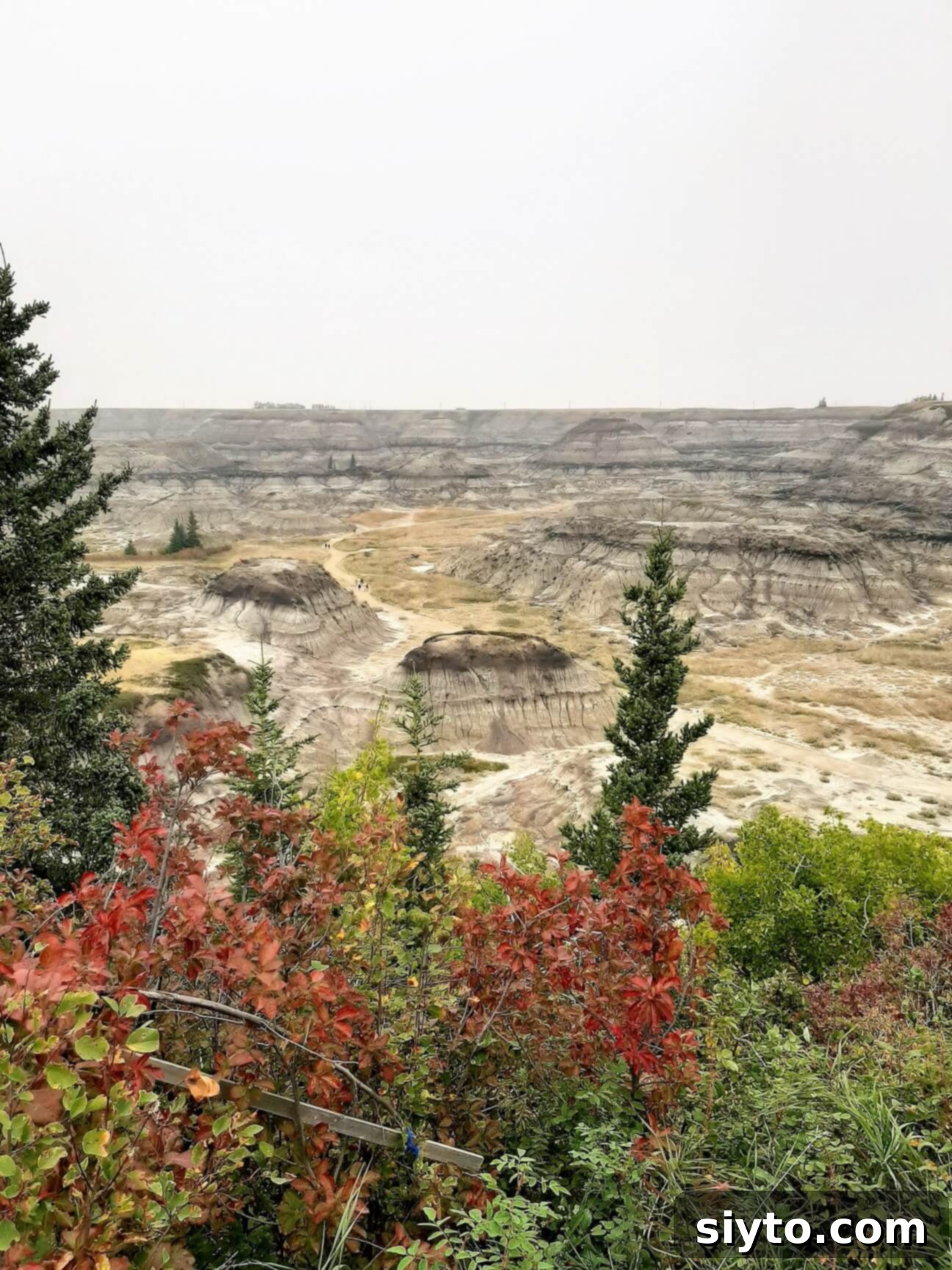
Continuing northward along the Dinosaur Trail, we made our way to Horsethief Canyon, a perennial favorite stop of ours for hiking and exploration. Despite the lingering smoky haze from distant California wildfires, which lent an almost mystical quality to the already dramatic views, the air held an exciting crispness. We particularly enjoyed descending into the canyon to scramble among its multi-layered hills and intricate crevices—a truly immersive experience in this magnificent valley carved by the Red Deer River.
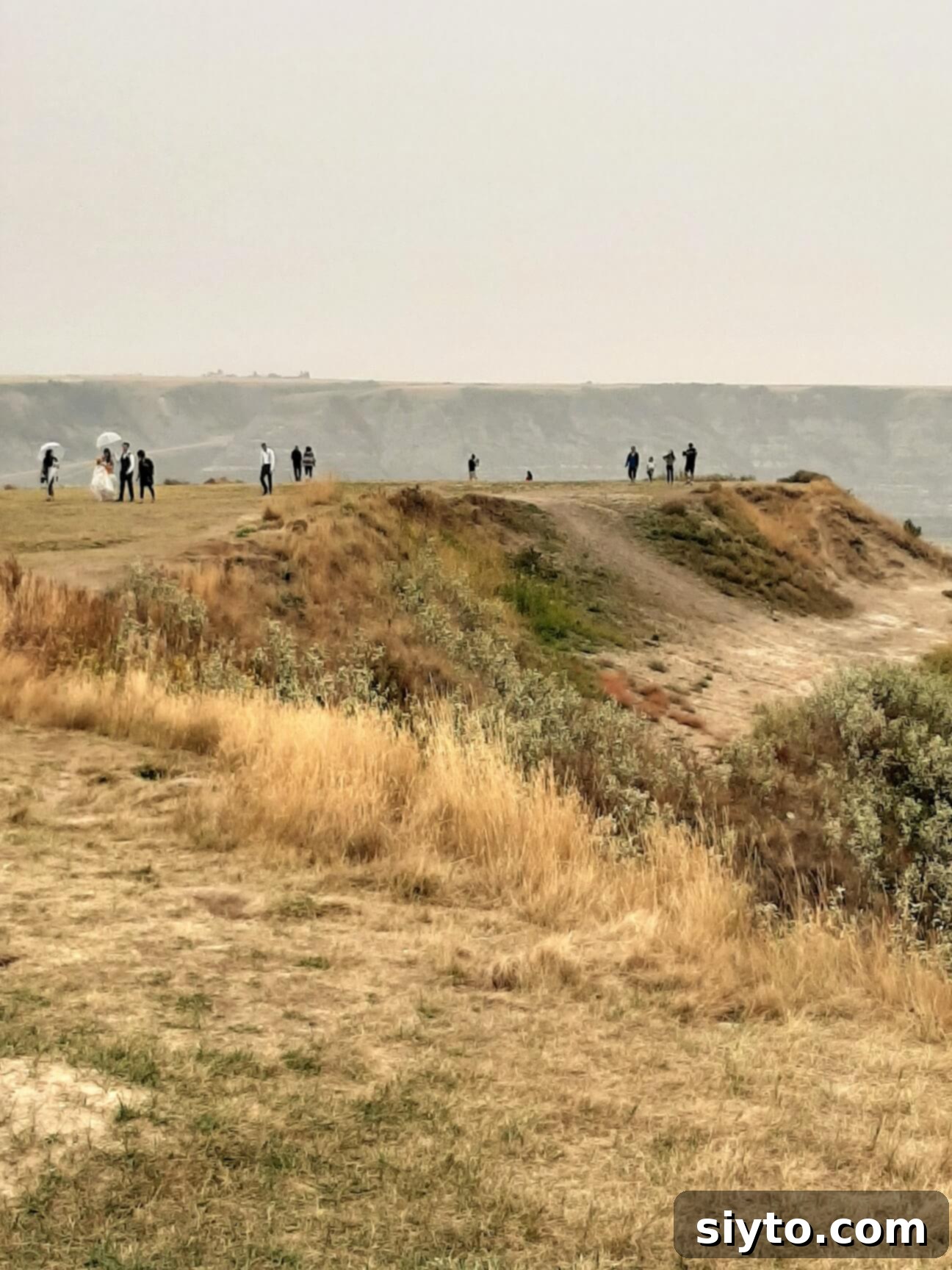
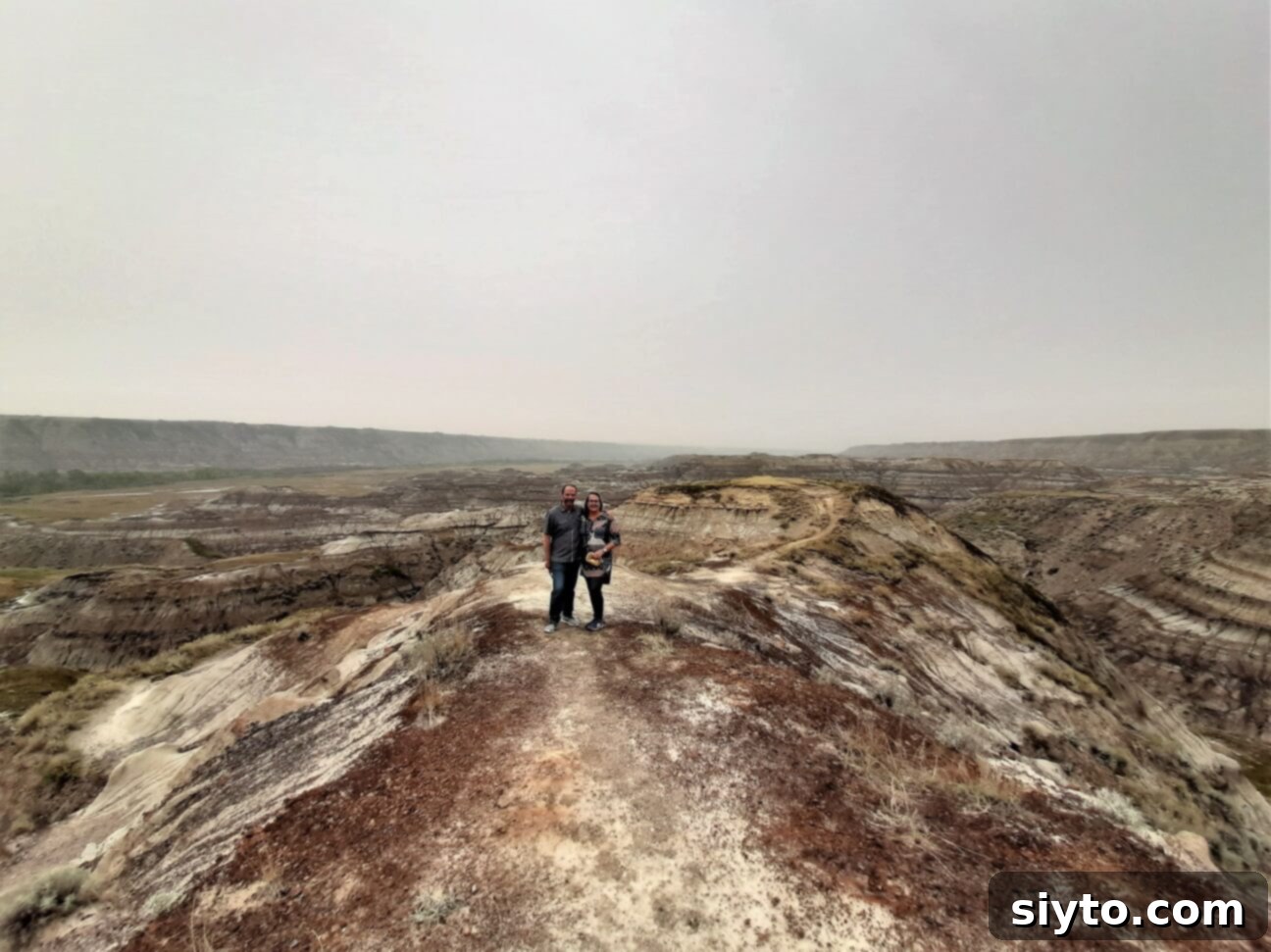
Our son, an avid drone enthusiast, captured some truly spectacular footage of the canyon. This glimpse into the magic of this massive river valley reveals why it was once the perfect hiding place for horse rustlers, who would temporarily conceal their stolen horses here while altering their brands. It’s a captivating slice of Alberta’s rich and rugged history.
Video edited by Amanda K. Morales
After an overnight stay in the charming town of Drumheller, we woke to a transformed landscape. The night’s refreshing rain had completely washed the smoke from the air, leaving the scenery sparklingly clear as we continued our drive, heading towards our next destination…
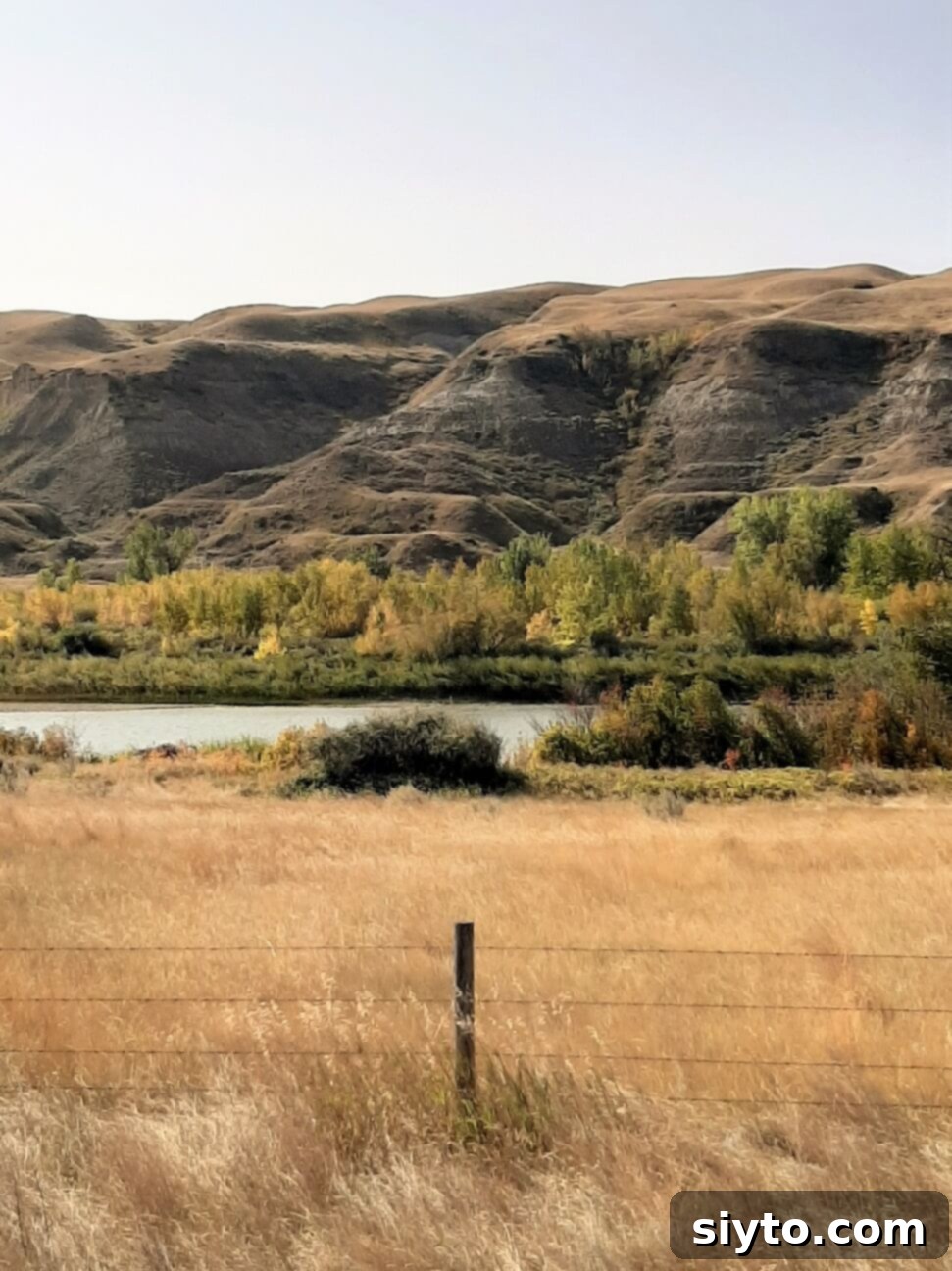
…a day of picnicking and exhilarating hiking in the world-renowned Dinosaur Provincial Park. This UNESCO World Heritage site is a paleontological treasure trove and a visual marvel.
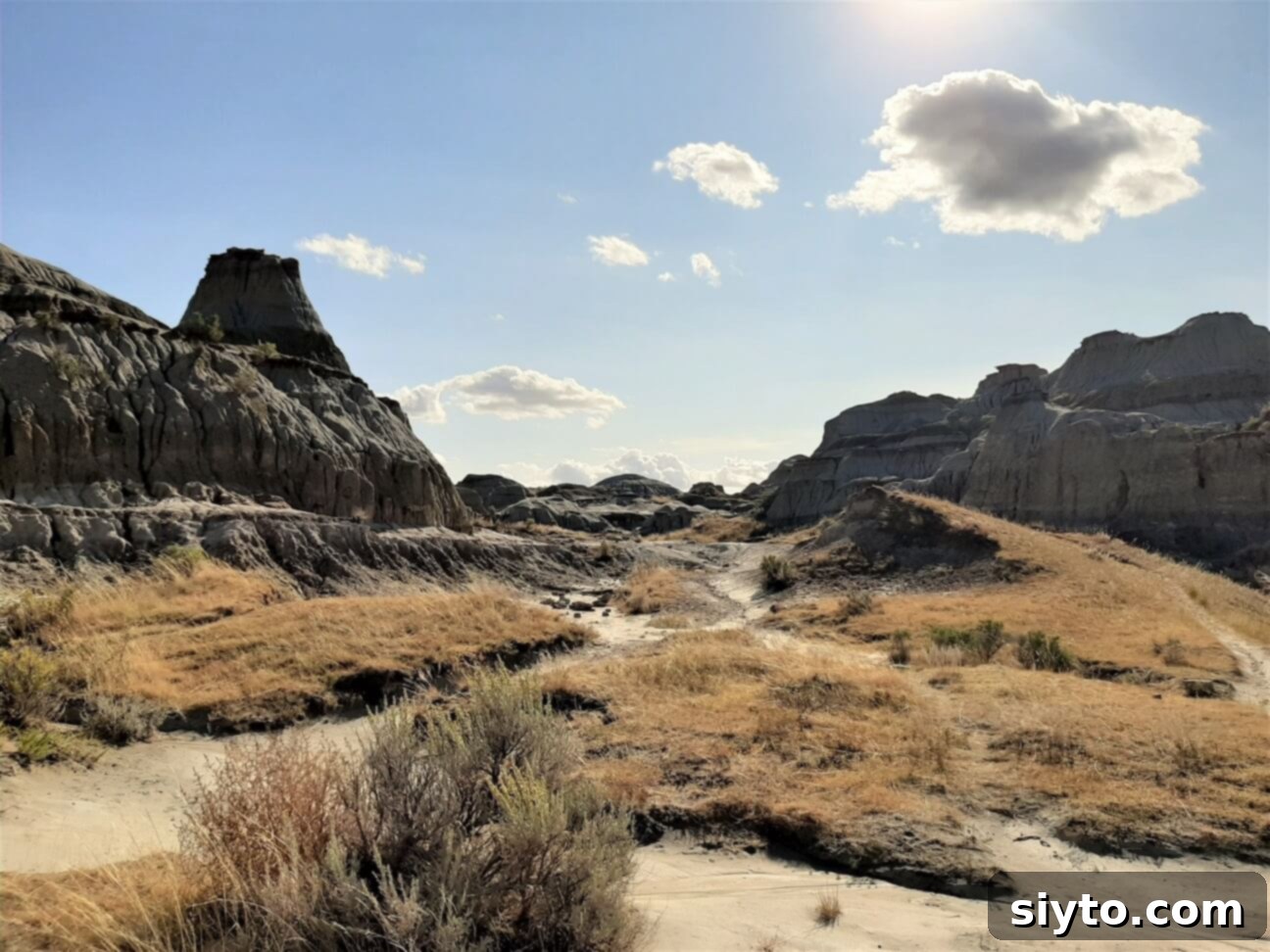
Millions of years of relentless wind and rain have meticulously sculpted this land, creating the most fantastic and otherworldly formations. Every turn revealed another breathtaking vista, a testament to nature’s artistry.
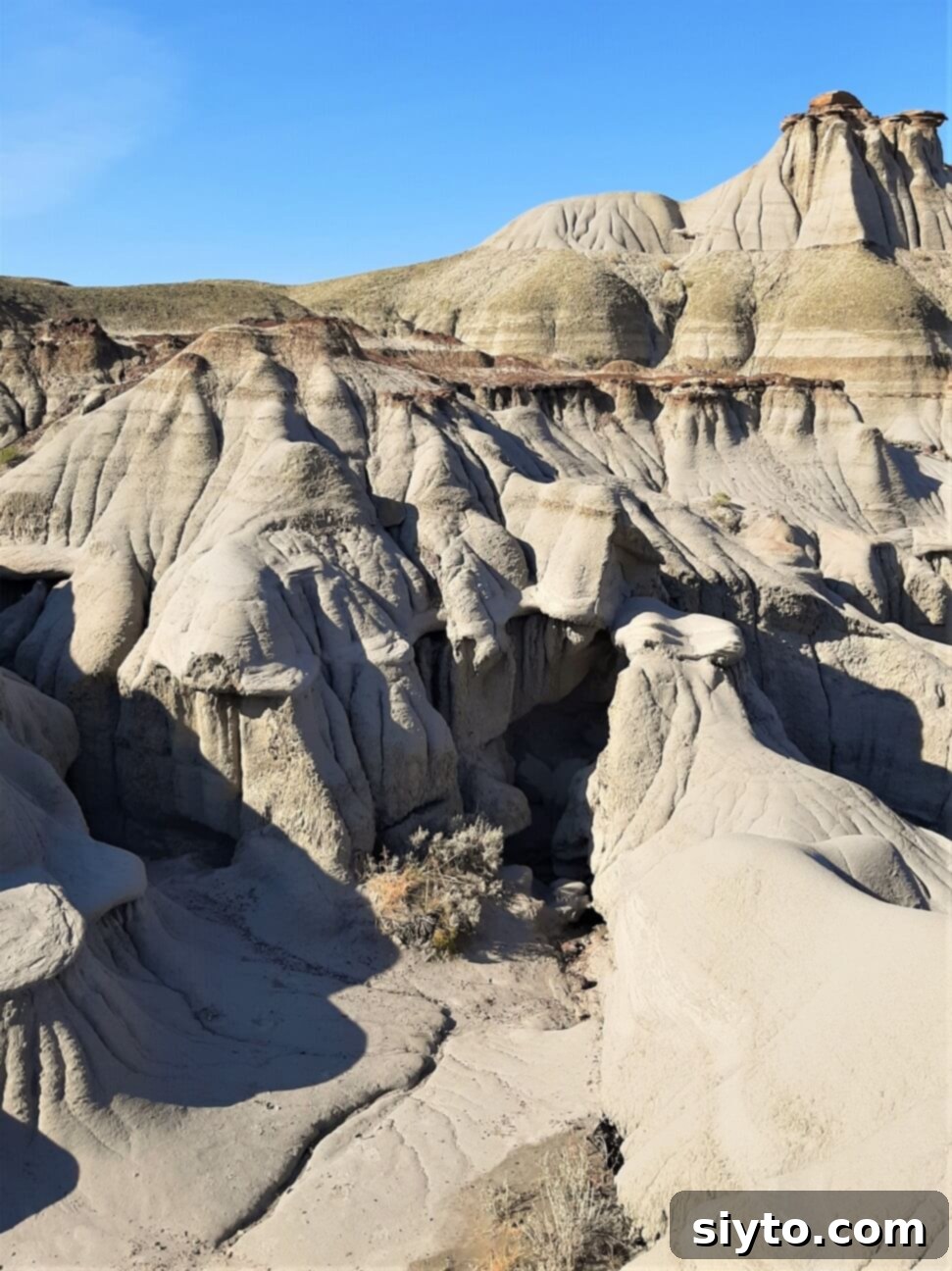
The sand and soil, still a bit slick from the overnight rain, added an element of playful adventure as we hiked the designated loops throughout the park, slipping and sliding our way through. The park wasn’t overly busy, allowing us to fully immerse ourselves in the ancient silence and grandeur, experiencing the views with a rare sense of solitude. As you wander through this wild and eerie landscape, it’s incredibly easy to imagine encountering a dinosaur—hopefully a gentle plant-eater! The sense of slipping back in time is palpable, envisioning these magnificent creatures freely roaming these vast riparian badlands.
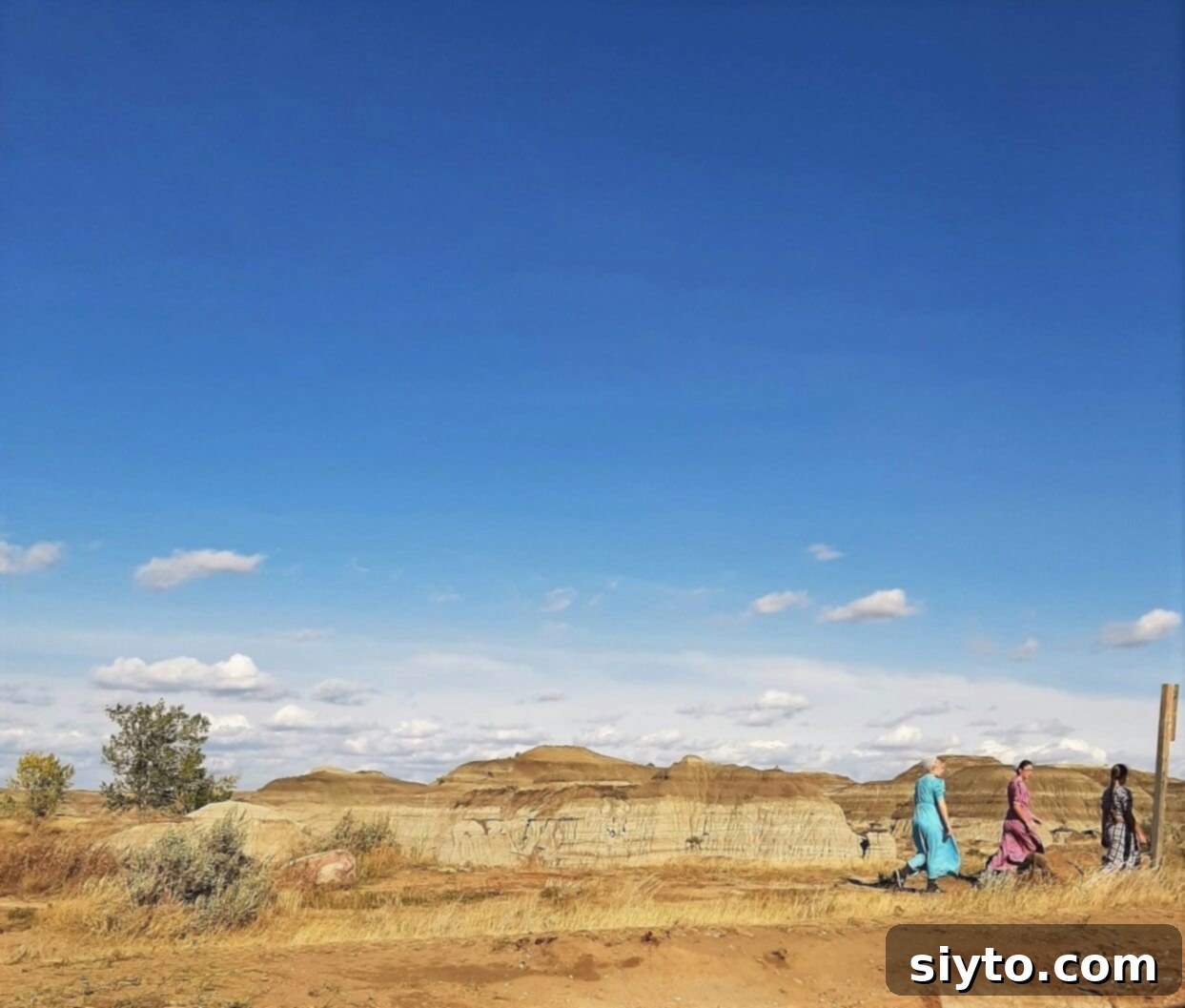
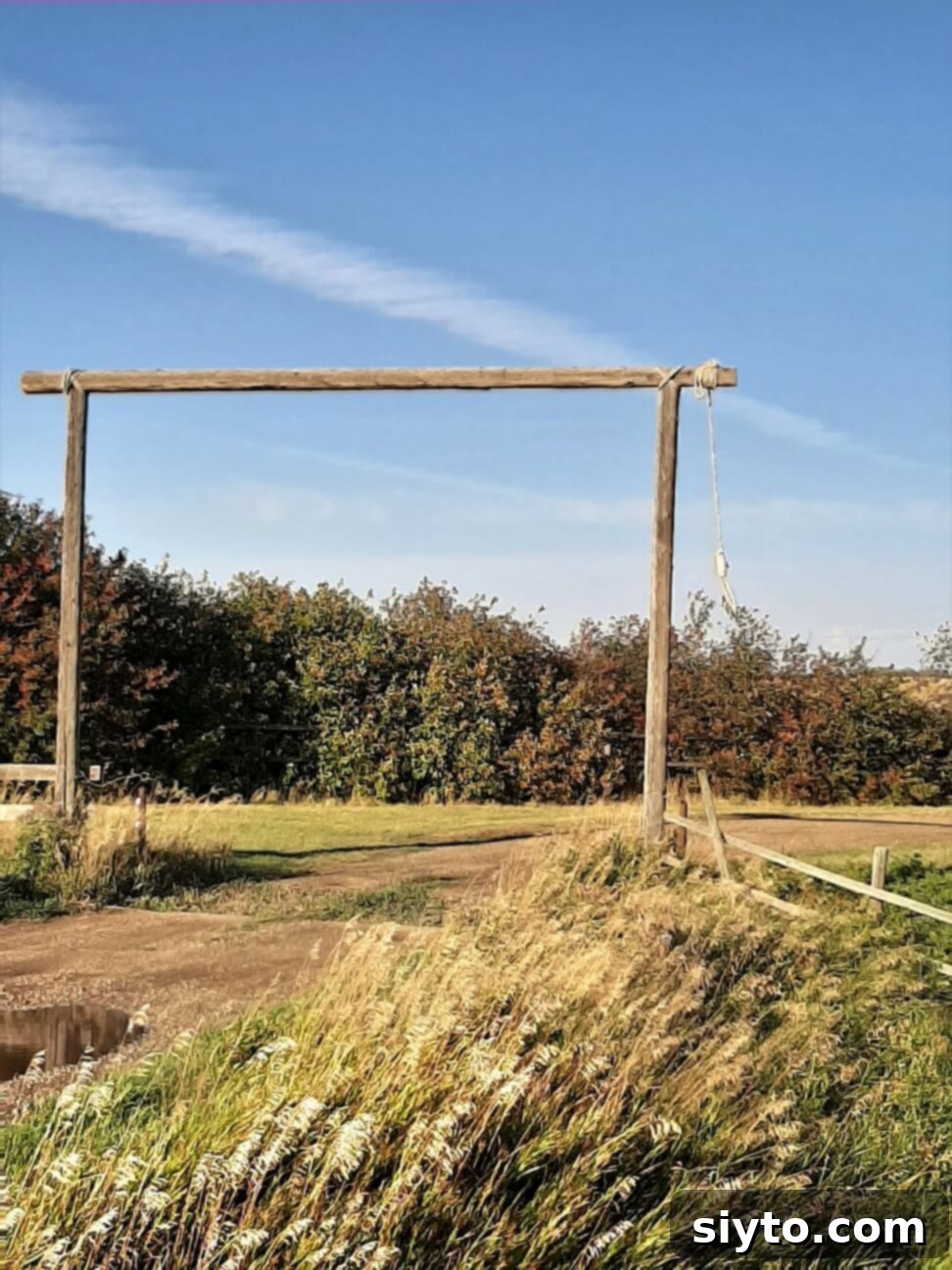
Our journey continued, driving further south towards Canada’s border with the U.S. It’s quite fascinating to observe the unusual sights and eccentricities that punctuate the drive through these prairies, which often feel suspended in a distant, simpler time. What tales could that old ranch head gate tell, with its weathered hangman’s noose? Was it a warning, a historical relic, or merely a quirky decoration?
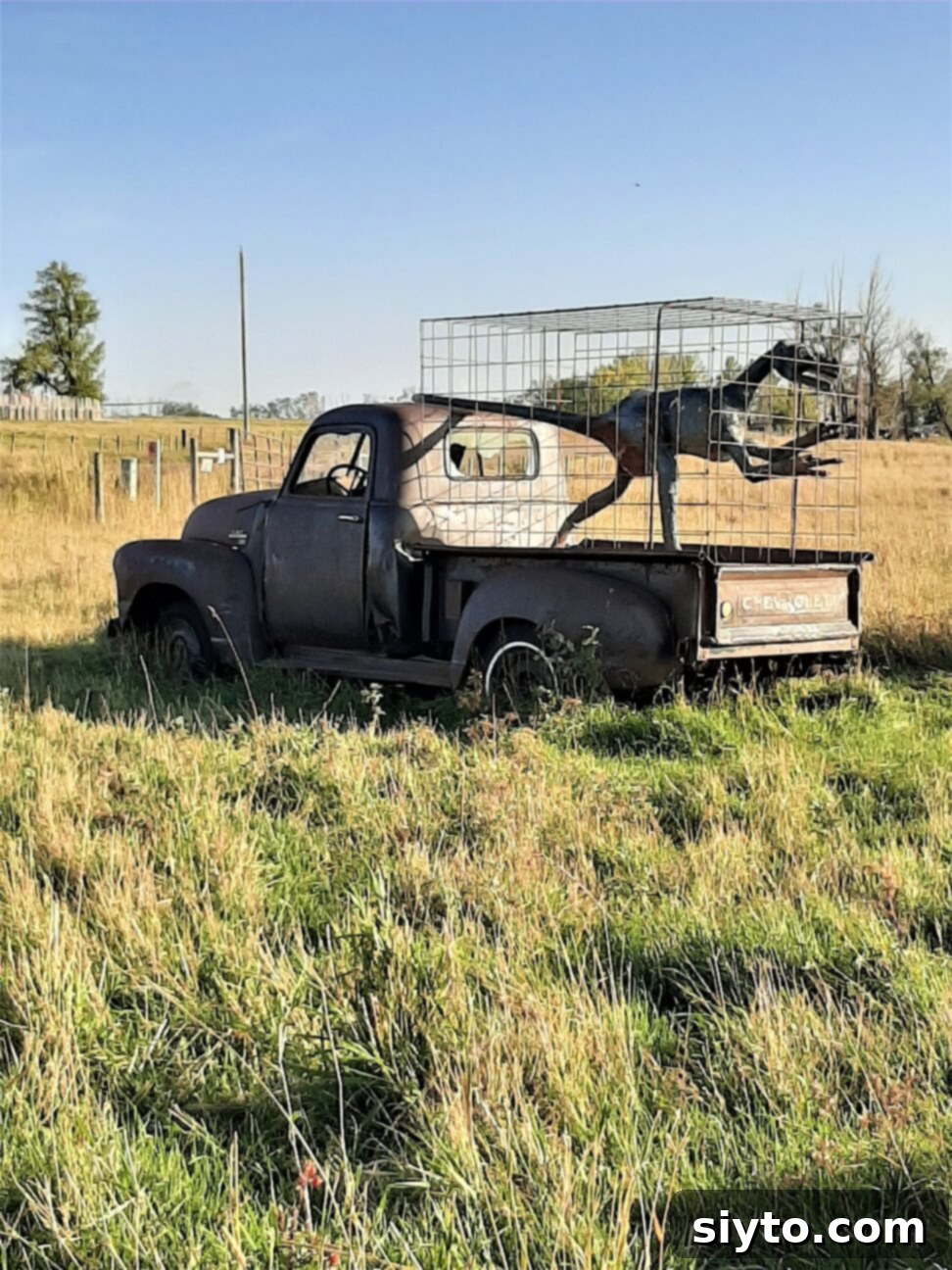
And who could resist wondering about the backstory of this curious traveler? Who is bringing home this dinosaur for a pet, and what adventures await them? Such whimsical encounters are part of the charm of the Badlands, where the past and present seem to playfully intertwine.
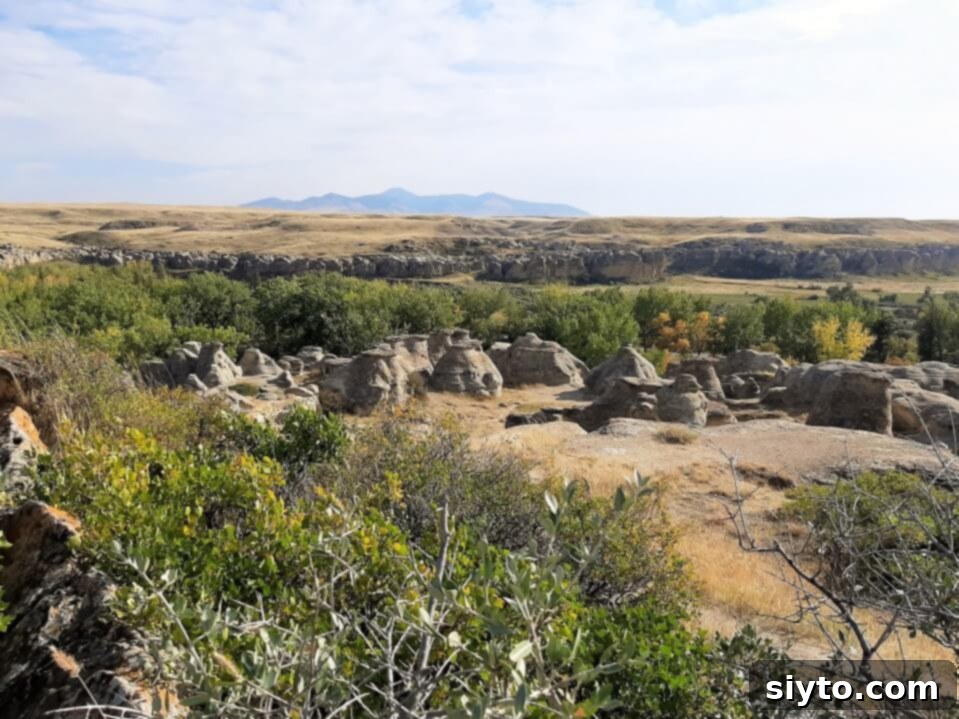
Our final significant stop was the southern part of the province to visit Writing-on-Stone Provincial Park. This is a truly special place for our family, a destination we have frequented over the years. During my teenage years, I visited the park with my Girl Guide troop, youth group, and on family camping trips—this was long before the interpretive center was built and before access to the First Nations petroglyphs and rock art was restricted to guided tours. It allowed for a more raw, unfiltered connection to its ancient history.
The park offers breathtaking vistas: hoodoos stretch along the banks of the Milk River as far as the eye can see, and in the distant blue haze, the Sweetgrass Hills of Montana rise majestically. Writing-on-Stone Park remains one of Alberta’s best-kept secrets—a place of unforgettable scenery that leaves a profound mark on all who visit. Here, you transition from a prehistoric dinosaur world (though important dinosaur remains have also been discovered within this park) to the ancient world and enduring culture of our Indigenous Peoples. The wind, whistling through the Milk River valley, whispers tales of how this land was, and continues to be, a sacred space for the Blackfoot tribes.
Video edited by Amanda K. Morales
We embarked on a guided tour to explore the ancient writings carved into the sandstone by the Blackfoot peoples many hundreds of years ago. These intricate carvings constitute the largest collection of rock art on the North American Great Plains. Recognizing its immense historical and cultural value, the park was rightfully designated a UNESCO World Heritage Site in 2019, ensuring the preservation of this irreplaceable record of Indigenous culture for generations to come. It’s a powerful experience to stand before these ancient petroglyphs, reflecting on the generations who sought meaning and connection here, though some have been unfortunately desecrated by modern graffiti, a poignant reminder of our responsibilities to heritage.
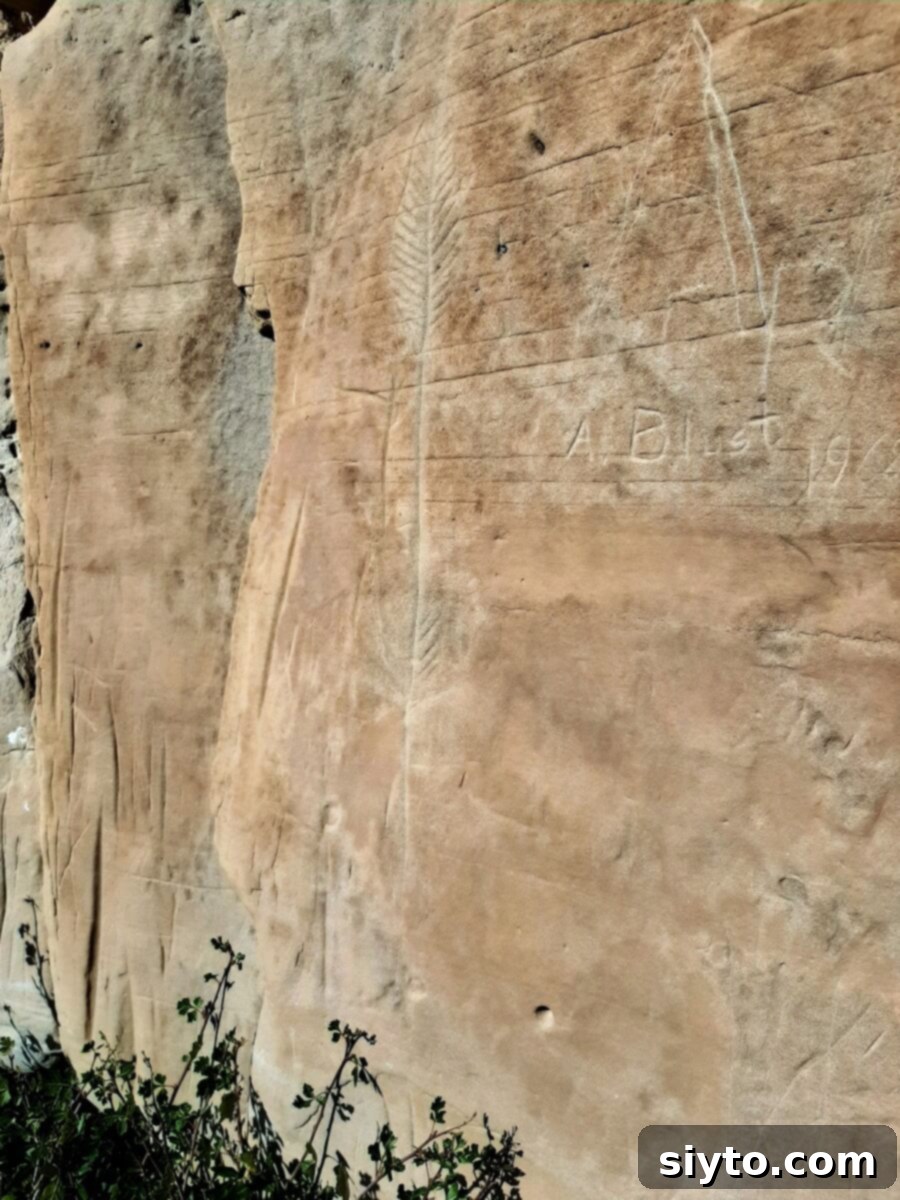
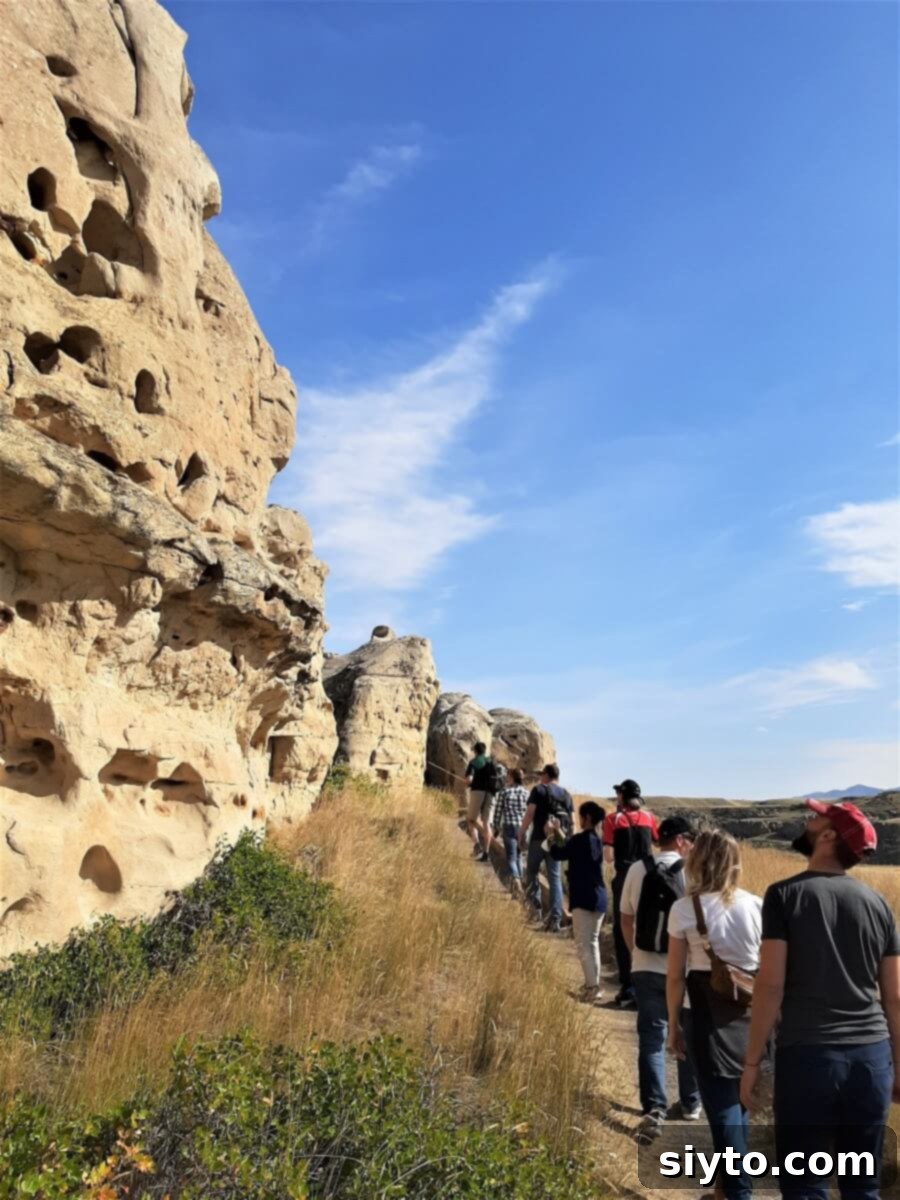
The sheer depth of history contained within this landscape is profound. Yet, beyond its historical significance, it’s also an incredible playground! Our family tradition, whenever we visit or camp here, is to play hide-and-seek among the hoodoos. Regardless of age, there’s an unparalleled thrill in running, slipping, sliding, leaping, climbing, and crouching within the countless nooks and crannies of these natural formations. It’s an irresistible invitation to rediscover your inner child.
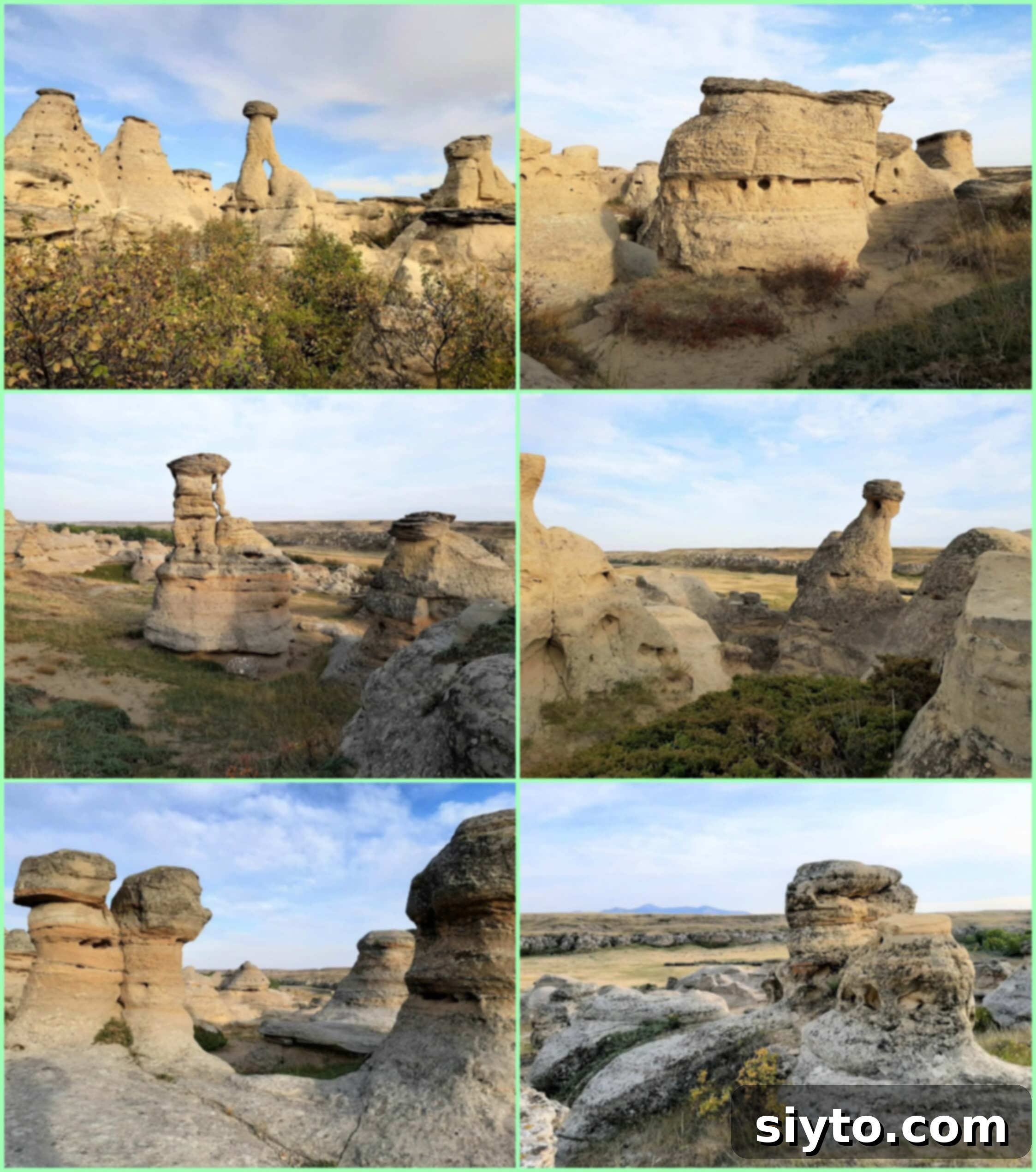
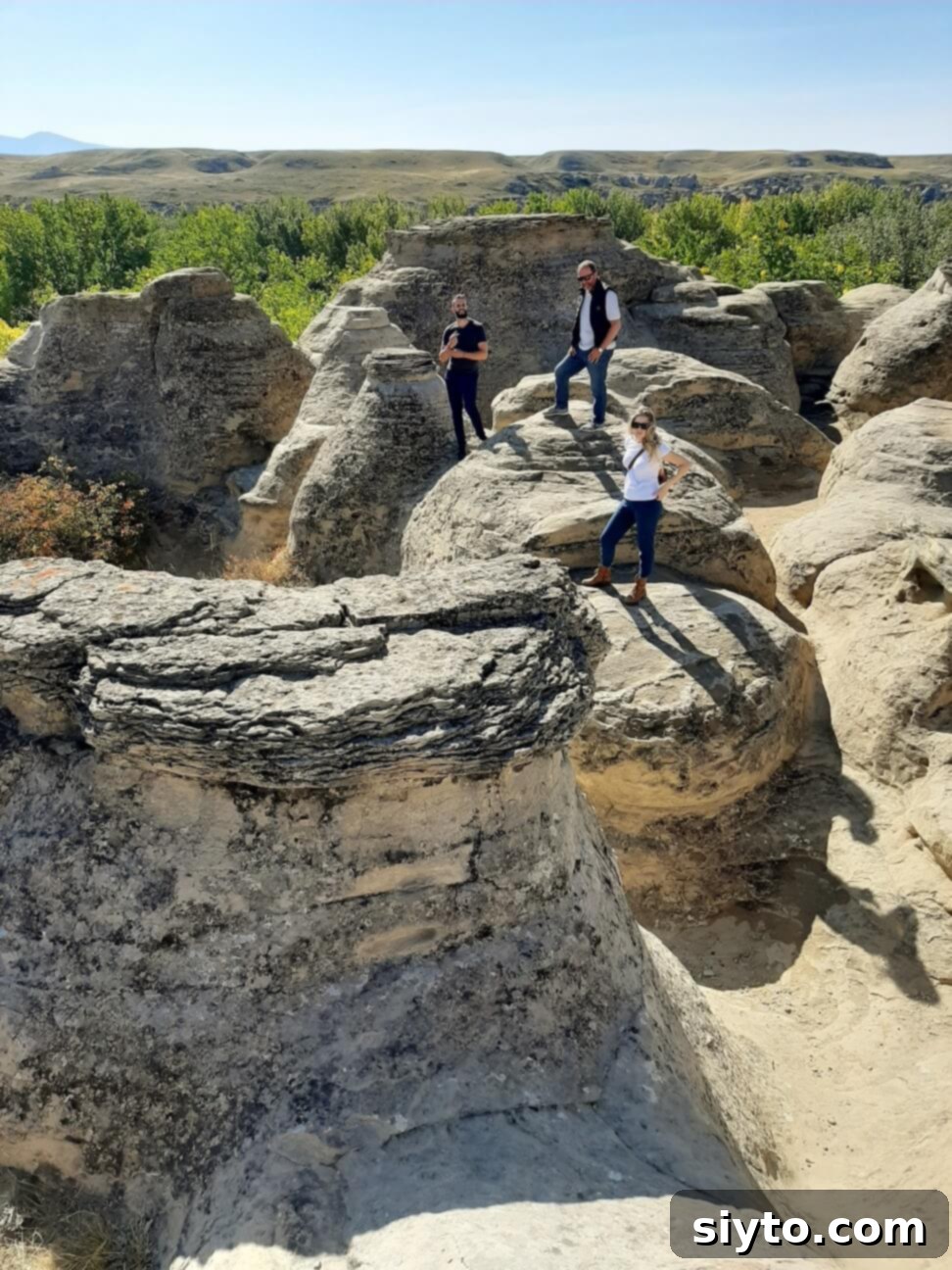
After many hours of playful exploration and hiding among the hoodoos, as the sun began its descent, painting the sky with fiery hues, it was time to reluctantly head back home, filled with gratitude for the day’s adventures.
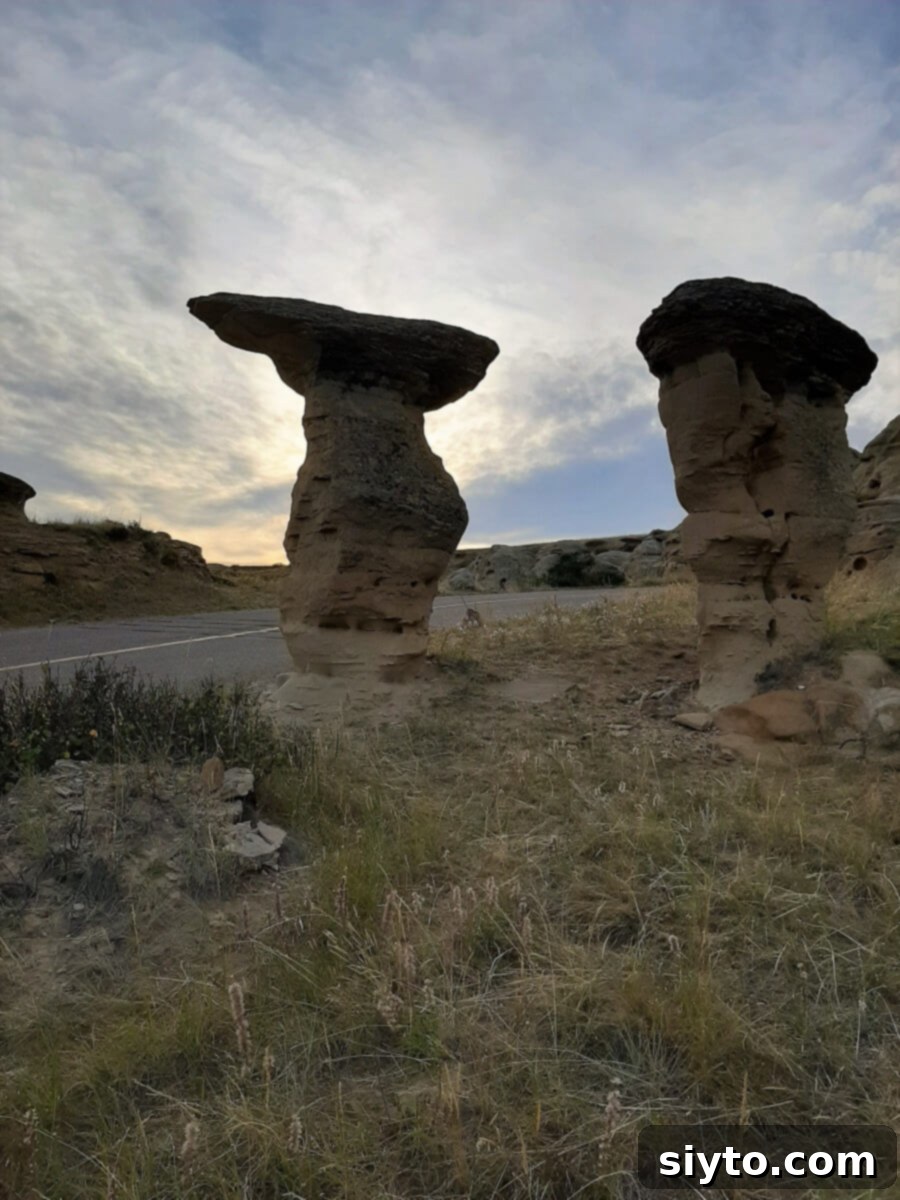
We returned home from our prairie getaway feeling tired yet utterly happy, enriched with countless wonderful new memories and a deeper connection to Alberta’s incredible landscapes and history.
* * * * *
Want to receive new Kitchen Frau recipes directly to your email? Sign up here and you’ll get a handy and useful kitchen tip along with each recipe, too. (No spam, ever.)
If you enjoy my recipes and content, please consider following me on Instagram, Pinterest, Twitter, and Facebook. Your support would truly make my day!
PIN IT HERE to save this unique recipe for later:

You might also enjoy these delectable appetizer ideas:
Bacon Bundles – Delectable Little Fruit & Bacon Appetizers
Crispy Kale Chips: A Healthy & Flavorful Snack
Big Beautiful Baked Blooming Onion: An Impressive Appetizer
Savory Lentil Fries with Zesty Currywurst Dipping Sauce