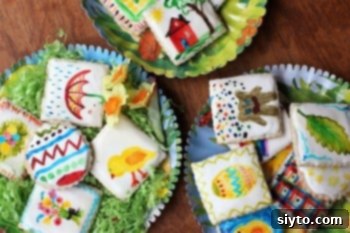
Unleash Your Inner Artist: The Ultimate Guide to Fun & Easy Cookie Painting for Kids and Adults
Looking for a delightful and engaging project that sparks creativity and satisfies sweet cravings? Dive into the world of cookie painting! This incredibly easy and edible craft transforms simple cookies into vibrant works of art, perfect for any holiday celebration, a unique party activity, or just a whimsical afternoon art session. Kids of all ages, from toddlers to teens, and even adults, will find immense joy in decorating these beautiful, delicious cookies. It’s a fantastic way to combine baking with artistic expression, resulting in treats that are almost too pretty to eat – almost! (Jump straight to the recipes and how-to guide.)
A Deliciously Creative Adventure with Cookie Painting
We’ve all enjoyed the simple pleasure of painting on traditional canvases – paper, wood, metal, or glass. Each offers a unique texture and a different challenge for the artist. But imagine a canvas that’s not only visually appealing but also incredibly delicious! This is the magic of cookie painting, an art form that brings a whole new dimension to your creative endeavors. Unlike conventional art projects, your edible masterpieces can be savored and enjoyed down to the very last crumb.
The beauty of painting on cookies lies in its temporary nature, encouraging bold experimentation and freeing artists of all ages from the pressure of perfection. If a design doesn’t quite work out, simply eat the “mistake” and start fresh on a new cookie! It’s a low-stress, high-reward activity that fosters imaginative play and artistic confidence, making it a favorite for family bonding time or solo creative exploration.
My recent cookie painting adventure with Meredith spanned a couple of delightful days, making it a perfect multi-stage project for maintaining excitement. We began by baking a batch of sturdy, delicious cut-out cookies, then meticulously iced them with a smooth layer of royal icing, allowing them ample time to harden into a perfect canvas. The true fun began on the second day: armed with an array of simple food colorings and fine-tipped paintbrushes, we transformed plain white cookies into miniature edible masterpieces. The beauty of this craft lies in its simplicity; you don’t need fancy tools or extensive artistic training. Just a dash of imagination and your inner artist are all that’s required to let creativity flow freely. We experimented with vibrant hues, delicate strokes, and playful patterns, discovering the endless possibilities of this unique art form.
Cookie painting is an incredibly versatile activity suitable for any occasion. Whether you’re decorating for a special holiday like Easter, Christmas, or Halloween, preparing unique party favors, or simply seeking a fun and creative outlet on a dreary day, this project fits the bill. It caters to every age group and skill level. Younger children can joyfully create abstract splotches and simple shapes, developing their fine motor skills and color recognition. Older children can explore more intricate designs, experimenting with details, shading, and thematic art. Even seasoned adult artists will find cookie painting a wonderfully meditative and satisfying challenge, allowing for impressive culinary artistry. (Speaking from personal experience, it’s remarkably therapeutic and addictive!). It’s a wonderful way to express yourself and create personalized, memorable treats that are sure to impress.
* * * * *
Essential Tips for Perfect Cookie Painting Canvases
Kitchen Frau Notes: The foundation of great painted cookies is a great canvas. Start with your favorite sturdy cut-out cookie recipe. We highly recommend our Rich Roll Cookie recipe, provided below. It’s a tried-and-true classic with just 5 ingredients, yielding cookies that hold their shape beautifully during baking and provide a perfect, flat surface for icing and painting. I’ve relied on this recipe for years for all my rolled cookie needs, and it never disappoints.
The next crucial step is the royal icing. This provides the smooth, hard surface that food coloring adheres to best. Achieving the right consistency for your royal icing is key for a flawless finish. For flooding the tops of your cookies with a smooth, even sheet, you’ll want a consistency that flows easily but isn’t too runny. It should be able to settle into a flat, glossy surface without dripping off the sides. You may need to experiment a bit, adding a touch more water if it’s too thick, or a bit more icing sugar if it becomes too thin. A good test is to lift your spoon or beater: the icing should drip back into the bowl and the lines should disappear within 10-15 seconds. This “flow consistency” is ideal for a smooth base.
Rich Roll Cookies: The Perfect Edible Canvas
Adapted from The Joy of Cooking, this recipe delivers consistently delicious and perfectly shaped cookies, ideal for decorating. Gluten-free variation included.
- 1 cup (225gms) salted butter, softened
- ⅔ cup (133gms) granulated sugar
- 1 large egg, room temperature
- 1 teaspoon pure vanilla extract
- 2½ cups (350gms) all-purpose flour (for gluten-free, use 2¾ cups/385gms of my gluten-free flour mix + ½ teaspoon xanthan gum)
Instructions for Rich Roll Cookies:
- In a large mixing bowl, cream the softened butter and sugar together using an electric mixer until the mixture is light, fluffy, and pale in color. This step is crucial for incorporating air and ensuring a tender cookie.
- Beat in the egg and vanilla extract until fully combined, scraping down the sides of the bowl as needed.
- Gradually add the flour (and xanthan gum if making gluten-free) to the wet ingredients, mixing on low speed until just combined. Be careful not to overmix, as this can lead to tough cookies. The dough will be soft.
- Divide the dough into two equal balls. Gently flatten each ball into a disc, approximately 1¼ inches (3cm) thick. Wrap each disc tightly in plastic wrap. Chill the dough in the refrigerator for at least 3 to 4 hours, or for a quicker chill, place it in the freezer for 30-45 minutes. Chilling is essential for making the dough firm enough to roll and cut without sticking, and it helps prevent the cookies from spreading too much in the oven.
- Once chilled, liberally sprinkle your counter surface with all-purpose flour (or gluten-free flour blend). Take one disc of dough at a time and roll it out evenly to a thickness of just under ¼ inch (about 0.5 cm). This thickness ensures a sturdy cookie that won’t easily break when painted.
- Use your favorite cookie cutters to cut out desired shapes. For simple shapes, you can also cut the dough into squares or rectangles with a knife. Carefully transfer the cut-out cookies to a cookie sheet lined with parchment paper or lightly greased.
- Gather any dough scraps, gently press them back into a ball, and re-roll to cut more cookies. Continue this process until all the dough has been used.
- Bake in a preheated 350°F (180°C) oven for 8 to 10 minutes, or until the edges are just beginning to turn a light golden color. Overbaking can make them brittle.
- Allow the cookies to cool in the pan for 5 minutes before gently transferring them with a spatula to a wire cooling rack to cool completely. They must be entirely cool before icing.
- Once cooled, apply a smooth layer of Royal Icing (recipe below) and allow the icing to harden completely at room temperature, typically for at least 8-12 hours, or ideally 24 hours. This creates your perfect, non-sticky painting surface.
Royal Icing: The Smooth, Hard Canvas
- 2 large egg whites (for safety, consider using pasteurized egg whites from a carton or 3 tablespoons of meringue powder mixed with water according to package directions)
- 3 cups (330gms) powdered icing sugar (confectioners’ sugar), sifted
- Juice of one fresh lemon (approximately 3 tablespoons), strained
- Additional water, if needed, for consistency
Instructions for Royal Icing:
- In the clean, dry bowl of a stand mixer fitted with the paddle attachment, beat the egg whites on medium speed until they become foamy.
- Gradually add the sifted icing sugar and the strained lemon juice. Continue to beat on medium-high speed for 3 to 5 minutes, until the icing becomes thick, glossy, and holds a soft peak. When you lift the beater, the icing should leave a “ribbon” that holds its shape for three to four seconds before melting back into itself. This is a crucial indicator for a good flood consistency.
- Adjusting Consistency:
- If the icing is too thick and doesn’t flow smoothly, add water, one tablespoon at a time, beating after each addition until the desired ribbon consistency is achieved. Be cautious, as a little water goes a long way.
- If the icing becomes too thin, add more sifted icing sugar, a bit at a time, until the correct consistency is restored.
- This royal icing is best used immediately. If you need to store it, transfer it to an airtight container, press plastic wrap directly onto the surface to prevent a crust from forming, and refrigerate for up to several days. Always stir well before using again to ensure a smooth consistency.
TO MAKE THE PAINTED COOKIES: Step-by-Step Artistry
Before you begin painting, ensure your cookies are fully prepared. Spread the royal icing evenly onto the completely cooled cookies, making sure the surface is as smooth as possible. Then, allow them to air dry, uncovered, at room temperature for a minimum of 8-12 hours, but preferably 24 hours. The icing must be perfectly smooth and hard to the touch; any stickiness will cause the food coloring to bleed or absorb unevenly, ruining your design.
Get Started Cookie Painting: Setting Up Your Art Station
Gathering your supplies beforehand will make the painting process smooth and enjoyable:
- Assorted Liquid Food Coloring: Opt for gel or liquid food colorings found in the baking aisle. Liquid food coloring works directly as “paint.”
- Small Dishes or Egg Cartons: Use several small ceramic dishes, plastic ramekins, or the wells of a clean styrofoam or plastic egg carton to hold individual drops of each food color. This prevents cross-contamination.
- Clean Paintbrushes: Invest in a set of small, fine-tipped paintbrushes (often available at dollar stores or craft stores). Synthetic bristles work well and are easy to clean. Have a variety of sizes for different details – a very fine tip for outlines and small details, and a slightly broader one for filling in larger areas. Dedicate these brushes solely for food use.
- Container for Rinsing Brushes: A small glass or cup filled with clean water for rinsing your paintbrushes thoroughly between color changes.
- Small Glass of Clean Water for Dilution: Have a separate small glass of fresh water. This is crucial for dipping your brush into to dilute colors if you want lighter shades, watercolor effects, or soft washes of color.
- Working Surface Protection: A plate or a sheet of wax paper to place your cookie on while you are painting. This protects your table and makes it easier to move the cookie.
- Drying Surface: A large sheet of wax paper or a clean cookie baking sheet for placing your freshly painted cookies in a single layer to dry.
- Paper Towel: Essential for blotting excess paint from your brush and for drying brushes after rinsing.
The Painting Process: Let Your Imagination Shine!
- Prepare Your “Paints”: Dispense a few drops of each liquid food coloring into separate small dishes or egg carton wells. Keep them distinct to prevent colors from mixing unintentionally.
- Manage Your Water: Keep your rinse water and dilution water separate and easily accessible.
- Begin Painting: Place a dried, iced cookie on your protective plate or wax paper. Dip your clean paintbrush into the clean water for dilution (if desired for a lighter shade), then gently dip it into the drops of food coloring.
- Control Excess: Lightly dab any excess “paint” off on a folded paper towel. This prevents oversaturation and helps achieve cleaner lines and more controlled application.
- Create Your Designs: Unleash your creativity! Paint any designs, patterns, or pictures you like onto the cookie. For lighter, translucent colors or watercolor effects, dip your paintbrush into the clean dilution water before or after dipping into the food coloring. Experiment with different brush strokes and pressure.
- Color Changes: Always clean your brush thoroughly in the rinse water and blot it dry with a paper towel before switching to a different color. This prevents muddy colors and keeps your palette vibrant.
- Drying Your Masterpieces: Once painted, gently transfer your cookies to a clean sheet of wax paper or a cookie sheet, ensuring they are in a single layer and not touching. Allow the painted designs to air dry completely at room temperature. This can take anywhere from a few hours to overnight, depending on the thickness of the paint and humidity levels. Once dry, the colors will be set and won’t smudge.
Enjoy the fruits of your labor! Admire your beautifully decorated cookies, then savor them as a well-deserved treat, or carefully wrap them up as thoughtful, handmade gifts for friends and family. They make perfect party favors or unique contributions to any festive gathering.
For more engaging and fun cooking projects to create with children, explore our full ‘Cooking With Kids’ series here. Discover a variety of recipes and activities designed to inspire young chefs and create lasting memories in the kitchen.
Guten Appetit!
Sign up here to receive brand-new Kitchen Frau recipes sent directly to your email inbox. As a bonus, you’ll also get a handy and useful kitchen tip with each recipe, enhancing your culinary skills and making your cooking adventures even more rewarding.
If you love my recipes and enjoy the content, please consider following me on social media! You’d truly make my day by connecting with me on Instagram, Pinterest, Twitter, and Facebook. Your support means the world!
Don’t forget to PIN IT to save this delightful recipe and project idea for later!
Discover More Fun Easter Projects from Kitchen Frau:
Delightful Rice Krispie Easter Egg Nests
Whimsical Surprise Jellied Easter Eggs
Elegant Lemon Coconut Pavlovas
Classic Strawberry Rhubarb Pavlova Cake