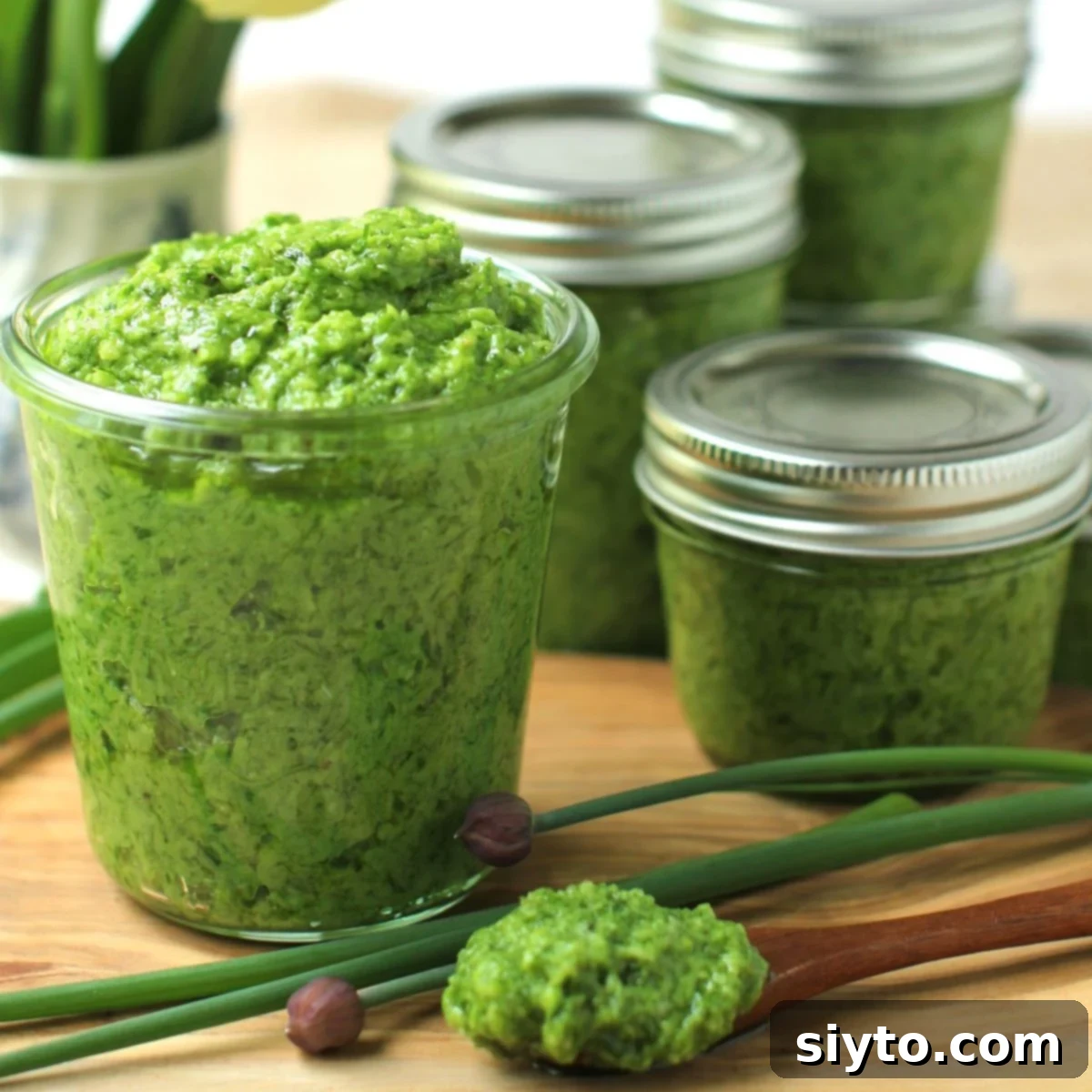
Easy Homemade Chive Pesto Recipe: A Burst of Spring Flavor in 10 Minutes
Chive pesto offers a bright, zesty, and utterly delightful culinary experience that awakens your palate with the fresh taste of spring. If you’re fortunate enough to have a flourishing clump of chives in your garden, you possess the key ingredients for crafting this incredible homemade pesto in under 10 minutes. Its bold yet subtly oniony flavor profile is incredibly versatile, complementing a myriad of dishes, and the best part is, it freezes beautifully, allowing you to savor spring’s essence long after the season ends.
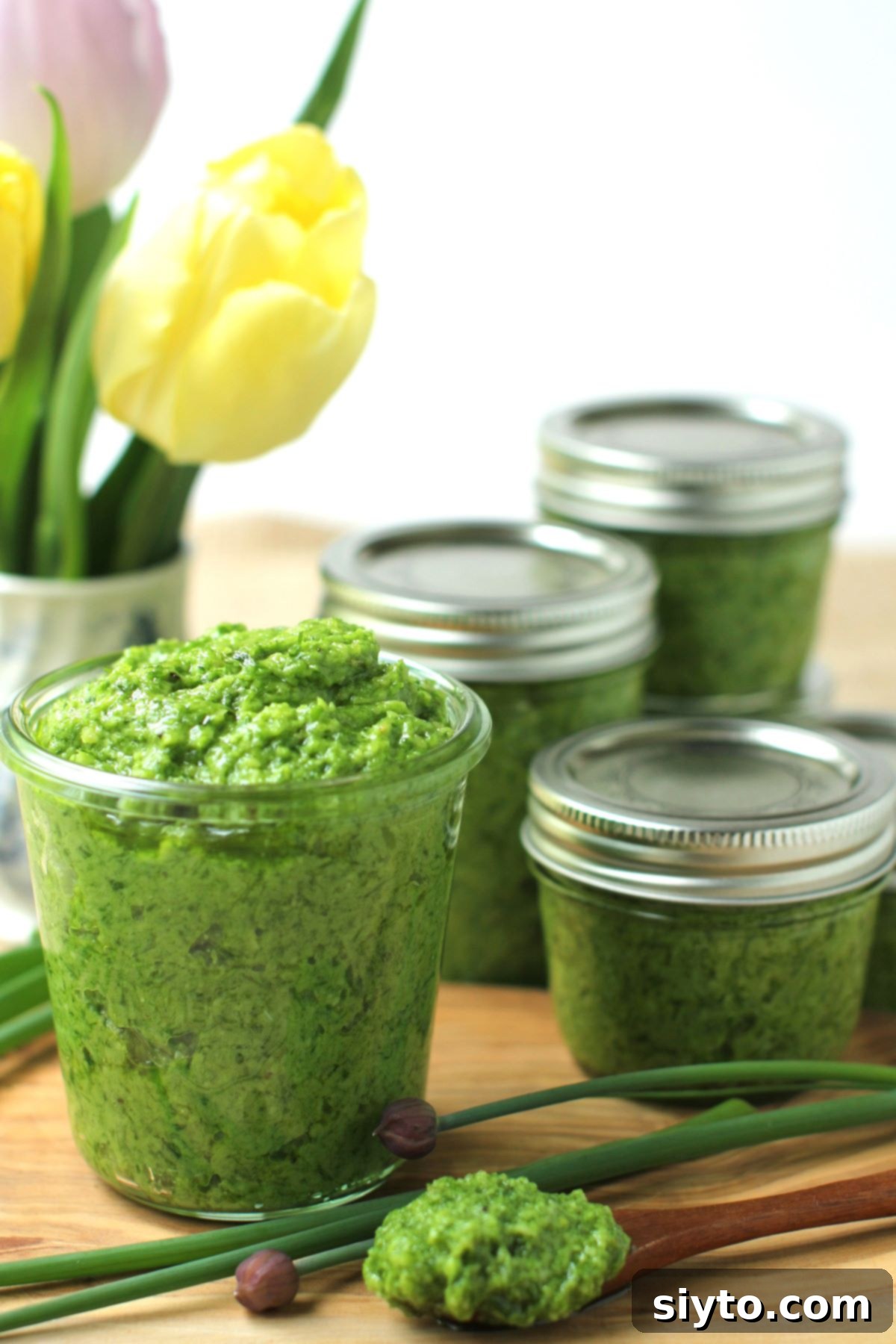
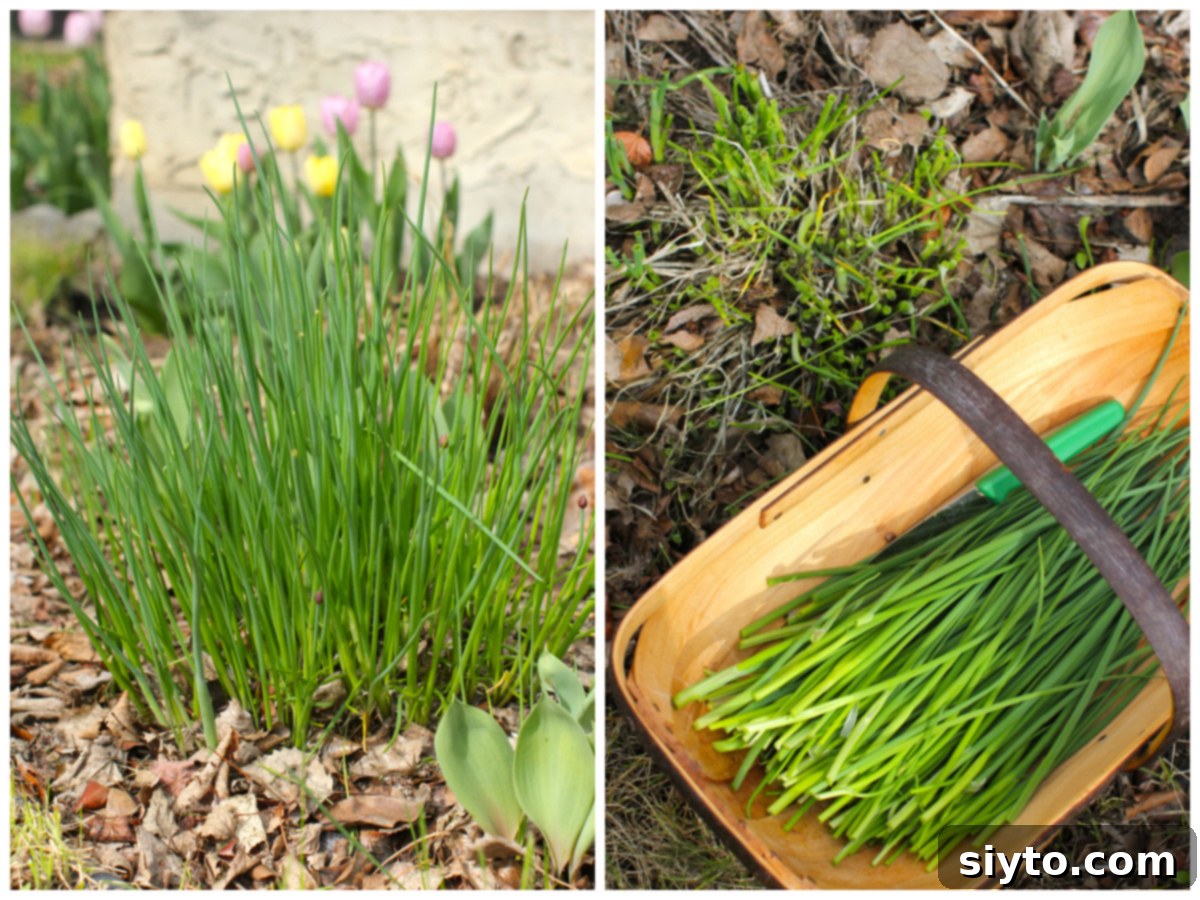
Here in the northern regions, spring tends to arrive with a gentle slowness, taking its time to coax life back into the slumbering earth. Yet, amidst the lingering chill, our hardy chives always emerge as the very first heralds of green in our spring garden. We are blessed with several large, vibrant clumps of these mild green onions, and their fresh, delicate flavor is a welcome addition to salads and various meals throughout the warmer months. However, ever since I discovered the sheer joy of making chive pesto, I now eagerly harvest an entire clump at once, transforming these humble garden treasures into jars of an exquisite culinary delight. This chive pesto truly packs a punch—it’s wonderfully zesty, brimming with a harmonious blend of cheesy richness and a subtle, mild onion essence. A faint, yet crucial, hint of lemon brightens the entire profile, perfectly balancing the chives’ light peppery warmth. This versatile homemade pesto has become a staple in our kitchen; we generously spread it on crackers for a quick snack, stir it into warm gnocchi for a gourmet touch, and layer it onto sandwiches and scrambled eggs for an instant flavor upgrade, making it an indispensable part of our spring and summer cooking repertoire.
Beyond this incredible chive pesto recipe, I often find creative ways to utilize our abundant chive harvest. I particularly enjoy using the delicate chive blossoms to infuse homemade chive blossom vinegar, which adds a beautiful pink hue and mild onion flavor to dressings and marinades. Another family favorite is this wonderfully zesty Chive and Egg Pasta Salad, perfect for picnics and light lunches, offering a refreshing twist on a classic. And, of course, fresh chives are indispensable when sautéed with fresh mushrooms, lending their subtle pungency to earthy flavors and elevating simple side dishes. Their versatility truly knows no bounds, making them a cornerstone of our spring kitchen.
A Whimsical Peek at Our Emerging Spring Garden and Early Harvests
There’s an unparalleled joy in the daily ritual of wandering through the garden each morning, eagerly anticipating what new spring surprises might have unfurled overnight. After the long, quiet slumber of winter, the sight of tender green shoots pushing through the soil and the delicate unfurling of vibrant colors brings a profound sense of renewed joy and delight. Each year, it feels like the very first time, a true treasure to behold, marking the triumphant return of life and warmth.
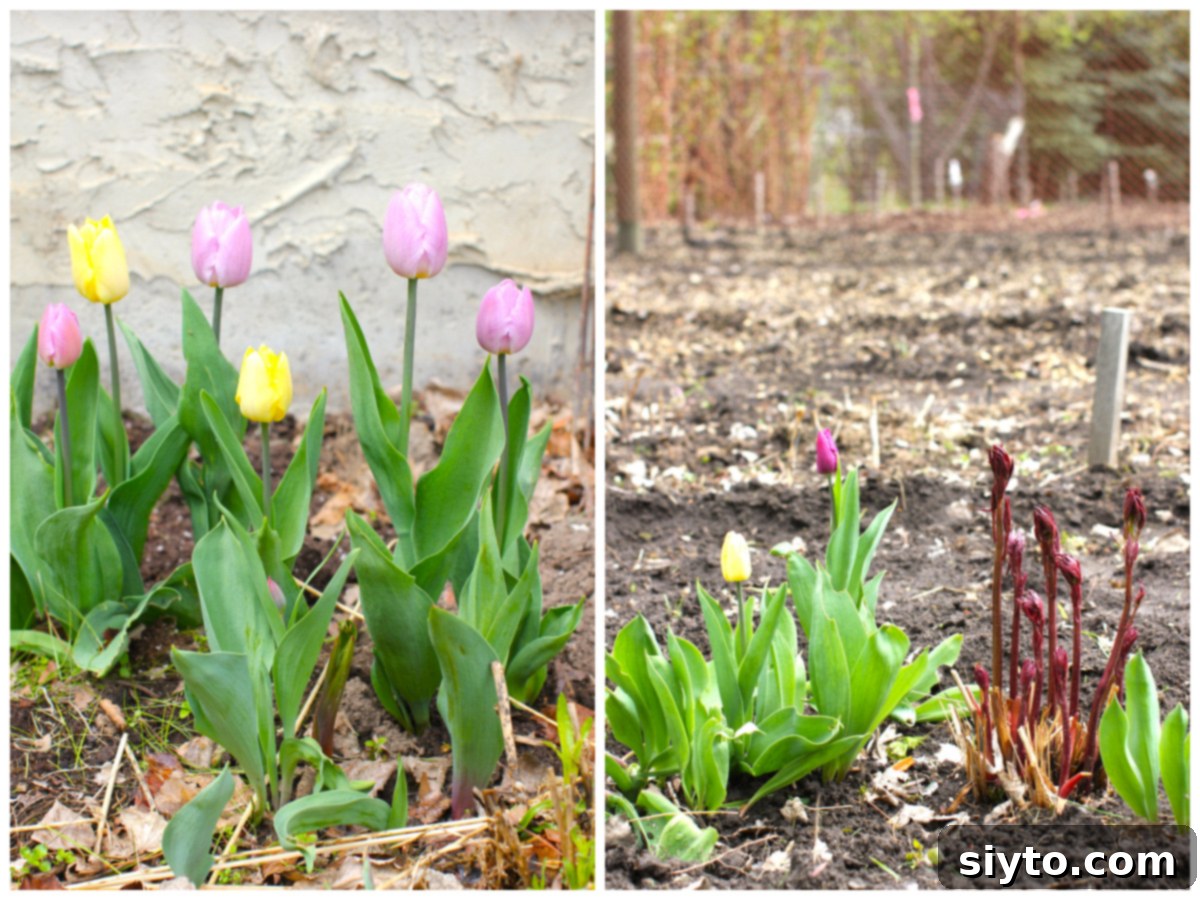
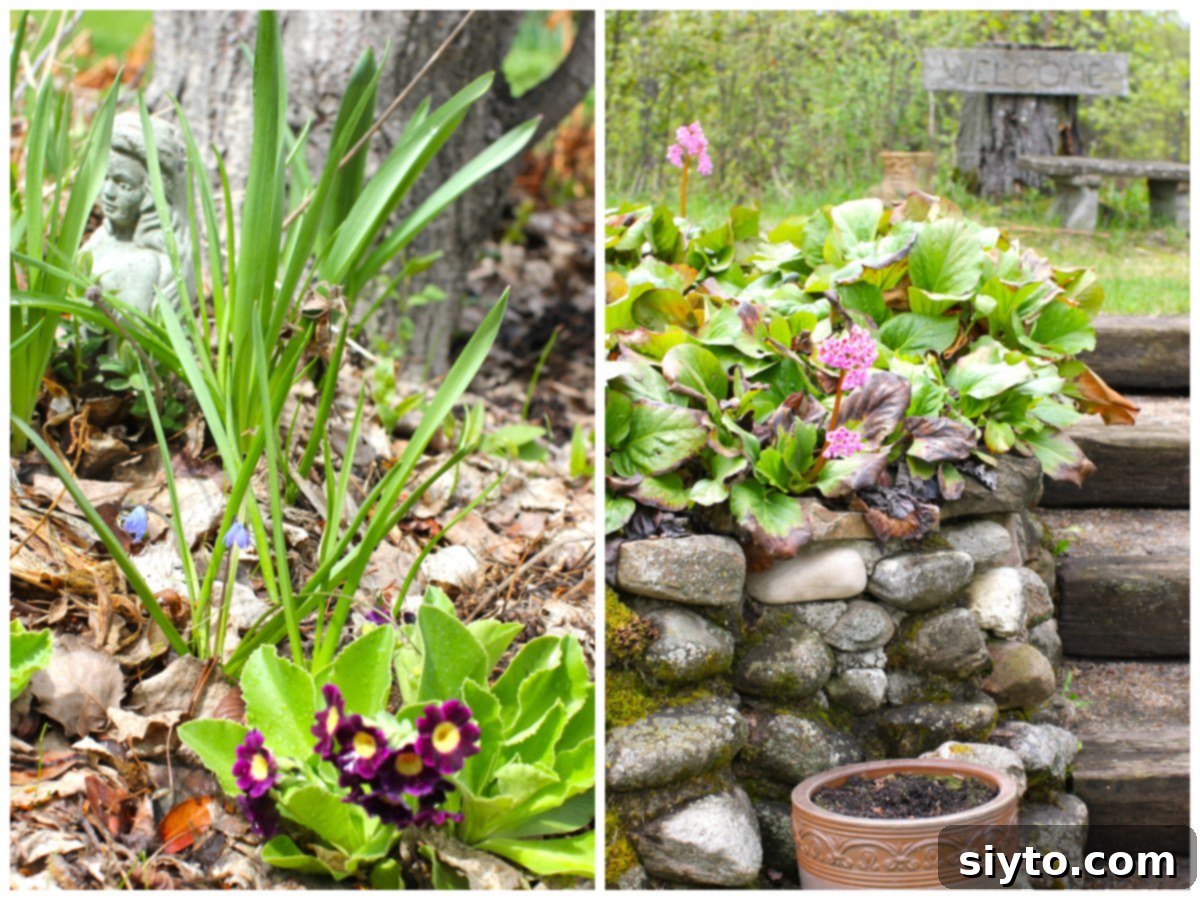
Our garden is a testament to nature’s resilience and beauty, especially in these early spring days. The brilliant pinks and cheerful yellows of the tulips, carefully planted in the freezing cold last autumn, now stand tall and proud, offering a spectacular display of color that brightens every corner of the yard. Their cheerful faces are a welcome contrast to the muted tones of winter. Beside them, the robust, ruby-red shoots of the peonies are already making their dramatic appearance, pushing through the soil with remarkable strength and promising future magnificent blooms that will grace our summer landscape.
Further along, the burgundy primulas are bursting into bloom, adding deep, rich tones to the awakening landscape, and a few scattered blue squills dot the ground with their cheerful sapphire petals, creating a whimsical tapestry of color. Clinging tenaciously to the rock wall, the sturdy bergenia plants consistently prove their winter hardiness, always making it through the harshest cold to bloom defiantly atop the stone, providing a comforting splash of evergreen foliage and delicate pink flowers that withstand the late spring frosts.
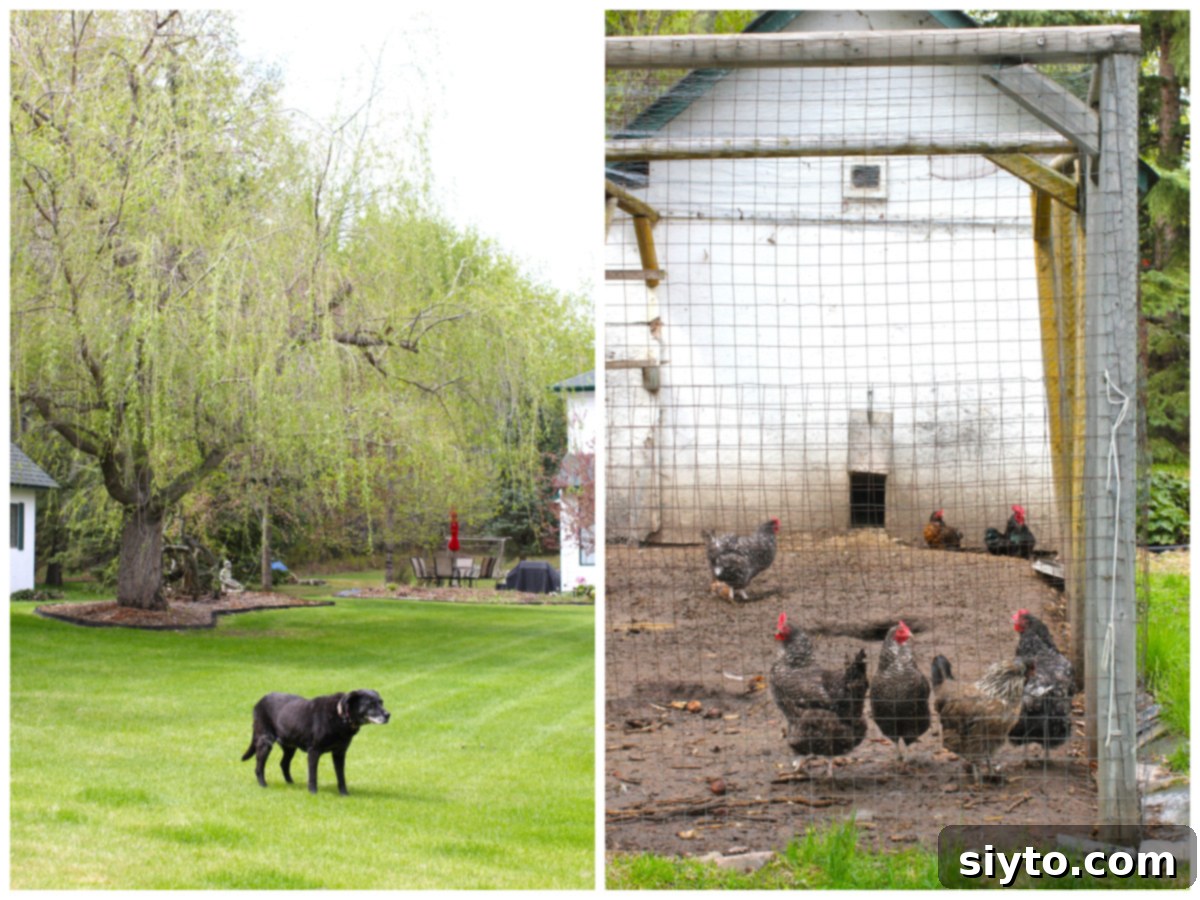
Even our beloved Pippa, our loyal canine companion, shares in the joy of spring’s return, thoughtfully surveying her flourishing kingdom from her favored spot in front of the gracefully greening weeping willow tree. Her keen eyes observe every new leaf and bud. Meanwhile, our lively flock of chickens are absolutely thrilled to be back in their outdoor run, happily scratching and pecking for hidden bugs and tasty scraps in the thawing earth, a sure sign of warmer days ahead and abundant life returning to the homestead. Their contented clucking is the soundtrack of our spring mornings.
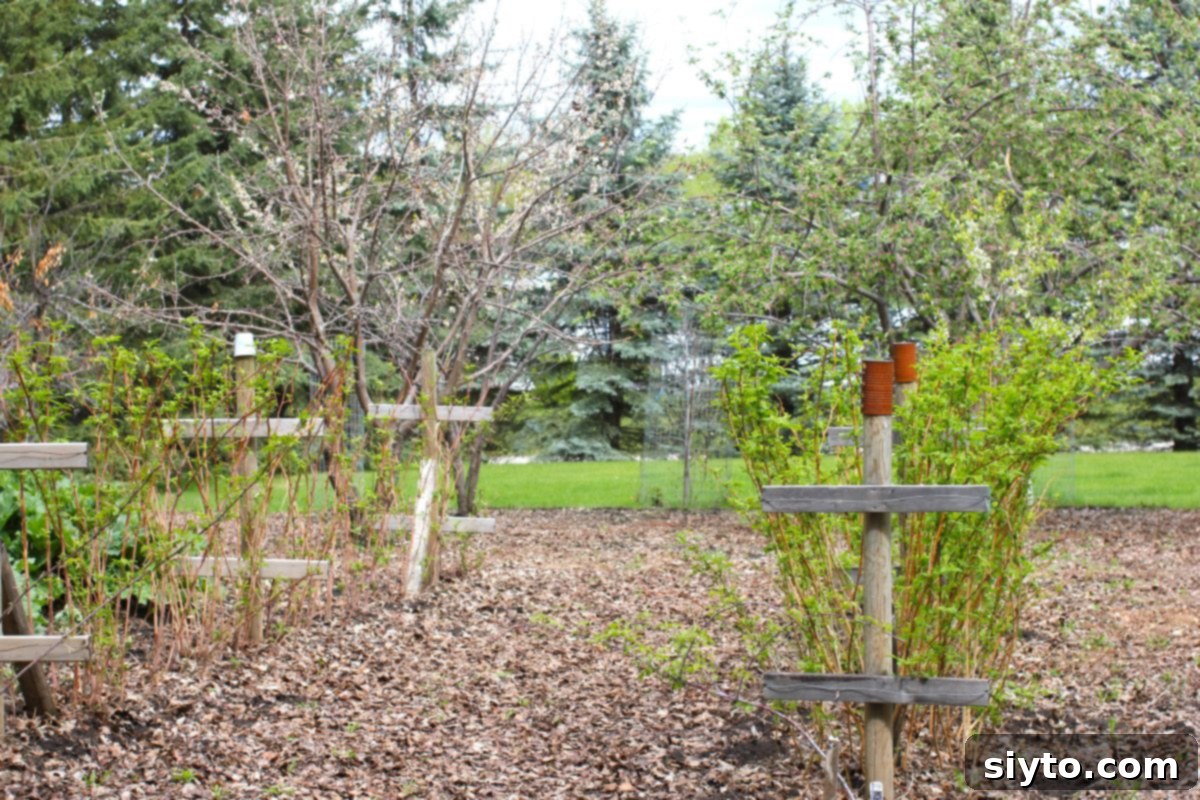
In the orchard garden, the raspberry canes are vibrantly greening up, their new growth promising a bountiful summer harvest of sweet berries. Just behind them, the plum trees are already adorned with delicate white and pink blossoms, a beautiful sight that signals the promise of sweet, juicy fruit to come later in the season. And the robust rhubarb stalks are growing with impressive vigor, their crimson stems reaching skyward, soon to be ready for pies, crisps, and jams that will fill our kitchen with comforting aromas.
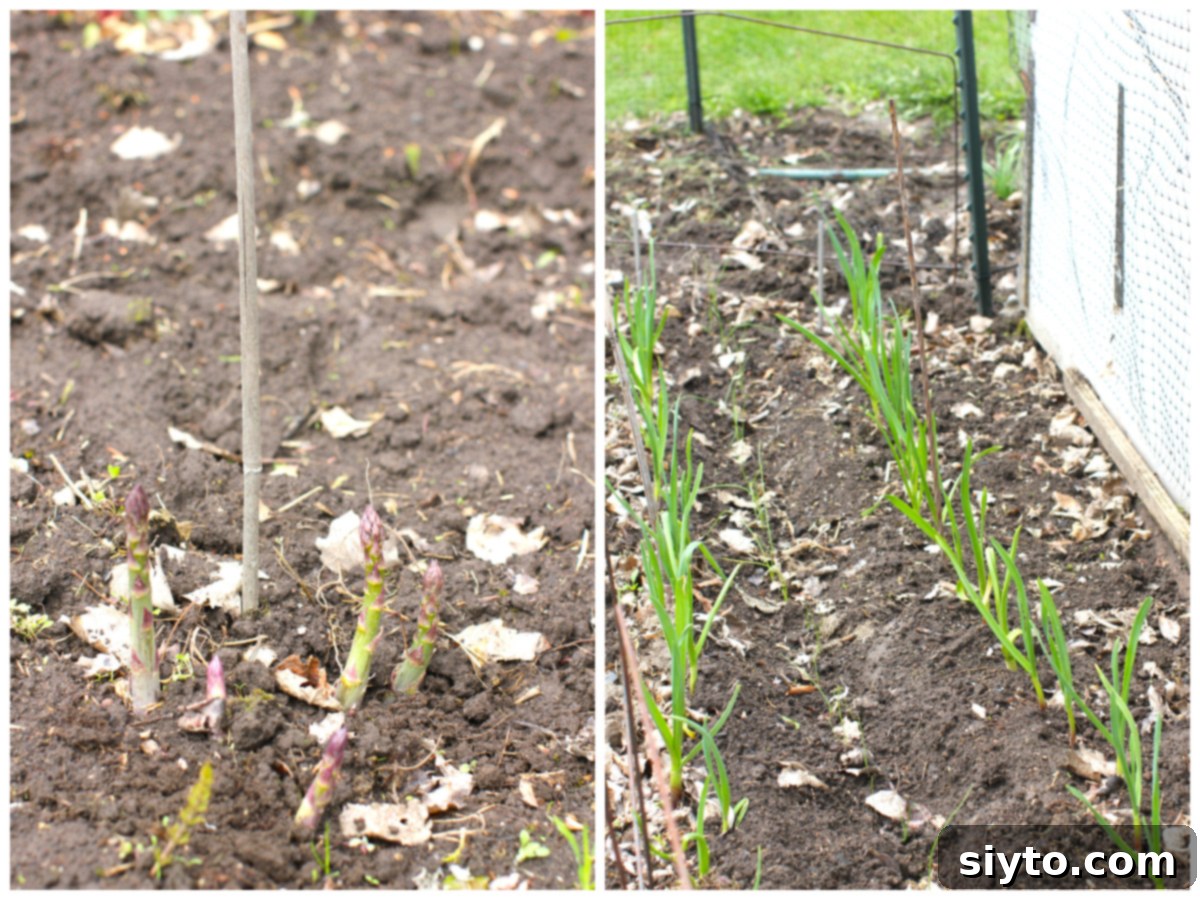
Our dedicated vegetable garden is also showing remarkable progress and the first signs of an early harvest. We anticipate enjoying our first delicious spears of asparagus very soon – a true delicacy of early spring, sweet and tender after the long winter! The garlic cloves, carefully planted last year in anticipation, have successfully overwintered and are now pushing up strong, vigorous shoots, promising a fragrant and flavorful harvest of plump garlic bulbs later in the season. These initial successes fuel our excitement for the growing season ahead.
Despite a few weeks of cool, cloudy, and rather damp weather, the timing for planting our main garden beds couldn’t wait any longer. Rain or shine, the crucial task had to be done to ensure a bountiful harvest later in the year! Fortunately, we were blessed with some wonderfully willing helpers who eagerly joined our gardening efforts. My incredible mom and energetic nephew proved to be true troopers, working tirelessly by our side. With their invaluable assistance, and their infectious enthusiasm, we managed to get most of the garden planted, even though it rained and drizzled persistently throughout the entire day. Their smiles and unwavering hard work transformed a potentially soggy chore into a cherished family memory, a testament to shared effort and love for the land.

The spirit of collaboration and the satisfaction of hard work truly made the day special, reminding us of the rewards that come from tending to our garden.
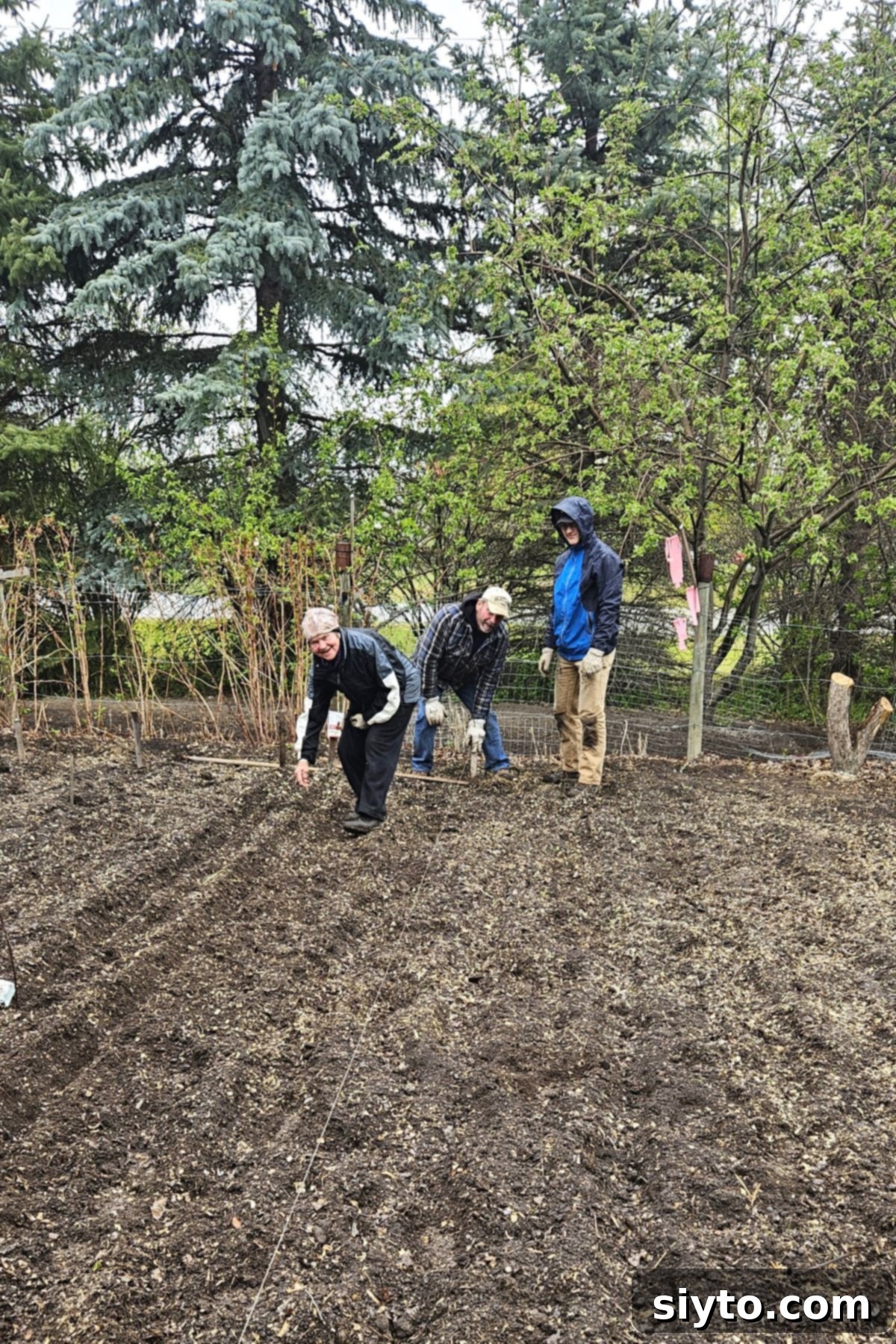
And now, with the garden tasks well underway and our chives flourishing abundantly, it’s the perfect moment to gather our generous clumps of fresh chives and transform them into this delightful homemade pesto – a true taste of spring’s bounty and a celebration of our successful early harvest.
How to Make Flavorful Chive Pesto in Under 10 Minutes
Creating this vibrant chive pesto is incredibly quick and simple, a testament to how easily fresh ingredients can be transformed into something extraordinary. The key lies in having all your components ready and a good food processor at hand. Here’s a detailed look at what you’ll need to gather:
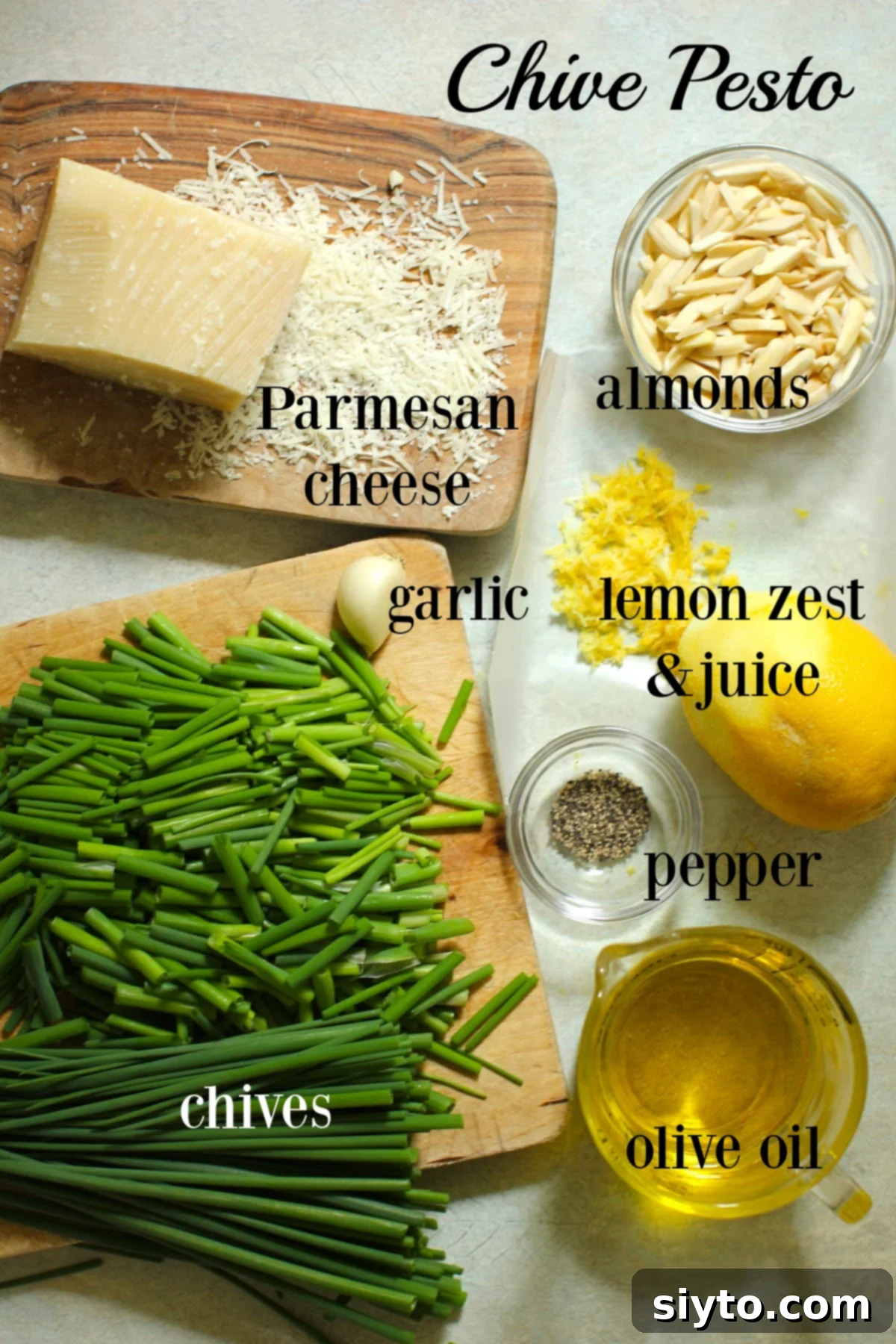
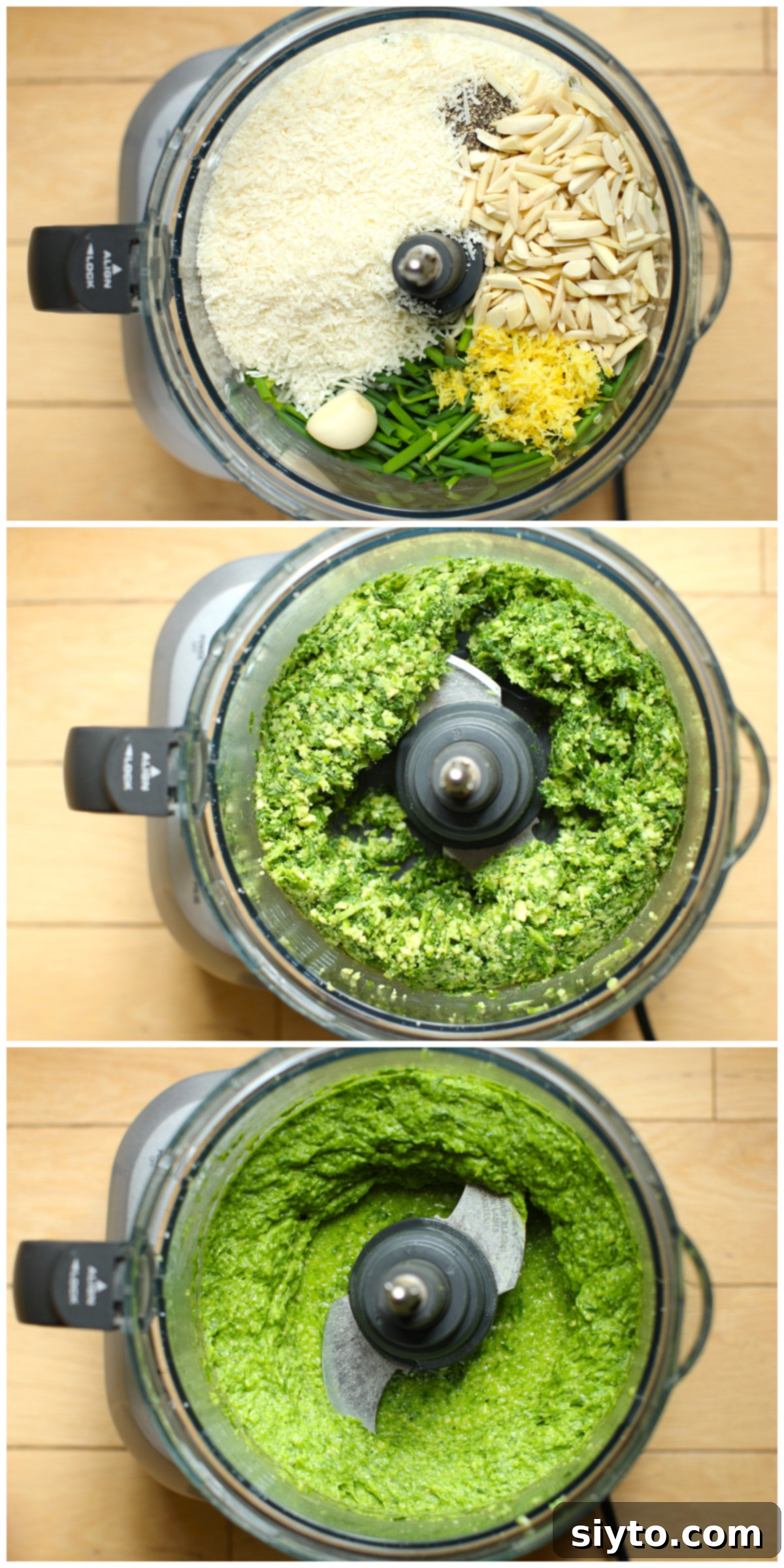
The process truly couldn’t be more straightforward, even for novice cooks. First, take your freshly harvested chives and give them a coarse chop – about 1-inch lengths are perfect, as the food processor will do the rest of the work. Then, grate your Parmesan cheese (freshly grated always yields better flavor and texture) and zest half a lemon, ensuring you only get the bright yellow part and none of the bitter white pith. These initial preparations are key to ensuring an even blend and maximizing the flavors. Once prepped, simply combine all the ingredients – except for the olive oil – into the bowl of your food processor. Pulse the mixture in short bursts until all the ingredients are well chopped and uniformly combined. You want a consistent, finely minced texture before adding the oil, but avoid turning it into a complete mush just yet. Next, with the food processor motor running, slowly and steadily drizzle in the extra virgin olive oil through the feed tube. The slow addition helps emulsify the pesto, creating a creamier texture. Continue to process the chive pesto until it transforms into a smooth yet still slightly chunky paste. The texture is a matter of personal preference; if you desire a looser, more flowing pesto, gradually add more olive oil, one tablespoon at a time, until it reaches your desired consistency. Remember, chive pesto does tend to thicken slightly as it sits and chills, so don’t be afraid to add a little extra oil later if needed to achieve that perfect dollop-able, vibrant texture.
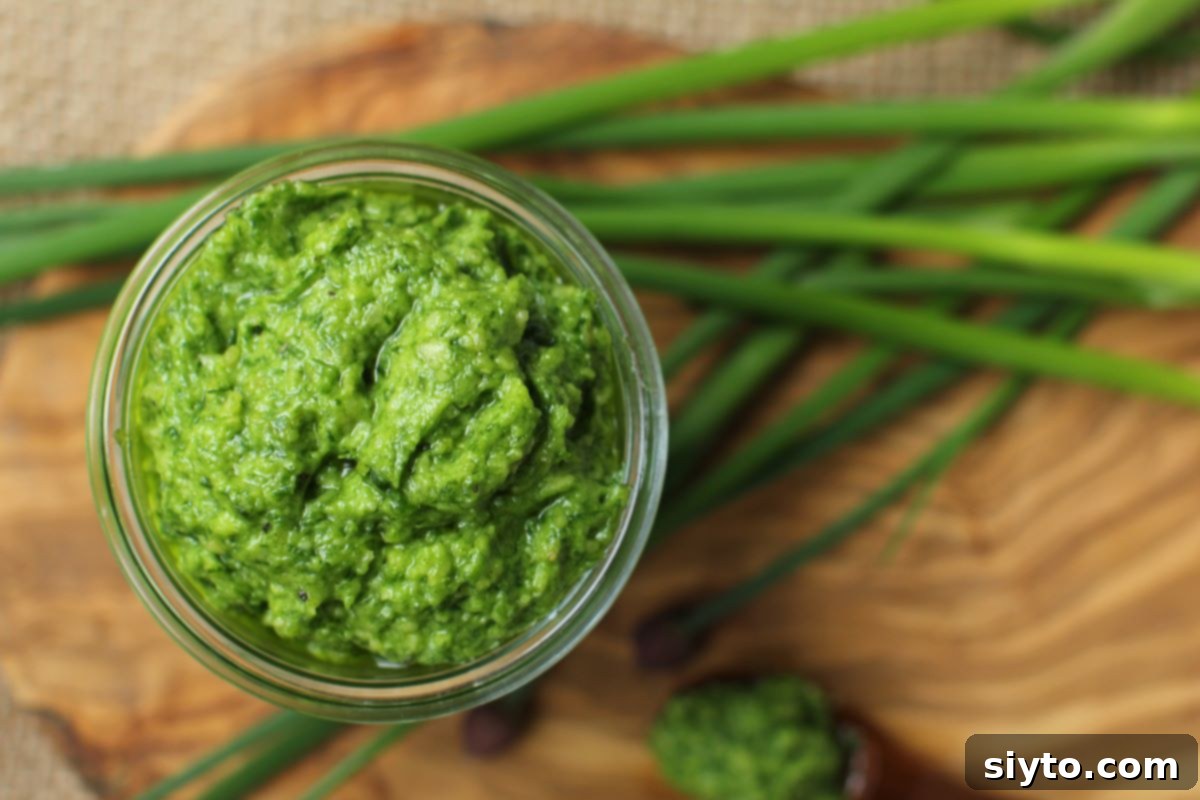
Voilà! In mere minutes, you’ve created an instant, incredibly versatile condiment that can serve as a vibrant appetizer, a rich sauce, a flavorful spread, a tangy dip, or a zesty addition to countless meals. Its bold and herbaceous flavor profile, with its unique mild onion and bright lemon notes, adds a truly magical touch to everything it graces, elevating even the simplest dishes to gourmet status. This homemade chive pesto is not just a recipe; it’s a celebration of spring’s bounty, bottled up for your enjoyment.
Creative Ways to Enjoy Your Fresh Chive Pesto: Versatile Serving Ideas
The versatility of chive pesto is one of its most appealing qualities. Once you’ve made a batch, you’ll find endless delicious and creative ways to incorporate its bright, zesty, and herbaceous flavor into your daily meals and special occasions alike:
- On Pasta: This is a classic use for any pesto, and chive pesto shines particularly bright here. Simply dollop a few generous spoonfuls of fresh chive pesto onto your al dente cooked pasta. For a silkier sauce that clings beautifully to the noodles, add a spoonful or two of the starchy pasta cooking water to loosen it up, then finish with an extra sprinkle of salt and freshly ground pepper. It’s particularly wonderful with light, fresh pastas like fettuccine, linguine, or even gnocchi, offering a refreshing departure from traditional basil pesto.
- With Chicken or Seafood: Chive pesto pairs exquisitely with delicate proteins. Try stirring it into freshly sautéed shrimp or scallops, adding an extra squeeze of lemon juice to enhance the flavors and create a vibrant pan sauce. It’s also fantastic brushed onto baked or pan-seared chicken breasts, grilled fish fillets (like salmon or cod), or even mixed into a simple fish stew, providing a vibrant, herbaceous crust and an aromatic finish.
- On Grilled Meats: Elevate your summer barbecue by using chive pesto as a vibrant marinade before grilling, or as a delectable finishing sauce for grilled chicken, pork chops, or steak. Its bold flavor holds up exceptionally well to the smoky char of the grill, adding a fresh dimension to rich meats.
- Baked Potatoes: Transform a simple baked potato into a gourmet side dish or a light meal. Split open a hot baked potato, fluff the insides, and stir in a generous dollop of chive pesto along with a pat of butter, a spoonful of sour cream, or a sprinkle of shredded cheddar cheese. It melts beautifully, infusing the potato with its zesty goodness.
- Eggs & Omelets: For a delightful breakfast, brunch, or light supper, stir chive pesto into scrambled eggs just at the last minute of cooking, or spread it generously inside a freshly made omelet before folding. The mild onion flavor of the chives perfectly complements eggs, adding a gourmet touch without overpowering.
- Burgers or Sandwiches: Use chive pesto straight from the jar as a vibrant, flavorful spread for homemade burgers, turkey burgers, or any sandwich. For a creamier, milder option that’s equally delicious, you can also mix it with mayonnaise or plain Greek yogurt to create an amazing, zesty sandwich spread that pairs wonderfully with cold cuts, grilled vegetables, roasted chicken, or even egg salad and tuna salad.
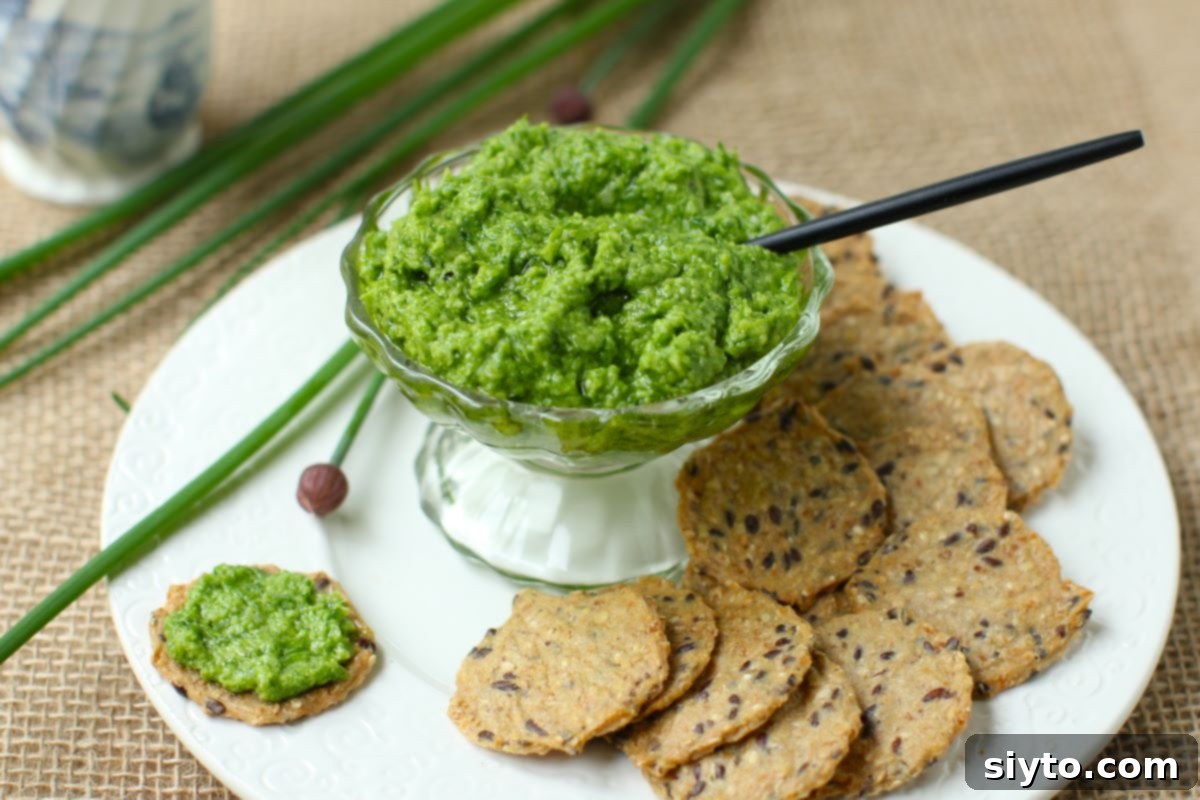
- Appetizer with Crackers: This is arguably one of the quickest and most satisfying ways to enjoy chive pesto. Serve it simply in a small bowl with an assortment of your favorite crunchy crackers, pita chips, crostini, or slices of crusty baguette. It makes for an incredibly quick, elegant, and zesty appetizer or snack that guests will adore, perfect for entertaining.
- Garnish for Soups: Add a beautiful flourish and an extra layer of flavor to your favorite creamy soups (like potato, leek, cauliflower, or vegetable soups). Just add a spoonful to the center of each bowl just before serving and gently swirl it in, creating an appealing visual and an aromatic burst of flavor with every spoonful.
- Dip for Veggies: Offer it as a fresh and flavorful dip for an array of raw vegetables like carrot sticks, cucumber slices, bell pepper strips (various colors!), cherry tomatoes, or blanched broccoli florets. For a creamier dip, mix the pesto with a bit of sour cream, plain Greek yogurt, or mayonnaise, creating a luscious texture that’s perfect for dipping.
Mastering the Art of Freezing Chive Pesto for Lasting Freshness
One of the most wonderful advantages of making chive pesto, especially when you have an abundant harvest of chives from your garden, is its excellent freezer-friendliness. This allows you to capture and preserve the bright, fresh flavors of spring to enjoy months down the line, long after the chive season has passed. To freeze chive pesto effectively and ensure maximum flavor retention, follow these simple, yet crucial, steps:
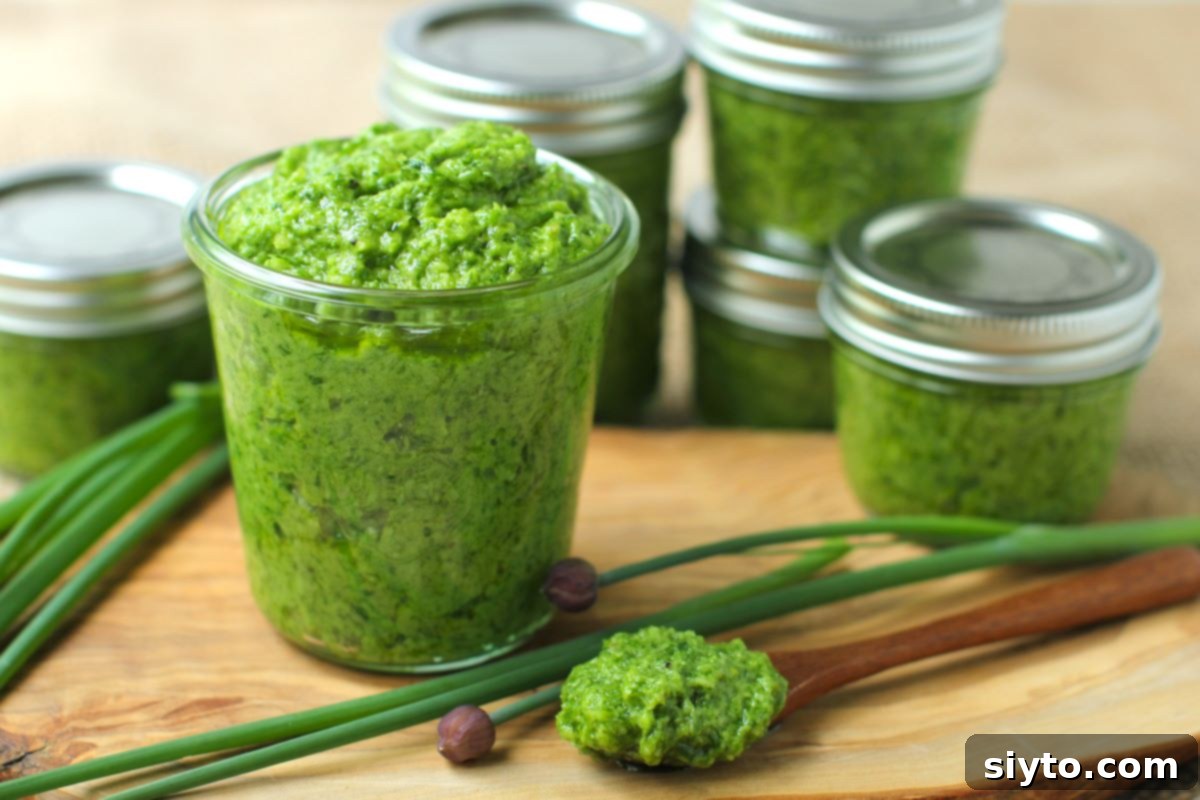
- Portioning: Spoon the freshly made chive pesto into small mason jars, individual ice cube trays (for smaller, single-serving portions), or other designated freezer-safe containers. It’s crucial to leave about a ½-inch (1 cm) headspace from the top of the container to allow for the pesto to expand slightly during the freezing process without cracking the container.
- Sealing with Oil: Gently smooth the surface of the pesto with the back of a spoon. Then, pour a thin, protective layer of high-quality extra virgin olive oil over the top of the pesto. This oil layer acts as a vital barrier, preventing air from reaching the pesto and thereby inhibiting oxidation (which can cause browning) and freezer burn, both of which can dull its vibrant color and fresh flavor.
- Freezing: Secure the lids tightly on your jars or containers. If using ice cube trays, freeze until the cubes are completely solid, then transfer the frozen pesto cubes to a heavy-duty freezer bag. Squeeze out as much air as possible from the bag before sealing to further prevent freezer burn. Place jars upright in the freezer until fully frozen, then they can be stored horizontally if space is an issue.
- Storage Duration: Properly frozen and sealed chive pesto can be stored in the freezer for up to 6 months without significant loss of quality. Beyond this, it will still be safe to eat but might gradually lose some of its vibrant flavor and color.
It’s worth noting that chive pesto, like many homemade sauces, tends to thicken slightly after a few days, both when stored in the refrigerator and especially after thawing from the freezer. This is a natural occurrence due to the fats solidifying. If you find your pesto a bit too stiff for your intended use (e.g., tossing with pasta), simply stir in an additional splash of fresh olive oil, a teaspoon or two at a time, until it reaches your desired creamy and spreadable consistency. This simple trick will bring it back to its creamy, spreadable best, ready to enhance your dishes as if it were freshly made.
Want to receive new Kitchen Frau recipes directly to your email as soon as they’re posted? Sign up here and you’ll get bits of news updates on what’s happening in my kitchen and garden, plus a handy and useful kitchen tip along with each recipe, too. We promise to only send you valuable content, with no spam ever.
If you like my recipes and culinary adventures, I would be absolutely delighted if you followed me on Instagram, Pinterest, X, and Facebook. Your support means the world to me and helps our community grow. You’d truly make my day. 😊
Guten Appetit!
Fresh & Zesty Homemade Chive Pesto
Margaret Bose Johnson
Save to Pinterest
Ingredients
- 4 cups (135 g) fresh chives, cut into 1″ (2.5cm) lengths, loosely packed
- ¾ cup (75 g) freshly grated Parmesan cheese (or Grana Padano for a milder taste)
- ½ cup (60 g) slivered almonds (or pine nuts for a more traditional pesto, walnuts for earthy notes)
- 1 clove garlic, peeled and roughly chopped
- zest of half a lemon (about 1½ teaspoons), for brightness
- juice of half a lemon (about 1½ tablespoons), to balance flavors
- ¼ teaspoon freshly ground black pepper (or to taste)
- ⅔ cup (160 ml) extra virgin olive oil, plus more for desired consistency and preservation
- Pinch of sea salt (optional, as Parmesan is salty, taste first)
Instructions
- Begin by adding the coarsely chopped chives, freshly grated Parmesan cheese, slivered almonds (or your choice of nuts), peeled and chopped garlic, bright lemon zest, fresh lemon juice, and freshly ground black pepper to the bowl of a sturdy food processor. Secure the lid and pulse until all the ingredients are finely yet coarsely chopped. The goal here is a uniform texture, but not yet a paste.
- With the food processor motor continuously running, slowly and carefully drizzle in the extra virgin olive oil in a thin, steady stream through the feed tube. Continue processing until the mixture transforms into a wonderfully homogeneous and slightly chunky paste. Resist the urge to over-process; a little texture is desirable for a rustic and appealing mouthfeel.
- Taste the pesto and adjust seasoning as needed, adding a pinch of sea salt if desired (remember Parmesan is already quite salty, so taste first) or more pepper to your preference. If you prefer a looser, more fluid pesto, add an additional tablespoon of olive oil at a time, blending briefly after each addition, until it reaches your desired consistency. Keep in mind that this chive pesto will naturally firm up a bit as it rests or chills, so don’t hesitate to add a splash more olive oil to loosen it up just before serving or whenever you use it again from the fridge.
- This recipe typically yields approximately 1⅔ cups (about 300 ml) of fresh chive pesto, perfect for immediate enjoyment or for freezing.
Notes
Storage in the Refrigerator: Your homemade chive pesto will keep beautifully in the refrigerator for up to one week. To maintain its freshness and vibrant green color, always ensure there is a thin layer of olive oil covering the surface of the pesto in the jar. Each time you scoop some out, simply add a fresh thin layer of olive oil to reseal it, forming a protective barrier against air.
Serving Suggestions: This versatile pesto is delightful in countless ways. Serve it stirred into warm pasta (add a splash of pasta water for a creamier sauce), dolloped over grilled chicken or baked fish, or spread generously onto sandwiches and burgers (it pairs wonderfully with cheese, cold cuts, egg salad, or tuna salad). It’s also fantastic as a zesty dip for fresh vegetables or an elegant appetizer spread on crackers and crostini. Don’t forget to try it on hot baked potatoes or stirred into scrambled eggs or omelets for a burst of fresh, savory flavor.