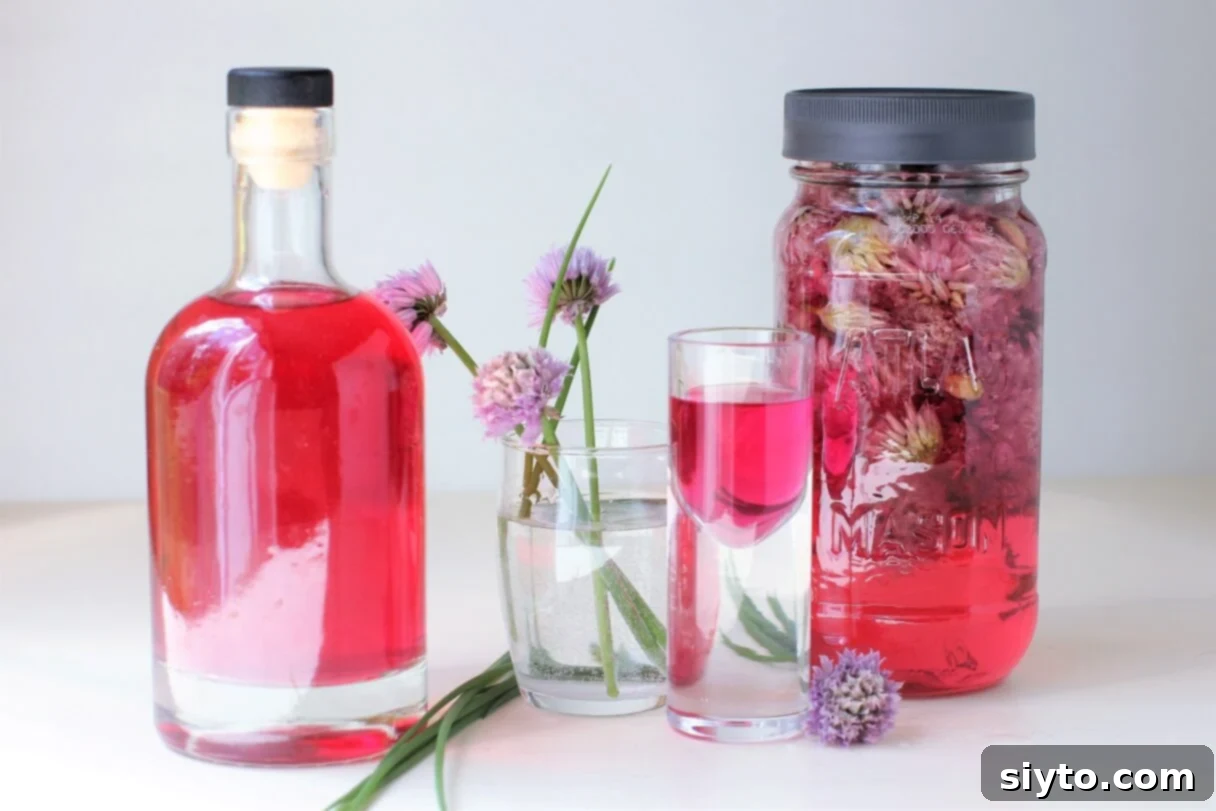
Homemade Chive Blossom Vinegar: A Vibrant & Flavorful Culinary Gem for Your Kitchen
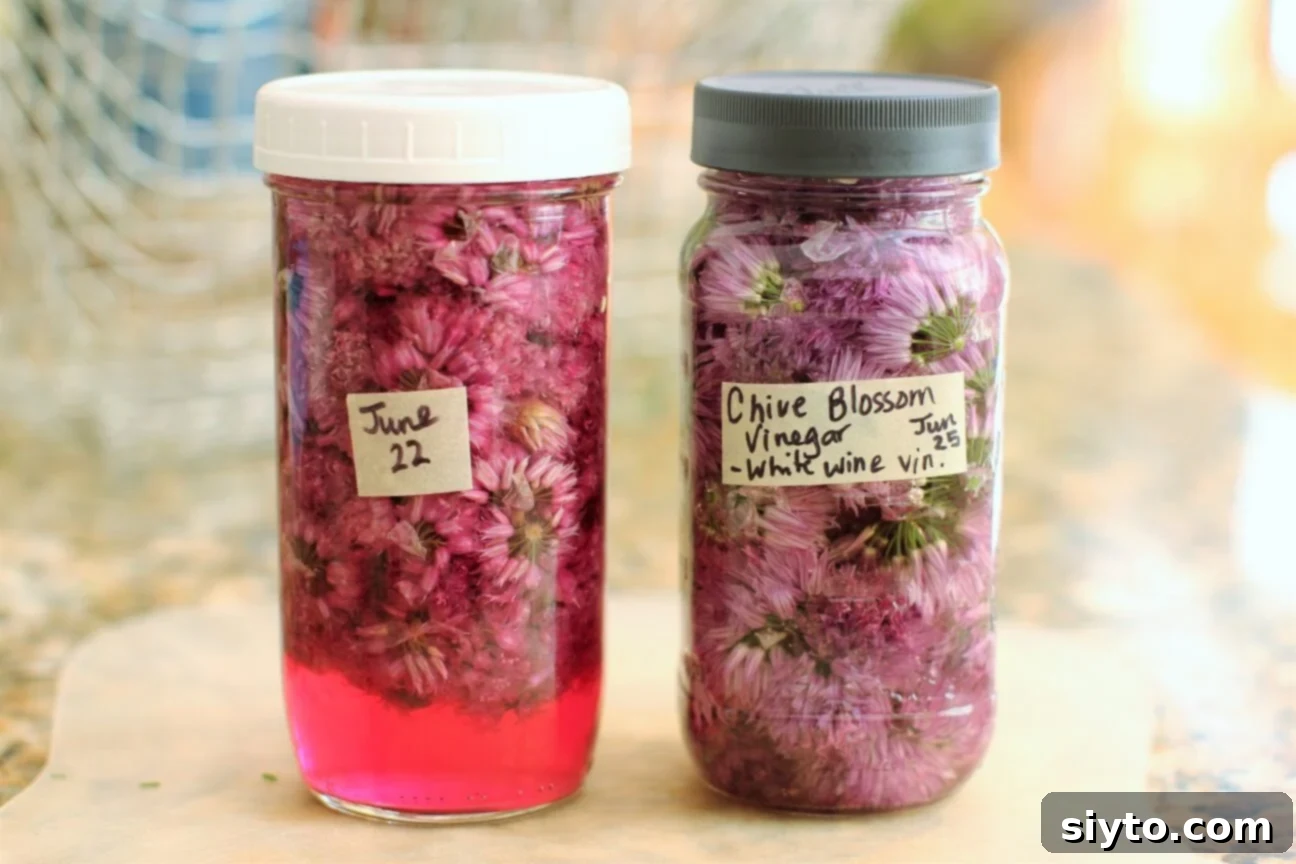
Transform a simple clump of garden chives into a truly sparkling culinary jewel with this easy recipe for Chive Blossom Vinegar. This homemade infusion glows with a fantastic rosy hue, offering a gentle, mild onion-flavoured tang that elevates salad dressings, vinaigrettes, marinades, and a variety of other recipes. It’s not just an ingredient; it’s a beautiful expression of your garden’s bounty, promising to add both visual appeal and a unique flavor profile to your meals. (Jump to the full recipe below!)

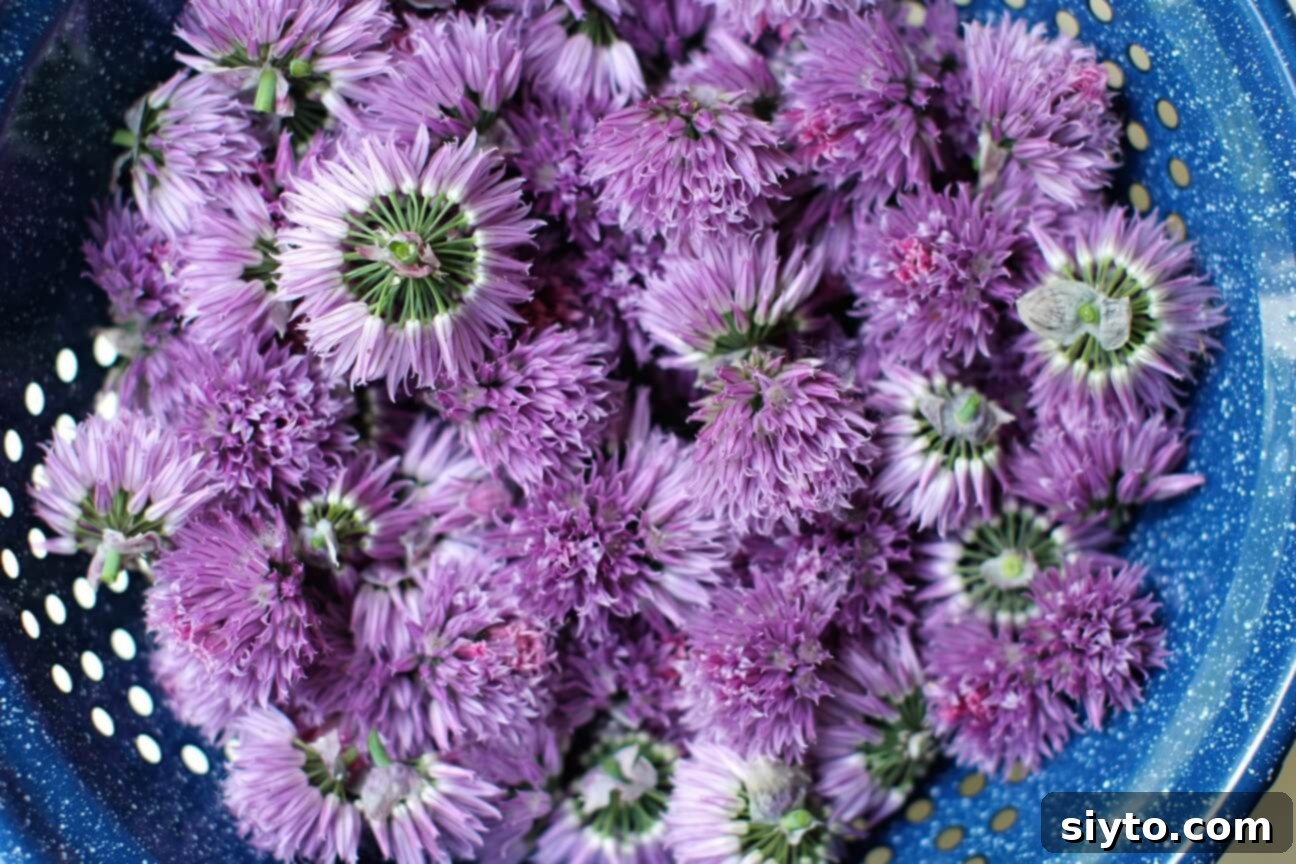
If you’re lucky enough to have a thriving clump of chives somewhere in your yard or garden, you possess a versatile green and purple gourmet treasure waiting to be enjoyed. Chives are incredibly rewarding to grow, offering more than just their fresh, mild onion flavor. The finely chopped green leaves are a quintessential addition to countless dishes – think a delicate sprinkle over fresh salads, enhancing the creaminess of pasta dishes, or as a fragrant garnish for hearty soups, stews, and casseroles. But the culinary magic doesn’t stop there. The stunning edible flowers, with their delicate purple spheres, make an eye-catching garnish. You can use them whole to adorn a plate or gently pull them apart into individual flowerets to scatter across the top of dishes, adding both beauty and a subtle oniony zest. Truly, every part of the chive plant is a gift to the home cook.
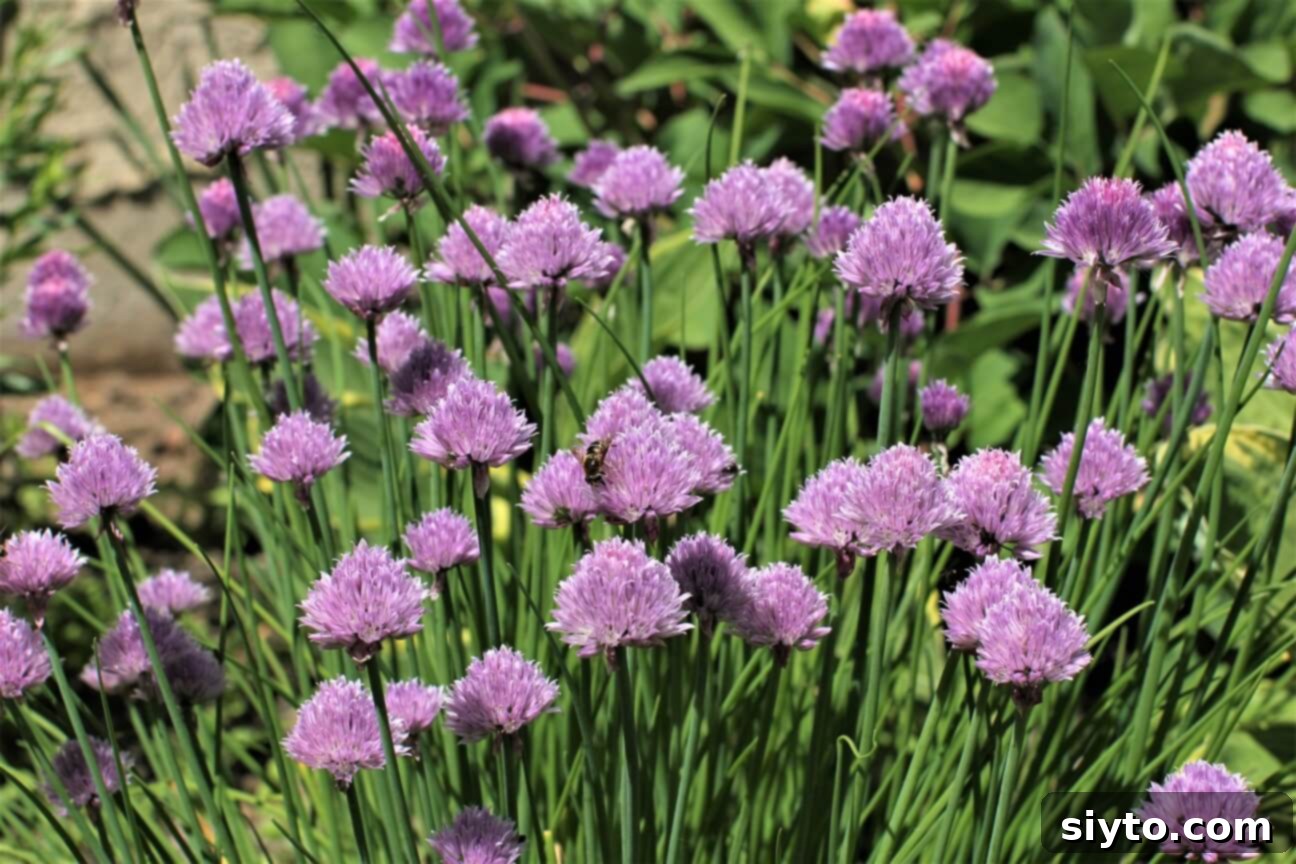
Beyond immediate use, chives offer excellent preservation options. I always ensure I have a generous supply of chopped chives in the freezer, ready to bring that fresh, garlicky onion flavor to winter cooking. It’s incredibly convenient to just grab a handful as needed for omelets, mashed potatoes, or savory bakes. Furthermore, I practice a no-waste approach by saving the tougher stems from the blossoms. These go directly into my freezer’s veggie scrap bag, destined to lend their aromatic depth to rich, homemade stocks – a cornerstone of flavorful cooking.
In our yard, we cultivate several large, flourishing clumps of chives. This strategy allows us to maintain a rotational harvest: I designate one clump for daily snipping of tender leaves, ensuring a continuous supply of fresh greens. The other clumps are left to grow freely and flower, providing an abundance of beautiful blossoms when the season is right for making our signature chive blossom vinegar. Chives are remarkably resilient; they regrow vigorously after cutting, often yielding multiple bountiful harvests throughout the growing season, from early spring well into late summer.
How to Harvest Chives and Create Exquisite Chive Blossom Vinegar
Harvesting chives, especially for their blossoms, is a simple and satisfying process. When the chives are in their full, glorious bloom – a vibrant sea of purple in the garden – that’s the ideal time to gather them. For efficiency, I often cut down an entire clump at its base, using sharp scissors, a sturdy knife, or even garden shears. This method not only provides a large harvest but also encourages the chive plant to regenerate new, tender growth for future use.
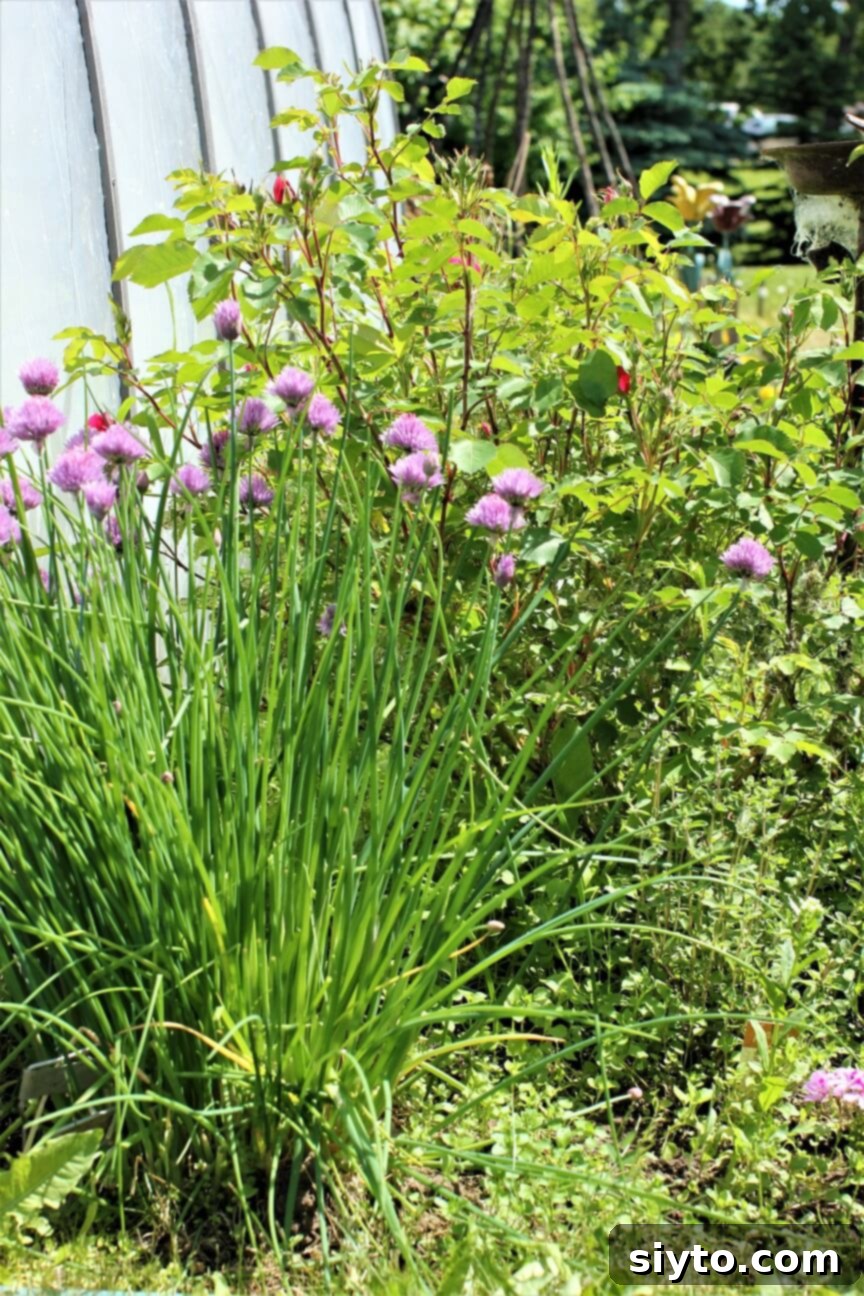
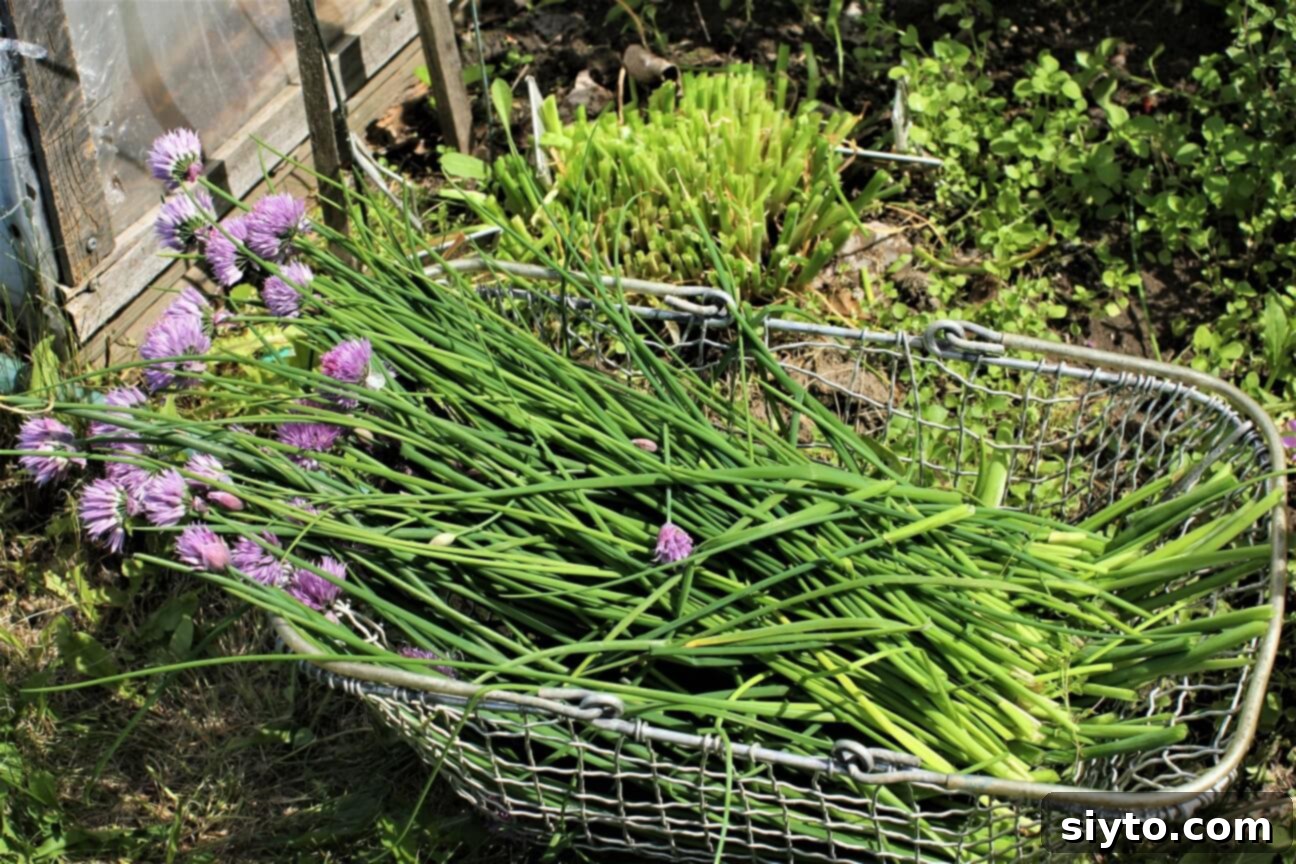
Once harvested, the processing begins. I carefully separate the flowering stems from the tender chive leaves. The blossoms are then snipped off, destined for the beautiful vinegar. The tougher, hollow stems that supported the blossoms are not wasted; after removing the papery sheath at their base, I snip them into shorter lengths and add them to a freezer bag. These contribute essential flavor to my homemade soup stocks, embodying a true ‘nose-to-tail’ approach for garden produce. Meanwhile, the tender chive leaves are finely snipped and, if clean, directly placed into freezer bags. If they happen to be sandy or muddy from a recent rain, a quick rinse and pat dry is all they need. Freezing chopped chives this way makes it incredibly easy to portion them out for cooking throughout the year, ensuring fresh flavor is always at hand.
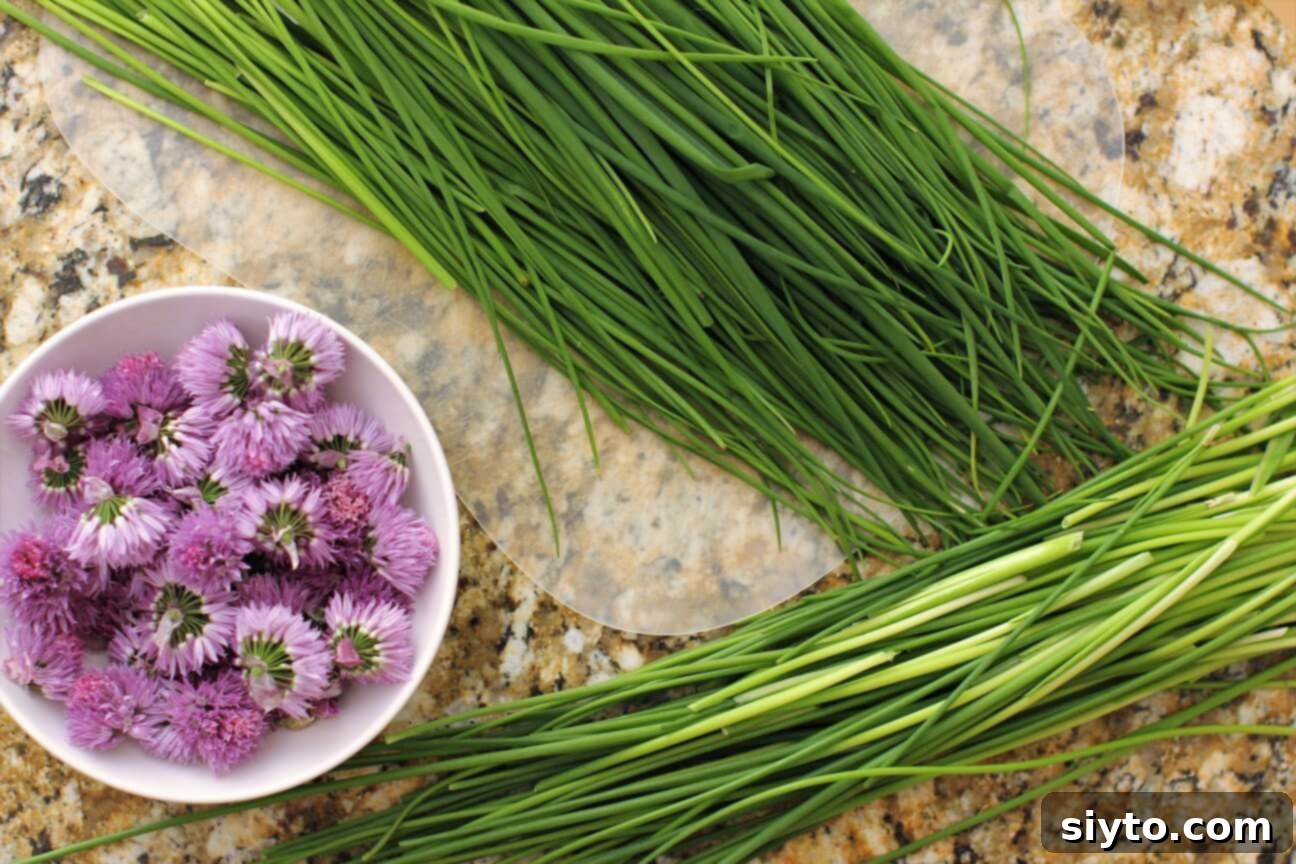
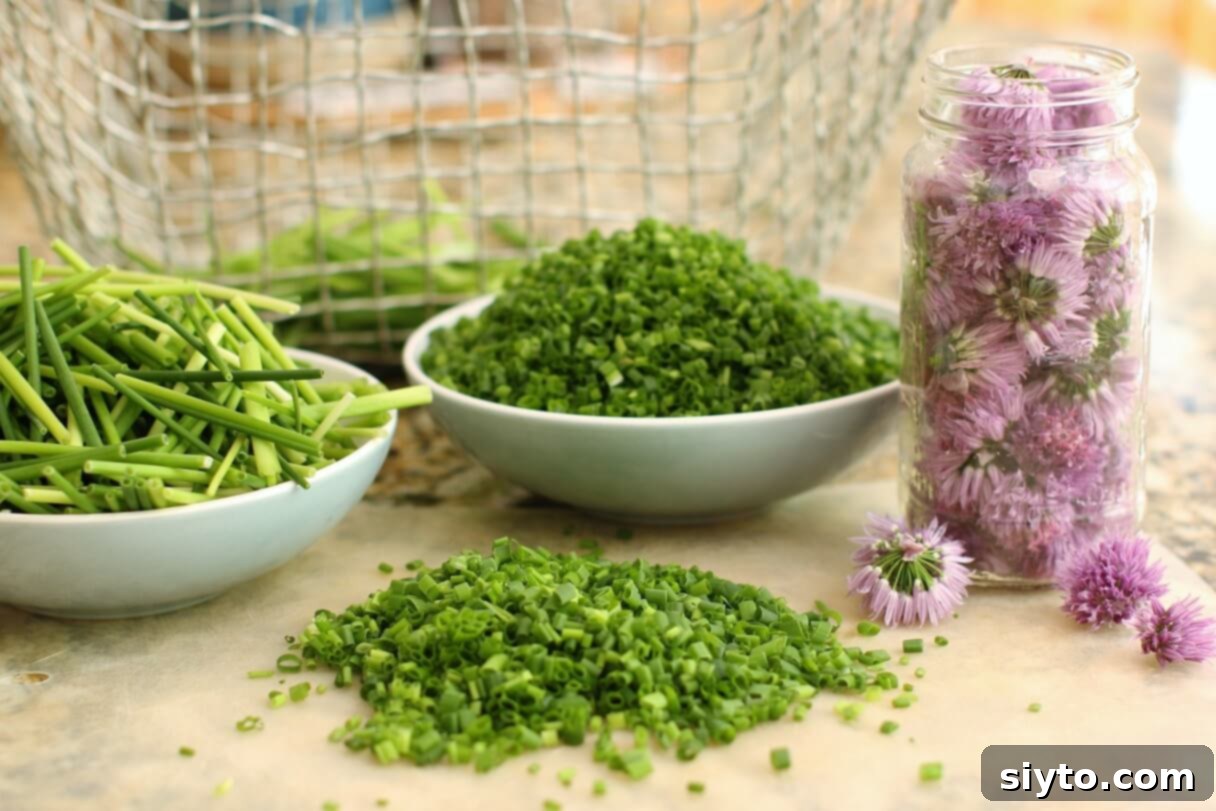
For the chive blossoms destined for vinegar, a quick, gentle rinse under cool water is essential to dislodge any tiny bugs or garden debris that might be hiding within their delicate petals. After rinsing, they must be thoroughly drained and patted dry to prevent dilution of the vinegar. Once prepared, the blossoms are ready to be covered in vinegar and set aside to steep. This simple infusion process creates a culinary delight that is both easy to achieve and remarkably rewarding.
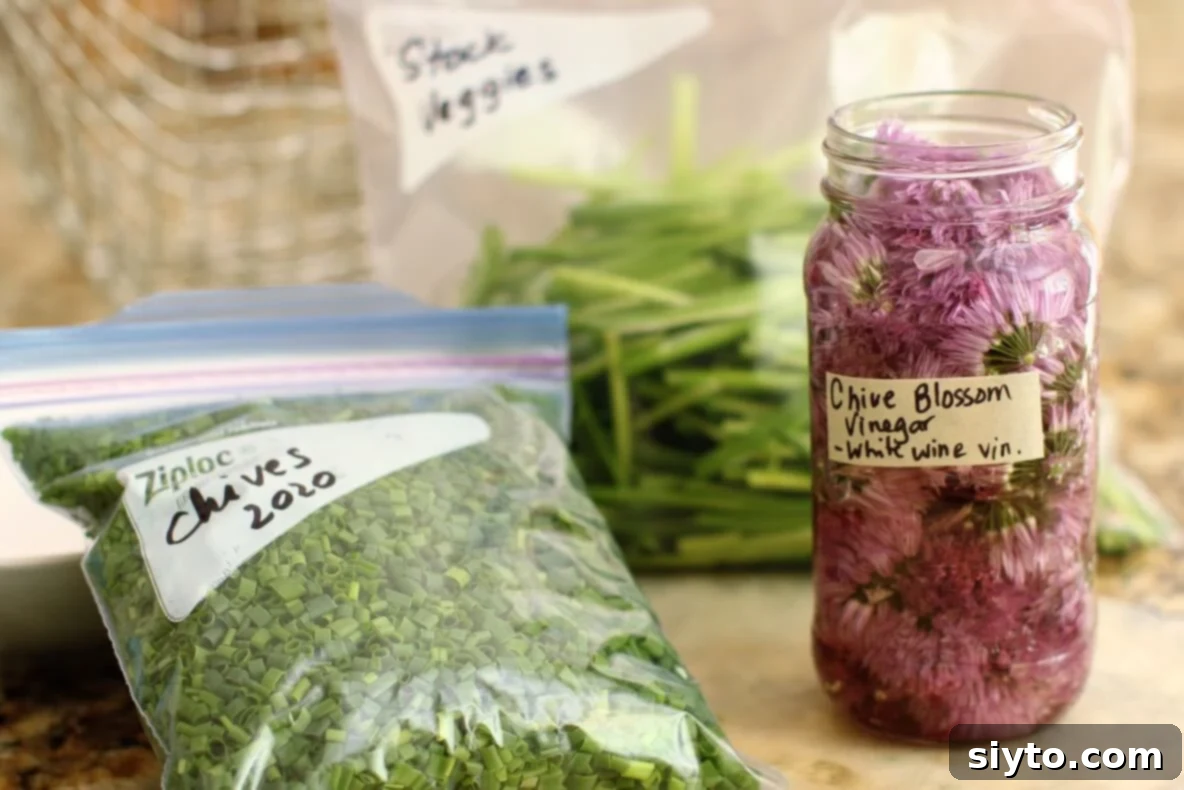
Making chive blossom vinegar is truly a cinch, transforming a seasonal garden bounty into a beautiful culinary treasure that can be enjoyed all winter long. Its vibrant magenta pink hue is simply magnificent, and the delicate onion flavor it imparts adds a delicious extra layer of complexity to any dish. A small, elegant jar of this homemade vinegar makes a truly thoughtful and impressive gift – as sophisticated and appreciated as any fancy gourmet vinegar, but imbued with the special touch of being lovingly homemade by you. It’s a wonderful way to share the joy of your garden.
The Flourishing Saga of Our Garden: A Midsummer Update
We’ve sailed past Midsummer’s Eve, the longest day of the year, and here in the northern reaches, the lingering daylight stretches past 11 o’clock at night. These exceptionally long daylight hours are the driving force behind the explosive growth we witness in our gardens during this season. While we typically don’t get our planting underway until late May, the extended sunlight allows our crops to rapidly catch up with the rest of the world, often surpassing growth expectations.
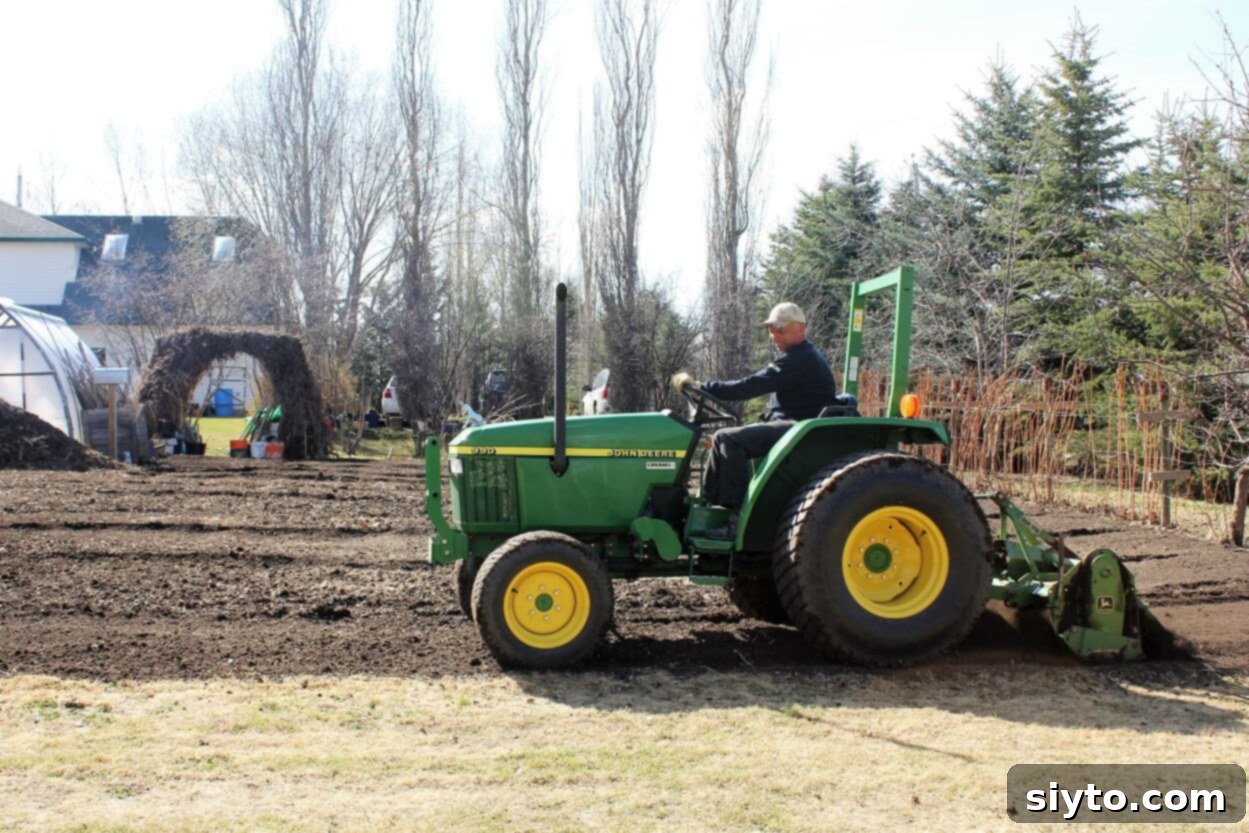
Our gardening season truly kicked off in early May when our dear friend Ed arrived with his trusty John Deere tractor. The sight of him tilling the soil is always a welcome sign of spring’s earnest arrival. At that time, the landscape was still awakening; the trees had yet to unfurl their leaves, and the raspberry canes, clearly visible on the right, remained bare, hinting at the dormant winter they had just endured.
Over the subsequent weeks, fueled by determination and the promise of a fruitful harvest, we diligently got everything planted. Most of the garden was established by the end of May, although a final burst of activity saw us putting in the last plantings of beans and peas in the middle of June. It’s a race against the clock in our climate, but one we eagerly embrace each year.
And what a transformation our garden has undergone! It’s incredible to see it now, lush and vibrant. This spring brought us abundant rain, interspersed with a few glorious sunny days, though we’re always hoping for more sun to ripen everything perfectly. We’ve already savored the first delicious harvests of crisp leaf lettuce and tender spinach. The potato plants are beginning to bloom, signaling that we’ll soon be unearthing those prized new baby potatoes. Our peas have triumphantly reached the top of their fence and are blossoming beautifully. The broad beans stand impressively several feet tall, and the herb garden is flourishing, a fragrant carpet of lush, green growth, ready for clipping.
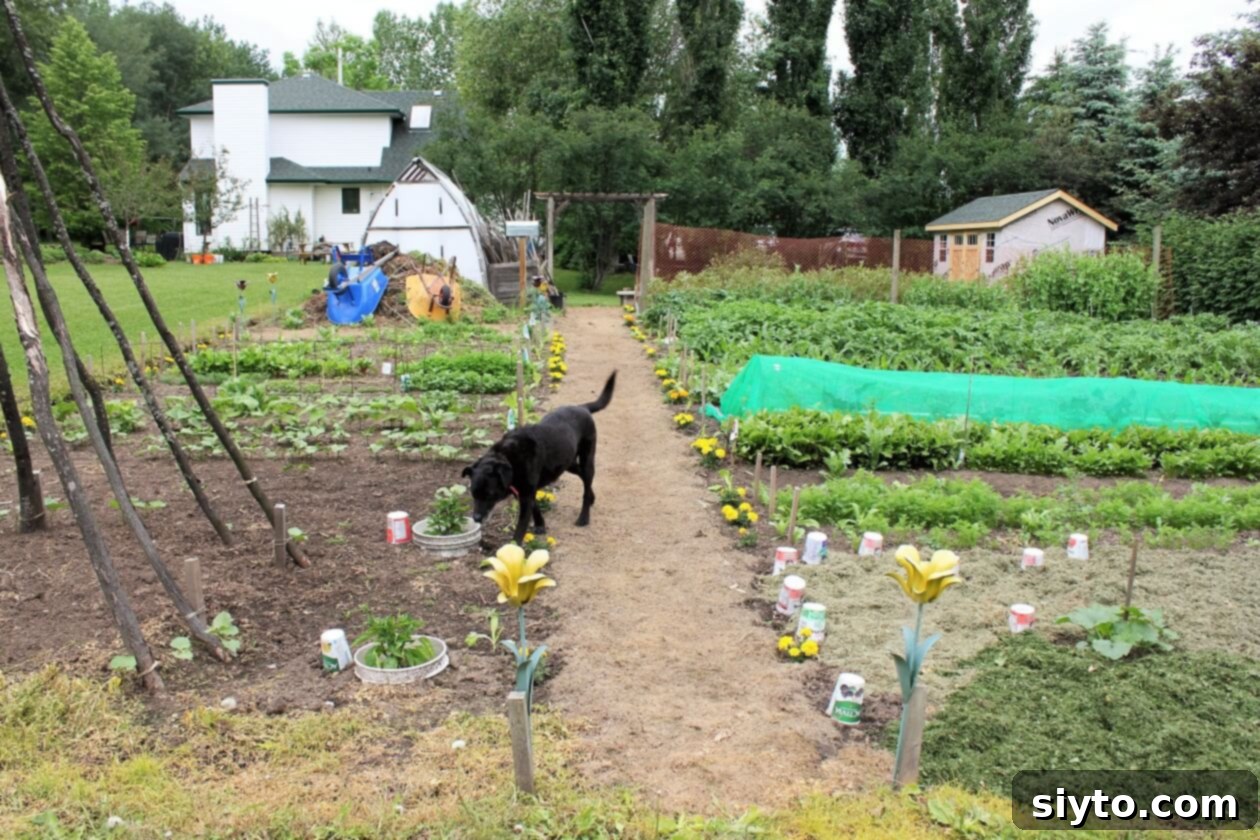
Have you noticed our fabulous new garden shed to the right side of the garden? It has been a long-awaited item on my wish list, a dream slowly coming to fruition. We’re currently just awaiting the finishing touches of trim and siding, and then, oh, the joy! I can finally begin the satisfying process of filling it with all my gardening tools, pots, and various ‘junk’. I confess, I’m way more excited about this new shed than perhaps I should be; it represents organization, efficiency, and a dedicated space for all my green thumb endeavors!
In our ongoing quest for a thriving organic garden, I’m currently trying out a floating row cover over our broccoli and kale plants. The goal is to deter those pesky, destructive green caterpillars. However, I must admit, I made a rookie mistake this year and waited a little too long before deploying the covers, resulting in caterpillars finding their way *inside* the protective barrier. It’s been a daily ritual of meticulously picking them off, and I derive a rather satisfying, albeit grim, pleasure from drowning them in a bucket of water. I’m hopeful I’ve managed to eradicate them all, safeguarding our precious brassicas.
The inviting brown material you see covering the pathways is a generous layer of mulch, primarily composed of grass clippings. There’s a particularly fresh application visible in the bottom right corner, carefully spread around the zucchini plants. This practice is incredibly beneficial, especially after all the spring rains; it effectively keeps the pathways and wider rows from turning into muddy quagmires. Beyond aesthetics, tilling in this organic mulch each year dramatically enriches our soil, adding vital fiber and a wealth of essential nutrients, contributing to a healthier, more productive garden ecosystem.
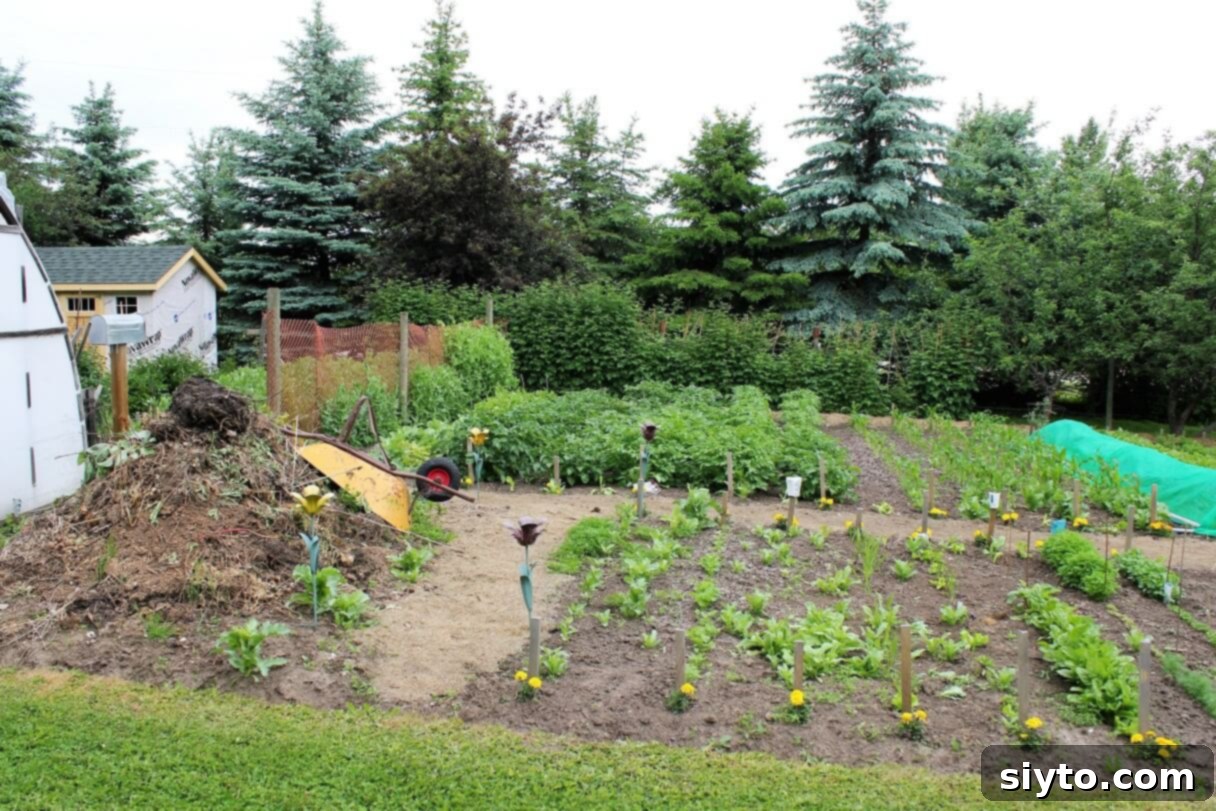
This past winter delivered a particularly harsh blow to our fruit trees and shrubs. The cold proved to be exceptionally tough, resulting in significant losses across the orchard, which was truly heartbreaking. Raymond has spent a considerable portion of the spring engaged in the arduous task of digging out mature trees and shrubs that succumbed to the winter’s fury. Among the casualties were our beautiful flowering dogwood, a cherished purple-leafed sandcherry, a Convoy cherry/plum hybrid, and even a mature apple tree (though that one we had actually cut down last year, its fate sealed). Worst of all, the severe winter claimed the majority of our large, productive Evans cherry trees. We had three mature trees and two younger ones; tragically, the three mature ones suffered almost complete die-back of their large branches, with only a few struggling sprouts remaining. We cling to the hope that these resilient bits will regrow and eventually restore their former glory. These trees used to yield hundreds of pounds of sour cherries every single year, providing an abundance for baking and preserving. This year, we’ll be incredibly lucky if we manage to taste even a few precious cherries. It’s a tragic, yet all too common, tale for gardeners in the north, where the relentless winter winds can be merciless. But like the old pioneers who braved these lands, we hope these trees are made of hardy stock and will survive this severe setback to once again flourish.

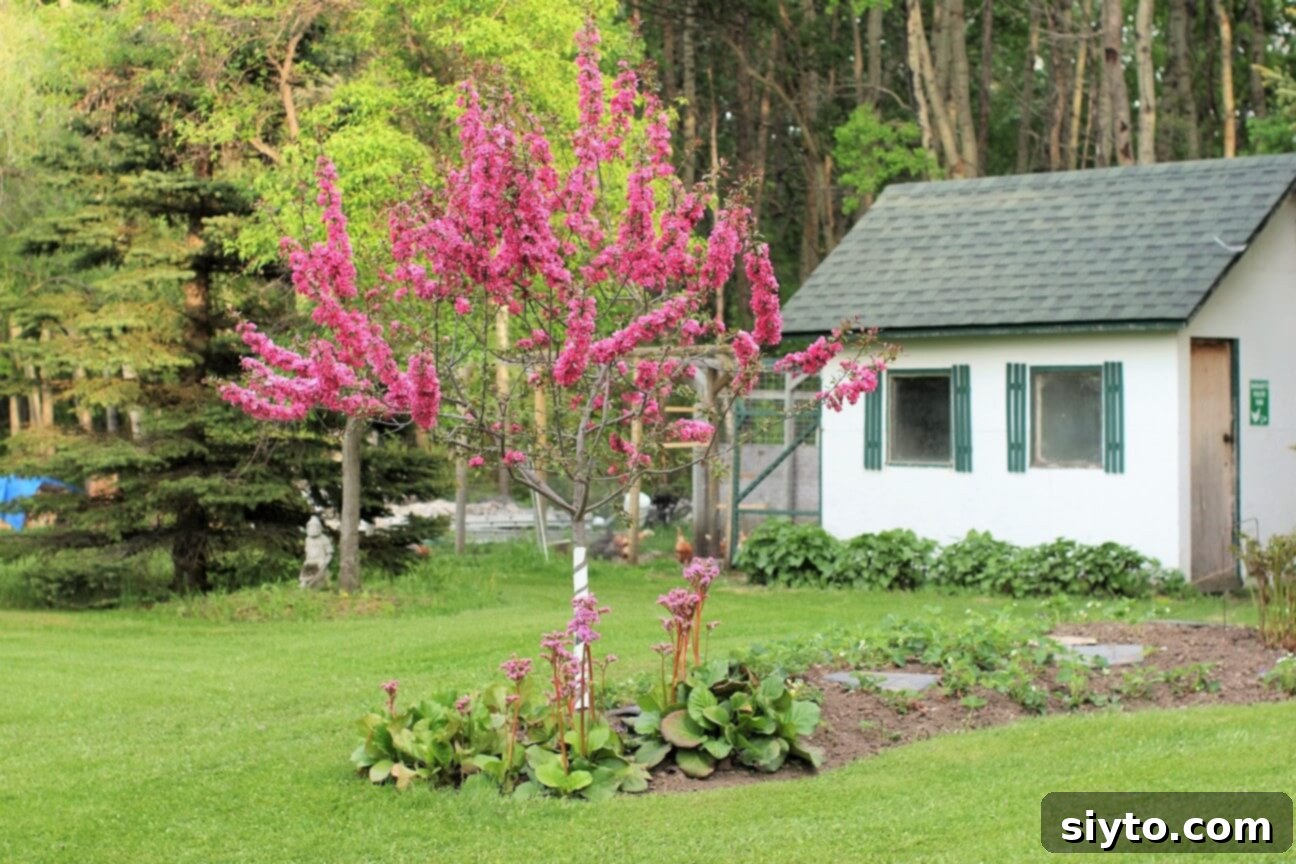
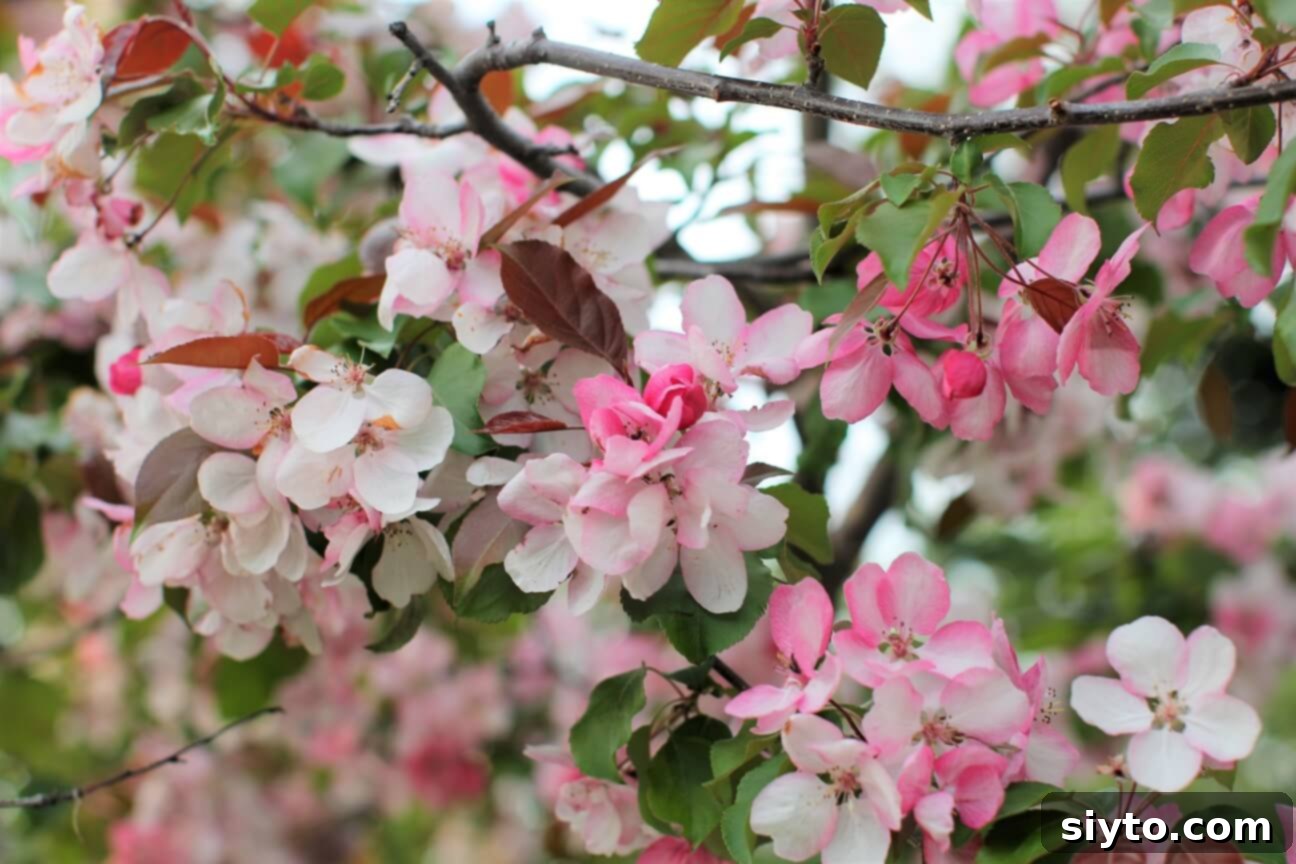
Amidst the sorrow of our fruit tree losses, we were fortunate that our ornamental crabapple trees survived the harsh winter relatively unscathed. Earlier this year, they provided us with an absolutely stunning floral show, their vibrant blossoms a welcome splash of color and a testament to resilience.
On to Our Chicken Chronicles: Tales from the Coop
Oh, these blasted chickens! I swear, we have never had a more skittish, easily spooked bunch in all our years of keeping poultry. Now I truly understand the origin of the term “chicken” to describe a scaredy-cat! They seem to freak out and fly up at the slightest provocation, creating a flurry of feathers and panic. Over the years, we’ve raised many new batches of chicks, but never one that exhibits such consistently nervous behavior. Adding to the oddities, about half of them developed severely crooked feet – another first for us. I’ve since learned this can be attributed to them being overly active and prone to panicking when very young. When startled, the chicks would constantly pile on top of each other, bending their tender little feet into permanent crooked positions. Apparently, it doesn’t impede their ability to live full lives, but it certainly looks unsettling and makes them a bit wobbly.
Thankfully, we have our very own resident “Chicken Whisperer” in the family: my amazing mom!
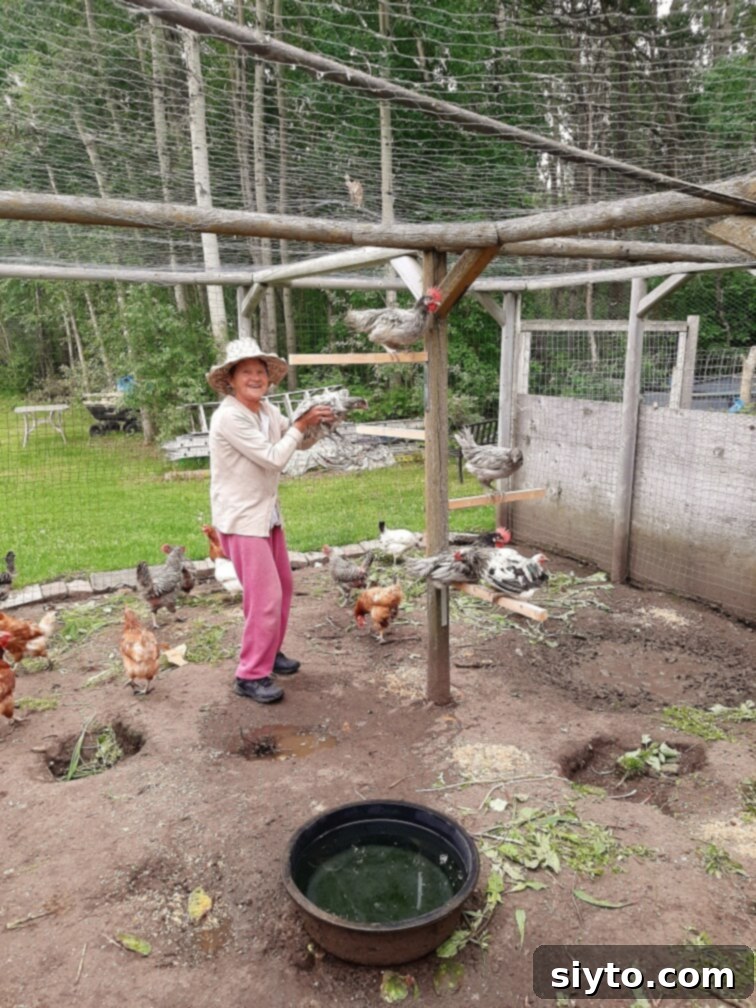
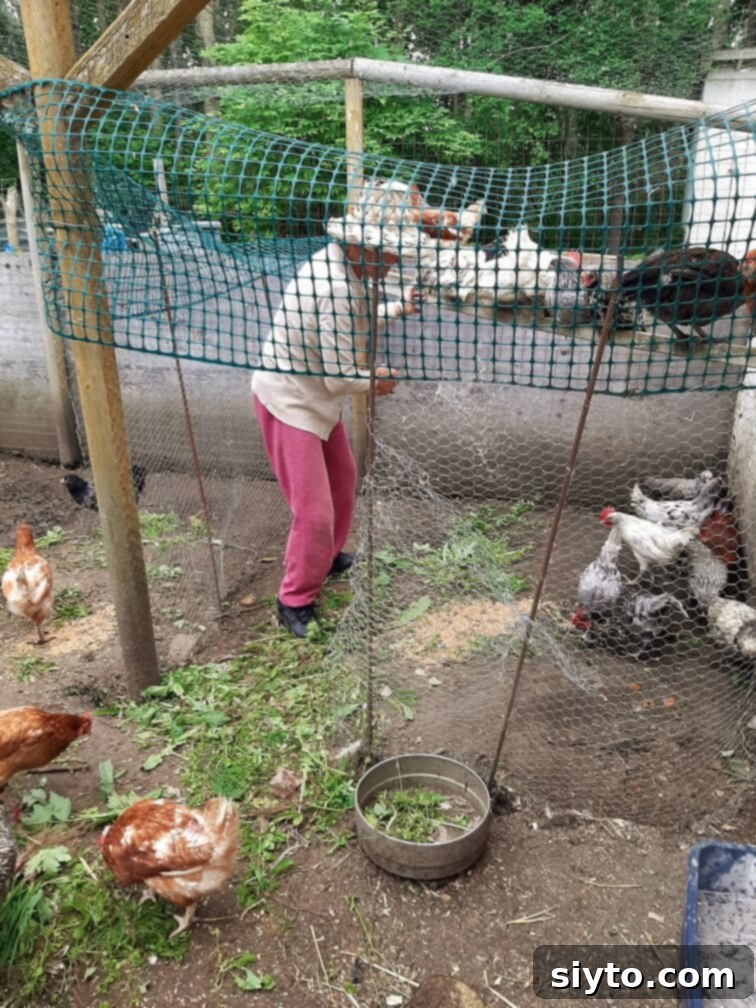
Just two weeks ago, when they reached a respectable 12 weeks of age, we introduced this new batch of young chickens to the existing flock of older hens. It has been an ongoing war ever since, a true pecking order power struggle! The old biddies, as they always do, are fiercely protective of their established territory and resources. They relentlessly prevent the young ones from approaching the food and, most frustratingly, refuse to allow them into the coop at night. This situation demands constant chicken surveillance from our end, as we continually try to intervene and prevent serious skirmishes from breaking out. The young ones, even the roosters among them, seem utterly unwilling to stand up for themselves, exhibiting a startling lack of assertiveness. I’m beginning to suspect it might be a characteristic of the breed itself. This year, I ordered two varieties: Ameraucanas and Blue Andalusians. We’ve often had Ameraucanas before (known for laying those beautiful blue eggs), and they’re typically quite calm and agreeable birds. However, this is our first experience with Blue Andalusians. I strongly suspect they are the source of this skittish, timid behavior, and unfortunately, they seem to have influenced the Ameraucanas to follow their nervous lead.
With all this dramatic social dynamic playing out, I have a feeling it’s going to be a rather interesting and eventful summer in the chicken coop. Who needs to go on an expensive holiday for entertainment? We’ve got our very own live, ongoing drama right here in the backyard!
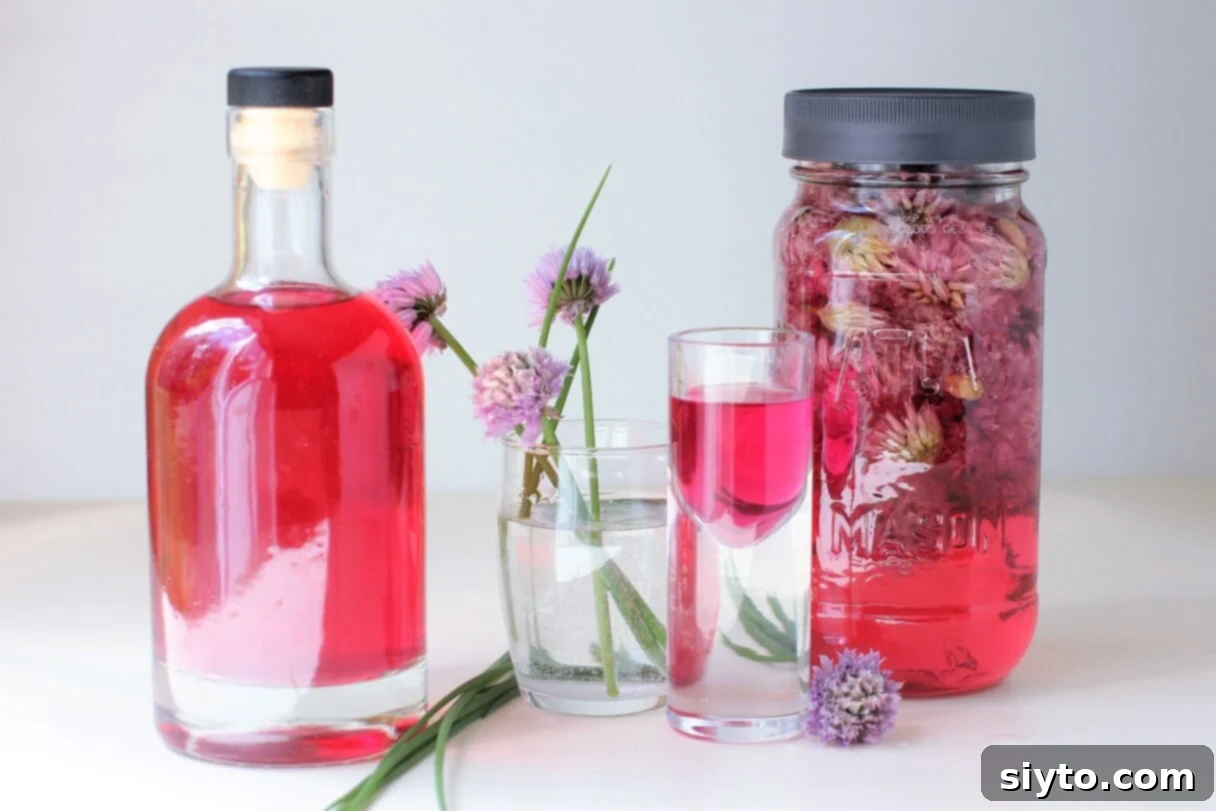
Circling back to the star of our show: Chive Blossom Vinegar. It truly is a remarkable and delightful way to preserve the fleeting beauty and flavor of your chive harvest. That exquisite magenta pink color is simply magnificent, a feast for the eyes before it even touches the palate. The delicate yet distinct onion flavor it imparts adds a delicious and complex extra layer to any dish you choose to incorporate it into. You can confidently use it to replace regular white vinegar or white wine vinegar in almost any savory recipe – its unique character will only enhance the outcome. It’s especially transformative and utterly tasty when used as the base for vibrant vinaigrettes and zesty salad dressings, making every bite a celebration of garden freshness.
* * * * *
Kitchen Frau Notes: When making Chive Blossom Vinegar, the exact quantity of chive blossoms isn’t a strict science; it’s more about achieving your desired color and flavor intensity. Generally, the more blossoms you gently stuff into the jar, the more deeply and richly pink your vinegar will ultimately become. However, be mindful not to pack them in too tightly, as this will leave less essential space for the vinegar itself. A gentle, looser packing is usually the best middle ground, allowing sufficient contact between the blossoms and the liquid for optimal infusion, resulting in a beautifully vibrant and flavorful vinegar.
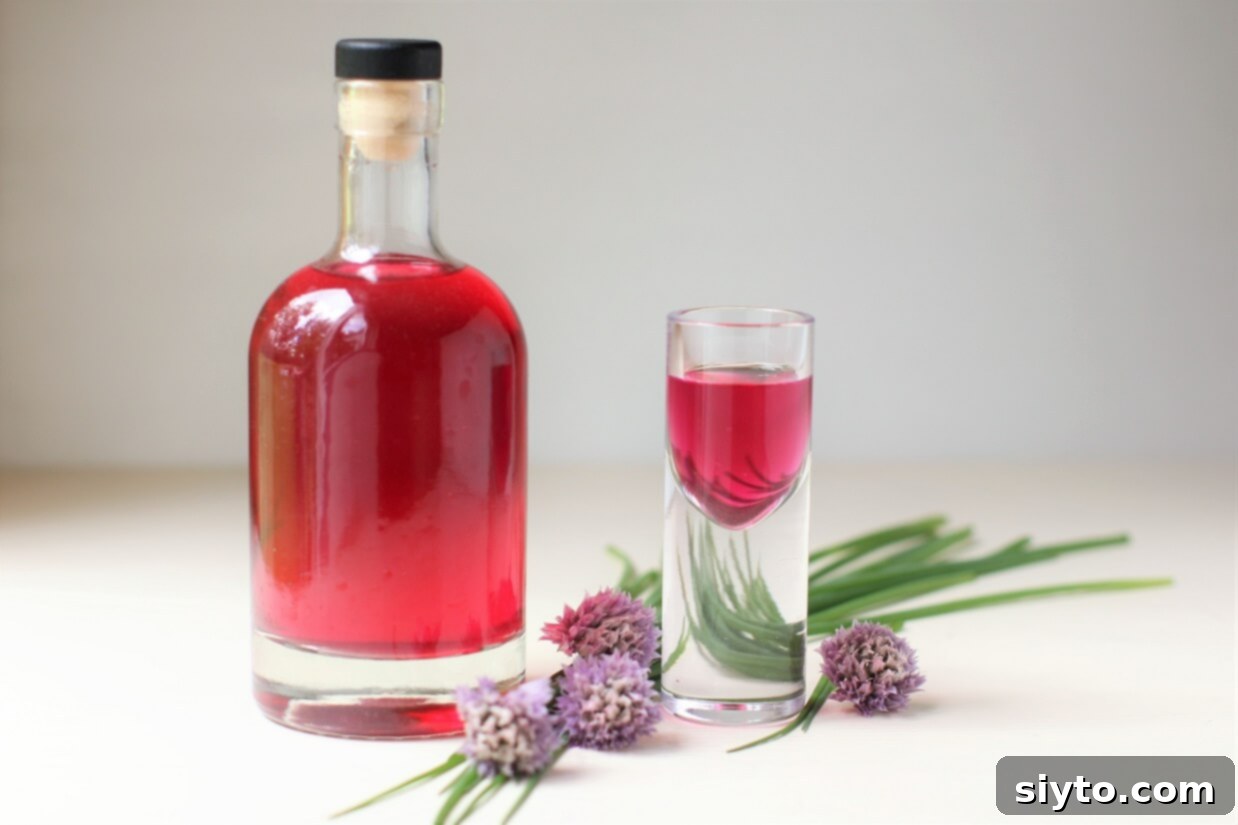
Homemade Chive Blossom Vinegar Recipe
Embrace the bounty of your garden with this simple, yet incredibly rewarding recipe to create your own gorgeous chive blossom vinegar. It’s a beautiful way to capture the essence of spring!
- 2 to 3 cups of fresh chive blossoms (loosely packed, feel free to use more for deeper color!)
- 1 to 2 cups of good quality white vinegar or white wine vinegar (choose one you enjoy the taste of)
Instructions:
- Prepare the Blossoms: Begin by carefully snipping the green stems off the chive blossoms, leaving only the purple flower heads. Gently rinse the blossoms in a colander under cool running water. This step is crucial for removing any tiny insects, dust, or garden debris that might be nestled within the petals.
- Dry Thoroughly: After rinsing, it’s vital to dry the blossoms extremely well to prevent diluting the vinegar. Spread them out in a single layer on a clean tea towel. Cover them with another clean tea towel and gently press down to absorb as much moisture as possible. You can even let them air dry for an hour or so to ensure they are completely dry.
- Pack the Jar: Place the thoroughly dried chive blossoms into a clean, sterilized pint-sized glass jar. Gently pack them down just a bit to maximize the number of blossoms you can fit, ensuring there’s still room for the vinegar to fully cover them. The more blossoms, the more intense the color and flavor will be.
- Add the Vinegar: Carefully pour your chosen white vinegar or white wine vinegar over the blossoms until they are completely submerged. Ensure all blossoms are covered to prevent mold.
- Seal the Jar: To protect the metal lid from corrosion by the vinegar, place a piece of plastic food wrap or a plastic lid directly over the jar opening before screwing on the metal lid and band. This barrier is a simple but effective trick for preserving your vinegar.
- Steep for Infusion: Place the sealed jar in a cool, dark place (like a pantry or cupboard) for 2 to 4 weeks. During this time, the magic happens: the vinegar will slowly extract the beautiful pink pigment and delicate onion flavor from the chive blossoms. You’ll notice the color intensifying beautifully over the days.
- Strain and Decant: Once the steeping time is complete and the vinegar has reached your desired color and flavor strength, strain the blossoms out using a fine-mesh sieve lined with cheesecloth. Discard the spent blossoms.
- Store and Enjoy: Decant the beautiful pink chive blossom vinegar into a clean, attractive glass bottle. This delightful homemade vinegar will keep for several months at room temperature in a sealed bottle, and even longer – up to a year – if stored in the refrigerator. Use it in any savory dish where vinegar is called for to add an extra layer of gourmet flavor. It is particularly exquisite in salad dressings, vinaigrettes, marinades, or even as a finishing splash over roasted vegetables.
Guten Appetit!
Want to receive new Kitchen Frau recipes directly to your email? Sign up here and you’ll get a handy and useful kitchen tip along with each recipe, too. (No spam ever.)
If you like my recipes, follow me on Instagram, Pinterest, Twitter, and Facebook. You’d make my day!
PIN IT HERE to save the recipe for later:

You might also like these other delightful recipes:
Spruce Tip Vinegar
Apple Cider Vinaigrette
Macaroni Salad with Two Dressings
Fresh Veggie Chow Chow