Classic Canadian Prairie Gumdrop Fruitcake: A Cherished Holiday Tradition
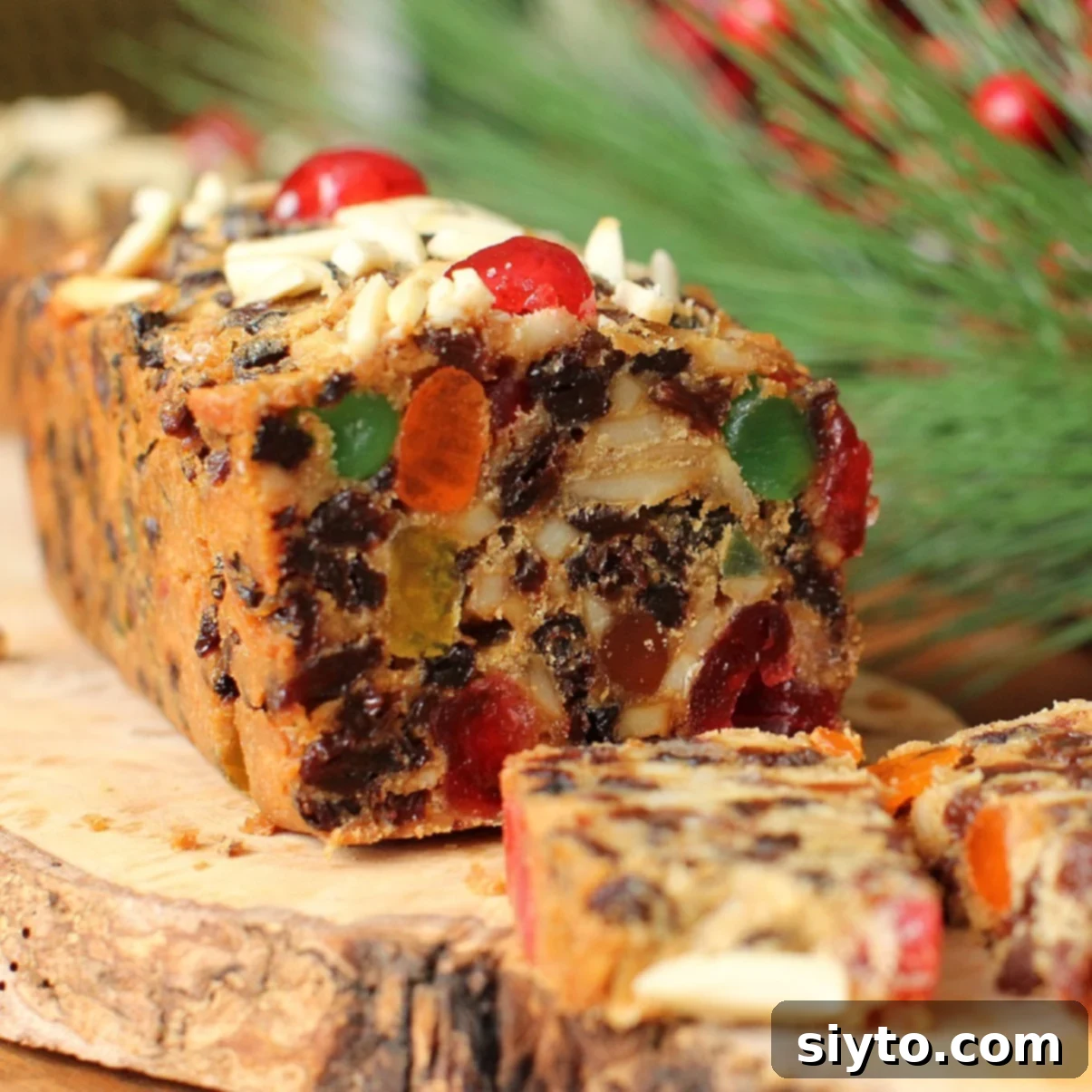
Gumdrop Fruitcake is a timeless Canadian prairie recipe renowned for transforming even the most ardent fruitcake skeptics into true believers. This delightful holiday treat features a light, caramelized batter generously studded with chewy gumdrops and an array of sweet, succulent fruits, making it a true Christmas jewel.
Fruitcake often carries a divisive reputation, yet this particular rendition stands out. It’s not the heavy, overly spiced, and sometimes dry fruitcake many recall from childhood. Instead, this recipe offers a moist, flavorful, and surprisingly approachable version that has captivated generations across the Canadian Prairies.
Originally featured in The Canadian Food Experience Project (December 2013), this recipe highlights the rich culinary heritage of Canada. The project, initiated on June 7, 2013, aimed to showcase Canada’s diverse regional food experiences. Through the collective stories of participants from across the vast Canadian landscape, the initiative sought to illuminate our unique national culinary identity with a unified Canadian voice.
This particular month’s theme, “A Canadian Christmas: A Prairie Tradition,” perfectly encapsulates the essence of this beloved gumdrop fruitcake, a staple on many prairie holiday tables.
The Treasured Gumdrop Fruitcake: A Multi-Generational Prairie Recipe
There’s nothing quite like the comforting scene of a big mug of milky tea, the soft strains of Christmas carols in the background, and a generous slice of sweet, dense fruitcake to transport you to Christmas heaven. The usual hustle and bustle of holiday preparations simply melt away, leaving only the delightful, fruity, gumdrop-infused flavor of this cherished seasonal treat. Each moist, substantial slice encapsulates the vibrant colors, rich flavors, and warm feelings of the entire Christmas season.
Ah, that quintessential festive feeling. It’s a moment to savor, to sip your tea and gaze out at a serene, snowy winter wonderland.
We all have those special holiday foods that instantly conjure up fond memories of Christmases past. For me, it was my mom’s Pfeffernüsse, her delicate poppyseed Strudel, and rich Honig Kuchen, alongside my mother-in-law’s fruit-studded toasting bread and spicy gingerbread cookies. But increasingly, it was this gumdrop fruitcake—a recipe passed down through a charmingly long lineage: from my friend’s mother’s landlady’s mother in Yorkton, Saskatchewan. Such a fascinating pedigree only adds to its charm and legendary status.
This fruitcake became an instant hit with my own children, and indeed, with every guest who tasted it. This was particularly surprising, given my childhood aversion to fruitcake. As a child, I despised raisins and found most fruitcakes to be heavily spiced, strong-tasting, and possess an unappealing texture that made me shudder. I genuinely believed fruitcake was a delicacy reserved solely for older generations.
As I matured, I learned to tolerate fruitcake, even having it as my wedding cake—a tradition at the time, likely due to its robustness in supporting layers and heavy icing. It was also sturdy enough to be wrapped in plastic and tucked under a single girl’s pillow, supposedly to induce dreams of her future husband. Yet, those little wrapped squares of wedding cake were rarely actually eaten.
My true love affair with fruitcake didn’t begin until my friend Judy convinced me to try her family’s recipe. It was a revelation. I was instantly hooked. My young children loved it too, completely oblivious to the notion that kids were “supposed” to dislike fruitcake. To them, it was simply delicious—a sentiment I suspect was largely due to the delightful, chewy gumdrops. This gumdrop fruitcake quickly became a cornerstone of our family’s Christmas tradition. Each year, they eagerly anticipate its arrival, enjoying large slices in their school lunches, sneaking chunks from the counter, and delighting in it as a festive dessert or offering for visitors.
The Enduring Legacy of Canadian Gumdrop Fruitcake
This particular Christmas cake recipe has truly stood the test of time. Judy inherited it from her mother, Frances Slater, who, along with Judy’s father, lovingly prepared it every year throughout Judy’s childhood. Frances, in her early twenties, had moved from the small town of Canora, Saskatchewan, to Yorkton in the late 1940s or early 1950s to work at the local dairy. She settled into a boardinghouse with two other young career women, where she acquired the fruitcake recipe from their landlady, Mae Tunnicliffe. The only detail known about its origins is that it was an old recipe belonging to Mae’s mother. It’s lovely to imagine it reaching back several generations prior, a true culinary heirloom.
The beauty of any cherished family recipe lies in its evolution and personalization. I believe this recipe has been gently refined over time, with each person adding their unique touch. Judy recalls that the original recipe included candied pineapple and that her family often doubled the amount of gumdrops. In my own adaptation, I slightly reduced the sugar (the original called for 2¼ cups) and introduced vanilla extract, rum extract, and frozen orange juice concentrate, enhancing its fragrant profile.
It’s hard to pinpoint exactly what makes this cake so extraordinary. Perhaps it’s the rich, yet remarkably simple batter, subtly infused with the bright notes of orange and a hint of brandy. Or maybe it’s those irresistible bursts of chewy, sweet gumdrops. It could also be the deliberate absence of strong spices, allowing the natural flavors of the fruits and caramelization to truly shine. Then there’s the long, slow baking process, which transforms the pale, cream-colored batter into a beautiful, amber-hued vehicle for the raisins, almonds, and mixed fruits.
It’s very likely the harmonious combination of all these elements that creates such a uniquely delicious and beloved fruitcake.
Essential Tips for Baking and Enjoying Your Gumdrop Fruitcake
To truly allow the complex flavors to develop and mellow, it is highly recommended to make this gumdrop fruitcake at least two weeks before Christmas, or even two months in advance. The longer it ages, the more profound and smooth its flavor becomes, reaching a peak of deliciousness that is hard to resist.
Fruitcake is famously known for its longevity. You might have heard tales of fruitcakes sent in tins to boarding school students or young British ladies embarking on intrepid global adventures, packed carefully in their trunks. Indeed, I’ve personally hoarded a fruitcake from last year, tucked away in the back of my downstairs fridge, perfectly aged and brimming with flavor. I recently pulled it out to enjoy while this season’s new batch is busy aging and steeping in brandy, preparing for the upcoming festivities. That year-old cake is simply divine—so good, I’m reluctant to share even a crumb!
For those who prefer, rum can be used instead of brandy in the cakes, or simply orange juice for a completely non-alcoholic version. My children never seemed to notice the alcohol content when I included it. The optional finishing step—wrapping the cooled cakes in cheesecloth and periodically dousing them with rum or brandy to age—undeniably adds a remarkable complexity to their flavor and a silky smoothness to their texture, though it is by no means an absolute necessity for an excellent fruitcake.
Finding baker’s gumdrops or baking ‘fruitlets’ can sometimes be a challenge. These are generally sturdier than regular jujubes and hold their shape better during baking. If you find them, I recommend buying extra and freezing them in their original sealed bag, tucked inside another sealed freezer bag, where they can last for up to two years. They will soften beautifully as the cake ages.
In recent years, I’ve successfully adapted this recipe to be gluten-free, and it remains every bit as delicious as the original! I’ve even crafted a corn-free version for one of our daughters (quartering the recipe), using minced dried fruit soaked in brandy instead of candied cherries and glacéed fruit, and Sun-Rype® Fruit Source Minibites in place of gumdrops. This variation also turned out exceptionally well. While I’ve experimented with other gluten-free flours, I’ve found that using my own gluten-free flour mixture or the suggested blend in the recipe below yields slices that are less crumbly and hold together perfectly.
Mastering the Art of Making Gumdrop Fruitcake
The secret to a beautifully distributed fruitcake lies in the initial preparation. Begin by tossing all the vibrant fruits and crunchy nuts with a portion of the flour. This crucial step prevents them from clumping together and ensures they are evenly suspended throughout the cake batter. For this substantial mixture, you will need a very large bowl—or as Frances often did, a large roasting pan or even a clean wash basin.
Once the fruits and nuts are beautifully coated, prepare your rich, flavorful batter separately. Then, pour this golden batter over the floured fruit mixture. Now comes the most efficient and satisfying part: rolling up your sleeves and using your hands! They are truly the best tools for thoroughly combining a large, dense batter like this, ensuring every piece of fruit and every gumdrop is perfectly integrated.
(If you happen to have a strong, muscular teenage boy around, enlist his help! The promise of a few delicious gumdrops is usually an excellent motivator for such a strenuous task.)
You’ll quickly notice that the mixture is quite stiff and heavy, which is exactly how it should be to achieve that classic dense fruitcake texture.
Prepare your loaf pans by thoroughly greasing and flouring them. Then, meticulously divide the thick batter evenly among the prepared pans. Using a kitchen scale can help ensure each loaf is uniform in size, contributing to even baking and a beautiful presentation.
Once the batter is in the pans, use a stiff rubber spatula or a flat wooden paddle to firmly press the mixture down. This compacts the fruitcake, eliminating any air pockets and ensuring a dense, cohesive texture. Smooth the tops and gently shape them, creating a slightly mounded center for an aesthetically pleasing dome when baked.
For an extra festive touch, you can artfully arrange a few halved candied cherries and slivered almonds on the tops of the cakes before baking. This adds a beautiful visual appeal, making your fruitcakes truly shine.
The magic happens during the long, slow baking process, which not only cooks the cakes through but also allows the batter to caramelize beautifully, transforming them into these rich, nutty brown jewels.
The Art of Aging and Flavoring Your Fruitcakes with Brandy or Rum
Embrace the traditional method of aging fruitcakes for an unparalleled depth of flavor and extended shelf life. Soaking them in rum or brandy creates a deliciously complex taste profile and ensures the cakes remain moist and flavorful for many months. To achieve the best results, begin this aging process at least a month before Christmas; however, even a couple of weeks can make a noticeable difference.
Once your fruitcakes have completely cooled, carefully wrap each one in several layers of cheesecloth. Place the wrapped cakes into a sealable container or heavy-duty zip-top plastic bags. Drizzle the top of each wrapped cake with 2 to 3 tablespoons of brandy or rum. There’s no need to ensure the liquid is immediately absorbed; the alcohol will slowly wick its way around and into the cake as it is stored. Seal the containers or bags tightly and store them in a cool, dark place—a refrigerator, a cold room, or even on the concrete floor of a cool basement works perfectly. Allow them to age for several weeks to several months before serving. For an even richer flavor and longer preservation, you can repeat the drizzling process with more brandy or rum every few weeks. This repeated “dousing” significantly enhances both their flavor and their keeping qualities.
I once kept a fruitcake for an entire year. It aged beautifully, much like a fine wine, offering a delightful taste of Christmas cheer whenever I desired it!
This cherished Gumdrop Fruitcake recipe is a thoughtful adaptation of Frances Slater’s original, which itself came from Mae Tunnicliffe’s mother. When Frances’s daughter, my dear friend Judy, first entrusted me with this recipe, she made me promise to keep it a secret. I honored that promise for many years. But now, with her gracious permission, I am thrilled to share this wonderful piece of culinary heritage with you.
If you’re eager to explore more delightful holiday bakes, consider trying a beautiful German Stollen. This famous Christmas fruit bread is generously laden with nuts and raisins, subtly spiced, and often features a creamy, nutty marzipan center. My version is an easy, no-yeast recipe, complete with clear instructions and photos for shaping, and it even includes a gluten-free option.
Alternatively, you might be intrigued by Panforte, the Italian Christmas Cake. This chewy, almost candy-like treat is rich with spices, nuts, fruit, and honey, but surprisingly not overly sweet. It’s incredibly quick and easy to prepare, and the gluten-free version works wonderfully!
Guten Appetit and Happy Holiday Baking!
* * * * *
Gumdrop Fruitcake
Margaret Bose Johnson
Save to Pinterest
Equipment
- 3 loaf pans (4½ x 8 inches/11.5cmx21.5cm) plus 3 small loaf pans (3 x 6 inches/ 7.5cmx15cm), or use 4 larger loaf pans
- A very large bowl to mix the batter (a roasting pan, canner, or clean wash basin can also be used)
- Cheesecloth (optional, for soaking and aging finished cakes with brandy or rum)
Ingredients
Fruit & Nut Mix:
- 3 lbs (1.36kg) sultana raisins
- 1 lb (454gms) dried currants
- 1 lb (454gms) baker’s gumdrops (sometimes labeled ‘fruitlets’)
- 1 lb (454gms) red candied cherries, plus a few extras for garnish
- 1 lb (454gms) blanched slivered almonds, plus a few extras for garnish
- 8 oz (½lb/225gms) mixed glacéed fruit and peel
- 1 cup (140gms) all-purpose flour (or brown rice flour for a gluten-free option)
Batter:
- 2 cups (400gms) granulated sugar
- 1 lb (454gms) salted butter, at room temperature
- 12 large eggs
- 1 teaspoon fine sea salt
- ½ cup (120ml) orange juice or brandy (I often use ¼ cup/60ml thawed frozen orange juice concentrate plus ¼ cup brandy or rum for enhanced flavor)
- 1 tablespoon pure vanilla extract
- 1 tablespoon rum extract or brandy extract (optional, for added depth)
- 2¾ cups (385gms) all-purpose flour or gluten-free flour blend (for gluten-free, an alternative blend is: 1 cup/140gms sorghum flour + 1 cup/140gms tapioca starch + ½ cup/75gms millet flour + ¼ cup/30gms ground golden flax seeds)
- Additional cheesecloth and brandy or rum (optional, for soaking and aging the cakes)
Instructions
- Preheat your oven to 275°F (140°C). This low temperature is key for slow caramelization.
- Prepare your loaf pans: Grease and flour 3 large loaf pans (4½ x 8½ inches/11.5cmx21.5cm) and 3 small loaf pans (3 x 6 inches/7.5cmx15cm). If using non-stick pans, greasing alone should suffice. For older pans or extra security against sticking, consider lining them with parchment paper. Alternatively, you can prepare 4 larger loaf pans and 1 small one, or 3 very large loaf pans, adjusting the batter distribution accordingly.
Prepare the Fruit & Nut Mix:
- In your very large bowl (or roasting pan), combine all the dried fruits, gumdrops, and nuts with the 1 cup of flour (or brown rice flour for gluten-free). Use your clean hands to thoroughly mix everything, ensuring all raisins are separated and every piece of fruit and nut is lightly coated with flour. This prevents them from sinking to the bottom of the cake. Set aside.
Prepare the Batter:
- In the bowl of a stand mixer fitted with the paddle attachment, cream together the softened butter and granulated sugar until the mixture is light, fluffy, and pale. Gradually beat in the eggs, followed by the salt, orange juice (or brandy), vanilla extract, and optional rum/brandy extract. Continue beating until all ingredients are well incorporated, even if the mixture appears slightly curdled; this is normal for a fruitcake batter.
- Slowly add the remaining 2¾ cups of flour (or your chosen gluten-free flour blend) to the wet ingredients. Start beating at a low speed to prevent flour from flying, then increase to medium speed and beat for 2 to 3 minutes until the batter is smooth and thoroughly combined.
Assemble and Bake the Fruitcake:
- Pour the prepared batter over the floured fruit and nut mix in the very large bowl, scraping the mixer bowl clean with a rubber spatula.
- Using clean hands is the most effective way to combine the stiff batter with the heavy fruit mixture. Lift and fold the ingredients from the bottom and sides of the bowl towards the center until everything is evenly distributed. The mixture will be very dense and firm.
- Divide the thick fruitcake mixture evenly among your prepared loaf pans. For guidance, aim for approximately 2½ lbs (1140gms) for large pans and 1¼ lbs (570gms) for smaller pans. Adjust these amounts if your pans differ in size.
- With a stiff rubber or plastic spatula, or a flat wooden paddle, press the dough firmly into each pan. This ensures there are no air pockets and the cakes will be dense and uniform. Smooth the tops, gently mounding them slightly higher in the middle. Ensure the pans are filled no more than ¾ full to allow for expansion.
- Optionally, decorate the tops of the cakes by pressing halved candied cherries and sprinkling slivered almonds into the surface.
- Bake the cakes in your preheated oven. Large cakes typically require about 3 hours, while small cakes need approximately 2 hours. If your oven has hot spots, rotate the pans halfway through the baking time to ensure even browning. Begin checking the cakes about ½ hour before the recommended time. You are aiming for a beautiful deep, caramelly, nutty brown color—avoiding a dark brown, which could indicate a burnt flavor. While the cakes may technically be “done” earlier, the extended baking time is essential for developing the rich caramelized flavor that defines this fruitcake.
- In my oven, the cakes are often perfectly caramelized about 15 minutes before the suggested time, but oven temperatures vary greatly, and different pan sizes will also impact baking duration. Trust your visual cues and experience.
- As the cakes bake, you might observe melted butter bubbling around the edges. Do not be concerned; this butter will re-absorb into the cakes as they cool within their pans, contributing to their moistness.
- Allow the baked fruitcakes to cool in their pans for 10 to 15 minutes before carefully turning them out onto wire racks to cool completely.
- Once fully cooled, wrap each cake tightly with plastic wrap, then place them in heavy plastic zip-top bags or airtight containers. Store them in a cool, dark place. For the best flavor and texture, allow the cakes to rest for at least one to two weeks before slicing and serving. This aging period allows the flavors to meld and mature beautifully, and the cakes will slice more smoothly. Fruitcakes can also be refrigerated for up to a year or frozen for longer storage.
Optional Finishing Step: Soaking with Brandy or Rum (for Aging):
- Once the cakes are cool, cut several layers of cheesecloth to a size that will fully wrap each cake, with the ends overlapping underneath. Individually wrap each cake and place them into a plastic storage container or a large zip-top bag.
- Drizzle the top of each wrapped cake with 2 to 3 tablespoons of brandy or rum. There is no need to try to make it soak in immediately; the alcohol will slowly infuse throughout the cake as it is stored. Seal the containers or bags securely and store in a cool, dark place for several weeks to several months before serving. For an even more intense flavor and prolonged preservation, you can repeat the drizzling process with additional brandy or rum every few weeks.
- This recipe yields approximately 11¾ lbs of gumdrop fruitcake, typically resulting in 3 large and 3 small loaves, or variations thereof. This is ample for generous Christmas gifting or, of course, for discreetly enjoying a substantial slice with a cup of tea throughout the coming year!
Notes
For optimal flavor development and a smoother texture, prepare this fruitcake at least two weeks before the holidays, ideally even two months in advance. The longer the aging period, the more pronounced and complex the flavors become.
If you prefer, rum can be used as a substitute for brandy in the cakes. For a completely non-alcoholic version, simply use orange juice.
When properly wrapped and stored in the refrigerator, especially after being soaked in brandy or rum, this fruitcake can keep for up to a year. It also freezes exceptionally well for long-term storage.
If you enjoy my recipes, I invite you to follow me on Instagram, Pinterest, Twitter, and Facebook. Your support makes my day!
You might also like these festive delights:
Rouladen, A German Christmas Tradition
Irresistible Peanut Brittle Cravings
Decadent Little Truffles (Gluten-Free and Dairy-Free Options)
Homemade Chai Tea Syrup for Gifts or Indulgence
* * * * *
Discover previous entries from the Canadian Food Experience Project:
June, 2013: My First Authentic Canadian Food Memory: Buttery Sautéed Mushrooms with Spruce Tips and Chives
July, 2013: A Regional Canadian Food: Saskatoon Roll or Saskatoon Cobbler and How to Freeze Saskatoon Berries
August, 2013: A Canadian Food Hero in Northern Alberta, and Mabel Johnson’s Pickled Beets and Creamed Vegetables
September, 2013: My Cherished Canadian Recipe: Evans Sour Cherries Preserved in Brandy
October, 2013: Preserving, Our Canadian Food Tradition – Sweet and Spicy Apple Butter
November, 2013: The Canadian Harvest: Quinoa Harvest and Recipes (Quinoa Onion Frittata & Honey Vanilla Quinoa Pudding)