Mastering Flaky & Tender Gluten-Free Pie Crust: The Ultimate Make-Ahead Freezer Mix
Making a truly exceptional gluten-free pie crust can often feel like a daunting task. The delicate balance of various flours, the perfect temperature of fats, and the challenge of achieving that coveted tender, flaky texture can deter even seasoned bakers. But what if you could eliminate the hassle and have a delicious, homemade gluten-free pie crust mix ready in your freezer at a moment’s notice? This recipe simplifies the entire process by allowing you to prepare a large batch of mix, ensuring you’re always prepared to whip up a delightful pie, tart, or quiche with minimal effort and no messy cleanup. Say goodbye to frustrating attempts with store-bought alternatives and hello to superior homemade taste and texture!
Why a Make-Ahead Gluten-Free Pie Crust Mix is a Game Changer
For many home bakers, the pure joy of eating a homemade pie or a savory quiche is frequently overshadowed by the perceived effort involved in making the crust, especially when navigating the intricacies of gluten-free ingredients. The traditional process often demands a significant amount of time: carefully pulling out multiple types of gluten-free flours, precisely measuring each component, and then meticulously cutting in super cold fats like lard and butter. This can be a labor-intensive and, frankly, off-putting endeavor. How many times have you found yourself craving a warm, comforting slice of pie, only to be deterred by the thought that preparing the crust would simply take too much work?
My upbringing in a large farm family instilled in me the invaluable practice of “big batch” cooking. Every meal, every baking project, was instinctively scaled up to feed hungry crowds. From generous quantities of meat sauce to dozens of fresh loaves of bread, preparing food in bulk was simply the norm. It took me a surprisingly long time to apply this fundamental principle to gluten-free pie crusts, but once I did, it utterly transformed my baking routine and significantly reduced kitchen stress.
Now, with a freezer consistently stocked with pre-made gluten-free pie crust mixes, my family and I can indulge in delicious pies, tarts, and quiches whenever the desire strikes, without any of the usual fuss or extensive preparation. This clever make-ahead method guarantees a wonderfully tender and impeccably flaky crust every single time. Beyond its convenience, the dough itself is remarkably easy to work with, even for those who are new to the world of gluten-free baking. Furthermore, by incorporating a substantial ratio of wholesome whole-grain flours like oat and sorghum, this crust doesn’t just deliver on taste and texture – it also provides a beneficial dose of dietary fiber, making your desserts and savory dishes a little more nutritionally balanced. (It’s all about finding healthy justifications for your culinary delights!)
The Genius of Big-Batch Baking: Maximizing Efficiency and Flavor
The true brilliance of this big-batch approach lies in its unparalleled efficiency. Instead of laboriously measuring out individual ingredients for a single crust multiple times, you simply scale everything up by four (or even more, depending on your needs!) and accomplish all the prep work in one concentrated session. I’ve found that setting out four mixing bowls simultaneously streamlines the entire process. Since you’re already retrieving all the necessary bags of gluten-free flours, the lard, and the butter from your pantry and refrigerator, it genuinely takes very little additional time to prepare four batches compared to meticulously preparing just one. It represents a small, upfront investment of your time that yields substantial dividends in convenience and effortless baking for many months to come.
Once the meticulously measured dry ingredients are thoroughly whisked together in each individual bowl, the next crucial step involves incorporating the chilled fats. I carefully add precisely diced cold lard and butter into each separate flour mixture. Utilizing a robust pastry blender, or alternatively, two sturdy butter knives, I meticulously cut the fats into the flour until they transform into coarse, uniform, pea-sized lumps. This specific technique is absolutely vital for creating those essential pockets of fat within the dough. These fat pockets will then melt during the baking process, releasing steam and thereby creating the characteristic tender, supremely flaky layers that define a truly exceptional pie crust.
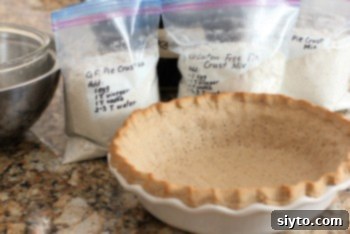
After the fats have been expertly cut into the flour mixture, each individual batch of the dry mix is carefully transferred into a separate, sturdy zip-top freezer bag. It is absolutely crucial to label each bag not only with the clear identification of “Gluten Free Pie Crust Mix” but also, and equally important, with a comprehensive list of the specific wet ingredients that will need to be added later when it’s time to prepare the dough for baking. This simple yet effective labeling strategy entirely eliminates any potential guesswork down the line and ensures consistently perfect results every single time you bake.
From Freezer to Flaky Perfection: Preparing Your Gluten-Free Pie Dough
Each perfectly prepared freezer bag of this versatile mix contains enough ingredients for two single pie crusts. This ingenious design means you have the flexibility to either create a glorious, robust double-crust pie, which is absolutely perfect for bountiful fruit fillings, or easily form two separate dough discs. If your culinary project calls for only a single crust—perhaps for an elegant quiche or a charming open-faced tart—simply use one disc immediately and wrap the other one tightly. This second disc can then be conveniently stored in the refrigerator for up to two weeks, patiently awaiting your next spontaneous baking adventure. Having this remarkable flexibility is undoubtedly another tremendous benefit of adopting the make-ahead method, offering unparalleled convenience and adaptability in your kitchen.
Rolling Out Gluten-Free Pie Dough with Utmost Ease
Working with gluten-free pie dough can, at times, present a slightly more delicate challenge than handling traditional wheat-based pastry. However, there’s a brilliantly simple and effective technique that makes it incredibly manageable and stress-free: rolling the dough gently between two sheets of parchment paper. This clever method expertly prevents any sticking, significantly reduces the need for additional flour (which, if overused, can unfortunately dry out the dough), and perhaps most importantly, makes transferring the delicate crust to the pie plate an absolute breeze. For a more comprehensive visual guide and invaluable expert tips on both mixing and seamlessly rolling out gluten-free pie crusts, be sure to refer to this incredibly helpful post.
Once your dough has been rolled to your desired thickness and uniformity, carefully peel off the top sheet of parchment paper. Next, invert the crust – still securely attached to the bottom sheet of parchment – gracefully over your chosen pie plate. Gently and steadily peel off the second layer of parchment, allowing the crust to settle naturally and perfectly into the dish. Do not be concerned if it doesn’t appear absolutely flawless at first; gluten-free pie dough is remarkably forgiving and accommodating. Any small imperfections, such as tiny holes or slightly thin spots, can be effortlessly patched up with scraps of overhanging dough, or even by gently pressing and smoothing the dough with your fingertips to redistribute it evenly. This inherent resilience is truly one of its most endearing and practical qualities!
Trimming and Crimping for a Beautiful, Professional Finish
After the delicate crust is perfectly nestled within the pie plate, it’s time for the precise step of trimming the excess dough. A sharp paring knife or a pair of clean kitchen scissors will work perfectly for this task. The goal is to leave a slight overhang, typically about half an inch beyond the edge of the pie plate, which will provide ample material for elegant crimping or creating a beautiful decorative edge.
Now, depending on the specific pie you are crafting, you have two primary options. You can either proceed to fill the pie and then roll out the second disc of dough to add a complementary top crust, or, if you’re preparing a single-crust pie, it’s the opportune moment to artfully crimp the edges. For an extra touch of sophistication, visual appeal, and delightful height, I frequently gather the trimmed scraps of dough, gently roll them into slender ropes, and then meticulously press these ropes onto the very edge of the main crust. This creates a slightly raised and more substantial ridge, which in turn allows for a more pronounced and beautifully defined crimp. This seemingly small detail significantly elevates the homemade look and professional feel of your finished pie, making it truly stand out.
Pre-Baking for the Perfect Crust Foundation
For any pie that necessitates a pre-baked crust (a technique commonly referred to as blind baking), such as savory quiches, delicate custard pies, or vibrant fresh fruit tarts, a critical initial step is to thoroughly prick the bottom and sides of the crust all over with a fork. This strategic puncturing allows trapped steam to escape freely during the baking process, effectively preventing the crust from puffing up excessively and creating an uneven surface.
Following the pricking, it’s highly recommended to chill the crust in the refrigerator for approximately 30 minutes. This chilling period is beneficial as it helps the fats within the dough to firm up, a crucial factor that contributes directly to achieving exceptional flakiness and significantly minimizes any shrinkage during the subsequent baking. Afterward, bake the crust in a preheated oven at 425°F (220°C) for a duration of 10 to 12 minutes, or until you observe it turning a beautiful, light golden-brown color. One particularly advantageous characteristic of this specific gluten-free pie crust is its inherent ability to adhere remarkably well to the pie pan. Unlike many traditional wheat-based pie crusts that frequently require weighting down with pie weights or dried beans to prevent unsightly bubbling and collapsing, this gluten-free crust typically maintains its shape beautifully and reliably without any additional measures. This wonderful quality saves you an extra step and makes the blind baking process even simpler and more foolproof.
So, are you absolutely ready to fundamentally transform your gluten-free baking experience and embrace the joy of effortless, homemade pastry? Let’s eagerly get started on creating your very own convenient stash of this truly amazing make-ahead pie crust mix!
* * * * *
Essential Tips for Success with Your Gluten-Free Pie Crust Mix
Kitchen Frau Notes: Achieving an absolutely perfect texture in a gluten-free pie crust often receives a significant boost from a few specific, thoughtful additions to the liquid components. I enthusiastically recommend incorporating one tablespoon of vodka into your dough. While entirely optional, I’ve consistently found that vodka performs a unique role: it helps inhibit any potential gumminess (even in gluten-free flours, starches can sometimes become undesirable if over-hydrated or overworked) and, crucially, it evaporates rapidly during the baking process, ultimately resulting in an exceptionally tender and delicate crust. Should you prefer to omit alcohol, you can easily replace the vodka with an additional tablespoon of cold water, simply adjusting the total water amount called for to 3-4 tablespoons.
It is profoundly important to recognize that various brands and types of gluten-free flours can exhibit significant differences in their absorption rates. These variations can be attributed to factors such as the fineness of the grind, the inherent moisture content of the flour, and even environmental humidity. Therefore, please do not be alarmed or discouraged if some batches of your dough require an extra tablespoon or two of water to achieve the ideal consistency and come together properly. The ultimate goal is to achieve a dough that just barely clumps when you gently squeeze a handful in your palm – it should not be overly sticky, nor should it be excessively crumbly. Trust your judgment and the feel of the dough.
While this particular recipe is expertly designed to maximize convenience by focusing on a generous quadruple batch, you absolutely have the flexibility to scale down the measurements to make a single batch if that better suits your immediate needs or if you’re simply trying the recipe for the first time. To do so, just follow the precise ingredient ratios for one batch as meticulously listed in the “Into each separate bowl” section below.
Quadruple Batch of Gluten Free Pie Crust Mix Recipe
This comprehensive and efficient recipe will meticulously guide you through the preparation of four individual batches of a superb gluten-free pie crust mix. This substantial yield provides enough mix for 8 single crusts or 4 magnificent double crust pies, ensuring you have a versatile and delicious base ready for an array of numerous sweet and savory culinary creations!
Total Ingredients Required for Four Batches:
In total you will need these ingredients to make four batches (which ultimately yield 8 single crust pies or 4 double crust pies):
- 4 cups (400gms) oat flour: Highly valued for its tenderizing properties and distinctively mild, pleasing flavor. For ultimate freshness and quality, you can easily make your own by finely grinding rolled oats in a high-speed blender until a fine flour consistency is achieved.
- 3 cups (400gms) sorghum flour: A highly nutritious, whole-grain flour that contributes a delightful, slightly nutty flavor and imparts excellent structural integrity to the crust.
- 2 cups (280gms) sweet rice flour: An absolutely crucial ingredient, known for its superb binding capabilities and ability to provide a desirable chewiness. It effectively imparts an elasticity often noticeably absent in many gluten-free dough formulations.
- 2 cups (240gms) tapioca flour/starch: Plays a vital role in contributing to a wonderfully crisp crust texture and further enhancing the dough’s overall elasticity.
- 1 cup (160gms) potato starch (not flour): Specifically selected for its ability to aid in the creation of a light, delicate, and tender crust texture. It is imperative to ensure you use potato starch, not potato flour, as their functional properties in baking are distinctly different.
- 4 tablespoons sugar: While seemingly a small amount, sugar is an essential component. It promotes beautiful browning during baking and adds a subtle, delicate sweetness that perfectly balances savory fillings and inherently enhances the flavors of sweet pies.
- 4 tablespoons (40gms) psyllium husk powder or 8 tablespoons (40gms) whole psyllium husks: A truly fantastic natural binder that ingeniously mimics the elasticity of gluten and significantly boosts the fiber content of the crust. Be mindful that powdered psyllium is more concentrated than whole husks; adjust your measurements accordingly to ensure proper binding.
- 4 teaspoons xanthan gum: Another absolutely vital hydrocolloid binder in the realm of gluten-free baking. It effectively prevents dry, crumbly textures and provides crucial structure, contributing to a cohesive and workable dough.
- 5 teaspoons baking powder: A leavening agent that imparts a subtle lift and contributes to the overall tenderness of the pie crust.
- 2 teaspoons salt: An indispensable ingredient that balances and brightens all the other flavors, significantly enhancing the overall taste profile of the crust.
- 1 pound (454gms) cold lard: Lard is renowned for its ability to produce pie crusts with exceptional flakiness and a wonderfully tender, almost melt-in-your-mouth crumb. It is paramount that the lard is kept very cold and diced into small pieces for the absolute best results.
- ½ pound (1 cup/228gms) cold butter: Adds a rich, luxurious flavor and complements the flakiness imparted by the lard. Like the lard, the butter must also be kept thoroughly chilled and diced into small, uniform cubes.
* * *
Step-by-Step Instructions for Preparing the Pie Crust Mixes:
To meticulously prepare the four (or more, depending on your ambitious scale) separate batches of gluten-free pie crust mix, begin by thoughtfully setting out four (or more) dedicated and adequately sized mixing bowls. If your kitchen happens to be short on mixing bowls, large, sturdy pots can serve as excellent and perfectly functional substitutes.
Into each separate bowl, carefully and precisely measure and then thoroughly combine the following dry ingredients:
- 1 cup (100gms) oat flour: As a helpful reminder, you can effortlessly create this by grinding rolled oats in a high-speed blender until a consistently fine flour texture is achieved.
- ¾ cup (100gms) sorghum flour
- ½ cup (70gms) sweet rice flour
- ½ cup (60gms) tapioca flour/starch
- ¼ cup (40gms) potato starch (not flour)
- 1 tablespoon sugar
- 1 tablespoon (10gms) psyllium husk powder or 2 tablespoons whole psyllium husks
- 1 teaspoon xanthan gum
- 1¼ teaspoons baking powder
- ½ teaspoon salt
Using a whisk, thoroughly combine these dry ingredients in each bowl. Ensure they are exceptionally well combined and evenly distributed throughout the mix. This meticulous step is absolutely crucial for the uniform distribution of the leavening agents and binders, which directly impacts the consistent texture and quality of the final crust.
Next, into each individual bowl, meticulously add the cold fats:
- ½ cup + 1 tablespoon (¼pound/114gms) cold lard: Carefully dice this specific portion from a 1-lb package of lard. It is paramount to keep the lard as cold as humanly possible to ensure optimal flakiness.
- ¼ cup (57gms) cold butter: Dice the butter into small, uniform cubes, making certain that it remains very cold throughout this step.
Employing a sturdy pastry blender, or for those who prefer a more traditional or rustic approach, utilizing two butter knives, carefully cut the diced lard and butter cubes into the flour mixture. Continue working the fats into the flour until they are broken down into distinct, coarse, pea-sized lumps. It is important to avoid overworking the mixture at this stage, as excessive handling can warm the fats and detrimentally reduce the potential for flakiness. The ultimate goal is to achieve visible, distinct pieces of fat expertly encapsulated by the flour mixture.
Once the fats are perfectly incorporated into the flour, meticulously transfer the contents of each mixing bowl into a separate, robust zip-top freezer bag. Before securely sealing each bag, it is absolutely essential to label each one clearly and comprehensively with the following vital information:
“Gluten Free Pie Crust Mix”
When ready to bake, add:
- 1 large egg
- 1 tablespoon apple cider vinegar (this acid adds tenderness and helps activate the baking powder)
- 1 tablespoon vodka or cold water (vodka, as previously noted, promotes superior tenderness in the crust)
- 2 – 3 tablespoons additional cold water (adjust this amount precisely as needed to achieve the ideal dough consistency)
Mix just enough to combine all ingredients into a cohesive, workable dough. Then, divide the dough into two flat discs. For best results, roll out between 2 sheets of parchment paper.
Each bag of mix makes 2 single crusts.
Optimal Freezing and Storage Tips for Your Pie Crust Mix:
Your meticulously prepared bags of premixed Gluten Free Pie Crust can be confidently stored in the freezer for an impressive duration of six to nine months. For optimal results and ease of handling, the mix combines most effectively when it is very cold but importantly, not completely frozen solid. Therefore, when you are ready to use a frozen bag, allow it to defrost at room temperature for approximately 15-20 minutes, or alternatively, transfer it to the refrigerator to thaw gradually overnight before you plan your baking session. If you prefer not to freeze the mixes immediately after preparation, the bags of dry mix can be kept perfectly well in the refrigerator for up to two weeks, providing another convenient short-term storage option.
Assembling the Dough from Your Premixed Bag:
Once your mix is appropriately thawed and ready for action, you have the flexibility to assemble the dough either meticulously by hand or swiftly using a food processor for added speed and efficiency. If opting for a food processor, pulse the ingredients until they are just combined, being careful to avoid overworking, which can lead to a tough crust. If mixing by hand, employ a sturdy fork or your fingertips to gently and consistently combine the wet ingredients with the dry mix until a cohesive dough forms.
Troubleshooting Dough Consistency:
As previously emphasized, different brands and types of gluten-free flours can vary significantly in their water absorption capabilities. When you are at the stage of adding the wet ingredients (the egg, vinegar, vodka/water, and the initial 2-3 tablespoons of cold water), combine them until the dough just begins to cohere. If, after incorporating the initial 3 tablespoons of cold water, your pastry dough still feels excessively dry and prone to crumbling, do not hesitate to add more water. Incorporate it very gradually, approximately ½ a tablespoon at a time, until the dough just forms a cohesive ball when you gently squeeze a handful in your palm. A few more gentle kneads will bring it into a rough, yet perfectly workable ball, ready to be divided and rolled. Always resist the urge to add too much water at once; it is significantly easier to incrementally add more moisture than it is to correct an overly sticky or wet dough.
Convenient Dietary Adaptations for Your Gluten-Free Pie Crust:
- To make the pie crust mix completely dairy-free: Simply substitute the butter with an equal amount of cold lard, thereby utilizing all lard for the entire fat component. As an alternative, you can successfully use a high-quality, cold dairy-free margarine that is specifically formulated for baking, ensuring it possesses a good fat content and firms up effectively when chilled.
- To make the pie crust mix entirely egg-free: When the time comes to prepare the crust, replace the regular egg with a highly effective “chia egg.” To prepare a chia egg, simply combine 1 tablespoon of finely ground chia seeds with 3 tablespoons of cold water, stir the mixture thoroughly, and then allow it to rest for approximately 5 minutes until it develops a thick, gel-like consistency. This natural binder serves as an excellent functional replacement for a conventional egg.
Yield: This thoughtfully designed recipe yields four generous batches of Gluten-Free Pie Crust Mix, providing an ample supply for 8 single pie crusts or 4 impressive double-crust pies. Prepare to effortlessly impress your family and friends with your consistently homemade, perfectly flaky, and utterly delicious creations!
Guten Appetit!
Don’t miss out on more incredibly delicious recipes and invaluable handy kitchen tips! Sign up here to receive brand new Kitchen Frau recipes sent directly to your email inbox, and get a practical and truly useful kitchen tip included with each and every recipe.
If you genuinely enjoy my recipes and wish to stay thoroughly updated, be sure to follow me on Instagram, Pinterest, Twitter, and Facebook. Your engagement and support would truly make my day!
You might also like these related recipes:
Can She Bake a Cherry Pie, Billy Boy? (Classic Cherry Pie with a Flaky Crust)
How to Make Your Own Tried and True Gluten Free All-Purpose Flour Mix
It’s Pumpkin Pie Time (A Delicious Egg-Free Pumpkin Pie Recipe)
Decadent Ginger Pear Tart