
Bethmännchen: Traditional German Marzipan Cookies from Frankfurt for a Festive Christmas
Bethmännchen are exquisite, traditional German Christmas cookies originating from the historic city of Frankfurt. These delightful little morsels of baked marzipan are not just a fantastic addition to your holiday baking platter, but also a delicious treat to savor all year long. With their distinctive shape and a heartwarming story behind their name, Bethmännchen offer a taste of German heritage and festive joy.
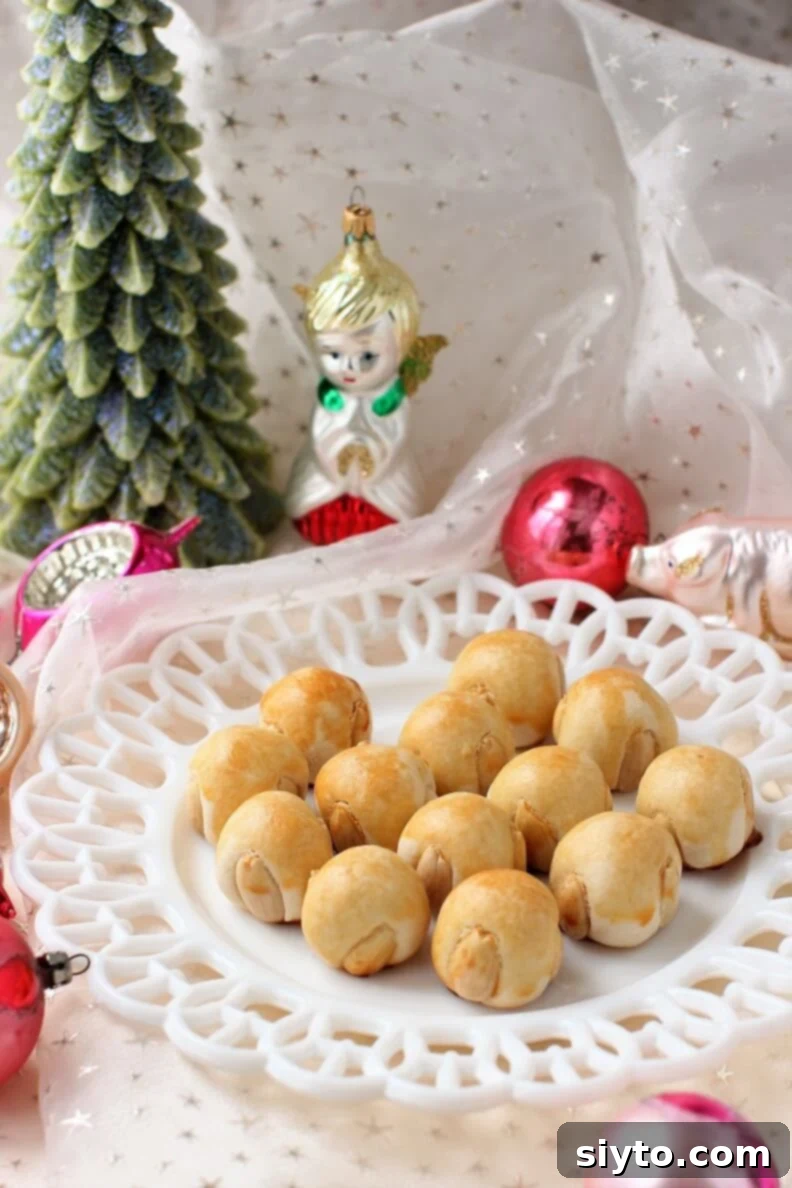
As seasons change and years pass, the comfort of tradition often becomes a cherished anchor in our lives. Recalling Christmases past, especially those spent amidst the enchanting ambiance of Germany, brings forth a deep sense of nostalgia and gratitude. In a world that constantly shifts and surprises us, the simple act of baking, particularly time-honored recipes like Bethmännchen, offers solace and connection.
During challenging times, when gathering with loved ones might be limited, the kitchen transforms into a sanctuary. It’s a place where warm aromas fill the air, creating an atmosphere of comfort and anticipation. Preparing traditional treats like these small German almond cookies provides a meaningful way to celebrate, connecting us to heritage and the joy of creation. It’s in these smaller, more intimate celebrations that we often find the greatest pleasure – in the soft glow of candlelight, the quiet shared moments, and the simple delights of homemade food.
Bethmännchen, aptly named “little praying men,” embody this sentiment beautifully. They are a delightful testament to the power of simple ingredients – primarily almonds, sugar, and egg whites – transformed into something truly special. Brushed with an egg yolk wash for a beautiful golden hue and traditionally adorned with three almond halves, these cookies offer a wonderfully chewy texture and an intense, authentic almond flavor. My first encounter with them in Germany was enchanting; they were ubiquitous in bakeries and gift shops, and a true highlight of the famous Frankfurt Christmas markets, instantly captivating me with their charm and taste.
The Endearing Legend and History of Bethmännchen
The history of Bethmännchen is as rich and charming as the cookies themselves, deeply rooted in the financial heart of Germany, Frankfurt. The legend dates back to the early 19th century, centering around the prominent Bethmann family, a wealthy and influential banking dynasty. The family employed a distinguished Parisian pastry chef, Jean Jacques Gautenier, who was renowned for his culinary artistry.
Among the many exquisite dishes Chef Gautenier created for the Bethmanns were these unique Christmas cookies. Originally, each chewy marzipan morsel was adorned with four upright almond halves, symbolizing the Bethmann family’s four sons: Karl, Moritz, Alexander, and Heinrich. However, tragedy struck a few years later when Heinrich, one of the sons, passed away. In a poignant gesture of grief and remembrance, the heartbroken family is said to have removed one almond from the cookie. From that day forward, Bethmännchen have traditionally been made with only three almonds.
While the complete historical accuracy of this tale may be debated, it undeniably adds a layer of magic and specialness to these cookies. It transforms them from a mere confection into a symbol of enduring family legacy and a touching narrative passed down through generations. This rich backstory, coupled with their irresistible taste, makes Bethmännchen a truly unique German Christmas tradition.
For many, marzipan itself evokes a sense of celebration and cherished memories. Growing up, marzipan was synonymous with special occasions. Christmas brought an abundance of almond paste delicacies: chocolate-covered marzipan bars in stockings, marzipan-stuffed Stollen, and charming marzipan “potatoes” dusted with cocoa. Easter baskets overflowed with marzipan molded into colorful fruits and animals. And for other festive gatherings, cakes and pastries filled with this sweet almond paste held pride of place on the table. Marzipan, in essence, signifies joyous times and togetherness with family.
The texture of these little Bethmännchen is truly delightful – a firm exterior yielding to a wonderfully chewy interior, with the pleasant crunch of the almonds punctuating each bite. The distinct almond flavor is undeniably front and center, creating an irresistible treat that elevates any moment into something truly special.

It’s Fun and Easy to Make Traditional German Bethmännchen – The Most Yummy Marzipan Cookie
Crafting these traditional German marzipan cookies is a surprisingly simple and enjoyable process, resulting in a truly delicious treat. Here’s how to bring these festive delights to your own kitchen:
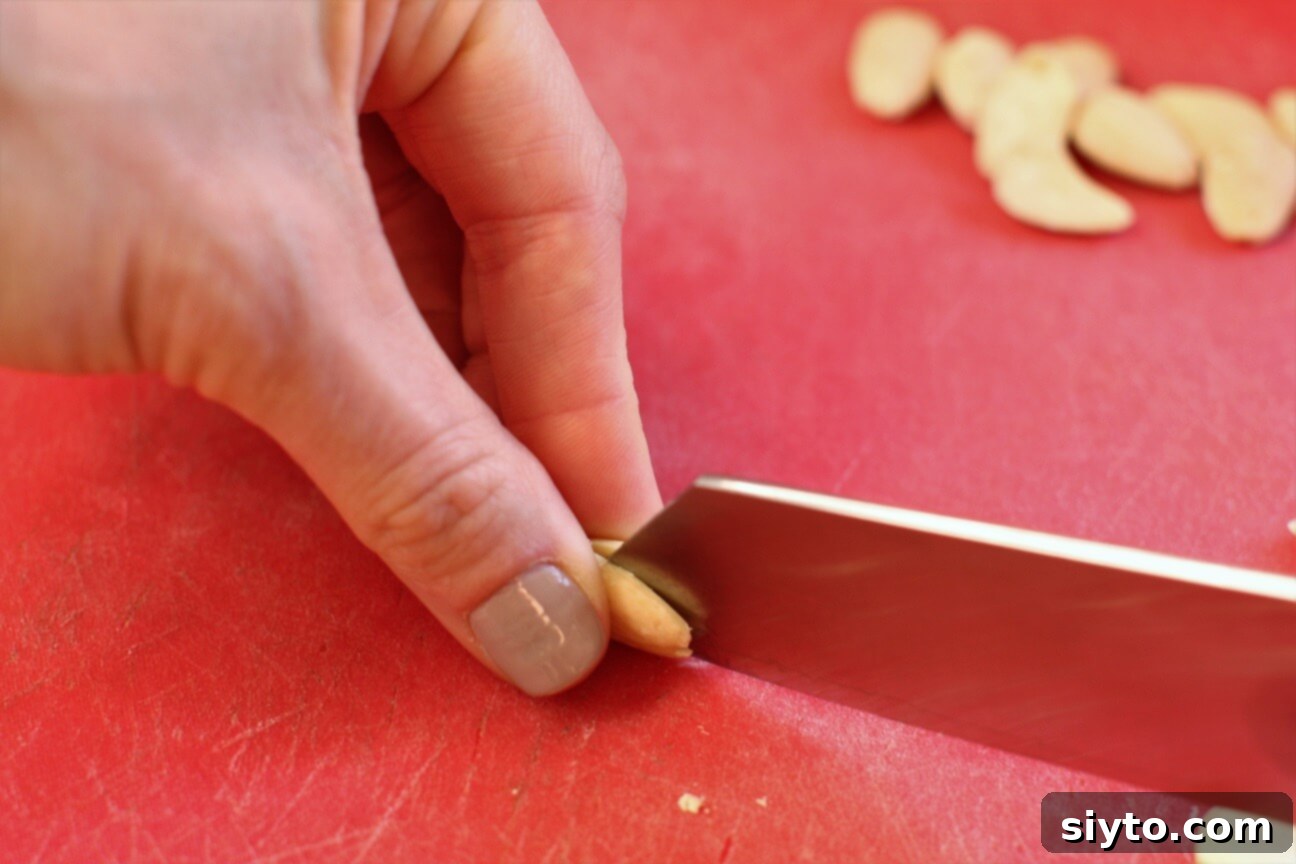
Before you begin mixing, prepare your almonds. Splitting the whole blanched almonds in half is easier if you warm them slightly first. Hold an almond upright on its side between your thumb and forefinger, and carefully use a sharp knife to cut it along its natural seam, splitting it into two perfect halves. This meticulous step ensures a beautiful presentation for your cookies.
The dough itself requires just five key ingredients: almond paste, icing sugar, egg white, flour (sweet rice flour is an excellent gluten-free option), and almond flour. Combine these in a mixing bowl and knead them together, either with an electric mixer or by hand. The goal is to achieve a nice, workable mass, much like playdough – stiff enough to hold its shape yet pliable enough to mold. This simple dough forms the delicious foundation of your Bethmännchen.
Once your dough is ready, roll it into a uniform log. Slice the log into six even sections, and then pinch off smaller, equal bits from each section. Roll each small piece into a smooth, round cookie ball. This is where the artistry of Bethmännchen truly comes alive: carefully press three of your split almond halves (with the pointy side facing upwards) equally around the sides of each ball. Then, gently push inwards on all three almonds simultaneously. This action helps to shape the cookie, making it slightly taller than perfectly round, mimicking the form of a “little praying man,” giving the cookie its unique and traditional silhouette.
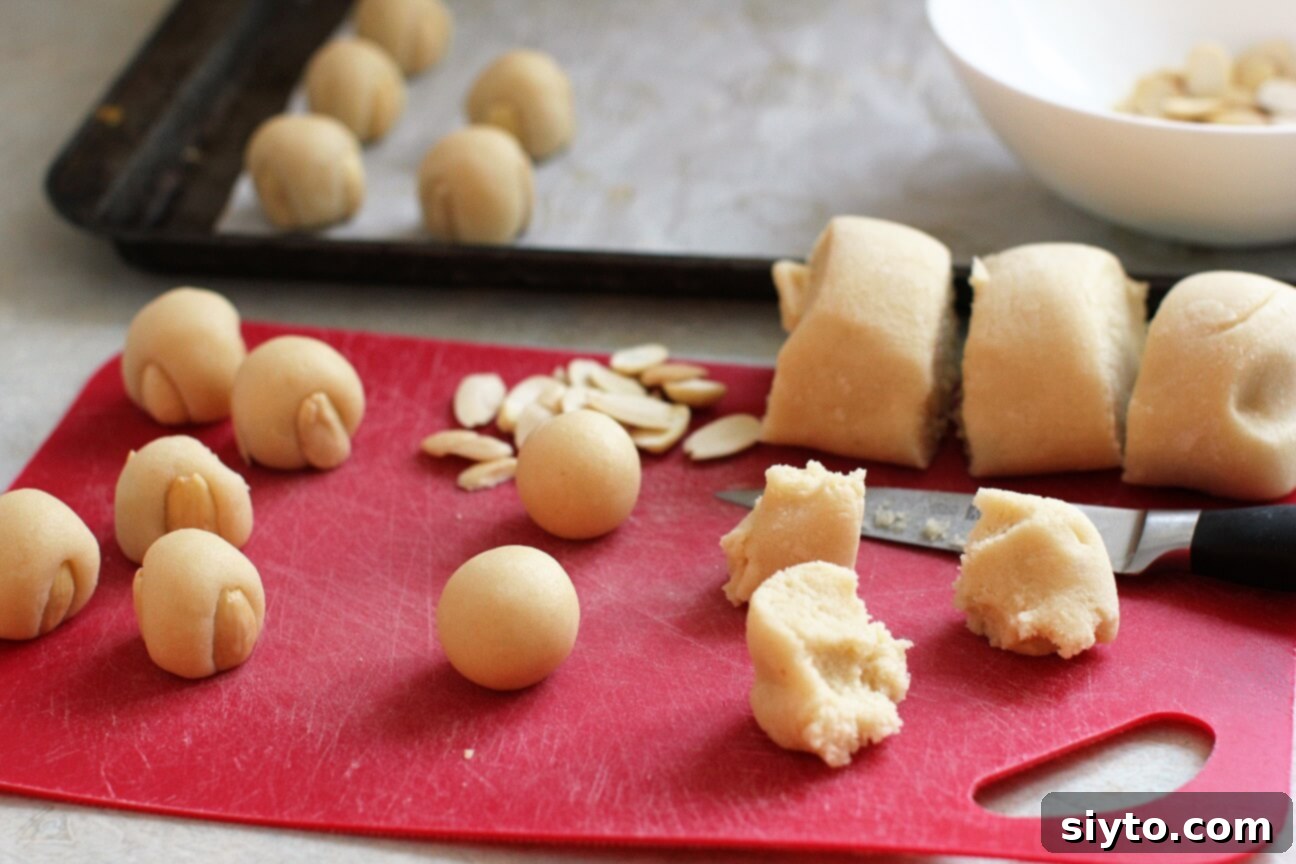
Finally, prepare an egg wash by whisking an egg yolk with a touch of milk, cream, or water. Gently brush the top half of each cookie with this mixture. The egg wash will not only give your Bethmännchen a beautiful golden sheen during baking but also contribute to their slightly crisp exterior. Arrange your shaped and brushed cookies on a parchment-lined baking sheet and bake them until they reach a lovely light golden color. The aroma that fills your kitchen will be absolutely irresistible, a true herald of the festive season.

Golden deliciousness, fresh from the oven, awaits.

And there they are – delectable little Bethmännchen, perfectly baked and ready for enjoying with a warm cup of coffee, tea, or mulled wine, bringing a touch of German Christmas cheer to your home.

What NOT to Do When Making Bethmännchen: The Critical Difference Between Almond Paste and Marzipan
One of the most crucial elements to the success of your Bethmännchen lies in selecting the correct primary ingredient: almond paste. The terminology for marzipan and almond paste can often be confusing, varying significantly depending on regional culinary traditions and product labeling. However, understanding their fundamental differences is key to achieving the desired texture and shape for these delicate German cookies.
Both almond paste and marzipan are made from ground almonds, sugar, and egg whites, but their proportions and processing differ significantly. Almond paste typically contains roughly equal amounts of almonds and sugar, or often a higher percentage of almonds (usually 50% or more), resulting in a less sweet and coarser texture. It is primarily used as an ingredient in baking, either mixed into doughs or as a filling for pastries and tarts. Marzipan, on the other hand, is almond paste that has been more finely ground and has a much higher sugar content, making it considerably sweeter and smoother. Its pliable consistency makes it ideal for molding into decorative shapes, such as the famous marzipan fruits, or for rolling out to cover cakes and fruitcakes.
For Bethmännchen, it is imperative to use **almond paste**. If you substitute marzipan, the high sugar content will lead to a disastrous outcome during baking. The excessive sugar causes the cookies to spread significantly, melting into flat, shapeless puddles rather than maintaining their iconic “little praying man” form. The dough will be too soft and sticky, making it impossible to work with effectively. To ensure you have genuine almond paste, always check the ingredient list: almonds should be the first ingredient, indicating a higher almond content (ideally 50% or more), with sugar listed second. If sugar is listed first, you likely have marzipan, which will not yield the desired results for this recipe.
Almond paste can typically be found in specialty food stores, European import markets (like the Italian Center in the Edmonton area, as mentioned), or some well-stocked delicatessens and grocery stores. It often comes in vacuum-sealed plastic tubes, similar to sausages, to maintain its freshness and consistency. The successful batch of Bethmännchen will be made with almond paste where almonds comprise at least 57% of the product, with sugar as the secondary ingredient. My own unfortunate experiment, pictured below, vividly illustrates the consequences of using marzipan instead – a pan full of sad, flat pancakes that resemble nothing like the traditional Bethmännchen. If marzipan is your only option, you might attempt to salvage the dough by adding more almond flour (or sweet rice flour for gluten-free versions) until the mixture becomes stiff enough to roll without sticking to your hands, but be aware that the final texture will be less chewy and the cookies significantly sweeter.
This is what happened when I used marzipan instead of almond paste! Yikes.
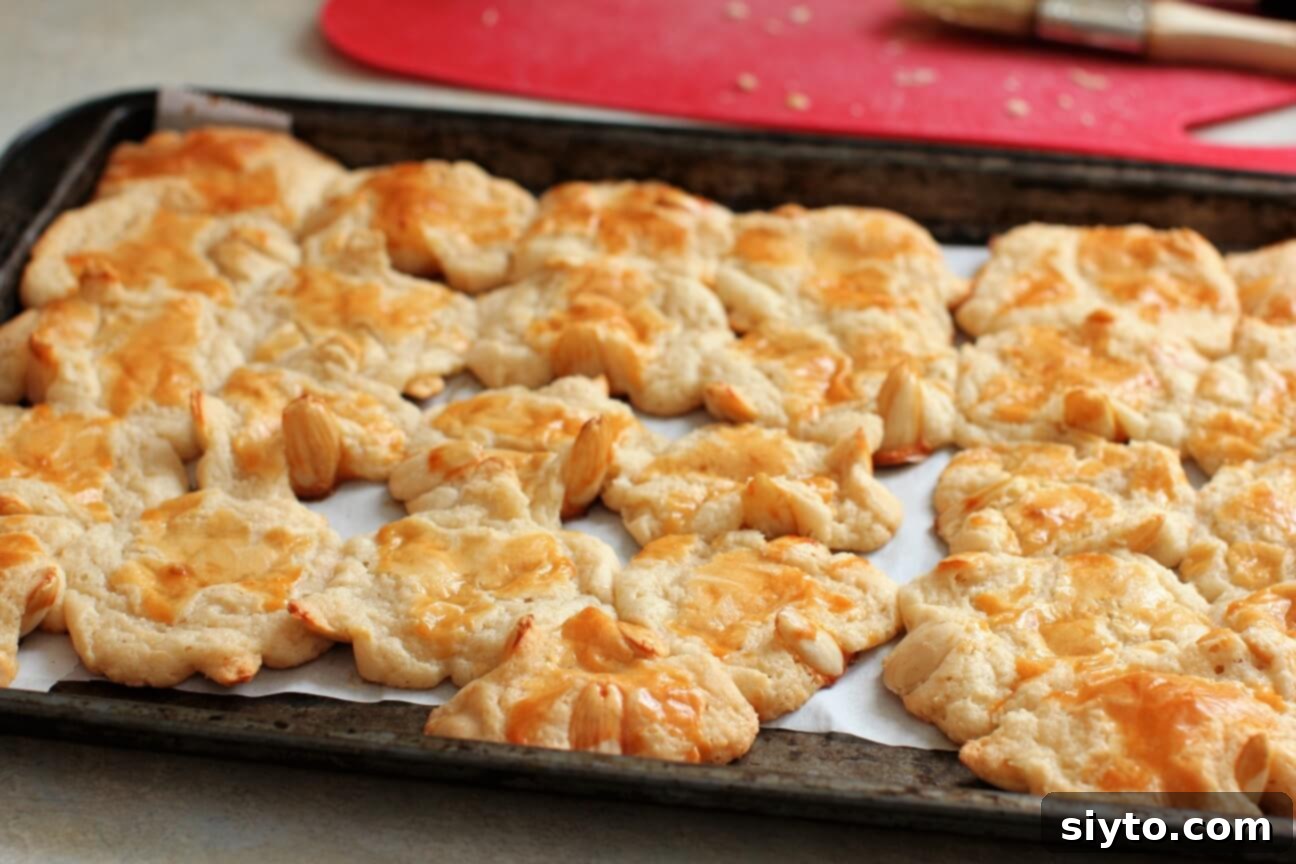
(At least my chickens were happy with their Christmas treats, so no ingredient ever truly goes to waste!)
* * * * *
Kitchen Frau Notes: Remember, the cornerstone of perfect Bethmännchen is using almond paste, not prepared marzipan. Marzipan’s higher sugar content will cause your cookies to spread and become overly sweet. Always check labels to ensure almonds are the first ingredient, followed by sugar. If you can only find marzipan, increase the amount of almond flour until your dough is firm and doesn’t stick during rolling. This will slightly alter the chewy texture and increase sweetness, but it’s a workable alternative. For gluten-free Bethmännchen, sweet rice flour is an excellent choice, providing a light, tender crumb that beautifully complements the marzipan base.

Bethmännchen (Traditional German Marzipan Cookies) Recipe
- 225 gms (8 oz) almond paste, at least 50% almonds (see Note above)
- 75 gms (⅔ cup) icing sugar
- 1 large egg white
- 35 gms (⅓ cup) sweet rice flour (or regular all-purpose flour for non-gluten-free)
- 70 gms (¾ cup) almond flour
- ⅓ cup (85 g) whole, blanched, peeled almonds, split
- 1 egg yolk
- ½ tablespoon light cream, milk, or water
Instructions:
- Preheat your oven to 300°F (160°C). Prepare a baking sheet by lining it with parchment paper or greasing it lightly.
- Dice or roughly chop the almond paste into coarse chunks. Place these chunks into a mixing bowl or the bowl of a stand mixer.
- Add the icing sugar, egg white, sweet rice flour (or all-purpose flour), and almond flour to the bowl. Mix with an electric mixer on medium speed, or knead by hand, until all ingredients are well combined and form a cohesive, stiff but workable dough. The dough should resemble playdough in consistency.
- Lightly dust a clean work surface with sweet rice flour (or regular flour). Scrape the dough onto the prepared surface and briefly knead it into a smooth ball.
- Roll the dough ball into a uniform cylinder or log. Slice the cylinder in half, then divide and cut each half into three equal pieces, resulting in a total of 6 even slices from the cylinder.
- From each of these 6 slices, pinch off pieces to create five even portions. Roll each portion into a small, smooth ball, about 1 inch (2.5 cm) in diameter.
- Take three split almond halves and gently press them into the sides of each dough ball. Ensure the pointy side of the almonds faces upwards and they are evenly spaced around the ball.
- Once the almonds are in place, gently push inward on all three almond halves simultaneously. This action will slightly elongate the cookie, making it taller than perfectly round, giving it the characteristic “praying man” shape.
- Repeat this process with the remaining dough slices, forming 5 cookies from each slice, for a grand total of 30 delightful Bethmännchen. Arrange the shaped cookies onto your prepared parchment-lined baking sheet, leaving a little space between them.
- In a small bowl, whisk together the egg yolk and light cream, milk, or water with a fork to create an egg wash.
- Using a pastry brush, gently brush the top half of each cookie with the egg wash. This will give them a beautiful golden sheen when baked.
- Bake the cookies for 25 to 30 minutes, or until they achieve a lovely light golden color, particularly around the edges and on the almond halves. Keep a close eye on them to prevent over-browning.
- Once baked, carefully transfer the Bethmännchen to a wire rack to cool completely. These cookies will firm up as they cool.
- Store the cooled Bethmännchen in an airtight container at room temperature for 2 to 3 weeks, where they will maintain their delicious chewiness. For longer storage, they can be frozen for up to 6 months.
Makes approximately 30 cookies, perfect for sharing or savoring throughout the holiday season.
Guten Appetit!
Want to receive new Kitchen Frau recipes directly to your email? Sign up here and you’ll get a handy and useful kitchen tip along with each recipe, too. (No spam ever.)
If you like my recipes, follow me on Instagram, Pinterest, Twitter, and Facebook. You’d make my day!
PIN IT HERE to save the recipe for later:

You might also like these other traditional German treats:
Zimtsterne (German cinnamon star cookies)
Elisenlebkuchen (Authentic German flourless Lebkuchen cookies)
Basler Leckerli (Beloved German & Swiss cookies)
Stollen (Traditional German Christmas Fruit Bread)