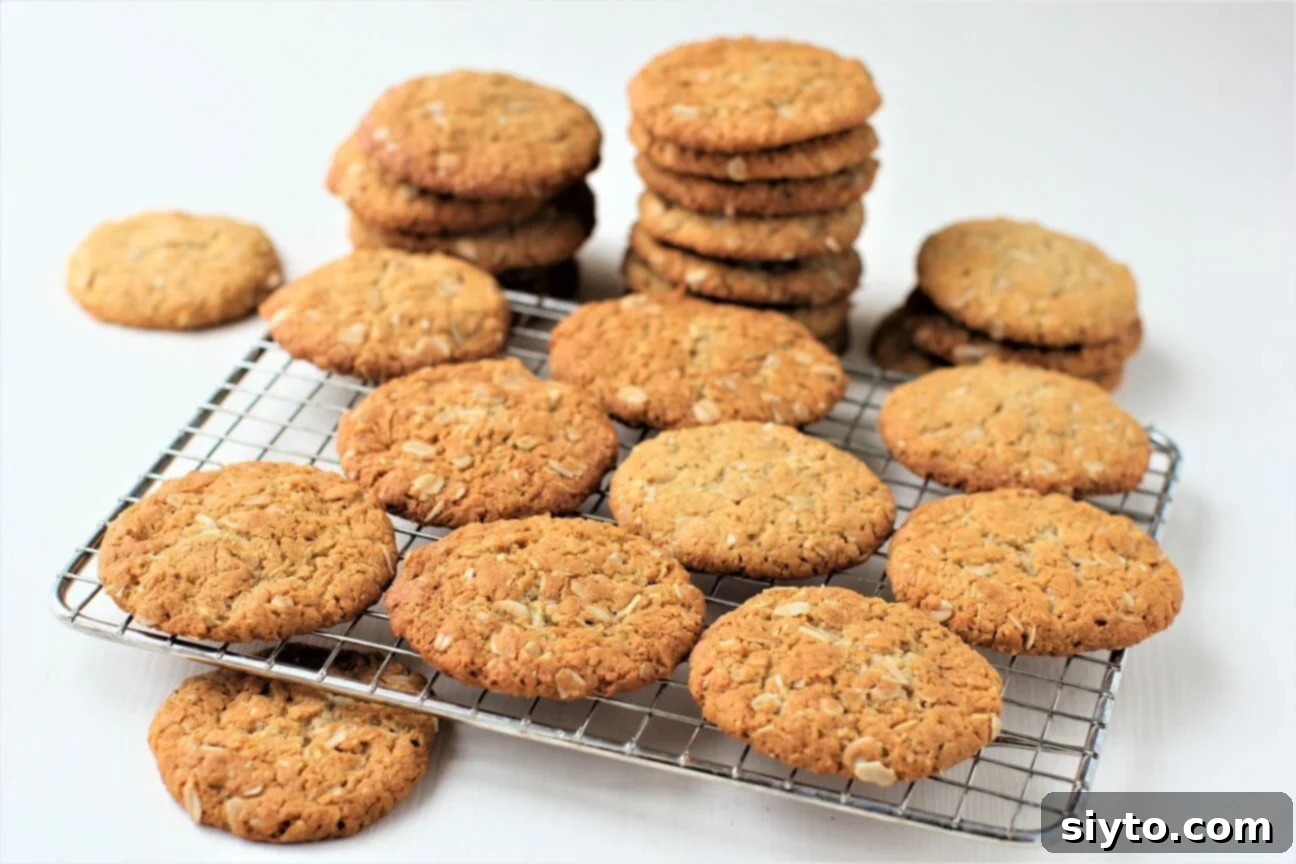
Authentic Anzac Biscuits: The Iconic Australian Oatmeal Cookie Recipe (Crispy, Chewy, & Gluten-Free Options!)
Anzac biscuits are truly an irresistible delight from Australia, a beloved oatmeal cookie that promises a delightful experience with every bite. These humble yet heavenly biscuits are famously eggless, contributing to their signature crunch. What makes them so captivating is the perfect symphony of rich caramel undertones from golden syrup, the wholesome nuttiness of oats, and the sweet, tropical essence of coconut. It’s a flavor combination that has stood the test of time, cementing their place as a cherished treat not just in Australia, but globally. Once you try them, you’ll understand why they quickly become a new favourite in any household. (Jump straight to the recipe!)
Discovering Australia’s Culinary Heritage Through Anzac Biscuits
This month, our culinary journey for the Eat the World Recipe Challenge takes us ‘down under’ to the magnificent and diverse continent of Australia. Known for its vast landscapes, unique wildlife, and stunning natural beauty, Australia also boasts a vibrant culinary scene. As a Commonwealth country, its cuisine carries strong influences from its British connections, but it has also been beautifully shaped by the countless cultures and communities that have made Australia their home. This rich tapestry of influences creates a fascinating food culture, and few dishes embody this blend of history and comfort quite like the iconic Anzac biscuit.
The Anzac biscuit is far more than just a sweet treat; it’s a profound symbol deeply embedded in Australian and New Zealand history. Originating over a century ago during World War I, this humble biscuit was a staple for the troops fighting overseas. The name Anzac is an acronym, standing for ‘Australian and New Zealand Army Corps’, a designation that carries immense historical weight and meaning. These resilient biscuits were traditionally baked by the women at home, carefully packaged, and sent to their loved ones serving far from home.
A Biscuit Born of Necessity and Resilience
The genius of the Anzac biscuit lies in its practicality and durability. Designed to withstand long sea voyages and harsh conditions, these biscuits were known for their ability to keep well for extended periods without spoiling. Their robust nature ensured they survived the journey intact, providing a much-needed taste of home and a source of sustenance for the soldiers. A key characteristic of the original Anzac biscuit was its eggless recipe. During wartime, eggs were scarce and often rationed, leading creative bakers to omit them. This adaptation not only addressed the limitations of wartime resources but also inadvertently contributed to the biscuit’s appealingly crisp texture, a hallmark that continues to be cherished today. The golden syrup, another vital ingredient, played a crucial role not only in flavor but also as a binder and a preservative, helping the biscuits maintain their freshness for longer.
Today, Anzac biscuits are readily available across Australia and New Zealand, found in bakeries, cafes, and supermarkets year-round. However, they hold an especially poignant and significant place on Anzac Day, observed annually on April 25th. This solemn day, akin to Remembrance Day in Canada, is dedicated to commemorating all the brave men and women who served, and those who made the ultimate sacrifice in defending their countries. It’s a day of national remembrance, reflection, and gratitude, where the Anzac biscuit serves as a tangible link to the past, reminding everyone of the courage and camaraderie of those who served. The Australian Government Department of Veterans Affairs eloquently captures the essence of Anzac Day:
‘The Anzac tradition—the ideals of courage, endurance and mateship that are still relevant today—was established on 25 April 1915 when the Australian and New Zealand Army Corps landed on the Gallipoli Peninsula (Turkey). This pivotal moment marked the beginning of a campaign that spanned eight arduous months, resulting in approximately 25,000 Australian casualties, including a heart-wrenching 8,700 who were killed or succumbed to wounds or disease.
The men who served on the Gallipoli Peninsula forged a legend, imbuing the word ‘Anzac’ with deep meaning in our vocabulary and giving birth to the enduring notion of the Anzac spirit. This spirit embodies qualities of bravery, resilience, ingenuity, and a profound sense of camaraderie.
In 1916, the first anniversary of the landing was observed with solemnity and respect across Australia, New Zealand, England, and among the troops stationed in Egypt. In recognition of its profound significance, 25 April was officially named ‘Anzac Day’ by the Acting Prime Minister, George Pearce.’
Biscuits, Not Cookies: A Cultural Nuance
While I might use the term “cookies” in an introduction for North American readers to distinguish them from our scone-like biscuits, it’s important to remember that these beloved treats are always referred to as “Anzac biscuits” in their home countries. This isn’t just a matter of semantics; it’s a point of cultural pride and tradition. Historically, the earliest recipes for Anzac biscuits did not include coconut. However, by 1924, the first documented mentions of coconut being added to the recipe began to appear. Today, most Anzac biscuit recipes include shredded coconut, which adds a wonderful texture and a subtle sweetness. For those who prefer a more traditional, minimalist approach, they can certainly be made with only oatmeal. A note for international bakers: when following older Australian recipes, keep in mind that the Australian tablespoon is slightly larger than its North American counterpart, measuring 4 teaspoons compared to the usual 3 teaspoons.
The Great Texture Debate: Crunchy vs. Chewy
One of the most delightful debates surrounding Anzac biscuits is whether they should be crunchy or chewy – and both camps have fiercely loyal supporters! The final texture largely depends on how long you bake them. A shorter baking time typically yields a softer, chewier biscuit, while a longer bake results in a crisp, snappable texture. The inclusion of golden syrup is a critical factor in achieving that desirable slight chewiness, as its unique properties help create a wonderfully pliable interior even when the edges are crisp. This versatility allows bakers to customize their Anzac biscuits to their personal preference, ensuring everyone finds their perfect bite.
Making Anzac Biscuits: A Simple and Rewarding Process
Creating these iconic biscuits at home is surprisingly straightforward, requiring minimal fuss and delivering maximum reward. The process begins with combining your dry ingredients. In a large bowl, whisk together the flour, rolled oats, shredded coconut, and firmly packed brown sugar. This ensures an even distribution of flavors and textures throughout the dough.
Next, prepare the wet ingredients. In a small saucepan, gently heat the butter, golden syrup, and water over medium heat. Stir continuously until the butter is completely melted and the mixture is well combined. The warmth helps to dissolve the golden syrup and create a cohesive liquid base.
Once the wet ingredients are ready, remove the saucepan from the heat and stir in the baking soda. This is where the magic happens! The baking soda will react with the warm, acidic golden syrup, causing the mixture to foam up quite dramatically. This effervescent reaction is not only fun to watch but crucial for the biscuit’s texture, creating tiny air pockets that contribute to its crispness.
Without delay, immediately pour this foaming butter mixture into your bowl of dry ingredients. Stir diligently until everything is thoroughly combined. The dough will look moist and slightly crumbly at first, but don’t worry. If it appears a little too sticky, simply let it rest for about 5 minutes. The oats will absorb some of the moisture, causing the dough to firm up and become much easier to handle.
Next, it’s time to form the biscuits. Roll the dough into uniform balls, typically around 1¼-inches (3cm) in diameter. A cookie scoop can be incredibly helpful for portioning, ensuring consistent size and baking. The mixture will make your hands quite oily from the melted butter, so it’s a good tip to roll all the dough into balls and place them on a clean plate (without touching each other). Then, you can wash your hands before transferring them to the prepared cookie sheets.
Once on the cookie sheet, gently flatten each dough ball slightly using the flat bottom of a glass or the palm of your hand. This helps them spread evenly and achieve the characteristic biscuit shape as they bake.
Finally, bake them until they reach a beautiful golden, caramelized deliciousness. The exact baking time (usually 12-14 minutes) will depend on your oven and your preferred texture. For a chewier biscuit, bake for a slightly shorter duration (around 10 minutes), and for maximum crispness, let them bake for the full recommended time until deeply golden.
Patience is a virtue when baking Anzac biscuits! If you can manage to wait until they’re fully cooled, you’ll be rewarded with a wonderfully crisp biscuit that surprisingly offers a delightful chewiness in its center. The magical combination of butter, brown sugar, and the distinctive golden syrup works in harmony to produce those sumptuously rich caramel flavors that define these treats. The absence of eggs, a historical necessity, plays a pivotal role in achieving that crisp exterior, while the golden syrup contributes significantly to the satisfying chewiness. All these elements converge to create an absolutely winning combination – a testament to why these biscuits have not only stood the test of time but remain such an incredibly popular and cherished classic in Australia today.
With their rich history, comforting flavor, and satisfying texture, Anzac biscuits are more than just a snack; they’re a connection to a proud heritage. Whether you enjoy them with a cup of tea or a cold glass of milk, they offer a moment of simple pleasure. I believe it’s time to go pour myself a glass of milk and take a biscuit break!
* * * * *
Tips for Perfect Anzac Biscuits: Kitchen Frau Notes
To ensure your Anzac biscuits turn out perfectly every time, here are a few essential notes and tips:
- Oat Selection: You have flexibility here! You can use either quick oats or old-fashioned large-flake rolled oats for these biscuits, or even a combination of both. If you opt for old-fashioned oats, the dough might initially seem a bit softer. Don’t fret; simply let it sit for about 5 minutes before rolling. This brief rest allows the larger oats to soak up some of the moisture, stiffening the dough and making it much easier to handle. I personally love using a combination of both types for varied texture.
- Coconut Customization: While coconut is a popular addition today, it wasn’t in the original recipe. If you prefer to omit the coconut, you absolutely can! Simply add an additional cup of rolled oats in its place. If, after adding the extra oats, the dough seems too dry or crumbly to form into balls, just add an extra tablespoon or two of water, one at a time, until it comes together nicely.
- The Importance of Salt: If you’re using unsalted butter in your recipe, it’s crucial to add ¼ teaspoon of salt to the dough. This small amount of salt isn’t just for seasoning; it plays a vital role in enhancing and bringing out the complex caramel flavors that are so characteristic of these biscuits. Don’t skip it!
- Choosing the Right Coconut: I highly recommend using fancy shred unsweetened coconut for the delightful texture it imparts. It’s sometimes a bit harder to find, but worth the search. Whatever you do, avoid using sweetened shredded coconut, as it will make the biscuits overly sweet and alter their traditional flavor profile. If fancy shred isn’t available, medium shredded or flaked unsweetened desiccated coconut will work perfectly well.
- Gluten-Free Version Success: For those with gluten sensitivities, you’ll be pleased to know that Anzac biscuits adapt beautifully to a gluten-free diet. I’ve successfully made the gluten-free version using my own gluten-free flour blend, and they turned out wonderfully – all the photos in this post, in fact, feature the delicious gluten-free rendition!
Anzac Biscuits (Crispy Oatmeal Cookies) Recipe
Ingredients:
- 1 cup (135gms) flour (or gluten-free flour blend, for gluten-free cookies)
- 1 cup (100gms) rolled oats (old-fashioned or quick oats or a combination), gluten-free if necessary
- 1 cup (80gms) unsweetened shredded coconut (see Note, above)
- ⅔ cup (135gms) brown sugar, firmly packed
- ½ cup (115gms) salted butter (add ¼ teaspoon salt if using unsalted butter)
- 2 tablespoons (30ml) golden syrup (like Rogers or Lyle’s)
- 2 tablespoons (30ml) water
- 1 teaspoon baking soda
Instructions:
1. Preheat your oven to 325°F (170°C). Prepare two cookie sheets by lining them with parchment paper or silicone liners, or by lightly greasing them. This prevents sticking and ensures even baking.
2. In a large mixing bowl, combine the flour, rolled oats, unsweetened shredded coconut, and firmly packed brown sugar. Whisk them together thoroughly to ensure all ingredients are evenly distributed.
3. In a small saucepan, melt the butter over medium heat. Once the butter is melted, add the golden syrup and water to the saucepan. A handy tip: dip your measuring spoon into the melted butter before measuring the sticky golden syrup; it will slide out effortlessly!
4. Remove the saucepan from the heat and immediately add the baking soda. Watch as the mixture dramatically foams up – this reaction is essential for the biscuit’s texture. Without delay, pour the foaming butter mixture into the dry ingredients and mix well with a sturdy spoon or spatula until fully combined.
5. If the mixture appears too moist and sticky to handle, allow it to rest for 5 minutes. The oats will absorb some of the moisture, causing the dough to firm up and become more pliable. (Note: if using large-flake old-fashioned oats, the mixture will be stickier initially, but will firm up after a few minutes of resting). Conversely, if the dough looks too dry and crumbly, add a bit more water, one tablespoon at a time, until it reaches a somewhat moist, crumbly-looking consistency that can be rolled.
6. Roll the dough into uniform 1¼-inch (3cm) balls. A cookie scoop is ideal for consistent portioning. The melted butter in the dough can make your hands quite oily, so a practical approach is to roll all the dough into balls first and place them on a separate plate, ensuring they don’t touch. Then, you can wash your hands before transferring the balls to the prepared cookie sheets. This recipe yields approximately 24 to 26 biscuits.
7. Place the dough balls on the lined cookie sheets, ensuring they are at least 2 inches (5cm) apart, as they will spread during baking. Gently press each ball down to flatten it slightly using the bottom of a glass or your palm.
8. Bake for 12 to 14 minutes, or until the biscuits achieve a deep golden color and are still slightly puffed in the center. For a chewier biscuit, reduce the baking time to around 10 minutes. For a crispier biscuit, bake for the full 14 minutes or until the edges are golden brown and firm.
9. Once baked, allow the biscuits to cool in the pans for about 2 minutes. They will still be very soft at this stage. Carefully remove them with a spatula and transfer them to a wire rack to finish cooling completely. They will firm up and become wonderfully crisp as they cool.
Makes 24 to 26 delicious Anzac biscuits.
Guten Appetit!
Ready to explore more global flavors? Check out all the wonderful Australian dishes prepared by fellow Eat the World members and share your culinary adventures with #eattheworld. Click here to find out how to join and have fun exploring a new country’s cuisine each month with us!
Here’s a taste of what other members cooked up for our Australian theme:
- A Day in the Life on the Farm: Australian Meat Pie
- Magical Ingredients: Anzac Biscuits
- Sneha’s Recipe: Deviled Chicken
- Kitchen Frau: Anzac Biscuits – Crispy Oatmeal Cookies
- Amy’s Cooking Adventures: Fairy Bread
Want to receive new Kitchen Frau recipes directly to your email? Sign up here and you’ll get a handy and useful kitchen tip along with each recipe, too. (No spam ever.)
If you like my recipes, follow me on Instagram, Pinterest, Twitter, and Facebook. You’d make my day!
PIN IT HERE to save the recipe for later:
Check out my past ‘Eat the World’ Recipe Challenge posts:
(in alphabetical order)
- Argentina: Red Chimichurri Sauce
- Bangladesh: Chingri Masala (Shrimp Curry)
- Bulgaria: Patatnik (Savoury Potato and Cheese Pie)
- Cambodia: Noum Kong (Cambodian Rice Flour Doughnuts)
- China: Kung Pao Chicken
- Colombia: Pan de Yuca (Warm Cheese Buns)
- Egypt: Fava Beans and Feta
- England: Gluten Free Fish and Chips and Mushy Peas
- Ethiopia: Four Ethiopian Recipes for a Fantastic Feast
- Fiji: Spiced Sweet Potato and Banana Salad
- Finland: Lohikeitto (Creamy Salmon, Potato, and Dill Soup)
- France: Axoa d’Espelette (A Simple Stew from the Basque Country)
- Georgia: Charkhlis Chogi (Beets with Sour Cherry Sauce)
- Greece: Moussaka
- Guyana: Fried Tilapia in Oil & Vinegar Sauce (fish dish)
- Hungary: Túrós Csusza (Pasta Scraps with Cottage Cheese)
- India: Kerala Upma (Fluffy, Kerala Style Breakfast Upma Recipe)
- Iraq: Tepsi Baytinijan (Eggplant & Meatball Casserole)
- Ireland: Dublin Coddle (A tasty Sausage and Potato Stew)
- Israel: Cucumber, Feta, and Watermelon Salad
- Jamaica: Rice and Peas (Coconut Rice and Red Beans)
- Japan: Chawanmushi (Steamed Savoury Egg Custard)
- Kenya:Maharagwe with Ugali (Red Beans with Cornmeal Slice)
- Laos: Ping Gai (Lao Grilled Chicken Wings)
- Lesotho: Chakalaka & Pap (Veggie & Bean Stew with Cornmeal Polenta)
- Luxembourg: Stäerzelen (Buckwheat Dumplings)
- Mexico: Cochinita Pibil Tacos (Pit Barbecued Pig to Make in Your Oven)
- Netherlands: Boerenkool Stamppot (Kale-Potato Mash with Sausages & Pears)
- New Zealand: Classic Pavlova
- Poland: Polish Honey Cake
- Portugal: Tuna and Sardine Pâtés
- Puerto Rico: Piña Colada Cocktail
- Scotland: Cranachan (Raspberry, Whisky & Oat Cream Parfaits)
- Senegal: Mafé (Beef and Peanut Stew)
- Sudan: Peanut Butter Creamed Spinach & Peanut Meringue Cookies
- Sweden: Swedish Meatballs with Cream Gravy
- Switzerland (Christmas): Basler Leckerli Cookies
- Thailand: Shrimp Laksa (Khung)
- Trinidad & Tobago: Peanut Butter Prunes
- Ukraine: Buckwheat Kasha with Beef
- United States (Soul Food): Smothered Pork Chops
- Uruguay: Torta de Fiambre (Baked Ham & Cheese Sandwiches)
- Vietnam: Caramelized Pork Rice Bowls