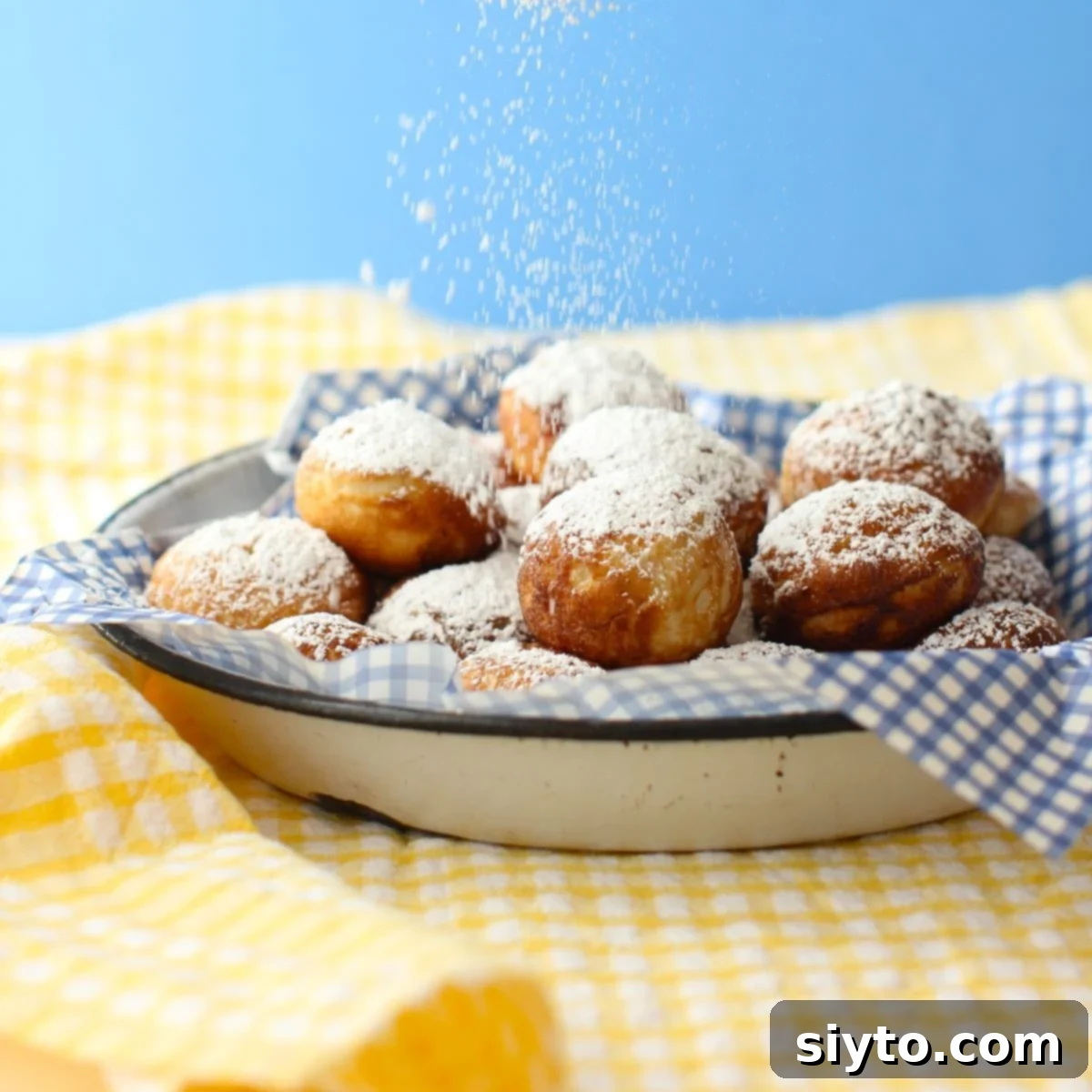
Authentic Aebleskiver Recipe: How to Make Delightful Danish Pancake Balls
Aebleskiver are truly delightful Danish pancake balls, a unique culinary treasure traditionally crafted in a special pan featuring distinctive rounded indents. These puffy, golden spheres are best enjoyed warm, often accompanied by a spoonful of your favorite fruit jam and a delicate dusting of powdered sugar, transforming each bite into a taste of pure heaven.
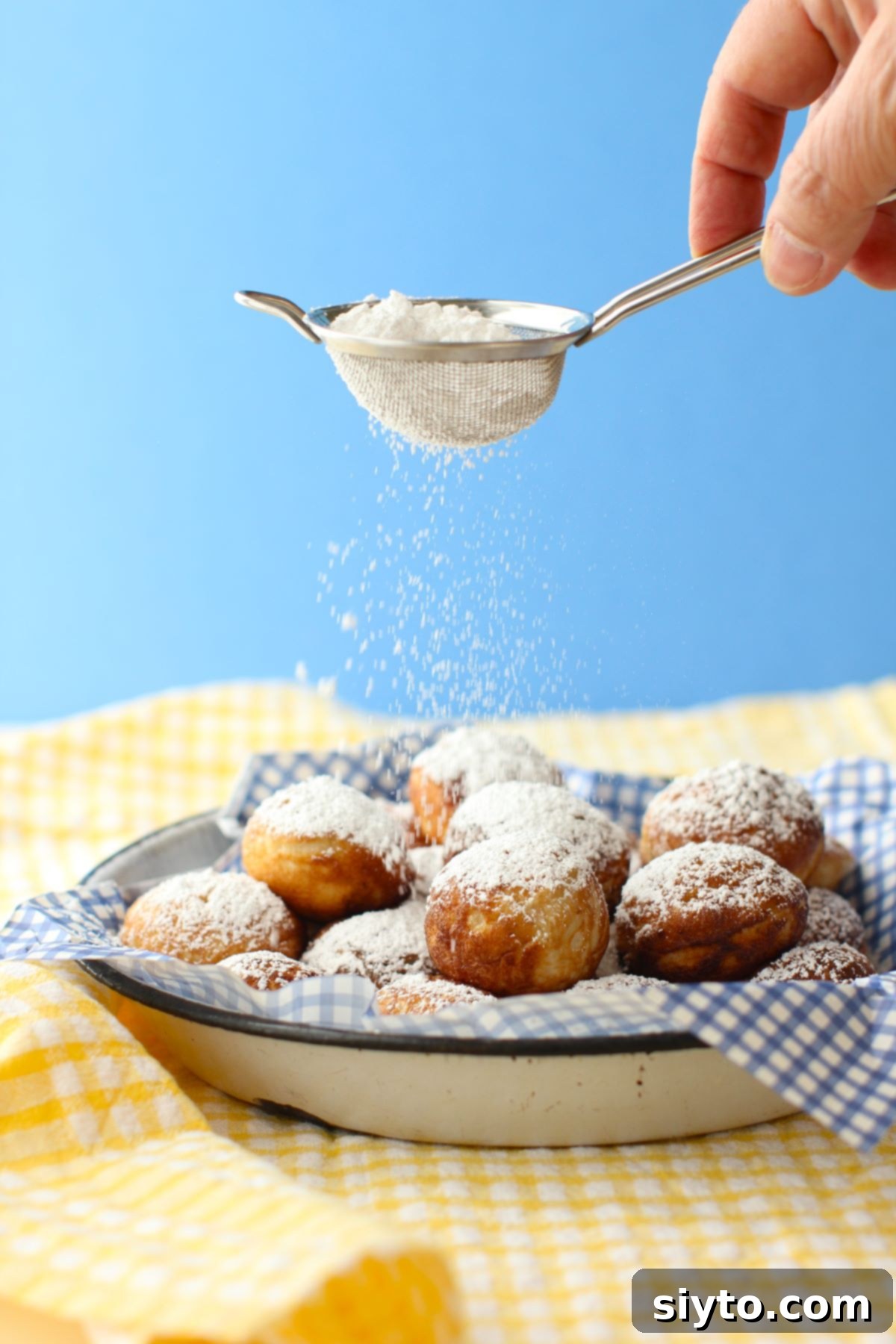
Imagine the best qualities of a crispy doughnut and a light, fluffy pancake magically combined to create something utterly irresistible. That’s precisely what Aebleskiver are – a charming and special Danish treat that captivates with its unique texture and comforting flavor. These small, spherical delights offer a tender interior wrapped in a slightly crisp exterior, making them a beloved indulgence for all ages.
Our culinary journey this month for the Eat the World recipe challenge takes us to the enchanting country of Denmark. Nestled at the northern tip of mainland Europe, Denmark shares a brief 42 km border with Germany and is comprised primarily of the Jutland Peninsula alongside over 400 islands. As the southernmost country of Scandinavia, Denmark proudly shares much of its rich culture and fascinating history with its Northern European neighbors.
The traditional Danish cuisine reflects its Nordic roots and the hearty fare found in Scandinavia and northern Germany. Staples include an abundance of meat, fish, dairy products, and potatoes, complemented by seasonal summer fruits and vegetables. Baking holds a significant place in Danish culture, evident in their robust rye breads and, of course, the world-famous Danish pastries. Over the last five decades, Denmark has also seen the rise of an innovative New Nordic cuisine, which beautifully showcases indigenous ingredients through exciting new dishes that blend classic French cooking techniques with modern culinary artistry.
The History and Charm of Aebleskiver: Danish Pancake Balls
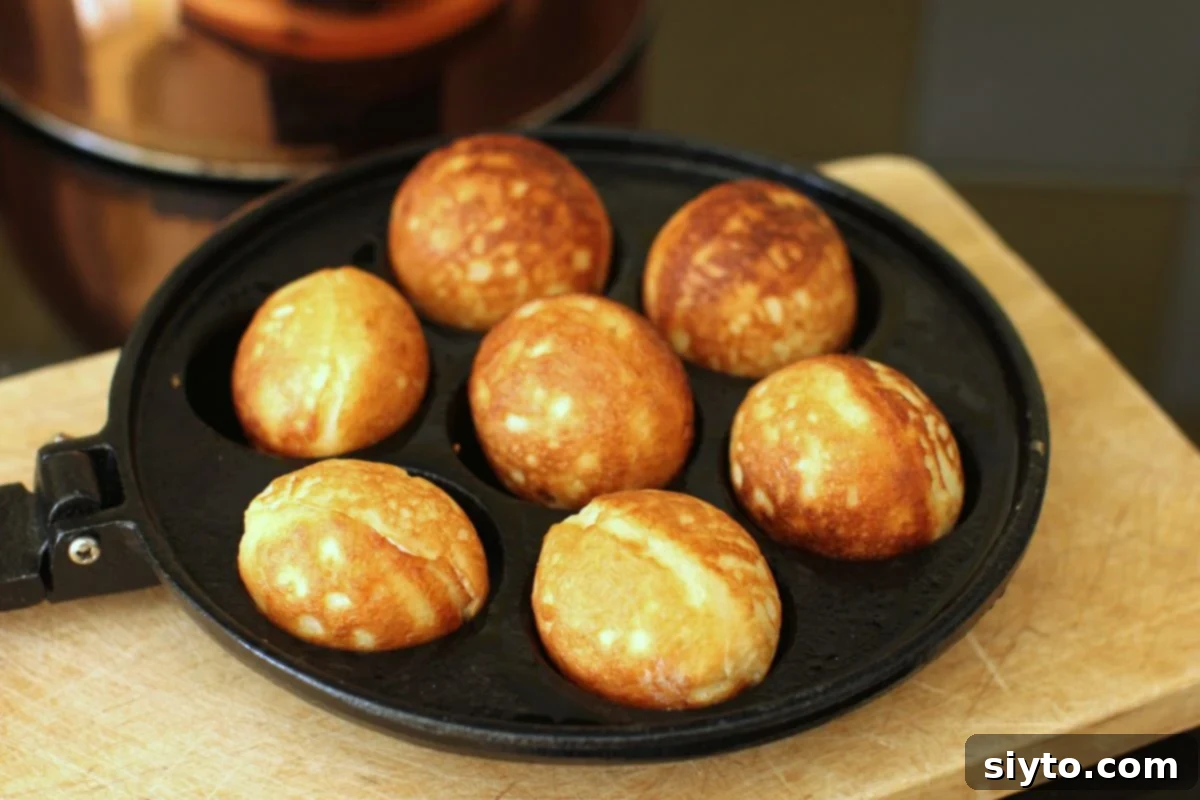
Aebleskiver, often spelled Ebelskiver or Æbleskiver, represent a cherished Danish tradition with deep historical roots. The earliest records of the distinctive pans used to create these treats date back over three centuries, originally fashioned from hammered copper. These unique pans feature several hemispherical indents, which are generously filled with a light, airy pancake-like batter. As the batter cooks, it is expertly turned to form a perfectly spherical shape. The resulting Aebleskiver boast a delightful contrast: a slightly crisp exterior gives way to a firm yet wonderfully fluffy interior.
Traditionally, Aebleskiver are not overly sweet on their own. Their deliciousness is completed with a generous dusting of powdered sugar and served alongside a vibrant fruit jam. While typically enjoyed as a sweet snack or dessert, these versatile pancake balls can also be prepared in a savory rendition, making them a unique side dish to various meals. In Denmark, Aebleskiver (the singular form being Aebleskive) are savored year-round, but they hold a particularly special place in Danish hearts during the festive Christmas season, evoking warmth and togetherness.
The name “Aebleskive” literally translates to “apple slice” in Danish. This intriguing name harks back to the original recipes, where these pancakes indeed contained a slice or piece of apple within them. While modern Aebleskiver are more commonly prepared without apple, the tradition of including apple cubes or a wide array of other delightful fillings continues to thrive. Whether you prefer them plain or filled, the charm of Aebleskiver lies in their simplicity and comforting appeal.
Essential Ingredients and Equipment for Perfect Aebleskiver
Creating delectable Aebleskiver requires only a handful of simple ingredients and one very special piece of equipment. This recipe for Danish pancake balls is wonderfully adaptable, allowing you to easily make them with a standard flour blend or even a gluten-free flour blend for those with dietary preferences.
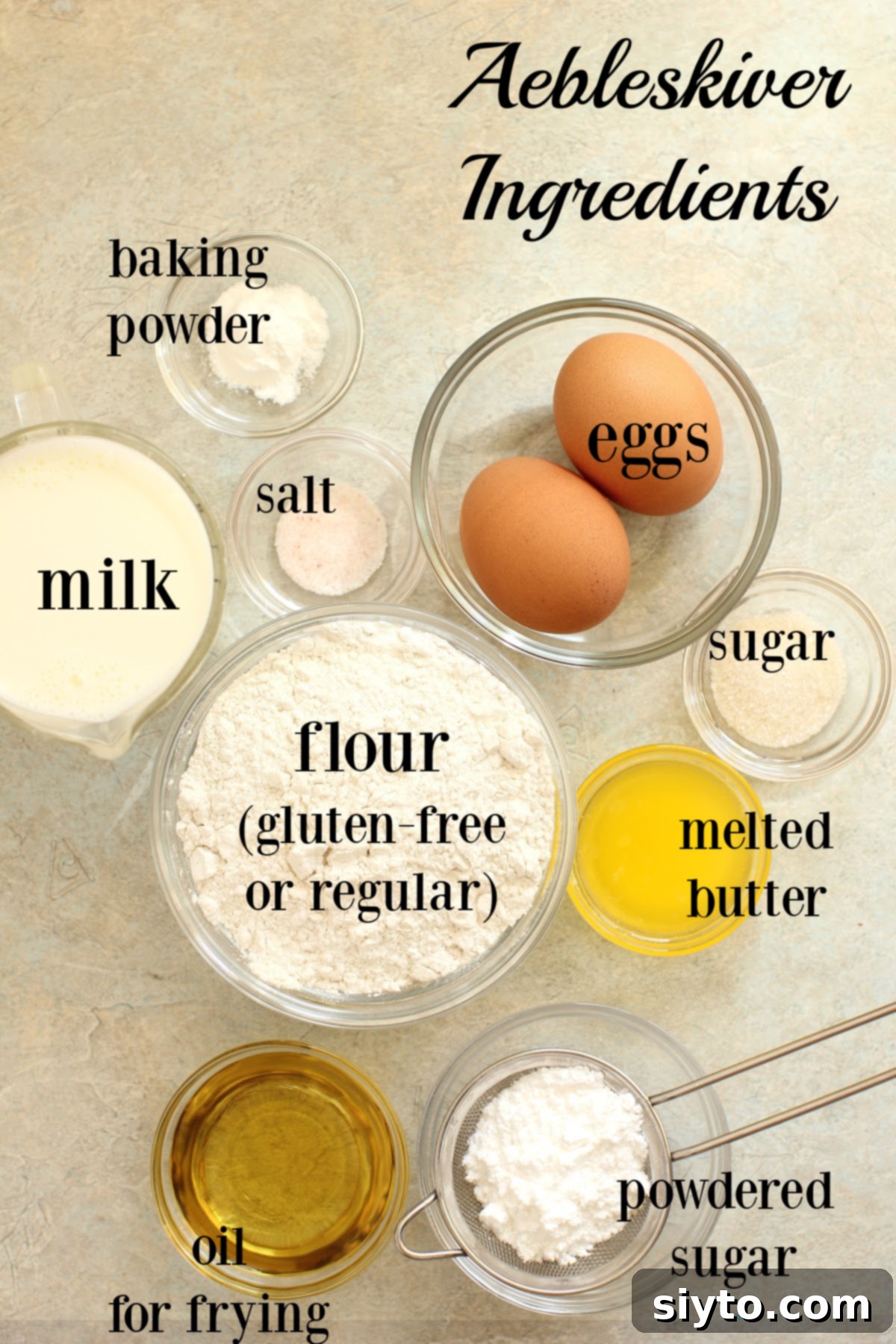
- Flour: Use either a high-quality all-purpose flour or your favorite gluten-free flour blend for equally delicious results.
- Eggs: Fresh large eggs are crucial. You’ll need to separate them, as whipping the whites separately contributes significantly to the characteristic light and fluffy texture of Aebleskiver.
- Milk: Whole dairy milk is traditional, but feel free to substitute with any plant-based milk of your choice (e.g., almond, soy, oat milk) for a dairy-free option.
- Sugar: Just a small amount of granulated sugar is added to the batter, providing a hint of sweetness without overpowering the finished treat.
- Salt: A pinch of fine sea salt helps to balance the flavors and enhance the overall taste.
- Baking Powder: This leavening agent is essential for giving the Aebleskiver their signature airy and puffy texture.
- Butter: Two tablespoons of melted butter add richness and flavor to the batter.
- Oil: A small amount of neutral oil (like canola or vegetable oil) or additional butter is needed for frying the Aebleskiver in the pan, preventing sticking and aiding in browning.
- Powdered Sugar: Also known as icing sugar or confectioner’s sugar, this is for dusting the finished pancake balls, adding a classic sweet finish.
- Jam: Serve with your favorite fruit jam – strawberry, raspberry, or lingonberry are popular choices – for a burst of fruity flavor.
- Optional Fillings: Get creative! You can fill the centers of your Aebleskiver with a small cube of apple, a dollop of jam, a few chocolate chips, a fresh raspberry or other berries. For a savory twist, omit the vanilla from the batter and add a small cube of cheese or ham to the center.
Beyond the ingredients, you will absolutely need a special Aebleskiver pan, which features those distinctive rounded indents. Traditionally, these pans are made of sturdy cast iron, known for its excellent heat retention and even cooking. However, non-stick versions are also available, offering easier cleanup. Keep an eye out for these unique pans in thrift stores, specialty kitchen shops, or conveniently order them online. To master the art of turning the Aebleskiver as they cook, you’ll also need a couple of bamboo skewers or fondue forks. Historically, a knitting needle was often used, demonstrating the simple yet effective tools employed for this technique.
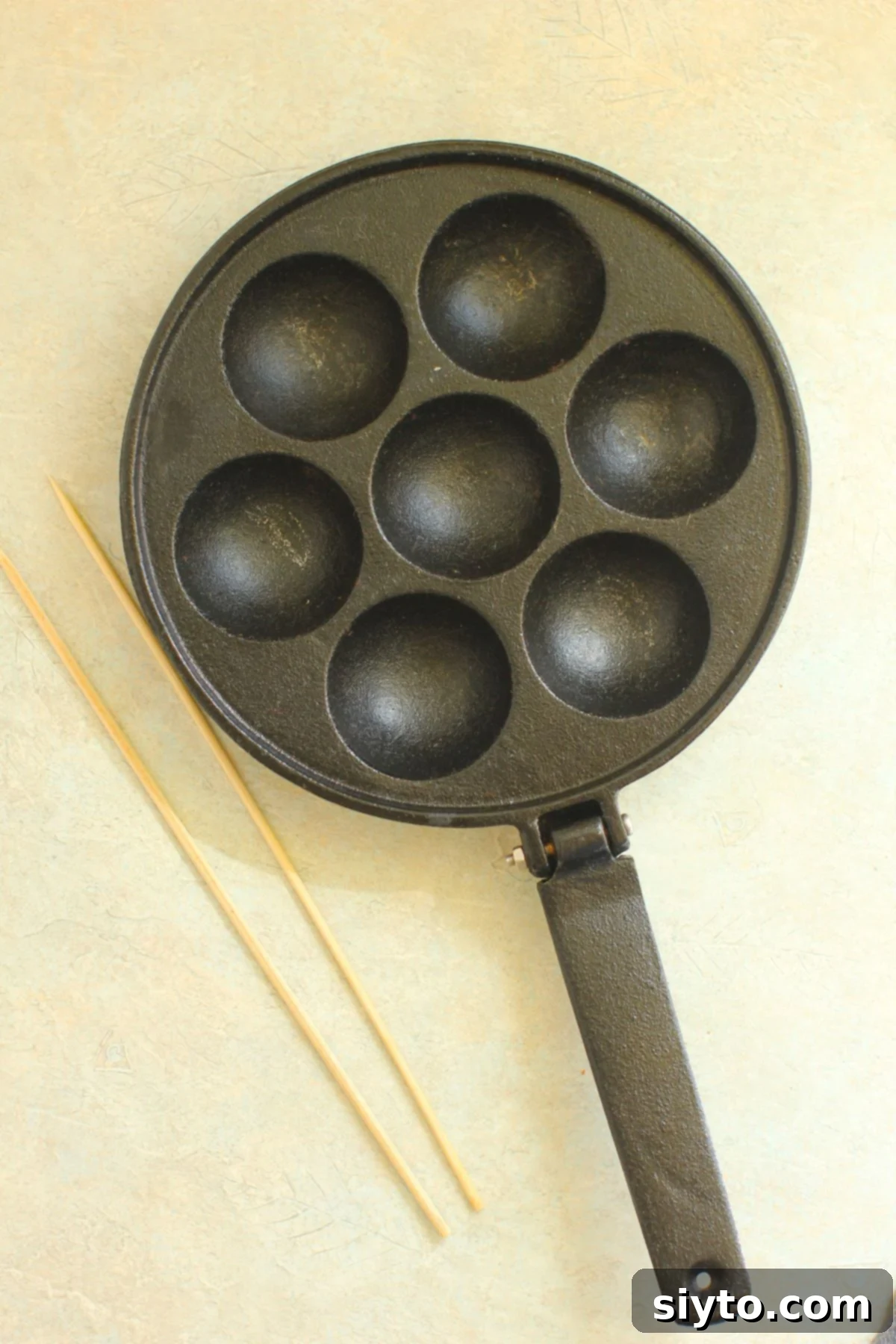
For adventurous cooks, if you possess a cast iron Aebleskiver pan, you can even take your dessert-making outdoors! Imagine crafting these special treats over a campfire or on a barbecue, adding a rustic charm to your dining experience. Discover how we elevated one of our famous campfire dinners by making Aebleskiver – it’s guaranteed to transform your camping adventures into a gourmet affair!
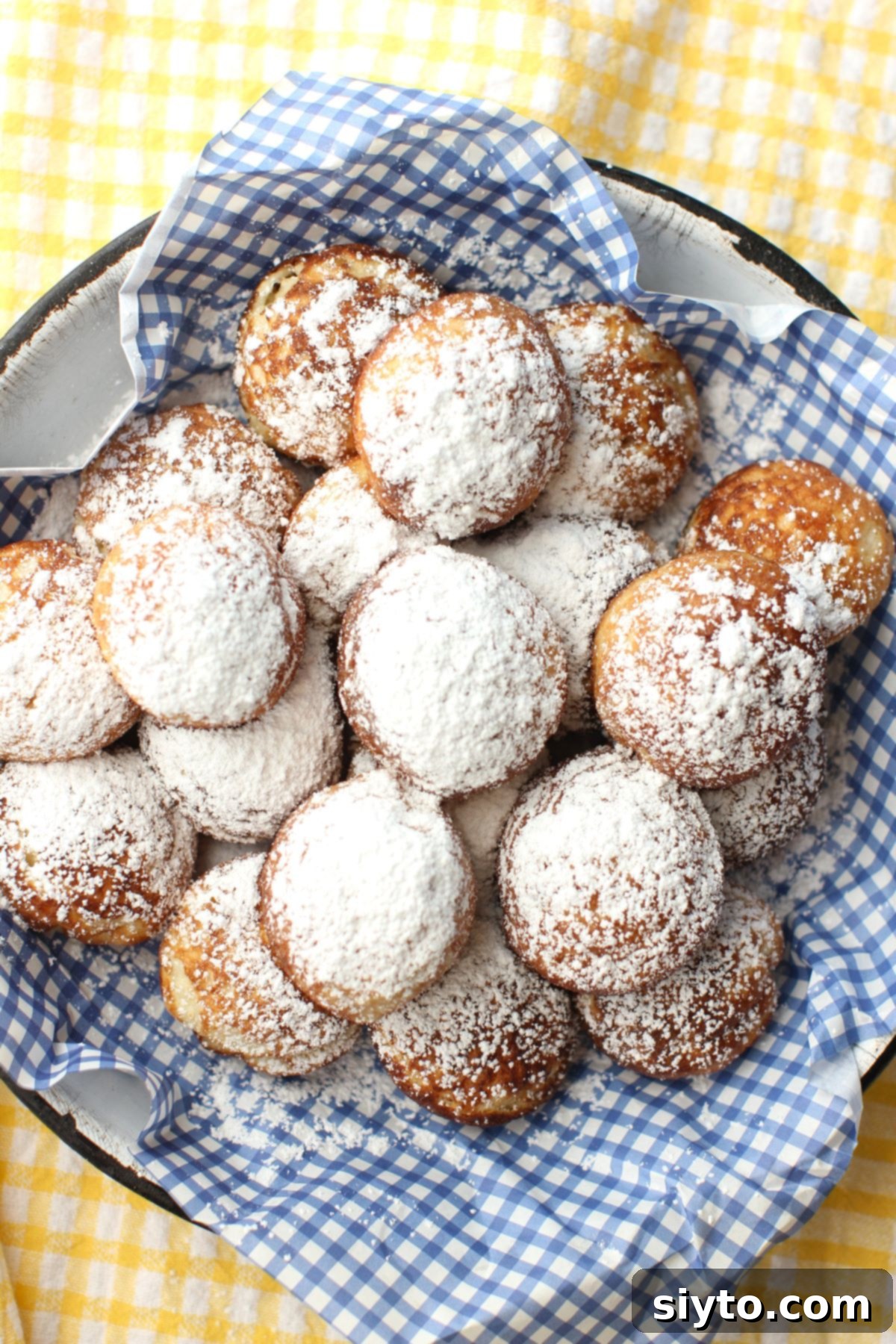
Crafting the Perfect Aebleskiver: Step-by-Step Guide
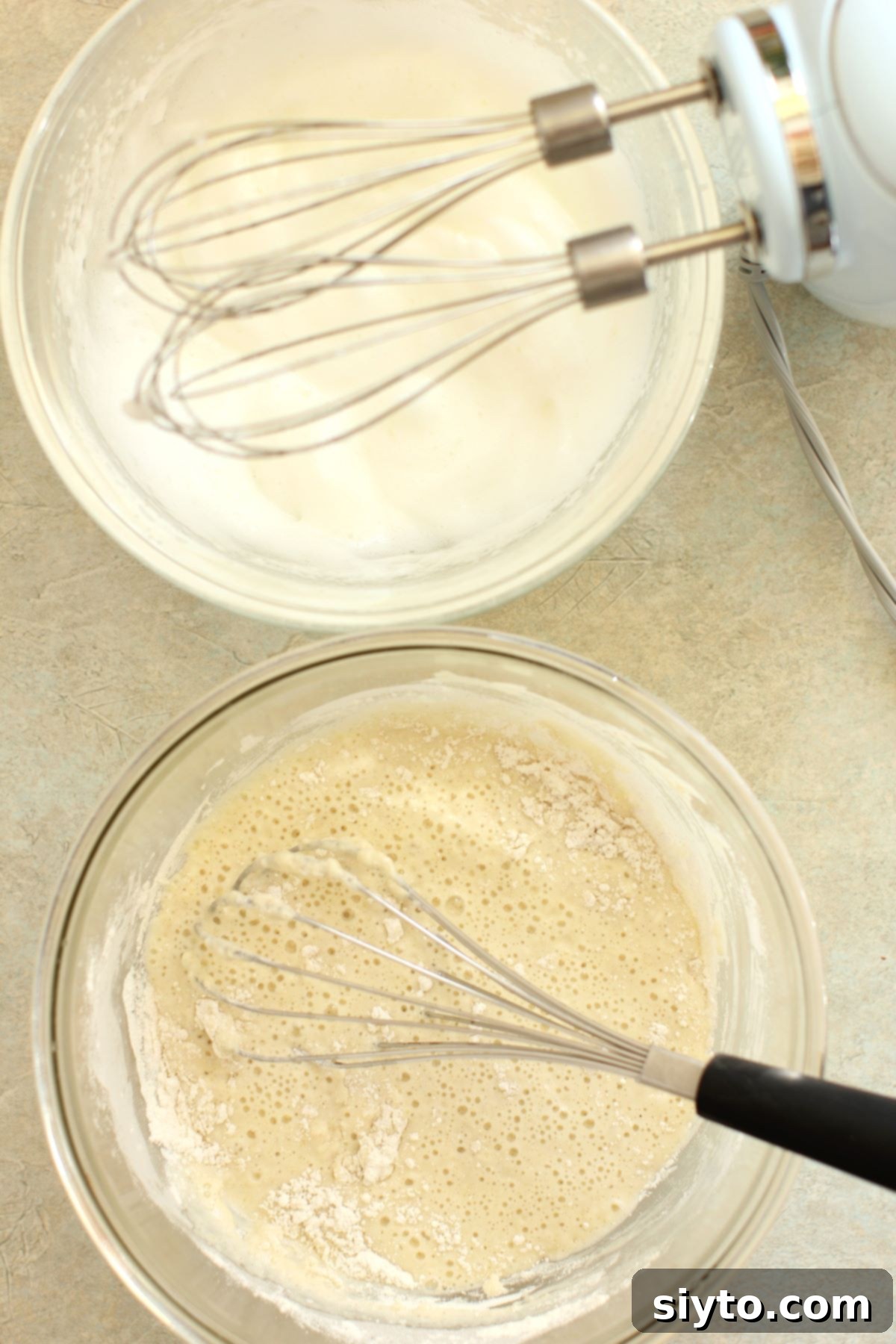
The journey to making delightful Aebleskiver begins with preparing a light and airy batter. First, carefully separate your eggs. In one bowl, whisk together the egg yolks with the wet ingredients such as milk, melted butter, sugar, and a touch of vanilla if you’re making sweet Aebleskiver. In a separate, clean bowl, whip the egg whites until they form stiff, glossy peaks. This crucial step is what gives Aebleskiver their wonderfully fluffy texture. Once the wet ingredients are combined, gently stir in the flour and baking powder until just incorporated, then delicately fold in the whipped egg whites, being careful not to deflate them. This creates a beautifully aerated batter, ready for cooking.
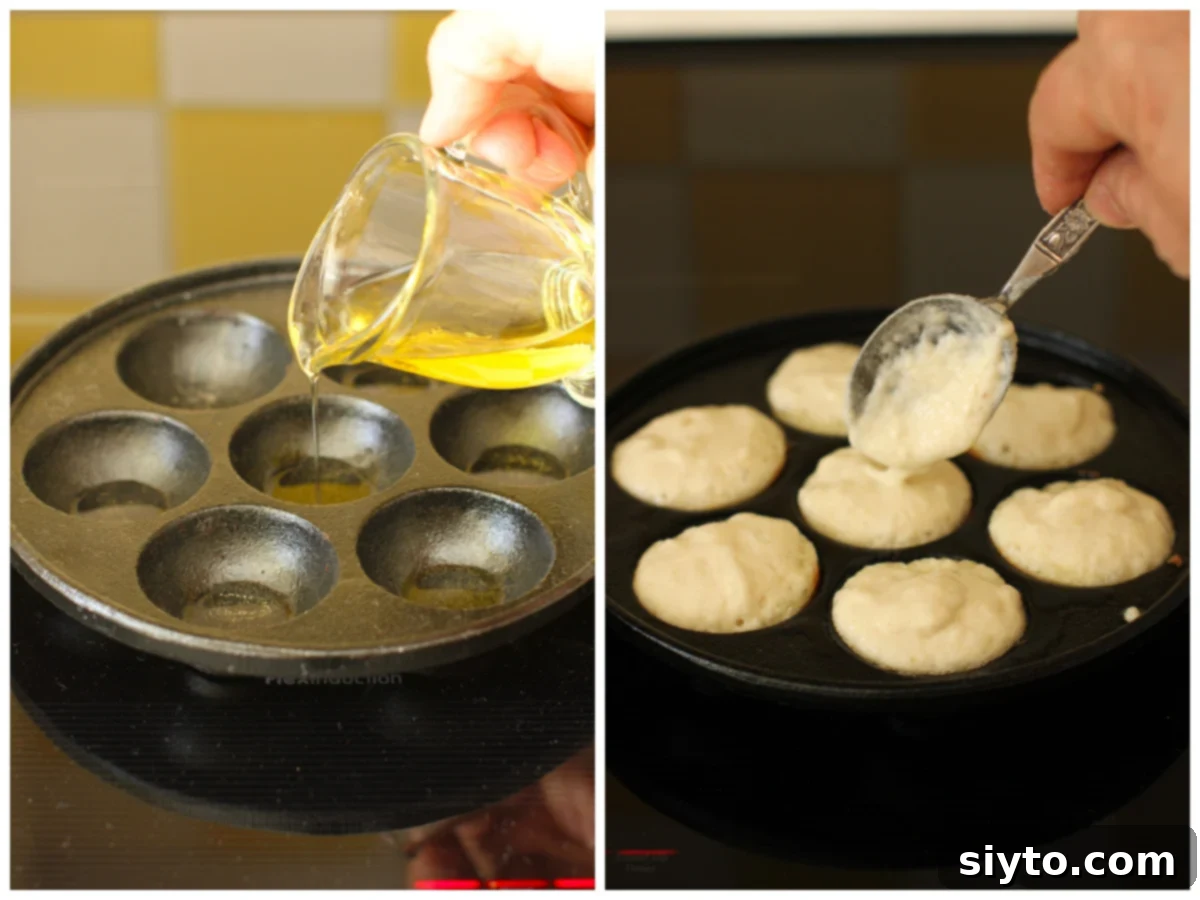
Next, it’s time to heat your Aebleskiver pan. Place it over medium heat and allow it to get thoroughly hot. Add a small amount of oil or a tiny cube of butter to each of the pan’s round indents, ensuring they are well-greased and ready. Once the fat is shimmering, spoon enough of your prepared batter into each hole to generously fill it right to the brim. Watch as the batter begins to bubble and set, signaling the perfect moment for the next exciting step.
The Art of Flipping Aebleskiver: A Skill to Master
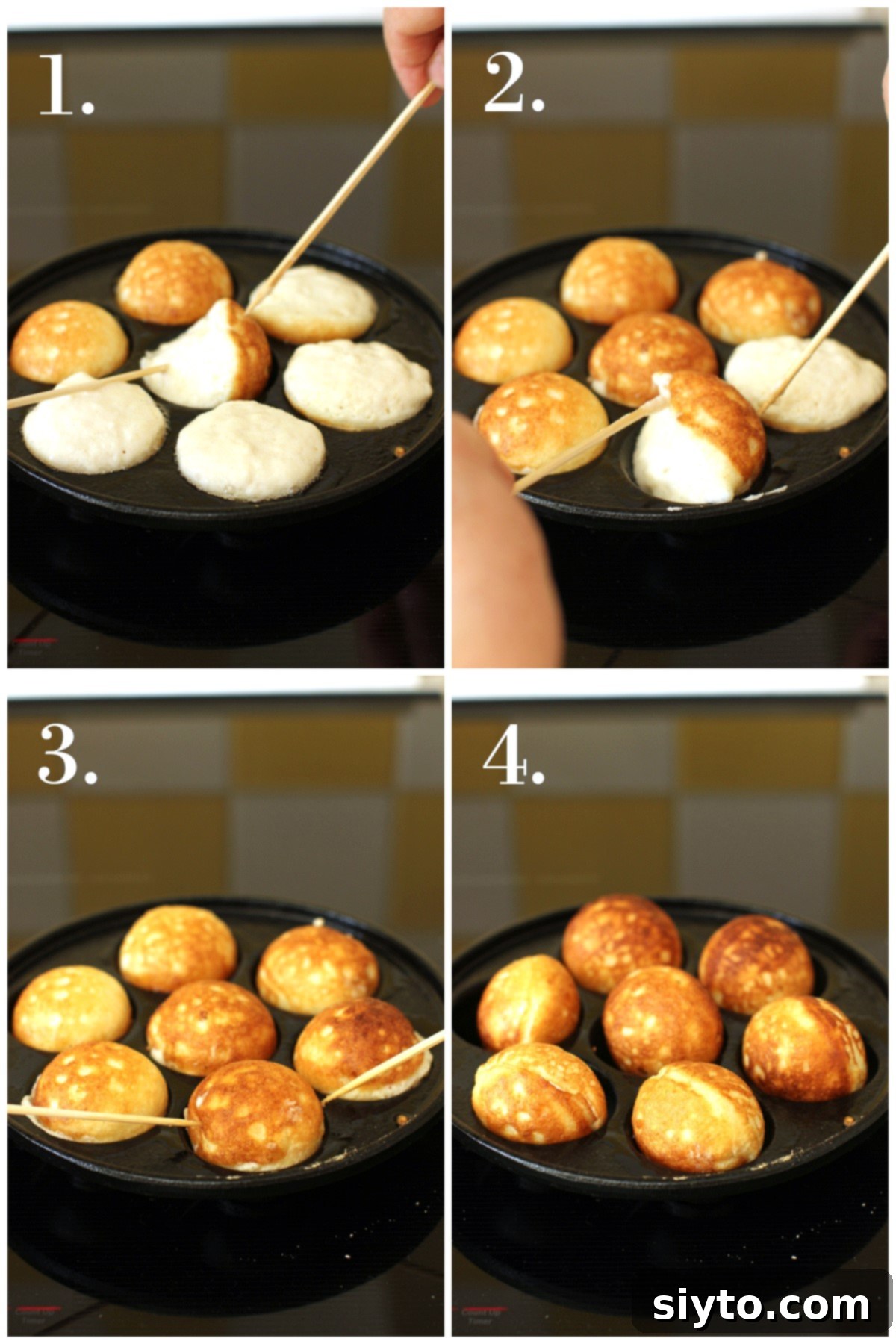
This stage of making Aebleskiver might initially feel a little challenging, but with just a bit of practice, you’ll quickly gain confidence and realize how straightforward it is. The key is to be decisive and swift! You’ll know the Aebleskiver are ready to be turned when you see the edges of the pancakes beginning to brown and set, even though the batter in the very center is still wet. This is your cue to act.
To flip, insert one bamboo skewer (or fondue fork) into the top edge of an Aebleskive. Gently lift it up, using a second skewer to guide the other side of the developing dough ball. The goal is to swiftly pull it up and flip it completely over, allowing the still-wet batter from the top half to flow down into the bottom half of the indent. This action is crucial for creating the characteristic spherical shape. As soon as it’s flipped, quickly tuck in any edges of dough that might be sticking out to ensure a neat, round ball. And just like that, you’ve successfully turned your first Aebleskive!
To ensure your Aebleskiver are thoroughly cooked through and beautifully golden all around, continue to turn them several times during the cooking process. Aim to position any lighter-colored or uncooked edges at the bottom of the wells, allowing them to brown evenly. The total cooking time for each batch will typically be around 6 to 8 minutes. You’ll know they are perfectly done when they are golden brown on all sides and a skewer inserted into the center comes out clean, indicating a fully cooked, fluffy interior.
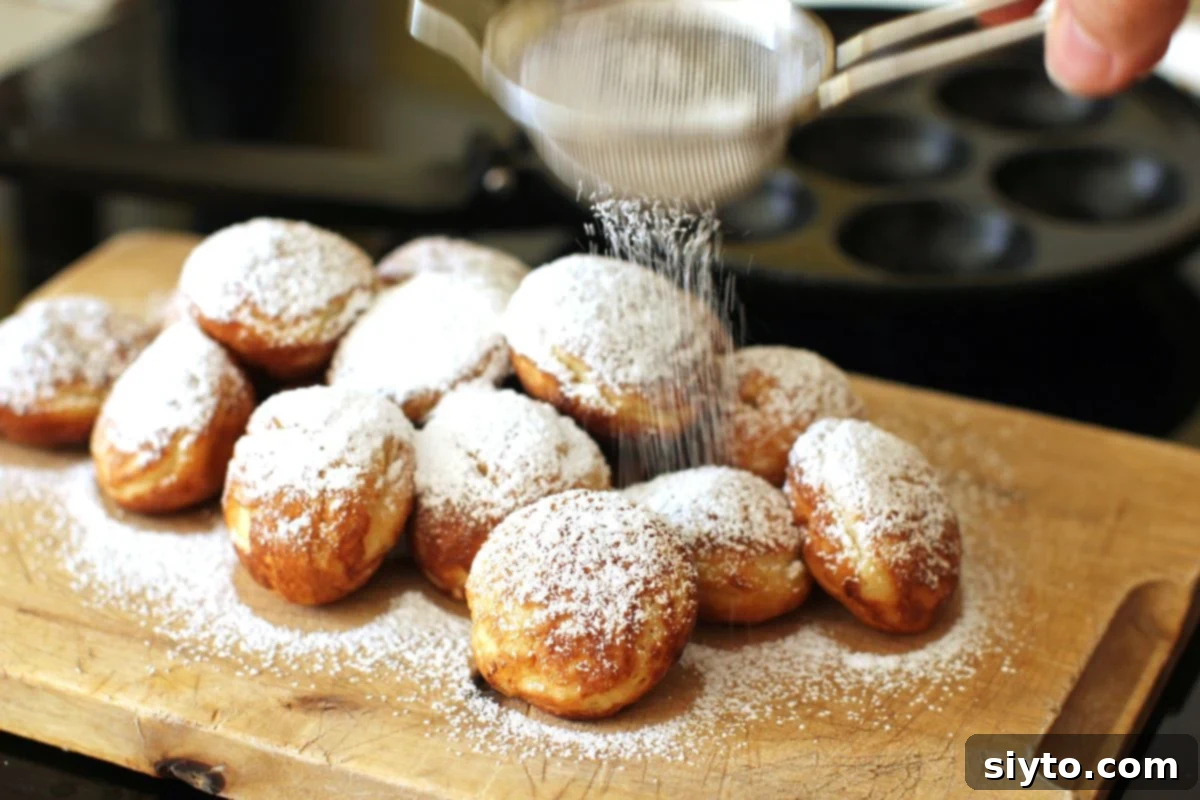
Once cooked to perfection, carefully remove the golden Aebleskiver from the pan using a skewer. Arrange them on a serving plate and immediately dust them generously with a fine layer of powdered sugar. The warmth of the Aebleskiver will allow the sugar to adhere beautifully, creating a classic presentation.
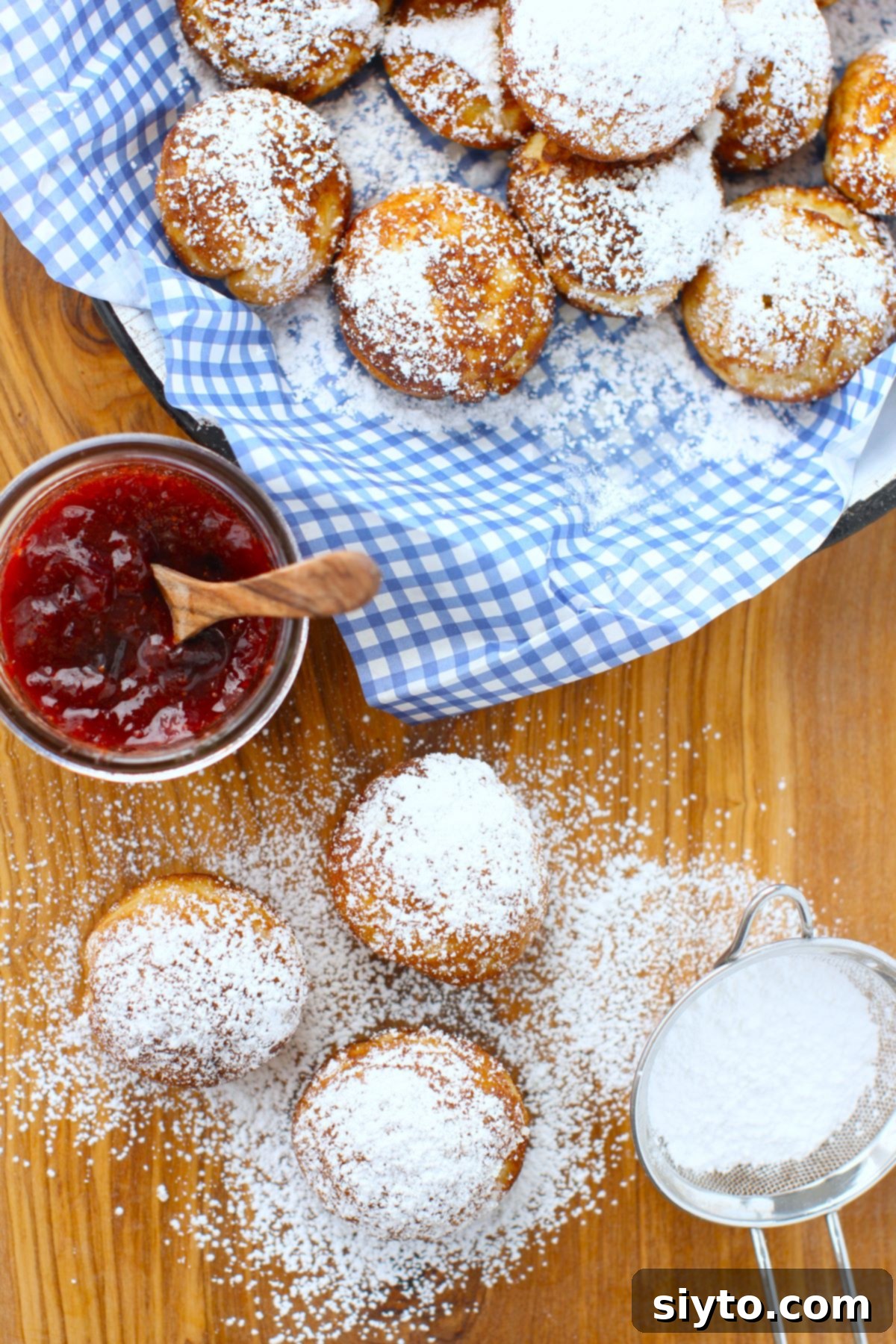
The best way to savor these delicious Danish pancake balls is to enjoy them immediately while they are still warm and fresh from the pan. Pair them with your favorite jam – whether it’s a tart berry jam or a sweet apricot preserve – for a truly authentic and comforting treat. Aebleskiver are perfect for breakfast, brunch, or a delightful dessert, bringing a touch of Danish hygge to your table.
Explore the diverse and wonderful Danish dishes expertly prepared by fellow Eat the World members this month and share your culinary adventures using #eattheworld. Find out how to join Eat the World here and embark on a delicious journey with us, exploring a new country’s cuisine each month right from your kitchen!
Amy’s Cooking Adventures: Frikadeller (Danish Meatballs)
Culinary Cam: Stegt Flæsk Med Persillesov
Kitchen Frau: Aebleskiver (Danish Pancake Balls)
A Day in the Life on the Farm: Poached Halibut in Orange Lemon Sauce over Braised Lettuce
Sugarlovespices: Pandekager (Classic, Thin Danish Pancakes)
Sneha’s Recipe: Salmon & Avocado Towers
Want to receive new Kitchen Frau recipes directly to your email as soon as they’re posted? Sign up here and you’ll get bits of news updates on what’s happening in my kitchen and garden, plus a handy and useful kitchen tip along with each recipe, too. (No spam ever.)
If you like my recipes, follow me on Instagram, Pinterest, X, and Facebook. You’d make my day. 😊
Guten Appetit!
Aebleskiver (Danish Pancake Balls)
Margaret Bose Johnson
Save to Pinterest
10 minutes
25 minutes
35 minutes
Dessert, Snack
Danish
21 balls
Equipment
- 1 Aebleskiver pan
- 2 bamboo skewers or forks
Ingredients
- 2 large eggs, separated
- 1 cup (240 ml) whole milk
- 2 tablespoons butter, melted
- 1½ teaspoons sugar (or 1 teaspoon honey)
- ¼ teaspoon fine sea salt
- ½ teaspoon pure vanilla extract, optional (omit for savory pancakes)
- 1 cup (240 g) gluten-free flour blend, or regular flour for non gluten-free
- ¾ teaspoon baking powder
- oil or butter for frying the Aebleskiver
- powdered sugar for dusting the Aebleskiver (or roll them in granulated sugar while hot)
- optional – small cubes of apple (½-inch/1 cm), spoonfuls of jam, chocolate chips, raspberries or other berries, or small cubes of cheese for savory pancakes to fill the pancakes
Instructions
- If using a cast iron Aebleskiver pan, preheat it on medium heat just before mixing the batter. This allows the pan to reach an even temperature.
- Separate the eggs, placing the whites into a small, clean mixing bowl. In a separate, larger bowl, whisk together the egg yolks, milk, melted butter, sugar, salt, and vanilla extract (if you’re making sweet Aebleskiver; omit for savory).
- Using an electric mixer or whisk, beat the egg whites until they form stiff but not dry peaks. Set them aside carefully.
- Add the flour and baking powder to the wet ingredients in the larger bowl and whisk just until combined. It’s okay if the batter isn’t perfectly smooth; overmixing can lead to tough Aebleskiver.
- Gently stir about one-third of the beaten egg whites into the batter to lighten it. Then, carefully fold in the remaining egg whites using a spatula, working until no streaks of white remain, but being careful not to deflate the mixture.
- Add approximately ¼ to ½ teaspoon of oil or a small cube of butter to each well of the aebelskiver pan. Heat the pan until the oil is shimmering and very hot, ensuring optimal non-stick cooking.
- Using a tablespoon or a small scoop, fill each well of the Aebleskiver pan right to the top with batter. This generous filling is key to achieving a full, round shape.
- Cook on medium heat, carefully monitoring so they don’t brown too quickly on the outside before cooking through. Once you see the edges starting to brown and set, use two bamboo skewers to quickly and gently flip each Aebleskiver halfway over. The uncooked batter from the top will flow into the well and rise to fill the center as it bakes. Tuck in any edges that stick out after flipping to maintain a neat ball shape. This step may require a few attempts to perfect, but it becomes very satisfying once mastered.
- Continue to cook, turning the pancake balls in the wells several times to ensure all sides are golden brown and evenly cooked. The Aebleskiver are done when they are brown all around, and a skewer inserted into one comes out clean, indicating a fully cooked interior.
- Serve the Aebleskiver immediately while still warm. Dust them generously with powdered sugar and serve with your favorite fruit jam for the ultimate Danish experience.
- Option: Filling Aebleskiver. For a delightful surprise, you can fill the Aebleskiver. Add about a tablespoon of batter into the hot, oiled wells of the pan. Then, place a small cube of apple (½-inch/1 cm), a half-teaspoon of jam, a berry, a few chocolate chips, or a small piece of chocolate into the center. Cover the filling with more batter to fill each well completely. Proceed to flip and cook as you would with unfilled Aebleskiver. For savory Aebleskiver, omit the vanilla from the batter and fill with a small cube of cheese or ham.
Notes
Flavor Variation: For a delightful aromatic twist that is popular in Denmark, add ½ teaspoon of ground cardamom and the finely grated zest of half a lemon to the batter. This variation adds a wonderful fragrant depth to your Aebleskiver.
Tried this recipe?Let us know how it was!
Explore More Global Flavors: My Past ‘Eat the World’ Recipe Challenge Posts
(in alphabetical order)
- Afghanistan: Aush (Afghan Noodle Soup)
- Argentina: Red Chimichurri Sauce
- Australia: Anzac Biscuits (Crispy Oatmeal Cookies)
- Bangladesh: Chingri Masala (Shrimp Curry)
- Bermuda: Fish Chowder
- Bulgaria: Patatnik (Savoury Potato and Cheese Pie)
- Cambodia: Noum Kong (Cambodian Rice Flour Doughnuts)
- China: Kung Pao Chicken
- Colombia: Pan de Yuca (Warm Cheese Buns)
- Dominican Republic: Empanaditas de Yuca (Cassava Empanadas)
- Ecuador: Pescado Encocado (Fish in Coconut Sauce)
- Egypt: Fava Beans and Feta
- England: Gluten Free Fish and Chips and Mushy Peas
- Ethiopia: Four Ethiopian Recipes for a Fantastic Feast
- Fiji: Spiced Sweet Potato and Banana Salad
- Finland: Lohikeitto (Creamy Salmon, Potato, and Dill Soup)
- France: Axoa d’Espelette (A Simple Stew from the Basque Country)
- Georgia: Charkhlis Chogi (Beets with Sour Cherry Sauce)
- Greece: Moussaka
- Guyana: Fried Tilapia in Oil & Vinegar Sauce (fish dish)
- Hungary: Túrós Csusza (Pasta Scraps with Cottage Cheese)
- India: Kerala Upma (Fluffy, Kerala Style Breakfast Upma Recipe)
- Indonesia: Nasi Goreng (Indonesian Fried Rice with Chicken)
- Iraq: Tepsi Baytinijan (Eggplant & Meatball Casserole)
- Ireland: Dublin Coddle (A Tasty Sausage and Potato Stew)
- Israel: Cucumber, Feta, and Watermelon Salad
- Jamaica: Rice and Peas (Coconut Rice and Red Beans)
- Japan: Chawanmushi (Steamed Savory Egg Custard)
- Kenya:Maharagwe with Ugali (Red Beans with Cornmeal Slice)
- Laos: Ping Gai (Lao Grilled Chicken Wings)
- Lesotho: Chakalaka & Pap (Veggie & Bean Stew with Cornmeal Polenta)
- Libya: Kufta bil Batinjal (Eggplant & Meat Rolls in Tomato Sauce)
- Luxembourg: Stäerzelen (Buckwheat Dumplings)
- Malta: Ross il Forn (Baked Tomato Rice)
- Mexico: Cochinita Pibil Tacos (Pit Barbecued Pig to Make in Your Oven)
- Morocco: Moroccan Shredded Carrot Salad with Oranges
- Netherlands: Boerenkool Stamppot (Kale-Potato Mash with Sausages & Pears)
- New Zealand: Classic Pavlova
- Poland: Polish Honey Cake
- Portugal: Tuna and Sardine Pâtés
- Puerto Rico: Piña Colada Cocktail
- Scotland: Cranachan (Raspberry, Whisky & Oat Cream Parfaits)
- Senegal: Mafé (Beef and Peanut Stew)
- Slovakia: Bryndzové Halušky (Potato Dumplings with Cheese & Bacon)
- Spain: Tortilla de Patatas (Potato Tortilla/Frittata)
- Sudan: Peanut Butter Creamed Spinach & Peanut Meringue Cookies
- Sweden: Swedish Meatballs with Cream Gravy
- Switzerland (Christmas): Basler Leckerli Cookies
- Thailand: Shrimp Laksa (Khung)
- Trinidad & Tobago: Peanut Butter Prunes
- Turkey: Çilbir (Scrambled Eggs with Garlic Yogurt)
- Ukraine: Buckwheat Kasha with Beef
- United States (Soul Food): Smothered Pork Chops
- Uruguay: Torta de Fiambre (Baked Ham & Cheese Sandwiches)
- Vietnam: Caramelized Pork Rice Bowls
- Wales: Welsh Cakes (Skillet Cookies with Nutmeg & Currants)