Handmade Scotch Eggs: Your Essential Guide to a Whimsical Scottish-Inspired River Picnic
Embark on a culinary adventure with us as we craft delectable Scotch Eggs – perfect for an enchanting, mystical Scottish-inspired picnic by the river. Though these savory delights don’t originate in Scotland, they are a beloved British classic: perfectly boiled eggs lovingly wrapped in seasoned sausage meat, then expertly crumbed and fried to a golden crisp. They offer a truly magnificent treat for any occasion, whether it’s a leisurely picnic, a convenient packed lunch, or a satisfying light meal. Discover our simple, foolproof techniques that guarantee easy preparation and impressive results, making you the star of your next outdoor gathering.
There are those rare, magical autumn days when the air carries a dreamy mist, painting the landscape with soft, ethereal hues. On such days, the call of the river is irresistible, beckoning you to immerse yourself in nature’s tranquility. What better way to answer that call than with a carefully curated picnic, filled with delicious food and cherished company?
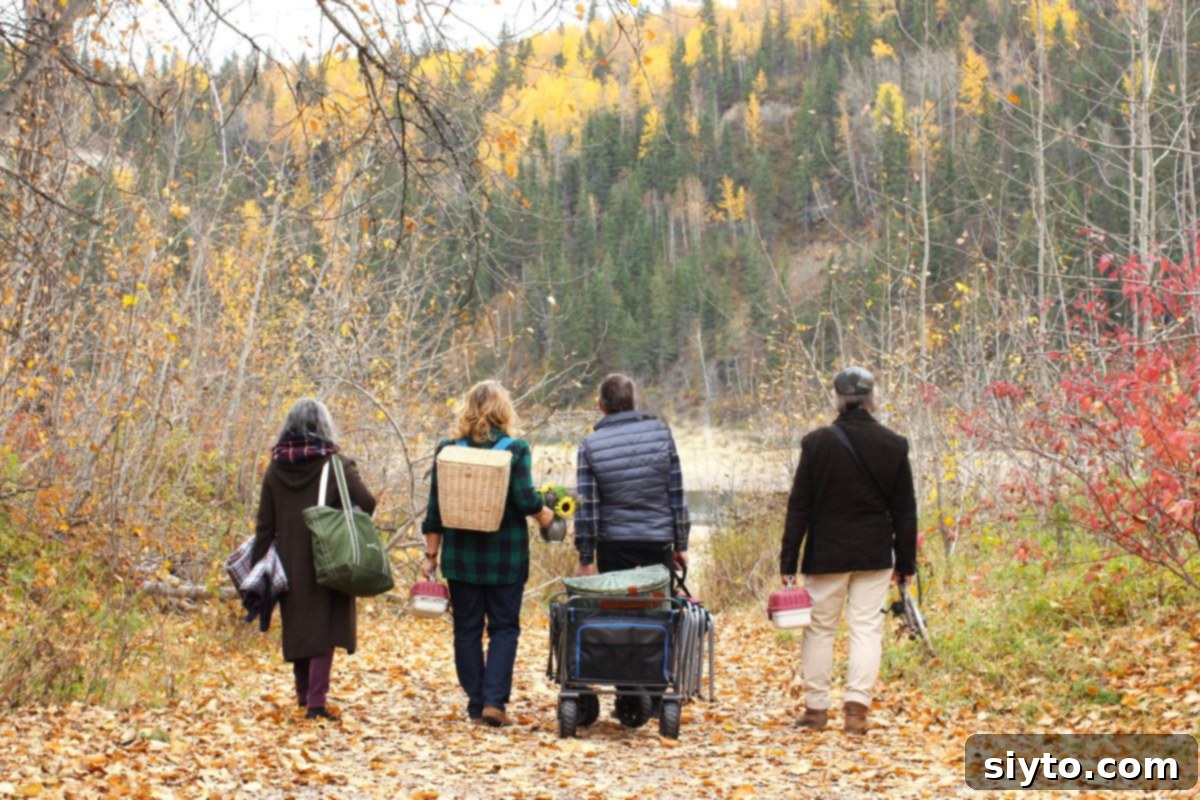
Good friends + a cooler full of tasty food + a blanket or two + fishing gear + a beautiful location = a truly memorable afternoon.
Such an afternoon promises the simple joys of fall: the crunch of vibrant leaves underfoot, the rhythmic plink of skipping rocks across the water’s surface, lazy conversations drifting on the breeze, the hopeful anticipation of fishing (even if no fish are caught!), and an abundance of delicious nibbles and comforting sips. It’s these moments that nourish the soul and create lasting memories.
Recently, we had the pleasure of gathering with our dear friends, Nicoletta and Loreto from SugarLoveSpices, for a magnificent autumn picnic. We four share a deep appreciation for picnicking together, always seeking out charming local spots and collaborating on delightful culinary menus. This time, our compass led us to a beloved site on the banks of the North Saskatchewan River – a place steeped in countless wonderful family picnic memories over the years.

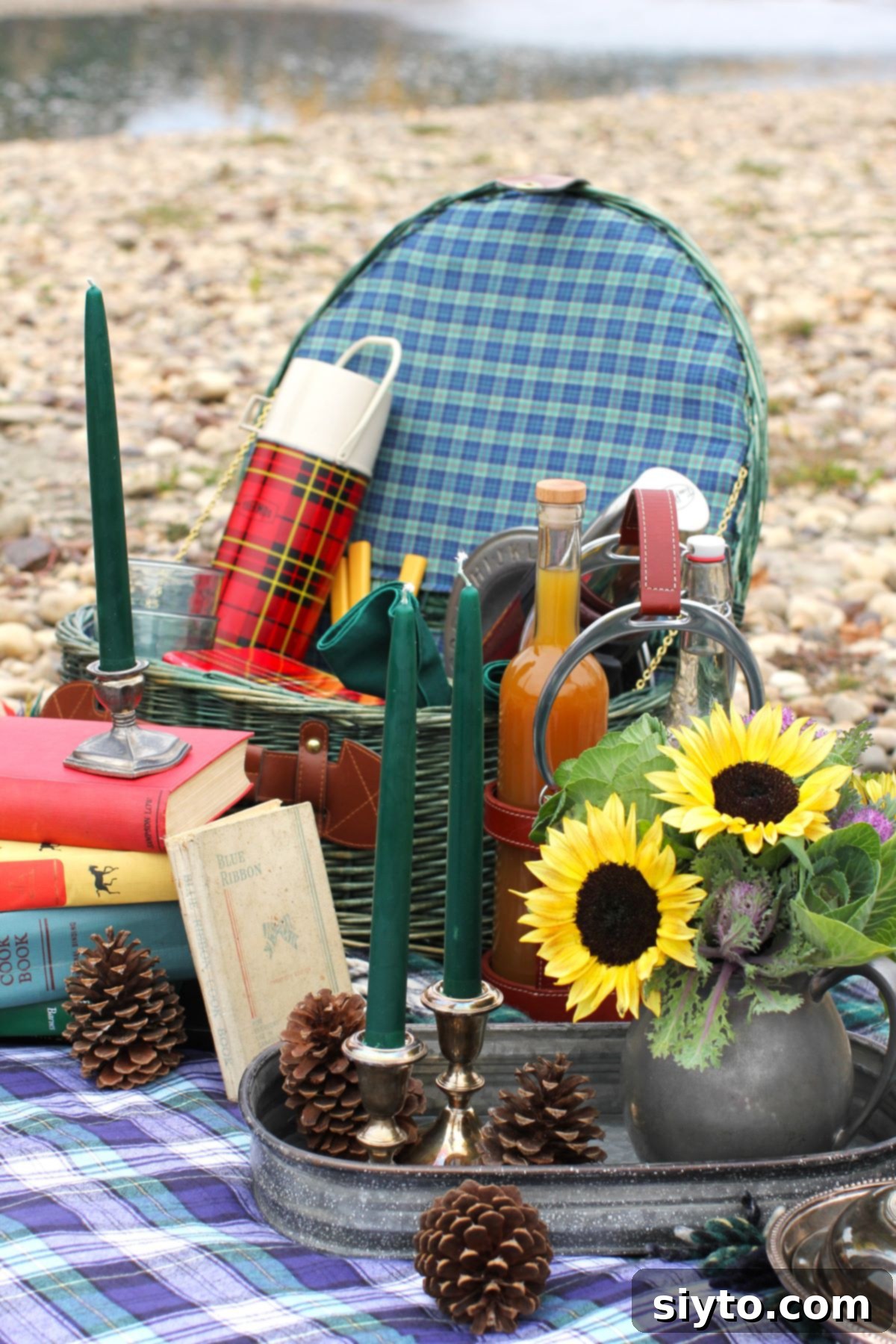
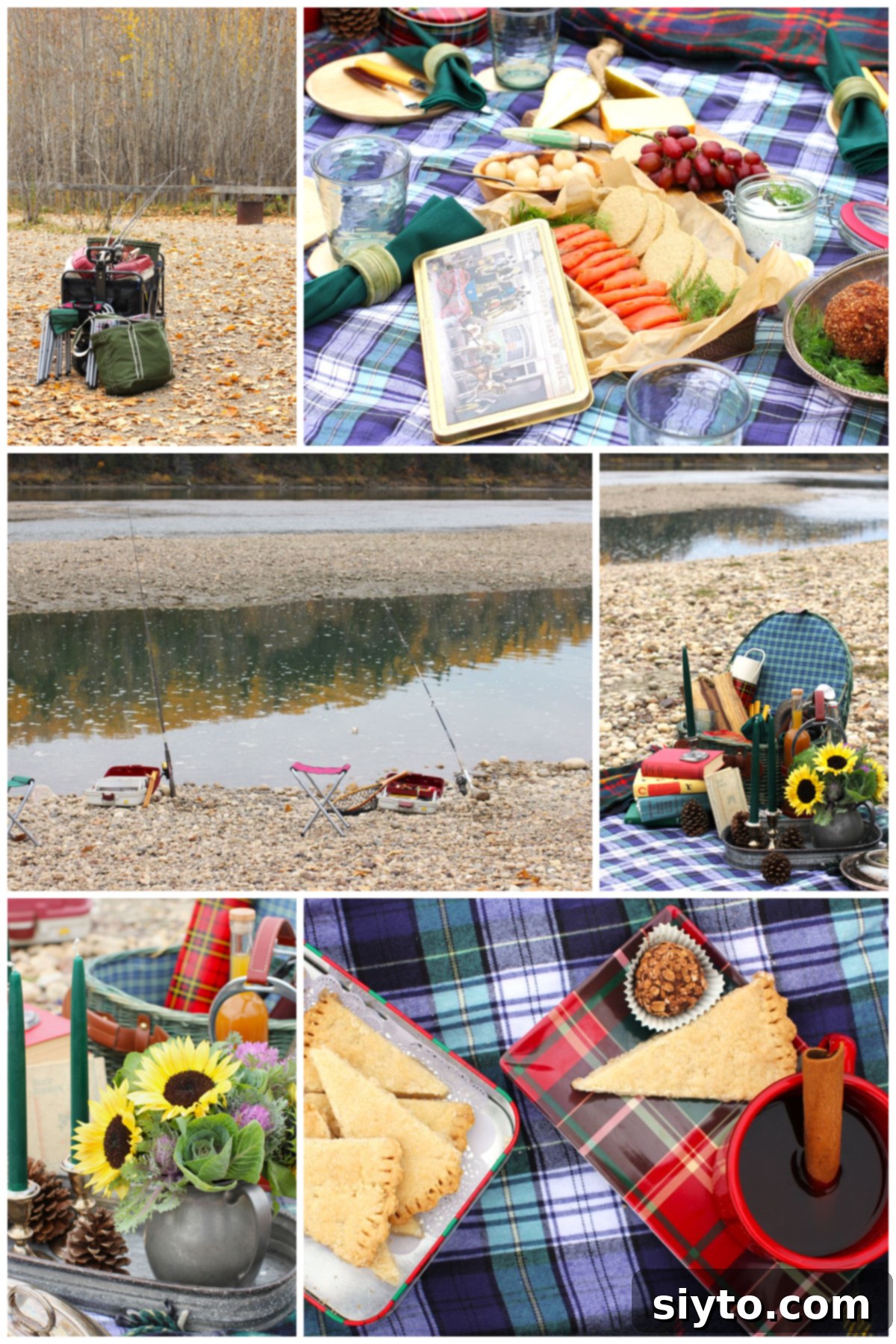
The enchanting misty weather and the romantic ambiance of the river setting immediately transported our thoughts to the rugged beauty of Scotland, making a Scottish-themed picnic feel absolutely perfect. It was a joyous treasure hunt through our cupboards as we unearthed delightful accessories to bring our vision to life. We carefully selected a pair of cozy plaid woolen blankets and a classic cotton tablecloth, complemented by charming wicker baskets, antique pewter, and tarnished silver dishes. Our picnic basket, a beautiful woven green creation, held wooden plates, durable acrylic glasses, rustic tin cups, and soft dark green cotton napkins. To add a touch of nature’s artistry, we gathered a handful of majestic pinecones along our walk, scattering them thoughtfully across our spread.
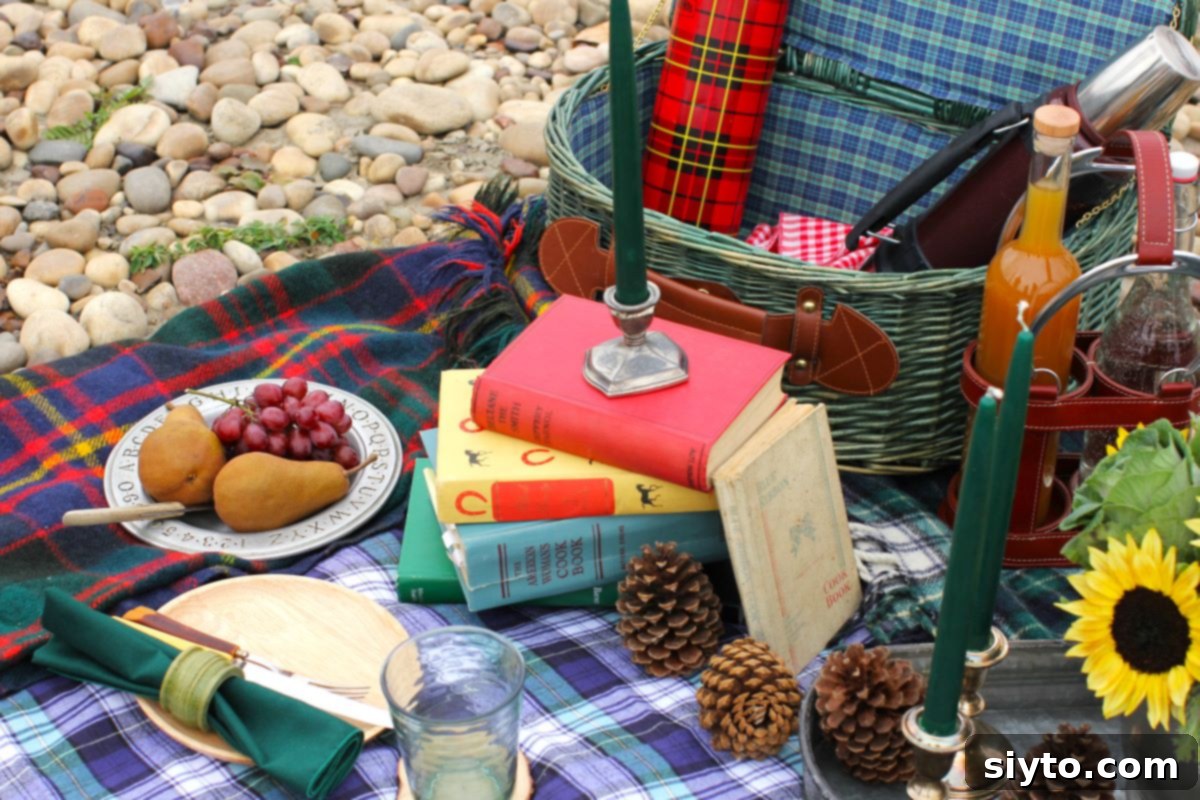
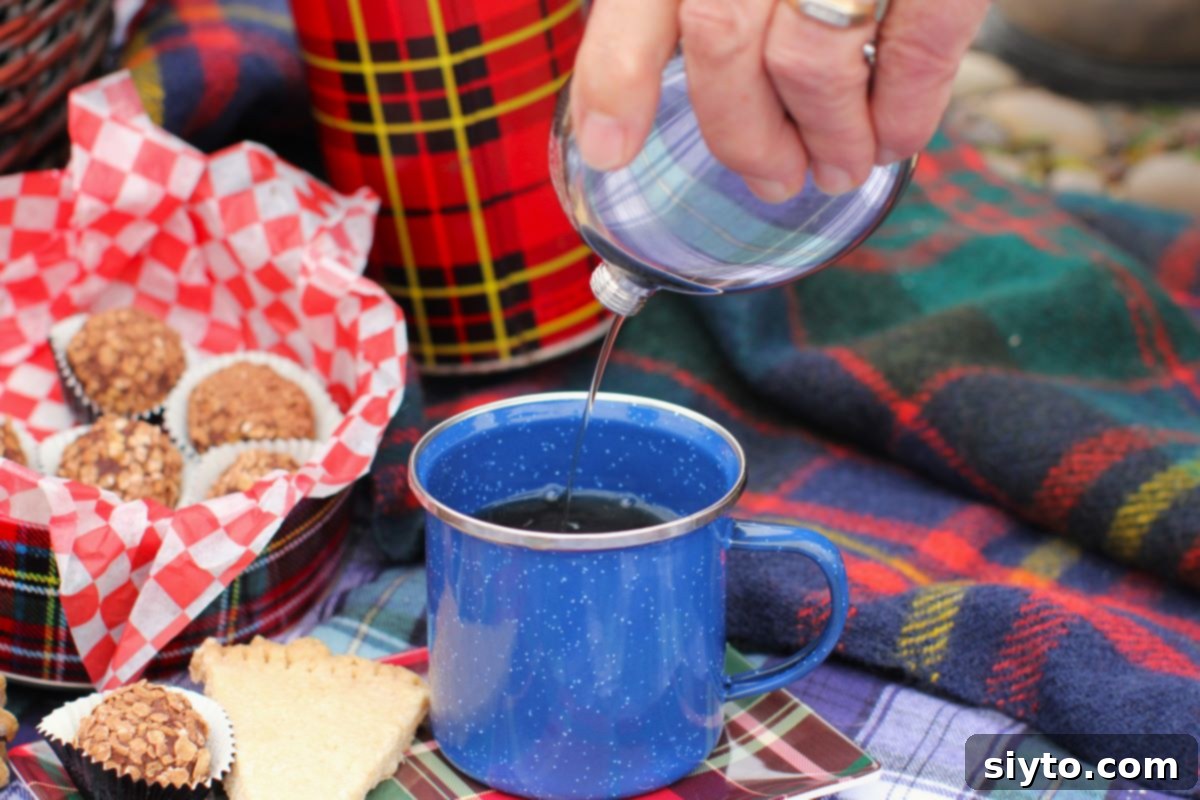
Our trusty thermoses were brimming with comforting hot tea and crisp, cold apple cider, ensuring we had the perfect beverages for the cool autumn air. We have a fondness for collecting vintage cookie tins from thrift stores, and these proved ideal for packing our delicious picnic fare, with layers of wax paper ensuring everything stayed fresh and protected. Fresh flowers, on this occasion vibrant sunflowers and elegant flowering kale, nestled in a pewter pitcher, provided a bright contrast against the rich Scottish plaid. For a touch of relaxation and intellectual pursuit, we brought along a few flickering candles and a stack of our favorite old books, allowing Nicoletta and me to leisurely peruse them while the guys enjoyed their fishing.

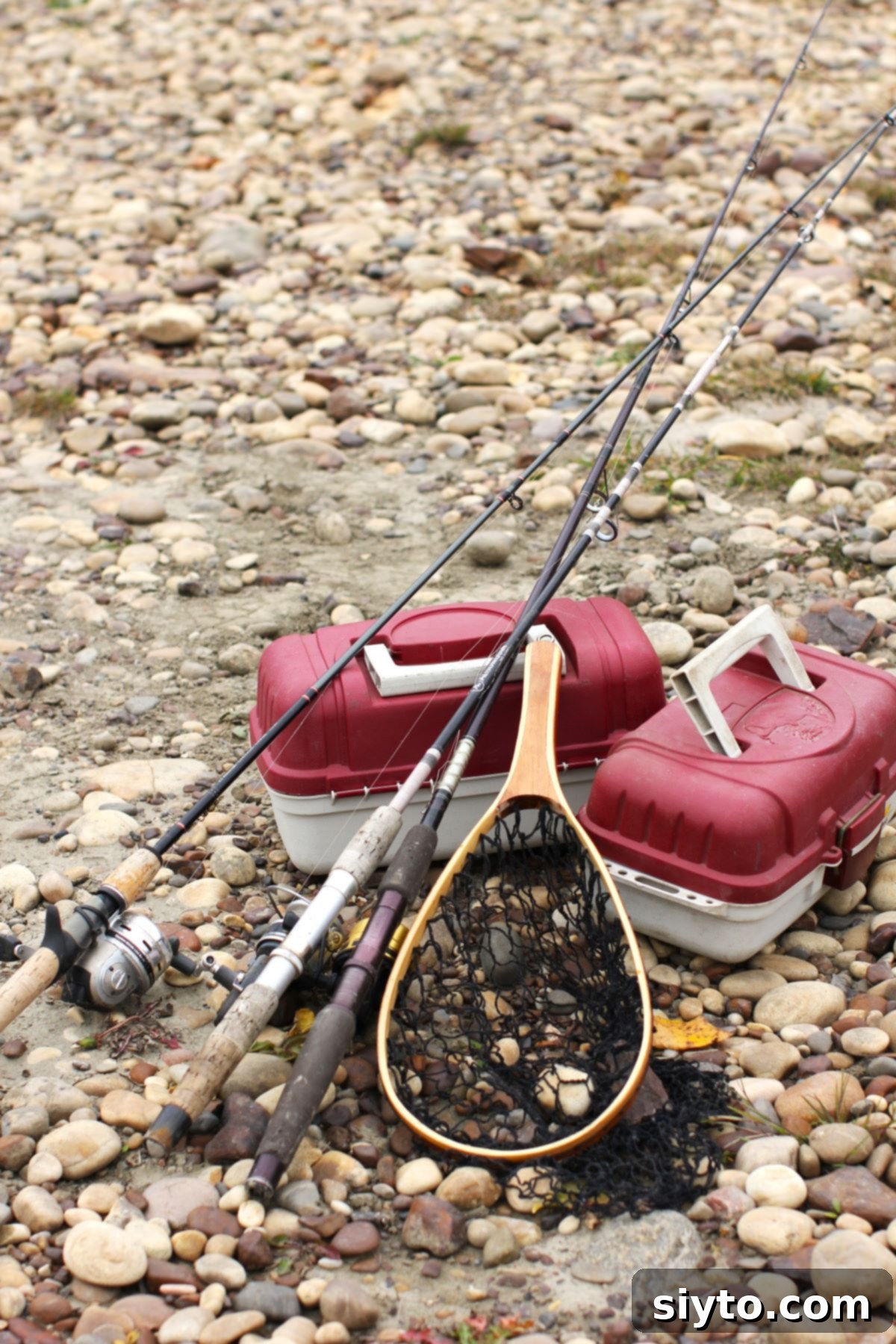
Raymond meticulously packed his dad’s old tackle boxes, and he and Loreto brought their fishing rods, eager for a peaceful afternoon by the water. With the river running low at this time of year, fishing from the shore was remarkably easy. While no fish were fortunate enough to be caught on this particular day, we’re quite certain that a few of the world’s lingering problems were thoughtfully debated and undoubtedly solved during their serene angling efforts.
As for Nicoletta and me, our souls found true restoration. We indulged in the simple luxury of lounging on the smooth river rocks, the gentle burbling of the water providing a soothing soundtrack. The cheerful chirping of birds in the trees behind us offered a lively accompaniment as we contentedly thumbed through old cookbooks, finding inspiration and peace in equal measure. It was an idyllic scene, a perfect escape from the hustle and bustle of everyday life.
The Perfect Scottish Picnic Menu
When we set out to plan our Scottish-inspired picnic menu, Scotch Eggs were the very first item that sprang to mind. Their heartiness, satisfying nature, and perfect portability make them an absolute must-have for any outdoor feast. They are the quintessential picnic food, offering both substance and incredible flavor.
Scotch Eggs with Zesty Mustard
Authentic Oatcakes with Smoked Salmon and Herbed Cream Cheese
Smoked Cheddar Cheese, Tangy Pickled Onions
Sweet Bosc Pears, Juicy Red Grapes
Homemade Shortbread Cookie Wedges, Indulgent Whisky Oat Truffles
Beverages: Fresh Apple Cider, Warming Black Tea
Delving into Our Picnic Basket: Culinary Delights
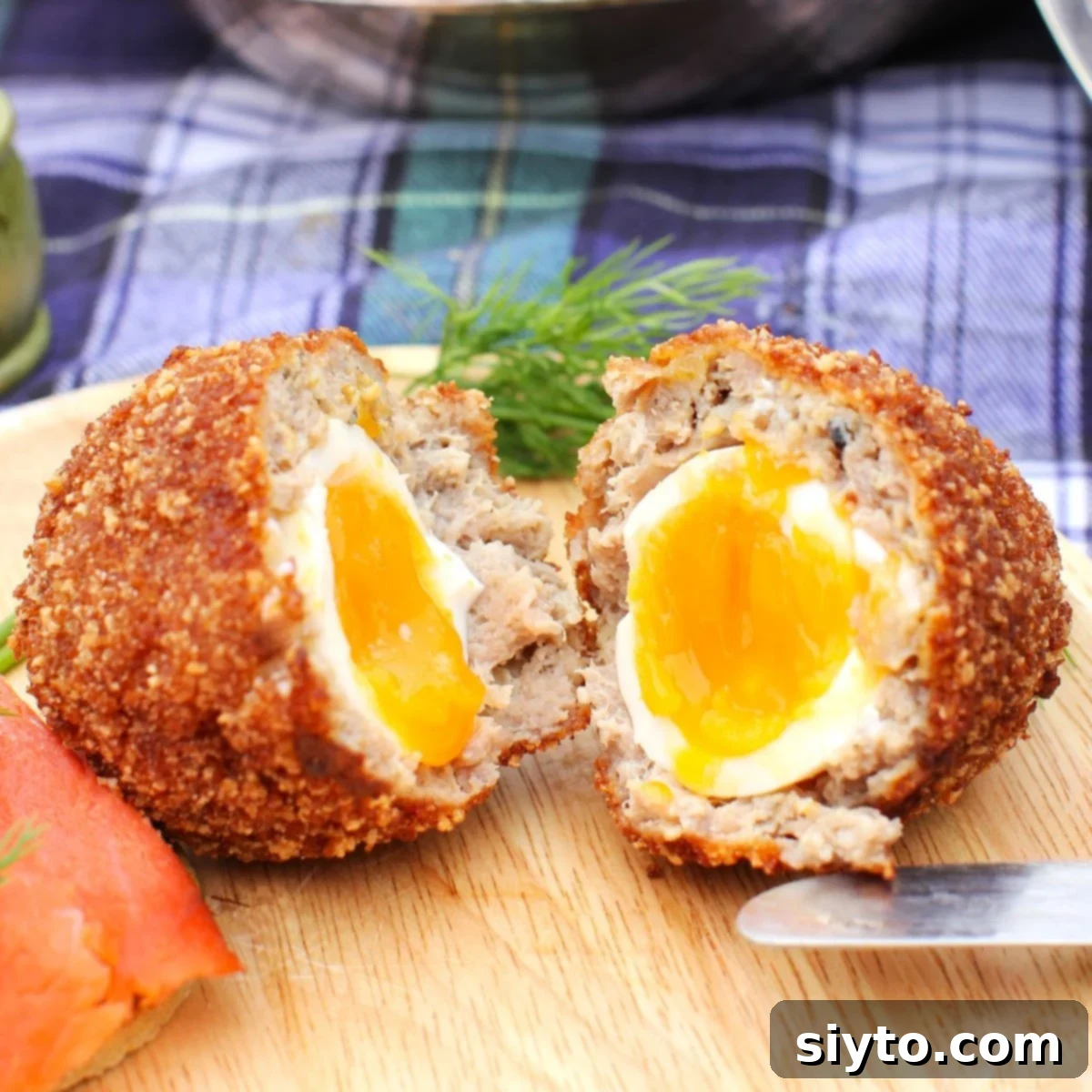
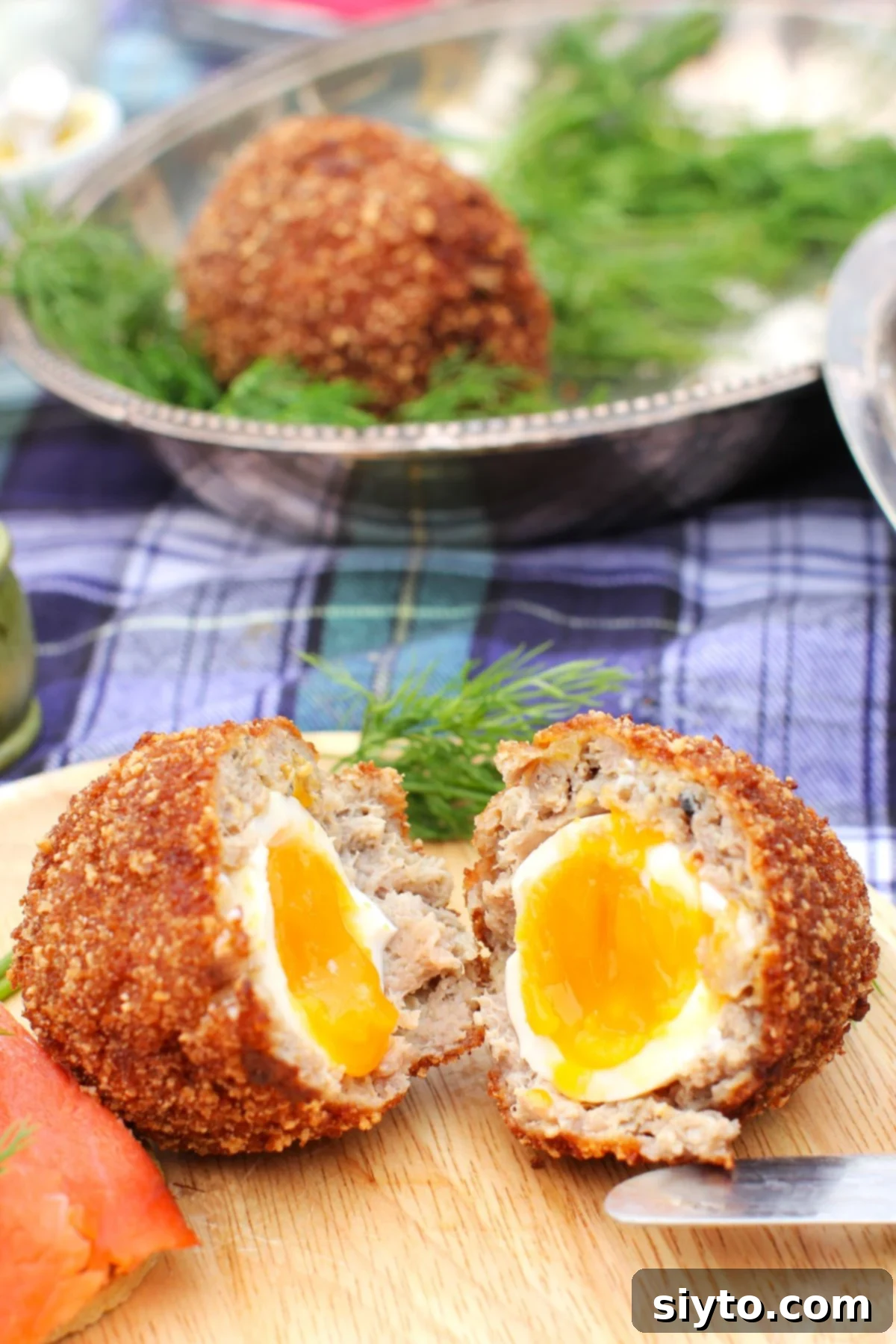
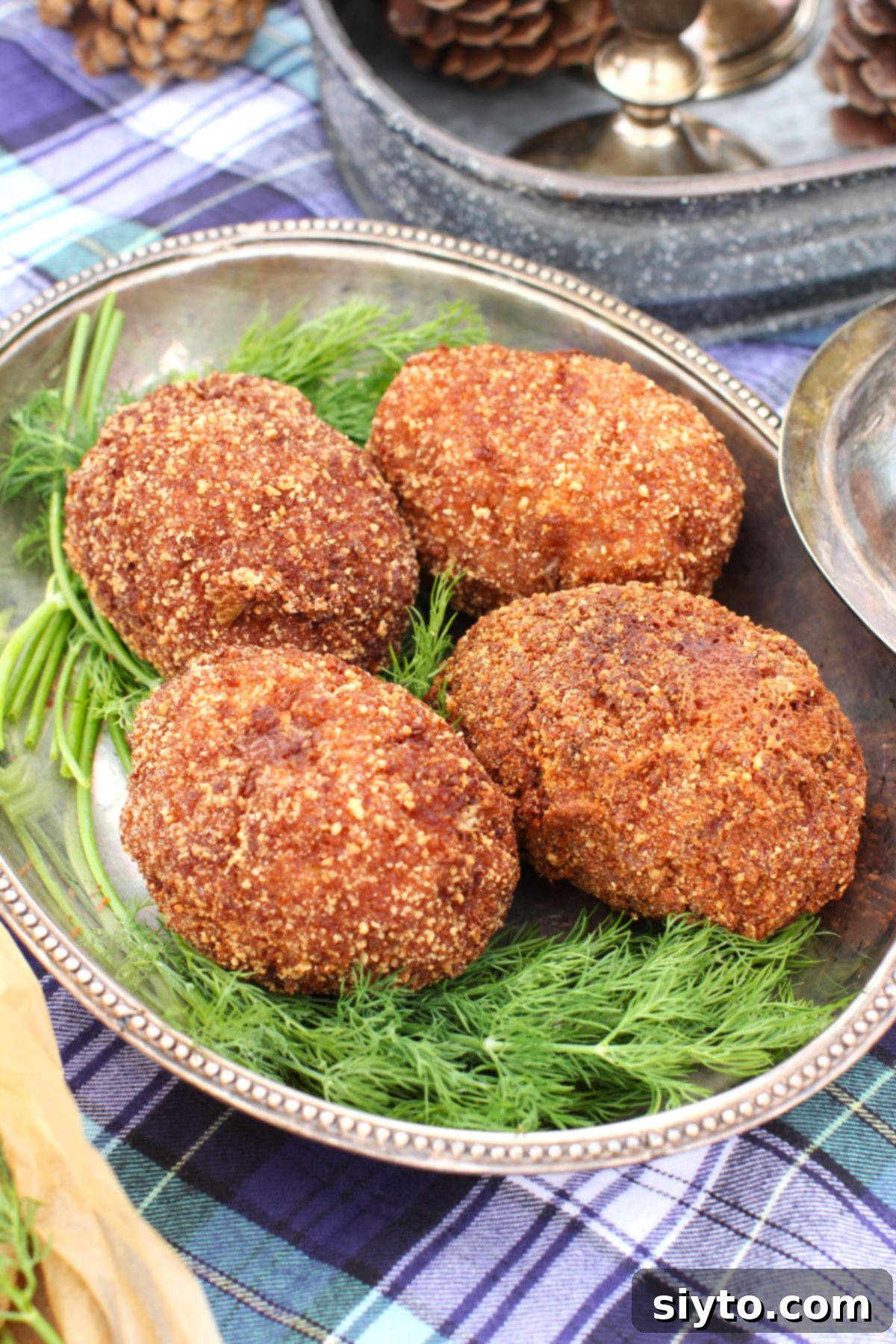
For our serene river picnic, we opted for a menu that was both simple and deeply satisfying. The undeniable stars of the spread were the Scotch Eggs, served at a delightful room temperature. Cutting into one of these culinary treasures revealed a creamy, perfectly cooked yolk, gently oozing out like thick, golden lava. Each bite offered a symphony of textures and flavors: the satisfying crunch of the crumbed shell yielding to the piquant, savory sausage meat, which perfectly encased the rich egg within. A dab of sharp, zesty mustard provided the ideal counterpoint, elevating the entire experience.
Authentic Scottish oatcakes were another indispensable item. We sourced genuine wheat-free oatcakes, made solely with oatmeal, from the British import section of our local grocery store. To complement these, we picked up some exquisite smoked salmon from Costco – a food for which Scotland is justly famous. We layered this luxurious salmon onto the oatcakes, spread generously with a simple, aromatic herbed cream cheese. The delicate crumble of the oatcakes, the vibrant tang of the cheese, and the sumptuously rich, smoky flavor of the salmon combined to create a truly heavenly texture and flavor pairing that transported us straight to the Scottish coast.
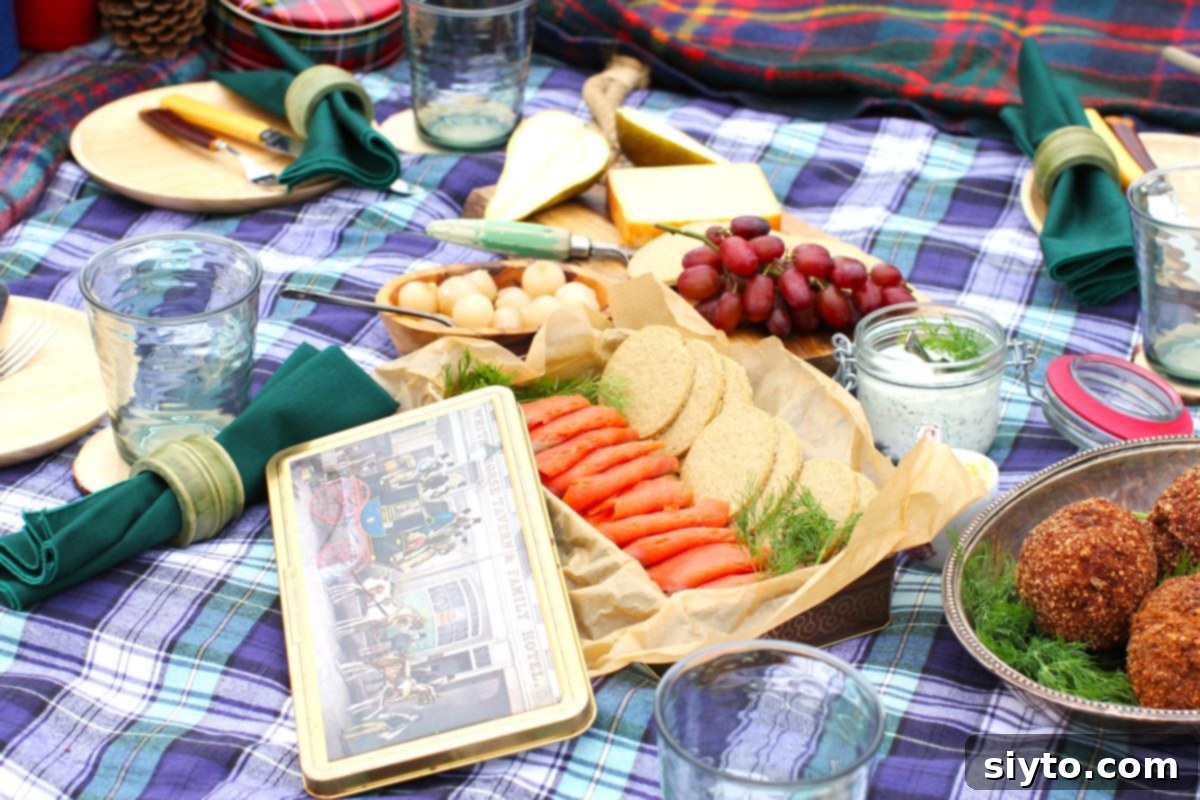
To round out our savory selection, we included slices of creamy, smoked cheddar cheese, offering a deep, robust flavor that paired wonderfully with the rest of the meal. Alongside, we added sharply pickled onions, also conveniently found in the British import aisle, providing a welcome tangy bite. Fresh, juicy Bosc pears and sweet, crimson red grapes added a refreshing, natural sweetness to balance the richness of the other dishes, completing our balanced and satisfying spread.
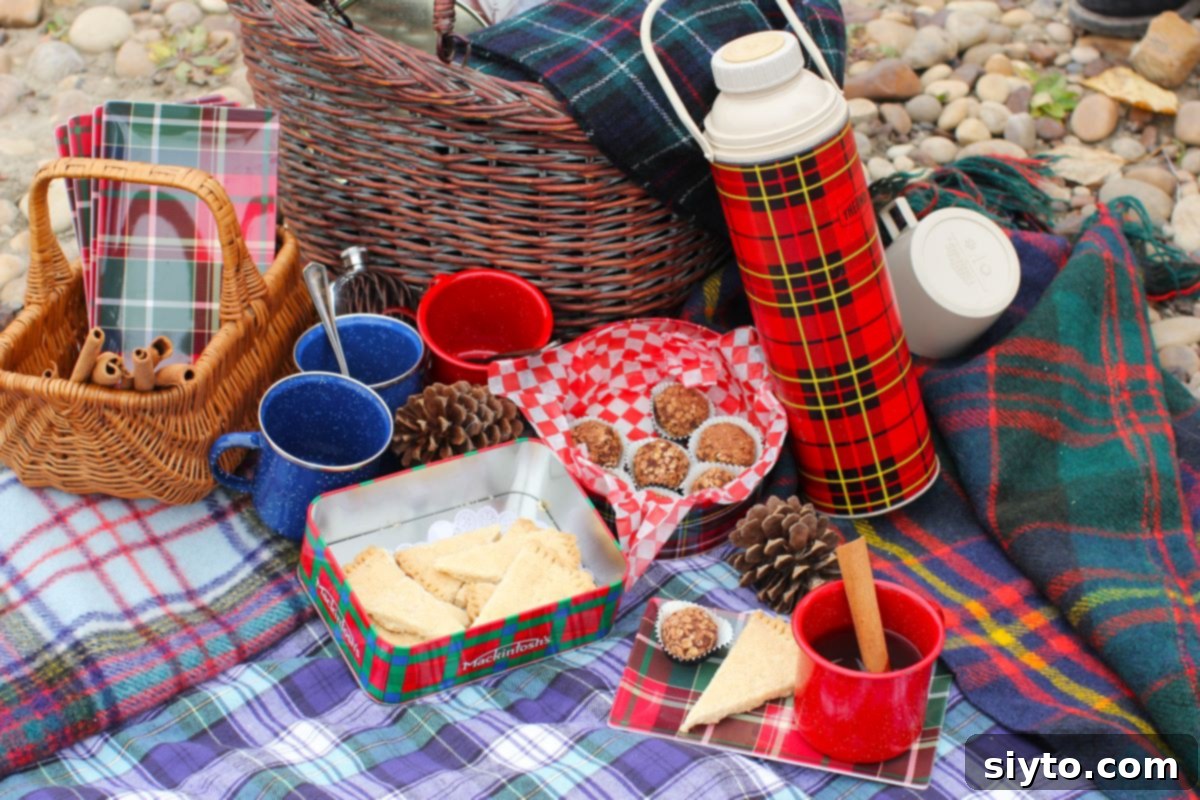
Dessert was equally delightful and comforting. We enjoyed mugs of steaming, hot black tea, perfect for warding off the autumn chill, accompanied by our crisp, buttery homemade shortbread cookie wedges. These classic Scottish treats melted in the mouth, providing a sweet, comforting finish. The highlight, however, were the enchanting little chocolate truffle balls, infused with the distinctive warmth of Scotch whisky and textured with rolled oats. These decadent truffles were the perfect indulgent finale to our memorable meal, adding a sophisticated touch to our rustic picnic.
Scotch Eggs: A Journey Through Their Misty Origins
Despite their name and popularity throughout Scotland, our research revealed a surprisingly misty past for Scotch eggs, much like the charming river weather we enjoyed. The name “Scotch” actually stems from a historical British culinary term: “scotching” referred to the practice of surrounding a food item with minced meat and bread crumbs. In earlier times, the very act of mincing meat was sometimes simply called “scotching.” This linguistic connection, rather than a geographical one, appears to be the true origin of their intriguing name.
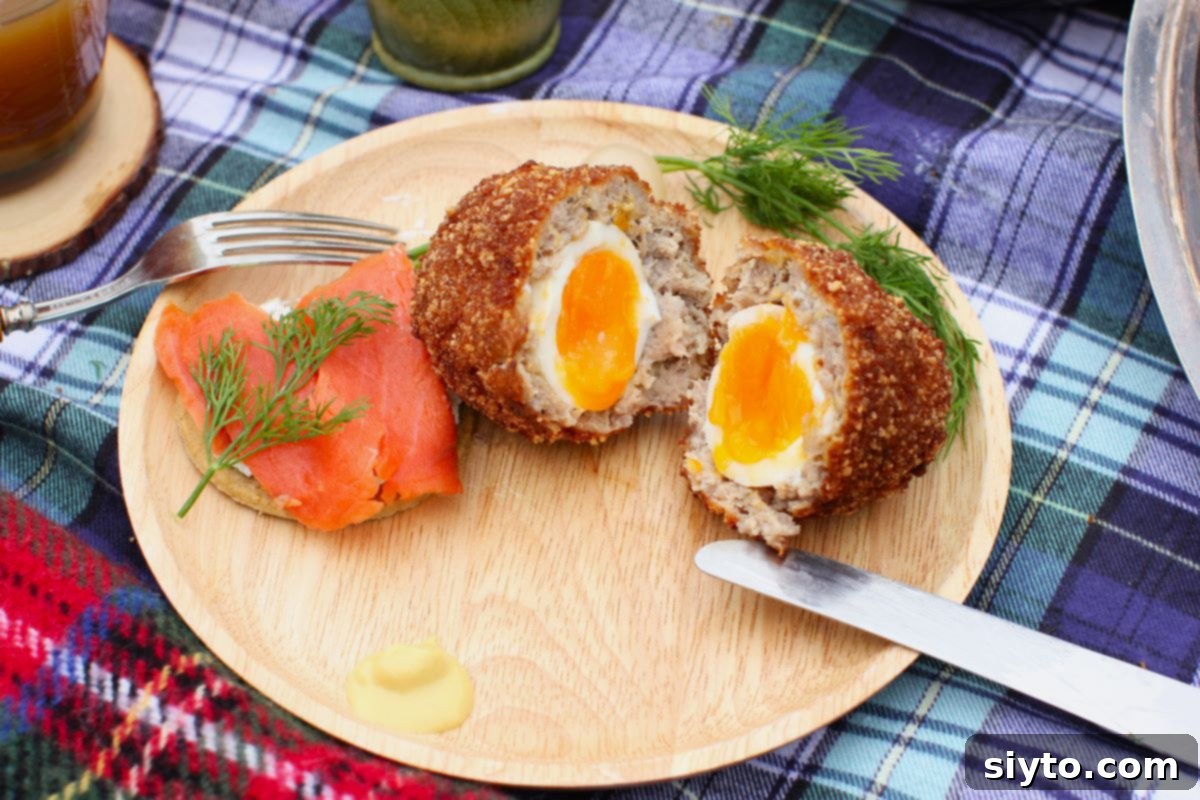
Served alongside an oatcake with herbed cream cheese and luscious smoked salmon.
Several theories vie for the title of the Scotch egg’s true birthplace. The luxurious London department store, Fortnum & Mason, proudly claims to have invented these delightful snacks in the 1800s, intending them as a convenient, high-quality bite for wealthy travelers. Other historical investigations suggest the British Army might have been the original creators, valuing them for their portability and sustained energy. Whispers also point to a resourceful Yorkshire butcher as a possible inventor. Furthermore, some culinary historians argue that Scotch eggs may be an adaptation of similar meat-wrapped egg dishes found in North Africa or India, brought back to Britain through colonial influences. Regardless of their true genesis, one thing is universally agreed upon: despite their widespread enjoyment across Scotland today, Scotch Eggs are not originally a Scottish invention. Nevertheless, their irresistible flavor, ease of transport, and suitability for being eaten cold or at room temperature make them absolutely ideal for a picnic, and we simply couldn’t imagine our Scottish-inspired feast without them.
Crafting Your Own Scotch Eggs: Simple Ingredients for a Gourmet Treat
Creating these delightful Scotch Eggs requires just a few key, high-quality ingredients, easily accessible and often found in your pantry. The foundation of a perfect Scotch egg lies in the quality of your chosen components, promising a truly delicious outcome.
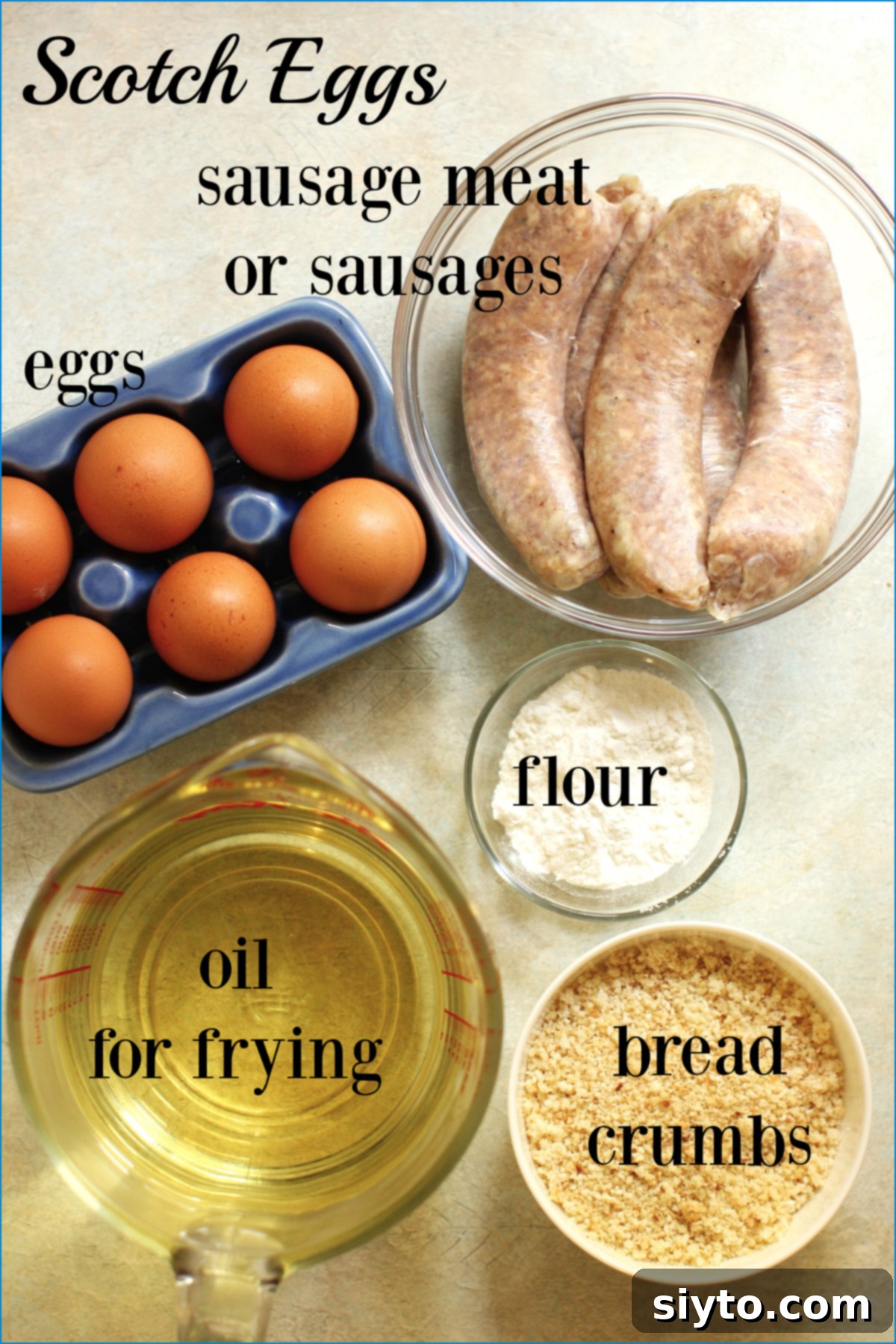
The sausage meat you choose is paramount, as the outer coating will only be as flavorful and robust as the sausage itself. For this particular batch, I opted for traditional British bangers, which provided a wonderfully rich taste and texture. However, I’ve successfully experimented with other types of sausages in the past, including turkey sausages, which also yielded excellent results. The key is to select a high-quality sausage with good flavor and a suitable fat content to keep the meat moist and delicious during frying.
Mastering the Art of Making Scotch Eggs
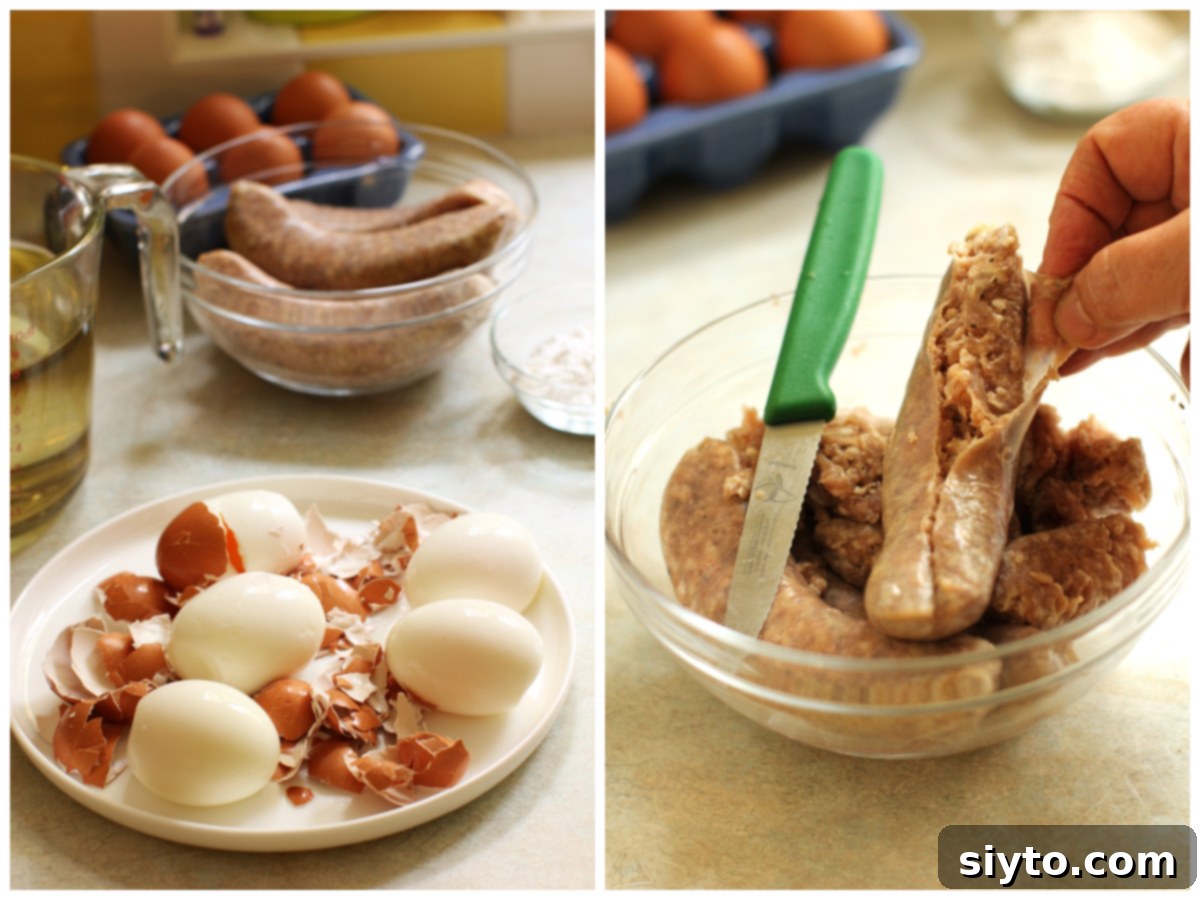
The journey to creating perfect Scotch Eggs begins with carefully soft-boiling your eggs. You’ll need four impeccably cooked eggs for the core, along with additional ones for coating. Subsequently, you’ll prepare the savory sausage meat by removing it from its casings, ensuring it’s ready to form the delicious outer layer.
Kitchen Frau Note: The Art of Peeling Soft-Boiled Eggs
Peeling soft-boiled eggs can be a delicate operation, as their whites are still quite tender. A helpful trick is to boil one or two extra eggs beyond what the recipe calls for. This way, if one or two happen to crack or break during the peeling process, you’ll still have enough perfectly intact eggs for your Scotch Eggs, ensuring your culinary efforts are always successful.
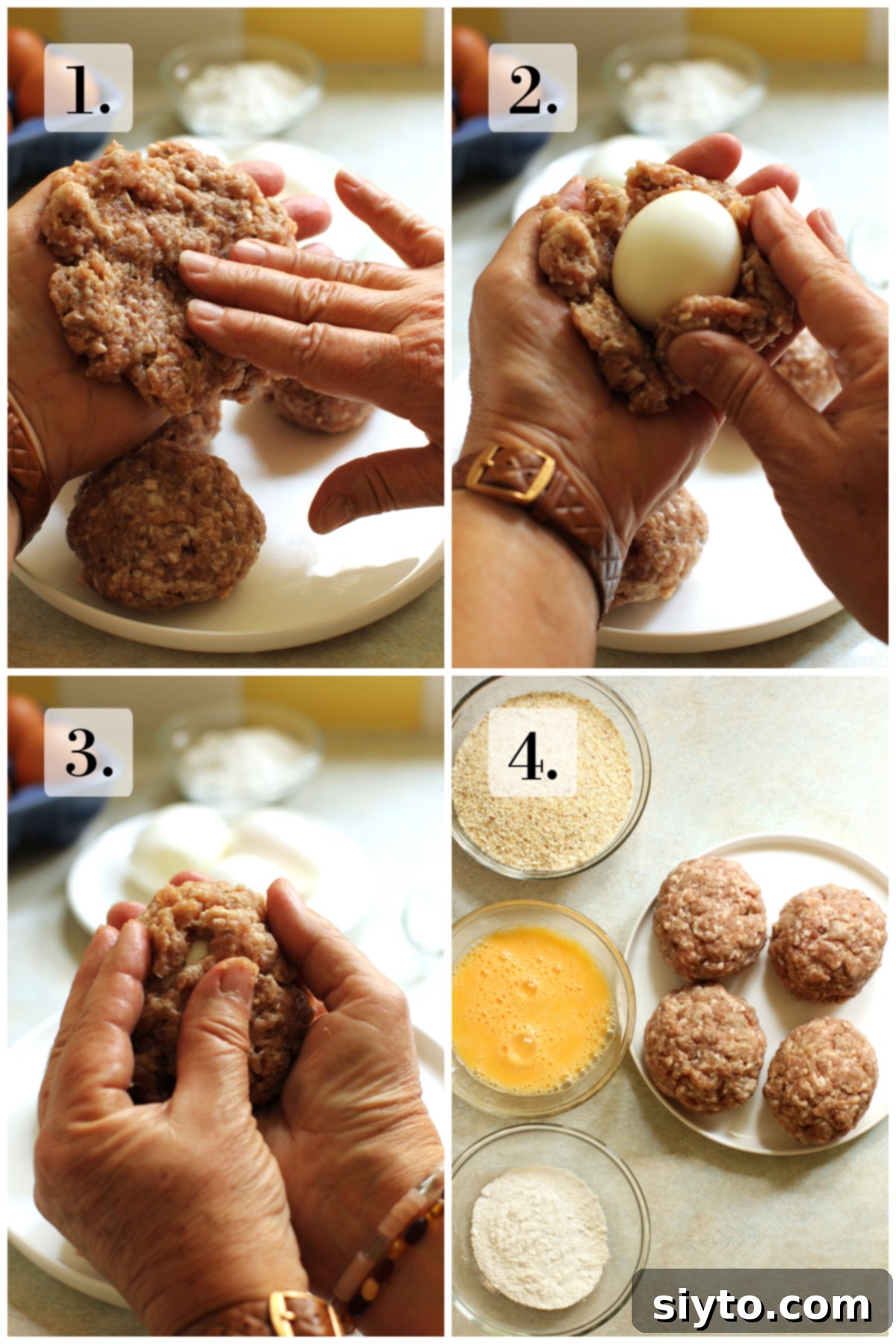
Once your eggs are perfectly peeled, divide the sausage meat into four equal portions and roll each into a smooth ball. Then, gently flatten each ball into a patty, creating a uniform base. The next crucial step is to carefully mold this sausage patty around a boiled egg, forming an even outer shell. It’s essential to work with a gentle touch during this stage, as the soft-boiled eggs are quite fragile. Ensure the sausage fully encases the egg, pressing and sealing any cracks to create a seamless, protective layer. This careful handling will prevent any breakage and ensure a beautiful, uniform shape.
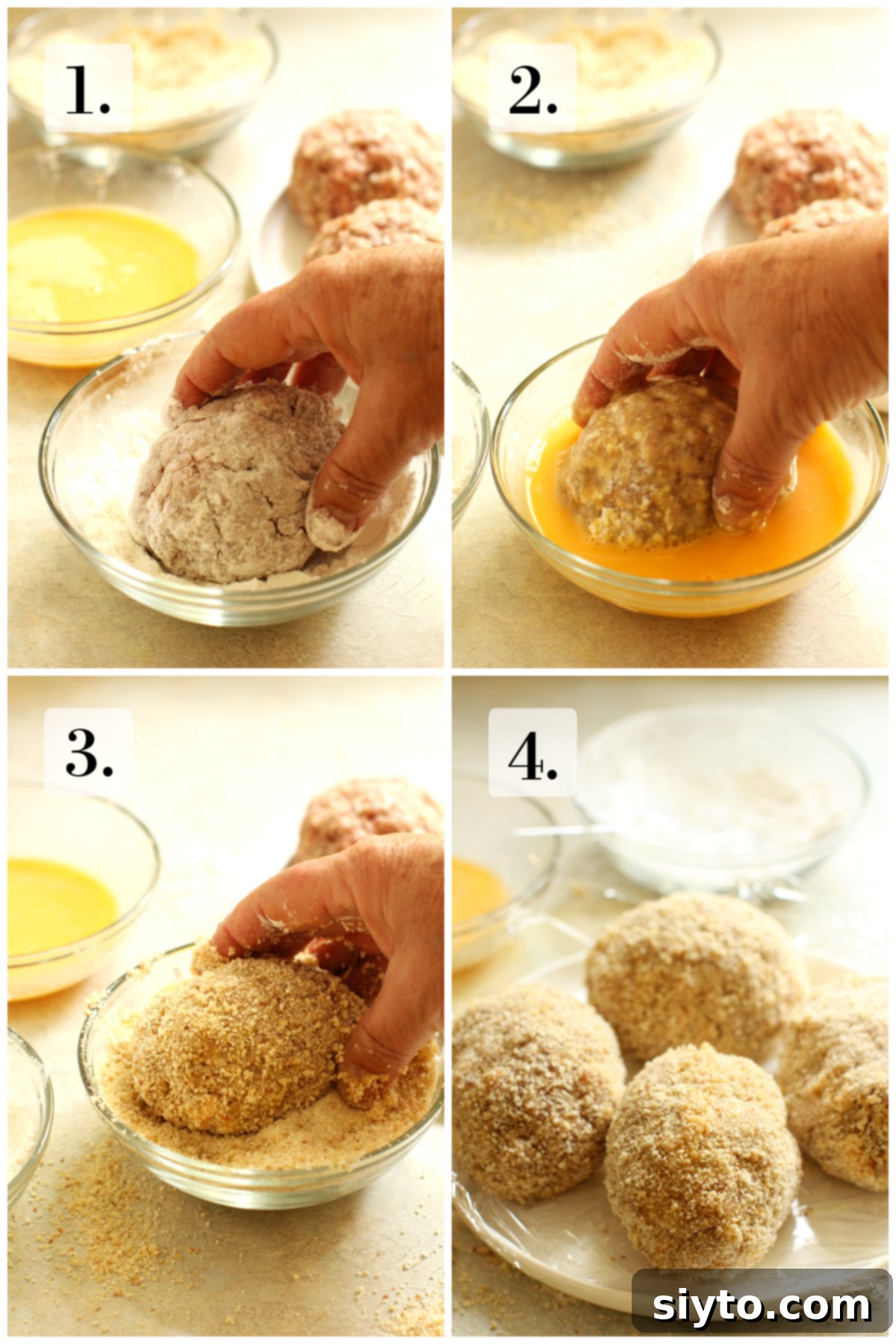
With the eggs beautifully encased in sausage, it’s time for the breading process, which will create that irresistible crispy crust. Set up your classic three-station breading assembly: first, gently roll each sausage-wrapped egg in flour, ensuring it’s completely dusted. Next, transfer it to a bowl of beaten egg, allowing it to be thoroughly coated. Finally, roll the egg generously in bread crumbs, pressing lightly to ensure a firm and even layer. This multi-layered crust not only adds incredible texture but also effectively seals in all the delicious flavors during frying. After breading, place the coated eggs into the refrigerator to firm up; this crucial chilling step helps the breading adhere better and prevents the eggs from falling apart when they hit the hot oil.
The final step is the frying, where the magic truly happens. Heat a generous amount of neutral, high-heat cooking oil in a heavy-bottomed saucepan until it reaches the ideal temperature for deep-frying. Carefully lower the chilled Scotch Eggs into the hot oil, ensuring not to overcrowd the pan, which can lower the oil temperature. Fry them until they achieve a glorious golden-brown color and a satisfyingly crispy exterior, making sure the sausage meat is thoroughly cooked through. The ultimate goal is for the egg yolk inside to remain beautifully golden and slightly runny, adding a luxurious creaminess to each bite. However, even if the yolk cooks a little more and becomes firmer, rest assured, the Scotch Eggs will still taste absolutely fantastic!
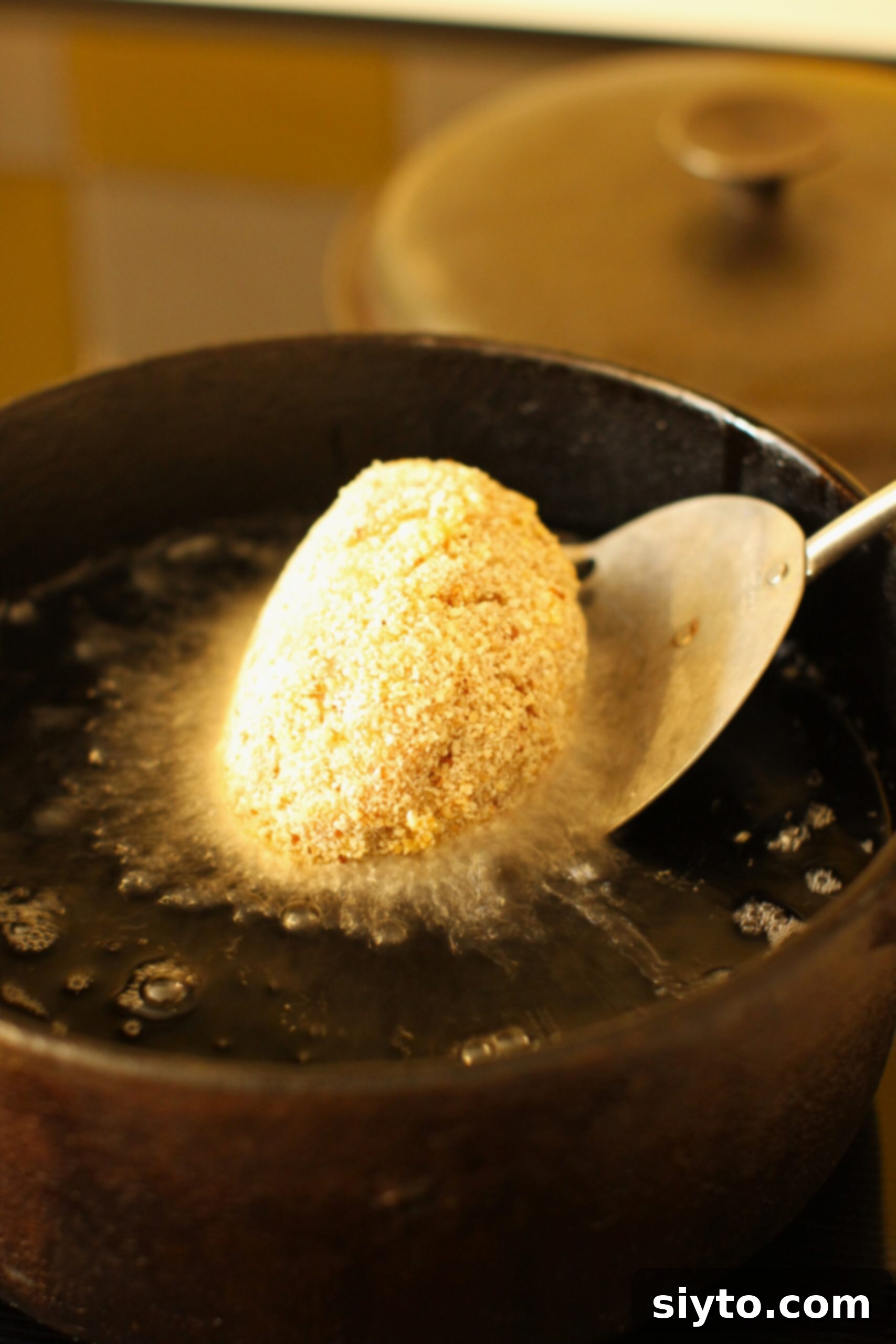
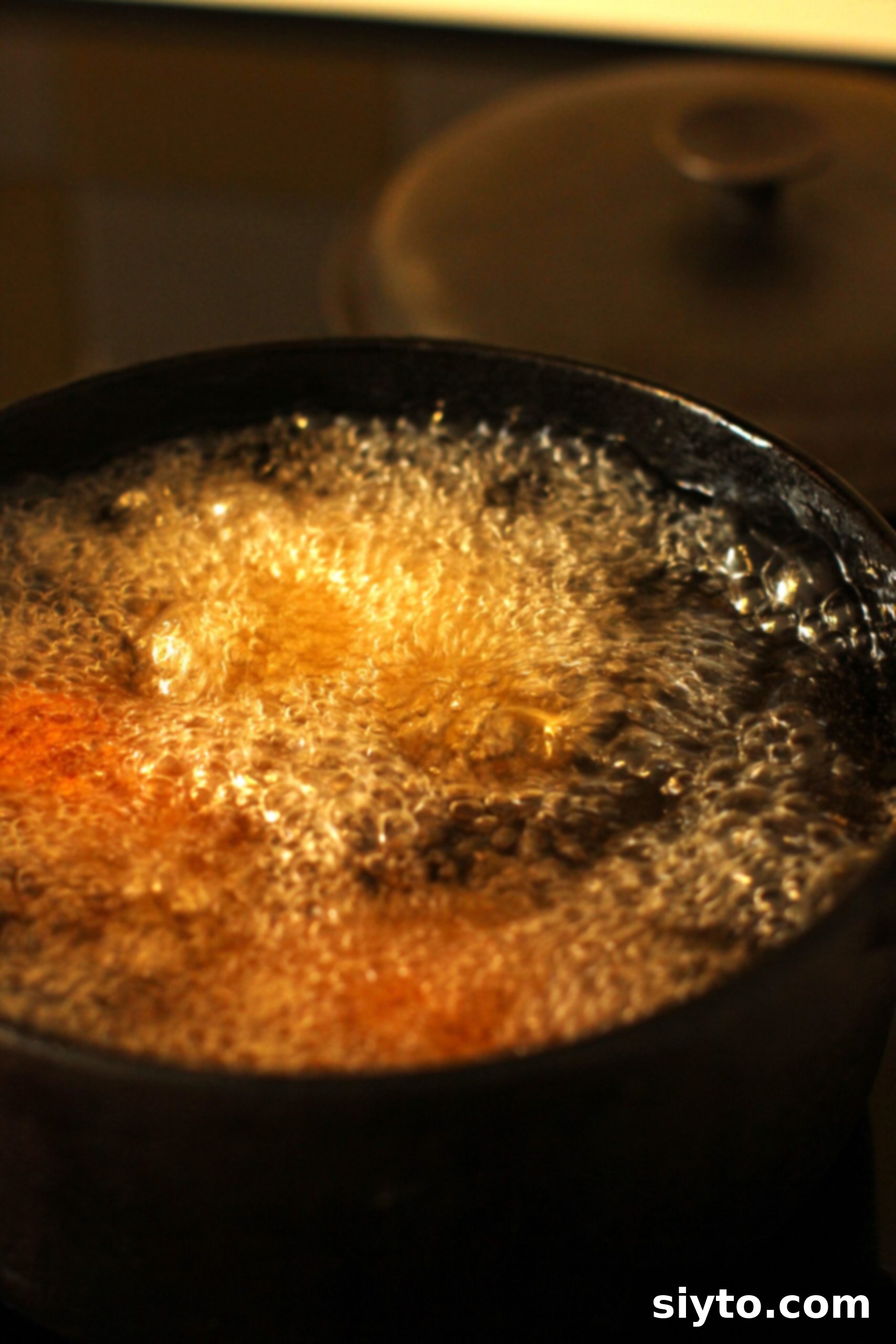
Once perfectly golden and cooked through, carefully remove the Scotch eggs from the hot oil using a slotted spoon. Transfer them to a plate lined with paper towels to drain any excess oil, allowing them to cool for just a few minutes before indulging. This brief resting period helps the internal temperatures equalize and prevents them from being too hot to handle.
Storing and Serving Your Delicious Scotch Eggs
These fantastic Scotch eggs are utterly irresistible whether eaten immediately, still warm from the pan, or saved for later. If you’re preparing them in advance for a picnic or future meal, allow them to cool completely to ensure the crumb coating remains wonderfully crisp. Once cooled, transfer them to an airtight storage container, ensuring they are arranged in a single layer to prevent them from becoming soggy. They can be safely refrigerated for up to 5 days, making them an excellent make-ahead option. Please note that Scotch eggs are not suitable for freezing, as the texture of the egg and sausage can degrade upon thawing.
For the best culinary experience, Scotch eggs are truly at their peak when served slightly warm or at room temperature. If you’ve stored them in the refrigerator, simply remove them from the cooler or ice packs approximately 20-30 minutes before you plan to serve. This allows them to gently come to temperature, enhancing their flavors and textures. By the time you’ve set up your beautiful picnic spread, your Scotch eggs will be perfectly ready to enjoy.
The ideal Scotch egg boasts a sausage cooked through and a lusciously jammy, slightly runny yolk, achieved by carefully soft-boiling the eggs just enough before frying. The frying process will gently cook the yolk a touch further, resulting in that perfect, creamy center. However, don’t despair if your eggs turn out to be more on the hard-boiled side – they will still be incredibly mouthwatering and satisfying! Serve these gourmet delights with a generous dab of your favorite zesty mustard or a spoonful of a sweet and tangy chutney to truly complement their rich flavors.
A Truly Wonderful Scottish-Inspired Picnic Experience
Our magical Scottish-inspired picnic by the river was more than just a meal; it was a deeply rejuvenating experience that profoundly recharged our spirits. Spending a misty fall day immersed in good company, beautiful scenery, and delicious food is a truly wonderful thing, fostering connection and tranquility. We sincerely hope that our adventure has sparked an inspiration within you to plan and enjoy your very own enchanting autumn picnic. For more delightful Scottish-themed treats, we encourage you to head over to our friends Nicoletta and Loreto’s blog, SugarLoveSpices. There, you’ll find their captivating photos and personal story of our picnic, along with their exquisite recipe for homemade Shortbread Cookie Wedges – the perfect sweet accompaniment to any outdoor feast.
Explore More Picnic & Afternoon Tea Inspirations
If you’ve enjoyed this culinary journey, be sure to delve into our other exciting picnic ideas and unique Afternoon Tea experiences. Each post offers fantastic recipes and fresh inspiration for your next gathering:
- Coronation Chicken Salad Sandwiches and a Perfect Afternoon Tea Picnic
- Gluten-Free Sausage Rolls and a Glorious Autumn Picnic
- Homemade Tomato Soup and a Late Fall Picnic by the Lake
- Gluten-Free Victoria Sponge Cake and a Summer Afternoon Tea Picnic
- Luscious Lemon Mousse and a ‘Fun & Games’ Picnic
- Butter Pecan Bars and a Glowing Afternoon Tea in the Orchard
Want to receive new Kitchen Frau recipes directly to your email as soon as they’re posted? Sign up here and you’ll get bits of news updates on what’s happening in my kitchen and garden, plus a handy and useful kitchen tip along with each recipe, too. (No spam ever.)
If you like my recipes, follow me on Instagram, Pinterest, X, and Facebook. You’d make my day. 😊
Guten Appetit!

Scotch Eggs
Margaret Bose Johnson
Save to Pinterest
Ingredients
- 6 large eggs (4 for boiling, 2 for coating) (tip: boil 2 extra in case of breakage when peeling)
- 1 lb. (450 g) good quality sausages or sausage meat, gluten-free if necessary
- ¼ cup (30 g) flour (or sweet rice flour for gluten-free)
- 1 cup (100 g) panko crumbs or fine dry bread crumbs, gluten-free if necessary (*If using gluten-free panko crumbs, give them a quick pulse in a food processor or mini-chopper to break up any large, hard crumbs)
- 2-3 cups (500-750 ml) neutral, high-heat cooking oil, for frying enough to be about 2inches/5 cm deep in a medium-sized, heavy-bottomed saucepan
Instructions
- To soft-boil the eggs: Bring a medium saucepan half-filled with water and a teaspoon of salt added to a boil. Gently lower in 4 to 6 large eggs. Boiling extra eggs (e.g., 6 instead of 4) is a wise precaution, as it provides a buffer in case any break during the peeling process. Boil the eggs for precisely 6 minutes for a perfect soft-boiled consistency. While they are boiling, prepare an ice bath by filling a bowl with cold water and several handfuls of ice cubes. After 6 minutes, carefully remove the eggs from the boiling water with a slotted spoon and immediately plunge them into the ice water. Allow them to chill for 10 minutes; this stops the cooking process and makes them easier to peel.
Note: For smaller eggs, reduce the cooking time to 5 minutes to achieve a similar soft yolk.
- Gently crack the eggs all over their surface. Then, with careful hands, peel them under cold running water, aiming to keep the whites intact. Don’t worry if a few minor breaks occur; it’s a common challenge with soft-boiled eggs.
- If you’re using sausage links, carefully slit the casing lengthwise and peel it away from the meat. Divide the sausage meat into 4 equal-sized balls, ensuring each portion is consistent in size.
- Lightly wet your hands to prevent sticking. Take one of the sausage balls and flatten it in the palm of your hand, forming an even patty about ½-inch (1 cm) thick.
- Place one of the peeled, soft-boiled eggs onto the center of the sausage patty. Carefully bring the sausage meat up and around the egg, gently pinching and smoothing it to completely encase the egg. Ensure there are no open cracks or gaps where the egg might be exposed. Re-wet your hands as necessary to prevent the sausage meat from sticking. Remember to be gentle to avoid breaking the delicate egg inside. Repeat this process with the remaining eggs and sausage balls.
- Prepare your breading stations: set out three shallow bowls. Fill the first with the flour, the second with the two raw eggs lightly beaten with a fork, and the third with the bread crumbs.
- Carefully roll one sausage-coated egg first in the flour, ensuring it is completely coated. Gently pinch together any small cracks that may have appeared in the sausage. Next, transfer the egg to the beaten eggs, rolling to coat it thoroughly. Finally, roll it generously in the bread crumbs, making sure it is fully covered and sealed. Repeat this breading process for all remaining eggs.
- Place the breaded eggs on a plate, uncovered, and refrigerate them for 30-60 minutes. This chilling period is crucial as it helps the breading and sausage firm up, preventing them from falling apart during frying.
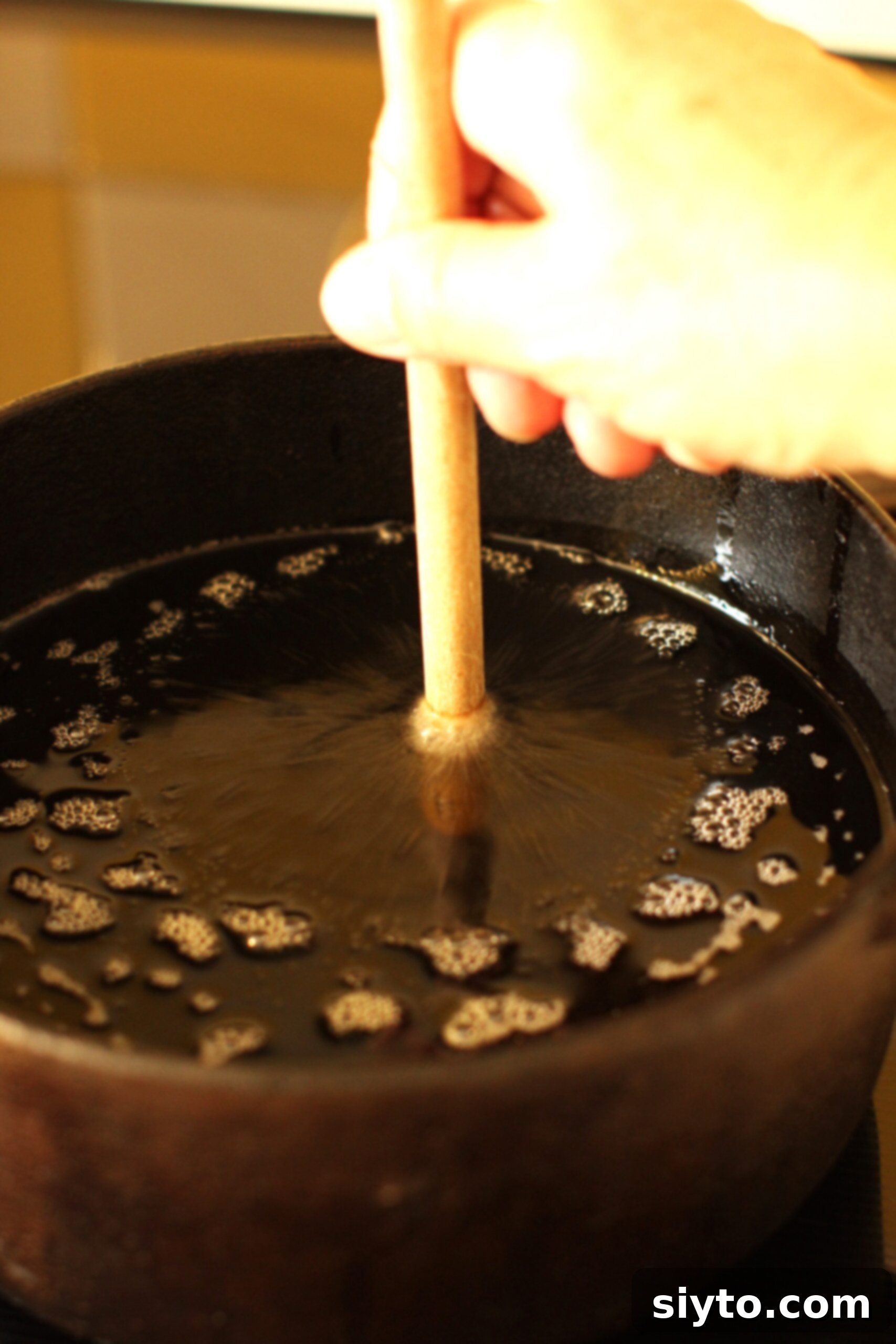
- Pour the cooking oil into a medium-sized, heavy-bottomed saucepan, ensuring it’s about 2 inches (5 cm) deep. Heat the oil over medium-high heat until it reaches approximately 325℉ (170℃). If you don’t have a thermometer, you can test the oil’s readiness by inserting the handle of a wooden spoon (or other wooden utensil) into it. If bubbles immediately form and vigorously well up around the handle, the oil is hot enough for frying. If not, allow it to heat a bit longer and test again.
- Before frying, gently re-shape any Scotch eggs that may have lost their perfect form. Carefully lower them, one at a time, into the hot oil using a slotted spoon. Avoid overcrowding the pan; you may need to fry them in batches of two at a time to maintain optimal oil temperature. Fry them for 6-8 minutes, turning them several times to ensure even browning and thorough cooking of the sausage meat. To check for doneness, you can carefully remove one egg from the oil and poke into the sausage with the tip of a knife to confirm it’s cooked through.
- Once cooked, remove the Scotch eggs from the oil with a slotted spoon and place them on paper towels to drain for about 5 minutes. Serve them immediately while warm, or allow them to cool completely before packing them for a picnic or storing them in the refrigerator. Once chilled, they will keep for up to 5 days.
Enjoy your Scotch Eggs at room temperature, ideally with a dollop of zesty mustard or your favorite chutney for an added burst of flavor.
Notes
Always use high-quality uncooked sausage, such as traditional British bangers, savory Cumberland sausages, or leaner turkey sausages. These can be in link form (casings removed) or as loose sausage meat.
To maintain a crisp crumb coating, ensure the Scotch eggs cool completely to room temperature before placing them into a sealed container and refrigerating them.