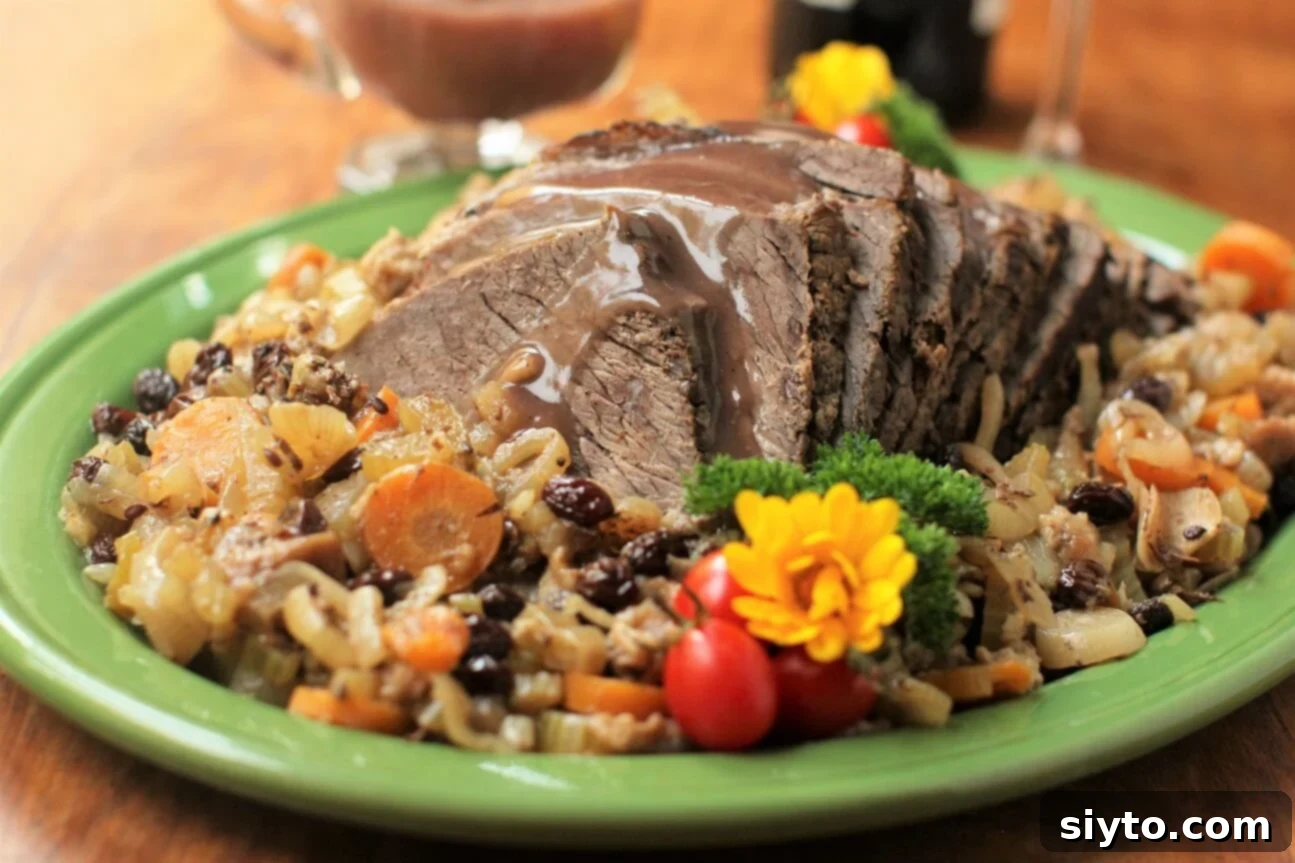
Authentic German Sauerbraten Recipe: A Tangy Pot Roast Tradition
Searching for that perfect centerpiece for your next special dinner? Look no further than the delightful German Sauerbraten. This iconic dish is a wonderfully flavored, slow-simmered pot roast, renowned for its distinctive tangy marinade and a rich, aromatic gravy that will transport your taste buds straight to Bavaria. Forget bland Sunday dinners; prepare for a culinary experience that’s truly unforgettable. Oom-pa-pah! Let the festive spirit begin! (Jump to the full recipe card)
As someone with German heritage, I’ve long felt the need to share a truly authentic Sauerbraten recipe on this site. It’s a foundational dish in German cuisine, a culinary legacy that deserves to be celebrated. Today, I’m thrilled to finally rectify that omission and guide you through creating this exquisite comfort food, ensuring it meets the expectations of both tradition and modern dietary needs.
What is Sauerbraten? The “Sour Roast” Explained
At its heart, Sauerbraten translates literally to “sour roast,” a name that, like many traditional German foods, might not sound immediately appetizing to some, but don’t let the name mislead you. This humble moniker belies a dish of profound flavor and tenderness. It’s essentially a tangy marinated German pot roast, making for an absolutely wonderful Sunday dinner or a special occasion meal. The magic of Sauerbraten lies in its lengthy marination process, where a cut of beef, often a rump roast, is steeped for several days in a mixture of vinegar, wine, water, and an array of aromatic spices and vegetables. This not only infuses the meat with incredible depth of flavor but also tenderizes it beautifully, resulting in a melt-in-your-mouth texture that is surprisingly easy to achieve.
My own journey with Sauerbraten is a testament to its widespread appeal and the adaptability of traditional recipes. While my mother, a master of preserving and pickling, instilled in me a deep appreciation for tangy flavors through her homemade sauerkraut, pickled fish, and various fermented vegetables, Sauerbraten wasn’t a dish she typically prepared. Her kitchen was a hub of vibrant, piquant notes, making the flavor profile of Sauerbraten feel familiar and comforting, even though it was new to me. It wasn’t until I was newly married that I truly delved into learning about this classic dish. The particular recipe I cherish and have adapted over the years actually came from a German student, shared during a charming cookbook project in my grade school class. It’s a wonderful testament to the timelessness of good food that a recipe learned decades ago still holds pride of place in my kitchen, now thoughtfully adapted to be gluten-free for my family without sacrificing any of its fantastic, rich flavor.
The Distinctive Flavors of German Cuisine: Savory, Piquant, and Tangy
If I were to encapsulate German cooking in a few words, they would undoubtedly be savoury, piquant, and above all, tangy. These dishes are consistently big, bold, and utterly full of flavor. “Tangy” is truly the cornerstone of today’s Sauerbraten recipe and indeed, much of German culinary tradition. This pronounced sour element isn’t accidental; it’s a deeply ingrained characteristic that stems from both necessity and preference. You find it elegantly integrated in the sour pickles tucked into Rouladen (beef rolls), the subtle lacing of vinegar in a hearty Eintopf (one-pot stew), or the unapologetically pucker-inducing tang of a dish of robust Sauerkraut. Germans have, over centuries, mastered the art of elevating ‘tangy’ to remarkable culinary heights, creating a balance of flavors that is both complex and incredibly satisfying.
The historical roots of this preference for sour and tangy flavors are deeply practical. In northern climates with long, chilly winters, techniques like pickling and fermenting were indispensable for food preservation long before refrigeration existed. These ingenious methods allowed communities to store essential foodstuffs—from vegetables to meats—long after the harvest, ensuring sustenance through the lean months. What began as a necessity, a way to survive the elements, evolved into a beloved culinary tradition, passed down through generations. Today, these techniques remain central to German cooking not only out of respect for this rich tradition but also because of a deep and abiding love for the complex, vibrant flavors they impart. Sauerbraten perfectly exemplifies this heritage, transforming a simple cut of meat into a masterpiece of balanced tartness, sweetness, and spice, creating a dish that is both comforting and exquisitely flavorful.
The Effortless Joy of Making Sauerbraten: A Perfect Make-Ahead Meal
One of the aspects I adore most about making Sauerbraten is its inherent ease, especially considering the impressive final result. While the recipe might appear extensive and involved at first glance, the individual steps are remarkably straightforward and designed to minimize active cooking time on the day of serving. The real beauty of this dish lies in its make-ahead nature. The initial preparation, which involves combining the roast and aromatic vegetables with the tangy marinade, is done days in advance. You simply pop everything into a sturdy, heavy-duty bag and let it rest patiently in the refrigerator, allowing the marinade to work its slow, tenderizing magic.
During these crucial marinating days, the flavors of the vinegar, spices, and vegetables meld and deepen, and the acidity of the marinade gently breaks down the meat fibers, ensuring unparalleled tenderness and infusing every bite with complex flavor. You can go about your week, knowing a delicious, authentic German meal is slowly developing its character with minimal effort on your part. Then, on the day you plan to entertain or simply enjoy a special family dinner, the active cooking process is surprisingly minimal. You’ll begin by browning the roast to develop those magnificent caramelized flavors and a beautiful crust – a vital step for enhancing the overall taste and texture of your Sauerbraten. This searing creates rich, savory “fond” at the bottom of the pan, which will later become the backbone of your incredible gravy.
After this initial browning, the roast, along with its braising liquid and vegetables, goes into the oven or simmers gently on the stovetop. This extended, slow cooking phase is largely hands-off, freeing you to relax, attend to other tasks, or simply savor the enticing aromas filling your home. You’ll find yourself with plenty of time to set the table, enjoy a glass of wine, or even read a book while your Sauerbraten transforms into a tender, flavorful masterpiece.
When your guests arrive, or when it’s time to gather around the table, the bulk of the work is already done. All that remains is to slice the incredibly tender meat and prepare the accompanying rich, complex gravy. This gravy is a true highlight of the dish, masterfully transformed from the tangy braising liquid. A judicious splash of dry red wine and a touch of sugar are added at this final stage, expertly balancing the inherent tartness of the vinegar and enhancing the overall piquant flavor with layers of sweetness and depth. The braised vegetables, which have cooked alongside the roast, are often laced with bits of bread (creating an almost stuffing-like consistency). These flavorful components offer a delightful textural and taste counterpoint to the moist and tender meat, soaking up all the wonderful, nuanced flavors of the sauce.
Perfect Pairings: Serving Your Sauerbraten
To complete your authentic German meal, serve the succulent Sauerbraten with classic accompaniments that perfectly complement its rich flavors. Buttered noodles, which can easily be made gluten-free if desired, are a popular and comforting choice. Traditional Spätzle, small egg noodles, offer a delightful chewiness, while creamy mashed potatoes provide a smooth contrast to the tangy gravy. For an even more authentic experience, consider making a batch of homemade potato dumplings (Kartoffelklöße), which are fantastic for soaking up every last drop of that exquisite sauce. If time is short or you’re seeking convenience, I often opt for the convenient packaged German dumplings (Knödel) available in international import shops. Many brands are naturally gluten-free, so always remember to check the ingredients list to ensure they meet your dietary needs. The richness of the gravy, the tender beef, and these comforting sides create a harmonious balance that truly epitomizes German home cooking.
To truly set the mood and enhance your dining experience, complement your meal with a hearty red wine – its robust character makes it a perfect match for the complex flavors of the roast. And for an extra touch of gemütlichkeit (coziness and cheer), let the rollicking strains of traditional oom-pa-pah music play softly in the background. It’s more than just a meal; it’s an experience, a celebration of rich heritage, delicious food, and joyful company. Prosit! (Cheers!)
A special thank you goes out to Bonny, a valued reader, whose thoughtful request for a Sauerbraten recipe provided the gentle nudge I needed to finally bring this cherished dish to life on the Kitchen Frau site. Your encouragement means a lot and helps inspire new culinary adventures! 🙂
* * * * *
Kitchen Frau Notes: When preparing this Sauerbraten gluten-free, selecting the right ingredients is key to achieving the desired texture and flavor without compromise. For the bread component, which adds body and flavor to the gravy, I highly recommend using Schär brand Gluten Free Artisan Baker Multigrain Bread. Its robust structure holds up exceptionally well during braising, preventing it from becoming mushy and instead contributing beautifully to the gravy’s consistency. However, any other sturdy gluten-free whole-grain loaf you prefer would also work effectively. Crucially, when thickening the gravy for a gluten-free version, ensure you use sweet rice flour (also commonly known as glutinous rice flour), not regular white rice flour. Sweet rice flour is superior for gravies as it provides a much smoother, more cohesive texture, mimicking regular all-purpose flour far more effectively and preventing a grainy consistency.
Authentic German Sauerbraten Recipe
This traditional recipe yields a tender, flavorful pot roast with a rich, tangy gravy – perfect for a special family dinner or entertaining guests. The long marination is key to its signature taste and texture.
Ingredients:
- 2 bay leaves
- 1 teaspoon whole black peppercorns
- 1 teaspoon dried juniper berries
- 8 whole cloves
- 1 cup (240ml) red wine vinegar
- 3 cups (720ml) low sodium beef broth (ensure it’s gluten-free, if necessary)
- 2 teaspoons fine sea salt
- 1 boneless beef round rump roast, 4 – 4½ lbs (1.8-2kg)
- 2 medium onions, sliced
- 2 stalks of celery, sliced
- 1 carrot, sliced
- 2 tablespoons oil (such as vegetable, canola, or grapeseed oil)
- 2 slices pumpernickel bread – or *gluten-free whole grain bread (see Kitchen Frau Notes)
- ½ cup (65gms) raisins
- 1 additional teaspoon salt
- ½ teaspoon ground black pepper
- ½ cup (120ml) dry red wine
- ⅓ cup (45gms) flour – or sweet rice flour for gluten-free thickening (see Kitchen Frau Notes)
- 2 tablespoons sugar
- 1 teaspoon powdered ginger
- Hot cooked noodles (gluten-free if needed), Spätzle, or mashed potatoes, for serving
Supplies Needed:
- 1 six-inch (15cm) square of double-layer cheesecloth plus a length of cotton twine or thread
- 1 large heavy-duty plastic bag with a zip top or a twist tie (ensure it is food-safe)
- A large bowl to hold the plastic bag (as a precaution against leaks)
- Dutch oven or heavy-bottomed large saucepan with a tight-fitting lid
- Fine-meshed sieve
- Whisk
- Measuring cups and spoons
- Cutting board and sharp knife
Instructions:
- Prepare the Spice Bundle: Pile the bay leaves, black peppercorns, whole cloves, and juniper berries onto the center of the cheesecloth square. Gather up the corners and tie the string securely around the folds, creating a tidy bundle. This spice bundle will infuse the marinade with its aromatic notes and is easily removed later.
- Make the Marinade: In a medium saucepan, combine the red wine vinegar, beef broth, 2 teaspoons of fine sea salt, and the prepared spice bundle. Bring the mixture to a boil over medium-high heat, then immediately remove from heat and allow it to cool completely to room temperature. This cooling step is crucial to prevent partially cooking the beef during marination.
- Marinate the Roast: Place a handful of the sliced onions, carrots, and celery into a large, heavy-duty plastic bag. Set this bag inside a large bowl; this precaution will catch any potential leaks from the bag. Add the beef roast and the remaining sliced vegetables to the bag. Carefully pour the completely cooled marinade, including the spice bundle, over the roast and vegetables. Seal the bag tightly with a twist-tie or zip top, trying to remove as much air as possible without spilling the marinade.
- Refrigerate for Flavor Development: Place the bag (still in its protective bowl) in the refrigerator and allow the roast to marinate for a minimum of 3 days and up to 5 days. Turn the bag daily to ensure even marination and maximum flavor infusion into the beef.
- Prepare for Cooking: Approximately 4 hours before you plan to serve the Sauerbraten, remove the roast from the plastic bag. Discard the spice bundle. Carefully reserve all the marinade liquid and the marinated vegetables separately.
- Brown the Roast: Heat the 2 tablespoons of oil over medium-high heat in a large Dutch oven or a heavy-bottomed, large saucepan. Pat the beef roast thoroughly dry with paper towels; this step is essential for achieving a good, deep sear and caramelized crust. Brown the roast vigorously on all sides in the hot oil until a deep, crusty brown forms. This should take about 10 to 12 minutes in total, creating rich fond at the bottom of the pan.
- Braise the Roast: Once the roast is beautifully browned, scoop the marinated vegetables out of the reserved marinade and add them around the roast in the Dutch oven. Pour 3 cups of the reserved strained marinade over the roast and vegetables. (Discard any remaining marinade, as it will have come into contact with raw meat and is no longer suitable for use). Bring the contents of the Dutch oven to a boil, then reduce the heat to low, cover tightly, and simmer gently for 2½ to 3 hours. Alternatively, you can braise the Sauerbraten in a preheated 325°F (170°C) oven (after bringing it to a boil on the stovetop). Turn the meat occasionally during cooking to ensure even tenderness. The roast is done when it feels very tender when pierced with the tip of a knife. If the liquid level drops significantly during braising, top it up with a bit of water or additional gluten-free beef broth to maintain approximately the starting level.
- Add Bread and Raisins: Crumble or tear the pumpernickel or gluten-free whole grain bread into small pieces and add them, along with the ½ cup raisins, 1 additional teaspoon salt, and ½ teaspoon ground black pepper, to the vegetables around the roast. Cover and continue to simmer for another 30 minutes, allowing the bread to absorb flavors and begin to thicken the sauce.
- Rest the Meat & Prepare Gravy Base: Carefully remove the tender meat to a cutting board and tent it loosely with aluminum foil to keep warm and allow it to rest for at least 10-15 minutes. With a slotted spoon or strainer, transfer the braised vegetables, raisins, and bread crumbles to a separate covered saucepan to keep them warm. Pour the remaining liquid from the Dutch oven into another container. Strain 3 cups of this liquid through a fine-meshed sieve back into the Dutch oven, pressing gently on the solids to extract maximum flavor. Discard any solids remaining in the sieve or save them for future use in soups or stocks. If you have less than 3 cups of strained liquid, add water or beef broth to make up the difference.
- Finish the Gravy: In a small bowl, whisk together the ½ cup dry red wine, ⅓ cup flour (or sweet rice flour for gluten-free), 2 tablespoons sugar, and 1 teaspoon powdered ginger until completely smooth and free of lumps. Stir this mixture into the strained liquid in the Dutch oven. Bring the gravy to a simmer over medium heat, cooking and stirring continuously until it has thickened and is bubbly, typically taking about 5-7 minutes. Taste the gravy for seasoning and add more salt or pepper if needed to achieve your desired balance of sweet, sour, and savory flavors. Continue to cook and stir for two more minutes to ensure the flour is fully cooked and there’s no raw flour taste. If the gravy becomes too thick, thin it with a bit of additional beef broth or water until it reaches your preferred consistency.
- Serve: Slice the rested meat against the grain into thick, even pieces. Arrange the slices attractively on a warm serving platter. Spoon some of the flavorful braised vegetables around the meat. Pour a generous amount of the rich, tangy gravy over the sliced Sauerbraten. You can also serve the remaining vegetables and gravy on the side in separate dishes, allowing guests to add more as they wish.
- Enjoy with Sides: Serve the Sauerbraten immediately with your choice of hot cooked noodles, traditional Spätzle, comforting potato dumplings, or creamy mashed potatoes.
Serves 8 to 10 hungry guests, making it ideal for gatherings.
Guten Appetit!
Sign up here to receive new Kitchen Frau recipes directly to your email inbox, and get a handy and useful kitchen tip with each recipe – making your cooking journey even more delightful.
If you’re enjoying my recipes and culinary insights, make sure to follow me on Instagram, Pinterest, Twitter, and Facebook. Your support truly makes my day!
Don’t forget to PIN IT to easily save this wonderful recipe for later (simply hover over the image below and click the ‘Pin it’ button):
You might also like these other hearty German-inspired recipes:
German Fleisch Rouladen: A Holiday Tradition
Sweet and Sour Lentil Eintopf: A Comforting One-Pot Meal
German Style Sauerkraut – Schmeckt Wunderbar! (Tastes Wonderful!)
Foolproof Easy Method for Cooking a Roast to Perfection