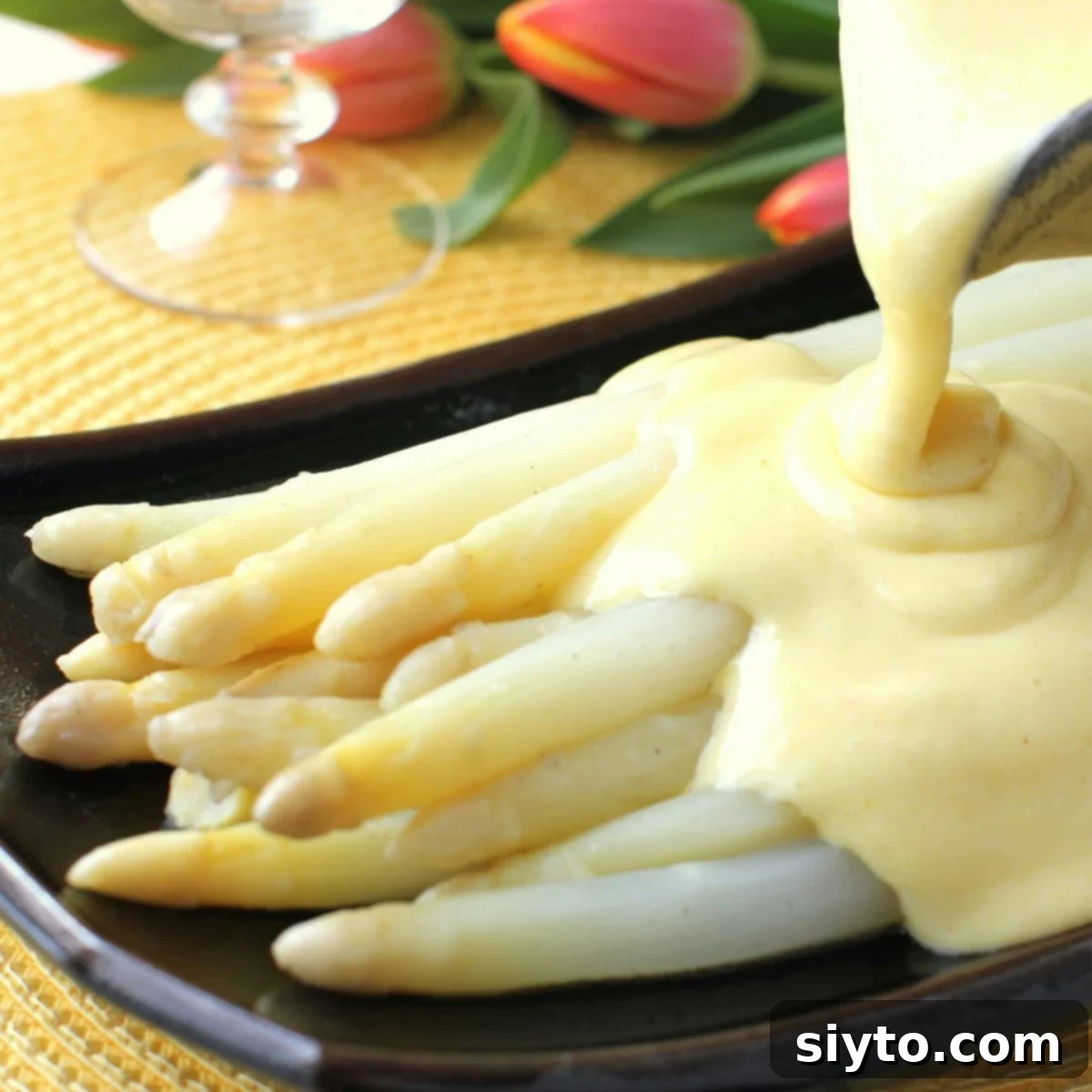
Foolproof Easy Hollandaise Sauce: Master Spargelzeit with White Asparagus
Embark on a culinary journey to conquer the classic French Hollandaise sauce with this remarkably easy recipe. Designed to banish all fears of making this notoriously finicky sauce, our method guarantees a thick, creamy, and smooth result every single time. Say goodbye to split sauces and hours of tedious whisking – this version comes together in mere minutes, requiring just a simple whisking of ingredients over gently simmering water. The outcome is a luxurious, rich, and tangy sauce, perfect for elevating a variety of dishes. Whether you’re drizzling it generously over classic Eggs Benedict, enhancing delicate fish, or transforming steamed vegetables into a gourmet delight, this Hollandaise is a game-changer. It’s also the quintessential partner for white asparagus, a celebrated pairing in German cuisine that heralds the arrival of spring.
Embrace ‘Spargelzeit’: Germany’s Obsession with White Asparagus
In Germany, the calendar turning to mid-April signifies the much-anticipated arrival of Spargelzeit, affectionately known as ‘Asparagus Time.’ This beloved culinary season, which typically concludes on the 24th of June, is arguably the most significant period in the country’s gastronomic calendar. Germans, and indeed many across Europe, develop an almost fervent obsession with their cherished white asparagus each spring. This unique vegetable transforms markets, restaurant menus, and home kitchens into vibrant hubs of celebration. It’s a culinary event deeply embedded in German culture, with many towns hosting asparagus festivals and special markets dedicated solely to this pale green (or rather, white) delight.
The sheer scale of this devotion is astonishing: Germans and the Swiss are among the world’s leading consumers of white asparagus, each person enjoying more than 3 pounds (approximately 1.5 kg) annually. Germany itself is a major producer, yielding over 125,000 tonnes of asparagus every year. This massive production underscores the vegetable’s immense popularity and its crucial role in the national diet during these precious few months. Spargelzeit isn’t just about eating; it’s a social occasion, a reason to gather with family and friends, and a genuine celebration of spring’s bounty. The delicate flavor and tender texture of white asparagus are savored, often served simply to highlight its natural elegance.
The Allure of White Asparagus: Cultivation and Preparation
While sharing the same botanical origin as its green counterpart, white asparagus stands apart due to a distinctive cultivation technique. Unlike green asparagus, which grows exposed to sunlight, white asparagus is grown entirely underground. This labor-intensive process, known as etiolation, prevents the development of chlorophyll, giving the spears their characteristic pale, almost ivory hue. During our travels through Germany’s asparagus season, especially in the northern regions, we’ve witnessed vast fields transformed by long, meticulously mounded ridges of dirt covering the asparagus plants. These rows are often blanketed with white plastic sheets, a clever method to shield the delicate spears from any sunlight whatsoever. This dedication yields the exquisitely flavored white spears that inspire such passion in German culinary traditions.
The unique growing conditions of white asparagus result in a flavor profile that is notably milder, sweeter, and less grassy than green asparagus, often described as more refined and delicate. This subtle elegance demands a specific approach to preparation, particularly when it comes to peeling. The outer skin of white asparagus is significantly more fibrous and can carry a bitter note, making peeling an essential step. It’s best performed with a quality vegetable peeler. To prevent breakage, lay the spears flat on a sturdy work surface. Begin peeling about 1½ inches (3-4 cm) from the tip and gently draw the peeler downwards along the stalk. The stalks are surprisingly crisp and delicate, making peeling them in the air risky. Equally important is trimming off the bottom 1 to 2 inches (2-5 cm) of the stalk, as this section can also be tough and woody, detracting from the overall tender experience.
Once peeled and trimmed, white asparagus truly shines with simple cooking methods. The stalks are best when gently simmered in a small amount of water infused with a pat of butter, or delicately steamed until they reach a perfect state of tenderness. The goal is to preserve their subtle flavor and delicate texture, allowing them to remain crisp-tender rather than becoming mushy. This minimal approach ensures that the inherent sweetness and mild character of the white asparagus are the stars of the dish.
While asparagus is enjoyed in Germany in countless delicious ways, its most cherished and popular presentation remains the simplest. The tender, warm spears are generously draped with a luxurious coat of creamy, rich Hollandaise sauce. This exquisite pairing is then traditionally served alongside fluffy boiled potatoes, often tossed with fresh parsley and butter, and accompanied by a savory slice of ham or a couple of perfectly fried eggs (Spiegelei). This combination embodies the heart of German springtime cuisine – a celebration of fresh, high-quality ingredients prepared with elegant simplicity.
Revolutionary Easy Hollandaise Sauce: No More Fear of Splitting
The mere thought of preparing classic French Hollandaise sauce can strike fear into the hearts of even seasoned home cooks. This renowned sauce, a glorious emulsion of rich egg yolks and melted butter, is infamous for its tendency to ‘split,’ resulting in an unappetizing curdled mess. The traditional method demands extreme precision: slowly melting butter and then meticulously whisking it in a tiny, steady stream, drop by painstaking drop, into heated egg yolks. This delicate dance is crucial to prevent the emulsion from breaking and achieving that coveted smooth texture. For many, it’s a culinary challenge too daunting to attempt.
However, with the groundbreaking method we’re about to share, those fears become a distant memory. Forget the fussy, slow addition of butter – you don’t even need to melt the butter beforehand! The secret lies in a simpler, more robust approach. Begin by whisking the egg yolks with a splash of fresh lemon juice until they become beautifully creamy and slightly thickened. Then, with a bold step that defies tradition, simply plop in all the diced, room-temperature butter at once, alongside a touch of salt and a pinch of warming cayenne pepper (or white pepper for a milder flavor). This innovative technique dramatically simplifies the process, making perfect Hollandaise accessible to everyone.
Essential Ingredients for Your Easy Hollandaise:
- 4 large egg yolks
- 1 tablespoon fresh lemon juice
- ½ cup (117gms) cubed unsalted butter, at room temperature
- ¼ teaspoon fine sea salt (or ⅛ teaspoon if using salted butter)
- Pinch of cayenne pepper or white pepper
- 1-2 tablespoons white wine or water (for thinning, if needed)
The magic truly happens when you place the bowl containing all these ingredients over a pot of barely simmering water, essentially creating a makeshift double boiler. The key here is constant whisking. As you continuously whisk, the cubed butter melts at precisely the right rate, gradually incorporating into the egg yolks. This simultaneous melting and whisking action is what creates a stable emulsion, binding the fat from the butter with the egg yolks to form an incredibly smooth, thick, and creamy sauce. The crucial “trick” to success is to simply *not stop whisking*. Continuous movement prevents the eggs from overheating and scrambling, ensuring a velvety texture instead of a curdled one. Keep that whisk moving steadily, and you’ll be amazed at the transformation.
This entire process typically takes only a couple of minutes, a remarkably short time for such a sophisticated sauce. The resulting Hollandaise is often so luxuriously thick and rich that you’ll likely want to whisk in a small amount of white wine or water. This extra liquid helps thin the sauce to your preferred consistency, making it perfectly pourable and spoonable over your chosen dish. This flexibility allows you to tailor the sauce’s body to complement everything from delicate asparagus to hearty Eggs Benedict.
Once your Hollandaise reaches that ideal, velvety consistency, it’s ready to be lavishly poured in a thick, luscious puddle over warm, perfectly cooked asparagus spears. The contrast between the tender vegetable and the rich, tangy sauce is simply divine. If your timing requires it, you can prepare the Hollandaise a bit in advance and keep it warm for up to an hour before serving. This flexibility makes it an ideal sauce for entertaining, allowing you to focus on other elements of your meal without stress. With this foolproof method, the elegance of homemade Hollandaise is no longer reserved for professional chefs but is easily achievable in your own kitchen.
This spring, if you’re fortunate enough to discover those tender bundles of white asparagus gracing your local market or grocery store, seize the opportunity! Bring them home and celebrate the season with all the culinary passion of a German. Paired with this easy, never-fail Hollandaise, it just might become your new favorite springtime tradition, offering a taste of European elegance right in your own kitchen. This simple yet sophisticated meal is a testament to how exceptional flavors can be created with minimal fuss.
Guten Appetit!
Easy Hollandaise Sauce with White Asparagus (Spargel mit Sauce Hollandaise)
Margaret Bose Johnson
Save to Pinterest
Ingredients
for the Hollandaise Sauce
- 4 large egg yolks
- 1 tablespoon lemon juice
- ½ cup (113gms) unsalted butter, cubed room temperature
- ¼ teaspoon fine sea salt
- pinch of cayenne pepper or white pepper
- 1-2 tablespoons white wine or water
for the asparagus:
- 2 bundles (~1kg/2.2lbs) white asparagus (or green asparagus)
- 1 tablespoon butter
- ½ teaspoon fine sea salt
- ¼ teaspoon white pepper
- water
- Hollandaise Sauce, recipe above
Instructions
to cook the asparagus:
- Carefully peel the bottom three-quarters of the white asparagus stalks using a vegetable peeler. This essential step removes the tough, fibrous outer layer of each stalk, which can be bitter. For best results and to prevent breakage, lay the asparagus stalks flat on a clean work surface. Start peeling approximately 1½ inches (3-4 cm) from the top and gently draw the peeler downwards. (If you are using green asparagus, peeling is generally not necessary). After peeling, trim off the tough, woody bottom section of each stalk by about 1 to 2 inches (2-5 cm) to ensure optimal tenderness.
- Arrange the prepared asparagus stalks uniformly in the bottom of a large skillet, ensuring they are all facing in the same direction for even cooking. Add the tablespoon of butter, sprinkle with the specified amounts of salt and pepper, and then pour in enough water to cover about halfway up the depth of the asparagus spears. This method allows the asparagus to gently simmer and steam simultaneously.
- Bring the water in the skillet to a gentle boil over medium-high heat. Once boiling, reduce the heat immediately to a low simmer. Cover the skillet tightly with a lid and allow the white asparagus to cook until it is tender, which typically takes about 10-15 minutes, depending on the thickness of the spears. If you are cooking green asparagus, the cooking time will be shorter; cook until it is crisp-tender or to your desired doneness.
- Once the asparagus is cooked to perfection, carefully drain any remaining water from the skillet. Return the cooked asparagus to the covered skillet and keep it warm while you prepare the Hollandaise sauce. This ensures your asparagus remains hot and ready for serving.
Prepare the Hollandaise Sauce:
- Pour approximately 1 inch (2.5 cm) of water into a small pot or saucepan. Bring the water to a gentle simmer over medium heat, then reduce the heat slightly to maintain it just below a full simmer. The goal is to create a constant source of gentle heat without boiling vigorously, which could cause the eggs to curdle.
- Select a heatproof metal or glass bowl that is large enough to comfortably sit on top of your pot. Ensure the bottom of the bowl partially extends into the pot but does not touch the simmering water. Place the egg yolks and fresh lemon juice into this bowl (while it’s still on your countertop). Vigorously whisk the yolks and lemon juice together for about 2 minutes, until the mixture becomes pale, creamy, and slightly thickened. This aeration is crucial for the sauce’s final texture.
- Add the fine sea salt, a pinch of cayenne pepper (or white pepper for a milder flavor profile), and all the cubed, room-temperature butter directly into the beaten egg yolk mixture. There’s no need to melt the butter separately – this is part of the “easy” method!
- For easy access and to ensure you have it readily available, set a small cup containing a few tablespoons of white wine or water next to your stove. You may need this liquid at the end to adjust the sauce’s consistency.
- Now, carefully place the bowl of yolks and butter over the pot of barely simmering water, forming a double boiler. Begin to whisk constantly and vigorously. Continue whisking without interruption until all the butter has melted and the sauce has thickened to your desired luscious consistency. This process usually takes only one to two minutes. The continuous whisking is vital to emulsify the butter into the eggs smoothly and prevent the eggs from cooking too quickly. If, at any point, the sauce appears to become too thick, quickly whisk in a small amount of the prepared white wine or water to thin it down.
- Once the sauce has reached its perfect thickness and creaminess, immediately remove the bowl from the pot of hot water and place it on a work surface. Continue whisking the sauce for another 30 seconds off the heat. If needed, whisk in a few more drops of white wine or water to achieve your ideal, silky consistency.
- To keep the Hollandaise Sauce warm until serving time (for up to 1 hour), you can place the bowl back over the pot of hot water. Turn your burner to its lowest setting, just enough to keep the water hot but prevent it from actively simmering. Stir the sauce occasionally, and if it thickens too much during this time, simply whisk in a few more drops of liquid to restore its perfect consistency.
- Serve the Hollandaise sauce warm to fully appreciate its rich, tangy flavor and smooth texture. Any leftover sauce can be stored refrigerated in a tightly covered container for 2-3 days. When reheating, do so gently in a double boiler over warm (not simmering) water, whisking constantly until it regains its desired consistency. Alternatively, cold Hollandaise can be spread onto hot vegetables, allowing their residual heat to gently melt and warm the sauce. This versatile sauce is excellent on any cooked or steamed vegetables, as well as on various cooked fish dishes.
- This recipe yields approximately 1 cup of delicious Hollandaise sauce.
Notes
For an authentic German springtime meal experience, serve the exquisitely tender asparagus with your homemade Hollandaise sauce alongside generously sliced cooked ham and fluffy boiled potatoes. For an added touch of freshness and flavor, toss the potatoes with a knob of butter and a sprinkle of fresh parsley. If you prefer a vegetarian option, simply substitute the ham with one or two ‘Spiegelei’ (fried eggs cooked sunny-side-up), which offers a delightful richness that perfectly complements the asparagus and sauce.
Don’t let those unused raw egg whites go to waste! They can be easily frozen for future use in recipes like delicate meringues or light cake batters. Simply transfer them into a plastic freezer container, seal it tightly, and label it clearly with the number of egg whites inside. They will maintain their quality in the freezer for up to 6 months.
Alternatively, leftover egg whites can be stored in the refrigerator for up to 5 days. They make a fantastic base for a quick and healthy egg white scramble. Enhance your scramble by adding bits of your favorite chopped vegetables and a sprinkle of grated cheese for a simple yet satisfying breakfast or light lunch.
For more delicious and seasonal recipes, consider signing up for the Kitchen Frau newsletter! You’ll receive new recipes directly to your email inbox as soon as they’re posted, along with garden updates, culinary insights, and a handy kitchen tip with each recipe. Rest assured, your inbox will always be spam-free.
If you’ve enjoyed my recipes and found them inspiring, I’d be absolutely delighted if you followed me on social media! Connect with Kitchen Frau on Instagram, Pinterest, X (formerly Twitter), and Facebook. Your support makes my day! 😊
Looking for more ways to celebrate the vibrant flavors of spring? A light and delicate creamy butter sauce, similar to the one in this Fiddleheads with Creamy Butter Sauce recipe, would also pair wonderfully with asparagus. If you’re exploring options for green asparagus, it’s incredibly versatile. Try it simply roasted with garlic for an aromatic side, or incorporate it into a refreshing quinoa salad with cucumbers and peas or a hearty potato salad with shrimp. Asparagus also makes a fantastic addition to a quick 10-minute creamy pasta with beef, or creates a lovely summer luncheon when served with egg salad and a delightful hazelnut vinaigrette atop flax crackers.
Guten Appetit!