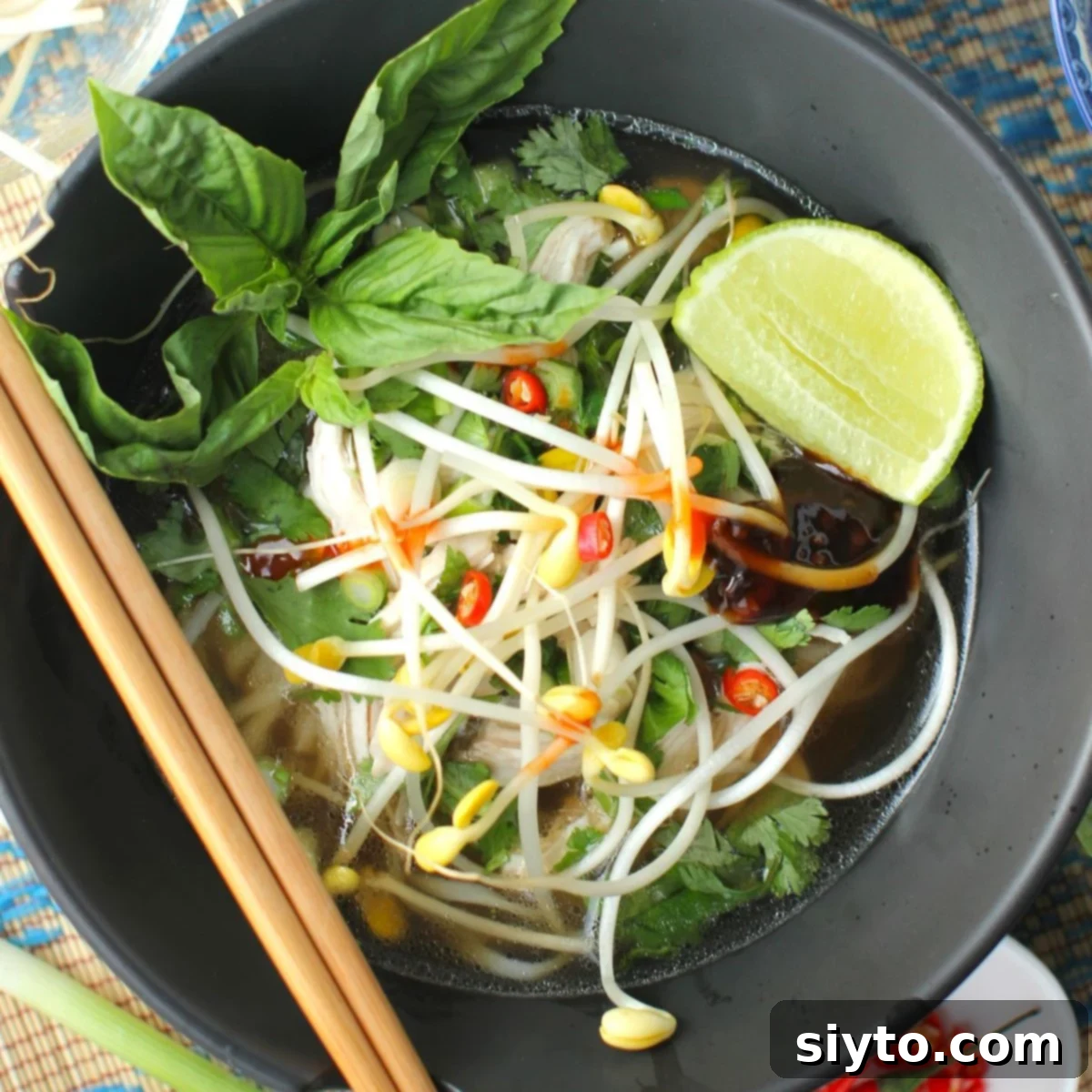
Easy Chicken Pho (Phở Gà) Recipe: Your Shortcut to Authentic Vietnamese Noodle Soup at Home
Craving a comforting bowl of Vietnamese pho but don’t have hours to simmer broth? This quick chicken pho soup recipe is your perfect solution! It’s a brilliant shortcut version of the famously addictive Vietnamese noodle soup, bringing that authentic, complex flavor right to your kitchen in a fraction of the time. If you’ve always thought making pho at home was a daunting task, prepare to be delightfully surprised. In just over an hour, you can have a steaming bowl of delicious pho on your table, ready to be savored. With a little advanced preparation of ingredients, this national dish of Vietnam can become a staple on your busy weeknights. Plus, the aromatic broth makes a generous batch that freezes beautifully, ensuring you’re always just minutes away from a warm, nourishing meal.
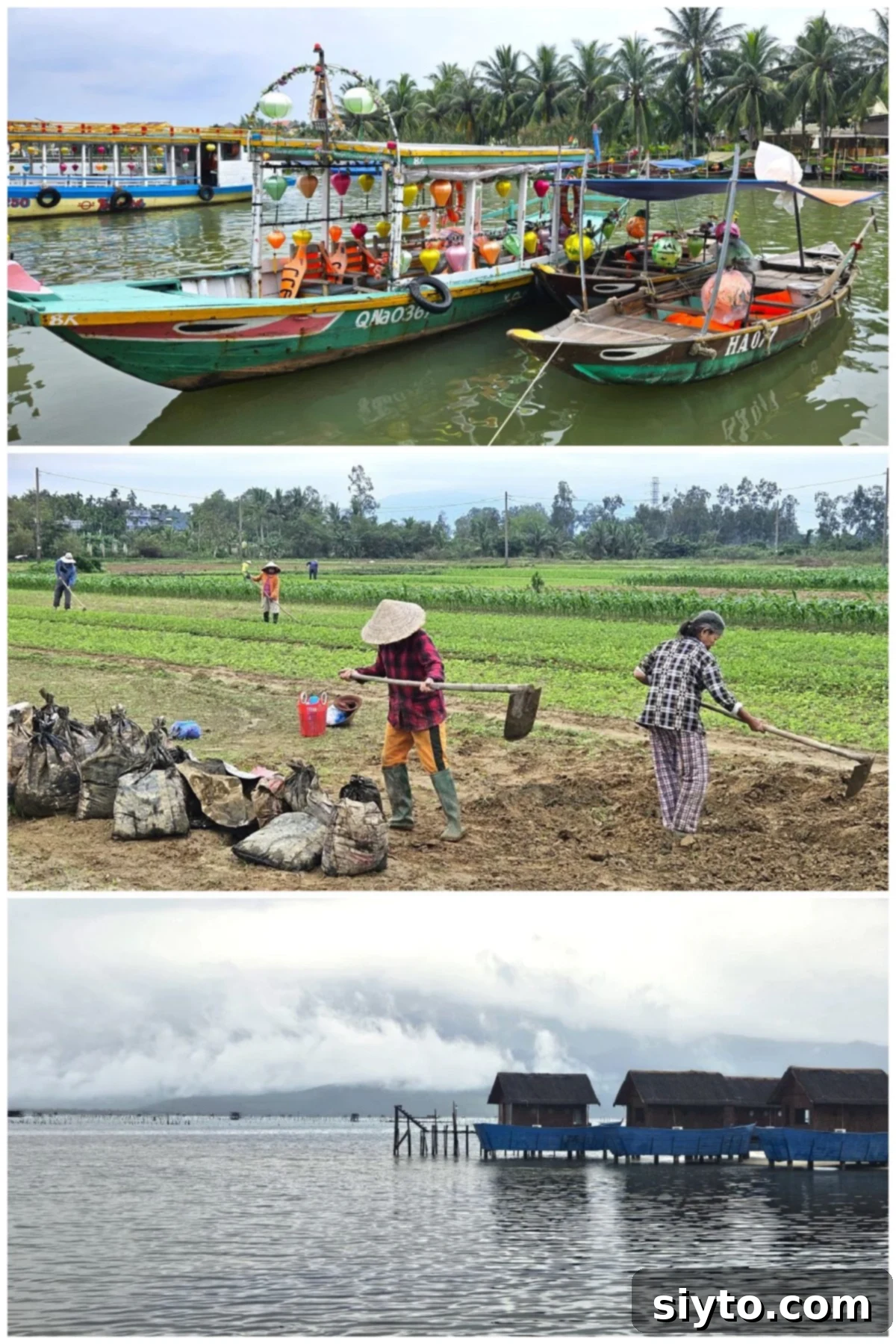
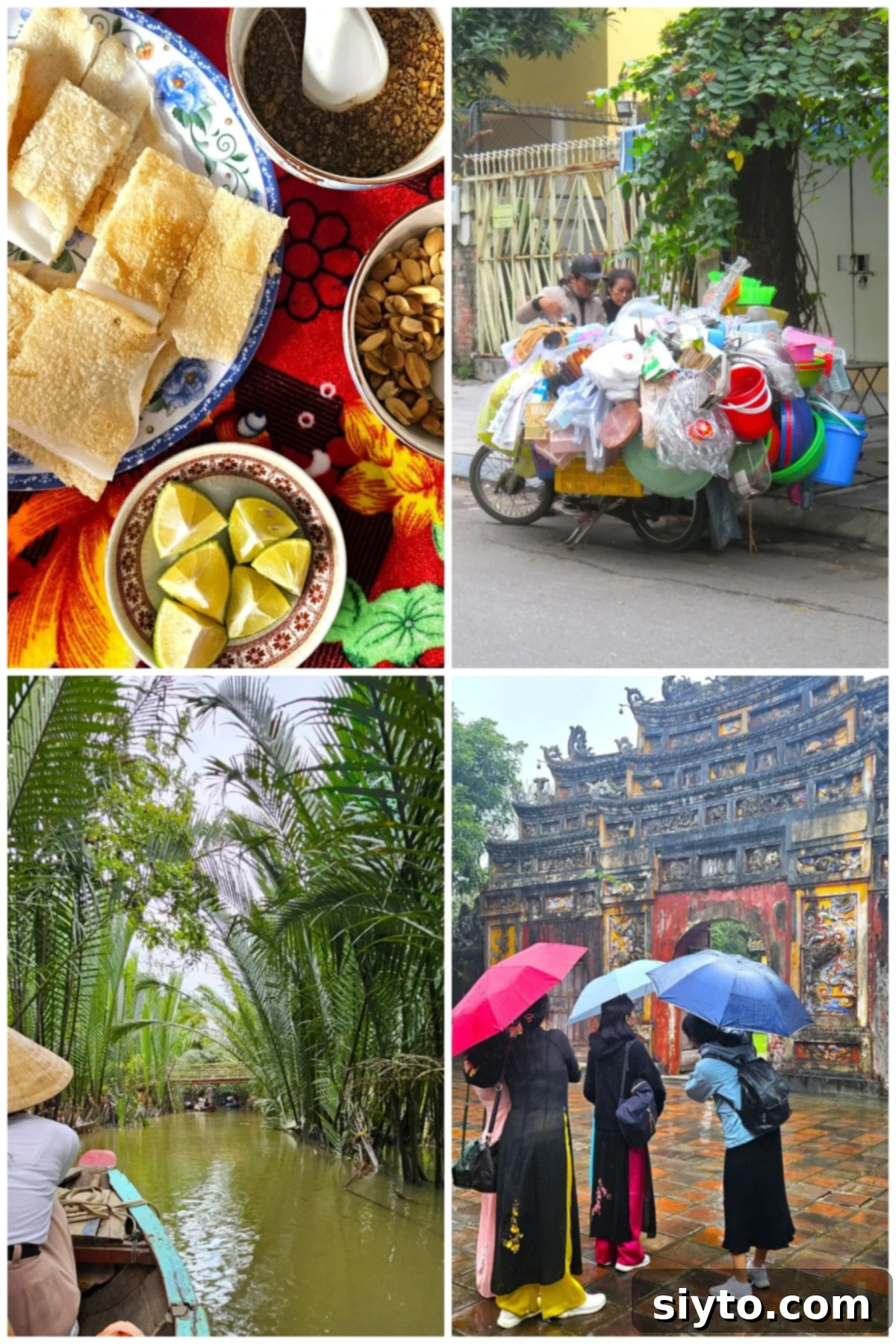
Our recent bucket list adventure to Vietnam over the holidays was nothing short of extraordinary. The country itself is a symphony of stunning landscapes, spectacular sights, and, perhaps most memorably, unbelievably delicious food. From the vibrant, humid energy of the south to the tranquil, cooler north, this long strip of Southeast Asian coastline offered an unforgettable tapestry of experiences.

As part of an Intrepid travel group, we were a small, diverse collective of seven enthusiastic travelers, guided by our phenomenal leader, Jay. His captivating stories didn’t just narrate Vietnam’s rich and sometimes tumultuous history; they brought the eras of emperors and ancient dynasties vividly to life, transporting us back through centuries of fascinating events and cultural evolution.

Our journey with Jay was an exhilarating expedition through diverse landscapes and vibrant urban centers. We traversed dense jungles, navigated serene rivers, explored majestic caves, climbed picturesque mountains, admired ancient pagodas, and immersed ourselves in bustling cities. Our modes of transport were as varied as our destinations: vans, planes, boats, bicycles, motorbikes, sampans, tuktuks, kayaks, and, of course, our own two feet. We experienced authentic homestays with local families, slept serenely on a boat rocking gently in the water, cycled through emerald rice paddies, delved into the mysteries of age-old caves and temples, and ascended steep hills for breathtaking panoramic views. And the food! Oh, the food was a revelation – the most exquisite dishes I have ever tasted, complemented by coffees so rich and aromatic they could blow your mind. Recalling our trip now, my mind is a vibrant kaleidoscope of colors, tastes, and sounds, each memory a precious gem.
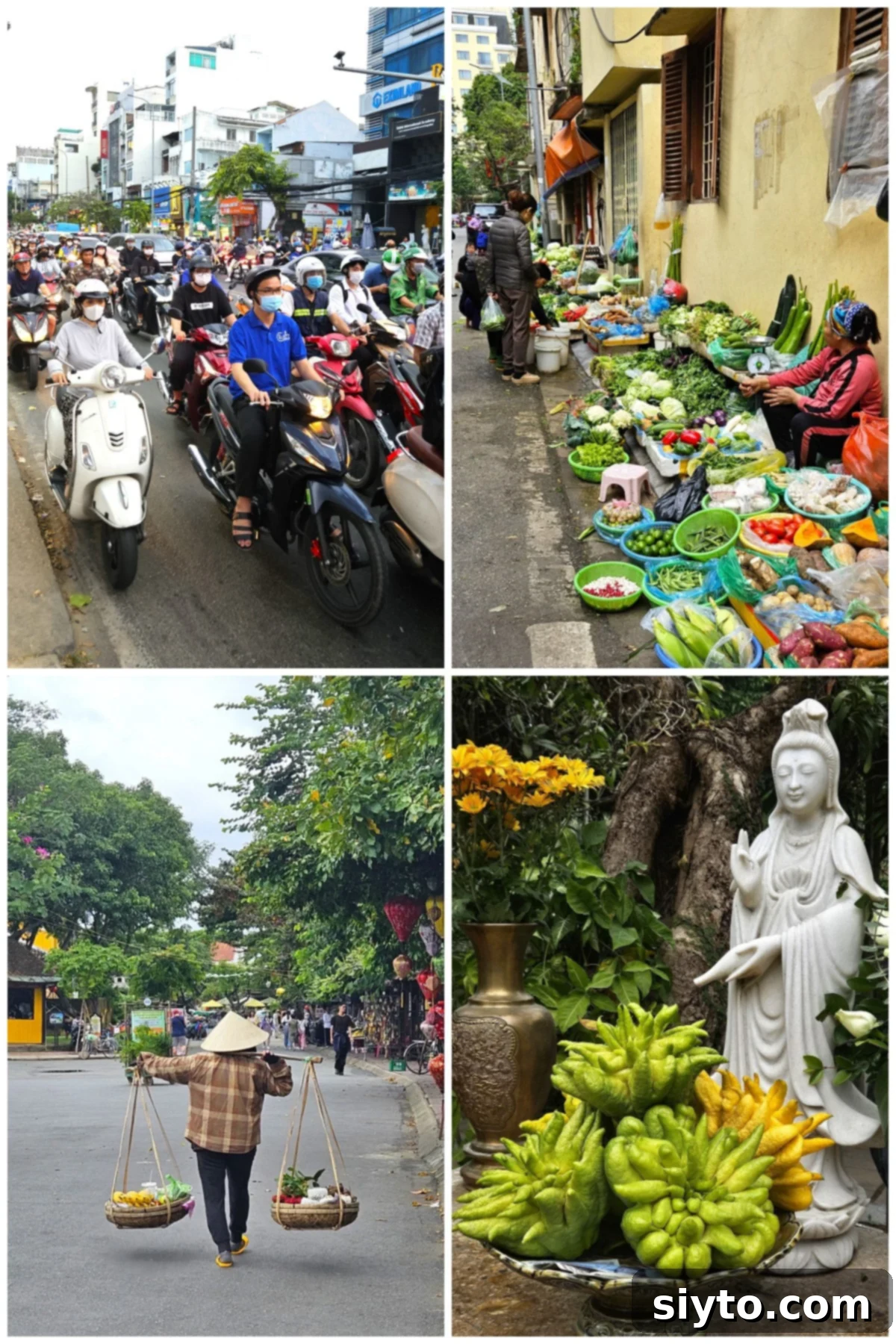
Our adventure commenced in the warm, sunny south, in Ho Chi Minh City (formerly Saigon), a mesmerizing metropolis that felt like a living, breathing entity, characterized by an endless flow of motorbikes, a symphony of sounds, and the welcoming smiles of its friendly inhabitants. Our initial days were a blur of captivating contrasts: from witnessing an elegant performance of ancient Vietnamese dance at Saigon’s magnificent opera house to an enchanting overnight stay with a local family on the banks of the mighty Mekong River, nestled amidst lush jungle and tranquil swamps. Falling asleep under the protective canopy of our mosquito nets, serenaded by the chirping of jungle insects outside the thin walls and the gentle lapping of the river against the overhanging deck, was an utterly magical and deeply immersive experience.

What is Vietnamese Pho? A Culinary Icon Explained
Phở (pronounced ‘fuh’) is not just a dish; it’s a cultural phenomenon and the unofficial national dish of Vietnam, deeply woven into the fabric of daily life. Originating in northern Vietnam in the early 20th century, it has evolved into a global culinary icon, cherished for its comforting warmth and complex flavors. While often referred to as “Vietnamese noodle soup,” the term “phở” actually refers specifically to the flat rice noodles that form its backbone. This seemingly simple bowl of soup is a masterclass in balance and fresh ingredients.
The traditional construction of a pho bowl involves several key elements. First, perfectly cooked phở noodles are placed at the bottom. Next, your chosen protein is added – most commonly thinly sliced raw beef (phở bò) which is instantly cooked by the scalding hot broth poured over it. Other popular beef additions include cooked brisket, meatballs, or tendon. For this recipe, we focus on phở gà, featuring tender shredded cooked chicken. Finally, a generous array of fresh herbs, bean sprouts, and other vibrant vegetables are piled on top, adding texture, color, and invigorating aromas. A final squeeze of fresh lime juice is essential for brightening the flavors, and optional additions like hoisin sauce for sweetness, fresh chili or sriracha for heat, allow for personal customization.
Pho is not just for dinner; it’s a versatile dish enjoyed throughout the day in Vietnam. It’s especially popular as a nourishing and filling breakfast, often seen bubbling away at street stalls and even offered at hotel breakfast buffets across the country. Its comforting properties also make it an ideal choice for a satisfying lunch or a light dinner.
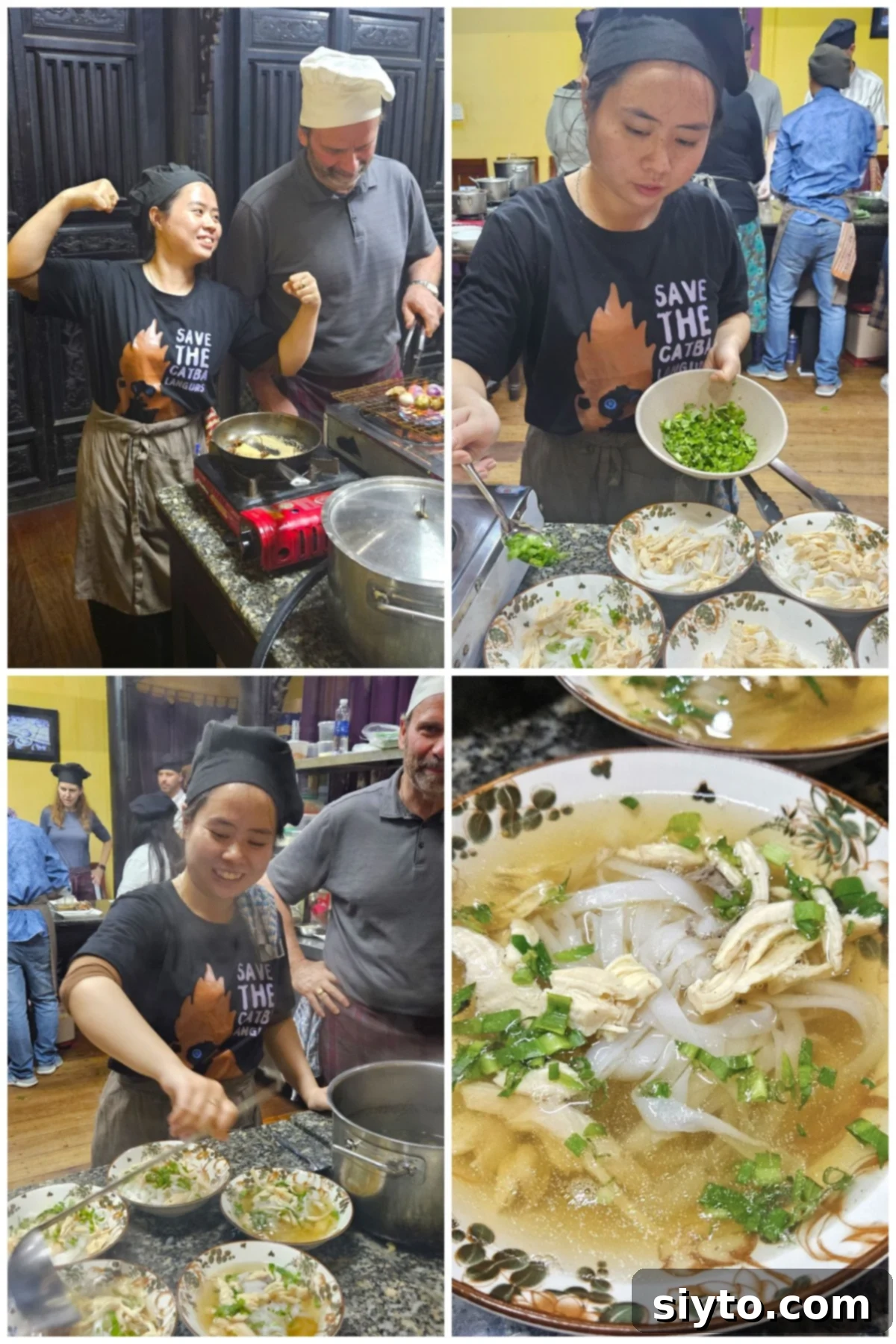
During our stay in the enchanting city of Hoi An, we had the incredible opportunity to participate in a phenomenal cooking class, led by our incredibly talented and entertaining young chef, Jam. This immersive experience was a highlight of our trip, offering a deep dive into Vietnamese culinary traditions. Among the many delightful dishes we mastered, one stood out for its ingenious simplicity and delicious results: a shortcut version of chicken pho soup, or phở gà (where ‘gà’ means chicken). Traditional Vietnamese pho broth is a labor of love, often simmered for 8, 12, or even 24 hours with beef or chicken bones, infused with an intricate blend of star anise, cinnamon bark, charred onions, and ginger, along with other aromatic spices. This phở gà recipe, however, is an easy and accessible version, achieving fantastic and authentic flavor by simmering for only about an hour. The generous yield means you’ll have plenty of extra broth to freeze, making a quick and satisfying pho dinner readily available whenever a craving strikes.
Jam also imparted an invaluable technique for poaching chicken breast, ensuring it’s always perfectly cooked, incredibly moist, and wonderfully tender – a surprisingly easy method that you’ll find detailed in the recipe card at the bottom of this post. It’s a game-changer for any chicken dish!
If you’re eager to explore more quick and easy Vietnamese dishes, be sure to try this equally delicious Vietnamese Caramelized Pork Rice Bowl.
How to Make the Quick and Easy Chicken Pho Broth: Flavor in an Hour
The heart and soul of any great pho is its broth, and during our cooking class in Hoi An, we had an absolute blast learning to create this shortcut version that captures incredible depth of flavor in a fraction of the time. It’s light, intensely aromatic, and oh-so-satisfying, proving that you don’t need to simmer for days to achieve pho perfection.
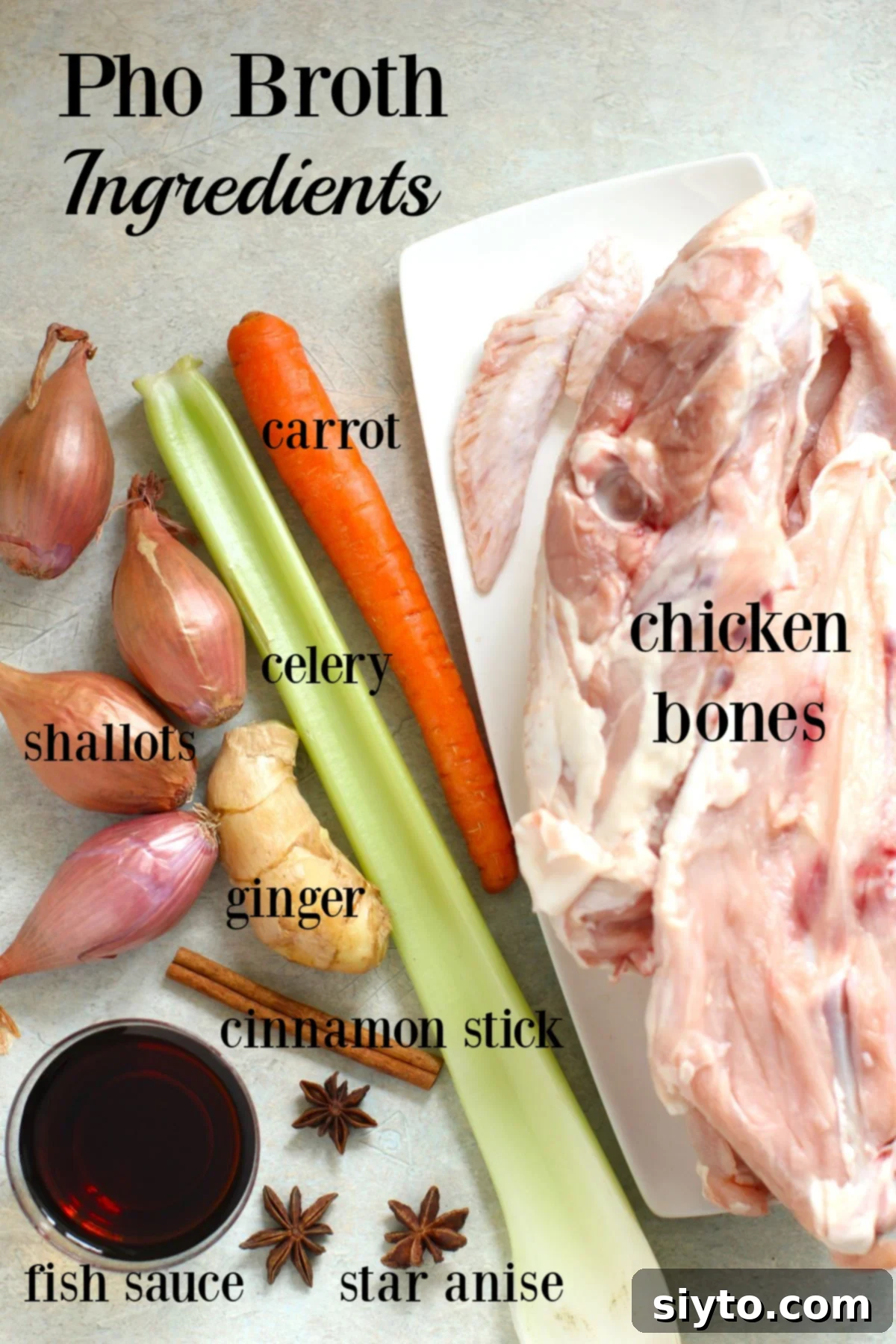
To craft a chicken pho broth that closely rivals the authentic, long-simmered versions, you’ll need just a few simple yet essential ingredients. The magic lies in how these ingredients are prepared and combined:
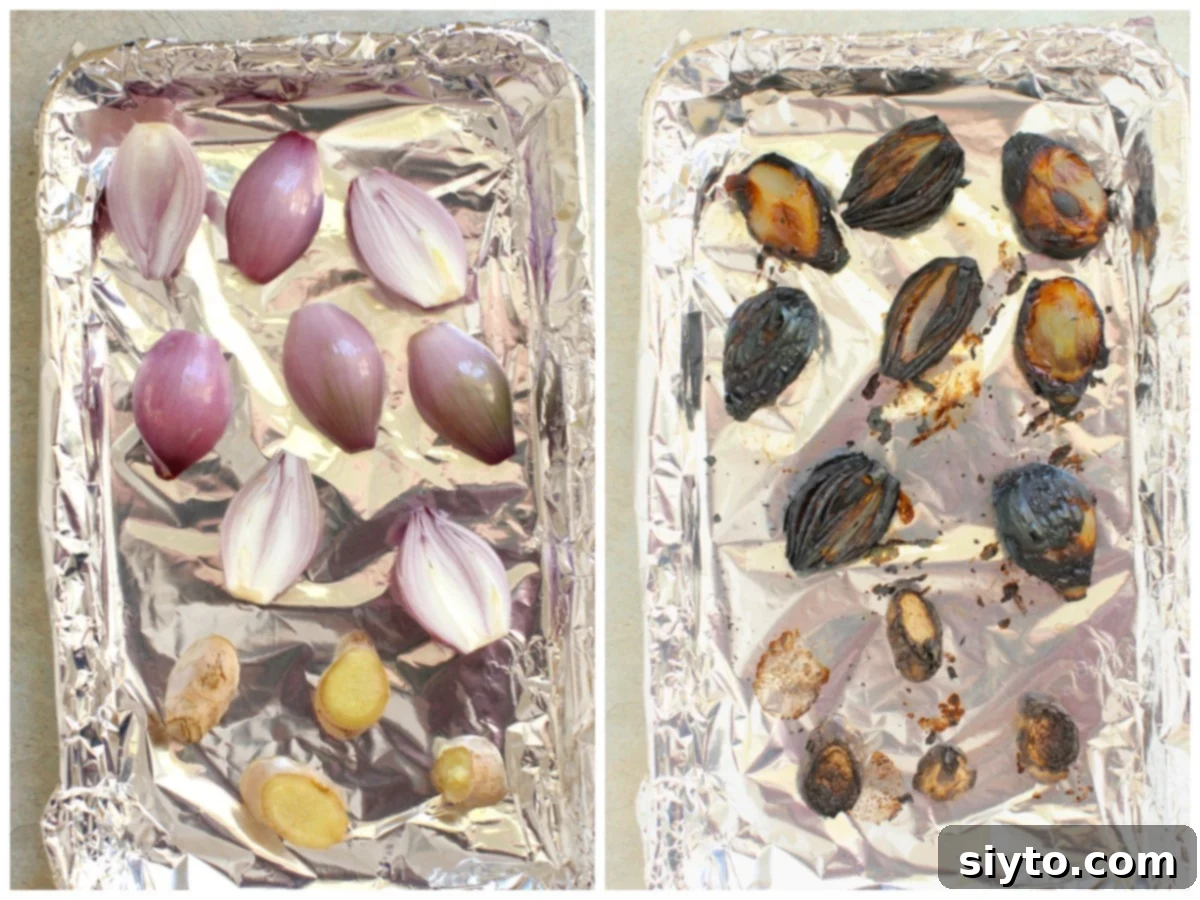
The critical first step in developing that signature complex pho flavor is charring the shallots (or onions) and ginger. This process isn’t just about cooking; it’s about caramelizing their natural sugars and imparting a distinctive smoky depth to the broth. The slightly bitter, smoky notes from the charring are what elevate the broth from good to truly exceptional. You have several options for achieving this: use your oven’s broiler, a hot and dry cast iron skillet, directly over the flame of a gas burner, or even on a barbecue grill. The goal is to get substantial blackened, charred bits on the surface of these aromatics, which will infuse the broth with an unparalleled richness.
Once your shallots and ginger are beautifully charred, the broth-making process continues. Begin by cooking the chicken bones in a large pot of water. Bring it to a boil and let it simmer for just a few minutes until a layer of foam, which consists of cooked proteins and impurities, rises to the surface. It’s crucial to diligently skim off and discard this foam to ensure a clear, clean-tasting broth. After skimming, add the fresh aromatics and vegetables: carrot, celery, your now-charred shallots and ginger, along with the distinctive whole spices like cinnamon stick and star anise. These spices are the backbone of pho’s aromatic profile, providing warmth and an unmistakable fragrance. Optional additions like dried shiitake mushrooms, bay leaves, and peppercorns can further enhance the depth and complexity of your broth. Allow all these ingredients to simmer together for approximately one hour. This shorter simmering time, combined with the charring, delivers a remarkably flavorful broth that tastes far more complex than its preparation time suggests.
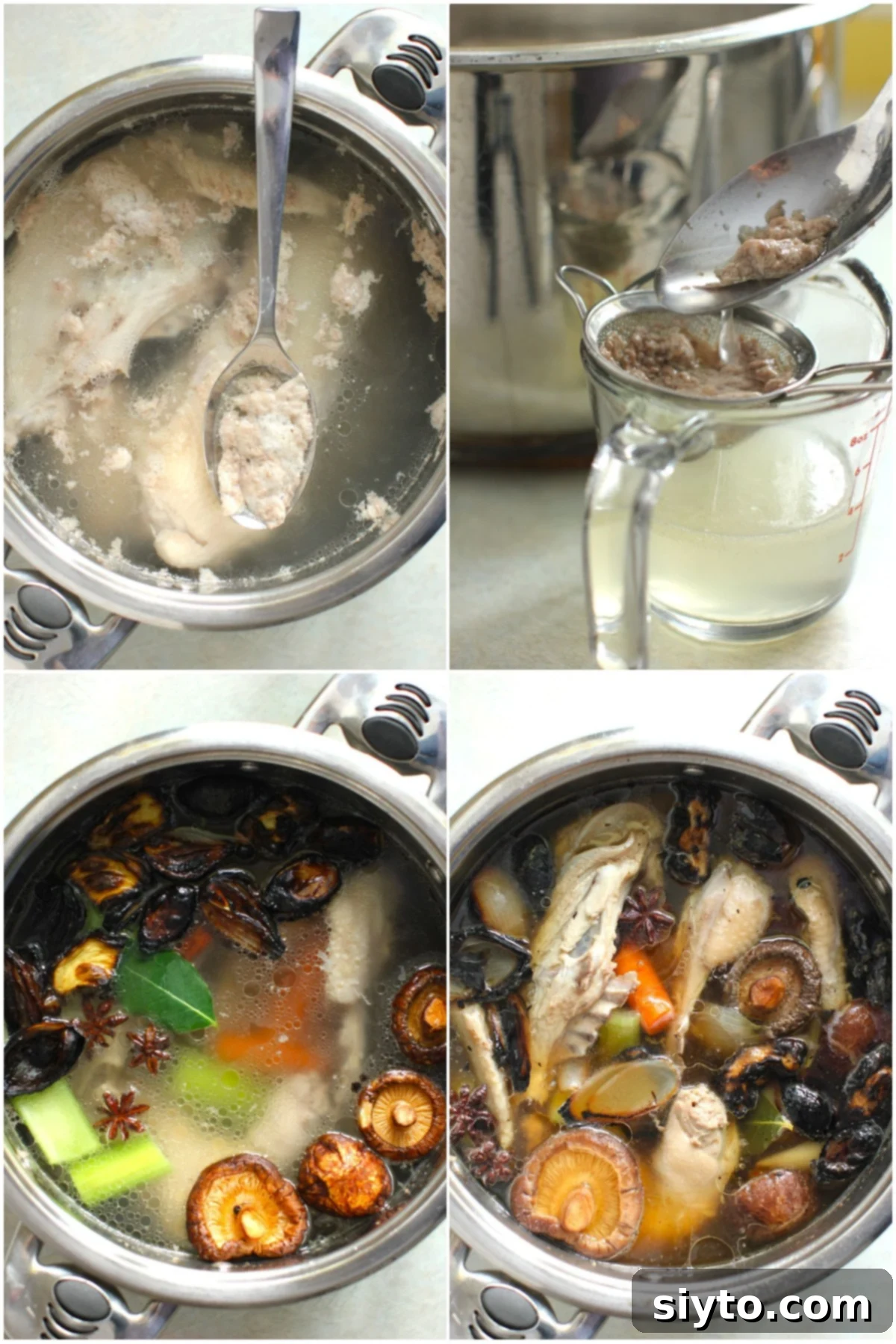
After simmering, carefully strain the broth. You can do this by pouring it through a colander set over a large bowl, or by using a spider ladle or slotted spoon to remove all the solids. For an exceptionally clear chicken pho broth, pass it through a fine-meshed sieve or cheesecloth for a second straining. The final, and crucial, step is seasoning. Add salt and fish sauce to taste. It’s important to make the broth slightly saltier than you might initially think is perfect, as the unsalted rice noodles and chicken meat you’ll add to each bowl will absorb some of that seasoning, ensuring a perfectly balanced flavor in the finished soup.
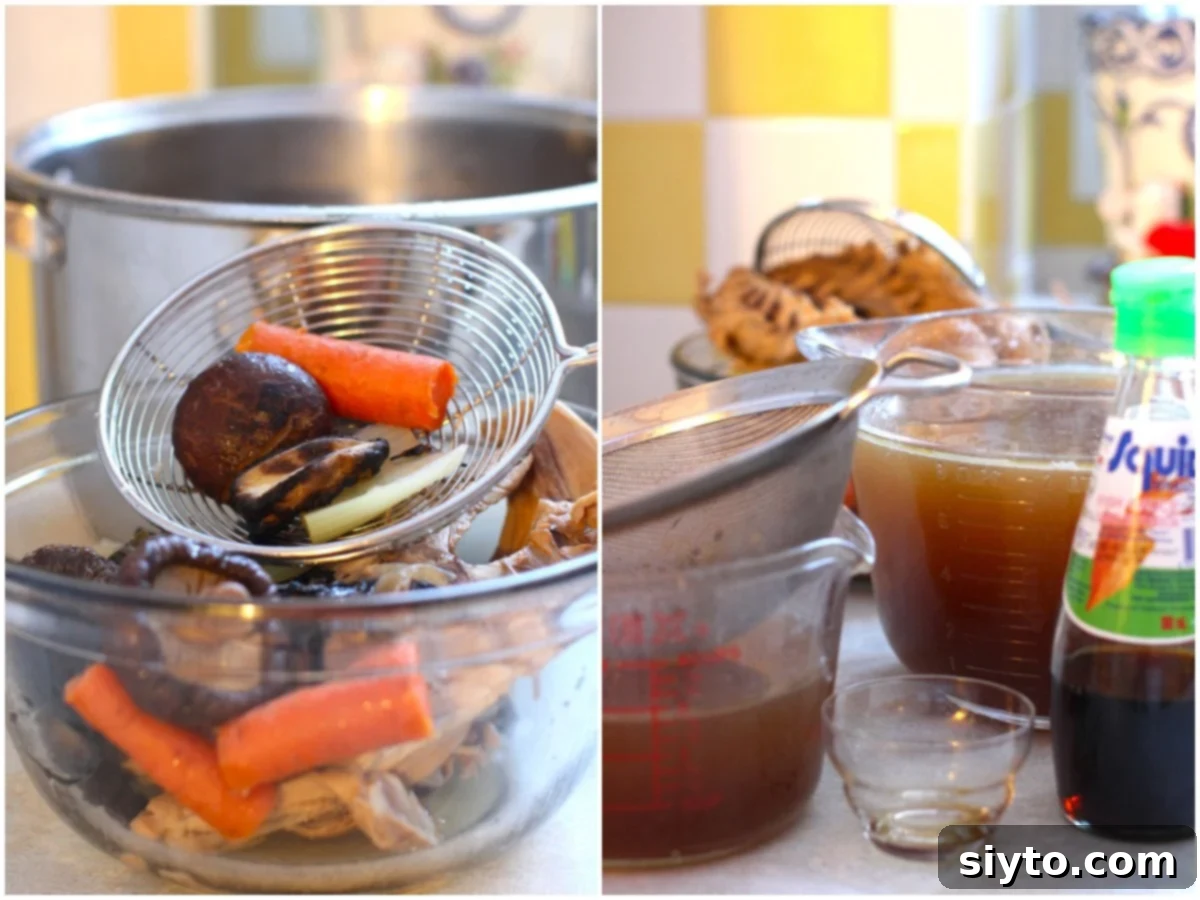
Congratulations! You now have approximately two and a half quarts of intensely flavorful, aromatic pho soup broth. This golden elixir is ready to form the base of countless delicious bowls of homemade pho, bringing the essence of Vietnam to your table with remarkable ease.
Can I Freeze Pho Broth? The Ultimate Meal Prep Hack
Absolutely, yes! Freezing pho broth is one of the best meal prep hacks you can adopt, especially with this recipe that yields a generous batch. This allows you to enjoy homemade pho whenever a craving strikes, with minimal effort. You can keep some of the freshly made broth in the fridge for up to 5 days, making it perfect for several meals throughout the week. For longer storage, this broth freezes exceptionally well for up to a year, maintaining its rich flavor and aromatic qualities.
Since each bowl of pho typically requires about 1½ to 2 cups of broth, it’s highly recommended to freeze it in smaller, single-serving or double-serving portions. This makes thawing and reheating incredibly convenient. You can use airtight containers, freezer-safe bags, or even ice cube trays (for smaller, quick additions to other dishes). Once frozen, simply thaw the desired amount of broth overnight in the refrigerator or quickly reheat from frozen on the stovetop. Having pre-portioned, frozen broth means that a delicious, steaming bowl of pho can be on your table in mere minutes, transforming busy evenings into opportunities for authentic culinary enjoyment.
How to Make up Bowls of Chicken Pho Soup: Assembling Your Culinary Masterpiece
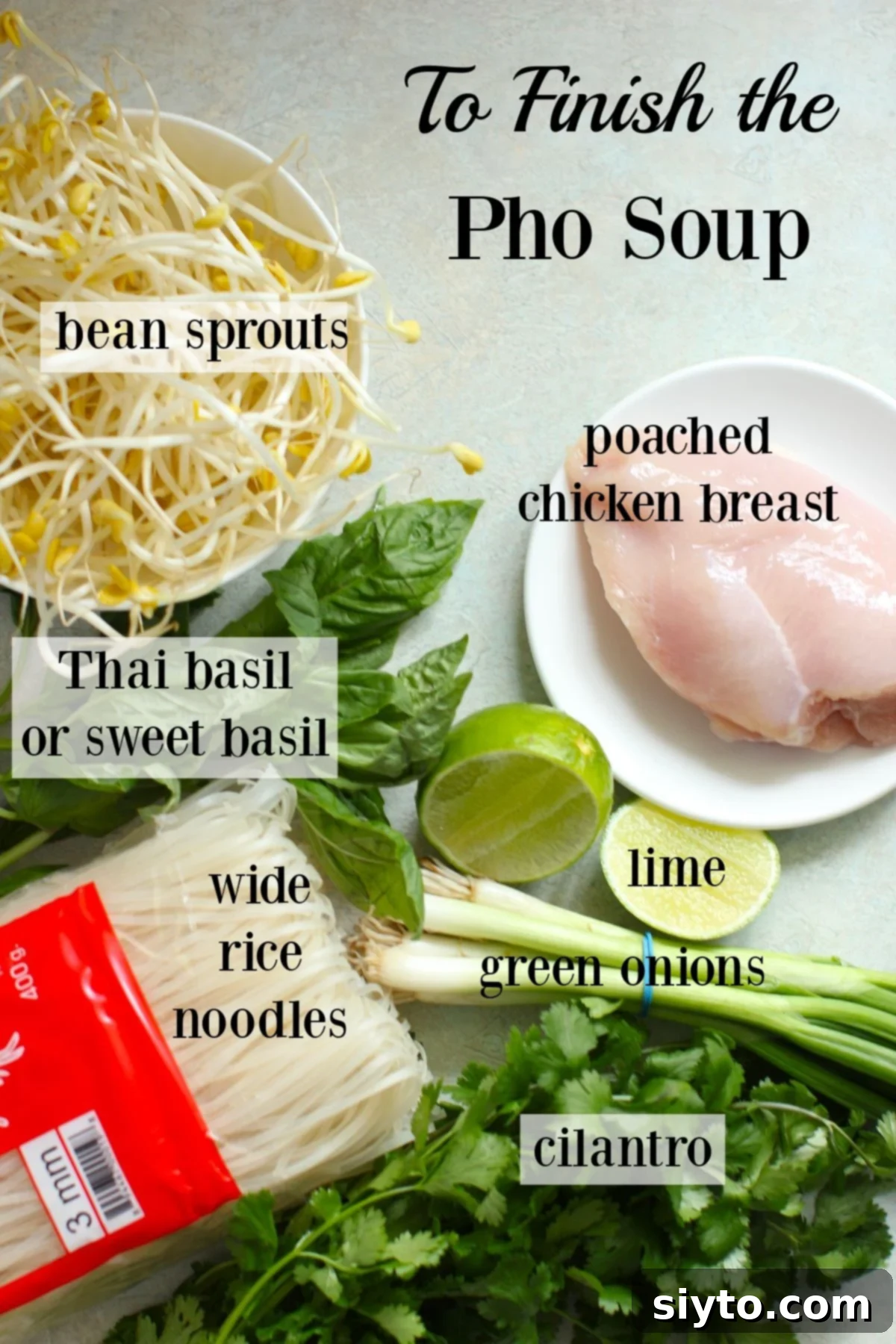
With that glorious, aromatic broth prepared, assembling your individual bowls of chicken pho becomes an incredibly straightforward and enjoyable process. The beauty of pho lies in its customizable nature, allowing each diner to create their perfect bowl. The essential components, beyond the broth, include wide rice noodles, your choice of protein (chicken in this case), and a vibrant array of fresh herbs and garnishes.
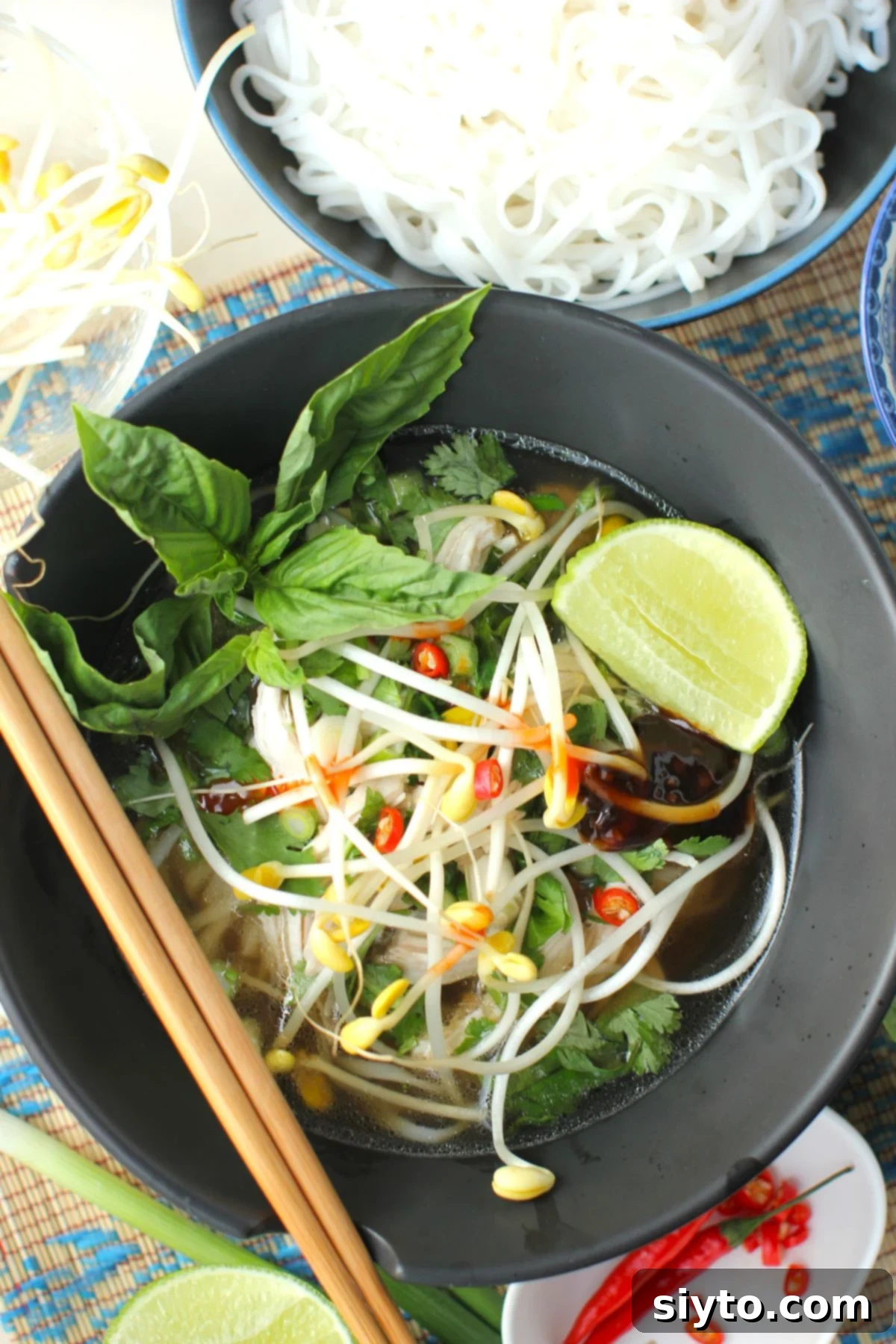
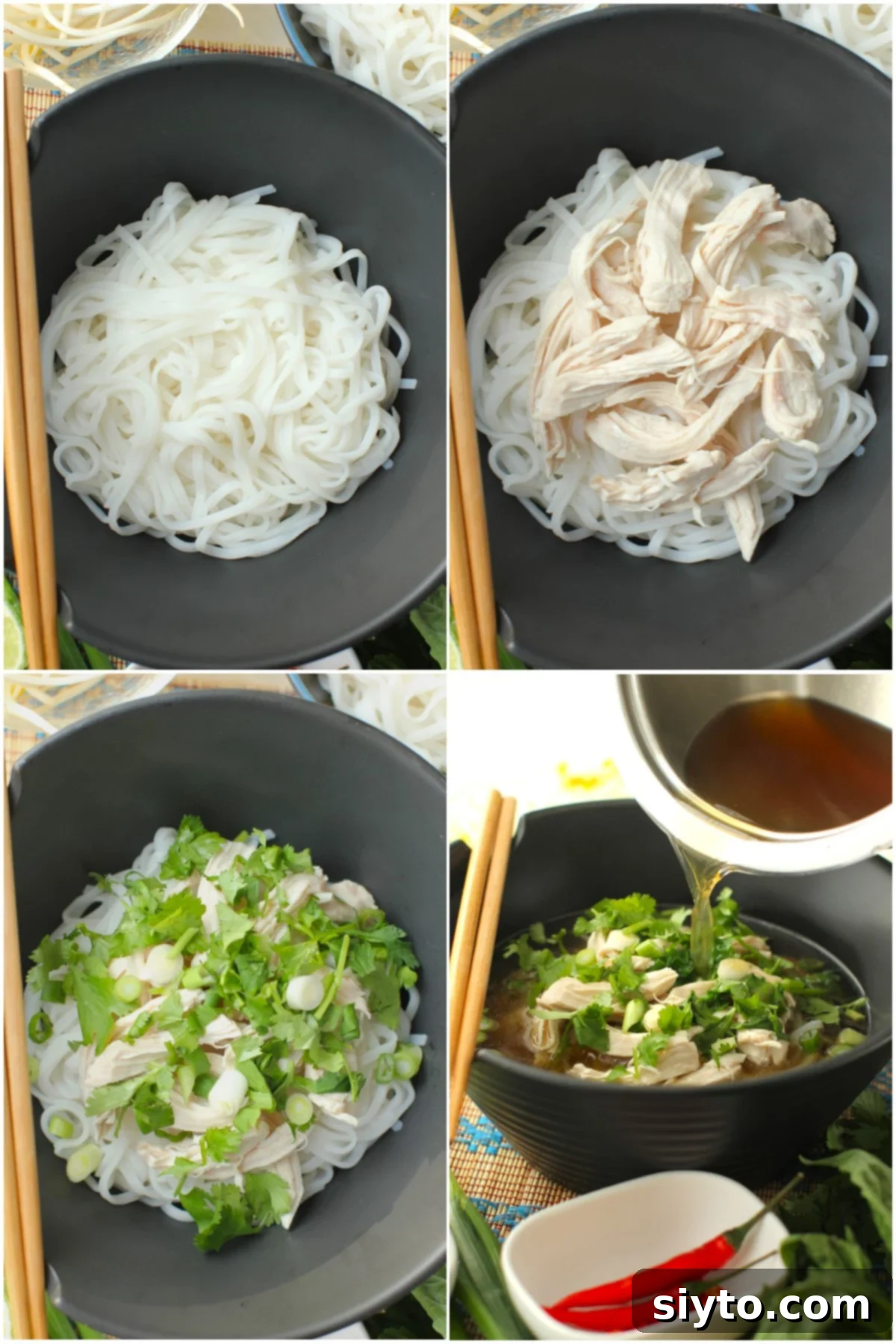
Start by cooking the wide flat rice noodles according to package directions. These noodles, aptly named phở (the very name of the soup!), are crucial for the authentic experience. Once perfectly tender, divide them evenly and place a generous clump into the bottom of each large soup bowl. Next, layer on your protein. For this chicken pho, a handful of tender, shredded poached chicken is ideal. If you opt for beef pho, thinly sliced raw sirloin or eye of round steak would go here, which will cook instantly in the hot broth. Follow with a generous sprinkle of freshly chopped green onions, cilantro, and Thai basil (or sweet basil/mint). These fresh herbs are vital, providing vibrant color, essential aromatics, and a burst of freshness that complements the rich broth.
The next step is perhaps the most critical for bringing all the elements together: carefully ladle the boiling hot broth over the noodles, chicken, and herbs. It is absolutely essential that the broth is piping hot; this not only perfectly heats the other ingredients but also gently cooks the raw beef if you’re making phở bò. Serve each bowl immediately with a wedge of fresh lime. The squeeze of lime juice is non-negotiable, as its bright acidity cuts through the richness of the broth, balancing the flavors to absolute perfection and enhancing every sip.
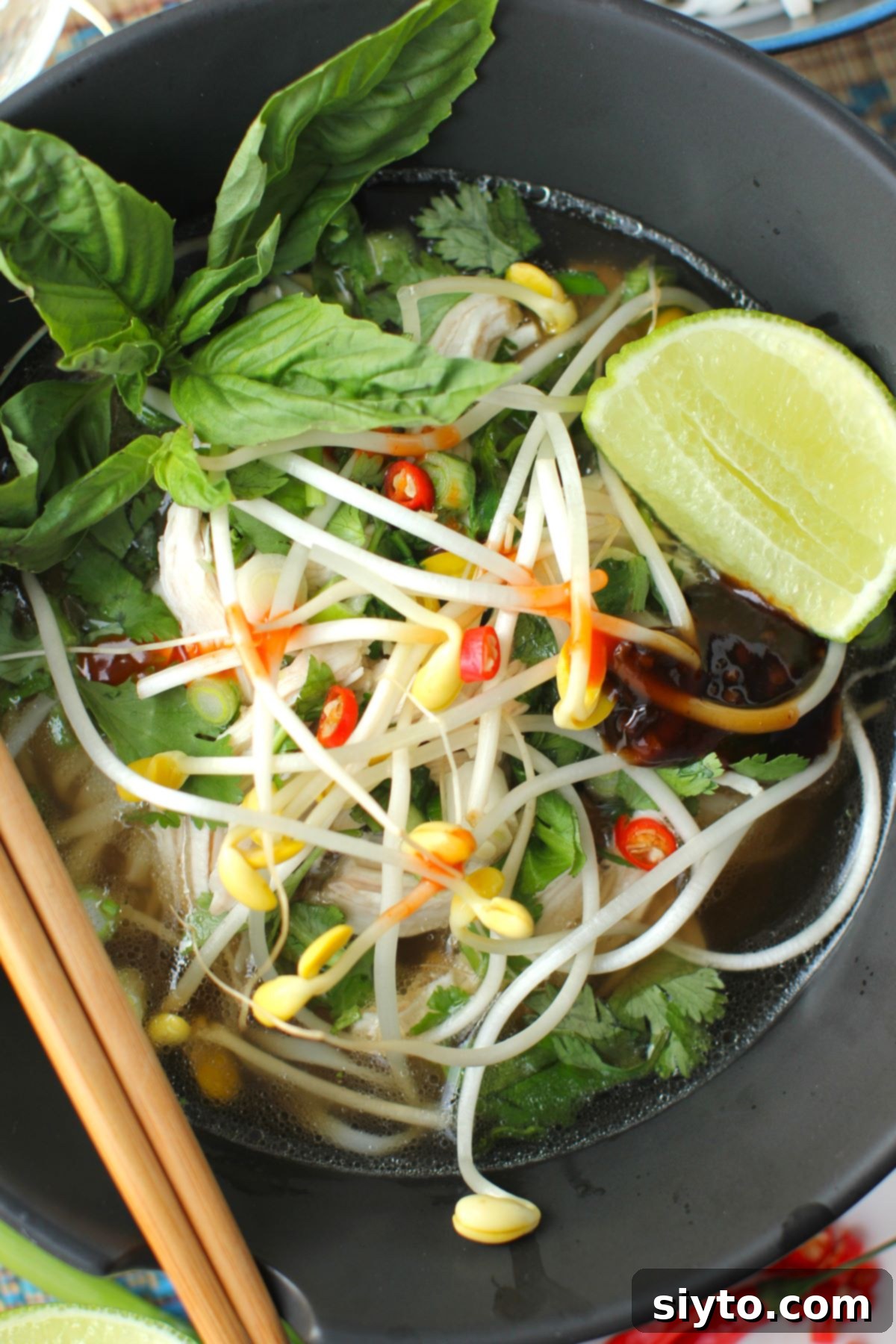
While a simple bowl of pho with just the broth, noodles, chicken, and herbs is wonderfully satisfying (just as we enjoyed it in our cooking class), you can truly elevate the experience with a range of additional garnishes and condiments. Go all out and offer a platter with crunchy fresh bean sprouts, extra sprigs of fresh herbs, and various sauces. A dollop of rich hoisin sauce adds a touch of sweet and savory depth, while a few drops of fiery sriracha or sliced fresh chili peppers provide a welcome kick of spiciness. To boost the vegetable content and add more texture, consider adding blanched baby bok choy, crisp snow peas, or thinly sliced fresh mushrooms. The beauty of pho is its adaptability – anything goes, allowing you to tailor each bowl to your exact preference, creating a truly personal culinary masterpiece.
How to Eat Pho Soup: A Guide to Savoring Every Drop
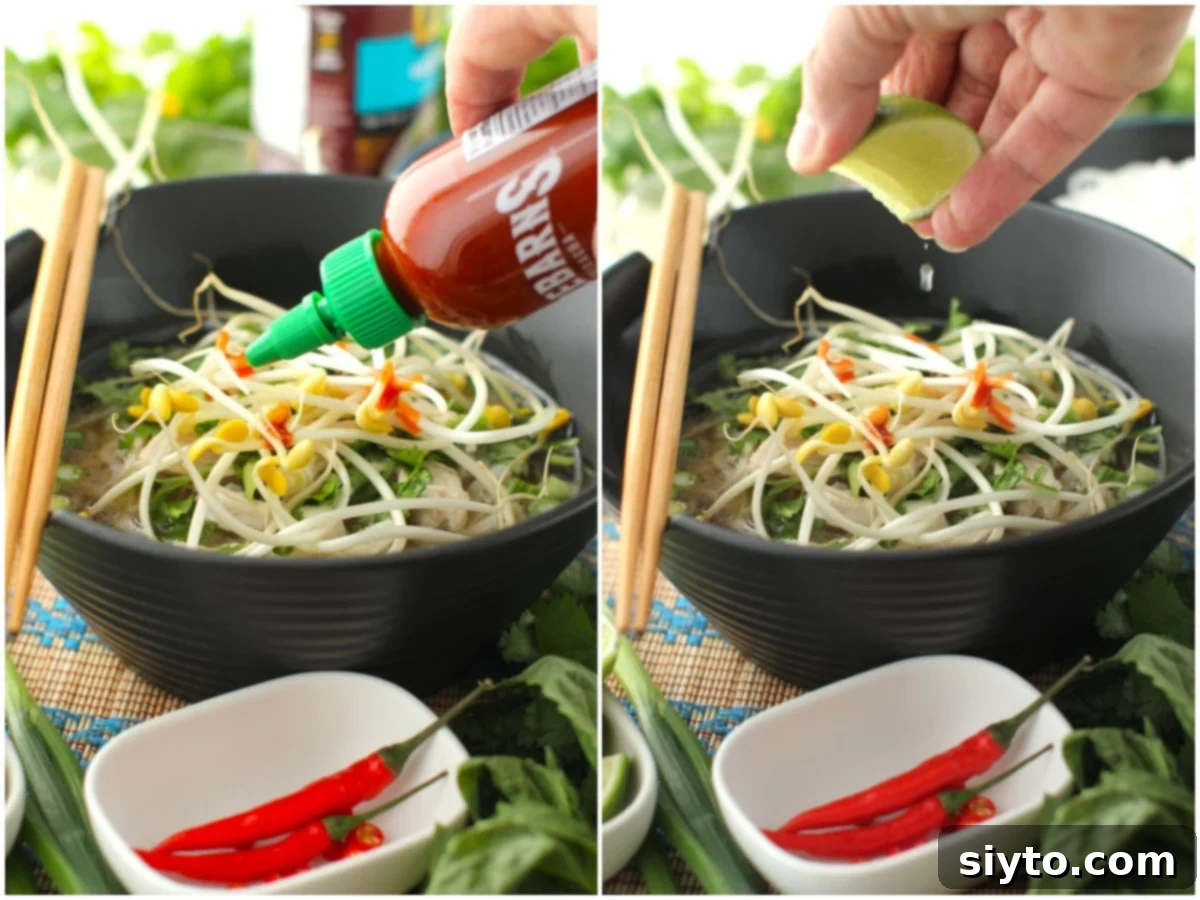
Eating pho is an experience to be savored, a delightful culinary ritual that engages all your senses. Before diving in, take a moment to customize your bowl. Squeeze the fresh lime wedge generously over the soup – this brightens all the flavors and adds a crucial acidic balance. Then, add any desired sauces and toppings: a swirl of hoisin for a touch of sweetness and depth, a dash of sriracha or a few slices of fresh chili for a spicy kick, and a handful of crunchy bean sprouts or extra herbs. Give the soup a gentle stir to submerge the vegetables and allow them to slightly soften and absorb the broth’s warmth.
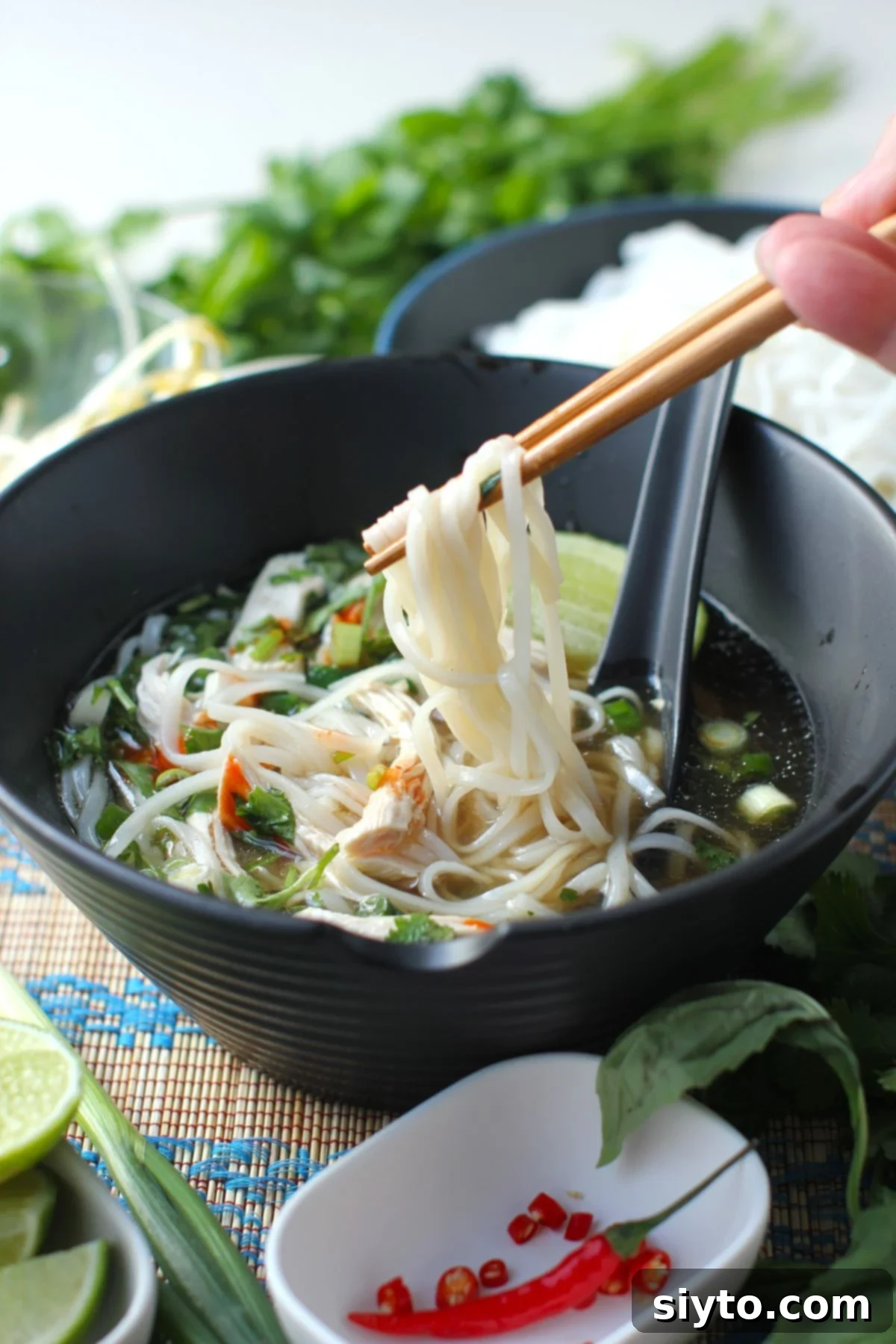
Now, for the authentic method: hold your chopsticks in your dominant hand and the soup spoon in your other. The goal is to alternate between solids and liquids. Use your chopsticks to pick up a mouthful of slippery noodles and tender chicken or beef. Don’t be shy – slurping is not only permitted but often encouraged in Vietnamese culture, as it signifies enjoyment and helps cool down hot noodles. After enjoying the noodles and protein, use your spoon to sip some of the rich, aromatic broth. Continue this delightful dance – a chopstick-full of noodles and meat, followed by a spoonful of broth, alternating until you’ve savored every last bit of the savory liquid. This alternating technique ensures you experience the full spectrum of textures and flavors in every bite, making each bowl of pho a truly satisfying and immersive meal.
Want to receive new Kitchen Frau recipes directly to your email as soon as they’re posted? Sign up here and you’ll get bits of news updates on what’s happening in my kitchen and garden, plus a handy and useful kitchen tip along with each recipe, too. (No spam ever.)
If you like my recipes, follow me on Instagram, Pinterest, X, and Facebook. You’d make my day. 😊
Guten Appetit!
Phở gà recipe adapted from Green Mango cooking class in Hoi An.
Easy Chicken Pho Soup (Phở Gà)
Margaret Bose Johnson
Save to Pinterest
Equipment
- 1 large stock pot or soup pot
- broiler, barbecue grill, or gas cooktop for charring the vegetables
- aluminum foil, if using the broiler
Ingredients
for the broth:
- 2 lbs. (900 grams) raw chicken bones, backs and necks, or chicken wings for richer flavor
- 3 quarts (3 litres/12 cups) water
- 4 large shallots (or 8 small ones) or 2 small onions, halved
- 1 thumb-sized piece of ginger (3 inches), sliced into ½-inch rounds
- 1 stalk celery, cut into 2-inch (5 cm) pieces
- 1 medium carrot, cut into 2-inch (5 cm) pieces, no need to peel it
- 2-3 whole star anise pods
- 1 3½-inch (9cm) cinnamon stick
- 1 teaspoon fine sea salt
- 3-4 tablespoons fish sauce
- 2 bay leaves, optional, for added depth
- 1 teaspoon whole peppercorns, optional, for subtle spice
- 3-4 dried shiitake mushrooms, optional, for umami
for the Pho soup:
- 1 large (10-12 oz/300 gms) boneless, skinless chicken breast or two small ones (or 1 sirloin, striploin, or eye of round steak for beef pho, or firm tofu for a vegetarian option)
- 400 grams (14 oz) wide flat rice noodles (approx. 100 grams/3½ oz per serving)
- 1 bunch green onions (spring onions), chopped
- ½ bunch fresh cilantro, chopped
- a handful of Thai basil, or sweet basil and/or mint
- 1 large juicy lime or 2 small ones, cut into wedges for serving
- a handful of fresh bean sprouts (see note below for substitutions)
- sriracha sauce or sliced fresh chili pepper, optional, for serving to taste
- hoisin sauce, optional, for serving to add sweetness
Instructions
to make the Pho broth:
- Preheat your broiler, setting the top oven rack about 3-4 inches (8-10cm) below the broiler element. Line a small baking pan with aluminum foil – this will be used for charring the shallots and ginger, making cleanup easier. Alternatively, you can char them on a barbecue grill, directly over the flame of a gas cooktop burner (using tongs), or in a hot, dry cast iron skillet.
- In a large stock pot or soup pot, combine the chicken bones and water. Bring this mixture to a rolling boil over high heat. Reduce the heat slightly to maintain a gentle boil and continue cooking for 5 minutes. During this time, use a large spoon or a fine-mesh skimmer to carefully remove and discard any foam or scum that rises to the surface. This step is crucial for achieving a clear and clean-tasting broth.
- While the chicken bones are boiling and being skimmed, prepare and char your aromatics: Peel the shallots (or onions) and cut them in half lengthwise (if using small onions, quarter them lengthwise). Slice the ginger into ½-inch (1cm) rounds; there’s no need to peel it as the skin will char. Arrange the shallots and ginger in your prepared aluminum-foil-lined pan and place it under the preheated broiler. Broil, turning every 3-4 minutes, until about ¾ of their surface area is charred and blackened. The shallots usually take around 10 minutes in total. The ginger might take an additional 5-10 minutes to reach the desired char. If any shallot skins become completely black and crisp, you can peel and discard those parts.
- Once you’ve thoroughly skimmed the chicken broth, add the cut celery and carrot pieces, the whole star anise pods, the cinnamon stick (broken in half for better flavor release), and your freshly charred shallots and ginger to the pot. If you’re using them, now is the time to add the optional dried shiitake mushrooms, bay leaves, and whole peppercorns. Bring the broth back to a low boil, then reduce the heat to a gentle simmer, cover the pot, and let it cook for 45 minutes to 1 hour. Be careful not to simmer much longer than one hour, as the flavors from the star anise and cinnamon can become overly dominant and bitter. (While the broth is simmering, begin poaching your chicken breast as described in the next section.)
- After the broth has simmered, strain it carefully to remove all solid ingredients. You can do this by pouring the entire contents of the pot through a large colander set over another clean pot or bowl, or by simply using a spider ladle or slotted spoon to fish out all the vegetables, bones, and spices. If you prefer an extra-clear broth, strain it a second time through a fine-mesh sieve or cheesecloth.
- Season the strained broth by adding the fine sea salt and 3 tablespoons of fish sauce. Stir well and taste. The broth should have a pronounced savory and slightly salty flavor. If it tastes a bit bland, add another tablespoon of fish sauce. Remember, the broth needs to be saltier than you might initially expect, as the rice noodles and chicken meat added to individual bowls will be unsalted and absorb some of the broth’s seasoning, leading to a perfectly balanced final dish.
- This recipe yields approximately 2½ quarts/litres (about 10 cups) of flavorful broth. Each bowl of pho typically uses 1½-2 cups (350-500ml) of broth. Any unused broth can be refrigerated for up to 5 days or frozen in airtight containers for up to a year, making future pho meals incredibly convenient.
to assemble the Chicken Pho soup:
- Poach the chicken (start this while your broth is simmering): Place the boneless, skinless chicken breast(s) in a medium-sized saucepan and cover them with water by about an inch (2.5cm). Add a generous pinch of salt to the water. Bring the water just to a boil, then immediately cover the saucepan with a tight-fitting lid and turn off the heat. Let the chicken sit in the hot water, without lifting the lid, for 40 minutes. This gentle method ensures the chicken breast cooks through perfectly, remaining incredibly moist and tender. After 40 minutes, remove the chicken and let it cool slightly before shredding.
- Once cooled slightly, use two forks or your fingers to shred the poached chicken breast into bite-sized pieces. Set aside.
- Cook the wide flat rice noodles in a separate pot according to the package directions. If no specific directions are provided, boil them gently until they are tender yet still have a slight chew (al dente), typically 6-10 minutes. Periodically remove a noodle and taste it to check for desired softness. Drain thoroughly.
- Prepare your fresh herbs: set aside 4 small sprigs of cilantro and 4 stems of basil (remove leaves from stems) for garnish. Finely chop the remaining green onions, cilantro, and basil together. This aromatic blend will provide a burst of fresh flavor.
- To assemble each bowl, fill 4 large soup bowls with ¼ of the hot cooked rice noodles. Divide the shredded poached chicken evenly over the noodles, then sprinkle a generous handful of the chopped green onions and mixed herbs over the chicken.
- Bring your pho broth back to a rolling boil. Carefully ladle the boiling hot broth over the noodles, chicken, and herbs in each bowl. The extreme heat of the broth is important to warm all the ingredients thoroughly and enhance the aromatics.
- Arrange the fresh bean sprouts, reserved sprigs of herbs, and lime wedges on a separate platter for serving. This allows everyone to customize their pho bowls to their liking. Alternatively, you can place a lime wedge directly on top of each bowl of soup. Serve immediately with optional sriracha sauce (or sliced fresh chili peppers) for heat and hoisin sauce for a touch of sweetness, allowing diners to add them to taste. Enjoy your delicious homemade chicken pho!
Notes
- The flavorful broth can be made in advance and stored. It will keep well in the refrigerator for up to 5 days or can be frozen for up to a year. This recipe makes a generous amount, ensuring you have multiple meals ready.
- The rice noodles can be cooked ahead of time and refrigerated for up to 5 days. To reheat them, simply cover them with boiling water for 2 to 3 minutes, then drain thoroughly. This brings them back to their tender texture without overcooking.
- The chicken breast can be poached, shredded, and refrigerated for up to 5 days. Having it ready makes assembly quick and easy.
For serving when made ahead: Simply reheat the desired amount of broth until it’s boiling hot. Reheat the noodles (if pre-cooked and cold), then place them into bowls. Add the cold shredded chicken and chopped fresh herbs, then pour the boiling hot broth over everything. Garnish as usual and serve.
If using beef for Pho Bo: For perfectly thin slices that cook quickly in the hot broth, freeze the steak (sirloin, striploin, or eye of round) for 15-30 minutes until it’s firm but not solid. This makes it much easier to slice paper-thin. Allow the slices to come to room temperature while you prepare the other ingredients. Add these raw, thin beef slices to the soup bowl on top of the noodles, ensuring they are fully submerged in the boiling hot broth immediately before serving; the heat will cook them to perfection.
Bean Sprout Substitutions: Fresh bean sprouts provide a delightful crunch and add valuable nutrients. If they are unavailable, you can substitute them with finely shredded green cabbage, thinly sliced or julienned daikon radish, or even carrots to achieve a similar fresh, crunchy texture.
Maximizing Chicken Bones: If you use chicken wings (or other bony parts) to make the broth, don’t let the meat go to waste! Once the broth is cooked and strained, you can pick off all the tender bits of meat from the bones. This cooked chicken is excellent for a chicken salad, as an addition to fried rice, tacos, omelets, or any dish where you need cooked, shredded chicken.