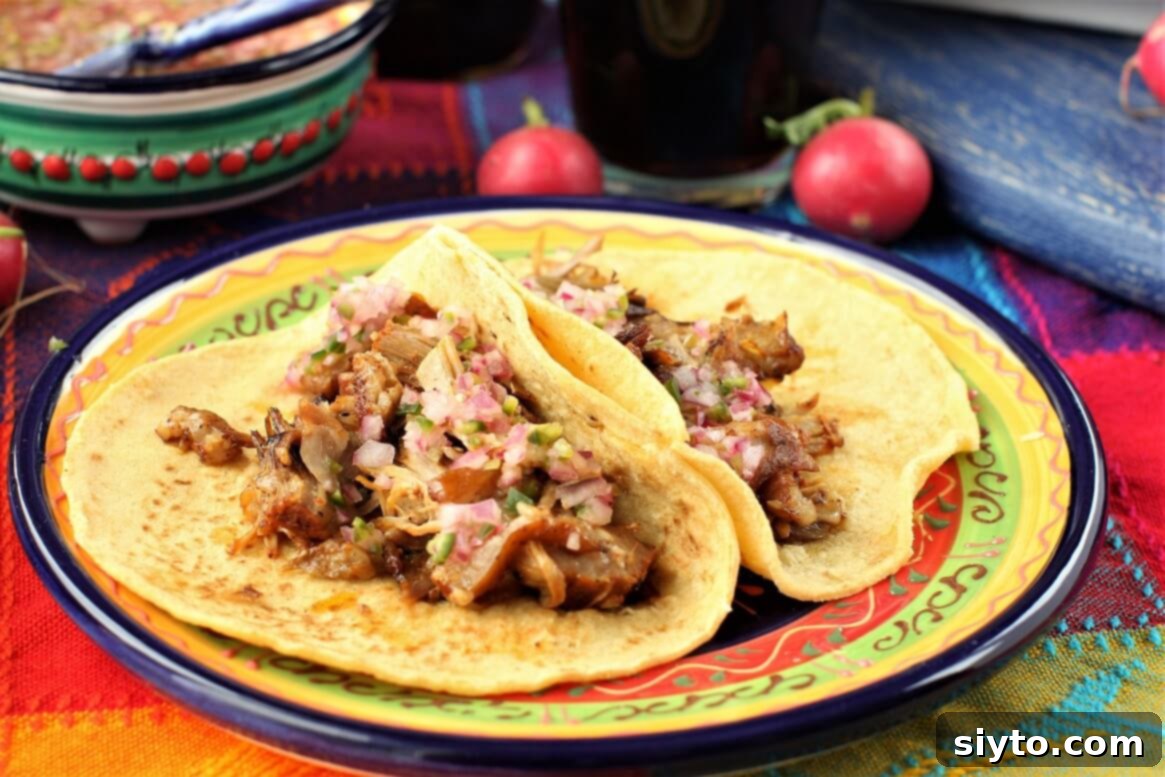
Authentic Cochinita Pibil: A Journey to Yucatecan Slow-Roasted Pork Perfection
Imagine tender, succulent pork, slow-roasted to fall-apart perfection, infused with a vibrant citrus-achiote marinade, then generously draped in a fresh, tangy sauce with a fiery habanero kick. All of this, nestled within a warm tortilla – does that tantalize your taste buds? This culinary masterpiece is ‘Cochinita Pibil,’ a celebrated Mexican specialty originating from the Yucatán Peninsula. Traditionally, it’s cooked in underground pits known as ‘pib,’ lending it an unparalleled depth of flavor. While digging a backyard pit might not be feasible for most, you can still craft an incredibly authentic and delicious version right in your own kitchen using this surprisingly accessible recipe. Prepare it ahead of time, and it becomes the star of your next gathering with friends and family, promising an unforgettable Mexican feast. (Skip to recipe.)
Discovering the Flavors of Mexico: Beyond the Stereotypes
When the word “Mexico” springs to mind, many conjure images of sun-drenched beaches, bustling resorts, vibrant sombreros, and ubiquitous tacos. While these elements are undoubtedly part of its charm, Mexico is a country of profound depth and stunning diversity. It boasts breathtaking natural scenery, from towering mountains and vast deserts to lush, enigmatic jungles. Its colonial cities are architectural wonders, steeped in history and culture. Yet, perhaps one of its most compelling attributes is its fantastic cuisine – a rich tapestry of flavors that has captivated and awakened palates worldwide.
The exhilarating tastes of Mexican food are a direct result of a glorious amalgamation: the culinary traditions of Spanish conquistadors blending seamlessly with the ancient cooking practices of indigenous Mesoamerican civilizations. This fusion, combined with an abundance of fresh local produce, the finest seafood, premium meats, and an exciting spectrum of aromatic herbs and spices, creates a gastronomic experience unlike any other. Each dish tells a story, a testament to centuries of cultural exchange and culinary innovation, making Mexican food a UNESCO Intangible Cultural Heritage of Humanity.
The Enchantment of Yucatán: A Personal Connection
The vivid colors, bold flavors, and vibrant spirit of Mexico resonate deeply with my soul, weaving an almost magical spell over me. The brilliant, intense sunlight seems to amplify every sensation in that magnificent country, making everything feel more alive, more vibrant. Mexico is a treasure trove of natural and cultural wonders, boasting an impressive 35 UNESCO World Heritage Sites. My excitement was palpable when I discovered that this month, Mexico would be our featured country in the Eat the World recipe challenge. As I write this, I’m eagerly anticipating a week-long journey (regrettably short, but certainly better than nothing!) back to this cherished destination. Our adventure will take us to the state of Quintana Roo, on the legendary Yucatán Peninsula, and I simply cannot wait to uncover more of its fantastic secrets, particularly looking forward to exploring the ancient ruins at Tulum.
The past week, spent immersed in preparing this Cochinita Pibil recipe in anticipation of our trip, has been an absolute delight. It’s a dish deeply rooted in the Yucatán’s rich Mayan heritage. The word ‘pib‘ itself is Mayan, referring to the traditional underground oven or pit barbecue. This ancient cooking method is still employed in many Yucatecan villages today, a living testament to culinary history.
The Ancient Art of the Pib: Traditional Cooking
The construction of a ‘pib’ is an art form in itself. A rectangular pit is meticulously dug, typically 2 to 3 feet deep. The base is then carefully lined with large stones, upon which a fire is built. The magic truly begins when the fire subsides, leaving behind glowing embers that heat the stones to the perfect temperature – a precise point of readiness known only to local experts, passed down through generations. Once the stones reach this optimal heat, the prepared meats, traditionally wrapped in banana leaves for flavor and moisture, are tucked into metal pots. These pots are then carefully placed onto the scorching hot stones and covered with sackcloth. Finally, a layer of earth is shoveled on top, sealing the meats within this natural, underground oven. There, they slowly cook for hours, emerging incredibly tender, moist, and infused with an unparalleled, earthy flavor. Can you imagine the heady, intoxicating aromas that burst forth as these succulent offerings are finally uncovered and unwrapped?
Bringing the Pib to Your Kitchen: Modern Adaptations
While recreating an authentic underground ‘pib’ in your backyard might pose a slight challenge, you can achieve a remarkably similar effect right in your kitchen. The secret lies in replicating the slow, moist cooking environment. Start by thoroughly marinating a generous cut of pork, then wrapping it tightly in banana leaves. These leaves impart a subtle, unique flavor and help seal in moisture. Place this parcel into a sealed roasting dish and let it cook low and slow in your oven for several hours. If banana leaves are hard to find, a double layer of parchment paper works wonders to create that essential steam-roasting effect. For an even simpler approach, a slow cooker can produce deliciously tender results – just skip the banana leaves or parchment and let the appliance do the work.
Once your pork is perfectly roasted and incredibly tender, the next step is to shred it. Drizzle the flavorful pan juices back over the shredded meat, adding an extra layer of moisture and richness. Then, spoon this delectable meat into warm tortillas. The Cochinita Pibil itself is not inherently spicy; its primary flavors come from the marinade. The heat comes from an accompanying fresh habanero-orange sauce. This zesty sauce, a vibrant mix of fresh orange juice, finely minced red onions, and potent habanero chiles, is ladled generously over your tacos, transporting you straight to Yucatecan pig heaven.
Crafting Your Cochinita Pibil: A Step-by-Step Guide
Preparing the Flavorful Pork
The journey to perfect Cochinita Pibil begins with the pork. First, generously pierce the meat all over with the tip of a sharp knife or a metal skewer. This allows the marinade to penetrate deeply, infusing every fiber with flavor. Then, rub the pork thoroughly with a combination of salt and Seville orange or lime juice. Seville oranges are traditionally preferred for their distinctive bitter and acidic notes, but fresh lime juice makes an excellent, readily available substitute. This initial rub helps tenderize the meat and sets the stage for the rich spice paste.
Next, it’s time to prepare the aromatic spice paste that defines Cochinita Pibil. If using whole spices, grind the achiote seeds, cumin seeds, Mexican oregano, peppercorns, and allspice in a spice grinder or pound them in a mortar and pestle until fine. For convenience, pre-ground spices work perfectly well. To these vibrant spices, add pressed or finely grated garlic cloves, the remaining salt, a touch of ground dried Yucatecan chili or hot smoked paprika for subtle heat, and more citrus juice. Mix everything thoroughly to form a deep red, fragrant paste. This paste is then lovingly smeared all over the pork, ensuring every surface is coated with this flavorful rub.
Now, for the magic of wrapping. Obtain some banana leaves (often found frozen in Asian markets or well-stocked supermarkets). If using, gently wipe them clean with a damp cloth. To make them more pliable and prevent cracking, lightly sear them over a bare flame or place them under a preheated broiler for a mere 10 to 15 seconds – be careful not to overheat, as they can become brittle. If banana leaves are unavailable, two large squares of parchment paper will also create an effective, sealed environment. Wrap the seasoned pork tightly in the banana leaves or parchment, creating a beautiful, verdant parcel. This package is then securely tied with cotton kitchen twine.
Place this bundled treasure into a dish large enough to accommodate it, cover it with plastic wrap or a lid, and refrigerate it overnight, or for at least 8 hours. This crucial marination time allows the flavors to meld and deepen, resulting in an incredibly rich and mellow pork. The next day, you’ll roast it low and slow for hours, giving you plenty of time to relax with your favorite book or enjoy a leisurely afternoon.
The Roasting Process
On the day of cooking, preheat your oven to a gentle 300°F (150°C). Place a rack at the bottom of a large Dutch oven or heavy roasting pot that can comfortably hold your wrapped pork parcel. Pour 1 cup of water into the pot, then carefully place the meat parcel onto the rack. Cover the Dutch oven with a tight-fitting lid to trap the steam and moisture, mimicking the underground ‘pib’ environment. Cook for an initial 2½ hours.
After the first cooking phase, carefully remove the meat parcel to a plate. Pour the accumulated pan juices from the pot into a spouted cup. Return the rack and the meat parcel to the Dutch oven. Now, pour those luscious juices back over the meat parcel, ensuring it’s well-basted and moist. Cover again and continue cooking for another 2½ hours. It’s a good practice to check the liquid level every hour or so, adding more water if it seems to evaporate too much from the pot. This slow, moist cooking ensures the pork becomes incredibly tender and flavorful, practically melting in your mouth.
Once roasted, it’s time for the delicious reveal. Unwrap your carefully prepared pork. With two forks or your fingers, shred the succulent meat into finger-thick chunks. Don’t forget the final, vital step: pour all the glistening, flavorful pan juices over the shredded pork. This adds an incredible layer of moisture, flavor, and an appealing sheen to the meat. If your pork roast had skin, scrape some of the rendered fat from its underside (but leave a thin layer on for flavor) and slice the tender, cooked skin into thin strips, tossing them with the shredded meat. This adds a delightful, luscious moistness that elevates the entire dish.
The Zesty Citrus Chili Sauce
While the pork is lovingly slow-roasting, use this time to whip up a batch of the essential lip-smacking fresh citrus sauce. This sauce provides the vibrant, spicy counterpoint to the rich pork. The recipe traditionally calls for fiery habanero peppers, but if you prefer a milder heat, serrano chiles are an excellent alternative (and even after soaking in citrus juice, the serranos I used weren’t overly spicy, so next time I might brave the habaneros!). As with the pork marinade, Seville oranges are the traditional choice for their distinct bitterness and acidity, which differs significantly from regular sweet oranges. To closely replicate this flavor profile, you can use a mixture of fresh orange, grapefruit, and lime juice.
Assembling Your Flavor-Bomb Cochinita Pibil Tacos
With your perfectly tender Cochinita Pibil and zesty sauce ready, you’re all set to assemble your flavor-packed tacos. Warm your corn tortillas – I prefer to toast mine in a dry skillet until lightly pliable, then stack and wrap them in a dampened kitchen towel to keep them warm and soft. Pile a generous amount of the shredded pork into each warm tortilla shell. Then, add a good swish of the Chili Citrus Sauce. Fold up your taco, and prepare to devour an explosion of authentic Mexican flavors.
For those who love a bit of fresh crunch and contrasting textures, consider adding optional toppings. Thinly sliced red or green cabbage, crisp radishes, or creamy avocado wedges are fantastic additions that complement the rich pork and tangy sauce beautifully. These additions allow you to customize your taco experience to your preference.
This dish is meant to be shared! Invite a few friends over to transform your taco time into a vibrant Mexican fiesta. (Unless, of course, you’d prefer to hoard your delicious stash of Cochinita Pibil all to yourself – which is perfectly understandable!). Crack open a cold Corona or a refreshing Mexican soda, put on some lively mariachi music, and let the good times roll. Olé!
* * * * *
Kitchen Frau Notes & Tips:
Banana Leaves: These can typically be found in the frozen foods aisle of Asian markets or larger supermarkets with an international section. If fresh or frozen banana leaves are unavailable, two large squares of parchment paper can be used as an effective substitute to create the necessary steaming environment.
Achiote Paste/Seeds: Achiote (also known as annatto) paste or seeds are crucial for the distinctive color and earthy flavor of Cochinita Pibil. You can find them in Latin American import stores or the international section of some larger supermarkets. If you absolutely cannot find achiote, a good substitute for the color and some depth of flavor is 2 tablespoons of sweet paprika. While the flavor profile will be slightly different, your spice rub will still be fantastic.
Slow Cooker Method: After successfully making Cochinita Pibil using the oven method, I believe a similar, highly effective result could be achieved with a slow cooker. My next attempt will involve marinating the pork with the spice rub in a covered casserole dish, then transferring it to a slow cooker. Cooking on low for 8 to 10 hours should yield wonderfully tender results. I suspect wrapping it might not even be strictly necessary in a slow cooker, given its inherently moist cooking environment. Of course, it will never precisely replicate an authentic pit-barbecued pig from the Yucatán, but until I experience the real thing, this alternative promises to be quite satisfying! I’ll be sure to report back on how it turns out in the slow cooker.
Cochinita Pibil Tacos (Authentic Yucatecan Slow-Roasted Pork You Can Make at Home)
Adapted from ‘The Essential Cuisines of Mexico’ by Diana Kennedy
For the Meat:
- 3¼ – 4½ pound (1.5-2 kg) pork roast with fat, preferably bone-in (shoulder picnic roast, shoulder blade roast, or shoulder butt roast all work well)
- 5 tablespoons Seville orange juice (or lime juice), divided
- 3 teaspoons salt, divided
- 1 heaped tablespoon achiote seeds or achiote/annatto paste (use seeds for gluten-free)
- ½ teaspoon cumin seeds (or ground cumin)
- ½ teaspoon dried Mexican oregano (or 1 teaspoon regular dried oregano)
- ½ teaspoon peppercorns (or ½ teaspoon ground black pepper)
- 6 whole allspice berries (or ¼ teaspoon ground allspice)
- 5 garlic cloves
- ⅛ teaspoon ground dried Yucatecan chili or ¼ teaspoon hot smoked paprika
- 2 large pieces of banana leaf (mine were each over 1 foot wide and 3 feet long / 100 x 30 cm), thawed if frozen (or substitute two large squares of parchment paper)
- Cotton kitchen twine for tying the parcel
- 1 – 2 cups (240-480mls) of water
For the Sauce:
- ⅔ cup (160ml) Seville orange juice – about 3 to 4 oranges (or use 3 tablespoons/45ml fresh orange juice, 2 tablespoons/30ml fresh grapefruit juice, 5 tablespoons/75ml fresh lime juice, and 1 teaspoon finely grated grapefruit zest)
- ½ cup (120ml) very finely minced red onion
- 3 habanero chilis, very finely minced (or use other hot chili peppers of your choice – I used serrano chilis, including the seeds, for milder heat)
- ½ teaspoon salt
To Assemble the Tacos:
- Approximately 4 corn tortillas per person
- Prepared Cochinita Pibil
- Fresh Citrus Chili Sauce
- Sliced red or green cabbage (optional)
- Sliced radishes (optional)
- Sliced avocado (optional)
Instructions:
- Marinate the Pork (Day Before): The day before cooking, pierce the pork roast all over with the tip of a sharp knife or a metal skewer. Pour 2 tablespoons of the Seville orange or lime juice over the meat, then sprinkle evenly with 2 teaspoons of the salt.
- Prepare the Spice Paste: If using whole spices (achiote seeds, cumin seeds, oregano, peppercorns, and allspice), grind them together in a spice grinder or pound them in a mortar and pestle until fine. Press the garlic cloves through a garlic press or grate them finely on a microplane and add them to the spices. Stir in the ground dried chili or paprika, the remaining 1 teaspoon salt, and the additional 3 tablespoons of Seville orange (or substitute citrus) juice. Mix everything thoroughly to form a deep red, aromatic paste.
- Coat the Pork: Generously smear the spice paste all over the pork, ensuring all sides are thoroughly coated.
- Prepare Banana Leaves (Optional): If using banana leaves, gently wipe them clean with a damp cloth. To make them pliable, lightly sear them over a bare flame for a few seconds or place them under a preheated broiler for 10-15 seconds. Be careful not to overheat, as they can become brittle.
- Wrap the Pork: Wrap the seasoned pork tightly in one piece of banana leaf or parchment paper, then wrap it again in the second piece. Secure the bundle with cotton kitchen twine.
- Refrigerate: Place the wrapped pork bundle into a dish just large enough to hold it. Cover with plastic wrap or a lid and refrigerate for 8 hours or overnight to allow the flavors to meld and deepen.
- Preheat Oven: The next day, preheat your oven to 300°F (150°C).
- Begin Roasting: Place a rack at the bottom of a large Dutch oven that can accommodate the wrapped pork. Pour 1 cup of water into the Dutch oven and carefully place the meat parcel onto the rack. Cover the Dutch oven with a tight-fitting lid and cook for 2½ hours.
- Baste and Continue Roasting: Remove the meat parcel to a plate. Pour the accumulated juices from the pot into a spouted cup. Return the rack and the meat parcel to the Dutch oven. Pour the collected juices back into the pot, over the meat parcel, to baste it thoroughly. Cover again and continue cooking for another 2½ hours. Check the liquid level every hour or so and add more water if the pot becomes too dry.
- (Slow Cooker Alternative): See notes above for cooking the pork in a slow cooker without parchment paper or banana leaves.
- Prepare the Sauce: While the meat is cooking, combine all the ingredients for the Citrus Chili Sauce in a bowl. Stir well and let it sit for at least 2 hours before serving to allow the flavors to meld.
To Serve as Tacos:
- Shred the Pork: Roughly shred the tender cooked pork with two forks or your fingers into finger-thick chunks.
- Add Juices: Pour any remaining fat and pan juices from the roasting pan over the shredded meat. If your pork roast had skin, scrape some of the fat from the underside of the cooked skin (leaving a thin layer) and slice the tender skin into thin strips, tossing them with the meat for added moisture and richness.
- Reheat (if necessary): If you shred the meat before serving, reheat it briefly in the microwave or cover the platter with foil and keep it warm in a low oven until serving time.
- Assemble Tacos: Serve the hot Cochinita Pibil with warm tortillas (toast them lightly in a dry skillet and keep them warm in a dampened kitchen towel) and the Citrus Chili Sauce in a separate bowl. Guests can assemble their own tacos at the table, enjoying the pork and sauce simply, or with optional crunchy additions like shredded red or green cabbage, sliced radishes, or soft avocado slices.
- Storage: Leftover meat and sauce will keep well for several days in the refrigerator.
Buen Provecho!
Explore more incredible global cuisines! Check out all the wonderful Mexican dishes prepared by fellow Eat the World members and share your culinary adventures using #eattheworld. Click here to find out how to join and embark on a delicious journey exploring a new country’s cuisine each month with us!
- Simply Inspired Meals: Disney Resorts Copycat Churro
- Palatable Pastime: Green Poblano Hot Sauce
- Culinary Adventures with Camilla: Cochinita Pibil with Homemade Tortillas
- Evelyne: Pork with Green Mole and White Beans
- A Day in the Life on the Farm: Veggie Enchiladas
- Amy’s Cooking Adventures: Crispy Pork Carnitas
- Margaret: Cochinita Pibil Tacos: With Yucatecan Pit-Barbecued Pig you can Make in your Kitchen
- Loreto & Nicoletta: Huevos Rancheros with Black Bean and Avocado
Want to receive new Kitchen Frau recipes directly to your email? Sign up here and you’ll get a handy and useful kitchen tip along with each recipe, too. (No spam ever.)
If you like my recipes, follow me on Instagram, Pinterest, Twitter, and Facebook. You’d make my day!
Don’t forget to PIN IT to save the recipe:
Check out my past ‘Eat the World’ Recipe Challenge posts:
- A Taste of Ireland: Dublin Coddle
- A Taste of Thailand: Shrimp Laksa (Khung)
- A Taste of Kenya:Maharagwe with Ugali (Red Beans with Cornmeal Slice)
- A Taste of Sweden: Swedish Meatballs with Cream Gravy
- A Taste of New Zealand: Classic Pavlova
- A Taste of France: Axoa d’Espelette (A Simple Stew from the Basque Country)
- A Taste of Argentina: Red Chimichurri Sauce
- A Taste of India: Kerala Upma (Fluffy, Kerala Style Breakfast Upma Recipe)
- A Taste of Poland: Polish Honey Cake
- A Taste of Ethiopia: Four Ethiopian Recipes for a Fantastic Feast
- A Taste of England: Gluten Free Fish and Chips and Mushy Peas
- A Taste of Georgia: Charkhlis Chogi (Beets with Sour Cherry Sauce)