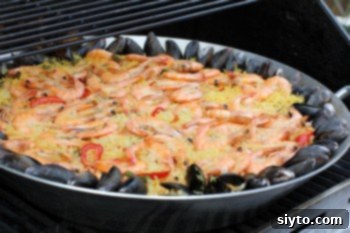
Authentic Spanish Paella: The Ultimate Crowd-Pleasing Fiesta Recipe
Gather your loved ones and prepare for a culinary journey to Spain with this incredible authentic paella recipe! Brimming with tender pork, succulent chicken, fresh seafood, and vibrant vegetables, this dish is not just a meal – it’s an unforgettable experience designed to feed a crowd. Simple to follow and bursting with flavor, it’s perfect for your next big celebration. (Jump directly to the recipe here!)
There’s something truly magical about a Spanish Paella Party. The aroma of saffron and simmering ingredients, the warmth of shared laughter, and the vibrant colors of a freshly cooked paella – it all comes together to create an atmosphere of pure joy. This past summer, we were fortunate enough to experience just such a gathering, and it was everything we could have hoped for and more.
Embarking on the Paella Journey: A Family Legacy Reimagined
For years, making paella has been a cherished item on my culinary bucket list, a dish that always seemed just out of reach due to its perceived complexity. The opportunity arose when our dear Spanish-Mexican friend, Gilbert, invited us to his home for a paella party. It was an invaluable chance to learn, mostly by observing, as he masterfully prepared this iconic Spanish rice dish.
For me, it was a thrilling chance to indulge my endless curiosity for new foods and cooking techniques. For Gilbert, however, it was a profound journey into his past. He spent his childhood in Mexico, watching his mother prepare paella countless times. He vividly recalled the swift, practiced movements of her hands as she chopped meats and vegetables, the intuitive way she seasoned the dish without measuring, and the fragrant aroma of sautéed onions and garlic. He remembered her lovingly tending the large, flat paella pan, as the rice slowly swelled, absorbing the rich broth and melding the diverse flavors of the ingredients into a harmonious masterpiece. This wasn’t just cooking; it was a ritual, a connection to his roots.
Yet, like many of us who grow up with a family’s signature dish, Gilbert never thought to formally learn the recipe or technique from his mother. He never asked her to write it down, nor did he hover by her side, taking notes. He simply reveled in the wonderful flavors of a dish deeply intertwined with his cherished childhood memories of happy family meals.
Now, with his mother no longer with them, Gilbert faced the challenge of recreating this beloved dish from memory. He relied on his recollections, conversations with siblings, a bit of research, and the invaluable assistance of his wife, Christine. Together, they embarked on a mission to craft a paella that would transport him back to those special moments of shared joy and familial warmth.
A Fiesta for the Senses: Reconnecting with Heritage Through Food
And it worked. The paella was a resounding success! All of us, friends and guests present that day at Gilbert and Christine’s Paella Party, had the immense pleasure of being the beneficiaries and eager taste-testers of the mouthwatering results of his heartfelt reconnection with his past. Each bite of the rich, flavorful rice, tender meats, and succulent seafood was a testament to his dedication.
Adding to the festive atmosphere, our thoughtful hosts had also set up a delightful wine-tasting. This heightened our senses and ensured that much laughter and joyous conversation deliciously seasoned the meal. It was a true celebration of food, family, and friendship.
The Heart of Paella: History, Tradition, and Flavor
Paella (pronounced pie-AY-ya) is a dish steeped in history and tradition, originating from the Valencia region of Spain. Traditionally, it’s cooked outdoors over an open flame or grill, which imparts a distinctive, coveted smoky flavor. A barbecue works exceptionally well for achieving this authentic taste. The wide, shallow steel paella pan is not just for aesthetics; its design is crucial for ensuring the rice cooks evenly and develops the prized crispy bottom layer known as socarrat.
Gilbert’s connection to paella runs deep: his maternal great-grandfather emigrated from Spain to Mexico, then known as ‘New Spain’ (Nueva España), bringing with him cherished Spanish traditions. Among these was the profound love for his family’s authentic paella, a culinary heritage passed down and savored through successive generations in their new home. This particular recipe is a glorious mixed paella, abundant with generous chunks of chicken and pork, large tender shrimp, and delicate mussels. It’s studded with bright, colorful vegetables and infused with the luxurious golden hue and delicate aroma of precious saffron threads. More than just a meal, it’s a treasure to behold and an absolute delight to savor.
To complement the rich flavors of the paella, Christine prepared several exquisite variations of homemade aïoli (garlicky mayonnaise), along with a selection of delicious, fresh salads. These accompaniments provided a wonderful contrast and added another layer of Mediterranean charm to the spread.
Here, we share Gilbert’s rendition of authentic paella, meticulously recreated to be as close to his mother’s cherished recipe as his memory allowed. This is a classic mixed paella, featuring both succulent meat and delicate seafood. It’s perfectly scaled to feed a large gathering, making it ideal for parties, but can certainly be adjusted for smaller groups if desired.
Essential Tips for Crafting Your Perfect Paella
Kitchen Frau Notes: The foundation of any great paella lies in its aromatic base of onions, garlic, tomatoes, and red peppers. While these are traditional, feel free to get creative with your vegetables; green beans are classic, but other fresh, seasonal options can be wonderful additions. Similarly, don’t hesitate to customize your meats. Alongside pork and chicken, a touch of spicy chorizo can add a fantastic depth of flavor. For the broth, if chicken stock isn’t readily available, water combined with two heaping tablespoons of a quality chicken stock powder makes an excellent substitute.
You might notice what seems like a generous amount of olive oil in this recipe. Trust us – it’s crucial! Olive oil is a fundamental flavor carrier in Spanish cooking, used liberally not just for frying, but for infusing the entire dish with its rich, fruity notes. It also boasts numerous health benefits. Despite the quantity, the finished paella will not be oily; instead, it will be incredibly flavorful. For a dish designed to serve 20, the oil amount works out to just over 1½ tablespoons per generous serving, perfectly balanced for taste and texture.
Remember to salt the dish judiciously throughout the cooking process, tasting as you go to ensure the flavors are perfectly balanced. Proper seasoning is key to a truly unforgettable paella.
Spanish Paella for a Crowd: Gilbert’s Authentic Recipe
Serves 20
Ingredients:
- 2 large onions
- 3 large ripe tomatoes
- 2 large red peppers
- 2 lbs (900gms) green beans
- 5 to 6 cloves garlic
- 2 pork tenderloins (about 1 kg total)
- 3 lbs (1.4kg) boneless, skinless chicken thighs
- 3 lbs (1.4kg) whole shrimp in the shell
- 1½ lbs (700gms) fresh mussels
- 10 cups (2.4l) chicken broth (gluten-free, if necessary)
- 1 teaspoon saffron threads
- about 2 cups (500ml) olive oil
- 5 cups (950gms) medium-grain rice (Spanish bomba rice is ideal, but Arborio or other medium-grain rice works well)
- Salt to taste
Instructions:
1. Prepare All Ingredients (Mise en Place):
Thorough preparation is key for a smooth paella cooking process. Start by blanching the tomatoes: cut a small ‘x’ into the bottom of each. Drop them into a pot of boiling water for just 1 minute. Remove with a slotted spoon, then easily peel off the skins. Cut out the stem end, halve them crosswise, and gently squeeze out the seeds and juices (discard these). Dice the remaining tomato flesh into half-inch cubes.
Dice the onions into uniform pieces.
Core and deseed the red peppers, then cut the flesh into long, thin strips.
Trim the ends of the green beans and cut them into 2 to 3-inch lengths.
Finely mince the garlic cloves.
Cut the pork tenderloin into bite-sized chunks.
Cut the boneless, skinless chicken thighs into similar bite-sized chunks.
Rinse and thoroughly drain the whole shrimp in the shell.
Clean the fresh mussels, scrubbing away any grit and removing their beards, if they haven’t been pre-cleaned.
2. Infuse the Broth:
In a saucepan, bring the chicken broth to a boil. Remove it from the heat, add the precious saffron threads, cover the pan, and keep it warm. The saffron will infuse the broth with its distinctive flavor and beautiful golden color.
3. Sautéing the Aromatics and Meats:
Preheat your barbecue to medium heat. Place the large paella pan directly onto the grill and pour in about ½ cup of olive oil. Once the oil is shimmering, add the diced onions and minced garlic. Season lightly with salt. Cook until the onions are translucent and fragrant, then carefully remove the cooked onions to a bowl and set aside.
Add another ½ cup of olive oil to the pan. Introduce the chicken pieces, sprinkling them generously with salt. Cook the chicken until all surfaces have changed color and are lightly browned. The insides may still be slightly pink, which is perfectly fine as they will finish cooking later with the rice. Remove the chicken to a bowl and set it aside with the onions.
Add the last ½ cup of olive oil to the pan and then add the pork pieces. Sprinkle with salt. Cook until the outsides of the pork are nicely seared and browned. Transfer the pork to the bowl with the chicken pieces.
4. Sauté the Vegetables:
Add the final ½ cup of olive oil to the paella pan. Stir in the chopped tomatoes and red pepper strips. Cook for a few minutes until they begin to soften, then add the green beans. Season to taste with salt. Using tongs, remove about half of the sautéed pepper strips and set them aside in a small bowl; these will be used for garnish later.
5. Layering the Paella:
Now, begin to reintroduce the cooked ingredients. First, evenly spread the browned chicken and pork over the sautéed vegetables in the paella pan. Pour in any accumulated oil and juices from the bowl, as these will add extra flavor.
Next, layer the cooked onions and garlic over the meats and vegetables.
Ensure their savory juices are also added to the pan:
6. Adding Rice and Broth (The Heart of the Paella):
Pour in the rice. To be truly authentically Spanish, pour the rice into the pan in the shape of a cross. (While the exact reason for this tradition might be lost to time, both Christine and Gilbert attest that “it’s just the way it’s always been done.” This simple act speaks volumes about the dish’s deep cultural roots.)
Carefully pour the hot saffron-infused chicken broth into the pan, aiming for the spaces between the arms of the rice cross. (We briefly moved the paella pan to the deck for photos, but for practical reasons, we highly recommend leaving it on the grill once the stock is added, as it becomes quite cumbersome to move.)
With the back of a spoon, gently tap any dry rice that might be sitting on top, ensuring it is fully submerged beneath the broth. It’s crucial not to stir the rice from this point forward, as stirring releases starch and prevents the formation of the desired socarrat (crispy bottom layer).
Finally, strew the reserved red pepper strips across the top of the paella. These vibrant strips will add a beautiful pop of color and a touch of sweetness.
7. Cooking the Paella:
Close the lid of the barbecue, turn up the heat slightly, and bring the paella to a rolling boil. Again, resist the urge to stir! Once boiling, reduce the heat to a gentle simmer. Continue to simmer, with the barbecue lid down, for approximately 20 to 30 minutes. Check occasionally after 20 minutes to see if the liquid has been mostly absorbed by the rice. Try not to lift the lid of the barbecue too often, as this allows precious steam to escape. (Even if your paella pan is so large that the barbecue lid doesn’t fully close, as was our case, the paella will still cook beautifully.)
During this simmering period, the magic happens. Traditionally, a delicate, light crust of rice, known as socarrat, is encouraged to form on the bottom of the pan. These crunchy, caramelized bits are often considered the best part of the paella by aficionados, adding a delightful textural contrast.
8. Adding Seafood and Resting:
Once most of the liquid has been absorbed by the rice, it’s time to add the seafood. Arrange the shrimp in a single layer over the top of the paella. Carefully tuck the fresh mussels into the rice all the way around the edge of the pan, forming an attractive ‘crown’.
To ensure the seafood cooks perfectly and the rice finishes steaming, cover the entire paella pan with several strips of parchment paper, followed by a layer of foil sheets. Crimp the edges tightly around the pan to create a good seal.
Close the lid of the barbecue once more and allow the mixture to simmer for an additional 5 minutes. After this time, turn off the flames of the barbecue completely and let the paella rest and steam undisturbed for another 5 to 10 minutes. This resting period allows the flavors to meld beautifully and the rice to achieve its perfect texture.
9. The Grand Reveal and Serving:
Gather your guests for the ceremonial uncovering of the paella! As the parchment and foil are removed, a chorus of “oohs” and “aahhs” is guaranteed as the tantalizing aroma of authentic Spanish paella wafts into the air, instantly transporting everyone to a sun-drenched Spanish patio.
Serve generous portions to your guests, arranging a few cooked shrimp and mussels on top of each mound of paella for an appealing presentation. Remember to discard any mussels that did not open during cooking.
To truly complete your Paella Party experience, consider serving a crisp Spanish cava (a sparkling white champagne-type wine) or a refreshing, fruity sangria. These beverages perfectly complement the rich flavors of the paella and enhance the festive ambiance.
Guten Appetit!
Want to receive new Kitchen Frau recipes directly to your email? Sign up here and you’ll get a handy and useful kitchen tip along with each recipe, too. (No spam ever.)
If you like my recipes, follow me on Instagram, Pinterest, Twitter, and Facebook. You’d make my day!
You might also like these delightful recipes:
Blueberry Sangria
Pico de Gallo Salsa Three Ways
Wowee! Watermelon Salsa
and for a cooling dessert:
Watermelon and Lime Ice (with a Tequila Option)