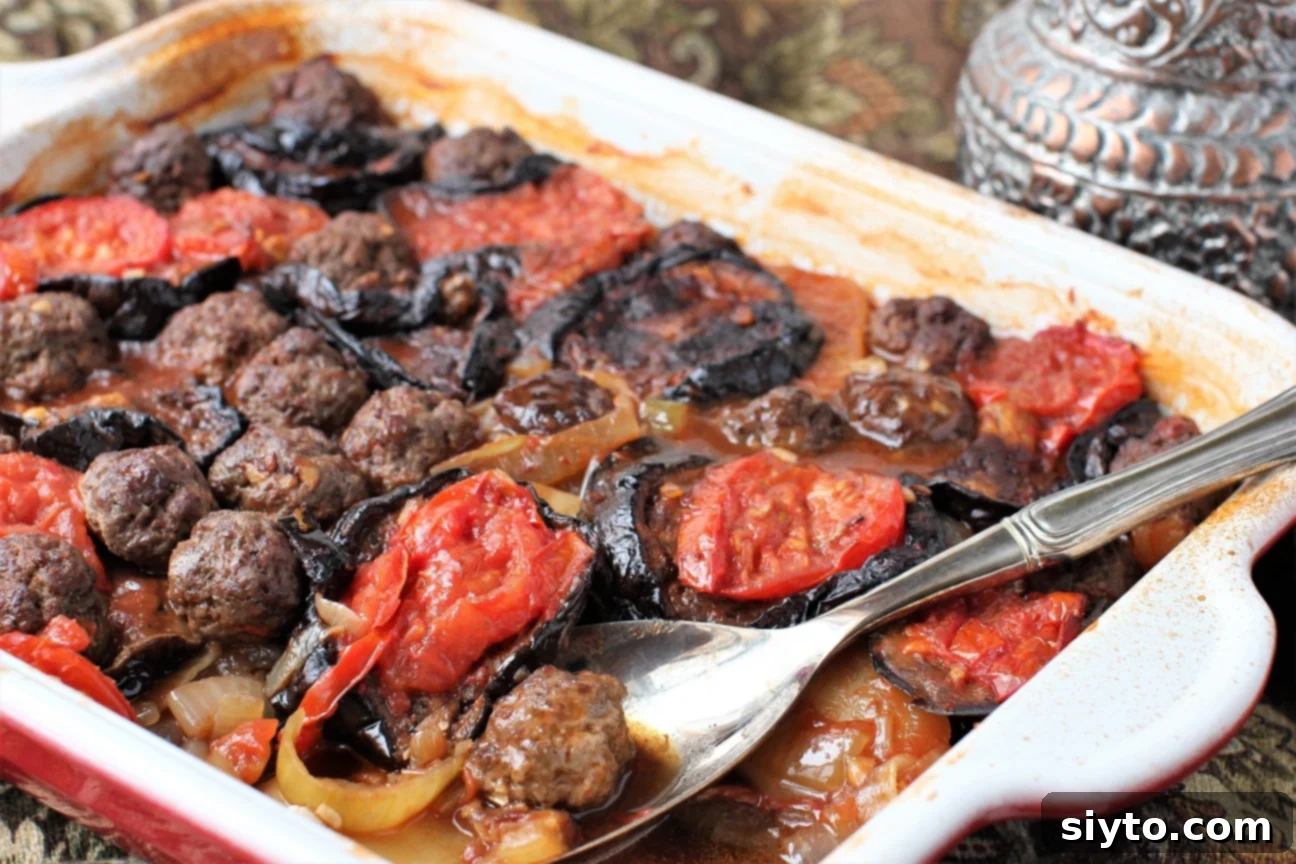
Tepsi Baytinijan: The Ultimate Iraqi Eggplant and Meatball Comfort Casserole
Imagine succulent eggplants, meltingly tender, combined with soft potatoes and richly flavorful meatballs, all gently braised in a light, silky tomato sauce. This delightful culinary experience is Tepsi Baytinijan, a beloved Iraqi comfort food that warms the soul and satisfies the palate. It’s a dish that embodies the rich culinary heritage of Iraq, offering a symphony of textures and tastes in every comforting spoonful.
Discovering Iraq: The Cradle of Civilization and Its Rich Culinary Roots
This month, our ‘Eat the World’ Recipe Challenge takes us on a captivating journey to Iraq, a nation steeped in ancient history and vibrant culture. Nestled between the legendary Tigris and Euphrates rivers, Iraq occupies the fertile lands of what was once Babylonia and Mesopotamia—often referred to as the “Cradle of Civilization.” Its diverse landscapes range from the majestic Zagros mountain range to the vast Syrian Desert, with a small but significant coastline along the Persian Gulf.
Modern-day Iraq’s political landscape represents merely a fleeting moment in its profound and extensive history. This ancient land is the birthplace of the earliest known civilizations, including the Sumerians, Babylonians, Akkadians, and Assyrians, whose origins trace back as far as 30,000 B.C. Iraq proudly boasts the creation of the world’s first writing system around 4000 B.C., giving rise to the very first recorded history of mankind. The advanced Sumerian civilization left behind writings that provide compelling evidence of humanity’s initial studies in diverse fields such as mathematics, astronomy, astrology, written law, medicine, organized religion, and notably, the culinary arts. It was the Sumerians who first organized themselves into city-states and pioneered forms of structured government, laying foundational stones for human society.
For fellow food enthusiasts and history buffs, Iraq holds a particularly fascinating secret: the world’s first known cookbooks. Discovered on ancient tablets in archaeological ruins across Iraq, these remarkable artifacts contain recipes meticulously carved into stone, detailing dishes prepared for religious festivals and temple gatherings. Imagine the delight of having a piece of this culinary history adorning your kitchen shelves!
The Essence of Iraqi Cuisine
Iraqi cuisine is characterized by its abundant use of fresh, seasonal produce and staple ingredients. Vegetables like eggplants (aubergines), ripe tomatoes, versatile zucchini (courgettes), tender okra, vibrant peppers, hearty potatoes, pungent onions, aromatic garlic, and fiery chilis form the backbone of many dishes. Fruits also play a significant role, with dates, raisins, apricots, figs, grapes, melons, pomegranates, and various citrus fruits adding sweetness and tang to meals. Grains, especially bulgur, and legumes are staples, providing essential nutrients and bulk. While meat is incorporated, chicken and lamb are the most commonly featured proteins. A generous serving of fluffy rice, much of which is grown in southern Iraq, typically accompanies most Iraqi meals, making them substantial and deeply satisfying.
Tepsi Baytinijan: A Symphony of Simple, Rich Flavors
Tepsi Baytinijan, at its heart, is a traditional Iraqi comfort-food stew. The name itself offers a clue to its identity: Tepsi translates to “casserole” or “baking dish” in Arabic, while Baytinijan refers to “eggplant.” This dish beautifully demonstrates how simple ingredients, when carefully prepared and combined, can yield flavors that are both rich and profoundly satisfying. It’s the kind of meal that wraps around you like a warm embrace, much like a grandmother’s hug, with each component playing its part in creating a harmonious whole.
The magic happens through a gentle oven braise, transforming individual vegetable parts into a lusciously satisfying final dish. The eggplant becomes incredibly silky and sweet, almost melting into the rich sauce. It tenderly envelops the soft potatoes, juicy tomatoes, and savory meatballs. The primary aromatic base comes from onions and garlic, which are cooked down to a gentle, fragrant submission, infusing the entire casserole with their deep, earthy notes. The result is a truly delicious dish, where every minute of preparation is well worth the effort. There’s nothing overly fancy about Tepsi Baytinijan; its true brilliance lies in its ability to deliver an unparalleled sense of comforting flavor and warmth.
Preparing Tepsi Baytinijan is an ideal activity for a leisurely Sunday afternoon, especially during the colder winter months. While the initial steps of roasting or frying the eggplant, forming and browning the meatballs, and sautéing the onions take a bit of time, the subsequent baking in the oven allows you to relax as the flavors meld and bubble. It’s a hearty family dinner that promises delicious leftovers, perfect for tasty weekday lunches. This traditional Iraqi casserole is more than just a meal; it’s an experience of culinary history and heartwarming flavors.
Crafting Your Own Tepsi Baytinijan: Roast, Layer, and Bake
The process of making Tepsi Baytinijan is straightforward, relying on simple techniques to build complex flavors. It begins with the star ingredient: eggplant. Slice your eggplants into even rounds, brush them lightly with olive oil, and roast them until they turn beautifully golden and tender. If you prefer, you can also pan-fry them in batches in a skillet, achieving that perfect golden-brown hue and soft texture. This step is crucial for giving the eggplant its characteristic silky texture and deep flavor.
Next, prepare the aromatic base. Slice and sauté onions until they are soft and golden, releasing their natural sweetness. In the same skillet, quickly brown your seasoned meatballs. While they don’t need to be cooked through at this stage, browning them creates a delicious crust and locks in their savory juices. Gather your remaining fresh ingredients: a few firm potatoes, sliced, and ripe tomatoes, also sliced. Finally, prepare the braising liquid by stirring together tomato paste with plenty of water, creating a light yet flavorful sauce that will envelop all the ingredients.
With all your components ready, it’s time for assembly. In a large, deep casserole dish, begin layering. Start with a portion of the sautéed onions, followed by a layer of sliced potatoes, then roasted eggplant, and finally, fresh tomatoes. Repeat these layers until all ingredients are used. Artfully tuck the browned meatballs among the layered vegetables, ensuring they are nestled into the dish. Pour the tomato sauce evenly over everything, making sure it reaches every crevice, carrying all the delicious accumulated juices from the prepared vegetables and meatballs. This creates the perfect environment for the flavors to meld during baking.
Now, your beautifully layered casserole is ready for the oven. Cover the dish tightly with foil or a lid. This initial covered baking period allows the vegetables to steam and soften, and the flavors to truly infuse. The eggplant will become wonderfully silky, and the potatoes will turn fork-tender, all while submerged in the aromatic sauce. After the initial bake, uncover the dish and continue baking. This final uncovered stage is where the magic truly happens: the top crisps up slightly, and the sauce thickens to a rich, luscious consistency. The entire dish transforms into one glorious, bubbling concoction of pure goodness.
Once removed from the oven, gently press down any crispy eggplant bits into the bubbling juices to ensure they are re-moistened and become even more tender. The result is a visually appealing and incredibly aromatic casserole, ready to be devoured.
Serve this magnificent Iraqi comfort food with a generous mound of fluffy, freshly cooked rice or warm, pillowy flatbreads, and a simple crisp green salad to complement its richness. It’s a wholesome meal that brings people together, offering a genuine taste of Iraqi hospitality and culinary tradition.
Tepsi Baytinijan: An Authentic Iraqi Eggplant and Meatball Casserole
Eggplants in a state of melting lusciousness, tender potatoes, and flavourful meatballs, all braised together in a bath of light, silky tomato sauce; this is Tepsi Baytinijan, the ultimate Iraqi comfort food dish.
- Prep Time:
- 40 mins
- Cook Time:
- 1 hr
- Total Time:
- 1 hr 40 mins
- Course:
- Main Course
- Cuisine:
- Iraqi
- Servings:
- 5
Ingredients
- 2 large eggplants/aubergines (2-2½ lbs/1-1.1kg total)
- ½ cup (8 tablespoons/120ml) olive oil, divided
- 2 large onions
- 6 cloves garlic, peeled and minced, divided
- 1 lb (450gms) ground beef or lamb
- ½ teaspoon ground cumin
- ½ teaspoon ground coriander
- 2 teaspoons fine sea salt, divided
- 1 teaspoon pepper, divided (preferably white pepper)
- 3 medium potatoes (~1 lb/450gms total)
- 3 medium tomatoes (~¾lb/350gms total)
- 4 tablespoons (¼ cup/60ml) tomato paste
- A sprinkle of ground cayenne pepper (optional)
- 2 cups (480ml) water
Instructions
- Preheat oven to 425°F (220°C).
- Slice the eggplants crosswise into ½ inch (1cm) slices. To prepare them for the dish, you can either roast them or pan-fry them. If roasting, reserve about 6 tablespoons of the olive oil for this step, divided accordingly (reserving 2 tablespoons for the onions and meatballs).
- For roasting: Pour about 1 tablespoon of olive oil onto a large rimmed baking sheet and brush evenly. Arrange as many eggplant slices as can fit in a single layer (approximately half). Lightly brush the tops with more olive oil.
- Bake for 10 to 15 minutes, or until the tops are lightly browned. Flip the slices, brush the tops lightly with more oil, and bake for another 10 to 15 minutes until golden brown. Transfer the roasted eggplant to a bowl and repeat with the remaining slices. Set aside (or refrigerate if preparing ahead of time).
- While eggplants roast, cut onions into quarters and slice them crosswise. Heat about 1 tablespoon of olive oil in a skillet and cook the onions until golden brown, about 10 minutes. Add about ⅔ of the minced garlic (4 cloves) and cook for 1 more minute. Scrape onions into a bowl and set aside. Do not wash the skillet.
- In a separate bowl, mix the ground beef (or lamb), the remaining ⅓ of the minced garlic (2 cloves), coriander, cumin, ½ teaspoon of salt, and ½ teaspoon of pepper. Shape the mixture into 1-inch (2.5cm) meatballs. Add 1 tablespoon of the remaining olive oil to the skillet used for the onions and brown the meatballs on all sides. They do not need to be cooked through. Set aside, retaining any juices in the skillet.
- Stir together the tomato paste, water, cayenne (if using), and the remaining 1½ teaspoons of salt and ½ teaspoon of pepper until well combined to form the sauce.
- Lower the oven temperature to 350°F (180°C).
- In a large, deep casserole or baking dish, begin layering: spread half of the sautéed onions, then half of the sliced potatoes, followed by half of the roasted eggplant, and finally half of the sliced tomatoes. Repeat these layers with the remaining ingredients. Gently tuck the browned meatballs among the top layer of vegetables, pushing aside any tomato or eggplant slices to ensure they are nestled into the dish. Pour any accumulated juices from the bowls of vegetables and meatballs into the casserole.
- Pour the prepared tomato sauce evenly over all the layered ingredients.
- Cover the baking dish tightly with aluminum foil or a lid. Bake for 40 minutes.
- Uncover the Tepsi Baytinijan and continue baking for another 20-40 minutes, or until the juices are bubbling around the edges, and the potatoes are tender when pierced with a knife. The top should also be slightly crisped.
- Remove from the oven. Gently push down any crispy bits of eggplant into the juices in the dish to moisten them and allow them to absorb more flavor.
- Serve hot with rice or flatbread and a fresh green salad.
- This recipe serves 4-6 people. Leftovers reheat beautifully.
Notes on Tepsi Baytinijan
- Some variations of Tepsi Baytinijan include bell peppers, or substitute carrots for potatoes. If you wish to incorporate bell peppers, core one or two red or green peppers, cut them into quarters or wide strips, and sauté them with the onions until softened before layering them into the casserole.
- This recipe maintains a relatively simple flavor profile, focusing on salt, pepper, and aromatics like garlic and onion, which are common in traditional Iraqi recipes. The resulting flavor is remarkably full and rich as is. However, if you prefer more spice, you could add a pinch of cumin to the tomato sauce or increase the cayenne pepper for an extra kick.
- To save preparation time, the eggplants can be roasted or pan-fried in advance and refrigerated until you are ready to assemble and bake the casserole.
Tried this recipe? Let us know how it was! Share your experience in the comments below.
Bel Hana Wel Shefa! (May you have your meal with gladness and health!)
Join the ‘Eat the World’ community and explore a new country’s cuisine each month! Check out all the wonderful Iraqi dishes by fellow members and share your culinary adventures with #eattheworld. Click here to find out how to join and embark on a global gastronomic journey with us!
Explore other delicious Iraqi recipes from our fellow ‘Eat the World’ members:
- Culinary Adventures with Camilla: Hadgi Badah (Iraqi Cardamom Cookies)
- Palatable Pastime: Maqluba (Upside Down Rice)
- The Schizo Chef: Iraqi Parda Pulao
- Amy’s Cooking Adventures: T’Bit (Iraqi Slow Cooked Chicken & Brown Rice)
- Sneha’s Recipe: Potato Kubbi/Potato Chap
- CulturEatz: Kahi with Gaymar Breakfast
- Kitchen Frau: Tepsi Baytinijan (Meatball & Eggplant Dish)
- Pandemonium Noshery: Iraqi Lamb Stew
- A Day in the Life on the Farm: Tepsi Baytinijan
Want to receive new Kitchen Frau recipes directly to your email? Sign up here and you’ll get a handy and useful kitchen tip along with each recipe, too. (No spam ever.)
If you like my recipes, follow me on Instagram, Pinterest, Twitter, and Facebook. You’d make my day!
PIN IT HERE to save the recipe for later:
Check out my past ‘Eat the World’ Recipe Challenge posts:
- Ireland: Dublin Coddle (A tasty Sausage and Potato Stew)
- Thailand: Shrimp Laksa (Khung)
- Kenya: Maharagwe with Ugali (Red Beans with Cornmeal Slice)
- Sweden: Swedish Meatballs with Cream Gravy
- New Zealand: Classic Pavlova
- France: Axoa d’Espelette (A Simple Stew from the Basque Country)
- Argentina: Red Chimichurri Sauce
- India: Kerala Upma (Fluffy, Kerala Style Breakfast Upma Recipe)
- Poland: Polish Honey Cake
- Ethiopia: Four Ethiopian Recipes for a Fantastic Feast
- England: Gluten Free Fish and Chips and Mushy Peas
- Georgia: Charkhlis Chogi (Beets with Sour Cherry Sauce)
- Mexico: Cochinita Pibil Tacos (Pit Barbecued Pig to Make in Your Oven)
- Cambodia: Noum Kong (Cambodian Rice Flour Doughnuts)
- Israel: Cucumber, Feta, and Watermelon Salad
- Finland: Lohikeitto (Creamy Salmon, Potato, and Dill Soup)
- Puerto Rico: Piña Colada Cocktail
- Egypt: Fava Beans and Feta
- Ukraine: Buckwheat Kasha with Beef
- Portugal: Tuna and Sardine Pâtés
- Christmas (Switzerland): Basler Leckerli Cookies
- Trinidad & Tobago: Peanut Butter Prunes