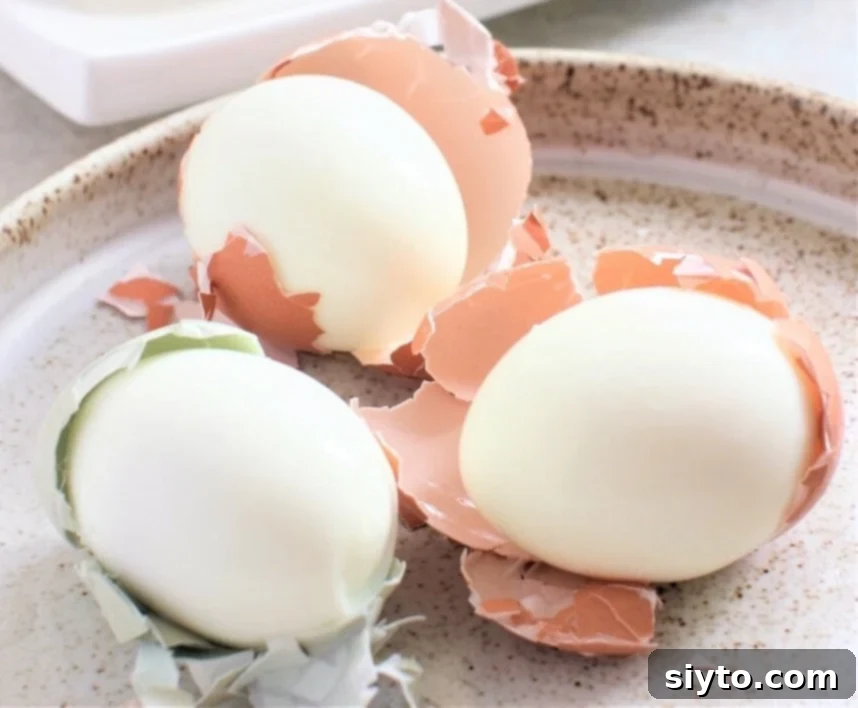
The Ultimate Guide to Perfectly Peeled Eggs: Steam Your Way to Effortless Results Every Time
Jump to the Full Recipe!
Are you tired of the frustrating battle with stubborn eggshells that cling to your perfectly cooked eggs, tearing away precious whites and leaving you with a messy, unappetizing result? You’re not alone. Many home cooks face this challenge, especially when dealing with incredibly fresh eggs. But what if there was a simple, foolproof technique to ensure every egg you cook peels like a dream, leaving you with smooth, pristine whites and perfectly centered yolks? Forget everything you thought you knew about “boiling” eggs, because the secret to consistently easy-to-peel eggs isn’t boiling at all—it’s steaming.
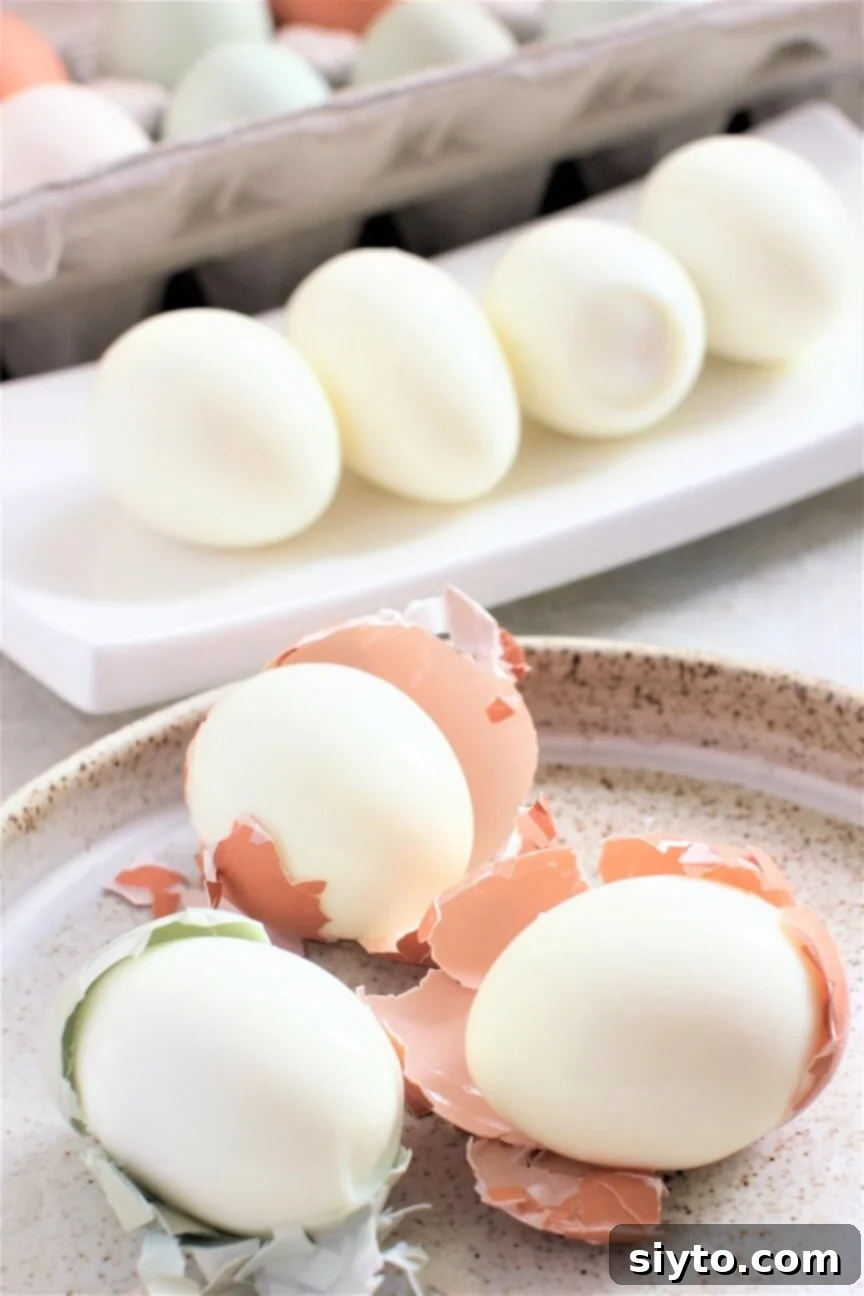
This simple, yet revolutionary, method has transformed my egg-cooking experience, saving countless hours of frustration and ensuring beautifully smooth eggs every single time. No more tiny bits of shell, no more torn whites, and no more misshapen egg blobs. Just flawlessly cooked eggs ready for any culinary creation, from deviled eggs and egg salads to elegant salads and delicious snacks.
Why Steaming is the Ultimate Method for Easy-Peel Eggs
For years, the conventional wisdom for cooking eggs involved “boiling” them. However, traditional boiling methods often lead to unpredictable results, especially when it comes to peeling. The main culprit? The inner membrane of the egg. When an egg is subjected to the harsh, direct heat of boiling water, the egg white can bond strongly with this membrane, making it incredibly difficult to separate. This bond is particularly strong in very fresh eggs, which is why many recipes suggest using older eggs for easier peeling.
Steaming, however, tackles this issue head-on. Here’s why it works so effectively:
- Consistent, Gentle Heat: Steam provides a gentler, more uniform heat transfer around the entire egg compared to direct contact with boiling water. This consistent heat allows the egg white to cook and set evenly without sudden drastic temperature changes.
- Rapid Contraction: The high, consistent heat from the steam causes the egg white to contract quickly away from the shell and its inner membrane. This creates a tiny, almost imperceptible air pocket between the cooked egg white and the membrane, which is key to effortless peeling.
- Membrane Permeability: The steam itself can slightly permeate the eggshell, helping to loosen the bond between the egg white and the inner membrane, further aiding in a smooth separation.
This isn’t just a theory; it’s a practice proven by countless home cooks and professional chefs. Once you try steaming your eggs, you’ll wonder how you ever managed without this game-changing technique.
My Journey from Frustration to Flawless Peeling
As a proud poultry mama with a thriving chicken coop, I am blessed with an abundance of beautiful, fresh eggs daily. There’s immense joy in collecting eggs still warm from the nest, a true taste of farm-to-table living. However, this delightful abundance came with a significant challenge: the fresher the egg, the harder it is to peel. For anyone who keeps chickens, this is a well-known culinary dilemma. Fresh eggs cling to their shells with an almost supernatural tenacity, making clean peeling a near impossibility.
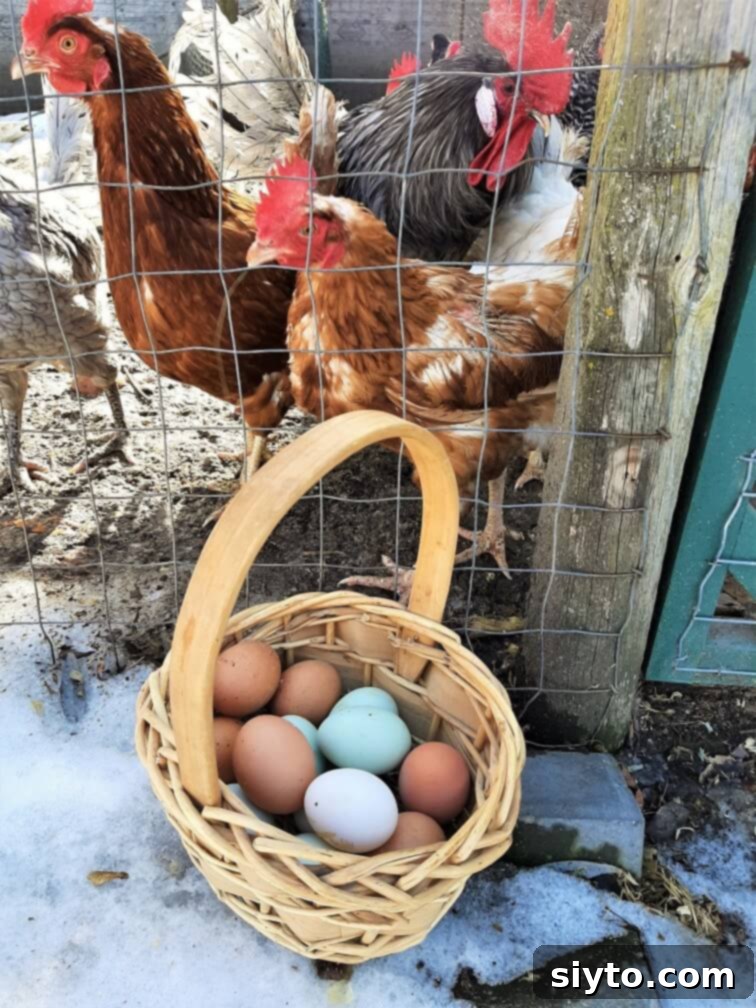
I experimented endlessly over the years, trying every supposed “trick” in the book. I tried starting eggs in cold water, plunging them into already boiling water, adding baking soda, adding vinegar, immediate ice baths, gradual cooling under tap water – you name it, I tried it. Each attempt with fresh eggs resulted in the same frustrating outcome: stubborn shells that tore away large chunks of the delicate egg white, leaving behind a cratered, unappealing mess. It felt like a culinary curse, especially when I needed perfectly smooth eggs for deviled eggs or a nice egg salad.
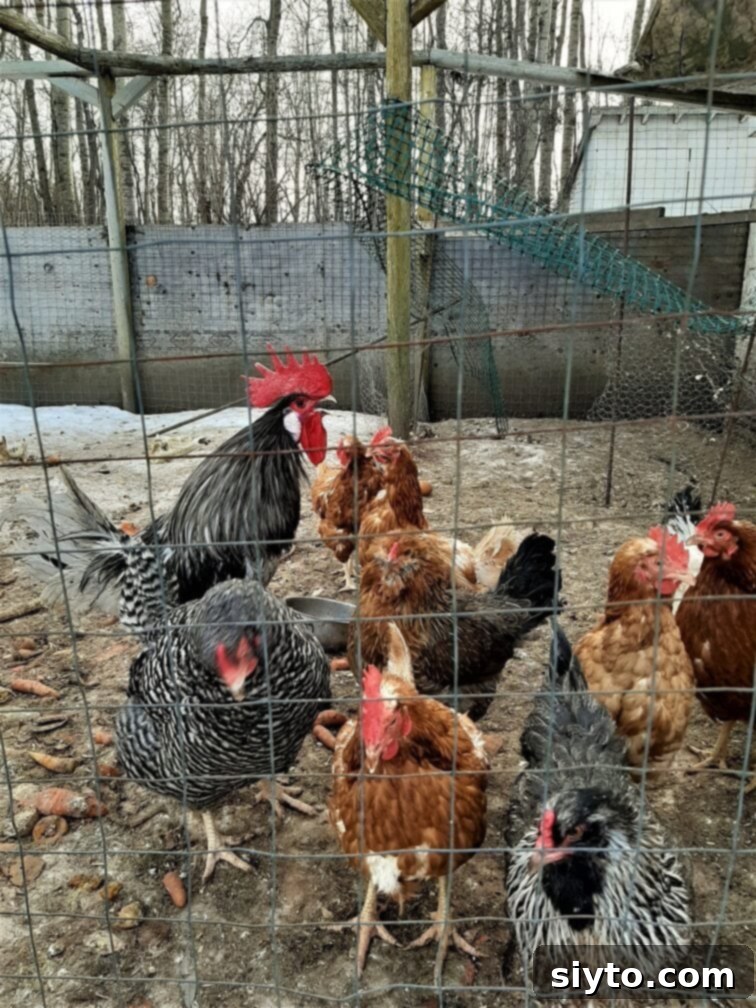
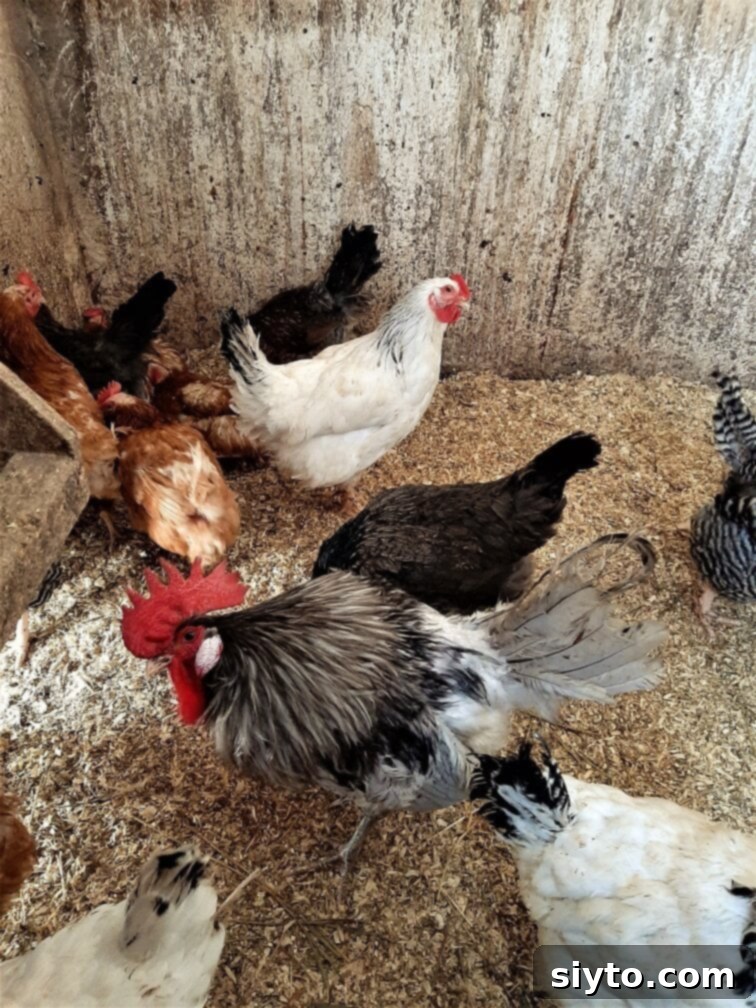
Then, I discovered the steaming method. It was a revelation! I could now take eggs still warm from the nest, steam them to my preferred doneness, chill them, and watch in amazement as the shells slid off in large, satisfying pieces. No more grey rings around the yolks, just beautifully cooked, perfectly peeled eggs every single time. This simple change transformed one of my most frustrating kitchen tasks into an absolute pleasure.
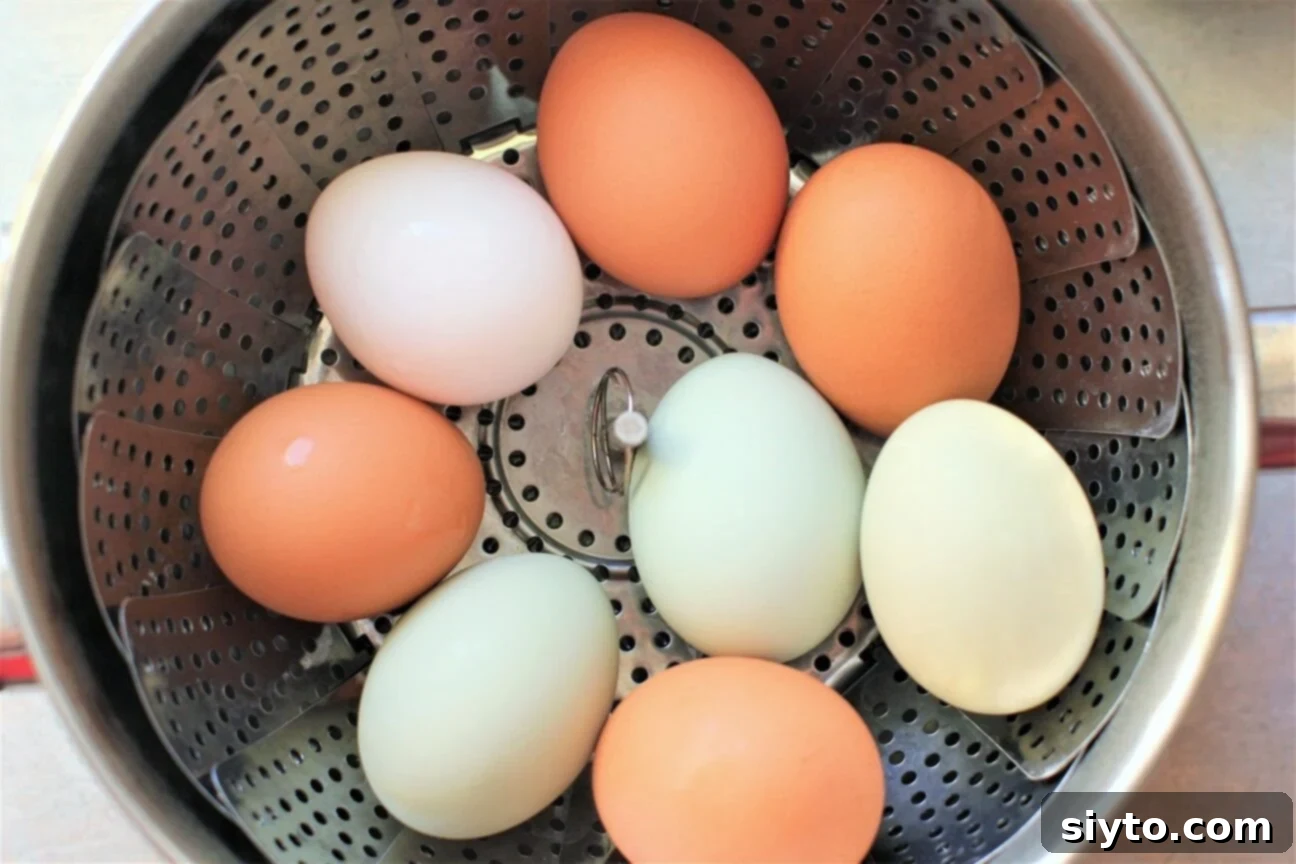
Step-by-Step Guide: Steaming Eggs for Easy Peeling
Achieving consistently perfect, easy-to-peel eggs through steaming is incredibly straightforward. While I’ve experimented with various timings, these instructions are designed for large eggs, typically around 2 ounces (57 grams) each, taken cold directly from the refrigerator. If you’re using exceptionally fresh eggs (straight from the nest) or different sizes, you might need to adjust cooking times slightly. For warm nest eggs, reduce the cooking time by approximately 30 seconds. The key is to follow these steps carefully:
1. Prepare Your Steamer Setup
You’ll need a pot with a tight-fitting lid and a way to elevate the eggs above the water. This can be:
- A dedicated steamer basket or insert.
- A collapsible steaming basket.
- A bamboo steamer.
- No special equipment? No problem! You can improvise by placing a layer of metal cookie cutters or even a handful of metal cutlery (spoons, forks) in the bottom of the pot, ensuring they form a sturdy base that keeps the eggs at least an inch (2.5 cm) above the water level.
2. Add Water and Bring to a Boil
Pour about an inch (2.5 cm) of water into the bottom of your saucepan. This is enough to create ample steam without risking the water boiling up into your eggs. Bring the water to a full, rolling boil over high heat.
3. Place the Eggs and Cover
Once the water is boiling, carefully place your cold eggs into the steamer basket or onto your improvised rack. You can typically arrange a single layer of eggs, or even two if your steamer allows, without significantly affecting cooking time. Cover the pot immediately with a tight-fitting lid. A clear lid is helpful so you can monitor the boil without losing steam.
4. Steam to Perfection
Reduce the heat slightly to maintain a steady, vigorous boil. The water should continue to produce plenty of steam, but not boil so intensely that it splashes up into the eggs. Avoid lifting the lid during steaming, as this releases valuable steam and can impact the final cooking time and doneness. Steam for the desired duration based on your preference (see the comprehensive timing chart below).
5. The Crucial Ice Bath
As soon as the steaming time is complete, remove the pot from the heat. Immediately transfer the eggs using a large spoon or tongs into a large bowl filled with cold tap water and plenty of ice. This rapid cooling process, known as an “ice bath,” is critical for two reasons:
- It halts the cooking process instantly, preventing overcooking and the formation of that undesirable greenish-grey ring around the yolk.
- It causes the egg white to contract further away from the shell, significantly enhancing ease of peeling.
Allow the eggs to cool in the ice bath for at least 10 minutes for fully cold eggs. If you prefer them still warm, 5 minutes should suffice, but they might be slightly more delicate to peel.
6. Effortless Peeling Under Running Water
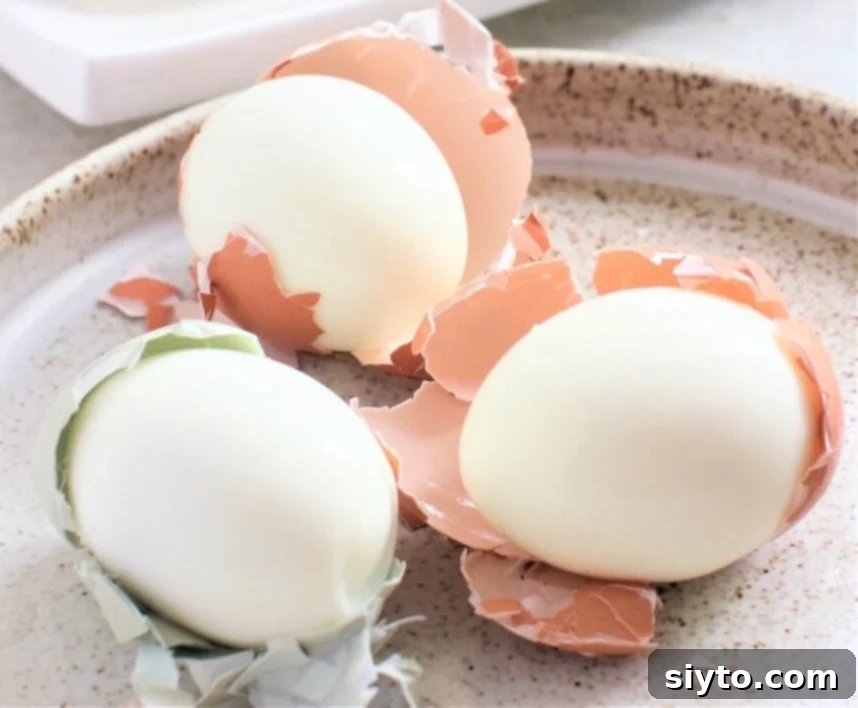
Set a colander or strainer in your sink to catch the shells. Turn on your tap to a thin, cool stream of running water. Gently tap each egg on a hard surface (like your counter) on all sides to create tiny cracks all around the shell. Then, peel the eggs under the running water, allowing the bits of shell to wash away directly into the colander. The water helps lubricate the peeling process, making it incredibly smooth and clean.
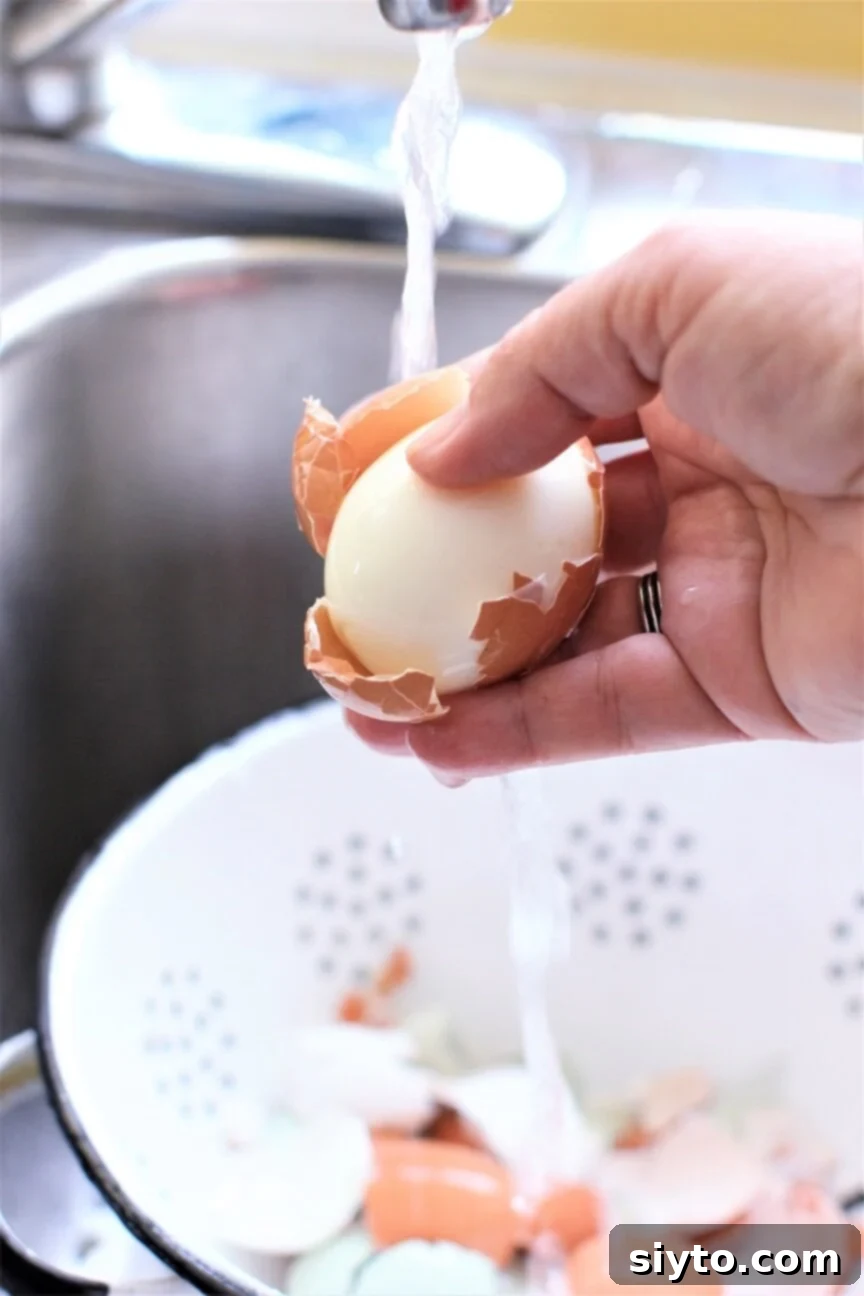
And there you have it – perfectly cooked, incredibly easy-to-peel eggs, ready for your enjoyment! This method guarantees consistently beautiful results, even with the freshest eggs straight from your backyard flock.
Steaming Times for Perfect Eggs: Your Doneness Guide
The beauty of steaming is the precise control it offers over the egg’s doneness, from luxuriously runny to perfectly firm. These steaming times are calibrated for large eggs (approximately 2 ounces/57 grams with the shell), taken cold directly from the refrigerator. Remember to adjust timings slightly for smaller or larger eggs. Also, note that softer cooked eggs (6-7 minutes) will be more delicate and require extra care when peeling, even with this method.
- 6 minutes: The white is just barely set, still very soft and delicate, while the yolk remains wonderfully runny. Ideal for dipping toast or adding to ramen.
- 7 minutes: The white is fully set, but the yolk is beautifully runny. This is the quintessential soft-boiled egg, perfect for breakfast.
- 8 minutes: My personal favorite! The white is firm, and the yolk is soft and creamy, offering a delightful richness without being fully liquid. Excellent for salads or enjoying plain.
- 9 minutes: The yolk transitions to a soft, fudgy consistency, still moist and rich, making it a great choice for various dishes where you want a slightly firmer yolk.
- 10 minutes: The yolk is firm but still very moist throughout. This is a great stage for slicing and adding to salads, where it holds its shape beautifully.
- 12 minutes: The yolk is hard but retains a pleasing moisture in its center. A good all-around hard-cooked egg for general use.
- 15 minutes: The yolk is fully cooked and uniformly firm and creamy with no soft spots. This is the optimal cooking time for mashing, such as in classic egg salads, deviled eggs, or when you need to press the yolk through a sieve for garnish, ensuring no clumps.
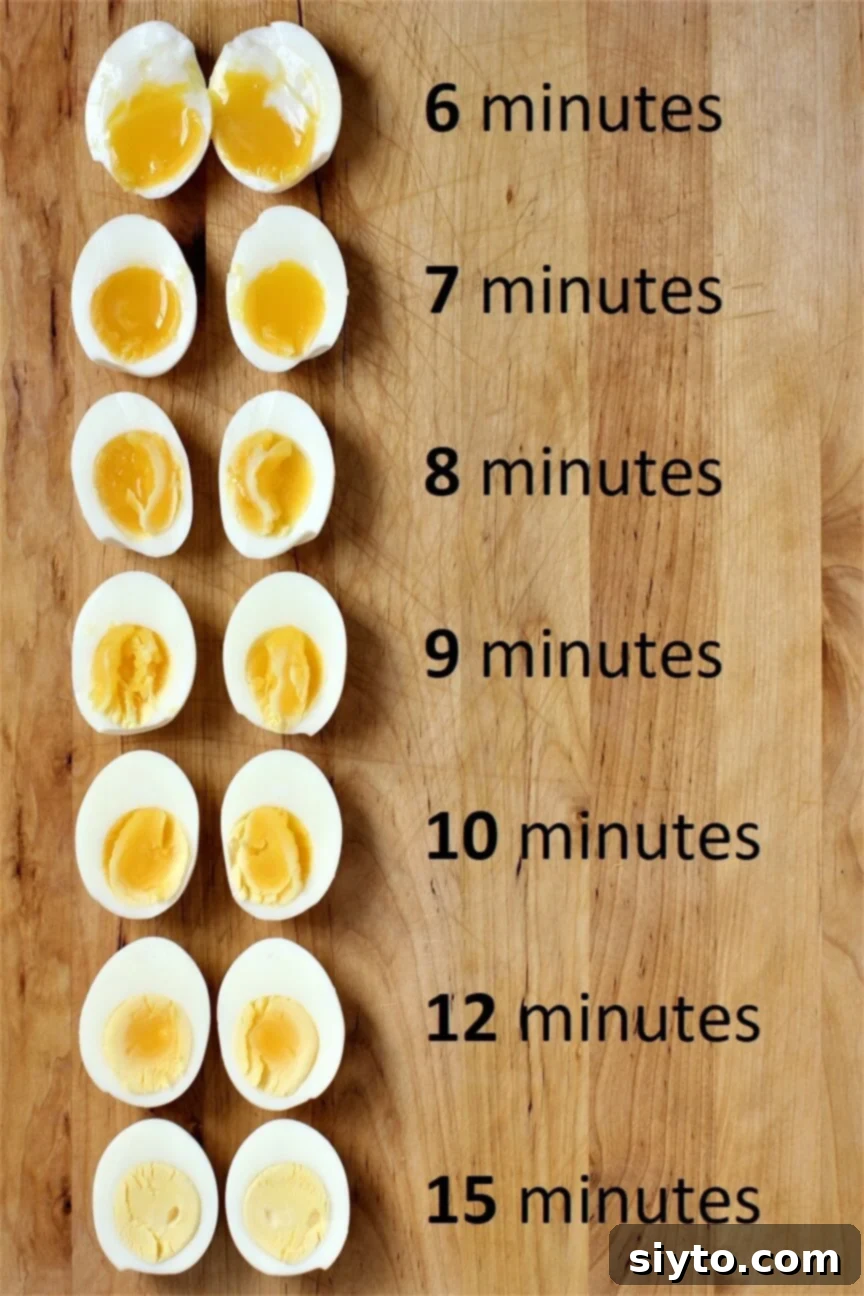
Experiment with these timings to discover your ideal egg consistency. Once you’ve perfected the method on your stove, you’ll consistently achieve restaurant-quality eggs with minimal effort. Remember that eggs can vary slightly in size even within graded categories, so a few practice runs will help you fine-tune the timing specifically for your kitchen and preferences.
* * * * *
Kitchen Note: The exact temperature setting on your stove to maintain a steady boil without excessive bubbling might require a little experimentation the first time. Once you find that sweet spot, cooking perfect steamed eggs will become second nature.
Easy Peel Steamed Eggs Recipe
This simple recipe will guide you through making perfectly cooked, effortlessly peelable eggs every time. Say goodbye to frustrating peeling and hello to beautiful eggs!
Ingredients:
- Eggs, cold from the fridge (any quantity that fits your steamer)
- Water (about 1 inch / 2.5 cm for the saucepan)
- Ice (for the ice bath)
Equipment:
- Saucepan with a tight-fitting lid
- Steamer insert, collapsible steaming basket, bamboo steamer, or a makeshift rack (e.g., metal cookie cutters or spoons) to keep eggs above water
- Large bowl for the ice bath
- Colander or strainer
Instructions:
- Prepare Steamer: Place your steamer insert or makeshift rack into the saucepan. Add approximately 1 inch (2.5 cm) of water to the bottom of the saucepan, ensuring it’s below the level where the eggs will sit.
- Boil Water: Bring the water to a rolling boil over high heat.
- Add Eggs: Carefully place the cold eggs into the steamer basket or onto your rack. You can arrange them in a single layer, or up to two layers if space allows and your steamer supports it.
- Steam: Cover the saucepan tightly with the lid. Reduce the heat slightly to maintain a steady, vigorous boil, ensuring consistent steam without the water splashing excessively. Avoid lifting the lid during steaming.
- Cook to Desired Doneness: Steam the eggs for the time corresponding to your desired doneness (refer to the “Steaming Times for Perfect Eggs” guide above). For example:
- 7 minutes: Soft-boiled, runny yolk.
- 8 minutes: Creamy yolk.
- 10-12 minutes: Firm but moist yolk.
- 15 minutes: Fully hard-cooked yolk, ideal for mashing.
- Prepare Ice Bath: While the eggs are steaming, fill a large bowl with cold tap water and plenty of ice cubes.
- Cool Eggs: Once the steaming time is complete, immediately remove the eggs from the hot pot using a large spoon or tongs and immerse them into the prepared ice bath. Let them cool for at least 10 minutes for thoroughly chilled, easy-to-peel eggs. If you prefer warm eggs, cool for about 5 minutes, though they may be slightly more delicate.
- Peel: Place a colander in the sink. Turn on a thin stream of cool running water. Gently tap each egg all around on a hard surface to crack the shell. Peel the eggs under the running water, letting the shell pieces fall into the colander. The water helps separate the shell from the egg white smoothly.
- Store: Cooked, hard-steamed eggs can be stored in their shells in a covered container in the refrigerator for up to 1 week, or peeled and stored in water in an airtight container for up to 5 days.
Guten Appetit!
Ready to master more kitchen secrets and delightful recipes? Sign up for the Kitchen Frau newsletter to receive new recipes directly to your email, along with handy and useful kitchen tips. (No spam, ever!)
Sign up here for exclusive Kitchen Frau recipes and tips!
If you’ve enjoyed this guide and found these tips helpful, I’d be thrilled if you followed me on social media! Find me on Instagram, Pinterest, Twitter, and Facebook. Your support makes my day!
PIN IT HERE to save this ultimate easy-peel egg recipe for later:
You might also enjoy these related egg recipes:
- Light and Fluffy ‘Cloud Eggs’
- Classic Pickled Eggs
- Turmeric Pickled Eggs
- Creamy Egg and Quinoa Bake (How to Turn Easter Eggs into Dinner)
- Ham ‘n Egg Salad
- Chive and Egg Pasta Salad