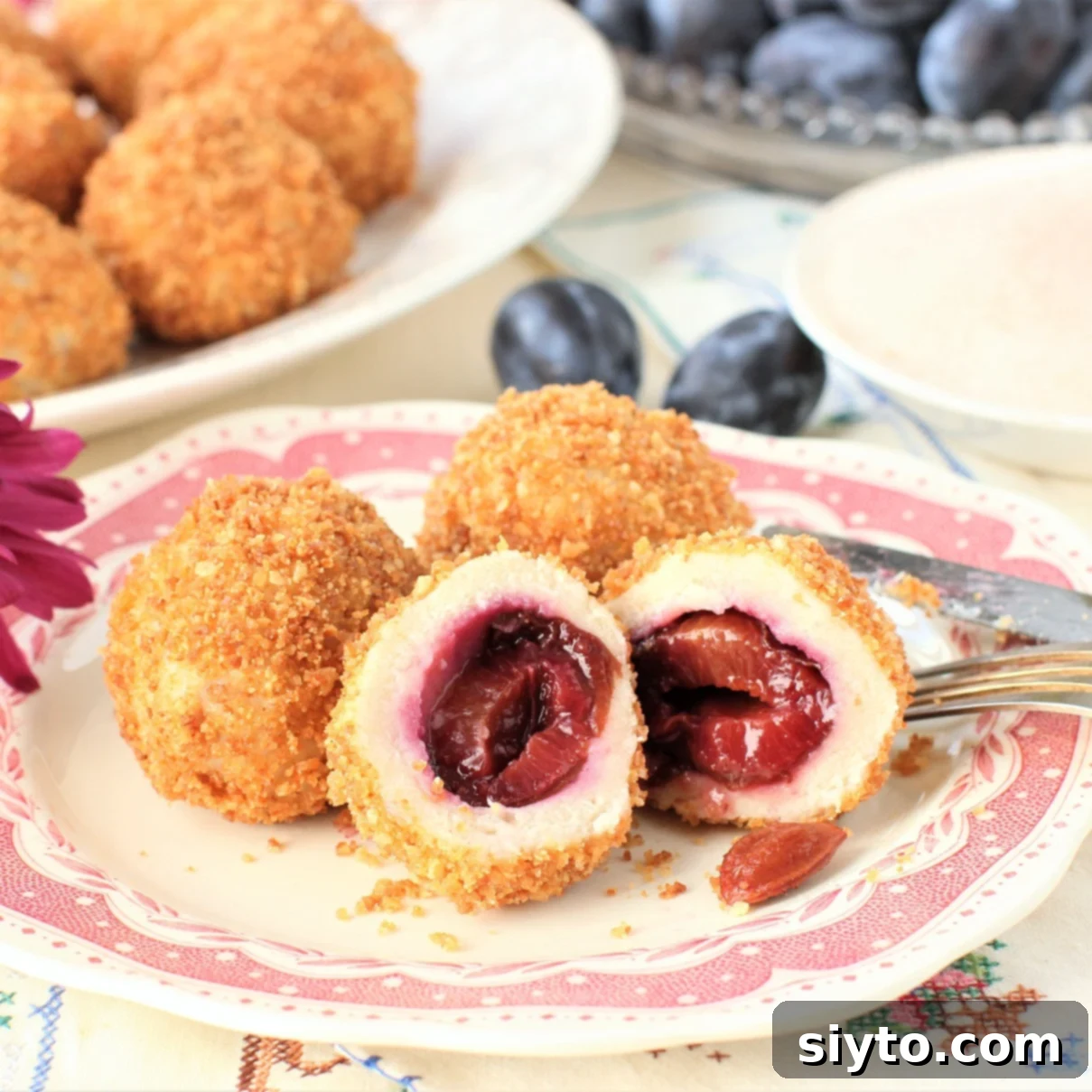
Zwetschgenknödel: Authentic German Plum Dumplings with Potato Dough and Cinnamon Sugar
Experience the ultimate taste of autumn with these delightful German Plum Dumplings, known as Zwetschgenknödel! Imagine soft, pillowy potato dough gently embracing a whole, sweet, and juicy purple prune plum. Once boiled to perfection, these delectable dumplings are rolled in golden, buttery breadcrumbs, then generously showered with a crunchy, aromatic cinnamon sugar. They are more than just a dish; they’re a wonderful culinary tradition, perfect as a satisfying light meal, a heartwarming brunch centerpiece, a comforting snack, or an exquisite dessert.
As soon as late summer arrives and the first Italian prune plums appear in grocery stores, a wave of nostalgia washes over me, immediately triggering a longing for these incredibly delicious dumplings. It’s a tradition I’ve cherished for years, making them annually long before my children were born, back when it was just my husband and I as a young couple. Every year, their arrival is eagerly anticipated, marking the true beginning of the fall season in our home with a truly special treat.
The Enduring Charm of Prune Plums: Zwetschgen
In Germany, these distinctive egg-shaped purple plums with firm, greenish flesh are affectionately known as ‘Zwetschgen.’ They differ from generic plums, which are simply called ‘Pflaumen.’ ‘Zwetschgen‘ are exclusively available in the autumn months and hold a special place in German culinary culture, deeply woven into many childhood memories, including my own. I vividly recall the plum tree in our yard when I was a young child. My father would vigorously shake its branches, sending a cascade of ripe purple plums thudding to the ground. We would gather them up and eat them until our bellies were delightfully full and aching from the sheer abundance.
My mother, with her practical wisdom, would carefully pit some of the plums and lay them out on large screens to dry under the sun, transforming them into delicious prunes. She’d also freeze a good portion of the fresh plums, ensuring we could enjoy the quintessential ‘Pflaumenkuchen‘ (plum streusel cake) throughout the year, alongside a comforting ‘Pflaumensuppe‘ (a sweet plum soup often served as a light meal). The unique balance of sweet and tangy flavors, coupled with the juicy, firm texture of these specific plums, makes them absolutely perfect for both cooked and baked goods. They retain their shape beautifully, and their flavor intensifies into a rich, deep purple deliciousness when cooked. For me, these are the true plums – far superior to the larger, often watery varieties that can be quite sour near their pits.
The Culinary Journey of Zwetschgenknödel
Plum dumplings, or Zwetschgenknödel, trace their origins to Eastern Europe, but their popularity has spread far and wide, making them a beloved delicacy throughout southern Germany, Austria, and indeed, all of Central Europe. Historically, these dumplings were often fried, but the more common and equally delightful preparation method today involves boiling them until tender, then coating them in a fragrant mixture of buttered breadcrumbs. Sometimes, ground nuts are added to the breadcrumb mixture for an extra layer of flavor and texture.
The dough for these dumplings can vary; some recipes call for a light yeast dough, others use a quark dough (a type of fresh German cheese), but our preferred method, and the one we share here, utilizes a cooked potato dough. This potato dough offers a unique soft and fluffy texture, yet with a satisfying slight chewiness that perfectly complements the tangy sweetness of the plums. The flavor profile is simply unparalleled, making it our top choice for authentic Zwetschgenknödel.
To delve deeper into the German terminology, “Zwetschgen” specifically refers to prune plums, while “Knödel” means dumplings. However, to add a touch of linguistic complexity, “Pflaumen” is the general term for plums, and “Klöße” is another word for dumplings. Thus, you might encounter these delicious plum dumplings under various names like Zwetschgenknödel, Zwetschgenklöße, Pflaumenknödel, or Pflaumenklöße. Regardless of the name, their delightful taste remains consistent and utterly delicious.
Zwetschgenknödel are incredibly versatile in how they can be served. They are frequently enjoyed as a standalone light, sweet meal, particularly during the autumn season. Alternatively, they can be presented as a sweet course following a savory soup, creating a more substantial and satisfying meal. Beyond main meals, they often appear as a delightful dessert or a comforting snack, and in Germany, they are a popular substitute for cake during the traditional afternoon coffee hour. When served as a dedicated dessert, plum dumplings are exceptionally tasty when paired with a creamy vanilla sauce, a dollop of freshly whipped cream, or a scoop of velvety vanilla ice cream, enhancing their sweet and fruity essence.
Growing up, it wasn’t uncommon for us to enjoy a sweet dish for a light lunch or supper – traditions like the aforementioned Pflaumensuppe, a sweet milk-noodle soup with butter and honey, or even sweet milk-rice. If the idea of a sweet main course seems a little unusual to you, consider the familiar concept of having pancakes or waffles for dinner; it’s a similar embrace of sweet dishes in a savory meal setting.
Crafting Perfect Plum Dumplings: A Step-by-Step Guide
While making plum dumplings involves a few distinct steps, the process is far from difficult and incredibly rewarding. The key to the tender potato dough lies in properly preparing the potatoes. You’ll need to boil whole potatoes in their skins; this crucial step prevents them from absorbing too much water, ensuring they remain firm and don’t become mushy. It’s also important that they are still warm when you begin preparing the dough. Once boiled, simply peel and mash the hot potatoes, then combine them with flour and an egg. This mixture will yield a beautifully soft and elastic dough that is a joy to work with.
Next, gently roll out the potato dough to a generous thickness, then cut it into even squares. Onto the center of each square, carefully place a whole prune plum. For easier wrapping, try to select plums that are small to medium in size. This ensures the dough can fully enclose the fruit without being stretched too thin.
Carefully bring the corners of the dough up and around the plum, pinching the edges firmly together to completely encase the fruit. It’s crucial to ensure there are no gaps or thin spots where the plum might escape during cooking. Once sealed, gently roll the dumpling between your palms to create a smooth, perfectly round ball. Take your time with this step to ensure a secure and aesthetically pleasing dumpling.
Once formed, the dumplings are ready for their gentle boil. Submerge them in simmering water until they gracefully float to the surface, indicating they are cooked through. Carefully remove them with a slotted spoon to drain. In a separate skillet, melt a generous amount of butter with a touch of oil, then add bread crumbs and fry them until they achieve a beautiful golden-brown hue and become wonderfully crispy. Now, introduce the warm, boiled dumplings to the skillet, rolling them around in the buttery crumbs until each one is completely coated. This creates an irresistible exterior that contrasts beautifully with the soft interior.
The final, delightful step before indulging is to prepare them for eating. Carefully cut each dumpling open, remove the prune pit from the center, and then, most importantly, sprinkle them liberally with a mixture of cinnamon sugar. The generous coating of cinnamon sugar is absolutely essential; it adds a perfect sweet, spicy, and crunchy counterpoint to the entire dish, elevating it to pure culinary heaven.
Oh, the pure delight of that first bite! Imagine the crispy, buttery crumbs yielding to a soft, slightly chewy potato dough, revealing a burst of juicy, tangy plum hidden inside like a vibrant purple jewel. The aromatic cinnamon sugar provides the crowning crunchy glory, transforming the entire dish into an unforgettable sweet and spicy sensation. It’s truly a heavenly experience!
Guten Appetit! Enjoy your meal!
* * * * *
Plum Dumplings (Zwetschgenknödel)
Margaret Bose Johnson
Save to Pinterest
Ingredients
- 1 pound (454gms) potatoes (4 medium or 5 small, preferably starchy varieties like Russet or Yukon Gold)
- 1 teaspoon butter
- ¼ teaspoon fine sea salt
- 2 cups (270gms) all-purpose flour for gluten-free, use a gluten-free flour blend + 2 teaspoons psyllium husk powder
- 1 large egg
- 20 Italian prune plums, small to medium in size or small apricots, chunks of apple, or chunks of banana
for the fried breadcrumbs:
- 2 tablespoons butter
- 1 tablespoon oil
- 1 cup (100gms) fine, dry breadcrumbs, gluten-free if necessary or substitute half of the crumbs with ground hazelnuts for extra flavor
for the cinnamon sugar:
- 1 cup (200gms) sugar preferably natural evaporated cane sugar for a richer flavor
- 2 teaspoons cinnamon
Instructions
- Begin by boiling the potatoes whole until they are completely tender when easily pierced with the tip of a knife. This usually takes about 20-25 minutes depending on size. Once cooked, drain the potatoes thoroughly and peel them immediately while they are still hot. This helps prevent them from becoming waterlogged.
- Mash the hot, peeled potatoes until smooth. Add the butter and fine sea salt, mixing them thoroughly into the mashed potatoes. Next, incorporate the all-purpose flour (or your chosen gluten-free flour blend plus psyllium husk powder). Mix everything well until a cohesive dough starts to form.
- Add the large egg to the potato and flour mixture. Knead the dough for approximately 3 to 4 minutes. This process is essential for developing a soft, elastic, and pliable dough that will hold its shape beautifully around the plums.
- Keep the dough warm as you work. Lightly flour a clean work surface and roll out the potato dough to an even thickness of about ⅓-inch or 8.5mm. Aim for a rectangular shape, roughly 10×12.5 inches (25.5x32cm), to maximize your yield of dumplings.
- Using a sharp knife or a pastry cutter, cut the rolled-out dough into twenty equal 2½-inch (6.5cm) squares. These squares will form the outer layer of your dumplings.
- Place one whole Italian prune plum directly in the center of each dough square. Carefully bring the four corners of the dough up over the plum, ensuring the edges meet and butt up against each other. Pinch the edges together very firmly to create a complete seal around the plum. If the dough seems reluctant to stick, a tiny dab of water can help. Once sealed, gently roll the dumpling between your palms to shape it into a smooth, even ball. Double-check that the plum is entirely enclosed with no thin spots or gaps, pinching or pressing if necessary.
You can prepare all the dumplings up to this point and arrange them on a floured plate or baking pan, making sure they don’t touch each other. Cover the entire plate tightly with plastic food wrap. They can be left at room temperature for a few hours or refrigerated for up to a whole day ahead of time, making them excellent for meal prep.
- Fill a large pot with approximately 4 inches (10cm) of water and bring it to a gentle boil. Carefully drop the prepared dumplings into the boiling water, adding only as many as will fit in a single layer without crowding the pot. Reduce the heat slightly so the water remains just below a vigorous boil; strong boiling can cause the dumplings to break apart. Cook the dumplings until they rise to the top of the water and float, which typically takes about 8-10 minutes. Using a slotted spoon, carefully remove the cooked dumplings and transfer them to a plate or pan to drain any excess water.
Cook the remaining dumplings in batches, and for best results, keep the finished ones warm in a low oven set to about 175°F (80°C) while you complete the rest.
- In a large skillet, melt the butter and oil over medium heat. Add the fine, dry breadcrumbs and fry them, stirring occasionally, until they turn a beautiful golden color and become fragrant. Once the breadcrumbs are ready, add a few cooked dumplings at a time to the skillet. Gently shake the skillet back and forth, or use a spoon to roll the dumplings, until they are completely coated in the buttery crumbs.
To maintain their warmth and crispness, you can temporarily keep the crumb-coated dumplings in a 175°F (80°C) oven for no longer than 20 minutes; beyond this, the crumbs may begin to soften.
- In a small bowl, stir together the sugar and cinnamon to create your aromatic cinnamon sugar mixture. Serve this alongside the warm plum dumplings, allowing each person to add as much as they desire.
- To truly enjoy the Zwetschgenknödel, cut open each dumpling, carefully remove the prune pit from the center, and then generously sprinkle the exposed plum and dough with the cinnamon sugar. The combination of textures and flavors is exquisite.
- This recipe yields approximately 20 plum dumplings. If you are serving these as a main light meal, a portion of four or five dumplings per person should be satisfying. If they are intended as a dessert or a sweet snack, one or two dumplings per person would be a perfect serving size.
Notes
Freezing Plum Dumplings for Future Enjoyment: Plum dumplings are excellent for making ahead and freezing. To do so, lay the formed, uncooked dumplings in a single layer on a cookie sheet, ensuring they don’t touch each other. Freeze them until they are solid. Once frozen, transfer them to a freezer bag or an airtight container and store them in the freezer for up to 6 months. When you’re ready to enjoy them, simply cook them directly from frozen in boiling water – they will require approximately 5 minutes longer to cook than fresh dumplings.
Serving Variations (Beyond Breadcrumbs): You have options beyond the classic breadcrumb coating! You can serve the plum dumplings simply by drizzling them liberally with melted butter and sprinkling them with cinnamon sugar. Alternatively, for a more indulgent dessert experience, they are wonderfully delicious served with a creamy vanilla sauce, a generous dollop of lightly sweetened whipped cream, or a scoop of rich vanilla ice cream. These accompaniments can be enjoyed with or without the buttery breadcrumb coating, depending on your preference.
Utilizing Leftover Cinnamon Sugar: Don’t let any leftover cinnamon sugar go to waste! It’s fantastic for other baking projects, or simply sprinkle it generously over hot, buttered toast for a quick and comforting cinnamon toast.
Craving to receive new Kitchen Frau recipes directly to your email inbox? Sign up here and you’ll not only get delicious recipes but also a handy and useful kitchen tip along with each one. We promise, absolutely no spam, ever!
If you adore my recipes and want to stay connected, make sure to follow me on Instagram, Pinterest, Twitter, and Facebook. Your support truly brightens my day!
PIN IT HERE to save this authentic recipe for later and share the joy of Zwetschgenknödel:
You might also enjoy these other delightful recipes:
Túrós Csusza (Pasta with Cottage Cheese): A Hearty Taste of Hungary
Classic Bavarian Apple Cake: A German Favorite
Simple German Crustless Apple Pie: Pure Apple Flavor
Old-Fashioned Gooseberry Pie: A Tangy Sweet Treat