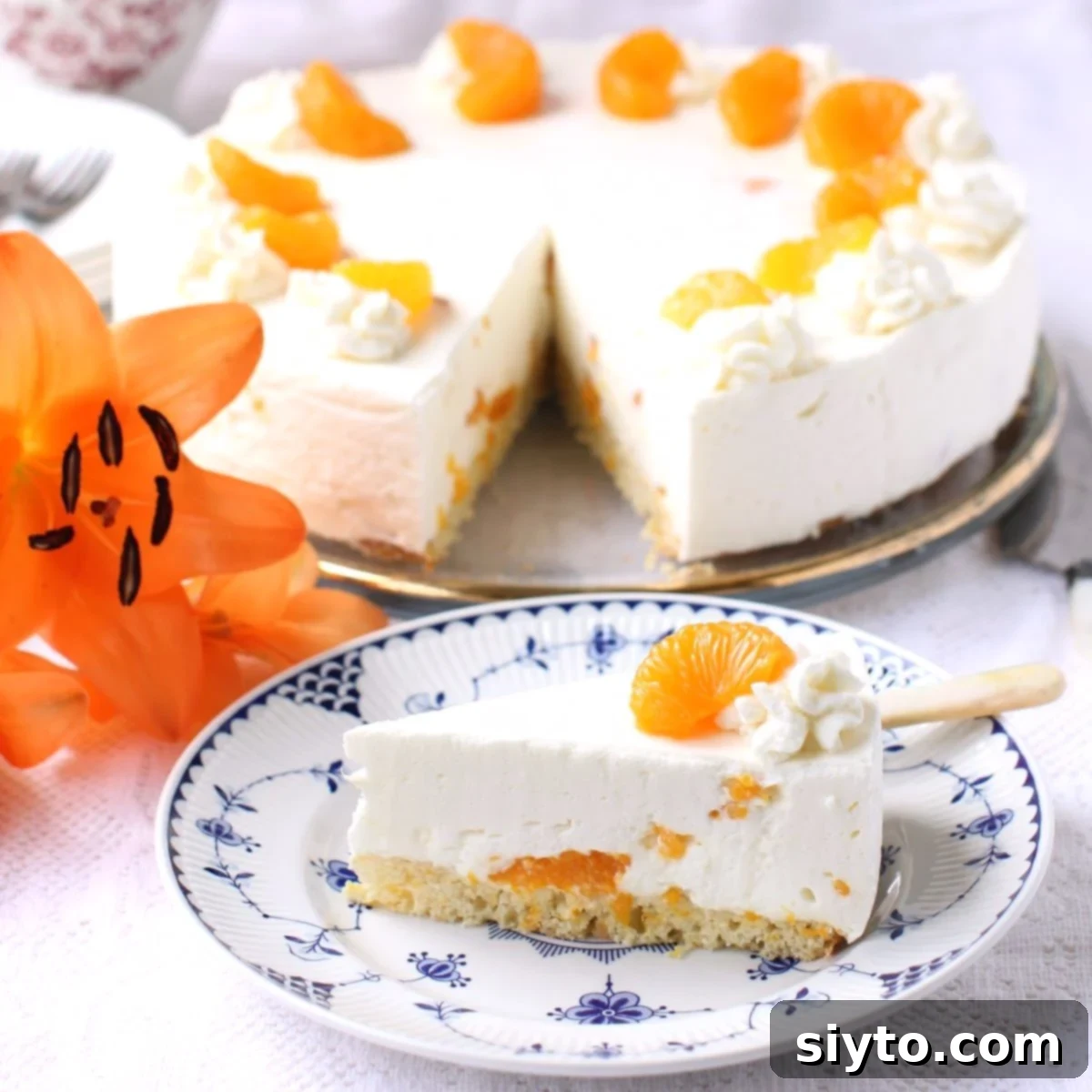
Mandarinen Sahnetorte: The Ultimate Guide to Crafting a Heavenly German Mandarin Cream Torte
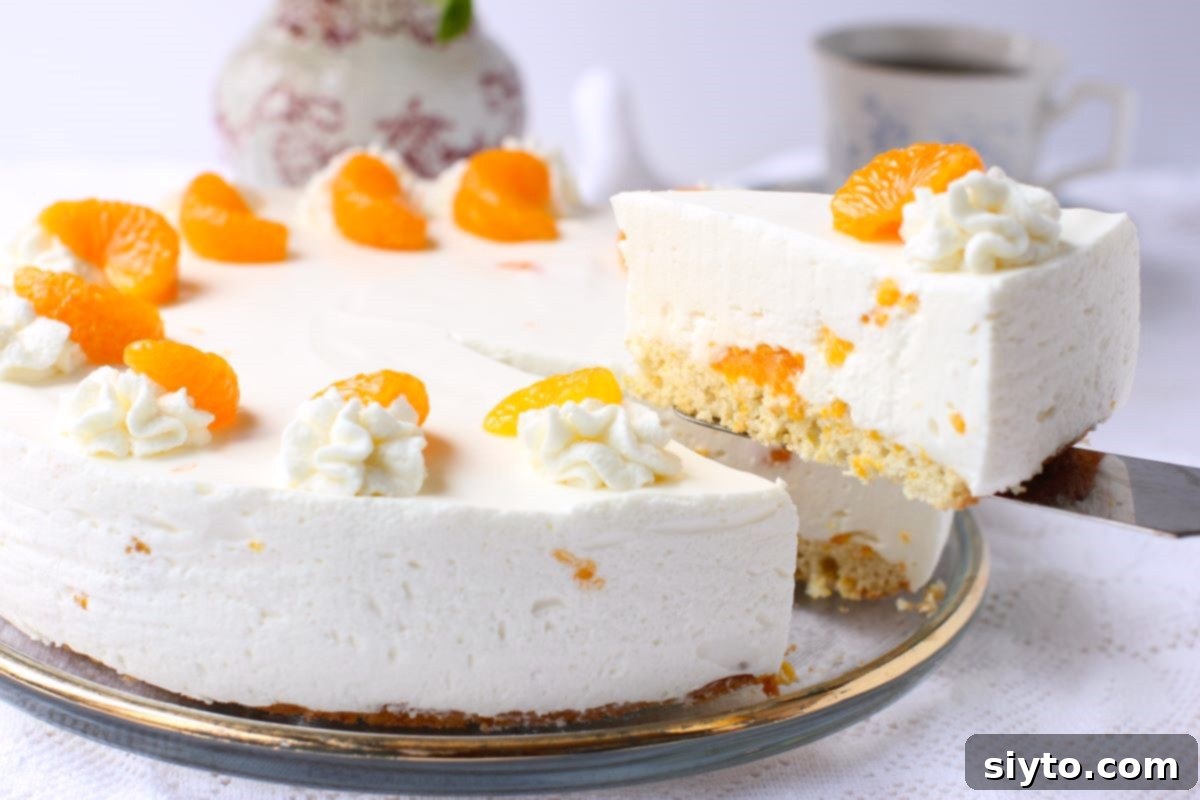
Prepare to embark on a delightful culinary journey with Mandarinen Sahnetorte, a quintessential German cream torte that perfectly captures the essence of celebration. This exquisite dessert, adorned with succulent mandarin orange segments, is more than just a cake; it’s a sensory experience. Light, incredibly creamy, and wonderfully fluffy, each forkful melts on your tongue, leaving behind a divine cloud of bright citrus tanginess. It’s the perfect centerpiece for any special occasion, be it a joyful spring gathering, a warm summer celebration, a birthday, a graduation, Mother’s Day, Easter, or simply a cherished Sunday afternoon treat.
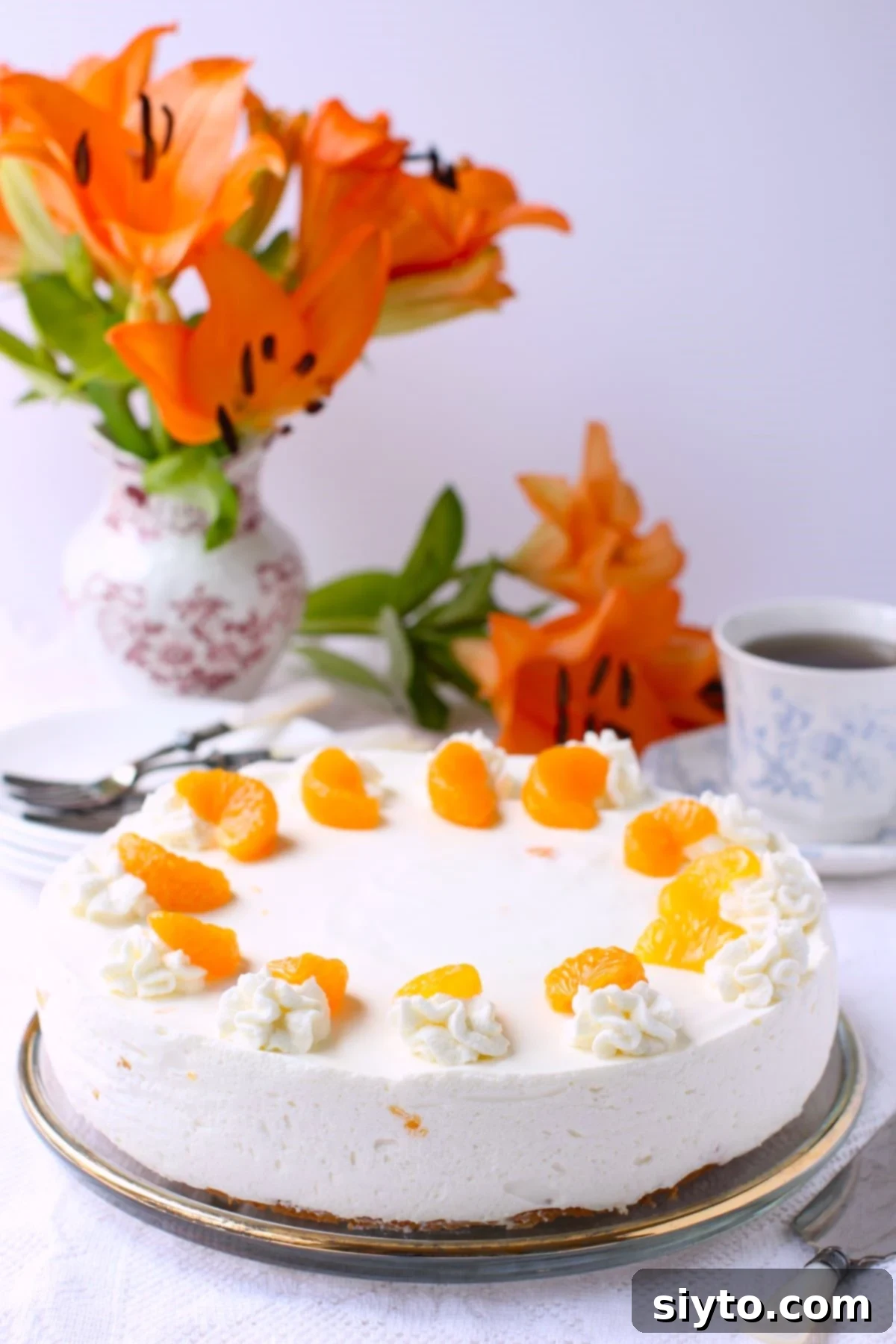
Do you believe that food is a powerful expression of love? For many, preparing a homemade meal or a special dessert is the ultimate way to show affection and care for loved ones. There’s immense satisfaction in dedicating time and effort to create something truly memorable that brings smiles to the faces of friends and family. This heavenly German cream torte offers exactly that profound joy.
German torten (plural of Torte) are renowned for their elegance and intricate flavors, typically featuring delicate layers of light sponge cake or nutty bases, often complemented by rich mousses and velvety creams. The Mandarinen Sahnetorte you’re about to master is a delightful variation of the traditional Käsesahnetorte, a “cheese cream torte.” These unbaked marvels are characterized by their lightly set, creamy fillings, traditionally made with Quark, a mild, fresh German cheese. In this adapted recipe, readily available full-fat Greek yogurt steps in beautifully, providing a similar tangy flavor profile and luscious texture that perfectly mimics authentic Quark. However, if you’re fortunate enough to find genuine German-style Quark, don’t hesitate to use it for an even more traditional touch!
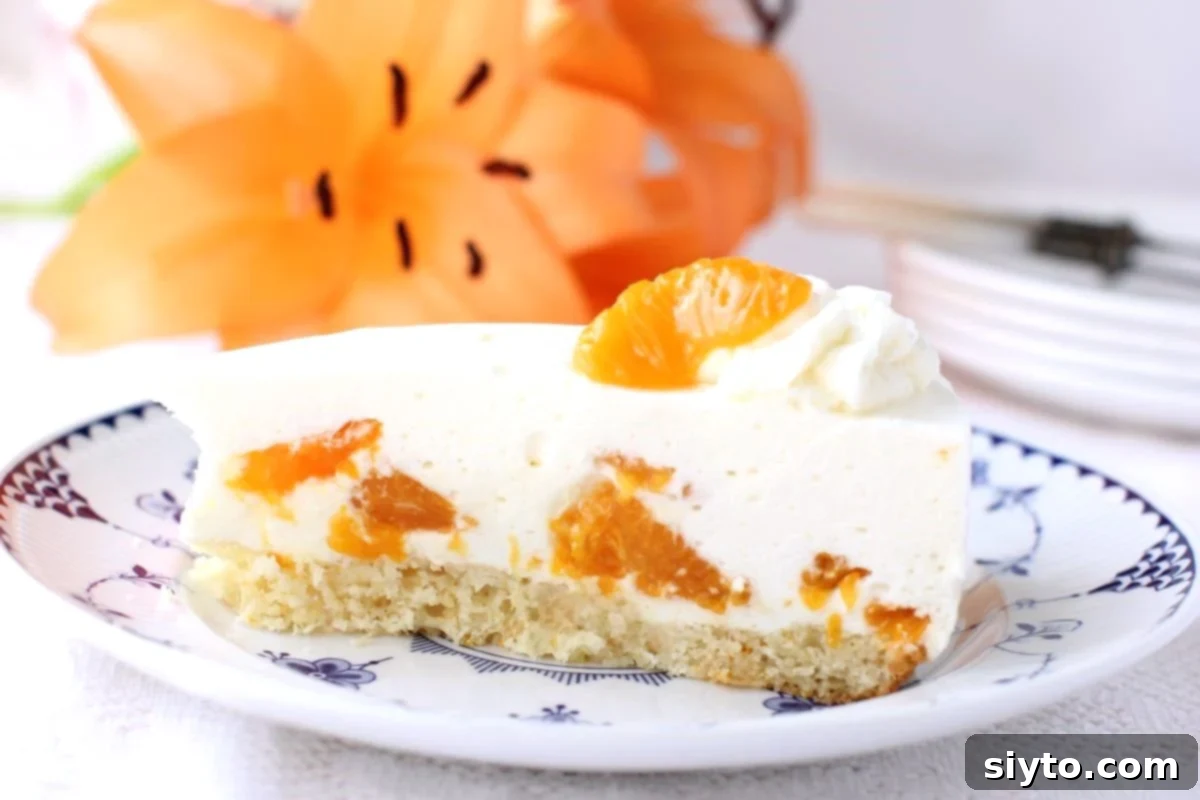
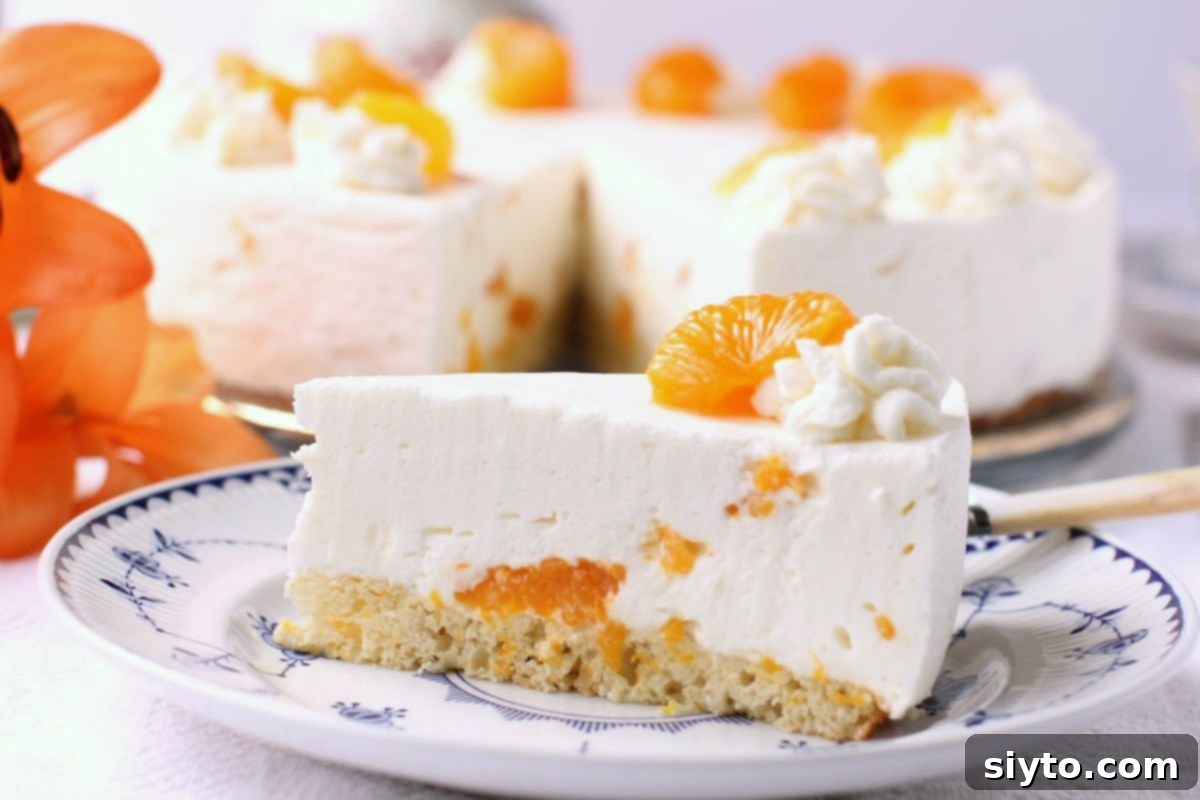
The foundation of this exquisite torte is a light, airy, and delicately baked sponge cake, known as Biscuitboden. This subtle base provides a perfect textural contrast to the smooth, creamy filling, which is generously studded with bright, juicy mandarin orange segments. The combination creates a harmonious balance of flavors and textures that is truly irresistible. Each element plays a crucial role, from the delicate sweetness of the sponge to the refreshing zest of the mandarins and the luxurious richness of the cream mousse, culminating in a dessert that’s both comforting and sophisticated.

If your heart beats for beautiful German torten, you’ll be thrilled to discover other wonderful creations. Each offers a unique taste of German baking tradition, perfect for exploring new flavors or revisiting cherished classics. Here are a few other beloved German Torte recipes you might enjoy:
- Eierlikörtorte (German Egg Liqueur Torte): A rich and creamy torte infused with the delightful flavor of traditional German egg liqueur.
- Feuerwehrkuchen (Fire Brigade Cake): A fun and fruity sheet cake, often featuring cherries and a streusel topping, reminiscent of a comforting childhood treat.
- Baumkuchen (German Tree Ring Cake): A magnificent layered cake, meticulously baked to resemble tree rings, known for its unique texture and impressive appearance.
- Bayrischer Apfelkuchen (Bavarian Apple Cake): A hearty and flavorful apple cake, characteristic of Bavarian baking, often with a moist, dense crumb.
- Lebkuchen Bûche De Noël: A festive German take on the classic Yule Log, incorporating the warming spices of traditional Lebkuchen.
- German Chocolate Cake: While not authentically German in origin, this beloved cake shares many characteristics with German torten, featuring decadent layers and a rich, creamy frosting.
Essential Ingredients for Your Mandarin Cream Torte
Crafting this luscious torte doesn’t require an arsenal of exotic ingredients. In fact, with a few staple items and our clear, detailed instructions, you’re guaranteed success in bringing this special cake to life for your friends and family every single time. The beauty of this recipe lies in its simplicity and adaptability, making it accessible for home bakers of all skill levels.
This particular recipe comes from my dear German friend, Ruth, who first introduced me to this delightful torte in her home. I instantly fell in love with it and have since adapted it to seamlessly incorporate ingredients more commonly found in North American kitchens. As mentioned, while the original recipe calls for German Quark, a fresh dairy cheese with a unique tang, full-fat Greek yogurt proves to be an exceptionally delicious and remarkably similar substitute. Its rich, creamy texture and slight tartness provide the perfect foundation for the mousse, ensuring an authentic taste even without the traditional Quark.
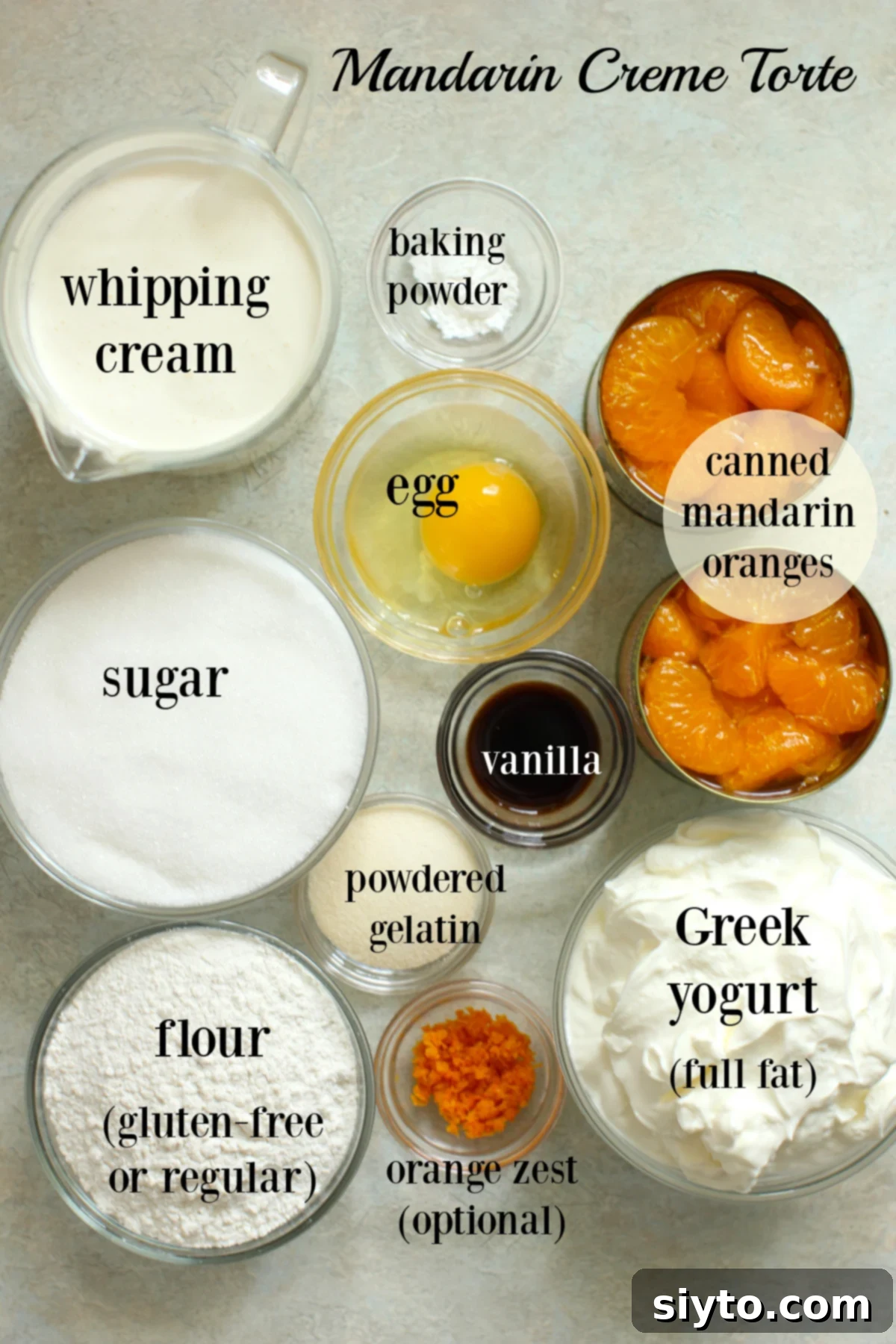
The sponge cake base for this cream torte is remarkably versatile. It bakes equally well with either regular all-purpose flour or a high-quality gluten-free flour blend, making this delightful dessert accessible to those with dietary preferences. It’s important to note that the sponge cake layer is intentionally designed to be slightly drier than a typical moist cake. This particular texture is crucial as it provides a sturdy and reliable foundation to support the substantial, creamy filling. Don’t worry, as the torte chills with the filling, the sponge base will gradually absorb moisture, softening beautifully and harmonizing perfectly with the mousse above.
Ingredient Tip: Choosing Your Mandarin Oranges
For the best visual appeal and flavor, we highly recommend using canned mandarin oranges packed in light syrup. The segments in light syrup tend to be firmer and more intact, maintaining their beautiful shape when incorporated into the torte. Mandarins canned in their own juice, while delicious, often have more broken segments. Furthermore, using the juice from mandarins in syrup for the filling base helps to achieve that desirable snowy-white cream color. If you use juice from oranges packed in their own juice, it might impart a slightly orange tint to the cream, altering its pristine appearance.
Step-by-Step Guide for Making a Mandarin Sahnetorte (Cream Torte)
Creating this beautiful German Mandarin Cream Torte is a rewarding process. Follow these detailed steps to ensure a flawless and delicious result.
Preparing the Mandarins and Pan
The very first step is crucial for both the flavor and appearance of your torte. Carefully drain the two cans of mandarin oranges, making sure to collect all the juice in a bowl. You’ll need precisely one cup of this mandarin juice for both the cake base and the filling. If your drained juice falls short of a cup, simply top it up with a little water or extra orange juice. If you have more than a cup, you can discard the excess. As you drain, gently pick out about 12 perfectly shaped, unbroken mandarin segments. These will be used later for a stunning garnish on top of the finished torte. Place them in a small, covered container and refrigerate them to keep them fresh and firm.
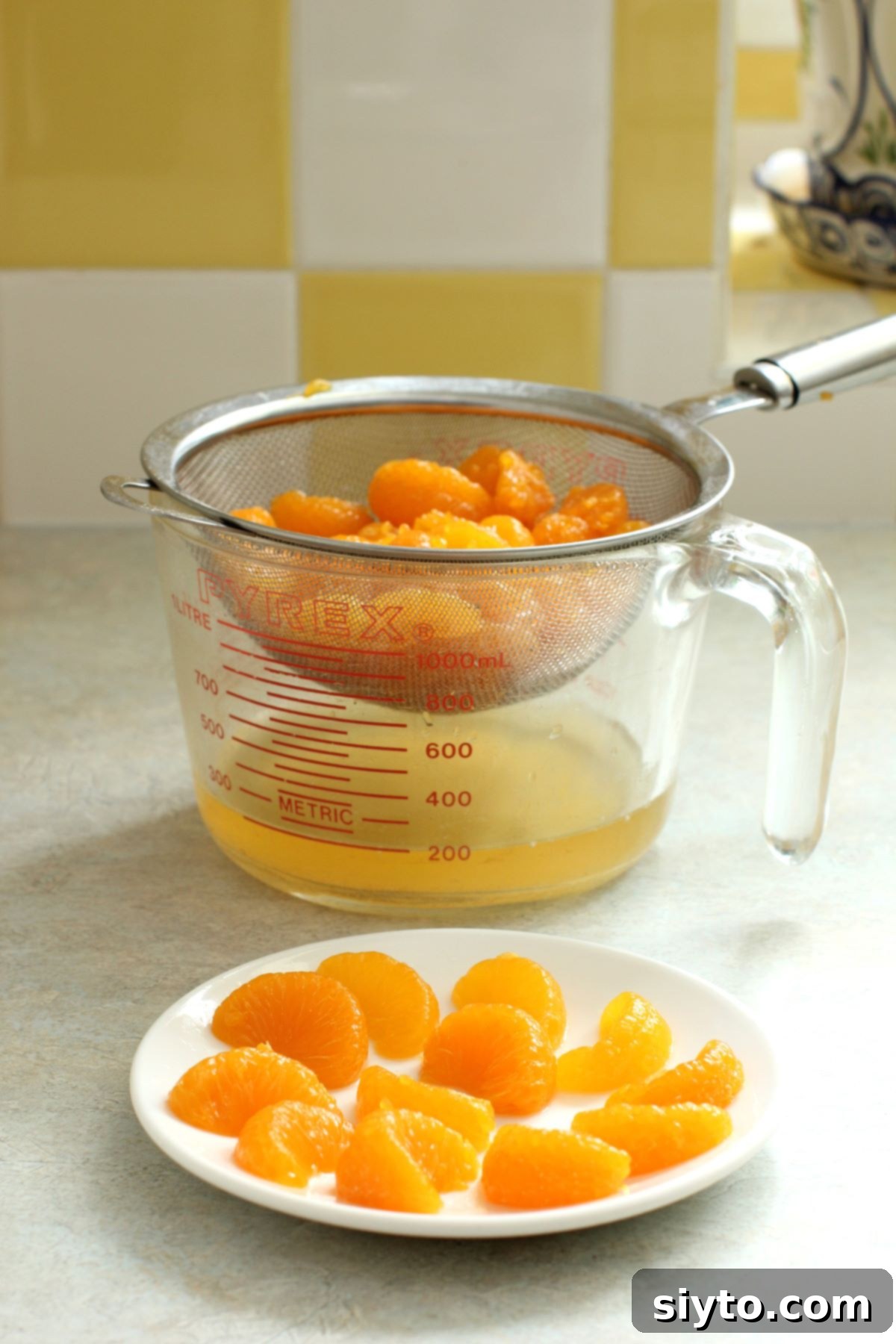
Before you begin baking, prepare your springform pan by greasing it thoroughly. This will prevent the sponge cake from sticking and ensure easy removal later. Preheat your oven to the specified temperature, ensuring it’s ready for baking as soon as your batter is mixed.
Baking the Biscuitboden (Sponge Base Layer)
The Biscuitboden is the heart of your torte. To start, take one whole egg and a couple of tablespoons of water. Whip this mixture vigorously with an electric mixer for about 3 to 4 minutes. You’ll be amazed as the single egg transforms into a voluminous, pale, and incredibly fluffy foam, increasing its initial volume by five to six times. This aeration is key to a light sponge.
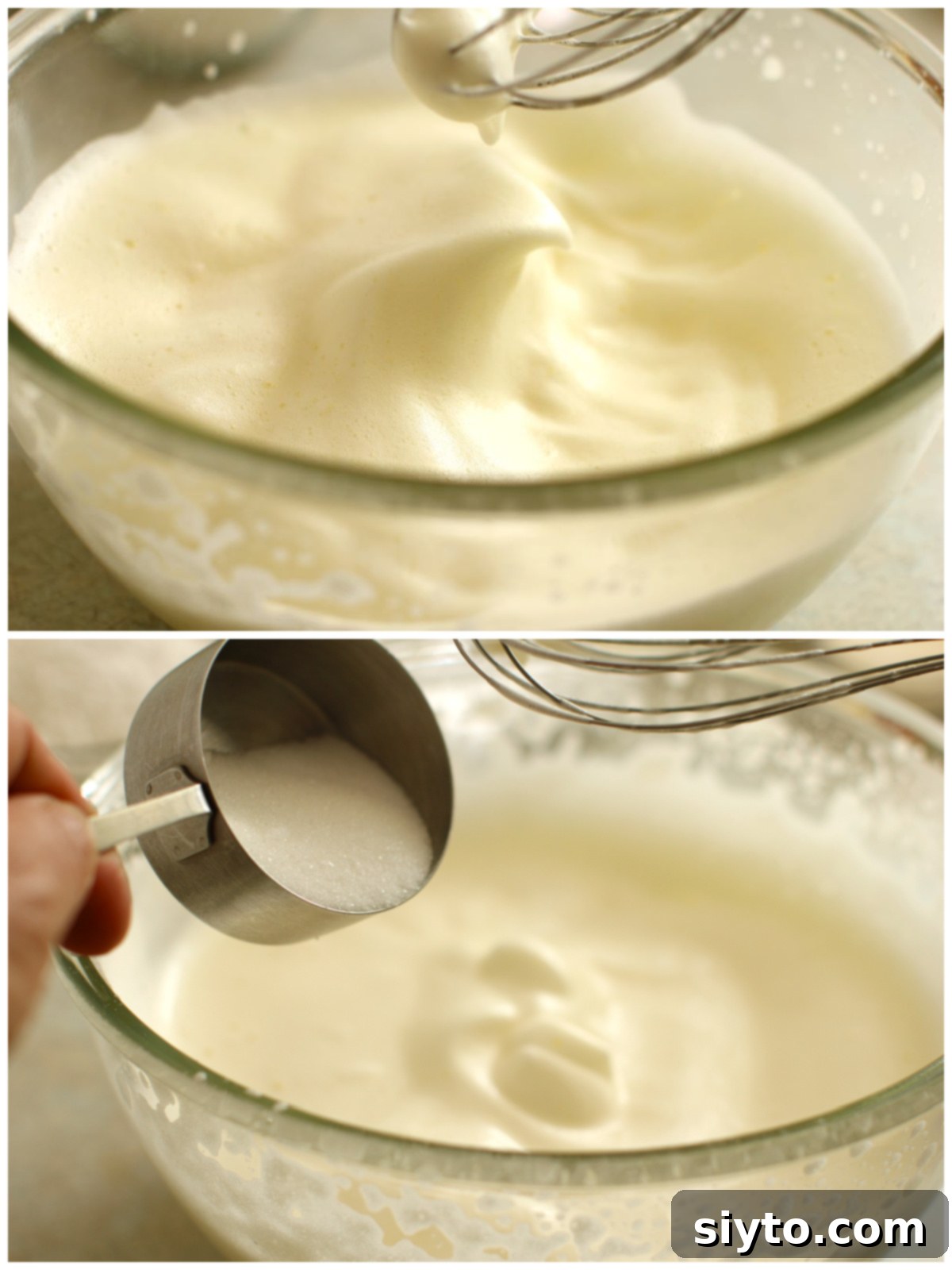
Next, gradually beat in the sugar until the mixture becomes thick, glossy, and holds its shape beautifully – this will take another 1 to 2 minutes. Then, gently fold in a teaspoon of pure vanilla extract, a teaspoon of finely grated orange zest (which adds a wonderful aromatic lift), and two tablespoons of the reserved mandarin liquid. At this stage, the mixture will thin out slightly, which is perfectly normal.
Now, carefully sift the flour and baking powder directly over your airy batter. This ensures there are no lumps and helps keep the batter light. Using a spatula, gently fold the dry ingredients into the wet mixture until just combined and no streaks of flour are visible. Overmixing will deflate your precious foam, so be gentle and precise.
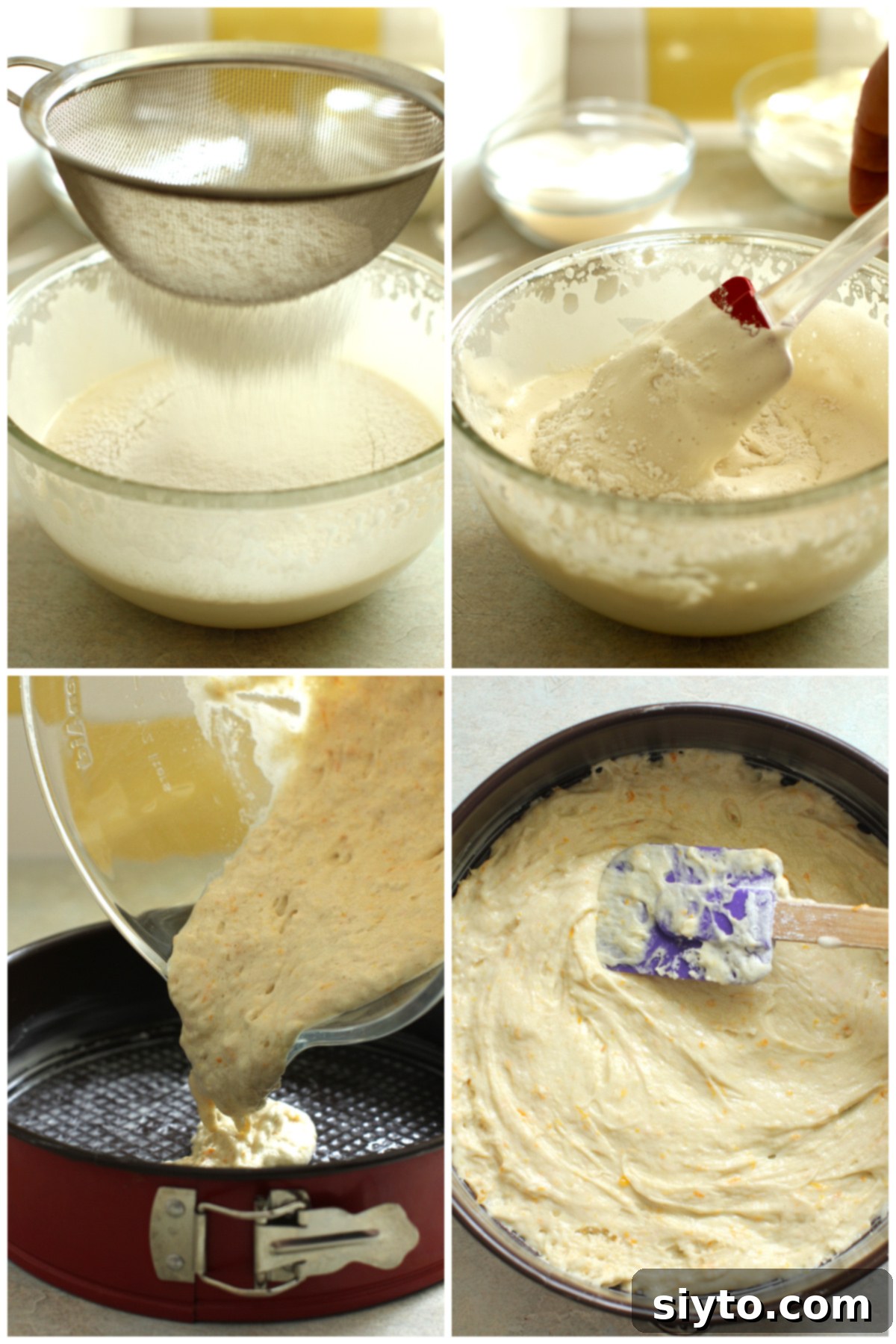
Pour the batter into your greased springform pan. Spread it around quickly and as evenly as possible. The baking powder will start to activate, making the batter foam up, so don’t over-fuss with it. A perfectly smooth surface isn’t strictly necessary; just do your best. Bake the base layer for 15-18 minutes, or until the edges are golden, and it springs back slightly when lightly touched. Once baked, allow the sponge cake to cool completely in the pan.
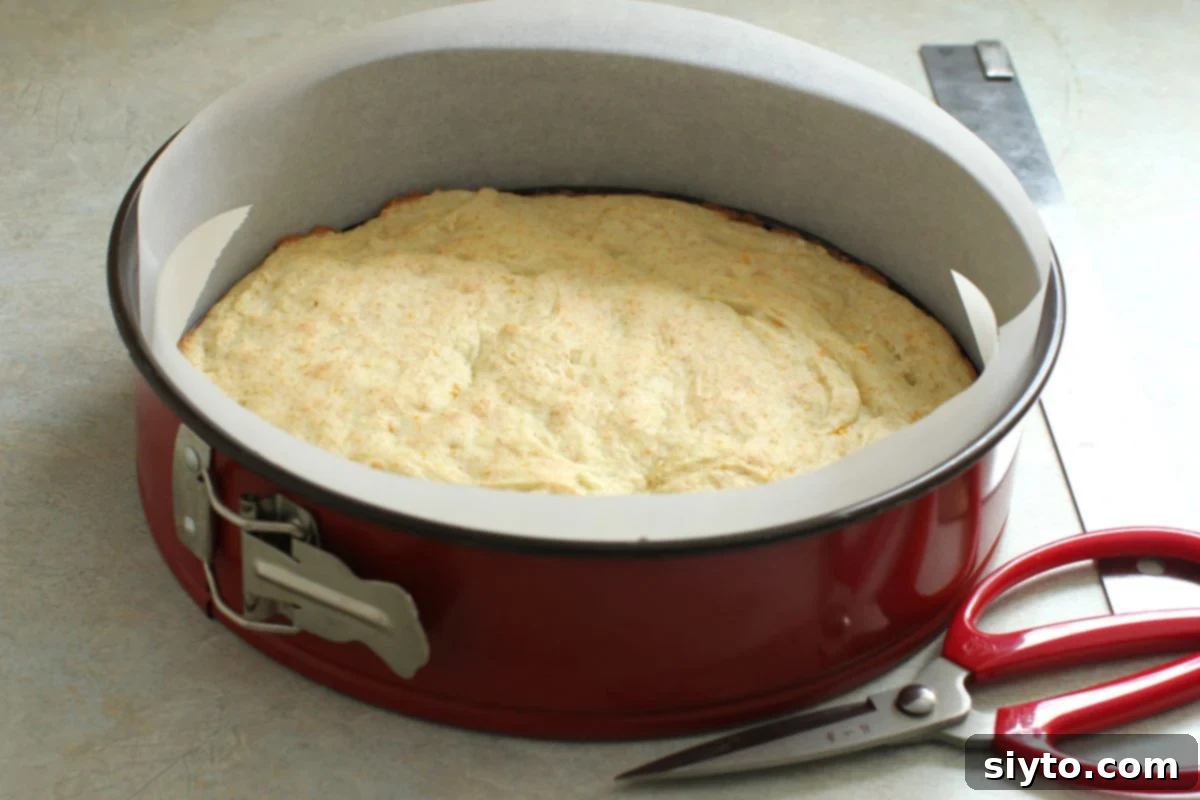
After the cake has cooled, carefully remove the sides of the springform pan. Run a thin spatula or knife gently under the cake to loosen it from the bottom of the pan, but leave the cake in place on the base. Re-attach the sides of the springform pan. This step is important for presentation and ease of serving later. To ensure a perfectly smooth edge for your filling, cut two long strips of parchment paper, approximately 2½ inches (6 cm) wide and 15-16 inches (38-40 cm) long. These strips will naturally curl if cut lengthwise from the parchment roll, making them easier to fit. Slide these parchment strips down into the pan, lining the inside edges around the cake. They should overlap by an inch or two and will adhere sufficiently to the greased pan sides to stay upright. These strips are your secret weapon for a professional-looking, crisp edge on your torte filling.
Crafting the Luxurious Mandarin Cream Torte Filling
With your sponge base ready, it’s time to create the star of the show: the creamy, dreamy mandarin filling. Begin by pouring half a cup (120 ml) of your reserved mandarin juice into a small saucepan. Evenly sprinkle the powdered gelatin over the juice. Allow it to sit undisturbed for about 10 minutes; this crucial step, known as “blooming,” allows the gelatin granules to absorb the liquid and swell, ensuring a smooth dissolution later. After blooming, gently heat the saucepan over low heat, stirring continuously until the gelatin is completely dissolved and no granules remain. Be careful not to boil it, as excessive heat can reduce gelatin’s setting power.
Once dissolved, remove the gelatin mixture from the heat. Stir in the remaining 6 tablespoons (90 ml) of cool mandarin juice, the sugar, the full-fat Greek yogurt, and a teaspoon of pure vanilla extract. Whisk this mixture until it’s perfectly smooth and all ingredients are fully incorporated. The cool juice helps bring down the temperature of the gelatin mixture, preventing it from setting too quickly when combined with other ingredients.
In a separate, clean bowl, whip the heavy cream until it forms stiff peaks. This requires a cold bowl and cold cream for optimal results. Once your whipped cream is ready, gently pour the gelatin/yogurt cream mixture over it. With a light hand, fold the two together using a spatula until they are smoothly combined, creating a luxurious, airy mousse.
Now for a decorative touch! Before adding the mandarin segments, remove about half a cup of this luscious mousse mixture. Transfer it to a small piping bag fitted with a star tip, or if you don’t have one, a small ziptop plastic sandwich bag will do. To prevent the mousse from spilling, twist the tip of the piping bag or snip off a tiny corner of the plastic bag, then set it into a tall cup before filling. Secure the open end with a twist tie or clip, or simply seal the plastic bag. Refrigerate this reserved portion; it will remain soft enough to pipe elegant rosettes onto your cake once it’s set.
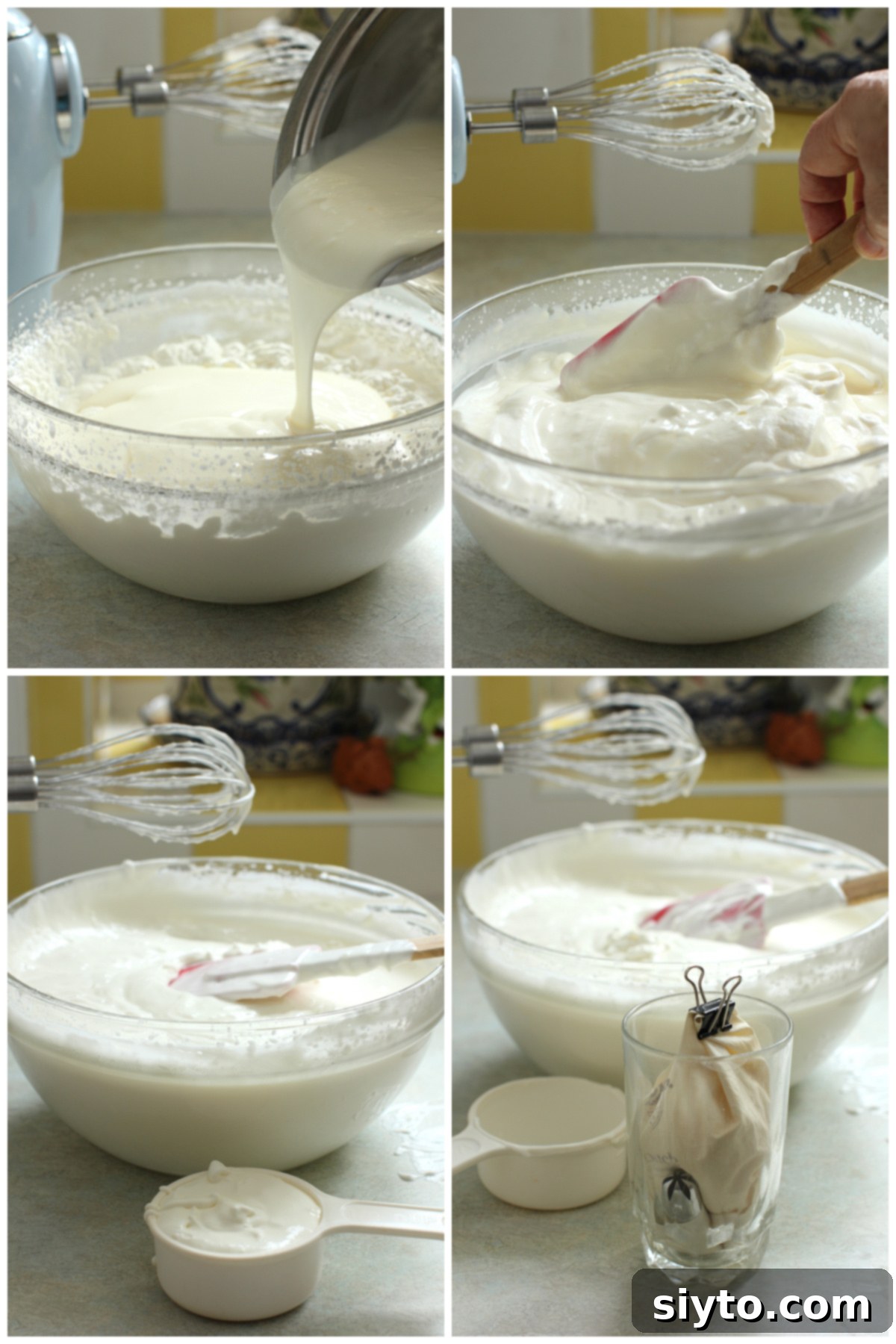
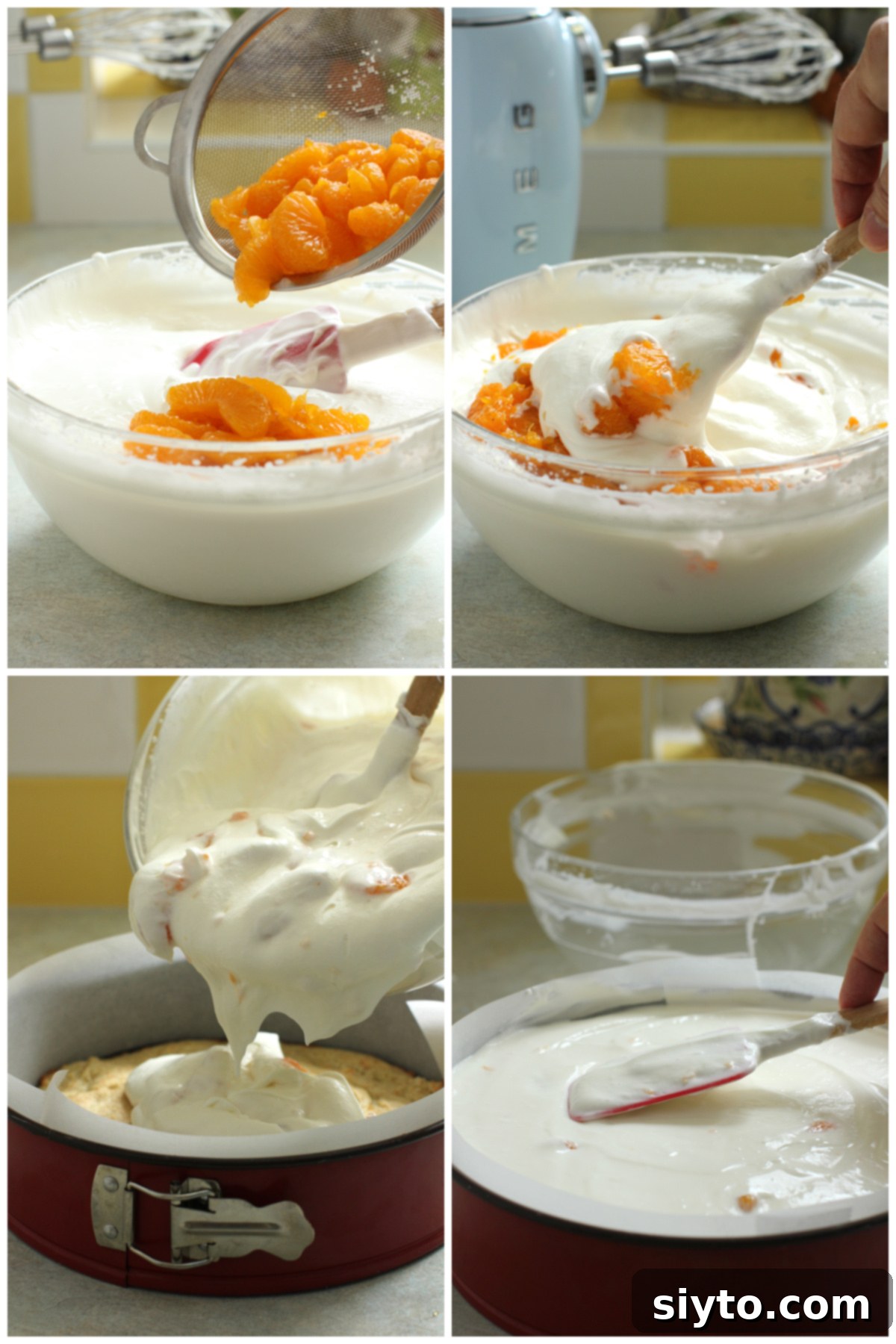
Finally, carefully fold the remaining drained mandarin orange segments into the main portion of the yogurt cream. Be gentle to avoid breaking the delicate segments. Pour this fluffy, citrus-infused mandarin mousse evenly on top of your cooled sponge base in the springform pan. Ensure the parchment paper strips around the edges remain upright and smooth the top surface of the mousse with a spatula. Transfer the entire springform pan to the refrigerator and allow it to chill for a minimum of 3 to 4 hours, or ideally overnight, until the torte is perfectly set and firm.
The Grand Finale: Decorating and Serving
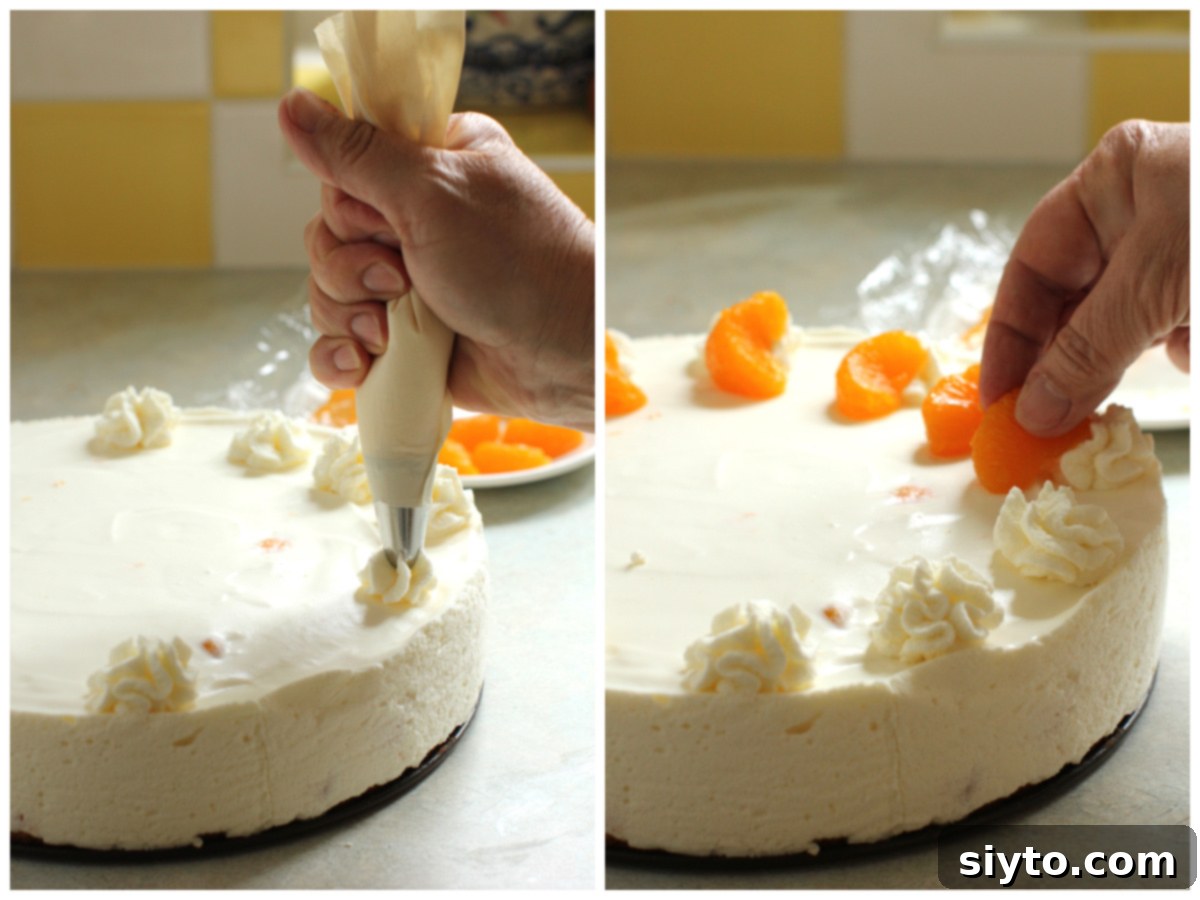
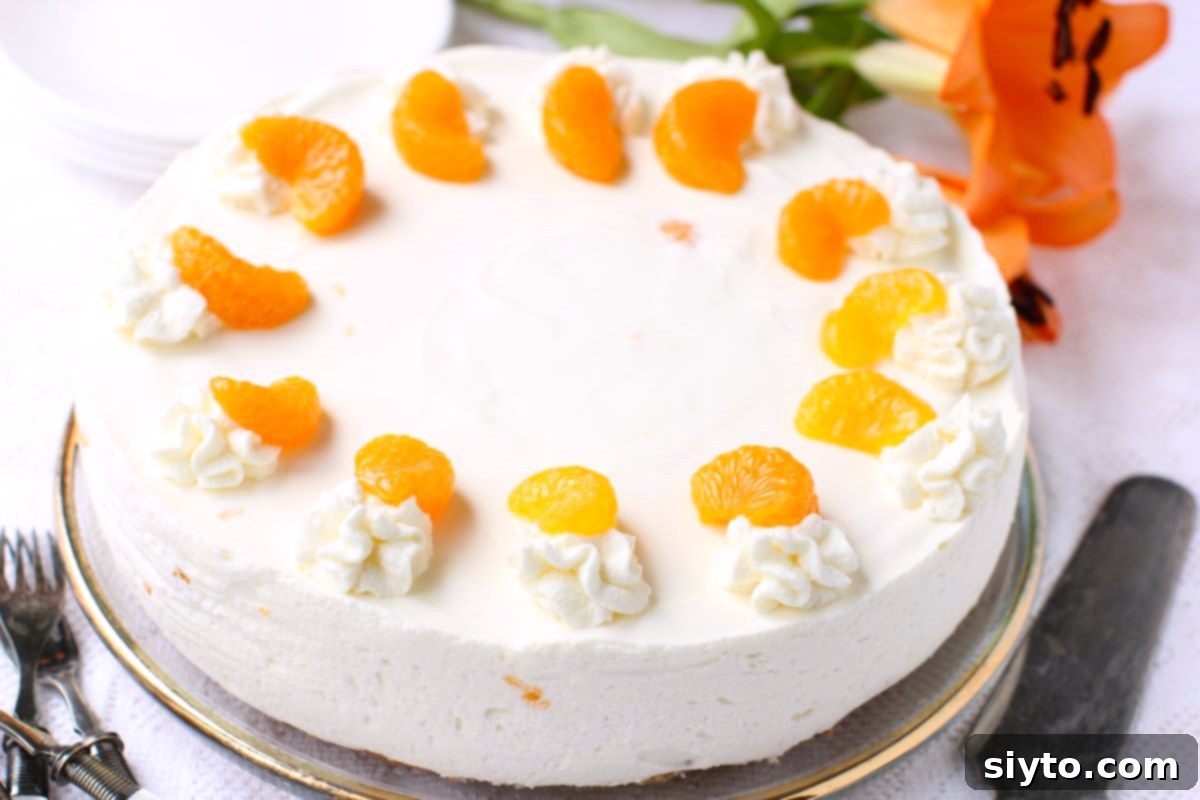
Once your exquisite cream torte is beautifully set and firm, it’s time for the final artistic touches. Carefully remove the sides of the springform pan. Then, gently peel away the parchment paper strips, revealing the perfectly smooth and defined edges of your torte. Now, retrieve your reserved mousse from the refrigerator. If using a piping bag with a star tip, pipe 12 elegant little rosettes evenly around the outer edge of the cake’s top surface. If you opted for a ziptop plastic bag, snip off one corner (about half an inch across) and gently squeeze out the cream into 12 small, swirled mounds. Finally, take your reserved mandarin orange segments and place one delicately on top of each piped rosette or swirled mound. This final garnish adds a burst of color and a professional finish to your homemade masterpiece.
Ta-da! Your stunning German Mandarin Cream Torte (Mandarinen Sahnetorte) is now complete and ready to be admired and savored. The vibrant orange of the mandarins against the pristine white cream is truly a sight to behold, promising a refreshing and delightful taste experience. Enjoy the fruits of your labor! 🧡
Want to receive new Kitchen Frau recipes directly to your email as soon as they’re posted? Sign up here and you’ll get bits of news updates on what’s happening in my kitchen and garden, plus a handy and useful kitchen tip along with each recipe, too. (No spam ever.)
If you like my recipes, follow me on Instagram, Pinterest, Twitter, and Facebook. You’d make my day. 😊
Guten Appetit!
Mandarinen-Sahnetorte (German Mandarin Cream Torte)
Margaret Bose Johnson
Save to Pinterest
Equipment
- springform pan, 10-inch (26 cm, inside measurement)
- parchment paper
- piping bag with star tip or small ziptop plastic food bag
Ingredients
- 2 cans (284 ml/10 oz each) mandarin orange sections in light syrup, drained and juice reserved
for the Biscuitboden base:
- 1 large egg
- 2 tablespoons water
- ⅓ cup (70 g) sugar
- 1 teaspoon pure vanilla extract
- 1 teaspoon finely grated orange zest, optional
- 2 tablespoons (30 ml) drained mandarin juice
- ¾ cup (100 g) gluten-free flour blend or regular flour for non-gluten-free
- ½ teaspoon baking powder
for the Mandarin Cream filling:
- ½ cup + 6 tablespoons (120 ml + 90 ml) drained Mandarin juice, divided
- 5½ teaspoons (16 g) powdered gelatin (2½ packages)
- 1 cup (200 g) sugar
- 2 cups (475 g) full-fat Greek yogurt (6-10% milk fat)
- 1 teaspoon pure vanilla extract
- 2 cups (480 ml) whipping cream
- drained mandarin orange sections from the 2 cans listed above
Instructions
- Pour the contents of the two cans of mandarin oranges into a sieve or colander set over a bowl to catch the liquid. Carefully pick out 12 perfectly shaped orange segments to use on top of the cake when it is finished. Place these chosen segments into a small bowl, cover, and refrigerate them for later use.
You will need exactly 1 cup (240 ml) of the drained mandarin juice. Discard any excess juice you may have. If your collected juice is less than 1 cup, simply add water or additional orange juice to reach the required volume.
- Preheat your oven to 350℉ (180℃). Prepare your springform pan (10-inch/26 cm) by greasing it thoroughly with approximately 2 teaspoons of butter or by using a cooking oil spray.
To make the Biscuitboden (base):
- In a large bowl, using an electric mixer, whip the large egg with the 2 tablespoons of water on high speed until the mixture becomes pale, very fluffy, and increases in volume by about 5 to 6 times. This aeration process typically takes about 3-4 minutes.
- Gradually beat in the ⅓ cup of sugar, continuing to beat for another 1-2 minutes until the mixture is thick, glossy, and holds soft peaks.
- Gently fold in the 1 teaspoon of vanilla extract, 1 teaspoon of finely grated orange zest (if using), and 2 tablespoons (30 ml) of the drained mandarin juice. The batter will become slightly thinner at this point.
- Sift the ¾ cup of flour (gluten-free blend or regular flour) and ½ teaspoon of baking powder over the batter. Using a spatula, carefully fold the dry ingredients into the wet mixture until no flour is visible and the batter is just combined. Be gentle to maintain the airiness.
- Scrape the batter into the greased springform pan and quickly spread it around evenly on the bottom. Work promptly, as the baking powder will cause the dough to foam slightly, making it a bit harder to spread. Don’t worry if it’s not perfectly even; just do your best.
- Bake for 15-18 minutes, or until the cake edges are golden brown and a toothpick inserted into the center comes out clean.
- Allow the cake to cool completely in the springform pan on a wire rack.
- Once cooled, gently remove the sides of the springform pan. Slide a thin spatula or knife carefully under the cake to loosen it from the bottom of the pan, but leave the cake resting on the pan’s base. Re-attach the sides of the springform pan to the base. Cut 2 long strips of parchment paper, approximately 2½-inches (6 cm) wide and 15-16 inches (38-40 cm) long. Tip: if you cut these strips lengthwise from your roll of parchment, they will naturally curl, making them easier to fit snugly against the inner edge of the pan. Slide these parchment paper strips down into the springform pan, lining the inside edges around the cake. Tuck the strips down beside the cake as much as possible. The parchment paper will stick to the greased sides of the pan sufficiently to hold them upright, creating a smooth barrier for the filling.
Make the Mandarin Cream layer:
- Measure ½ cup (120 ml) of the drained mandarin juice into a small saucepan. Sprinkle the powdered gelatin evenly over the juice and stir briefly. Let the gelatin “bloom” by sitting undisturbed for 10 minutes to absorb the liquid.
- Place the saucepan over very low heat, stirring constantly, until the gelatin is completely dissolved and the mixture is clear. Do not allow it to boil.
- Remove the saucepan from the heat. Stir in the remaining 6 tablespoons (90 ml) of cool drained mandarin juice, the 1 cup of sugar, the 2 cups (475 g) of full-fat Greek yogurt, and the 1 teaspoon of vanilla extract. Whisk vigorously until the mixture is perfectly smooth and all ingredients are well combined.
- In a separate, chilled bowl, whip the 2 cups (480 ml) of heavy whipping cream to stiff peaks.
- Gently pour the gelatin/yogurt mixture over the whipped cream. Using a spatula, carefully fold the two together until they are smoothly combined, creating a light and airy mousse. Remove ½ cup (120 ml) of this mousse mixture and transfer it into a small piping bag fitted with a star tip (or a small ziptop plastic bag). Close the piping bag with a twist tie or seal the plastic bag, and place it in the fridge until it’s needed for garnishing the cake.
- Add the thoroughly drained mandarin orange segments (from the initial 2 cans) to the remaining cream mixture. Gently fold them in, being careful not to break the segments.
- Scrape the mandarin cream mousse evenly on top of the cooled cake base in the springform pan, ensuring that the parchment paper strips remain pressed against the sides of the pan. Smooth the top surface of the mousse with a spatula.
- Chill the assembled torte in the refrigerator for 3 to 4 hours, or until it is completely set and firm.
- Once the cream torte is set, carefully remove the springform sides and gently peel off the parchment paper strips. Retrieve the reserved mousse from the fridge. Use the piping bag to pipe 12 small rosettes evenly around the outside edge of the top of the cake. If using a ziptop bag, snip off one corner (about ½-inch across) and gently squeeze the cream out to create 12 small mounded swirls. Top each rosette or swirl with one of the previously reserved mandarin orange sections. Your beautiful cake can be covered with a cake dome and refrigerated overnight before serving for optimal flavor development and setting.
- To serve, cut the torte into 12 elegant wedges. Any leftover cake should be loosely covered with a cake dome or plastic wrap and refrigerated, where it will remain fresh and delicious for up to 5 days.
Notes
To protect your beautiful cake once decorated, if you don’t have a specific cake dome, a large soup pot or stock pot that’s wide enough not to touch the sides of the cake can serve as an excellent temporary cover. Another clever trick is to insert a few toothpicks halfway into the cake, strategically placing them close to the cream rosettes where the small holes won’t be noticeable. Then, loosely drape several strips of plastic food wrap over the cake; the toothpicks will hold the plastic up, preventing it from sticking to the delicate cream and decorations.