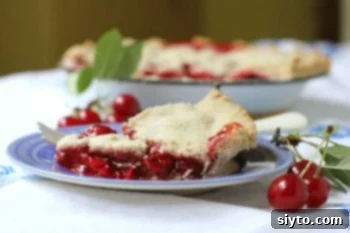
Classic Sour Cherry Pie Recipe: Perfectly Tangy, Sweet, and Gluten-Free Friendly
Prepare your taste buds for an unforgettable experience with this classic sour cherry pie. Its wonderfully tart filling, perfectly balanced with sweetness, is guaranteed to make your mouth pucker in the most delightful way, leaving your guests begging for another slice! We also provide a fantastic gluten-free crust option, ensuring everyone can enjoy this homemade delight.
The timeless charm of a cherry pie is often celebrated in song and story, bringing to mind images of home and comfort. Take, for instance, the classic folk song, “Billy Boy, Billy Boy,” which has been an earworm in my head all day, gently urging me towards the kitchen to create this very dessert:
Can she bake a cherry pie, Billy Boy, Billy Boy?
Can she bake a cherry pie, charming Billy?
Yes, she can bake a cherry pie, she’s the apple of my eye,
But she’s a young thing and cannot leave her mother.
That famous nursery rhyme/song, with my slightly altered childhood recollection of the lyrics (my lyrics are different), seems to suggest that baking a cherry pie is a prerequisite for certain life milestones! It’s a good thing my husband wasn’t aware of this requirement when we first met, or we might never have embarked on our culinary journey together. But hey, better late than never! I’ve finally mastered the art of making a cherry pie, and if I do say so myself, it’s pretty spectacular. And thankfully, I’m no longer a “young thing who cannot leave her mother,” so I can bake to my heart’s content!
The star of this pie is, undoubtedly, the Evans cherry. These beautiful trees are currently laden with their ruby jewels – glistening, juicy, and wonderfully sour cherries. As it’s late in the season, they’ve had more time to ripen, making them exceptionally sweet for *sour* cherries, which adds an extra layer of complexity to the pie’s flavor profile. Their distinct tang is what truly elevates this dessert, cutting through the sweetness of the sugar and creating a perfectly balanced bite that leaves you craving more.
Harvesting these beauties is a joy. It takes just minutes to pick a pail full, a task made even more satisfying when you know the delicious outcome. And don’t let the pitting process deter you; it takes barely any longer to pit them using this slick and easy trick. A simple method ensures you get to the heart of these delightful fruits with minimal fuss, making the entire baking process even more enjoyable.
For an especially unforgettable and tantalizingly delicious Evans Cherry Pie, I highly recommend adding a generous splash of sour cherry brandy, ideally made from last year’s cherry crop. This addition deepens the cherry flavor and introduces a sophisticated warmth that truly elevates the pie. However, if you don’t have any on hand, don’t despair! Your pie will still be incredibly delicious, and Billy Boy and his friends will undoubtedly love it just the same. It’s a fantastic pie with or without the brandy, but it’s an extra special treat if you can include it.
* * * * *
Kitchen Frau Notes: When it comes to the pie crust, you have some flexibility. While the recipes call for lard or shortening, feel free to substitute part of it with butter for a richer flavor profile. For the cherry brandy in the filling, you can easily substitute another fruit liqueur that complements the cherries, such as Crème de Cassis (black currant liqueur) or a raspberry liqueur. If you prefer a non-alcoholic option, apple juice works wonderfully to add a subtle fruity note and a touch of moisture.
Evans Cherry Pie
- 1 quantity of pie dough for a double crust pie (you can use your favourite pastry recipe or refer to our classic regular and gluten-free recipes below)
- 4 cups (675gms) pitted sour cherries, fresh or frozen (if using frozen, do not thaw them completely before mixing, as this can make the filling too watery; see how to pit Evans cherries)
- 1 ¼ cups (250gms) natural evaporated cane sugar (adjust to your preferred sweetness based on cherry tartness)
- ⅛ teaspoon fine sea salt (enhances all the flavors)
- 7 tablespoons (50gms) tapioca starch or 5 tablespoons (50gms) minute tapioca (excellent for thickening fruit pies without clouding the filling)
- ¼ teaspoon pure almond extract (a lovely complement to cherry flavor)
- ¼ cup cherry brandy (homemade or purchased), other fruit liqueur, or apple juice (for an extra depth of flavor)
Begin by rolling out half of your prepared pastry dough. Carefully line a 9 or 9½ inch (23-24 cm) pie plate with this bottom crust, ensuring it drapes evenly without stretching. Place the pastry-lined dish in the refrigerator to chill thoroughly while you prepare the top crust and the delicious cherry filling. Chilling the crust helps prevent shrinking and keeps it flaky.
Preheat your oven to 425°F (220°C).
Next, roll out the remaining pastry dough for your top crust. If you’re using gluten-free pastry, rolling it between two sheets of parchment paper (as described below) will make this process much easier. Using a bottle cap or a small round cutter (about cherry-sized), cut out six or seven small holes in the pastry. These holes are essential for allowing steam to escape during baking, preventing the top crust from puffing up excessively and ensuring even cooking of the filling. Use the tip of a butter knife to gently remove the small dough circles from the holes.
In a large bowl, combine your pitted cherries (along with any accumulated juices, especially if using fresh cherries). Add the sugar, salt, and tapioca starch. Using a silicone spatula, toss the ingredients gently until the cherries are evenly coated. Tapioca starch is an excellent thickener for fruit pies, creating a clear, glossy filling.
Sprinkle the almond extract and your chosen cherry brandy, other liqueur, or apple juice over the cherry mixture. Toss again gently to combine all the flavors thoroughly.
Retrieve your chilled bottom crust from the refrigerator. Carefully tip the prepared cherry filling into it, spreading it evenly. Then, gently lift the top crust and place it over the filling. Press the edges of the top and bottom crusts together firmly to seal them completely. With a sharp knife, carefully trim off any excess pastry dough from around the edge of the pie dish. Finally, flute the rim of the pastry with your fingers, creating a beautiful scalloped edge that will bake up to a lovely golden brown.
To prevent any potential drips from bubbling filling from dirtying your oven, place the pie onto a baking dish or a pizza pan with a raised lip. This acts as a catch-all for any delicious juices that might escape during baking.
Bake the cherry pie for 15 minutes in the preheated 425°F (220°C) oven. This initial high heat helps to set the crust quickly and ensures a flaky texture. After 15 minutes, reduce the oven temperature to 350°F (175°C) and continue baking for another 45 to 50 minutes. The pie is ready when the pastry is beautifully golden brown, and you can see the cherry filling bubbling slightly and thickly through the holes in the top crust. The bubbling indicates that the filling has reached the proper temperature to thicken.
Once baked, remove the pie from the oven and allow it to cool completely on a wire rack before attempting to cut into it. This step is crucial, as it allows the filling to set properly, ensuring clean, beautiful slices. Patience is key for the perfect pie experience! Slice into 6 to 8 generous wedges and serve.
Regular Pastry for Pie Crust
This reliable recipe for a flaky, tender pie crust comes from the inside cover of the beloved 1980 Fanny Farmer Cookbook, a testament to its enduring quality.
For a 9-inch two-crust pie:
- 2½ cups (350gms) all-purpose flour
- ½ teaspoon salt
- ¾ cup cold lard or shortening (cut into small pieces; you can use part butter for flavor)
- 6 to 7 tablespoons ice cold water
In a large mixing bowl, combine the flour and salt, whisking them together to ensure even distribution. Add the cold lard or shortening pieces to the flour mixture. Using a pastry cutter or two knives, cut the fat into the dry ingredients until the mixture resembles coarse crumbs with some pea-sized clumps of shortening still visible. These small chunks of fat are what create a wonderfully flaky crust.
Add five tablespoons of the ice-cold water to the mixture, stirring gently with a fork. Continue to add 1 or 2 more tablespoons of water, one at a time, just until the dough comes together and can be pressed into a rough ball. Be careful not to add too much water, as this can make the crust tough. Lightly knead the pastry a couple of times, just enough to ensure all the flour is incorporated. Overworking the dough develops gluten, which can lead to a less tender crust. The goal is to keep those visible clumps of shortening for ultimate flakiness. Divide the dough ball into two, making one half slightly larger than the other (this larger portion will be for your bottom crust). Form each half into a flat disk, then wrap each disk tightly in plastic wrap and refrigerate for at least 30 to 60 minutes. Chilling allows the gluten to relax and the fat to firm up, making the dough easier to roll.
(At this stage, these pastry disks can also be refrigerated overnight or for several days before being used. If refrigerated for an extended period, remove them from the refrigerator about 15 minutes before you plan to roll them out to allow them to soften slightly.)
When ready to assemble, lightly dust your work surface with flour. Take the larger dough disk and roll it out into a round that is approximately an inch (2.5cm) larger than your pie dish all the way around. Carefully lift the rolled pastry from the work surface by draping it gently over your rolling pin, then transfer it into the pie plate. Gently ease the sides of the pastry down into the dish with your fingers, ensuring it fits snugly without stretching. For the top crust, roll out the smaller dough disk to about ½ inch (1.3 cm) larger than the pie plate all the way around. Remember to cut the steam holes as mentioned in the main pie recipe instructions. Carefully place this top crust over your filled bottom crust. Trim off any excess dough from the edges, then press the two layers of pastry together firmly all the way around the pie to seal them. Finish by fluting the edges of the pie crust for a decorative touch.
Gluten Free Pastry for Pie Crust
Kitchen Frau Note: To make future pie baking even quicker and more convenient, consider preparing several batches of the dry ingredients for this gluten-free crust mix at once. As you measure out each ingredient, place it into a heavy-duty zip-top bag. Label the bag clearly as ‘Pie Crust Mix’ and write down the wet ingredients that need to be added later (lard, egg, vinegar, and water). Store these prepared mixes in the freezer. This way, you’ll have a ready-to-go flour blend that’s already cold, which is ideal for achieving a flaky pastry, and you’ll be able to whip up a delicious gluten-free pie crust much more quickly whenever the craving strikes!
This gluten-free crust recipe has been refined from my earlier pastry recipe. While it does include a few more ingredients, I find this particular blend yields a dough that is significantly easier to work with, offering excellent flexibility and a delightful texture.
- 1 cup (100gms) oat flour (you can easily make your own by whizzing rolled oats in a blender or food processor until finely ground)
- ¾ cup (100gms) sorghum flour
- ½ cup (70gms) sweet rice flour (provides structure and chewiness)
- ½ cup (60gms) tapioca flour/starch (contributes to crispiness)
- ¼ cup (40gms) potato starch (not potato flour; adds lightness and tenderness)
- 2 tablespoons sugar (helps the dough achieve a lovely golden brown color)
- 1 tablespoon (10gms) psyllium husk powder (acts as a binder, mimicking gluten)
- 1 teaspoon xanthan gum (another crucial binder for gluten-free baking)
- 1¼ teaspoons baking powder (for a little lift and tenderness)
- ½ teaspoon salt
- ¾ cup (170gms) very cold lard or shortening, diced (you can substitute part of it with cold butter for added flavor)
- 1 large egg or chia egg (1 tablespoon ground chia seeds soaked for 5 minutes in 3 tablespoons water, for a vegan option or if you don’t have an egg)
- 1 tablespoon apple cider vinegar (helps tenderize the crust)
- 2 – 3 tablespoons ice cold water
In the bowl of a food processor, combine all the dry ingredients (oat flour, sorghum flour, sweet rice flour, tapioca flour/starch, potato starch, sugar, psyllium husk powder, xanthan gum, baking powder, and salt). If you don’t have a food processor, use a regular large mixing bowl. Add the diced cold lard or shortening to the dry ingredients. If using a food processor, pulse for just two to three seconds until the mixture resembles coarse crumbs with some pea-sized pieces of fat remaining. If mixing by hand in a bowl, use a pastry cutter or two knives to cut in the shortening until you reach the same consistency.
Now, add the egg (or chia egg) and vinegar, along with 2 tablespoons of the ice-cold water. If using a food processor, whiz just until the dough begins to clump together when you squeeze a handful. If mixing in a bowl, stir with a fork until it starts to form. If the dough still feels too dry, add up to one more tablespoon of cold water, a tiny bit at a time, until the mixture can just be pressed together into a rough ball. Be careful not to add too much liquid.
If you used a food processor, dump the dough onto your counter; otherwise, leave it in the bowl. Lightly knead the pastry a couple of times – just enough to ensure all the flour is fully incorporated. It’s crucial not to overwork the dough, as you still want to see some small clumps of shortening. These are key to achieving a flaky, tender gluten-free pastry.
Divide the dough ball into two portions, making one half slightly larger for the bottom crust. Form each ball into a flat disk, then wrap each disk tightly in plastic wrap. Place them into the freezer for 30 minutes, or refrigerate for at least an hour. This chilling step is essential for gluten-free pastry, as it firms up the fats and allows the binders to hydrate, making the dough much easier to handle. These dough disks can be stored in the refrigerator for up to 3 days.
When you’re ready to roll, take one chilled disk of dough. Place it between two sheets of parchment paper. Using your rolling pin, start rolling from the center of the pastry circle outwards. Lift the top sheet of parchment paper occasionally and reposition it if it starts to wrinkle or stick. Here’s a helpful trick to keep the parchment paper from sliding all over the counter: position the top sheet of parchment directly over the bottom sheet so that their corners align. Then, let one of the corners hang slightly over the edge of your counter. Stand a bit sideways, pressing your hip gently against the parchment sheet to wedge the overhanging corner between your body and the counter. This will hold it steady while you roll the rolling pin from the center of the pastry circle outwards, away from you. After a few rolls, rotate the parchment papers a quarter turn, pin down the next corner with your hip, and continue rolling away from you. Repeat this process until your dough is rolled to the desired thickness and size.
Once rolled, carefully peel off the top sheet of parchment paper. Invert the pastry circle (which will still be attached to the bottom piece of parchment paper) directly into your pie dish. Now, gently and carefully peel off the bottom sheet of parchment paper. Ease the pastry carefully down the sides of the dish by lifting up the edges and gently pressing it into place with your fingers. Do not stretch the dough. Place the bottom shell in the fridge to chill for 15 to 30 minutes before filling. This helps the crust retain its shape during baking.
Repeat this entire rolling procedure for the top crust. Remember to cut the small holes into it for steam release, as described in the main pie recipe. Once rolled and vented, invert the top crust onto the pie filling, then carefully remove the remaining parchment paper. Trim off any excess dough from the edges and flute the edges of the pie crust to create a beautiful, finished look.
Guten Appetit!
Sign up here to receive new Kitchen Frau recipes directly to your email inbox, and get a handy and useful kitchen tip with each recipe.
If you like my recipes, follow me on Instagram, Pinterest, Twitter, and Facebook. You’d make my day!
Don’t forget to PIN IT to save the recipe:
You might also like these related recipes:
How to Pit Evans Cherries
Brandied Evans Cherries
No-Bake Cherry Coconut Bars – A Delightful Use for Evans Cherries
Gingered Pear Tarts and Gluten Free Pastry Recipe