Effortless Crustless Rhubarb Custard Pie: A Taste of Garden Magic
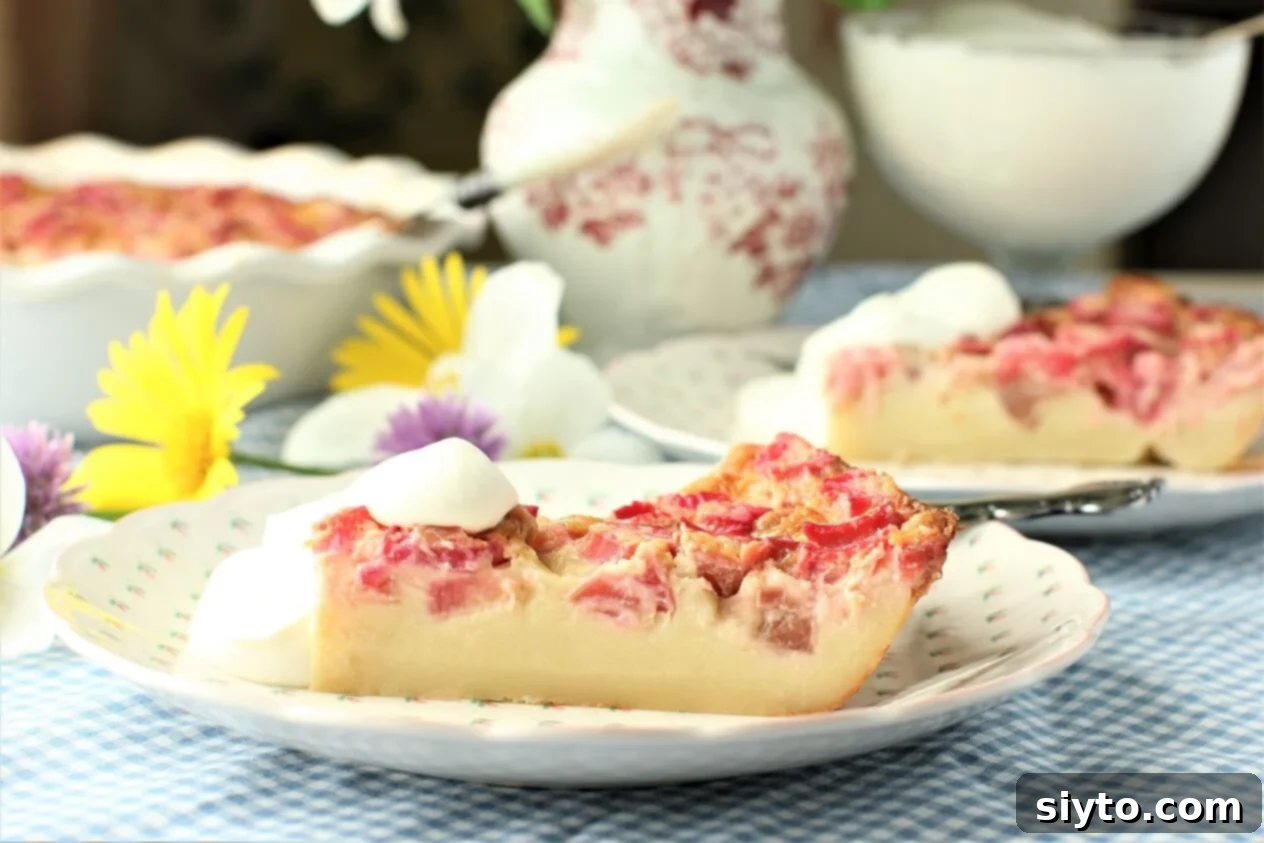
Imagine all the comforting deliciousness of a creamy rhubarb custard pie, but without any of the fuss of preparing a crust. This extraordinary recipe delivers just that! Crafted with simple ingredients and mixed in a blender, this “impossible” pie magically forms its own three distinct layers as it bakes: a tender, slightly firmer crust-like base at the bottom, a silky-smooth vanilla custard in the middle, and a vibrant, tangy rhubarb topping. The best part? This incredible dessert can be ready for the oven in just 10 minutes, leaving you more time to savor the day. Plus, a perfectly functional and equally delicious gluten-free version is also available!
This isn’t just baking; it’s pure kitchen magic! You simply toss a handful of basic ingredients into your blender, pour the smooth mixture over a pie dish generously filled with fresh, thinly sliced rhubarb, and let your oven work its charm. What emerges is an absolutely amazing custard pie, boasting three glorious, self-made layers: a slightly firmer, golden-brown bottom that acts as its own crust, a luscious middle layer of creamy, silky vanilla custard subtly sweetened with a delicate hint of nutmeg, and a top layer brimming with tangy, fruity rhubarb, glowing with its characteristic glorious pink hue. This is truly my kind of easy, impressive dessert, and I’m certain it will quickly become your go-to whenever you want to wow guests or treat yourself without spending hours in the kitchen.
Do you remember those carefree childhood summers? Walking barefoot through the grass, a small cup of sugar in one hand, a big, crisp stalk of rhubarb in the other? Dipping that juicy rhubarb into the sugar and biting into it, feeling your cheeks pucker and your eyes cross from the intense sourness, yet savoring every sweet-tart moment. It was one of those quintessential summer pleasures, a rite of passage for many of us. We’d even challenge each other to see who could eat it with the straightest face! Now, you can recapture that same delightful taste sensation in a beautifully baked pie – with significantly less pucker-power. In fact, this Crustless Rhubarb Custard Pie offers a perfectly balanced sweetness that makes it absolutely, deliciously irresistible.
From Garden to Table: The Story Behind Our Rhubarb and More
Our spring season was unusually short and delayed this year, but within the last two weeks, it felt like summer burst forth almost overnight! After what seemed like an endless stretch of cloudy, cool weather, we finally managed to get into the garden later than usual, squeezing in our seeding efforts between the persistent rainy spells. Yet, as it often happens with our long northern days and extended sunlight hours, everything — including the weeds — somehow popped up, and suddenly, we’re fully immersed in the joys and challenges of gardening again!
The rhubarb plants, in particular, have transformed into magnificent monsters almost overnight. The giant variety we cultivate proudly stands about 5 feet (1.5 meters) tall every single year. I’ve already harvested an armful of flowering stalks from them. The regular variety, which you can see positioned in front of the towering plant in the photo below, boasts beautiful redder stalks, and this is the specific variety I prefer for baking pies, especially this easy crustless rhubarb custard pie. The giant variety, with its thick, crisp, and incredibly juicy stalks, is absolutely perfect for making refreshing juice and delightful cordials. We’ve even started a new row of smaller rhubarb plants to the left of our established mature ones. Once this new row is fully established and thriving, we plan to carefully remove the older, larger plants. This strategic move will create more space between our beloved rhubarb and the new rows of raspberries we’ve just introduced into our evolving orchard garden.
Just two weeks ago, we successfully planted the majority of our vegetable garden. My incredible mom, who is 85 years young, was an exceptionally energetic helper – truly, I can hardly keep up with her! Her enthusiasm and experience are always a huge asset to our gardening endeavors, making the work feel less like a chore and more like a shared joy. It’s a wonderful tradition we cherish every spring.
In recent years, deer have become a persistent and increasingly frustrating problem in our garden. These pesky, uninvited guests would regularly arrive, treating our meticulously cultivated rows as their personal, all-you-can-eat buffet, greedily helping themselves to whatever delicacies they fancied. It was absolutely infuriating! I’d wake up every morning filled with dread, venturing out to inspect the garden and bracing myself to discover which rows they had utterly destroyed the night before. We tried everything we could think of: covering the delicate rows with tunnels made of stucco wire, only to find they managed to eat through the holes. We hung bars of strongly scented soaps from poles every few feet around the perimeter of the garden, hoping the smell would deter them – but they seemed to love the aroma! We even sprinkled a border of shaved soap around the outside of the garden with the same dismal result. Sprinkling blood meal and hair clippings everywhere also proved utterly useless; the deer simply seemed to thumb their noses at our foolish attempts. So, last year, in a desperate bid, we finally erected a fence made of fine-meshed deer netting, standing about 5 feet tall. To our utter disbelief, they still managed to jump right over it! It wasn’t until we added an additional extension, a single string that brought the total height to a formidable 6 feet (2 meters), that they finally gave up, moved on, and found a new restaurant to frequent. You can still see the new extension with its bright pink flagging tape hanging from it – we just want to make absolutely sure the deer can see it clearly and decide to stay out for good! For now, we’re sticking with this temporary fence, as it allows us the flexibility to take it down every winter. This is crucial because our good friend Ed comes with his tractor to till the garden annually, and a permanent fence would prevent that vital preparation.
Our herb bed, nestled along the warm south side of the greenhouse, is already looking incredibly lush and glorious. Many of our favorite herbs, such as chives, garlic chives, tarragon, oregano, sorrel, and thyme, are perennials that faithfully return year after year, offering a continuous supply of fresh flavors. Sage typically lasts for a good 2 to 3 years before it eventually dies out, prompting us to replant. Every year, I joyfully tuck annual herbs like rosemary, lemon balm, marjoram, and savory in between the established perennial ones, ensuring a diverse and aromatic bounty. Lovage has found a permanent and thriving spot within our peony border, adding its unique celery-like flavor to the garden. Chervil, various mint varieties, and delicate camomile are currently flourishing in pots, conveniently placed to the left in the photo. In the main garden beds, dill, cilantro, and borage are enthusiastic self-seeders, popping up all over the place. I tend to let them grow where they choose, though I limit the borage to just a couple of plants to prevent it from taking over. Additionally, I intentionally seed rows of parsley, basil, and purslane, ensuring a steady supply of these culinary staples throughout the growing season.
Last year, I ventured into planting red orach, using seeds generously given to me by a Swiss friend. To my surprise and slight overwhelm, the plants grew as tall as me, and I simply couldn’t keep up with harvesting them. As a result, they self-seeded extensively, and now they’ve happily homesteaded throughout our asparagus patch! This year, however, I’ve been much more intentional about incorporating them into our meals. Orach is a truly wonderful, delicate heritage green that can be used just like spinach, whether eaten raw in salads or cooked into various dishes. Its striking purple leaves, a visual treat in the garden, gracefully turn green once cooked, and the flavor is remarkably tasty! I’m planning to keep the orach plants under much better control this season, and I’m very happy with them as a unique and delicious addition to our garden’s bounty. I’ve read that if you consistently pinch them back, they will become incredibly prolific providers of fresh greens all season long, which is a tip I’m eager to implement.
The strawberry patch is looking particularly promising this year, with lush greenery and abundant blooms. I can hardly wait for those first sweet, sun-kissed berries to ripen!
This is our garden now, approximately two weeks after our initial planting efforts. We’ve diligently started adding generous layers of grass clippings as mulch along the pathways, which helps suppress weeds and retain moisture. The pea fence is proudly standing tall, ready to support its climbing bounty. Our broccoli, cauliflower, and kale are all thriving wonderfully under their protective tunnels of shade cloth, a necessary measure to keep out those pesky white butterflies that will soon transform into little green worms, notorious for devouring brassica leaves. And, of course, the weeds are coming up with as much vigor and speed as our cultivated plants! I’m eagerly waiting for these nightly rains to finally cease so I can get out there with my hoe and tackle them. Despite the weed battle, we’ve had an abundance of good moisture lately, which bodes well for a productive growing season.
Meanwhile, our chickens are happily scratching away in their secure coop, enjoying their safe haven. I know they’d love nothing more than to explore and forage in the wider garden, but with frequent visits from neighborhood dogs, keeping them safely confined in their pen is the best option for their protection and peace of mind.
Back to the Amazing Crustless Rhubarb Custard Pie: Simplicity and Flavor
While gorgeously pink rhubarb undoubtedly makes for the most visually stunning and Instagram-worthy pie, rest assured that even if your rhubarb is predominantly green in color, the flavor of this amazing pie will be just as absolutely fantastic. The natural tartness and unique sweetness of rhubarb shine through regardless of its hue, making every bite a delightful experience.
Once you have your rhubarb meticulously sliced into thin pieces (aim for ¼-inch or 0.5cm slices, as thinner slices not only cook faster but also spread out more evenly during baking), simply pile it generously into a thoroughly buttered pie pan. Next, gather all your custard ingredients and give them a quick whiz in a blender until perfectly smooth. This step takes mere minutes! Then, carefully pour this liquid batter over the bed of sliced rhubarb in your pie pan. Use a spoon to gently tap down any stubborn pieces of rhubarb that might be sticking up, ensuring they are fully submerged and coated with the luscious batter. Finally, transfer your creation to the oven and let the magic unfold as it bakes to perfection.
This delightful rhubarb custard pie belongs to the charming family of “Impossible Pies” – a truly magical confection that defies traditional baking norms by requiring absolutely no separate crust preparation. As it bakes, the blender-made batter ingeniously separates into three distinct and delicious layers. The flour, being denser, gracefully sinks to the bottom of the pan, forming a thicker, slightly firmer, and wonderfully golden-brown layer that serves as its own perfect crust. Simultaneously, the middle portion transforms into a gorgeously smooth and creamy custard, lightly sweet and delicately rich with vanilla and a hint of nutmeg. Meanwhile, the vibrant rhubarb pieces, naturally lighter, float to the top, creating a beautiful pink and subtly nubby layer that delivers that characteristic rhubarb tanginess – truly the quintessential flavor of spring’s first offering. The result is a harmonious blend of textures and tastes, making every forkful a celebration of the season.
Crustless Rhubarb Custard Pie – Can It Be Gluten-Free? Absolutely!
Yes, absolutely! This versatile pie recipe performs equally well, yielding fantastic results, when made with gluten-free flour. In fact, the beautiful pie featured in the photo above was lovingly crafted using a gluten-free flour blend. After conducting some (delicious) taste tests and experiments, I discovered that the optimal combination for achieving results most similar to those with all-purpose flour is to use a blend of half gluten-free all-purpose flour blend and half regular white rice flour. This particular ratio successfully creates that lovely, slightly firmer bottom layer that mimics a traditional crust.
During my testing, I tried a version made entirely with white rice flour, but found the bottom crust to be overly thick and quite heavy. Conversely, when I used only a gluten-free all-purpose flour blend, the results were still great – the custard was lovely, and the pie held together beautifully – but it lacked that distinct, thicker bottom crust layer. So, while the recipe does indeed work wonderfully using solely a gluten-free flour blend (it slices perfectly and tastes amazing, even if the bottom layer isn’t as pronounced), for that ideal “crust-like” base, the half-and-half mixture is truly the way to go. It offers the best of both worlds: a delightful gluten-free treat with that satisfying bottom texture.
In less than 10 minutes, you can have this incredible Rhubarb Custard Pie prepped and nestled in your oven, baking to golden perfection. As summer begins to unfold, who wouldn’t want a quick, easy, and undeniably delicious dessert that allows more time to soak up the glorious sunshine, relax, and perhaps even tackle a few more weeds in the garden? This recipe truly embodies the joy of effortless seasonal baking.
Looking for More Delicious Rhubarb Recipes?
If you’re as enamored with the versatile tang of rhubarb as we are, you’re in luck! We have a treasure trove of delightful rhubarb recipes that showcase this incredible spring and summer ingredient in various forms. From classic comforts to unique twists, there’s something here to satisfy every rhubarb craving. Explore these other fantastic ways to enjoy your fresh rhubarb harvest:
- Mom’s Rhubarb Cake
- Rhubarb Cordial, Two Ways
- Rhubarb Curd
- Rhubarb and Spruce Tip Galette
- Honey Rhubarb Ice Cream
- Rhubarb Crisp
- Strawberry Rhubarb Pavlova Cake
- Eton Mess with Saskatoons and Rhubarb
- Baked Rhubarb Compote with Swedish Cream
- Rhubarb Gin Kombucha Cocktail
Guten Appetit!
* * * * *
Crustless Rhubarb Custard Pie
Margaret Bose Johnson
Save to Pinterest
Equipment
- 1 pie pan, 9-inch (23cm) deep-dish or 10-inch (25.5cm) – or use an 8 or 9-inch square baking dish.
- blender or immersion blender
Ingredients
- ½ cup (115gms) soft butter, salted divided
- 3 cups (375g) thinly sliced rhubarb (¼-inch/.5cm slices)
- 4 large eggs
- 1 cup (240ml) milk
- ¾ cup (150gms) sugar preferably natural evaporated cane sugar
- ½ cup (70gms) flour [for gluten-free, use ¼ cup (30gms) gluten-free flour blend + ¼ cup (40gms) white rice flour, or use all gluten-free flour blend]
- 1 teaspoon pure vanilla extract
- ¼ teaspoon ground nutmeg optional
Instructions
- Preheat oven to 350°F (180°C).
- Use 1 tablespoon of the butter to generously grease the pie pan. Melt the rest of the butter and allow it to cool slightly before adding it to the batter.
- Thinly slice the rhubarb stalks (¼-inch/.5cm slices) and spread them evenly into the buttered pie pan.
- Put the eggs, milk, sugar, flour, vanilla, and nutmeg into a blender canister. Add the slightly cooled melted butter. Blend for 1 to 2 minutes until smooth.
- Pour the batter over the rhubarb in the pie pan. Push down any floating pieces of rhubarb so they are coated with batter.
- Bake for 45 to 50 minutes, until the top is nicely browned and evenly puffed up.
- Allow the pie to cool completely before cutting into 6 (or 8) wedges. Serve at room temperature or chilled, with ice cream or softly whipped cream.
- The pie will keep, covered, in the refrigerator for 3 to 4 days (if it lasts that long).
Notes
If you are using unsalted butter for this recipe, remember to add an additional ¼ teaspoon of salt to the batter. This small addition will help balance the flavors and enhance the overall taste of the pie.
For those making the gluten-free version of this pie, you have options! You can certainly use a full ½ cup of your preferred gluten-free flour blend if you don’t have white rice flour on hand. While doing so might mean you won’t achieve a distinct, firmer layer of crust at the bottom, the pie will still hold together beautifully, slice wonderfully, and taste absolutely delicious. However, for the very best result – a lovely thin crust layer at the bottom – we highly recommend using a combination of half gluten-free flour blend and half white rice flour. It truly makes a noticeable difference in texture. Just a note: avoid using all white rice flour, as it tends to create a very thick and heavy bottom layer that can be less desirable.
The ground nutmeg is listed as optional, but I genuinely recommend including it. It adds a subtle yet complex warmth and aroma that wonderfully complements the tartness of the rhubarb, elevating the pie’s flavor profile.
Consider making a batch of stabilized whipped cream. It will keep well in the fridge for several days, allowing you to easily add a dollop to your rhubarb custard pie whenever the craving strikes for a perfect treat.
Want to receive new Kitchen Frau recipes directly to your email inbox? Sign up here and you’ll not only get our latest delicious recipes but also a handy and useful kitchen tip along with each one. (Rest assured, we never send spam.)
If you enjoy my recipes and culinary insights, I’d be absolutely thrilled if you’d follow me on social media! Connect with me on Instagram, Pinterest, Twitter, and Facebook. Your support truly makes my day!
PIN IT HERE to save this fantastic recipe for later and share with your friends:
You might also like these other delightful pie and dessert recipes:
Crustless German Apple Pie
Evans Cherry Pie
Old-Fashioned Saskatoon Pie with Streusel Topping
Strawberry Meringue Pie