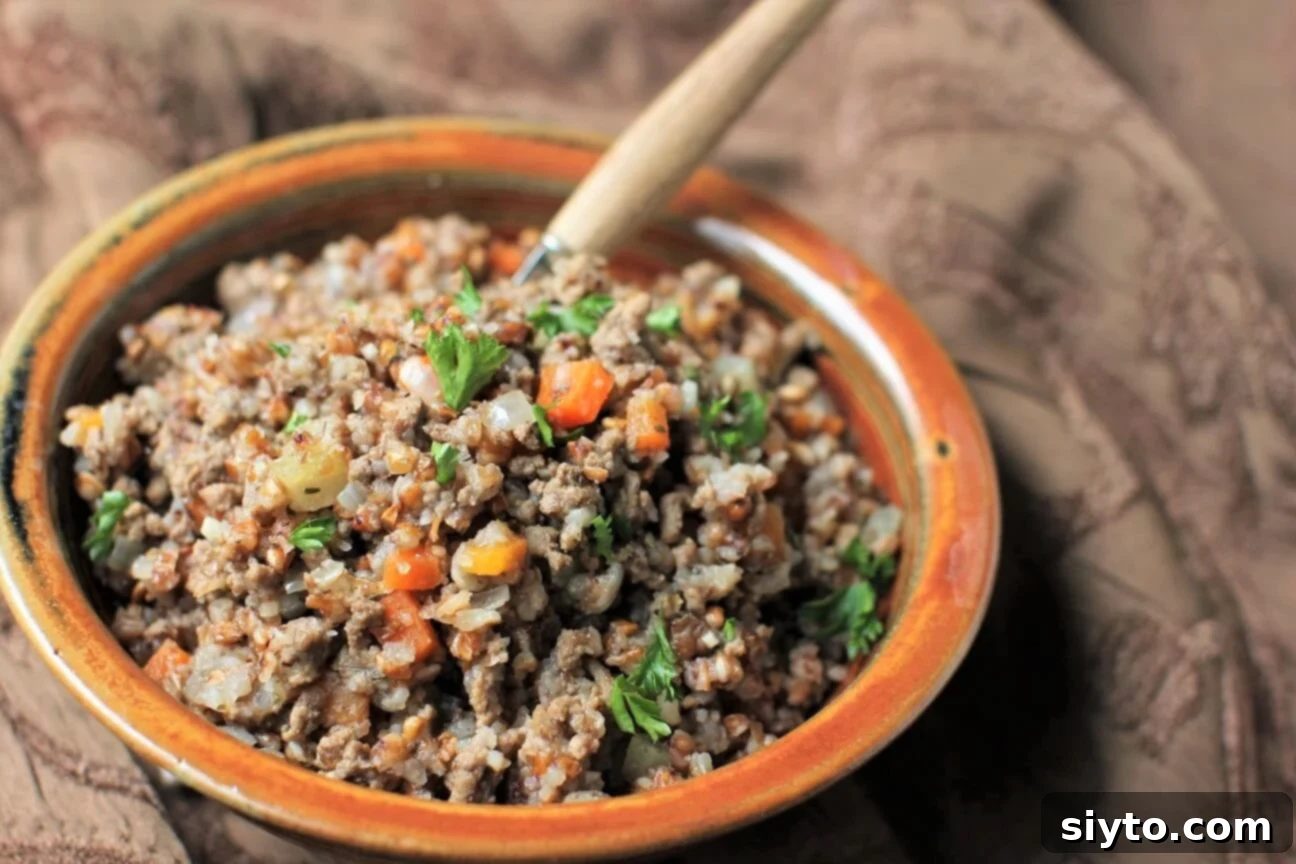
Hearty Ukrainian Buckwheat Kasha with Ground Beef: A Wholesome One-Pot Comfort Meal
Buckwheat Kasha with ground beef is more than just a meal; it’s a taste of Ukrainian heritage, offering profound comfort in a single, hearty dish. Forget those processed convenience meals – this traditional, naturally gluten-free plant seed combined with savory beef and vegetables presents a significantly healthier, more fulfilling alternative. Prepare to welcome a robust and nutritious staple into your culinary repertoire!
Our culinary journey this month for the Eat the World recipe challenge takes us to Ukraine, a nation affectionately known as the ‘Bread Basket of Europe.’ This moniker is well-earned, owing to its incredibly rich, fertile black soil (cherneyom), which accounts for nearly one-third of the world’s total. These vast fields produce an abundance of essential food crops, including barley, wheat, corn, sugar beets, and vibrant sunflowers. Beyond these, Ukraine proudly stands as the third-largest producer of buckwheat globally, highlighting its significance in the country’s diet and agricultural landscape.
Buckwheat, despite its name, is not a type of wheat at all, but rather a pseudocereal, much like quinoa. This means it’s a seed that is consumed as a grain, but it doesn’t grow on grasses. Instead, it comes from a plant with charming heart-shaped leaves, closely related to rhubarb and sorrel. This botanical distinction makes buckwheat naturally and completely gluten-free, a vital fact for those with dietary restrictions. For centuries, buckwheat has been a foundational food in the diets of Ukrainian and Russian people. It served as a dietary staple for the masses, sustaining peasant populations and even entire armies through challenging times, yet it also graced the tables of tsars in their opulent palaces, demonstrating its universal appeal and nutritional value across all societal strata.
When discussing buckwheat, especially in a culinary context, some terminology can be a bit confusing. In Ukrainian culture, the word “kasha” broadly refers to a porridge made from boiled buckwheat or other grains. However, here in North America, “kasha” typically specifies hulled buckwheat kernels, known as groats, that have been toasted. This distinguishes them from raw, untoasted buckwheat groats. The toasting process is a crucial step for many chefs, as it imparts a deeper, nuttier flavor and helps the buckwheat maintain its distinct texture, preventing it from becoming too mushy during cooking by sealing the grains and minimizing the release of a natural gel.
Beyond its culinary versatility and historical importance, buckwheat stands out as an incredibly healthy food choice. This humble, gluten-free seed is truly a nutritional powerhouse, packed with health-supporting nutrients. It boasts high levels of antioxidants, essential minerals, quality protein, and abundant fiber. Its impressive array of benefits, including cardiovascular health support and effective blood sugar control, often lead to it being lauded as one of nature’s “superfoods.” Compared to common grains like rice, wheat, millet, or corn, buckwheat contains more protein and is notably rich in the amino acids lysine and arginine, which are often lacking in other major cereals. This makes it a rare and valuable plant-based complete protein food, making it an excellent choice for vegetarians, vegans, and anyone looking to boost their nutrient intake.
And let’s not forget the most important part: it simply tastes delicious! Its distinctive rich, earthy, and nutty flavor profile makes it incredibly adaptable to a wide range of dishes. Growing up, my mom often prepared a comforting dish of kale simmered with buckwheat, a testament to its long-standing presence in our family meals. I’ve since discovered its incredible versatility, using cooked buckwheat groats in everything from fresh, vibrant salads to savory pilafs, and even creamy porridges for a nutritious breakfast. Buckwheat flour is another fantastic product, lending a wholesome and unique taste to baked goods like cakes, delicate crepes, fluffy pancakes, and even savory biscuits. This simple dish, combining toasted buckwheat with seasoned beef and flavorful winter vegetables, creates a rib-sticking comfort food that is not only satisfying but also remarkably easy to digest. It’s easy to picture yourself, perhaps a century ago in a Ukrainian farming village, returning home tired and hungry after a long day in the fields, and settling down to a large, heartwarming bowl of this wholesome buckwheat kasha. It truly embodies the spirit of nourishing, uncomplicated cuisine.
Beef and Buckwheat Kasha: Simplicity in a Single Pot
The beauty of this Beef and Buckwheat Kasha recipe lies in its straightforward preparation and the deep, satisfying flavors it yields. Achieving perfect kasha begins with a crucial first step: rinsing the buckwheat.
After a thorough rinse, the buckwheat groats are quickly seared in a hot skillet with a touch of oil. This brief sautéing step is more than just cooking; it’s a technique to ‘seal’ the grains. Buckwheat can release a natural gel during cooking, which might lead to a mushy texture. By searing it first, you help prevent this, ensuring each grain remains distinct and fluffy, contributing to a superior final dish.
Next, you’ll sauté your choice of meat, in this case, ground beef, alongside aromatic vegetables. This process builds the foundational flavors for your kasha. Once the beef is browned and the vegetables are tender, the seared buckwheat groats and water are added to the pan. The ingredients are then combined, ensuring an even distribution for optimal cooking.
The dish is then covered and allowed to simmer gently, much like cooking rice or other grains. The key here is patience and restraint: no peeking, no stirring. This hands-off approach allows the buckwheat to steam perfectly, absorbing the liquids and flavors evenly. When the cooking time is complete, you’ll uncover a pan brimming with savory meat, tender vegetables, and perfectly cooked buckwheat—a deeply warming and satisfying meal ready to enjoy.
To truly embrace the Ukrainian tradition, finish off your buckwheat kasha with a generous knob of butter. As the Ukrainians wisely say, “you can never put too much butter in buckwheat.” This final touch adds an incomparable richness and velvety texture, elevating the entire dish. Serve it warm, perhaps with a dollop of sour cream or a squeeze of ketchup, and alongside steamed vegetables or a crisp salad, to complement the hearty flavors of Ukraine. This simple, wholesome dish is designed to comfort your soul and fill you with robust, nutritious goodness.
* * * * *
Buckwheat Kasha with Beef
Margaret Bose Johnson
Save to Pinterest
Ingredients
- 1 cup (185g) kasha toasted buckwheat groats*
- 3 tablespoons oil
- 1 large red onion diced (1½ cups)
- 1 cup carrot ~2 carrots, cut in small ¼” (.5cm) dice or shredded
- ½ cup celery ~1 stalk, cut in small ¼” (.5cm) dice
- 3 cloves garlic minced
- 1 lb (454gms) lean ground beef
- 1 teaspoon dried marjoram
- ½ teaspoon dried thyme
- 1 bay leaf
- 1¼ teaspoons salt
- ½ teaspoon pepper
- 1¾ cups (420ml) water
- 2 tablespoons butter or ghee
Instructions
- *If using raw, untoasted buckwheat groats, I recommend to toast them first for a fuller flavour (see notes below), however you can use them untoasted if you wish.
- Rinse the buckwheat groats in a strainer under running water, then drain them well.
- Heat 1 tablespoon of the oil in a large skillet or dutch oven with a tight fitting lid (or use foil when it’s time to cover it) over medium heat. Add the drained buckwheat kasha and cook them until they are dry, stirring constantly. This only takes a minute or two. Remove the kasha to a bowl and set aside (this step ensures the buckwheat doesn’t get mushy when cooked).
- Heat the remaining 2 tablespoons of oil in the skillet. Cook the onion, carrot, and celery for five minutes, until they are translucent. Add the garlic and the ground beef and cook until the meat is no longer pink, breaking up large chunks as it cooks (about 10 minutes).
- Add the marjoram, thyme, bay leaf, salt, and pepper and stir to combine. Spread the reserved buckwheat evenly over the top of the hot meat and vegetable mixture. Pour the water over the buckwheat and do not stir. Bring the skillet to a boil, then lower the heat, cover with a lid or tin foil, and simmer the buckwheat kasha for 15 minutes without uncovering. Remove the pot from the heat, and dot the top with the butter.
- Cover again and leave it to steam for 10 minutes to absorb the remaining water. Stir gently to fluff the buckwheat grains.
- Serve with a dollop of sour cream or ketchup on top. Steamed vegetables and a salad make good side dishes to go with your buckwheat kasha.
Notes
However, you can easily toast raw buckwheat yourself. Rinse and drain the buckwheat, then put it into a dry skillet (without oil) and toast over medium-high heat, stirring constantly, for about five minutes, until the grains are evenly browned. Or spread the buckwheat on a cookie sheet and toast it in the oven at 300°F (150°C), for 35 to 40 minutes. Stir the grains halfway through so they brown evenly.
Guten Appetit!
Join us in exploring the rich culinary traditions of Ukraine! Check out all the other wonderful Ukrainian dishes prepared by fellow Eat the World members and share your own with #eattheworld. Click here to find out how to join and have fun exploring a new country’s cuisine with us each month!
Discover more delicious Ukrainian-inspired creations from our fellow food bloggers:
- Making Miracles: Mazuricks
- Culinary Adventures with Camilla: Nalysnyky (Ukrainian Crêpes)
- Sugarlovespices: Ukrainian Poppy Seed Roll, Makivnyk
- Pandemonium Noshery: Ukrainian Pickled Tomatoes
- A Day in the Life on the Farm: Galushki Soup
- Literature and Limes: Oladi
- Kitchen Frau: Buckwheat Kasha with Beef
- DishntheKitchen: Sourdough Stuffed Beet Leaf Rolls
- Sneha’s Recipe: Chicken Kiev-Serves Two #EattheWorld
- Amy’s Cooking Adventures: Ukrainian Scuffles (Rohalyky)
Want to receive new Kitchen Frau recipes directly to your email? Sign up here and you’ll get a handy and useful kitchen tip along with each recipe, too. (No spam ever.)
If you like my recipes, follow me on Instagram, Pinterest, Twitter, and Facebook. You’d make my day!
PIN IT HERE to save the recipe for later:
Check out my past ‘Eat the World’ Recipe Challenge posts:
- A Taste of Ireland: Dublin Coddle (A tasty Sausage and Potato Stew)
- A Taste of Thailand: Shrimp Laksa (Khung)
- A Taste of Kenya:Maharagwe with Ugali (Red Beans with Cornmeal Slice)
- A Taste of Sweden: Swedish Meatballs with Cream Gravy
- A Taste of New Zealand: Classic Pavlova
- A Taste of France: Axoa d’Espelette (A Simple Stew from the Basque Country)
- A Taste of Argentina: Red Chimichurri Sauce
- A Taste of India: Kerala Upma (Fluffy, Kerala Style Breakfast Upma Recipe)
- A Taste of Poland: Polish Honey Cake
- A Taste of Ethiopia: Four Ethiopian Recipes for a Fantastic Feast
- A Taste of England: Gluten Free Fish and Chips and Mushy Peas
- A Taste of Georgia: Charkhlis Chogi (Beets with Sour Cherry Sauce)
- A Taste of Mexico: Cochinita Pibil Tacos (Pit Barbecued Pig to Make in Your Oven)
- A Taste of Cambodia: Noum Kong (Cambodian Rice Flour Doughnuts)
- A Taste of Israel: Cucumber, Feta, and Watermelon Salad
- A Taste of Finland: Lohikeitto (Creamy Salmon, Potato, and Dill Soup)
- A Taste of Puerto Rico: Piña Colada Cocktail
- A Taste of Egypt: Fava Beans and Feta