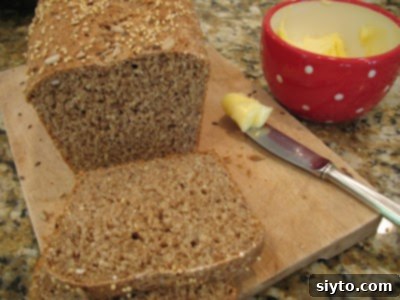
Effortless Whole Grain Quick Yeast Bread: Your Go-To Recipe for Homemade Comfort
Imagine the warm, inviting aroma of freshly baked bread wafting through your home – a scent that instantly conjures feelings of comfort and nostalgia. This incredible whole grain quick yeast bread recipe makes that dream a reality, effortlessly. It’s a simple, no-fuss method designed for anyone who craves a fragrant, wholesome loaf without the usual time commitment. Just stir a few ingredients together, transfer the batter to a pan, allow a brief 20-minute rise, and then let your oven do the rest. Could baking fresh bread truly be this easy? Absolutely! Get ready to enjoy delicious homemade bread with your dinner tonight, or any time the craving strikes.
The Irresistible Allure of Homemade Bread, Made Simple
What better way to spend a particularly dreary day than filling your kitchen with the enticing scent of baking bread? We’re talking about those days when the skies are a relentless grey, and the rain has been drumming against the windowpane for days on end. On such days, there’s a unique comfort in staying home and engaging in a simple, rewarding activity.
Baking homemade bread isn’t just about creating food; it’s about creating an atmosphere. The warm, yeasty aroma that permeates every corner of your house is a powerful magnet, drawing everyone towards the kitchen with noses twitching in anticipation. It’s a primal, comforting scent that signals warmth, nourishment, and a loving home.
But let’s be honest, the thought of traditional bread making—the hours of kneading, the multiple lengthy proofing stages, the pounding and waiting—can be daunting. For many, it’s a commitment that simply doesn’t fit into a busy schedule. This is where our quick yeast bread recipe shines. It offers all the rewards of homemade bread without the extensive labor.
Instead of spending a significant portion of your day wrestling with dough, you can whip up this delightful, fresh-from-the-oven loaf in minimal time. Imagine: mixing your dough, letting it rise briefly, and then slipping it into the oven. While it bakes, you can brew a comforting cup of mint tea with a dollop of honey, grab your favorite book, and curl up in a comfy chair. You can escape to sunnier climes within the pages of your novel while the oven and the magical yeast do their work, and the rain outside runs in cozy rivulets down the windowpane. It’s a perfect scenario for a truly relaxing afternoon.
This recipe is your little secret to effortless domestic bliss. (And don’t forget to casually smear a bit of flour on your cheek – it adds to the illusion of a full day of dedicated baking!) Perhaps, just perhaps, it’ll rain again tomorrow, giving you another excellent excuse to bake this wonderfully quick and satisfying bread.
Why Choose Whole Grain Quick Yeast Bread?
Beyond the undeniable deliciousness, opting for a whole grain bread offers significant health benefits. Whole grains retain all parts of the kernel – the bran, germ, and endosperm – meaning they are packed with fiber, essential vitamins (like B vitamins), minerals (iron, magnesium, selenium), and antioxidants. This makes for a more nutrient-dense and satisfying loaf compared to those made with refined flours.
The beauty of this particular quick yeast bread lies in its simplicity. It requires minimal handling, making it an excellent entry point for novice bakers, or a go-to for experienced bakers looking for an express route to fresh bread. The combination of whole wheat or spelt flour with a mix of grains adds incredible texture, depth of flavor, and boosts the nutritional profile even further. Each bite offers a satisfying chew and a rich, earthy taste that commercial breads simply can’t match.
Quick Yeast Bread Recipe: Ingredients You’ll Need
Gathering your ingredients is the first step towards baking this amazing loaf. Using fresh, quality ingredients will always yield the best results. Here’s what you’ll need for this quick and wholesome yeast bread:
- 3 cups whole wheat or spelt flour: The foundation of our whole grain loaf. Whole wheat flour provides a robust flavor and hearty texture, while spelt offers a slightly milder taste and can be easier for some to digest. Both are excellent choices for this recipe.
- ¾ cup mixed grains or a mixed 7-grain breakfast cereal (uncooked): This is where the magic of texture and added nutrition comes in. You’re looking for the kind of mixed cereal that typically requires cooking. A fantastic combination I often use is ¼ cup cracked wheat, ¼ cup coarse cornmeal, and ¼ cup wheat germ. This blend adds diverse textures and a nutty depth. Feel free to experiment with other grains like rolled oats, rye flakes, or even a small amount of flax seeds for an omega-3 boost.
- 1 tablespoon instant yeast: The leavening agent that makes our bread light and airy. Instant yeast is fantastic because it doesn’t require proofing in water beforehand, making the process even quicker.
- 2 tablespoons brown sugar: This isn’t just for sweetness; the sugar acts as food for the yeast, helping it activate and produce carbon dioxide more effectively, leading to a better rise. Brown sugar also adds a subtle caramel note to the bread.
- ¼ teaspoon salt: Essential for balancing the flavors and controlling the yeast activity. Don’t skip the salt, as it dramatically enhances the bread’s taste.
- 1 ¾ cups hot tap water (just hot to the touch, not boiling): The perfect temperature water is crucial for activating the yeast. It should feel comfortably hot on your wrist, similar to a baby’s bathwater. Water that’s too hot will kill the yeast, while water that’s too cold won’t activate it sufficiently.
Preheat your oven to 375°F (190°C) while you prepare the dough. This ensures your oven is at the optimal temperature when your bread is ready to bake, leading to a perfect rise and crust.
Simple Steps for Baking Your Quick Yeast Bread
The beauty of this quick yeast bread recipe lies in its straightforward process. No extensive kneading, no complicated techniques – just simple mixing and a short rise time.
Step 1: Combine Dry Ingredients. In a large mixing bowl, thoroughly whisk together the whole wheat or spelt flour, mixed grains (or your chosen combination of cracked wheat, cornmeal, and wheat germ), instant yeast, brown sugar, and salt. Ensure all ingredients are evenly distributed. This prevents lumps and ensures the yeast has access to its fuel (sugar) and is spread throughout the dough.
Step 2: Add Hot Water and Form Dough. Pour the hot tap water into the dry ingredients. Using a sturdy spoon or a Danish dough whisk, stir everything together until you have a loose, shaggy dough. Unlike traditional bread, we are not aiming for a smooth, elastic dough. This dough will be quite wet and sticky, which is perfectly normal for a no-knead, quick bread. Continue to stir until no dry pockets of flour remain.
Step 3: Prepare the Loaf Tin. Generously oil a standard loaf tin. I personally prefer a 4″x9″x2.75″ high pan because it helps produce taller, more substantial slices, giving your homemade bread that artisan look and feel. The oil prevents sticking and aids in achieving a beautiful golden crust.
Step 4: Scrape and Shape the Dough. Using a spatula or a dough scraper, transfer the entire loose dough mixture into the prepared loaf tin. The dough will be sticky, so the spatula helps manage it. Once in the pan, use the spatula to gently shape the top into a relatively even loaf. You don’t need to be precise; just aim for a general loaf shape.
Step 5: Add Toppings (Optional). For an extra touch of texture and visual appeal, sprinkle the top of the shaped dough with some additional mixed grains or your favorite seeds (like sesame seeds, poppy seeds, or sunflower seeds). This also adds a delightful crunch once baked.
Step 6: The Quick Rise. This is one of the secrets to the “quick” in this recipe! Place the loaf tin in a warmish spot to rise for just 20 minutes. A great trick is to put it on top of your preheated oven – the residual warmth is often perfect for a quick proof. Alternatively, a sunny spot near a window or a slightly warm (but not hot) oven with the door ajar can also work. The warmth helps the yeast activate quickly and efficiently, giving your bread a good lift before baking.
Step 7: Bake to Perfection. Once your 20 minutes of rising time are up, carefully transfer the loaf tin to your preheated 375°F (190°C) oven. Bake for approximately 40 minutes. The bread should develop a deep golden-brown crust and sound hollow when tapped on the bottom. If you have a kitchen thermometer, the internal temperature should reach about 200-210°F (93-99°C).
Step 8: Cool and Enjoy. After baking, let the bread cool in the pan for just a few minutes – typically 5 to 10 minutes. This brief cooling period helps the loaf firm up slightly, making it easier to remove. Then, carefully turn the loaf out onto a wire cooling rack to cool completely. Cooling on a rack is crucial for preventing a soggy bottom and allowing air to circulate, ensuring an even texture throughout. While it’s tempting to slice into it immediately, allowing it to cool properly yields the best texture and flavor. This recipe makes one generously sized loaf, perfect for sharing or enjoying throughout the week.
Serving Suggestions for Your Homemade Loaf
Once your beautiful quick yeast bread has cooled, the possibilities are endless! Slice it thick and spread it with creamy butter and your favorite homemade jam for a delightful breakfast or snack. It’s also the perfect accompaniment to hearty soups and stews, soaking up every last drop of flavorful broth. For lunch, use it to craft incredibly satisfying sandwiches, whether piled high with deli meats and cheeses or bursting with fresh vegetables. The robust texture and nutty flavor of this whole grain bread stand up beautifully to a wide array of fillings. Don’t forget, a warm slice straight from the oven (after cooling a bit!) with just a touch of butter is pure, unadulterated bliss.
Gluten-Free Quick Yeast Bread Variation
For those following a gluten-free diet, enjoying homemade bread can often be a challenge, but this recipe offers a fantastic solution. By carefully selecting the right blend of gluten-free flours and grains, you can achieve a loaf that is surprisingly close in texture and flavor to its wheat-based counterpart. The key is to use a high-quality, whole-grain gluten-free flour mix, as these often provide a better structure and nutritional profile than single-starch GF flours.
Flour Substitution: In place of the whole wheat or spelt flour, I highly recommend using a comprehensive whole-grain gluten-free flour mix. A blend similar to Gluten-Free Girl’s approach works exceptionally well. Aim for a mix using approximately 100 grams each of various whole-grain flours such as almond, quinoa, amaranth, millet, sorghum, buckwheat, and teff. To provide elasticity and binding without gluten, combine these with 100 grams each of starches like arrowroot, potato, and tapioca. Once you’ve measured them, shake all these flours and starches together thoroughly to ensure a uniform mix. Then, use the required 3 cups (or the corresponding weight) of this homemade blend for the recipe.
Mixed Grains Substitution: For the mixed grains component, a carefully chosen gluten-free blend is crucial. Instead of the wheat-based options, use a mixture of 2 tablespoons each of: teff grain, amaranth grain, millet grits, buckwheat hot cereal grits, oat bran (ensure it’s certified gluten-free), and ground flaxseed. You can certainly use any combination of these, or just several of them, as long as you achieve the total ¾ cup. However, make absolutely sure to include the ground flaxseed, regardless of which other grains you choose. Ground flaxseed is a powerhouse in gluten-free baking; it acts as an excellent binder, helping to hold the dough together and providing a much-needed structure that gluten typically offers.
Once you have prepared your gluten-free flour blend and grain mix, continue with the regular recipe instructions outlined above. From mixing to rising to baking, the process remains largely the same. I have found this variation turns out exceptionally well, yielding a delicious and satisfying gluten-free quick yeast bread that doesn’t compromise on flavor or texture.
Guten Appetit!
Want to receive new Kitchen Frau recipes directly to your email? Sign up here and you’ll get a handy and useful kitchen tip along with each recipe, too. (No spam ever.)
If you like my recipes, follow me on Instagram, Pinterest, Twitter, and Facebook. You’d make my day!
More Delicious Bread Recipes to Explore
You might also like these other fantastic bread recipes:
The Amazing Life-Changing Loaf of Bread
Gluten Free Irish Soda Bread
Easy Gluten Free Cottage Buns
Light and Flaky Gluten Free Biscuits