How to Freeze Corn: A Step-by-Step Guide for Year-Round Sweetness
Unlock the secret to enjoying fresh, sweet corn all year long with this simple, comprehensive guide on how to freeze corn. Whether you prefer it as kernels or on the cob, our handy tips will ensure perfect results every time.
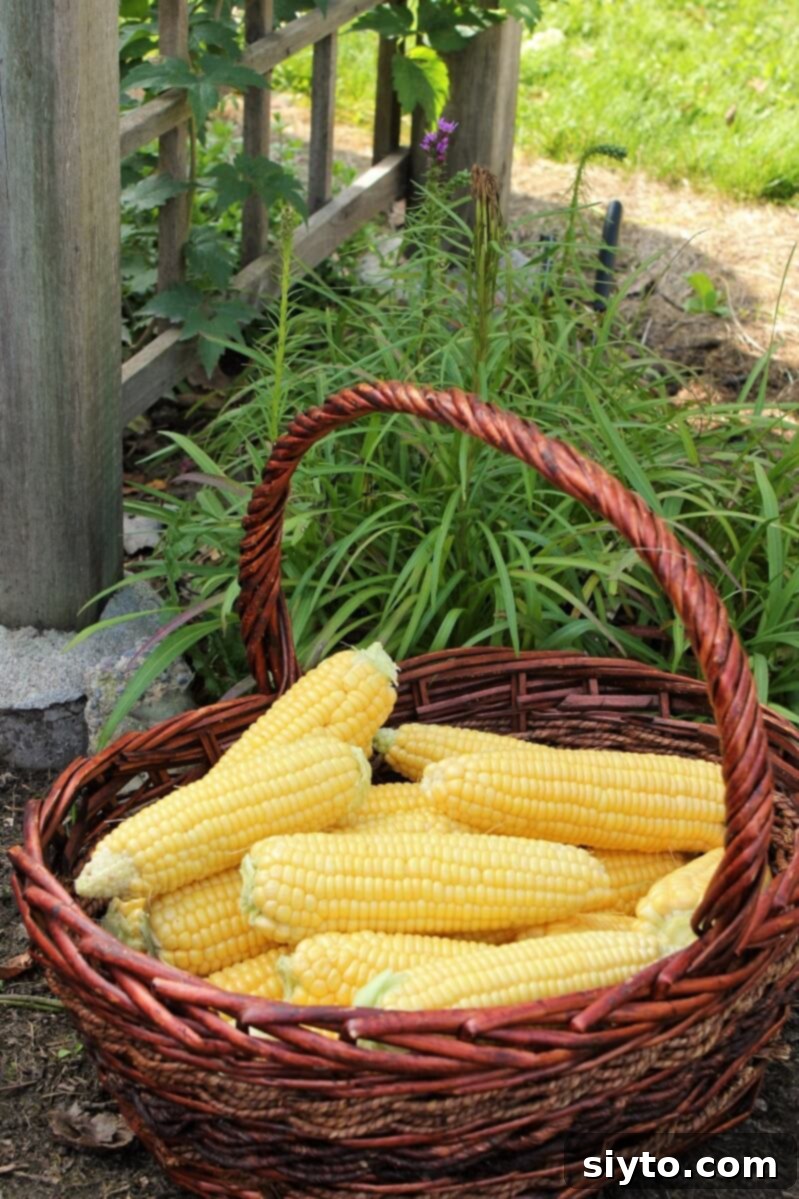
The peak of harvest season brings an abundance of nature’s finest, and few things capture the essence of summer quite like fresh corn. If you’re fortunate enough to have a bountiful garden or access to vibrant farmers’ markets, you’ll know the immense satisfaction of “putting up” this produce to enjoy long after the season ends. Here in our kitchen, it’s a bustling hub of preserving activity – canning, freezing, drying, jamming, and jellying are all in full swing. Counters are laden with stacks of jars, both full and eagerly awaiting their turn, while baskets of fresh produce overflow in every corner. Amidst this joyful chaos, one of my absolute favorite foods to preserve is undoubtedly corn.
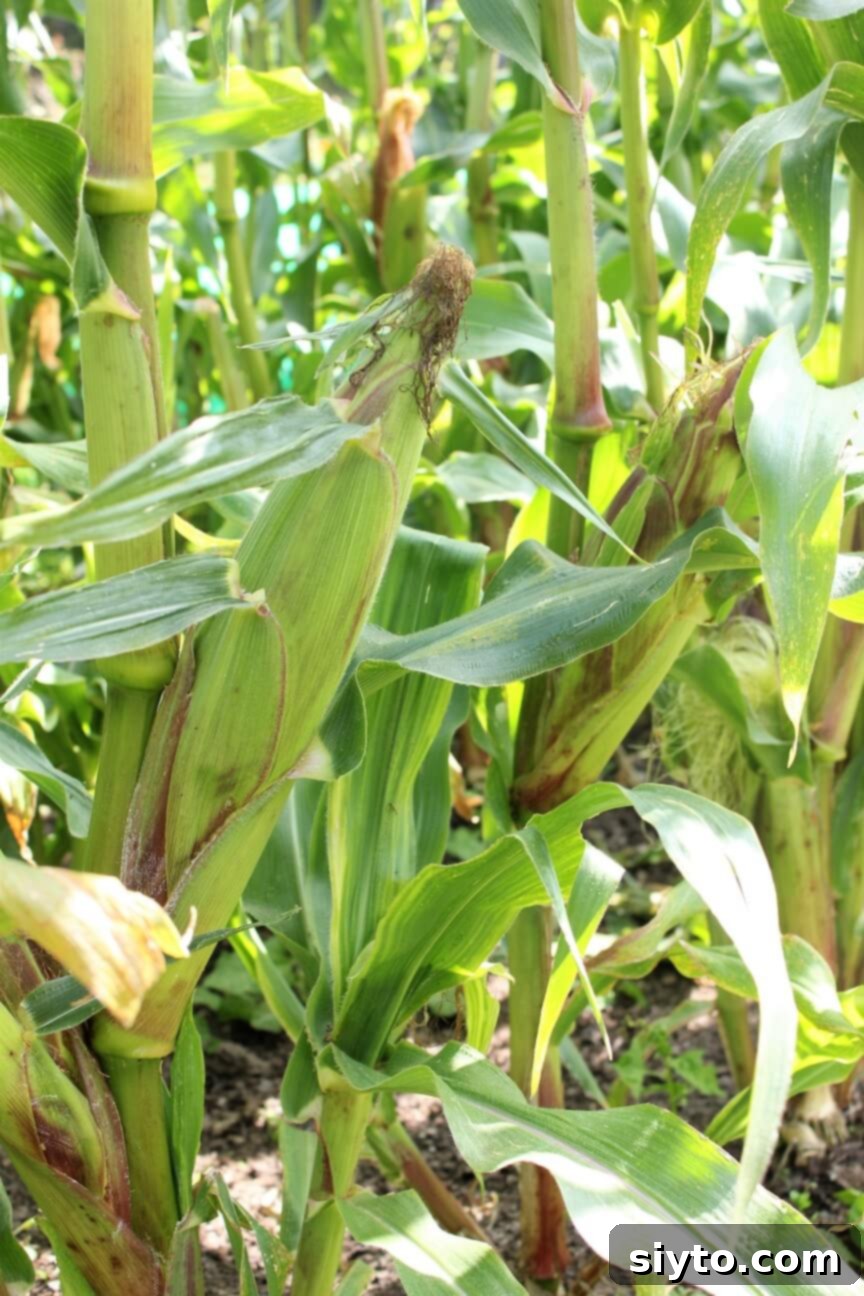
Perhaps it’s the sheer delight of plucking those perfect ears straight from the stalk, or the gratifying motion of cleanly slicing the kernels off the cob, scraping every last milky morsel. Or maybe it’s simply the delicious anticipation of grabbing a blanched cob of sweet corn from the freezer, ready to transform into a warm, comforting treat on a chilly winter evening. There’s a unique pleasure in knowing that summer’s sweetness is always within reach. The truth is, after a day spent freezing corn, I’m often too content from “quality control” nibbles to be hungry for dinner!
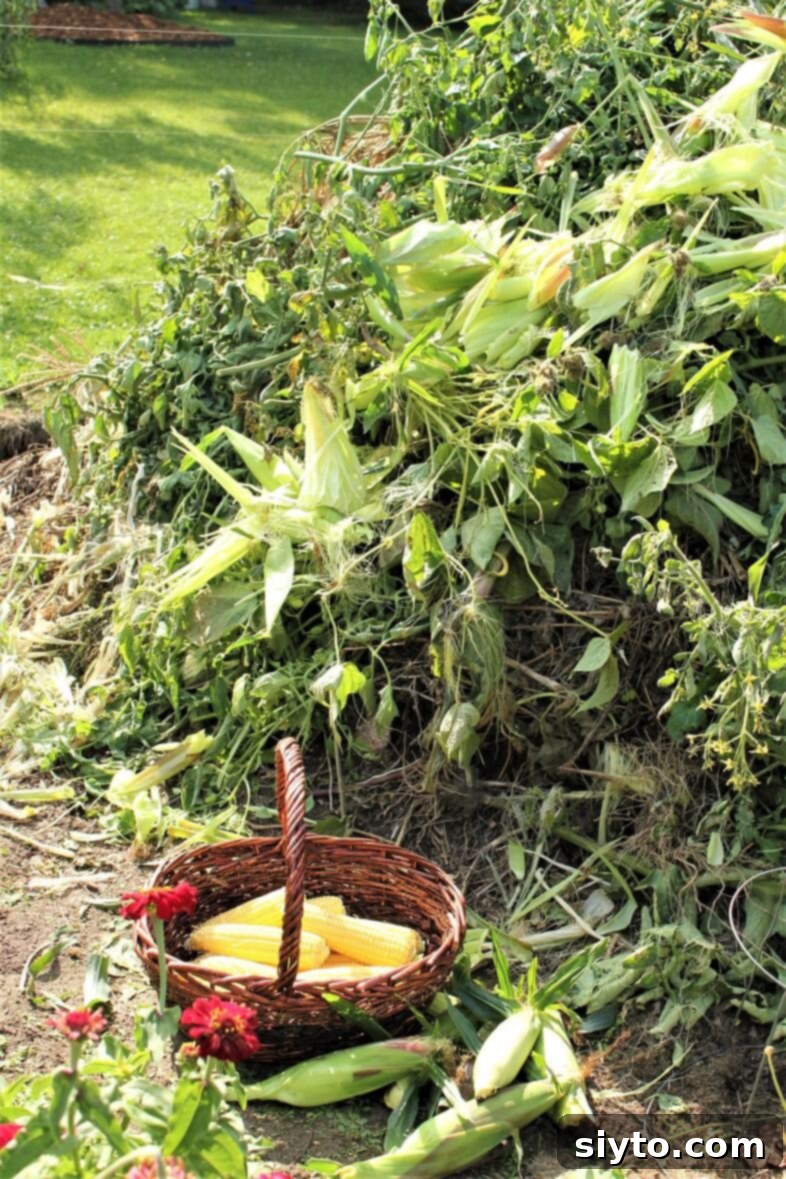
Why Freeze Corn? The Benefits of Preserving Sweetness
Freezing corn is an excellent way to extend its short seasonal availability and preserve its vibrant flavor and tender texture. Here are some key benefits:
- Enjoy Year-Round: With frozen corn, you can savor the taste of summer sunshine in soups, stews, casseroles, and salads even in the dead of winter.
- Nutrient Retention: Freezing is one of the best methods for preserving the vitamins, minerals, and antioxidants in fresh vegetables.
- Cost-Effective: Buying corn in bulk during peak season when prices are low and then freezing it can save you money compared to purchasing off-season or canned corn.
- Convenience: Having pre-prepped corn kernels or cobs in your freezer means quick meal additions without the need for shucking and blanching every time you cook.
- Reduces Food Waste: Preserve your garden’s bounty or market purchases before they spoil, ensuring nothing goes to waste.
When I was growing up, my mom often froze our corn whole, right on the cobs. While it might not be quite as crisp as when it’s cooked and served immediately after picking, it remains incredibly delicious. We relished having corn on the cob during those cold winter months. These days, however, I typically cut the corn off the cobs. This is primarily due to limited freezer space. Back then, we had two enormous chest freezers – one dedicated solely to meat and the other to an abundance of fruits and vegetables. Now, with a smaller household, I don’t require quite as much capacity, but even with a small chest freezer, an upright freezer, and two top-of-fridge freezers, they always seem to be brimming. I’m convinced there are tiny “freezer gremlins” at work, secretly adding items whenever I’m not looking!
The Science of Sweetness: Why Blanching is Essential for Freezing Corn
Corn is remarkably sweet, but its sugar content is fleeting. There’s an old saying that you should have the water boiling for supper before you even head out to pick the corn. This isn’t just folklore; it’s rooted in science. As soon as corn is picked, the natural sugars within the kernels begin to convert into starch. The longer it sits, the more starch develops, resulting in a less sweet and somewhat tougher texture. While still edible, it simply won’t have that irresistible fresh sweetness.
This is precisely why blanching is a crucial step before freezing. Blanching involves a quick dip in boiling water followed by an immediate plunge into an ice bath. This process serves two vital purposes:
- Deactivates Enzymes: The primary reason for blanching is to deactivate the enzymes responsible for converting sugars to starch. By stopping this enzymatic action, you preserve the corn’s natural sweetness, color, and texture during freezing and storage. Without blanching, the corn would gradually lose its quality and flavor over time in the freezer.
- Cleanses and Brightens: Blanching also helps cleanse the surface of the corn and can brighten its color, ensuring it looks as good as it tastes when thawed.
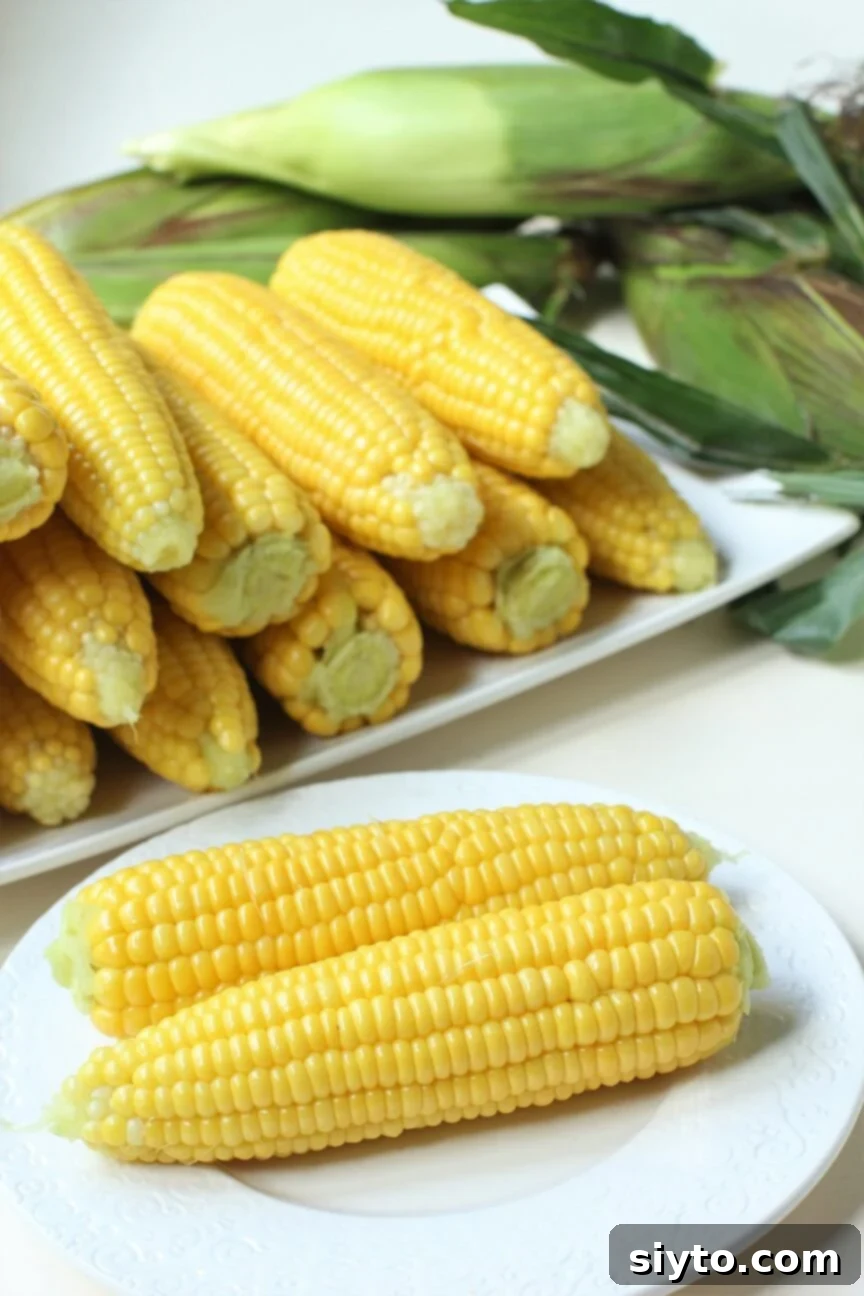
Delicious Ways to Enjoy Your Fresh or Frozen Corn
Whether fresh from the garden or thawed from your freezer, corn is an incredibly versatile ingredient. Here are some tasty ideas to inspire your cooking:
- Chili Butter for Corn on the Cob: A spicy and flavorful twist for a classic side.
- Grilled Corn on the Cob with Chipotle Cream: Smoky, sweet, and tangy – perfect for barbecues.
- Sweet Corn Bisque: A rich, creamy, and comforting soup.
- Lobster Salad with Charred Corn and Tomatoes: An elegant and fresh meal.
- Sweet Corn Pudding: A delightful side dish that’s both savory and subtly sweet.
- Corn Pie: A hearty and satisfying family favorite.
- Succotash: A classic medley of corn, beans, and other fresh vegetables.
- Creamy Corn and Penne One Pot Pasta Dish: A quick, easy, and flavorful weeknight meal.
- Shipwreck Slowcooker Casserole: A comforting and simple slow-cooker dinner.
Corn is an ideal candidate for freezing due to its ability to retain excellent texture and flavor when properly preserved. Some years, we tackle the freezing process in one massive effort – a wheelbarrow piled high with freshly picked cobs, with both Raymond and I working tirelessly to get it all done. However, this year, I’ve found a more manageable approach, processing a few dozen cobs each day, which has worked wonderfully. It spreads the effort out and keeps the kitchen a little less chaotic.
Here’s my proven method for freezing corn, ensuring you have that taste of summer whenever you desire.
How to Freeze Corn Kernels (Step-by-Step)
1. Prepare the Corn
Begin by shucking the corn. This involves peeling back all the husks and removing as much of the fine silk as possible. A stiff brush can sometimes help with stubborn silks. Also, break or cut off any remaining piece of stem at the base of the cob.
2. Blanch the Corn
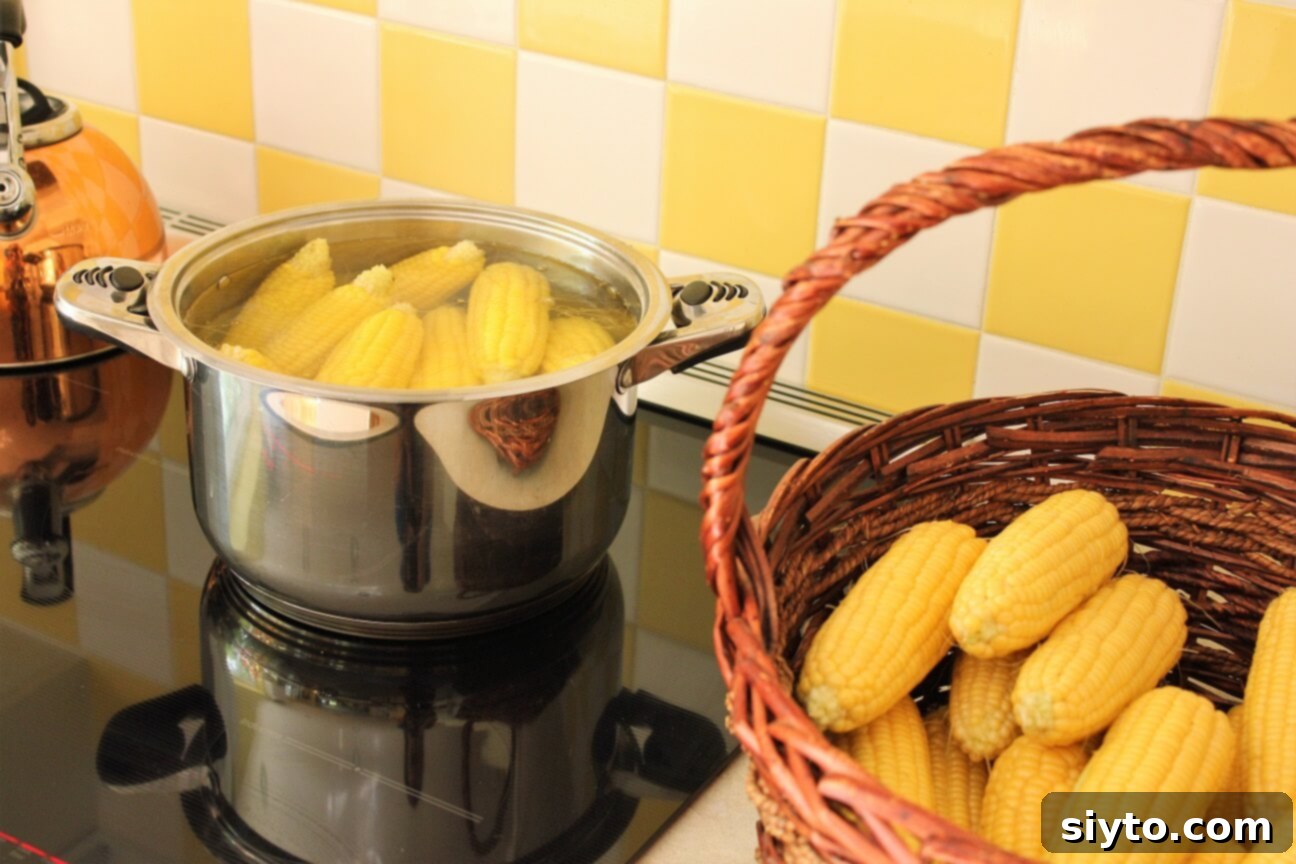
Fill a large stockpot about two-thirds full with water and bring it to a rolling boil over high heat. Once boiling, carefully add as many corn cobs as will comfortably fit without the water overflowing. Ensure the cobs are mostly submerged. Keep the heat on high to quickly return the water to a boil. Once the water resumes boiling, continue to cook the corn for exactly two minutes. This rapid blanching is crucial for deactivating enzymes that cause flavor and texture degradation during freezing.
3. Cool Rapidly
While the first batch of corn is blanching, prepare a large bowl, pot, or a clean sink basin with plenty of ice-cold water. You can even add a few ice cubes to ensure the water stays very cold. Using tongs, carefully remove the blanched corn cobs from the boiling water and immediately plunge them into the cold water bath. This rapid cooling, known as an ice bath, halts the cooking process and preserves the crispness of the corn. Leave them in the cold water until they are completely cooled to the touch, usually for about the same amount of time they blanched. Refresh the water or add more ice if it starts to get warm.
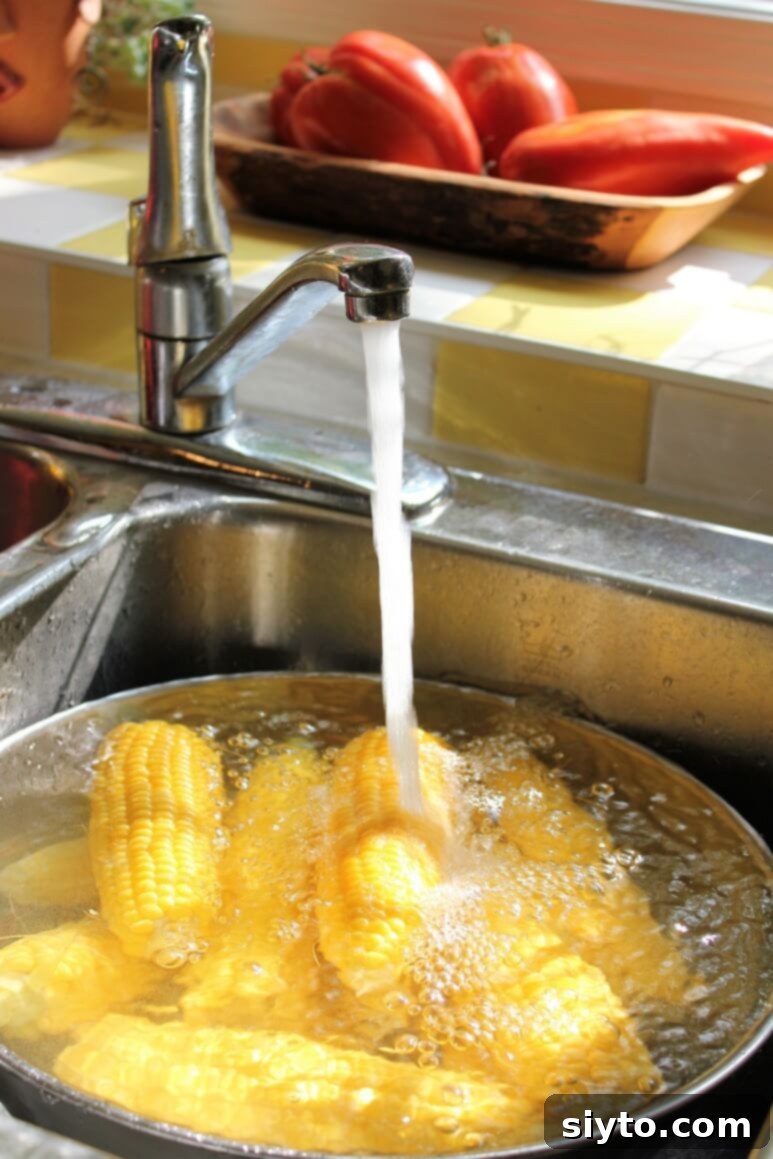
4. Repeat and Drain
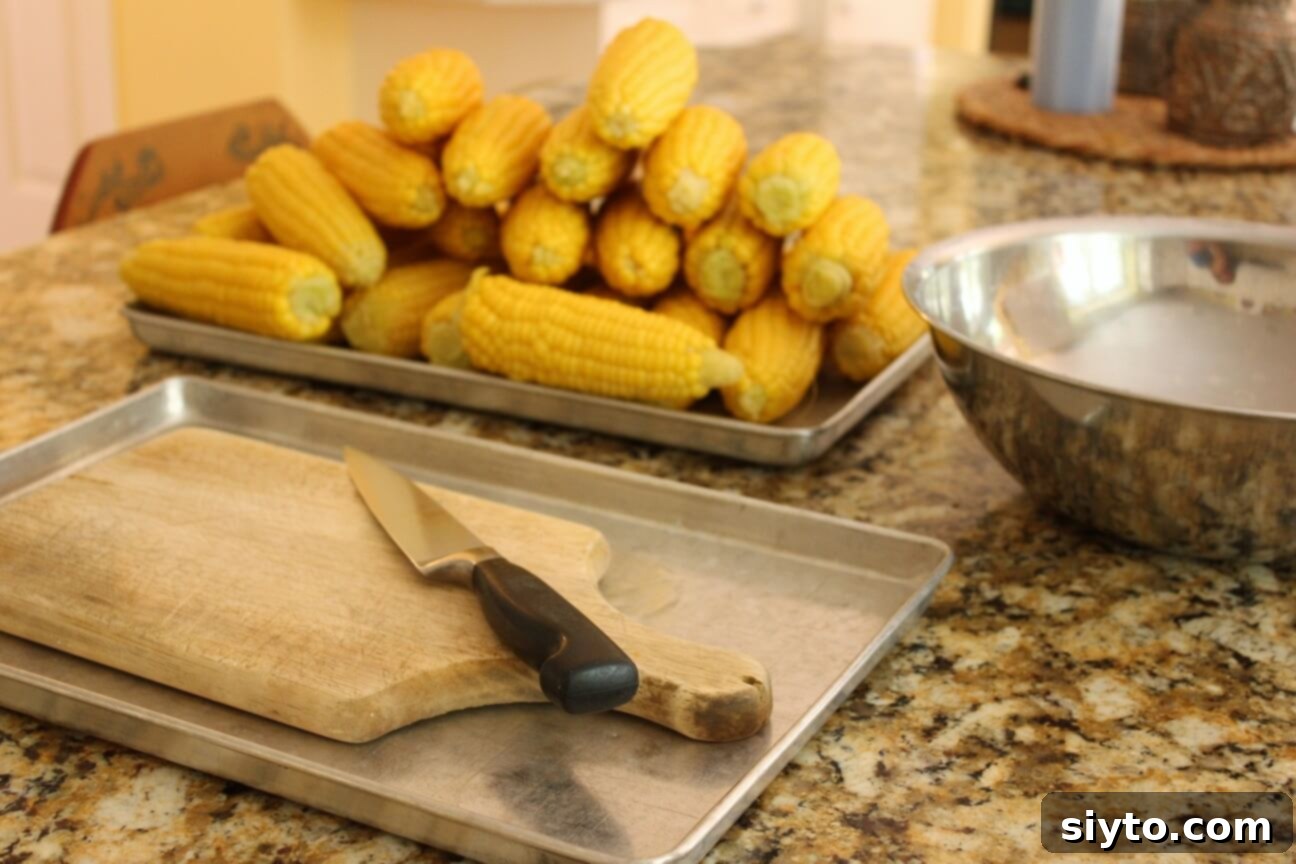
Add your next batch of prepared cobs to the boiling water and repeat the blanching and cooling steps. Once cooled, remove the cobs from the ice bath and place them on a clean towel-lined baking sheet or in a large bowl to drain any excess water. If you plan to freeze some of the cobs whole, they are ready for packaging at this point (*see specific instructions below).
5. Cut Off Kernels
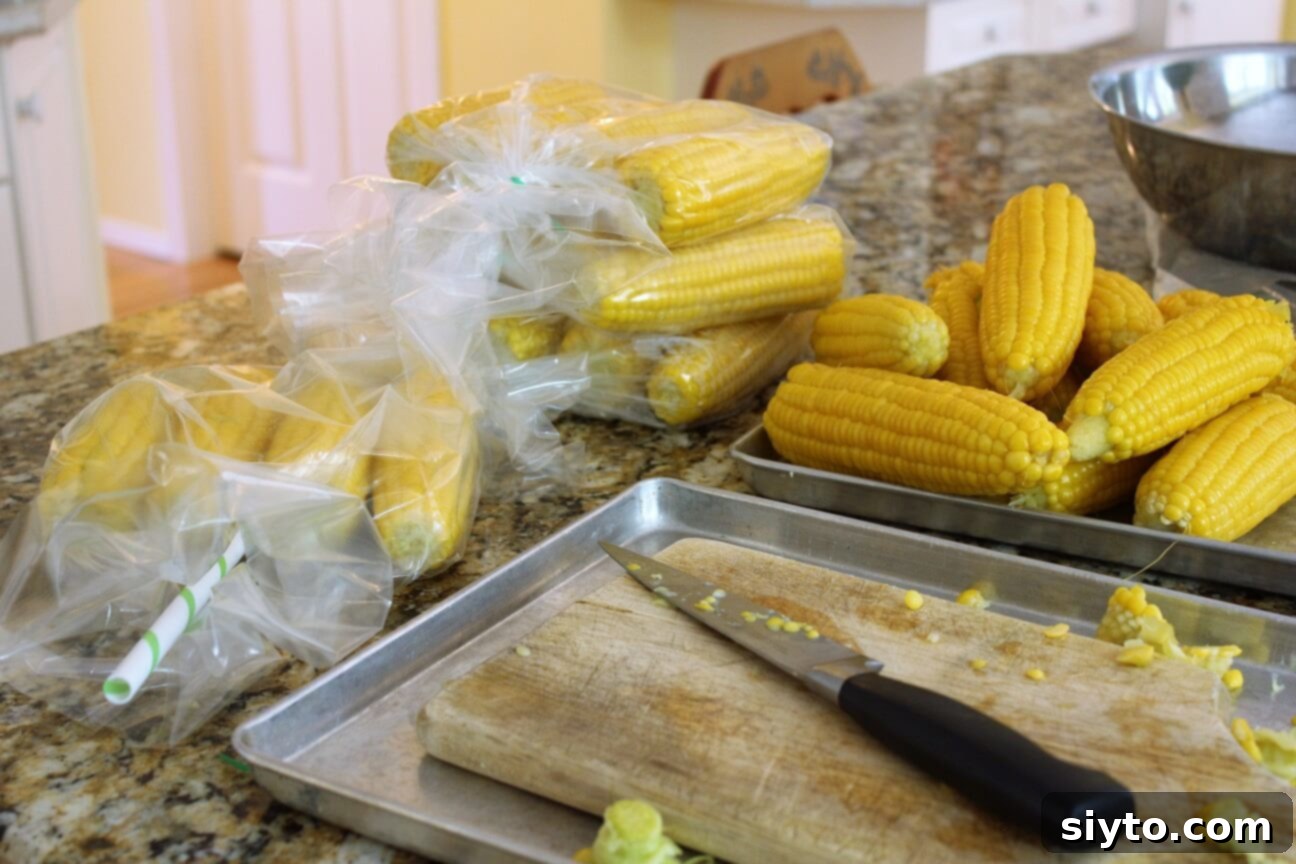
If you are freezing the corn as kernels, continue with these steps. Prepare your cutting area by setting a sturdy cutting board inside a shallow, rimmed baking sheet. This setup is excellent for catching errant kernels. (While some people use a bundt pan, setting the cob on the center hole to cut, I personally avoid this to prevent my knife from hitting the metal, which can dull or damage the blade. Safety and knife care are key!) To remove the kernels, hold one cob upright (thick end down) on the cutting board. With your other hand, use a sharp chef’s knife to slice downwards, cutting the kernels off as close to the cob as you can. Let the kernels fall onto the cutting board and into the surrounding baking sheet. Rotate the cob as you cut, continuing until all kernels are removed. The rimmed baking sheet will minimize mess, though a few “rebellious” kernels may still escape and find their way into unexpected corners of your kitchen.
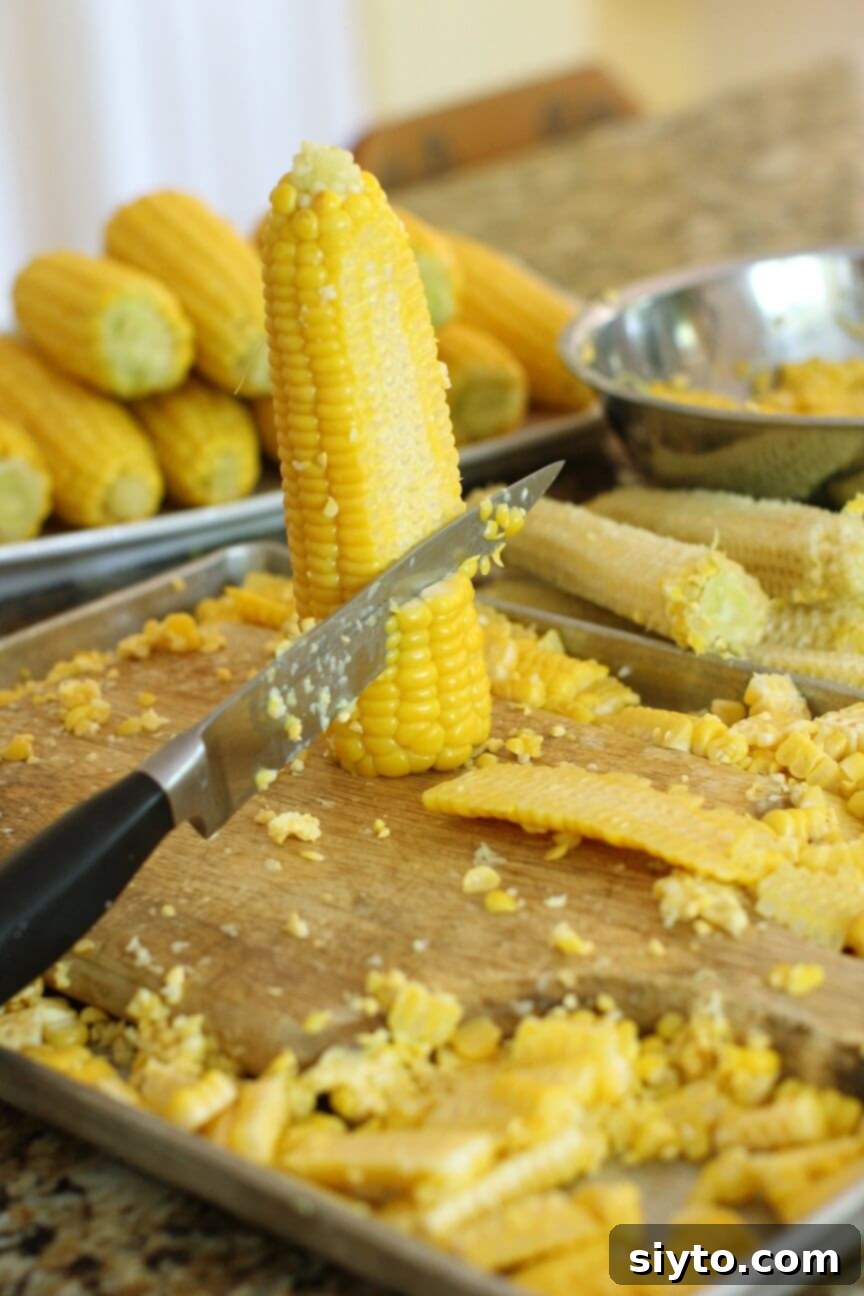
6. “Milk” the Cobs (Optional but Recommended)
Don’t discard the cobs just yet! After cutting off the kernels, turn your knife around and use the back (dull) side of the blade to scrape the cobs clean. This action extracts the sweet, milky pulp and the tender “hearts” of the kernels – often considered the best and sweetest part of the corn! Many refer to this as “milking the cobs.” This step adds incredible flavor and creaminess to your frozen corn.
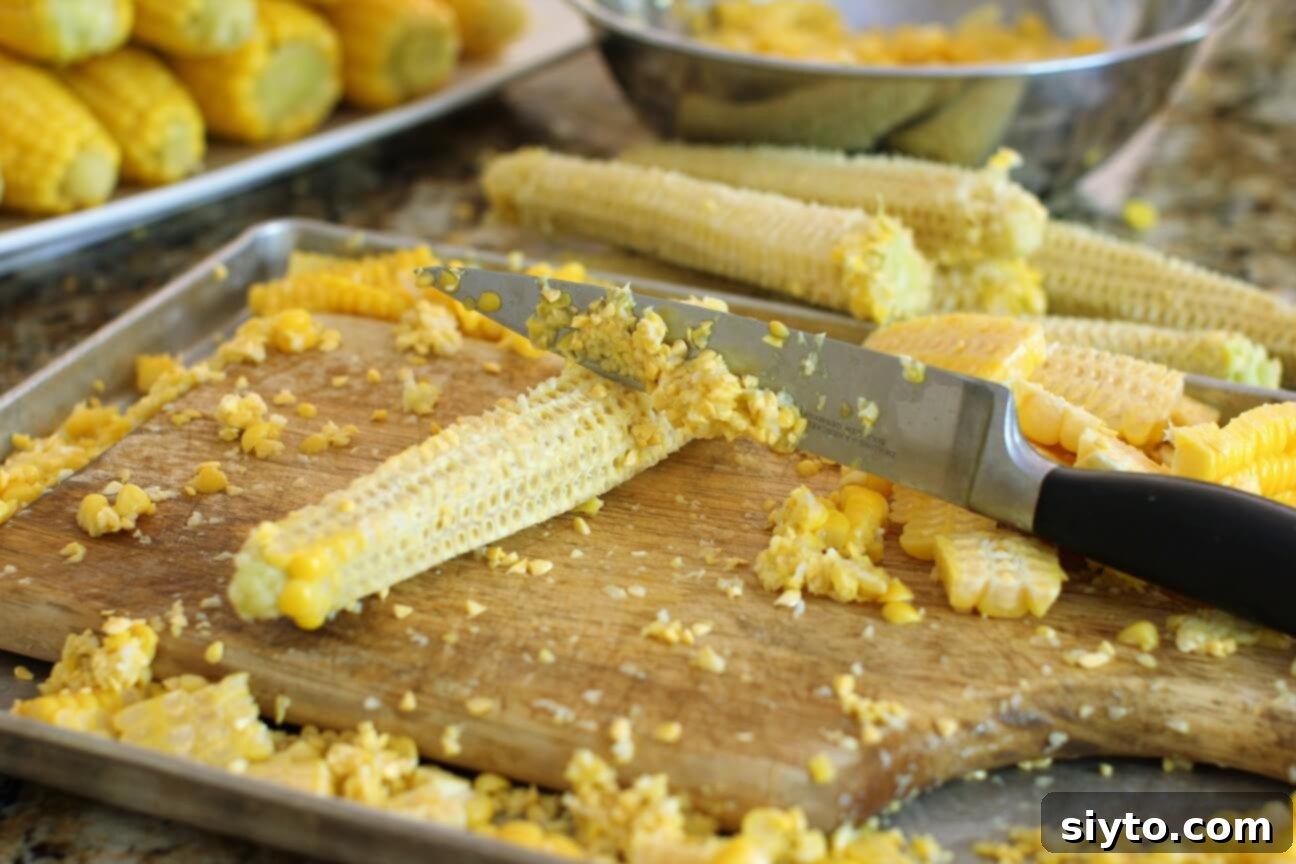
7. Combine and Separate Kernels
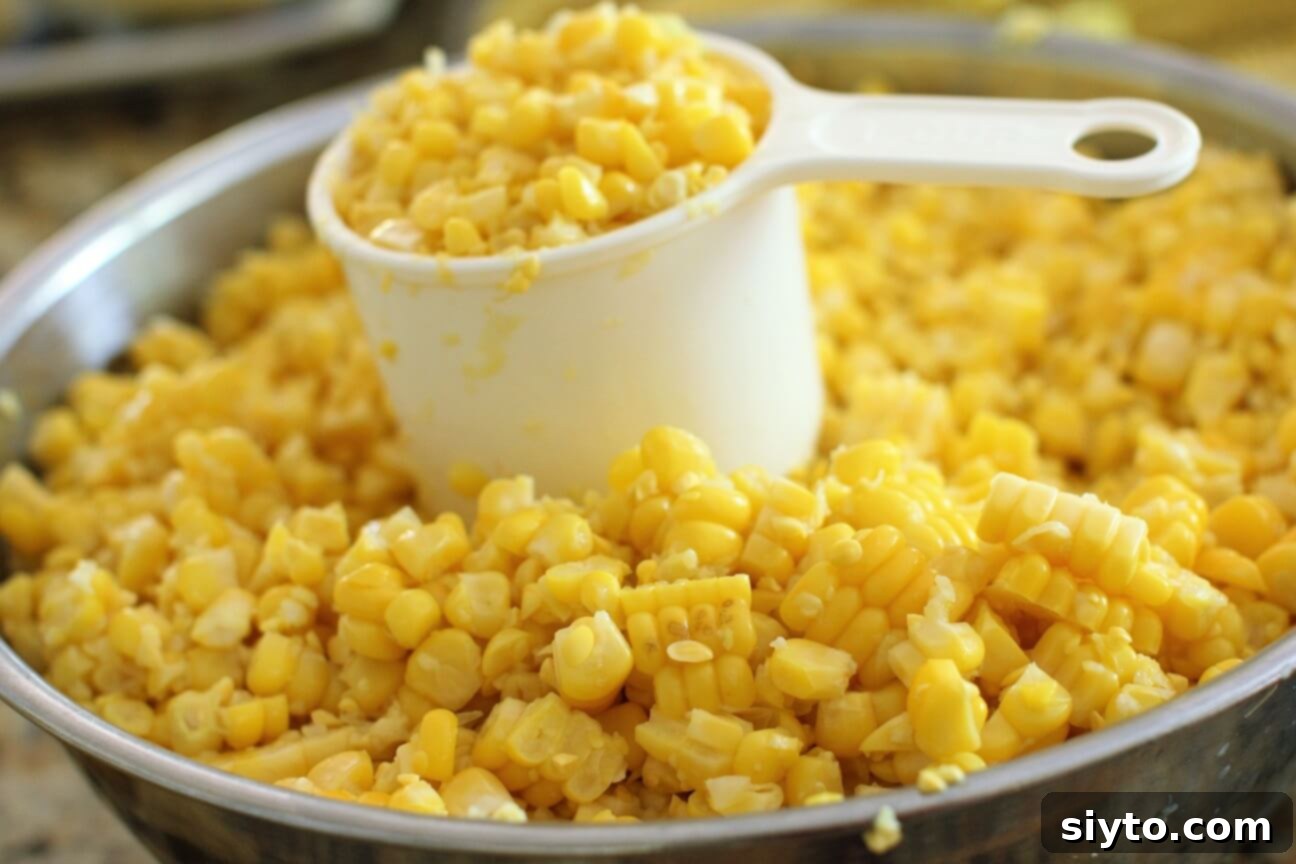
As the baking sheet fills, scoop the cut corn and collected milky pulp into a large mixing bowl. Continue this process until all your blanched cobs have been stripped. Then, use your hands to gently squeeze and separate any large clumps of kernels that may still be stuck together. You want individual kernels as much as possible for easy portioning later.
8. Package for Freezing
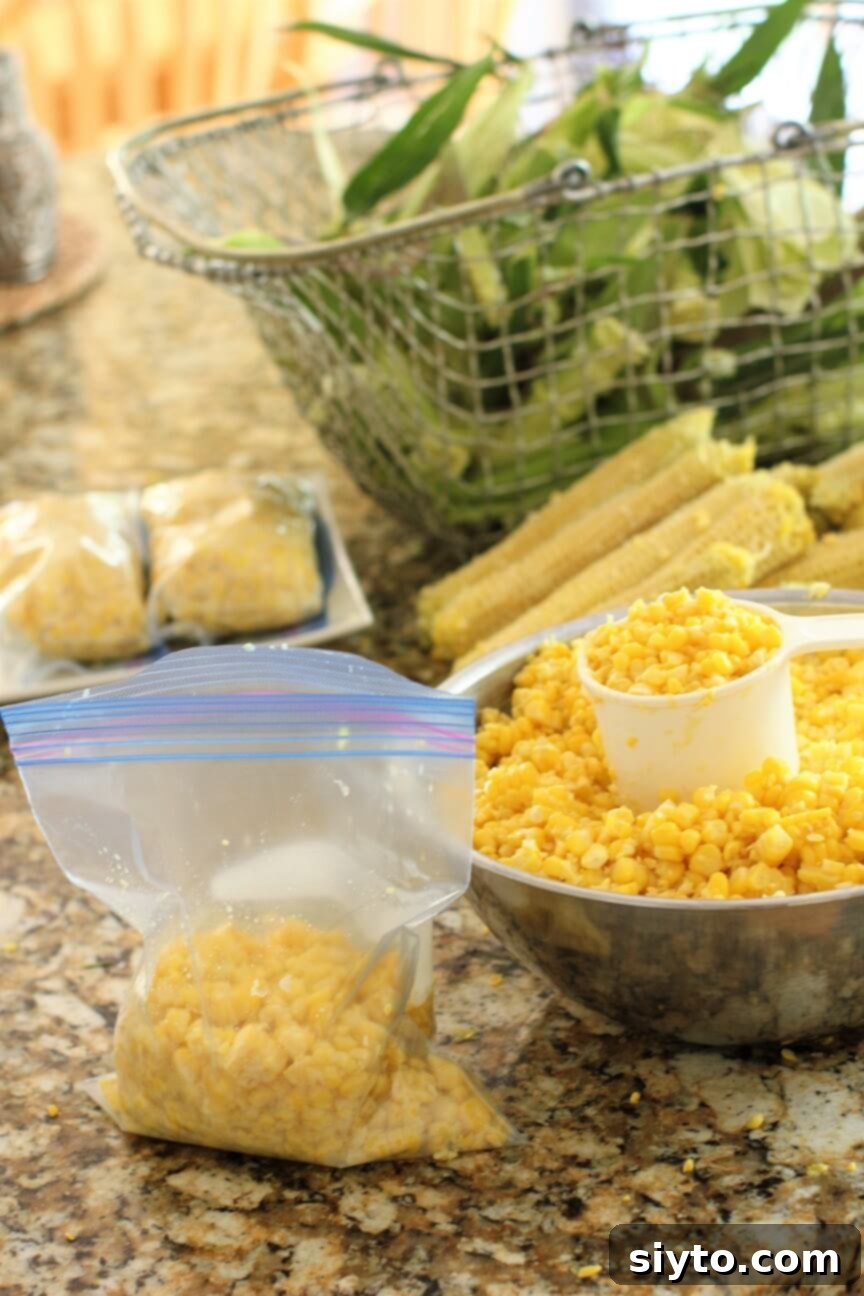
Using a measuring cup, portion the corn into freezer-safe plastic bags according to your family’s typical serving size. Try to avoid getting corn kernels on the inside tops of the bags, as the natural sugars can make them sticky and difficult to seal. Gently shake the corn to the bottom of the bags. The most critical step here is to remove as much excess air as possible to prevent freezer burn. You can press the air out, or for an even tighter seal, insert a straw into the bag, seal almost all the way, and suck out the remaining air before quickly sealing completely. If you have a vacuum sealer, this is an excellent application for it, as it provides the ultimate protection against freezer burn. Label each bag with the date and contents.
9. Freeze
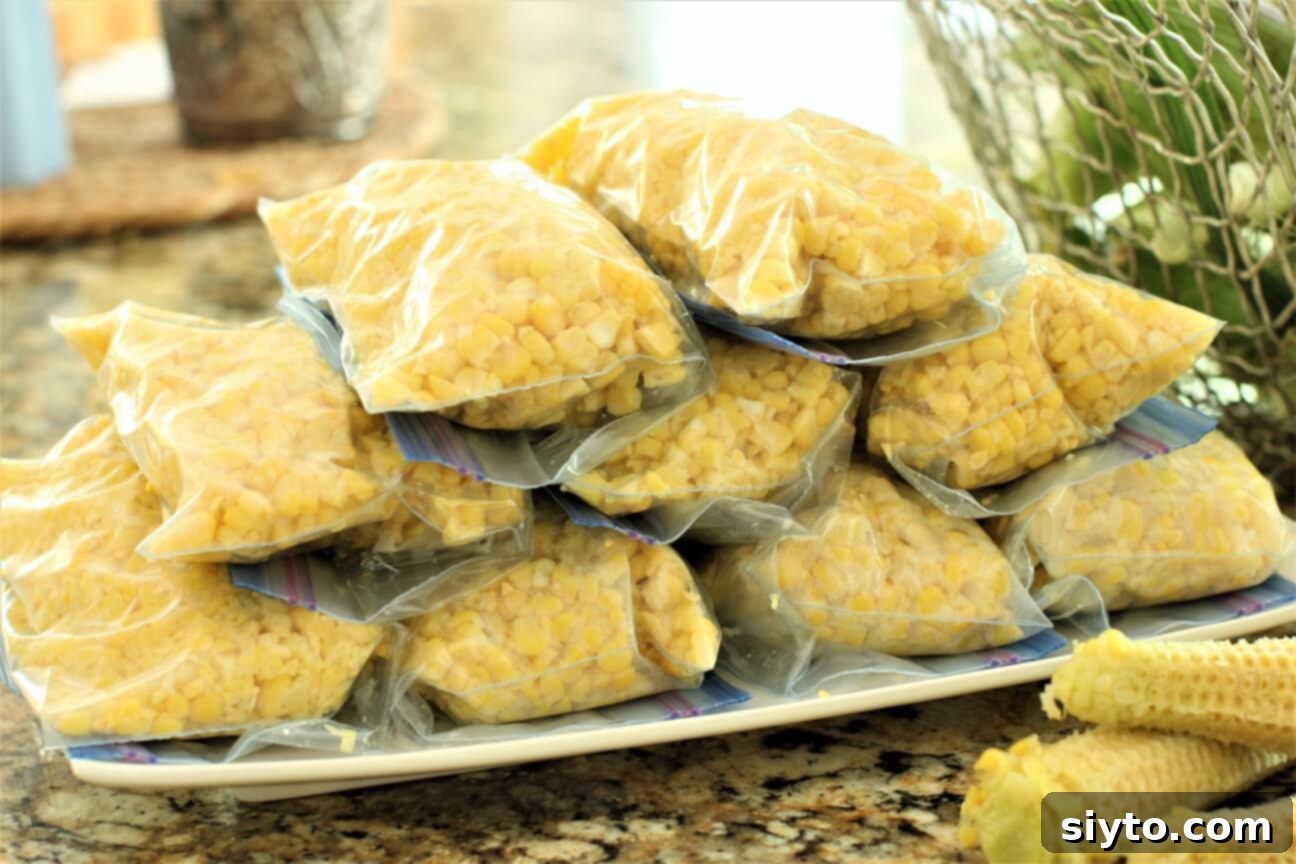
Place the sealed bags flat in your freezer. Freezing them flat initially helps them freeze faster and allows for more efficient storage once solid. If you have done a thorough job of removing excess air, your frozen corn kernels will maintain excellent quality for up to a year.
Alternate Method: Flash Freezing Loose Kernels
If you prefer to freeze kernels individually so you can pour out exactly the amount you need later, without any clumps, consider flash freezing. After cutting the kernels (Step 7), spread them in a thin, single layer onto parchment paper-lined baking sheets with rimmed sides. Place the baking sheets directly into the freezer. Stir the kernels gently every hour or so until they are completely frozen solid. Once frozen, transfer the loose kernels into a heavy-duty zip-top freezer bag or container. This method prevents clumping and allows for easy portioning. Flash-frozen loose kernels will typically keep well in the freezer for up to 6 months.
To Freeze Whole Corn on the Cob
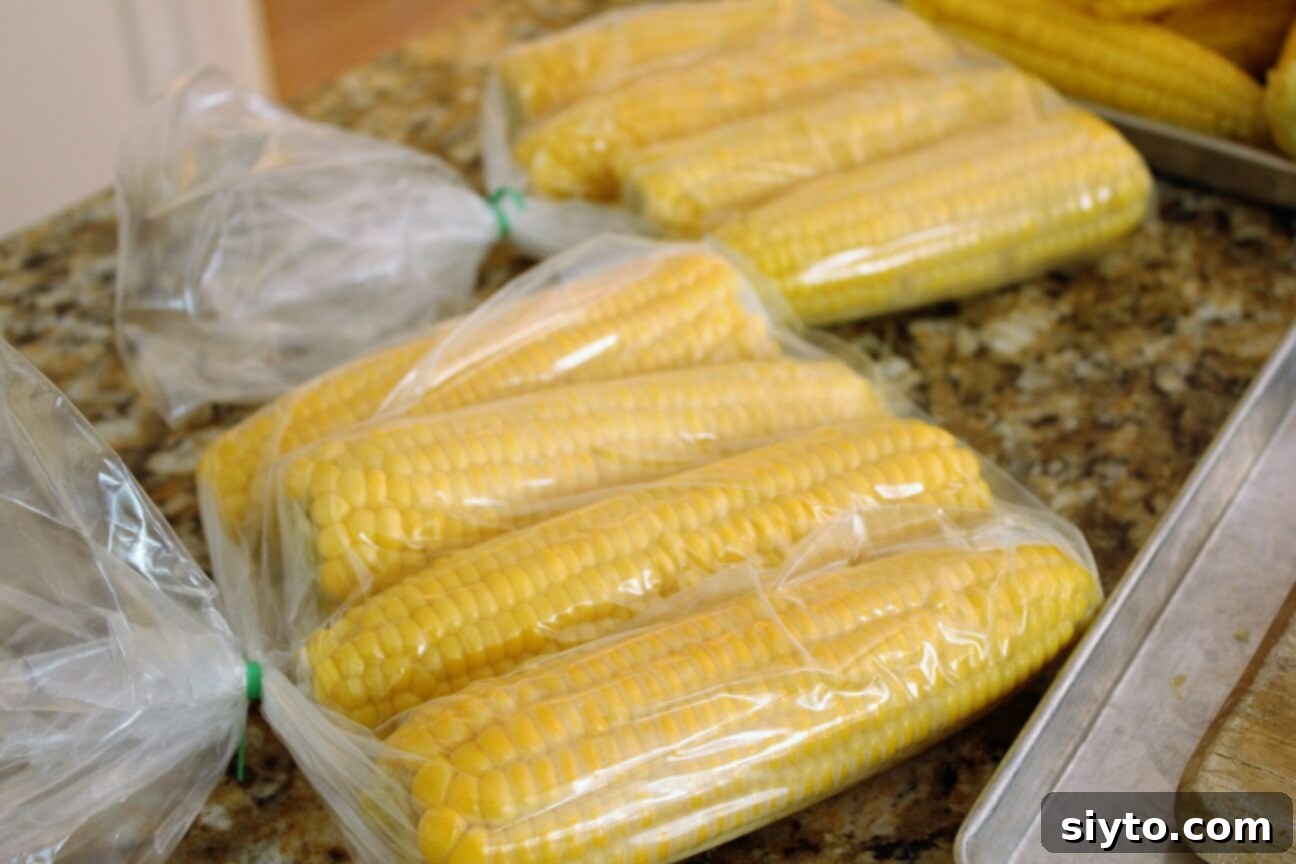
For those who adore corn on the cob, freezing them whole is a fantastic option. After completing the blanching and rapid cooling steps (Steps 1-4 above), trim any excess stem from the ends of the blanched and cooled cobs. This prevents sharp points from potentially puncturing the freezer bags. Then, simply place the blanched, cooled, and well-drained corn cobs into freezer bags. Pack as many cobs as you typically serve your family in each bag. As with kernels, remove as much air as possible from the bags – either by pressing it out, using a straw to suck out the air, or with a vacuum sealer. Seal the bags tightly and transfer them to the freezer.
Serving Frozen Corn on the Cob
To prepare your frozen corn on the cob, there’s no need to thaw! Simply drop the frozen cobs into a large pot of rapidly boiling water. Return the water to a boil and cook for approximately two minutes. The corn will be heated through and ready to enjoy. Drain well and serve immediately. It’s especially delicious served with a smear of chili butter or your favorite seasonings.
With these methods, you’ll have a bounty of perfectly preserved corn ready to enjoy. Imagine the delight of adding sweet, golden kernels to your winter chili or savoring a juicy cob as a reminder of warmer days. Freezing corn is a rewarding process that pays off with delicious dividends.
Guten Appetit! Enjoy the fruits of your labors this winter!
Want to receive new Kitchen Frau recipes directly to your email? Sign up here and you’ll get a handy and useful kitchen tip along with each recipe, too. (No spam ever.)
If you like my recipes, follow me on Instagram, Pinterest, Twitter, and Facebook. You’d make my day!
PIN IT HERE to save the recipe for later: