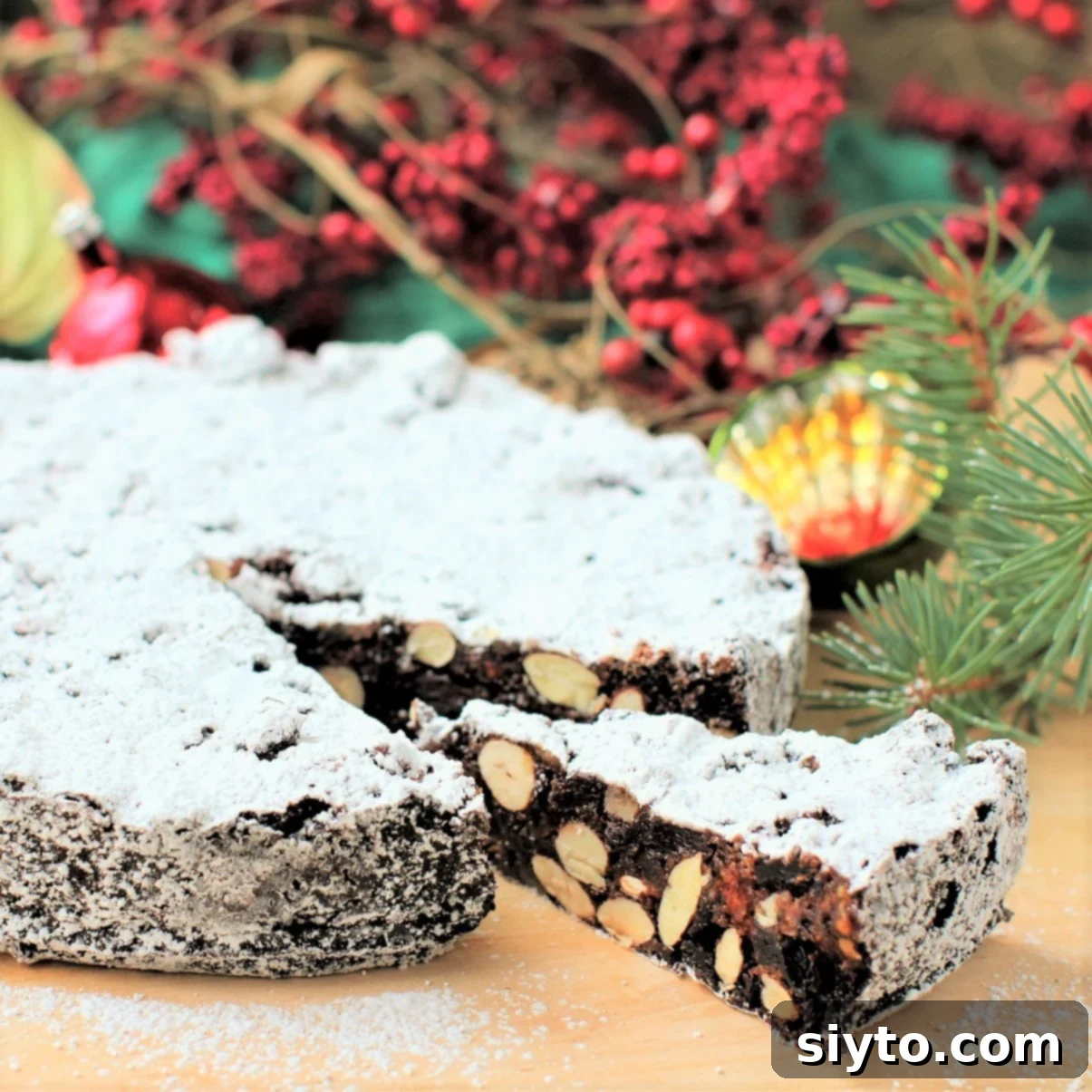
Authentic Panforte Recipe: The Best Traditional Italian Christmas Cake from Tuscany
Panforte is a truly exquisite Italian fruitcake originating from the sun-drenched hills of Tuscany, particularly renowned in the historic city of Siena. Far from your typical fruitcake, this delightful delicacy boasts a uniquely dense, chewy, and almost candy-like texture that is utterly irresistible. Each bite of this ancient Christmas cake offers a symphony of flavors, with a generous array of whole and chopped nuts alongside succulent dried fruits, all bound together by a rich, thick batter infused with an aromatic blend of exotic spices, dark cocoa, and sweet honey. What makes Panforte even more appealing is its surprising simplicity to prepare, yet it yields a dessert of profound richness and complexity. And here’s a secret: much like fine wine, Panforte only gets better with age. Allow it to rest for a week or two, and its flavors will meld and deepen beautifully. A small, elegant slice is the perfect light finish after a grand holiday feast, or a comforting companion to a steaming cup of coffee or tea when you need a delightful pick-me-up. Embrace a charming “new old” tradition this holiday season by bringing the magic of Panforte into your home!
Chewy, profoundly rich, and decadently satisfying – all without any added fats – Panforte presents a spectacular and wholesome alternative to more traditional fruitcakes on your festive holiday menus. Its unique blend of texture and flavor ensures it stands out as a memorable treat.
Years ago, on our inaugural adventure to Italy, I embarked on a personal quest: to savor authentic Panforte directly from its source. It was the height of summer, which, to my surprise, made this seasonal delight somewhat elusive. However, our determination paid off, and we eventually discovered a charming bakery in the quaint town of Colle Val d’Elsa, nestled within Tuscany’s picturesque Siena province. We excitedly purchased three or four different varieties, each a brie-shaped disc elegantly wrapped in decorative paper. These precious finds were carefully stashed in the glove compartment of our small rented car, ready for whenever a craving struck.
As we navigated the winding country roads through the heart of Tuscany’s rolling hill country, we would impulsively use a trusty jackknife to carve off generous hunks of the incredibly chewy, warmly spiced cake. With mouths lightly powdered by icing sugar and happy grins spreading across our faces, we munched greedily, gazing out at the breathtaking vista of verdant green fields, majestic columns of cypress trees, and ancient, glowing hilltowns unfolding before us. For me, the distinctive taste of Panforte became inextricably linked to the glorious, sun-drenched beauty and timeless charm of the Tuscan countryside. It was a culinary moment that transcended mere food, becoming a cherished memory.
I am incredibly fortunate that I can now effortlessly recreate this sensory experience in my own kitchen. A single slice of that subtly peppery Panforte instantly transports me back to that beautiful Italian summer, evoking the warmth and wonder of Tuscany with every bite.
What is Panforte? An Ancient Tuscan Delight
The name of this wonderfully chewy and intensely spiced fruitcake, Panforte, literally translates from Italian as ‘strong bread’ (where pan means ‘bread’ and forte means ‘strong’). This moniker perfectly encapsulates its dense texture and robust, concentrated flavors. Its origins are firmly rooted in the picturesque region of Tuscany, specifically in the historic city of Siena, but its unique charm has made it a beloved delicacy enjoyed throughout Italy and increasingly across the globe. Historically, the cake was also known as panpepato, or ‘peppery bread’. This earlier name refers to the distinctive warm and fiery flavor derived from a generous inclusion of invigorating spices and a notable hint of black or white pepper, which provides a subtle kick rather than an overwhelming heat. While Panforte is traditionally savored as a special Christmas cake, its popularity has grown to the point where it is now enjoyed year-round by many.
The rich history of Panforte stretches back centuries, with reliable sources dating its creation to at least the 1200s; some historians even suggest its existence as early as the year 1000. Originally, it was the industrious nuns of Siena who crafted these early versions. A fascinating detail from that era is that the pans were often lined with communion wafers to prevent the cake from sticking – a practice that modern bakers have replaced with the much more accessible parchment paper. The initial recipes crafted by these nuns did not feature chocolate. However, sometime in the 1800s, cocoa powder was introduced, adding another layer of depth and richness to the already complex flavor profile. Today, the world of Panforte offers a delightful array of variations: some include cocoa or chocolate, others remain true to the original un-chocolated form; some feature a more pronounced peppery bite, while others omit it entirely; and you’ll find countless combinations of different nuts and dried fruits. For many, the rich, slightly bitter notes of cocoa truly elevate the cake, providing a perfect counterpoint to the sweetness and spice.
The unique almost toffee-like consistency of Panforte is achieved through a carefully balanced honey and sugar syrup, which binds all the ingredients together without making the cake overly sweet. Unlike many fruitcakes, Panforte uses very little flour—just enough to act as a binder. This characteristic makes it remarkably easy to adapt into a delicious gluten-free treat; rice flour, for instance, works wonderfully as a substitute, maintaining the desired texture without compromising flavor. A key ingredient that truly sets Panforte apart is the pepper. Whether you opt for delicate white pepper or robust black pepper, it’s an essential component. Its role isn’t to overpower but to subtly enhance; it “dances” gracefully with the other spices, leaving a delightful, soft warmth on your tongue that adds to the cake’s complexity. Traditionally, Panforte is elegantly finished with a generous dusting of icing sugar, creating a beautiful snowy blanket. However, adventurous bakers can experiment with other toppings, such as a glossy chocolate glaze, a delicate layer of marzipan, or a simple brush of warmed and strained apricot jam for a fruity sheen.
This decadent and flavorful cake is truly magnificent as a dessert. Serving a slender sliver after a hearty holiday meal, accompanied by a rich cup of coffee or a soothing tea, provides a perfectly simple yet deeply satisfying finale. For a touch of traditional Italian elegance, pass around a bowl of fresh mandarin oranges or plump, seedless grapes as a vibrant accompaniment – truly, nothing more is needed. Beyond its role as a festive dessert, Panforte is also a wonderful indulgence for those moments when you need a little uplift. Imagine cutting yourself a slice in the quiet of a middle afternoon, enjoying it with your favorite hot beverage. The world seems to gently fade away, perhaps even allowing for a moment of armchair travel to the charming landscapes of Tuscany! Furthermore, a carefully wrapped wedge of Panforte makes for a thoughtful and much-appreciated holiday gift or a charming hostess offering, demonstrating both culinary skill and exquisite taste.
How to Make It? Surprisingly Easy!
Creating your own homemade Panforte is a surprisingly straightforward process that yields incredibly rewarding results. Begin by gathering all your dry ingredients. In a large mixing bowl, combine the robust whole almonds, fragrant whole hazelnuts, vibrant candied citrus peel, and your choice of dried fruits. To this, add almond flour, rich cocoa powder, and either rice flour (for a gluten-free version) or regular all-purpose flour. Complete the dry mix with a medley of warm spices, a pinch of salt, and, of course, the distinctive pepper.
Next, prepare the binding syrup. In a separate saucepan, gently boil the honey and sugar together. Stir continuously until every sugar granule has completely melted, creating a smooth, glistening syrup. This is a crucial step for achieving the perfect chewy texture. Once ready, immediately pour this hot, viscous syrup over the bowl of dry ingredients. Now comes the workout! Mix everything together very thoroughly. The batter will be exceptionally stiff and dense, requiring a sturdy wooden spoon and a good amount of arm strength to ensure all ingredients are evenly coated and well combined.
Once your batter is mixed, it’s time to prepare your pan. Ensure it’s well-greased, then lined with parchment paper, and greased again. This extra step guarantees easy release, especially since the recipe contains no added fats. Now, pack the stiff batter firmly into the prepared pan.
To press the batter down evenly and eliminate any air pockets, using wet hands is highly recommended. This technique not only makes the task easier but also prevents the sticky batter from adhering to your fingers – it might even evoke nostalgic childhood memories of playing with mud pies!
Once packed, allow the cake to rest for a while, letting the flavors begin to meld and the flour absorb the liquids. Then, gently slide it into a medium-low oven and bake until it is still just slightly soft in the center; it will firm up considerably as it cools. Critically, let the Panforte cool completely within the pan before attempting to remove it. This ensures its structural integrity. Once cooled, carefully peel off the parchment paper, revealing your beautifully crafted cake.
The hallmark, and truly the crowning glory, of a traditional Panforte is its exquisite finish: a generous dusting of icing sugar. Sift a thick, even blanket of this sweet “snow” over the entire cake – its bottom, sides, and top. This not only adds a touch of elegance but also enhances the overall sensory experience.
While the true connoisseur knows that Panforte reaches its peak after resting for at least a week, allowing the complex flavors to mellow and the unique texture to fully even out, I confess my patience often wears thin! The temptation is simply too great. A warm cup of rich cocoa, subtly spiced with a hint of lebkuchen spice (and not overly sweet, to complement the cake’s balance), serves as the absolute perfect accompaniment. It’s a moment of pure bliss.
Essential Tips for Making Perfect Panforte
- When gently heating the honey and sugar syrup, dedicate your attention to continuous stirring. This ensures that all the sugar granules fully dissolve into the honey. If any sugar crystals remain undissolved, they can unfortunately impart a grainy or gritty texture to your finished Panforte, detracting from its signature chewiness. However, be careful not to overcook the syrup once the sugar has dissolved, as this can cause the batter to become too hard and difficult to work with.
- Should you not possess an 8-inch (20cm) springform pan, a standard 8-inch cake pan can serve as an excellent alternative. The crucial point is to ensure the cake pan is meticulously greased and then thoroughly lined with parchment paper, covering both the bottom and sides, to facilitate easy removal of the dense cake.
- For the absolute best results in terms of texture and flavor integration, it is highly recommended to allow the mixed Panforte batter to rest in the pan for at least an hour before baking. This resting period gives the small amount of flour ample time to fully absorb the liquid from the honey syrup, contributing to the cake’s characteristic dense and uniform chewiness. If your schedule requires flexibility, the batter can be covered and left at room temperature for several hours, or even overnight, before proceeding with the baking.
- When pressing the dense batter into the prepared pan, employ wet hands for maximum efficiency. This prevents the sticky batter from clinging to your fingers. More importantly, it allows you to pack the mixture down very firmly, which is essential for eliminating any air pockets and achieving the characteristic compact, uniform texture of traditional Panforte.
- Work swiftly once the hot honey syrup is mixed with the dry ingredients and you begin pressing the batter into the pan. The batter will cool and begin to harden relatively quickly, making it increasingly difficult to mix and press effectively if you delay.
Creative Substitutions for Your Panforte
- Feel free to experiment with the nuts! Instead of solely relying on almonds or hazelnuts, incorporate any whole or coarsely chopped nuts you prefer. Walnuts, pecans, pistachios, or a delightful mix can add new dimensions of flavor and texture.
- Diversify your dried fruit selection beyond cranberries. Chopped dried apricots, plump pears, or rich figs make excellent substitutes and can introduce different levels of sweetness and tang.
- If you’re exploring gluten-free options or simply wish to vary the flavor, the almond flour can be replaced with another nut flour, such as hazelnut flour, for a different depth of taste.
- For those who prefer a more assertive spicy kick, or if white pepper is unavailable, black pepper can be used instead. It will still provide that distinctive warmth.
- To truly tailor the “peppery bread” experience to your preference, don’t hesitate to adjust the amount of pepper. If you enjoy a more pronounced warmth and subtle bite, you can increase the pepper content up to ½ to 1 teaspoon, depending on your individual taste.
How to Store Panforte for Optimal Flavor
The beauty of Panforte, much like many fine Italian delicacies, lies in its ability to improve with age. While delicious immediately, it is truly at its best when allowed to ‘age’ for at least a week before consumption. Two or even three weeks of aging will yield an even more remarkable experience. During this time, the robust spices have an opportunity to meld and mellow, integrating more harmoniously throughout the cake. Simultaneously, the texture evens out beautifully, allowing the nuts to soften slightly, contributing to a wonderfully uniform chewiness that defines a perfectly aged Panforte. It becomes an even more profound and delicious treat.
To properly store your masterpiece, wrap it meticulously. Begin by wrapping the entire cake tightly in parchment paper or waxed paper, then follow with a layer of tin foil, or a double layer of plastic food wrap. The goal is to create an airtight seal. Once wrapped, place the Panforte into a heavy-duty zip-top bag or a sturdy cookie tin or container with a tight-fitting lid. Store it in a cool, dark spot, or if your climate is warm, the refrigerator is an excellent choice. When properly wrapped and sealed, your homemade Panforte will maintain its exquisite quality for up to two months, continually improving in flavor. For even longer preservation, Panforte can be exceptionally well-wrapped and sealed, then frozen for an impressive duration of up to a year, making it a fantastic make-ahead holiday gift or treat.
More Irresistible Holiday Baking Ideas
Are you feeling inspired and in the mood for more festive baking? If you’d like to explore another delightful fruitcake tradition, why not try a beautiful German Stollen? This famous Christmas fruit bread is generously loaded with sweet nuts and juicy raisins, subtly spiced with traditional holiday flavors, and often features a creamy, nutty marzipan center. Our version is an easy, no-yeast recipe, complete with clear instructions and helpful photos to guide you through the shaping process (and yes, it’s also easily made gluten-free!).
Perhaps you’d prefer to indulge in a traditional Canadian fruitcake? This incredible family recipe includes colorful gumdrops, and it’s so delicious that it’s guaranteed to convert even the staunchest fruitcake hater into a devoted fan! Kids of all ages simply adore this fun and flavorful cake!
And for even more inspiration, be sure to take a look at our collection of other delicious holiday baking recipes. Many of these recipes are also gluten-free, offering a wide array of fantastic ideas to fill your home with the wonderful aromas and tastes of the festive season.
Guten Appetit! (Enjoy your meal!)
* * * * *
Panforte (Italian Christmas Cake)
Margaret Bose Johnson
Save to Pinterest
Ingredients
- 1½ cups (210gms) whole almonds
- 1 cup (130gms) whole hazelnuts
- 1 cup (130gms) dried cranberries, cherries, or raisins
- 1 cup (150gms) mixed candied citrus peel
- ½ cup (50gms) ground almonds/almond flour
- ¼ cup (22gms) unsweetened cocoa powder
- ¼ cup (35gms) rice flour (or all-purpose flour for non-gluten-free)
- 1 teaspoon cinnamon
- ½ teaspoon ground ginger
- ½ teaspoon ground cloves
- ¼ teaspoon nutmeg
- ¼ teaspoon white pepper
- ¼ teaspoon fine sea salt
- ½ cup (100gms) sugar (preferably natural evaporated cane sugar)
- ½ cup (175gms) honey
- 1 tablespoon water
- 2 – 3 tablespoons icing sugar (confectioner’s sugar)
Instructions
- Prepare an 8-inch (20cm) springform pan by greasing it lightly. Line the bottom with a parchment paper circle cut to fit. Then cut strips of parchment paper to line the sides of the pan. The light layer of grease will help the paper stick to the pan’s sides. Then lightly grease the paper again (cooking oil spray works well) as added insurance to make it easier to remove after baking (as there is no added fat in the batter).
- In a large bowl, combine the almonds, hazelnuts, dried fruit, candied peel, almond flour, cocoa powder, rice flour (or a.p. flour), spices, white pepper, and salt.
- Heat the sugar, honey, and water together in a small saucepan over medium heat and simmer until the honey is bubbling and the sugar crystals have melted completely. Pour the hot honey mixture over the dry ingredients in the bowl.
- Mix the batter well with a sturdy wooden spoon – it will be very stiff. Continue mixing until all the dry ingredients are fully incorporated and evenly coated.
- Pack the fruitcake batter firmly into the prepared pan, then use wet fingers to press it down tightly into the pan and to smooth out the top of the cake, ensuring no air pockets remain.
- Let the cake rest for one hour at room temperature. While it is resting, preheat the oven to 325°F (170°C).
- Bake the cake for 40-45 minutes. The center should still be slightly soft, while the edges will feel firm. Let it cool completely in the baking tin before attempting to remove it.
- Once completely cool, peel off the parchment paper lining the sides and remove the cake from the baking tin. Then carefully peel off the bottom parchment paper.
- Liberally dust the bottom, sides, and top of the cake with icing sugar, sifting it through a fine sieve for an even, beautiful coating. Note that the edges of the cake will soften wonderfully after being wrapped and stored for a few days.
- To store, wrap the cake tightly in waxed paper or parchment paper, then place it into a heavy-duty zip-top freezer bag or a sealed tin. Keep it well-sealed in a cool, dark place for at least a week (2 – 3 weeks is even better) to allow the flavors to fully mellow and the texture to even out perfectly.
- The cake will keep, sealed, in a cool, dark place or refrigerated, for 2 to 3 months, or can be frozen for up to a year. When serving, use a big, sharp knife to cut it into 12 to 16 wedges, rinsing the knife clean between cuts for smooth slices.
Notes
When mixing and packing the batter, work quickly before it stiffens and becomes harder to manage.
For optimal results, the batter is best if it sits in the pan for an hour to rest before baking, allowing the flavors to meld and flour to hydrate. If needed, it can be covered and left at room temperature for several hours or up to overnight before baking.
Substitutions:
- Use any whole or coarsely chopped nuts instead of almonds or hazelnuts (e.g., walnuts, pecans, pistachios).
- Use chopped dried apricots, pears or figs instead of the cranberries to vary the fruit flavor.
- Replace the almond flour with another nut flour if desired.
- Use black pepper instead of white pepper for a slightly different, bolder peppery note.
- Increase the pepper to ½ to 1 teaspoon for a bit more ‘bite’ and intensified warmth, according to your preference.
Want to receive new Kitchen Frau recipes directly to your email? Sign up here and you’ll get a handy and useful kitchen tip along with each recipe, too. (No spam ever.)
If you like my recipes, follow me on Instagram, Pinterest, Twitter, and Facebook. You’d make my day!
PIN IT HERE to save the recipe for later:
You might also like these festive baking ideas:
Canadian Gumdrop Fruitcake
Elisenlebkuchen (Authentic German Flourless Gingerbread Cookies)
Lebkuchen Loaf
Basler Leckerli (Swiss Christmas Cookies)