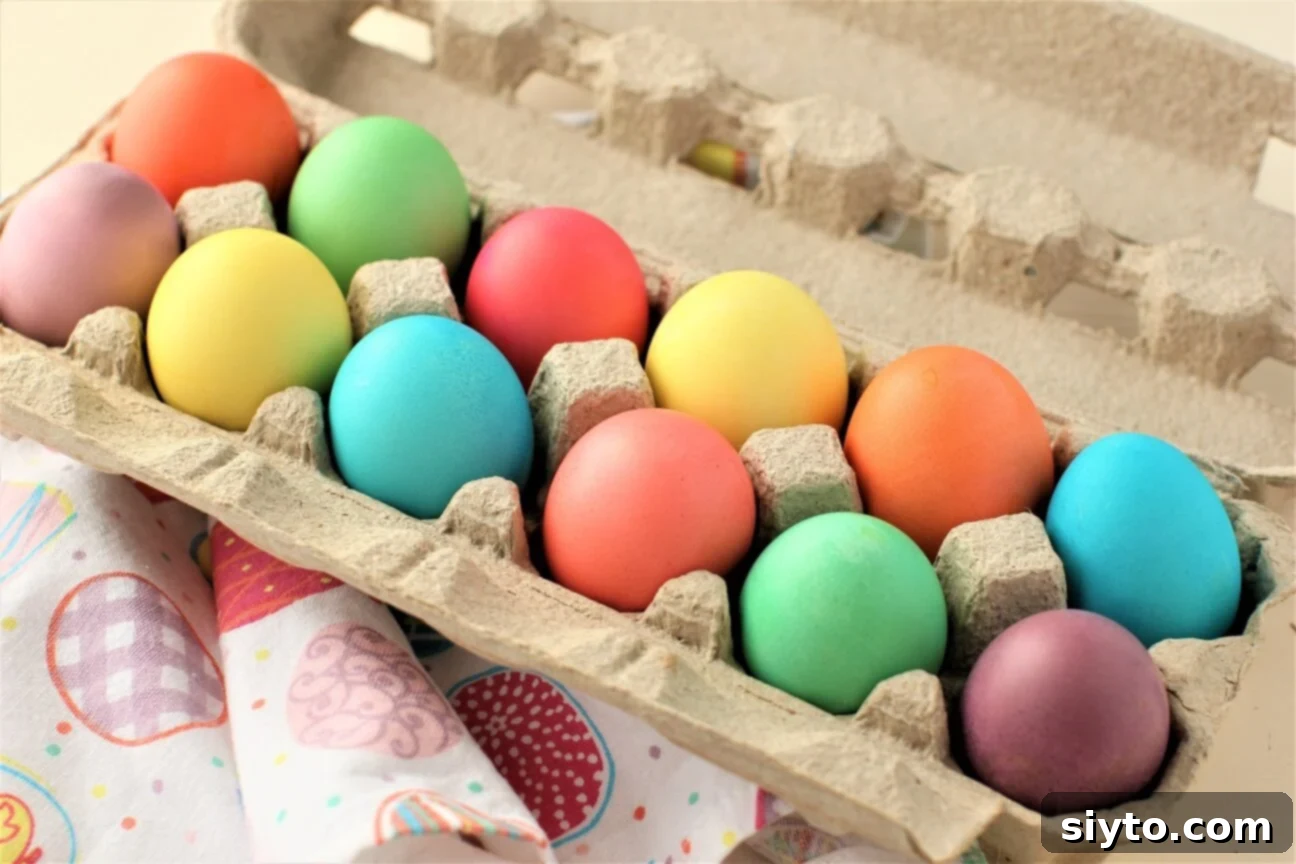
Easy & Vibrant DIY Easter Eggs: How to Dye Eggs at Home Without a Kit
Dreaming of beautifully colored Easter eggs without the fuss of store-bought kits? You’re in luck! Dying Easter eggs with simple ingredients from your pantry is not only quick and easy but also incredibly rewarding. This delightful project is perfect for engaging kids in a festive craft, or for you to simply unleash your inner child and enjoy the vibrant transformation. Get ready to create stunning Easter decorations and delicious hard-boiled eggs with this straightforward guide. (Jump to the full dyeing method below.)
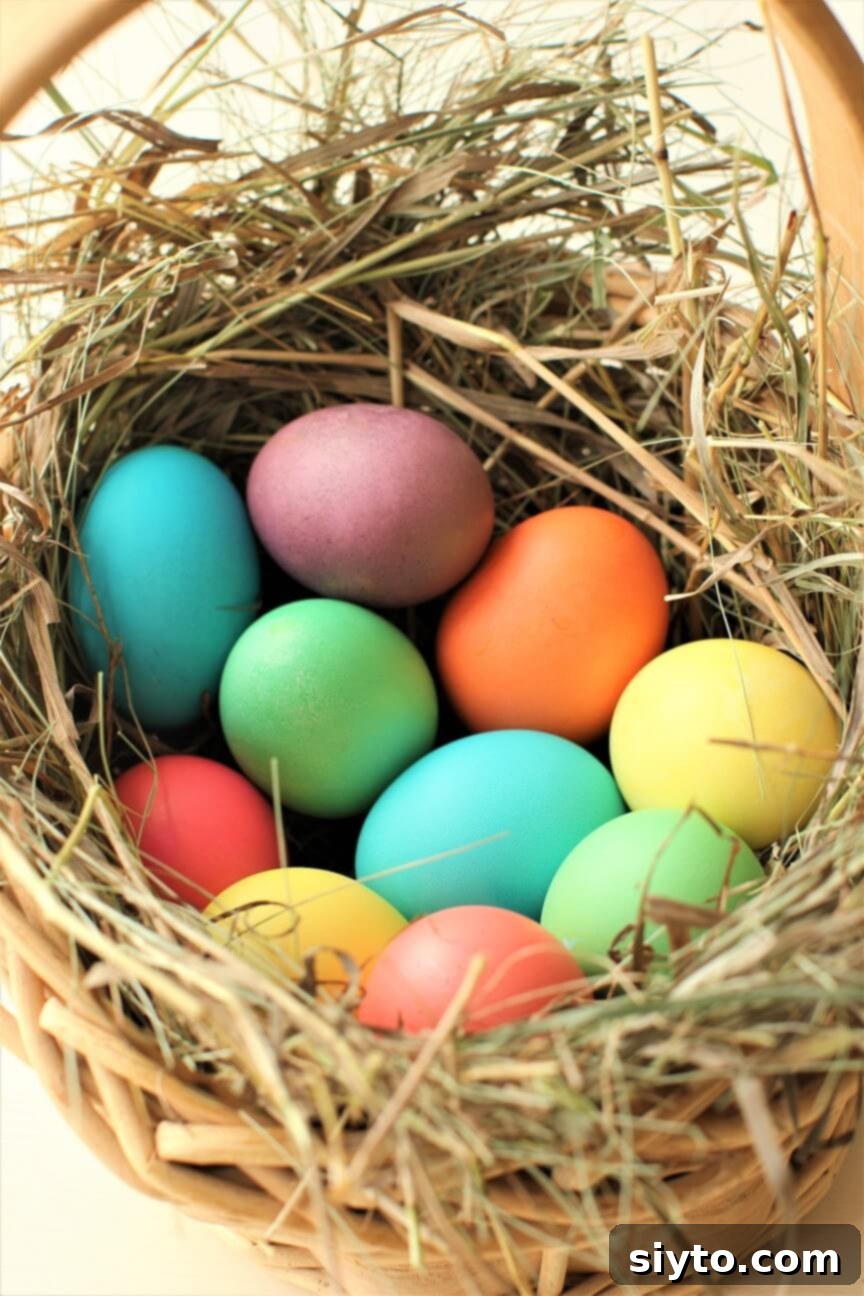
Why Choose Homemade Egg Dyeing? Simplicity, Savings, and Sustainable Fun
For many years, like countless others, my family relied on those familiar flat boxes of Easter egg dyeing kits. They came with wire egg holders, little dye tablets, and even plastic sleeves with holiday pictures. While they served their purpose, I soon discovered a much simpler, more economical, and infinitely more customizable approach using ingredients I already had on hand: white vinegar and a basic set of food coloring tubes. This method not only saves money but also offers endless creative possibilities, transforming a simple kitchen activity into a cherished family tradition.
Switching to homemade dye means you invest once in a food coloring packet that can be used for years, not just for Easter, but for other fun craft projects like cookie painting or even vibrant baking endeavors. It’s an eco-friendlier choice too, reducing plastic waste from single-use kits. If you haven’t already, why not make this year the start of your own easy, vibrant, and personalized Easter egg decorating tradition with your family?
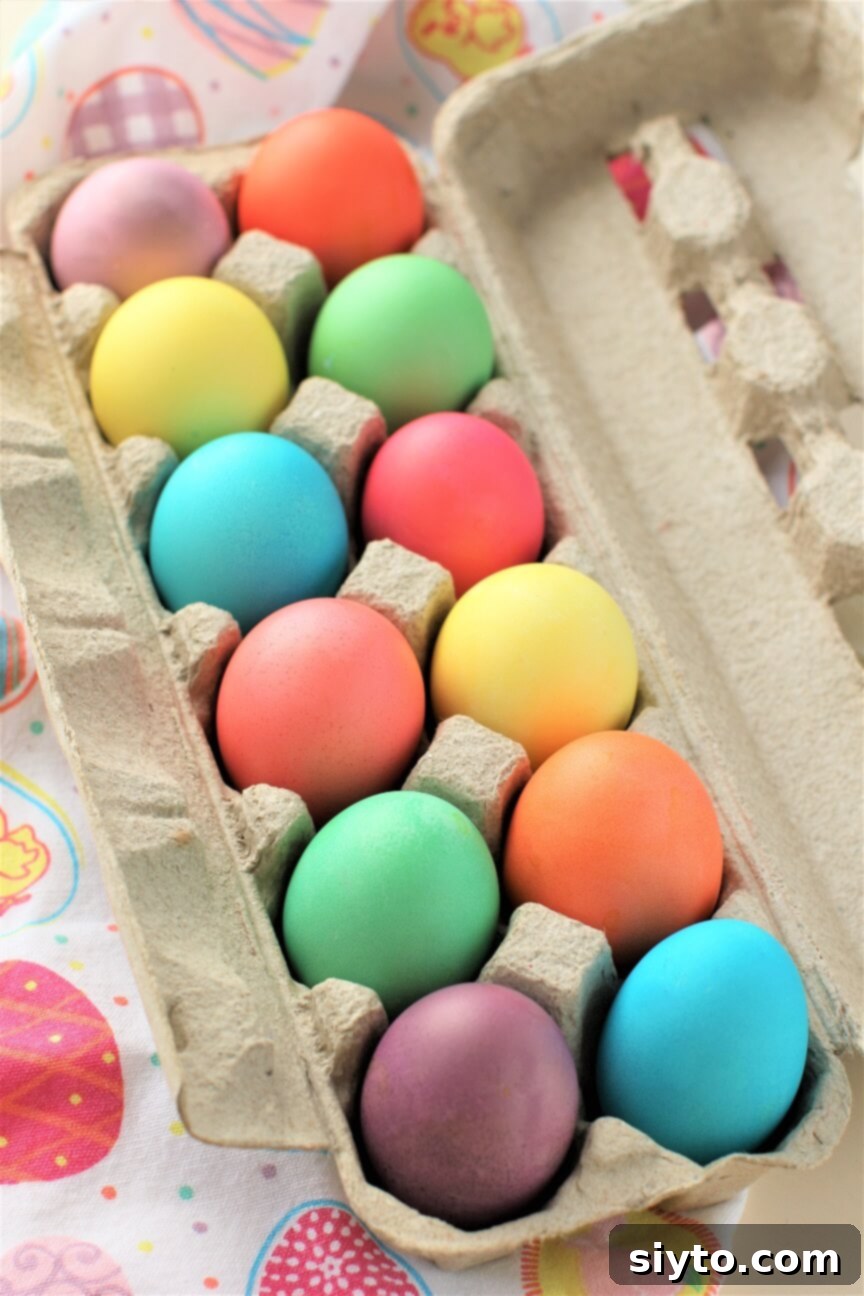
Crafting Your Colors: The Simple Steps to Beautiful Easter Eggs
The process of creating your own dye baths is surprisingly straightforward, turning a handful of pantry staples into a spectrum of vivid colors. No specialized equipment is needed, just a few jars or mugs and your chosen food colorings.
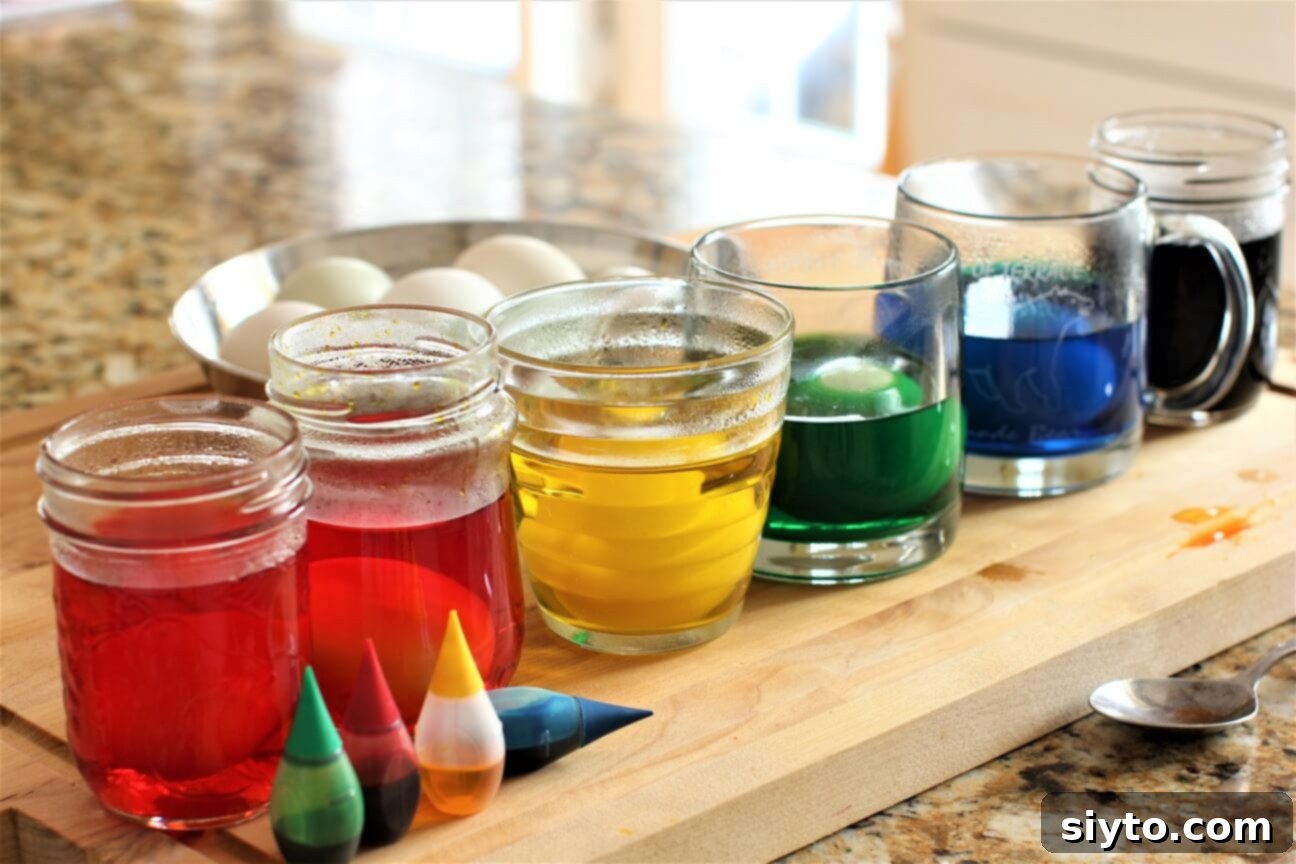
Step-by-Step Dyeing for Perfect Results
- **Prepare Your Dye Baths:** Begin by setting out several small jars, mugs, or even heat-safe bowls—one for each color you plan to create.
- **Add the Essentials:** Pour a splash of white vinegar into each container. The vinegar acts as an acid, helping the dye adhere better to the eggshell, resulting in more intense and lasting colors.
- **Introduce Hot Water and Color:** Carefully add boiling water to each container, then squeeze in your desired amount of food coloring. Start with a few drops and add more until you achieve the color intensity you desire. The hot water helps dissolve the dye quickly and facilitates quicker color absorption by the eggshell. Don’t be afraid to experiment! Mix different primary colors (red, yellow, blue) to create custom shades like orange, green, purple, or even unique pastels.
- **Submerge Your Eggs:** Once your dye baths are ready, gently lower a cooked, cooled egg into each one using a spoon. For eggs that peel perfectly every time, we highly recommend this method for cooking your eggs.
- **Wait for the Magic:** The longer an egg stays in the dye, the deeper and more vibrant its color will become. For lighter pastel shades, a few minutes might suffice. For rich, intense hues, you might leave them for 10-15 minutes or even longer. Turn the eggs periodically to ensure even coloring.
- **Dry and Admire:** Once your eggs have reached their desired shade, carefully remove them from the dye bath with a spoon and place them on a wire cooling rack to air dry completely. This prevents the colors from smudging and allows them to set beautifully.
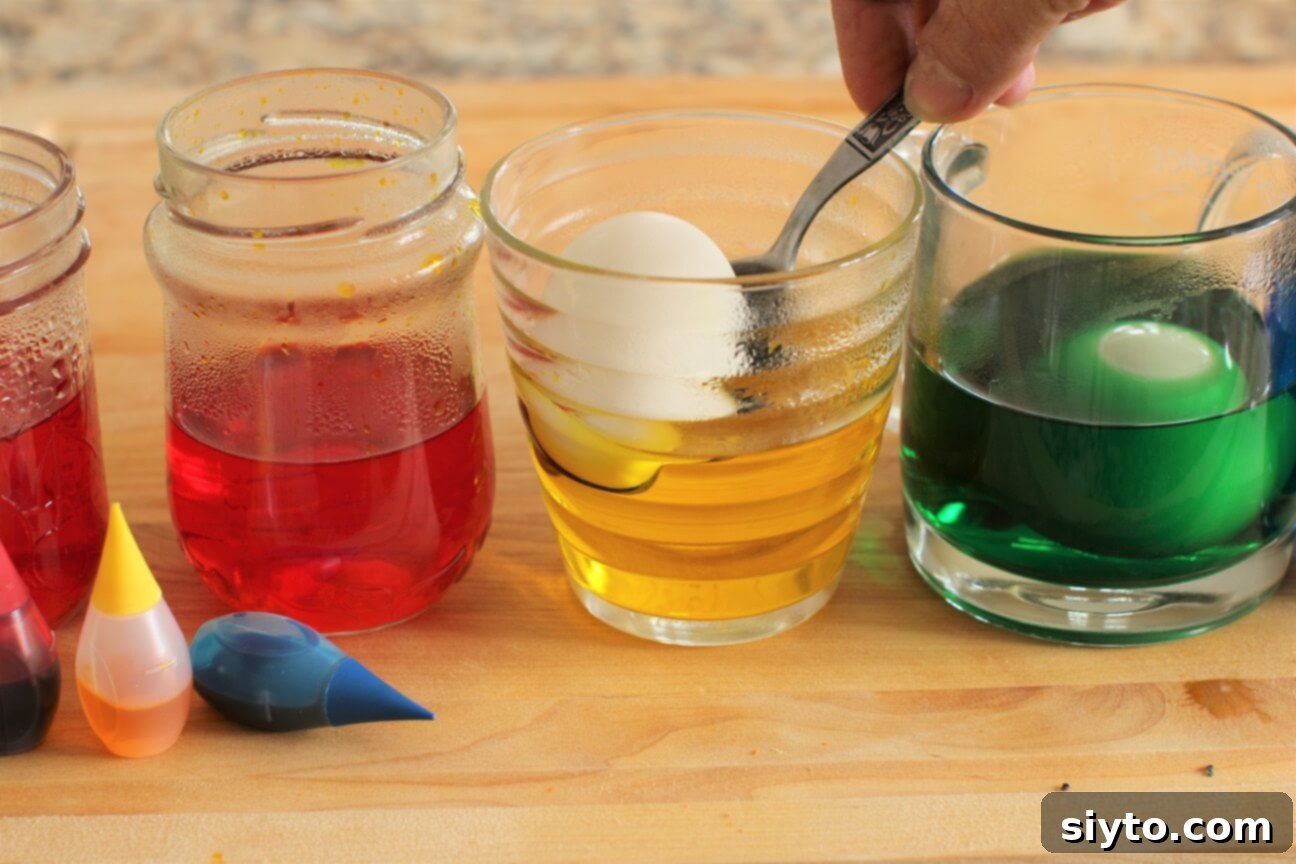
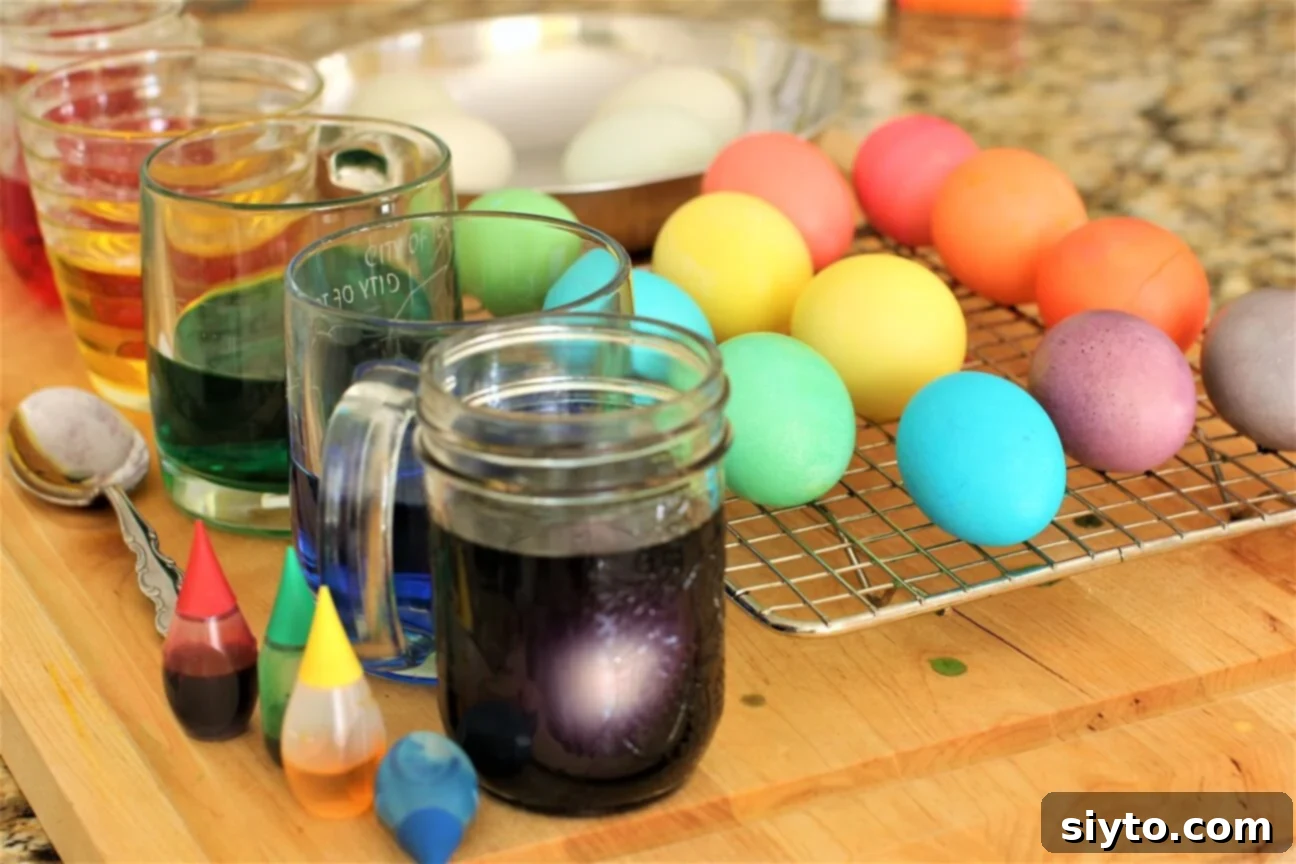
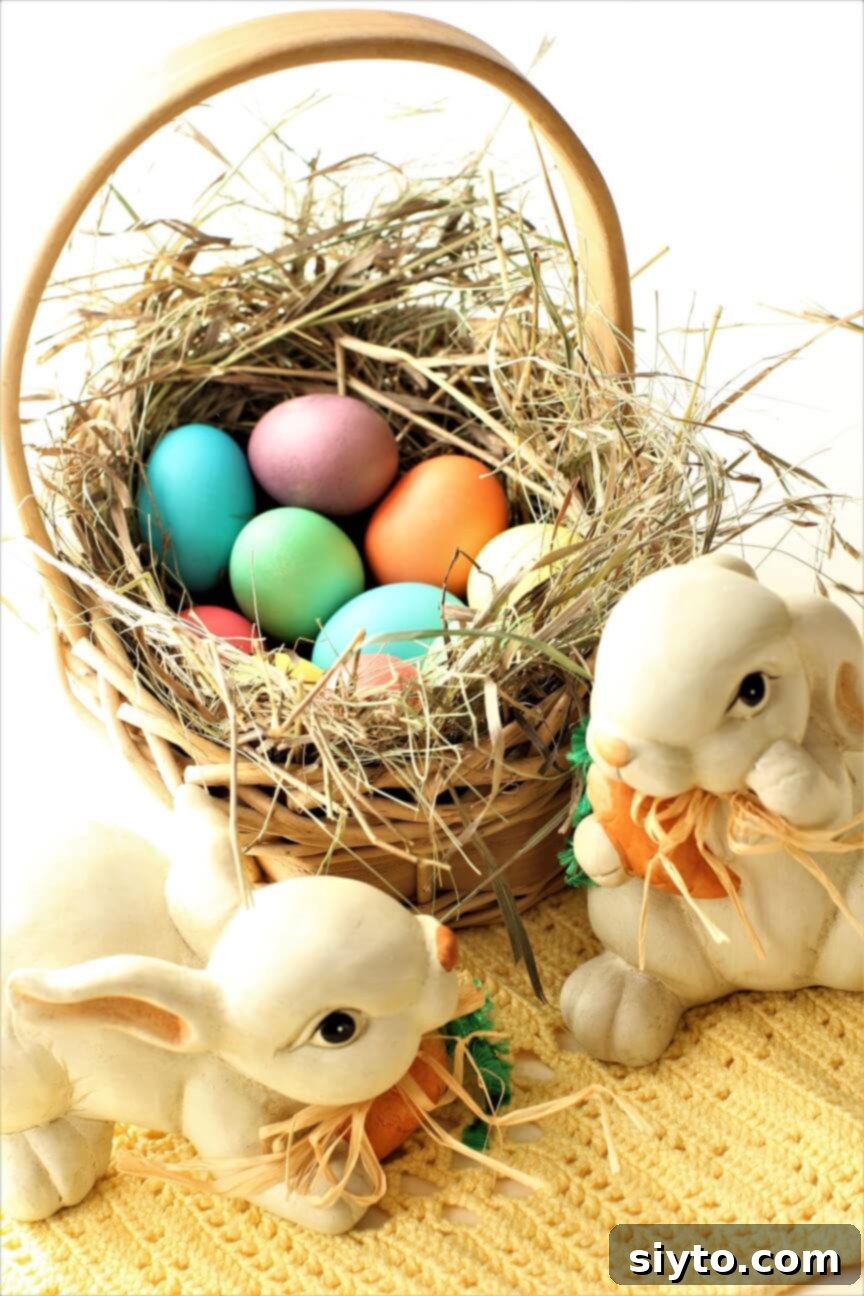
After your eggs are beautifully dried, they’re ready to adorn your Easter table or hide for a festive egg hunt. And who knows, maybe the Easter Bunny will even stop by for dinner, impressed by your colorful creations!
* * * * *
Kitchen Frau Notes for Perfect Easter Eggs:
For achieving clear, soft pastel colors, it’s always best to use white eggs. However, if your preference leans towards deeper, more earthy, and naturally rustic-looking colors, brown eggs are an excellent choice. Once your eggs are dyed and completely dry, you can rub them gently with a tiny bit of cooking oil (such as vegetable or coconut oil) to give them a beautiful sheen. This shine is particularly striking on brown eggs, enhancing their natural beauty.
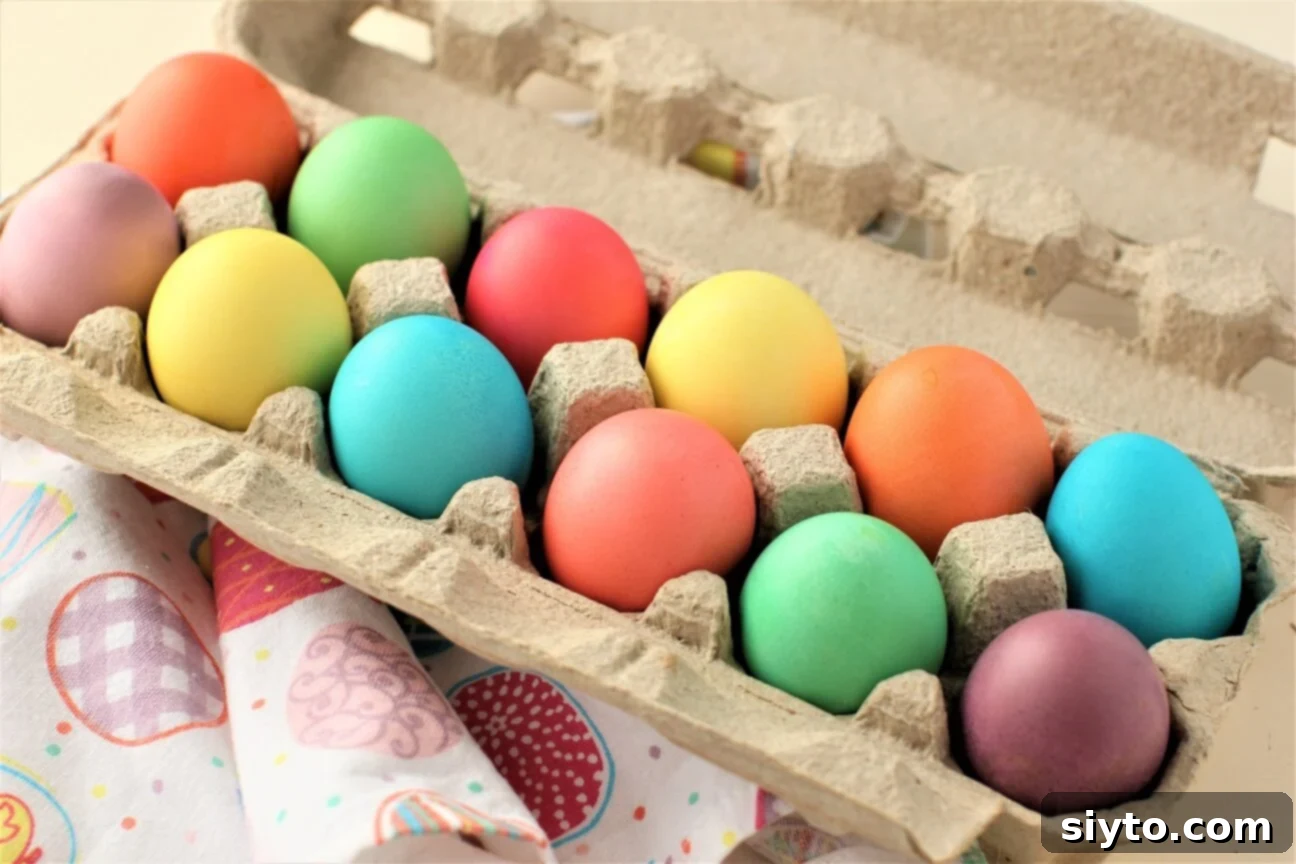
How to Dye Eggs: The Full Method
Ingredients & Supplies:
- **Hard-boiled eggs in the shell:** Using white eggs will produce vibrant, clear colors. Brown eggs result in deeper, more muted, earthy tones. For eggs that peel effortlessly, learn our simple method here.
- **White vinegar:** Essential for setting the colors and making them adhere beautifully to the eggshell.
- **Boiling water:** Helps dissolve the food coloring and aids in faster color absorption.
- **Food coloring:** Liquid or gel food coloring works equally well. Liquid is easier to drip, while gel offers more concentrated colors.
Equipment Needed:
- Small (approximately 250ml/1 cup) mason jars, empty jam jars, or sturdy mugs – one for each color.
- Soup spoons or slotted spoons for carefully lowering and removing eggs.
- A cake drying rack or several layers of paper towels for drying the dyed eggs.
- Optional: Disposable gloves to prevent staining your hands, and newspaper or an old tablecloth to protect your work surface.
Fun & Creative Design Variations:
Elevate your dyed eggs with these simple yet striking design techniques:
- **Sticker Resist:** Before dyeing, attach shaped stickers (foam stickies or vinyl stickers work great) to your eggs. Once the egg is dyed and dry, carefully peel off the stickers to reveal crisp white (or the original egg color) shapes in relief.
- **Rubber Band Stripes:** Wrap rubber bands around the eggs before submerging them in dye. You can create stripes, plaids, or random patterns. After the eggs are dry, remove the elastic bands to expose the undyed lines beneath, creating a unique striped effect.
- **Layered & Gradient Dyeing:**
- **Two-Tone Designs:** Dye the egg a light shade first, allow it to dry slightly, then apply stickers or rubber bands. Dip the egg again into a darker or complementary color. Remove the masks after drying to reveal fascinating colored designs.
- **Half-Dipped Colors:** Hold an egg halfway into one color until the desired shade is achieved on one half. Allow it to dry. Then, hold the other end into a different color, letting the colors slightly overlap in the middle to create a distinct band. This results in a beautiful two-toned egg.
- **Wax Resist Art:** Use a white or pastel-colored wax crayon to draw designs, patterns, or pictures on the eggshell before dipping it into the dye. The wax will repel the dye, preserving your drawn design in white. You can leave the wax on for a textured look, or once the egg is dry, gently heat it with a hairdryer to melt the wax and carefully wipe it off for a smoother finish.
Detailed Instructions for Dyeing:
- **Prepare Eggs:** Hard-boil (or steam) your eggs ahead of time. It’s crucial that the eggs are completely cooled and dry before dyeing to ensure even color absorption. Remember, white eggs yield clearer, brighter colors, while brown eggs result in deeper, earthier hues.
- **Set Up Dye Stations:** For each color you wish to create, set out one jar or mug. Ensure your workspace is protected with newspaper or an old tablecloth.
- **Create Dye Solutions:**
- Into each jar, add 1 teaspoon of white vinegar.
- Carefully add ½ cup (120ml) of boiling water to each jar.
- For liquid food coloring, add 10 to 20 drops per jar, depending on how intense you want the color to be. More drops equal a darker, more vibrant shade. Experiment with color mixing: Yellow + Red = Orange, Yellow + Blue = Green, Red + Blue = Purple/Violet. Adjust proportions to achieve varying shades.
- If using gel colors, start with a small dollop (like a toothpick tip) and stir thoroughly to dissolve. Continue adding small amounts until you reach your desired intensity.
- **Dye the Eggs:** Gently lower one cooled, cooked egg into each color solution using a spoon. Be mindful to wipe your spoon clean if you’re using it to submerge eggs into different colors, to avoid mixing dyes accidentally.
- **Monitor & Remove:** Leave the eggs in the dye bath for the required time to achieve your desired shade. A general guideline is **5 minutes for a medium shade**. Less time will produce lighter, pastel shades, while longer immersion (10-15 minutes or more) will result in darker, more intense colors. Turn each egg carefully with your spoon during its submersion time to ensure the color is absorbed evenly across the shell.
- **Dry Thoroughly:** Carefully remove the dyed eggs from the solutions with a spoon and place them onto a cake cooling rack or several layers of paper towels to air-dry completely. This prevents smudging and allows the colors to set.
- **Re-use Dye:** You can use the dye solutions repeatedly to color more eggs. As the dyes cool, the coloring process might take a little longer for subsequent eggs.
- **Storage:** Store your freshly cooked and dyed eggs in the refrigerator. Unpeeled hard-boiled eggs will keep for up to a week in the fridge, while peeled ones are best consumed within 5 days.
- **Enjoy Your Creations:** These festive eggs are perfect for a special spring or Easter breakfast, or they can be used in your favorite egg salad, deviled eggs, or other egg dishes.
Happy Egg Dying! We hope you cherish this joyful tradition.
Want to receive new Kitchen Frau recipes directly to your email? Sign up here and you’ll get a handy and useful kitchen tip along with each recipe, too. (No spam ever.)
If you like my recipes, follow me on Instagram, Pinterest, Twitter, and Facebook. You’d make my day!
PIN IT HERE to save the recipe for later:
You might also like these festive Easter ideas:
Surprise Jellied Easter Eggs
Rice Krispie Easter Egg Nests
Bird’s Nest Cookies and Bunny Bark
Cookie Painting