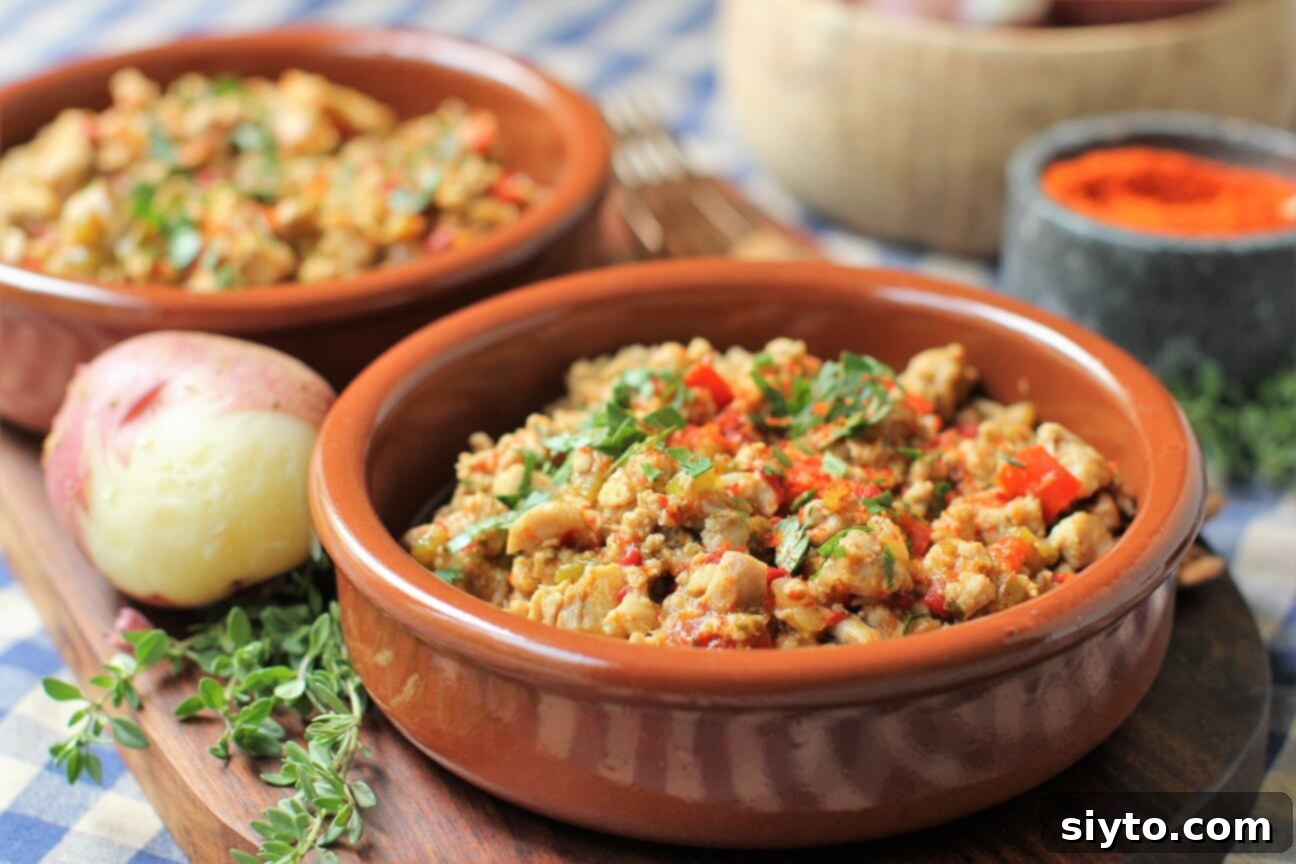
Authentic Axoa d’Espelette: A Flavorful Basque Chopped Meat Stew Recipe
Axoa d’Espelette, pronounced “achoa,” is a delightful and surprisingly simple chopped meat stew bursting with the vibrant flavors of the French Basque Country. This cherished dish, often gracing festive country fairs and intimate family dinners alike, is a true culinary gem. Its rich, savory profile, highlighted by the famous Piment d’Espelette, makes it a must-have in any cooking enthusiast’s repertoire. What’s more, like many great stews, it tastes even better when prepared a day in advance, making it perfect for entertaining or convenient weeknight meals. (Jump directly to the recipe here.)
Discovering the Enchanting Basque Country of France
Join us this month as we journey to France for our “Eat the World” recipe challenge, virtually exploring the captivating Basque Country. Nestled in the southwest corner of France, this region is a tapestry of rich agricultural landscapes, unique cultural traditions, a distinct history, and its very own ancient language. It’s an area that truly feels like stepping into a storybook.
During a recent trip to Spain and Portugal, we dedicated four unforgettable nights to exploring the French Basque Country, specifically staying in the charming seaside town of Saint-Jean-de-Luz. This picturesque corner of France immediately captured our hearts. Imagine rolling hills dotted with traditional farmyards, grazing sheep, and cows, all interspersed with storybook villages featuring characteristic red-timbered white houses. Driving along the winding roads through this lush, fertile countryside was a continuous visual feast, revealing breathtaking rural scenes around every bend.
Our timing in Saint-Jean-de-Luz was particularly fortuitous, as we stumbled upon the vibrant Fête de Saint Jean. This annual celebration sees villagers dress in the striking red and black colors of their patron saint, transforming the town into a lively spectacle of dance, music, and communal joy that lasts late into the night. The atmosphere was infectious, offering an authentic glimpse into the heart of Basque festivities.
The Heart of Basque Flavor: Piment d’Espelette
A highlight of our trip was our visit (twice, no less!) to the charming small town of Espelette. This town is globally renowned for its eponymous Piment d’Espelette – a fragrant, ground red pepper that forms the backbone of much of Basque cooking in the region. The peppers are cultivated locally, carefully harvested, and then traditionally sun-dried to a beautiful, deep brick-red hue. Everywhere you look, strings of these vibrant peppers adorn the sides of buildings, creating a striking visual spectacle as they dry in the warm sun. Shops throughout the town proudly display and sell these culinary treasures. With its distinctive red and white buildings, incredibly friendly residents, and the omnipresent Espelette peppers, the town exudes an undeniable charm and character.
The Espelette pepper is truly exceptional. It boasts a unique rich, fruity flavor profile, coupled with a mild to medium level of heat that tantalizes the palate without overpowering other ingredients. This distinctive pepper is fundamental to the authentic taste of countless Basque dishes from this region, and it lends its exquisite flavor in a particularly delightful way to a local specialty: Axoa d’Espelette. Understanding the importance of this specific ingredient is key to appreciating the depth of flavor in this traditional stew.
What is Axoa d’Espelette? A Culinary Gem
The term axoa (pronounced “achoa”) itself means ‘chopped’ or ‘minced’ in the local Basque dialect, perfectly describing the preparation of this hearty stew. Traditionally, Axoa d’Espelette is made from minced or finely diced veal, but variations using pork are also common. For those seeking alternatives, I’ve discovered that ground turkey thigh meat makes an excellent substitute, offering a similar texture and richness. Beyond being a staple in Basque homes, this beloved traditional dish is frequently served at the many vibrant fairs and bustling markets found throughout the Basque Country, embodying the region’s culinary spirit.
The Simplicity and Richness of Basque Cuisine
Basque cuisine is widely celebrated as some of the finest in the world, and its enduring appeal lies in the beautiful simplicity of its dishes and the unparalleled freshness and quality of its ingredients. Unlike many other global cuisines that rely on a vast array of spices and herbs, Basque dishes typically use very few, yet the resulting flavors are consistently rich, complex, and incredibly satisfying. I had the privilege of taking a couple of cooking courses in San Sebastian, located in the Spanish part of the Basque Country. I was absolutely awestruck by how fantastic the food tasted, often requiring little more than garlic, good olive oil, fresh parsley, and salt for seasoning. This minimalist approach allows the natural flavors of the high-quality produce and meats to truly shine through, a principle that is perfectly exemplified in Axoa d’Espelette.
Crafting Your Own Axoa d’Espelette: A Versatile Recipe
While Axoa is most often prepared with ground veal in the town of Espelette itself, other Basque towns might opt for diced veal. My own experiments with this recipe have yielded fantastic results. I’ve prepared Axoa d’Espelette twice: once using only ground turkey thigh meat, and another time with a combination of half ground turkey and half diced boneless, skinless chicken thighs. Both versions proved to be incredibly delicious and remarkably similar in flavor and texture to the authentic veal Axoa d’Espelette we savored at a quaint streetside restaurant in Espelette. This particular recipe is adapted from a postcard we purchased in the town, with a few personal enhancements – I’ve incorporated dry white wine and increased the amount of garlic to perfectly capture the essence of the dish we enjoyed in France.
The versatility of the meat choice makes this recipe highly adaptable to various preferences and availability. Whether you prefer the traditional veal, a pork alternative, or a poultry-based substitute, the core flavors of Piment d’Espelette, peppers, onions, and garlic remain central, ensuring a consistently delightful outcome. This flexibility is part of what makes Axoa d’Espelette such a beloved and accessible dish for home cooks.
A Taste of France, Wherever You Are
Recently, I spent a wonderful week at Lake Okanagan in the beautiful south of British Columbia, sharing precious time with my mom and four sisters. It was a glorious week dedicated to reconnecting, relaxing, and enjoying the stunning natural surroundings. Most of our meals were savored on the deck of our rented house, offering breathtaking views of the lake. It’s amazing how a beautiful setting can elevate the dining experience, making food taste even more extraordinary. We all thoroughly enjoyed this meal of Axoa d’Espelette, sipping wine and watching the serene lake. In those moments, it was wonderfully easy to imagine ourselves back in the heart of France, proving that a truly authentic dish can transport you anywhere in the world.
* * * * *
Expert Tips for the Perfect Axoa d’Espelette: This Basque chopped meat stew is wonderfully straightforward to prepare. If you opt for ground meat, your chopping time will be minimal, making it an ideal choice for busy schedules. One of the greatest advantages of Axoa d’Espelette is that its flavors deepen and meld beautifully overnight, meaning it tastes even better the next day. This makes it a fantastic make-ahead meal for guests, a convenient option for speeding up weeknight dinners (especially with school starting soon!), or even a delicious and comforting dish to bring along on a camping trip.
The authentic flavor of Axoa d’Espelette largely comes from its namesake pepper. If you find yourself unable to source genuine Piment d’Espelette, you can create a reasonable substitute by combining sweet paprika with a small sprinkle of cayenne pepper to introduce a touch of heat. However, if you do have Piment d’Espelette, be sure to reserve about half a teaspoon to add at the very end of the cooking process. This preserves its fresh, fruity aroma and mild piquancy, which can diminish if cooked for too long. This final addition is key to achieving that signature Basque zest.
To best enjoy your Axoa d’Espelette, serve it alongside classic accompaniments. Boiled or steamed potatoes are a traditional choice, providing a perfect balance to the rich stew. Alternatively, a crusty French baguette is excellent for soaking up every last drop of the flavorful juices, ensuring no culinary goodness is left behind.
Axoa d’Espelette Recipe
(A Fantastic Chopped Meat Stew from the Basque Country of France)
- 1 kilogram (2.2 lbs) veal shoulder (or substitute pork shoulder; or use ground turkey thigh meat; or a combination of half ground turkey thigh meat plus half diced boneless, skinless chicken thighs)
- 4 tablespoons olive oil, divided
- 1 large onion
- 3 cloves garlic, minced
- 2 large red bell peppers, diced
- 1 large green bell pepper, diced (or 8 mild, long, green pimento peppers)
- 1 bay leaf
- 4 tablespoons fresh parsley, chopped, divided (or 1 tablespoon dried parsley)
- 1 tablespoon fresh thyme leaves or 1 teaspoon dried thyme
- 1 teaspoon salt
- 1 cup (240ml) veal or chicken stock, or water
- ½ cup (120ml) dry white wine (or additional stock or water)
- 1½ teaspoons ground Piment d’Espelette, divided (or substitute 2 teaspoons sweet paprika + ¼ teaspoon cayenne pepper for heat)
Instructions
If using veal or pork shoulder, or chicken thighs, chop or dice the meat finely. Alternatively, if using ground meat, proceed as is.
Prepare your vegetables: Dice the onion, mince the garlic, and dice both the red and green bell peppers (or pimento peppers).
Heat 2 tablespoons (30ml) of the olive oil in a large Dutch oven or a heavy-bottomed skillet over medium heat. Add the diced onion, minced garlic, and diced peppers to the hot oil. Sauté for about 10 minutes, stirring frequently, until the vegetables begin to soften and become fragrant.
Increase the heat slightly if needed, then add the diced or ground meat to the skillet. Cook, stirring often and breaking up any large chunks with a wooden spoon if using ground meat, until the meat is no longer pink and is lightly browned. This step is crucial for developing flavor.
Stir in the bay leaf, 2 tablespoons of the chopped fresh parsley (or all of the dried parsley), the fresh or dried thyme, and 1 teaspoon of the Piment d’Espelette. If using the substitute, add all of the sweet paprika and cayenne pepper now. Remember to save the remaining ½ teaspoon of Piment d’Espelette for later to preserve its delicate fresh flavor.
Pour in the stock and the dry white wine (or additional stock/water if omitting wine). Bring the Axoa d’Espelette to a boil. Once boiling, reduce the heat to low, cover the pan, and let the stew simmer gently for approximately 45 minutes, allowing the flavors to meld beautifully.
After 45 minutes, remove the lid from the pan and increase the heat to medium. Continue to boil the stew, uncovered, stirring occasionally, to reduce the liquid until only a thin, flavorful layer remains at the bottom of the pan. This concentrates the flavors and thickens the stew slightly.
Taste the Axoa d’Espelette and add more salt if necessary to adjust the seasoning to your preference. Stir in the remaining ½ teaspoon of Piment d’Espelette along with the remaining 2 tablespoons of olive oil. Finally, sprinkle with the remaining 2 tablespoons of fresh chopped parsley.
Serve the Axoa d’Espelette immediately, offering additional Piment d’Espelette at the table for individuals to sprinkle on their portions to taste, enhancing the freshness and aroma of the dish.
Axoa d’Espelette is traditionally served with classic accompaniments like boiled potatoes or slices of crusty French bread, perfect for soaking up the rich and delicious juices.
Serves 6.
Bon Appétit!
Join the Culinary Journey with Eat the World
We invite you to explore the world through its diverse cuisines! Check out all the wonderful French dishes prepared by fellow Eat the World members and share your own culinary adventures with the hashtag #eattheworld. Click here to find out how to join our monthly challenge and have fun exploring a new country in your kitchen with us!
Here’s a taste of what our fellow adventurers have cooked up from France:
Juli: Choucroute
Camilla: Poulet à la Moutarde + Salade de Courgettes
Nicoletta and Loreto: Classic French Chocolate Profiteroles
Claudia: Bifteck Hache a la Lyonnaise
Margaret: Axoa d’Espelette: a simple and tasty Basque stew
Wendy: Charlotte de Chou et de Pommes de Terre
Amy: Fougasse (Provençal Flat Bread)
Sign up here to receive new Kitchen Frau recipes directly to your email inbox, and get a handy and useful kitchen tip with each recipe.
If you like my recipes, follow me on Instagram, Pinterest, Twitter, and Facebook. You’d make my day!
Don’t forget to PIN IT to save the recipe:
Explore More “Eat the World” Recipes
(in alphabetical order)
- Argentina: Red Chimichurri Sauce
- Australia: Anzac Biscuits (Crispy Oatmeal Cookies)
- Bangladesh: Chingri Masala (Shrimp Curry)
- Bulgaria: Patatnik (Savoury Potato and Cheese Pie)
- Cambodia: Noum Kong (Cambodian Rice Flour Doughnuts)
- China: Kung Pao Chicken
- Colombia: Pan de Yuca (Warm Cheese Buns)
- Egypt: Fava Beans and Feta
- England: Gluten Free Fish and Chips and Mushy Peas
- Ethiopia: Four Ethiopian Recipes for a Fantastic Feast
- Fiji: Spiced Sweet Potato and Banana Salad
- Finland: Lohikeitto (Creamy Salmon, Potato, and Dill Soup)
- France: Axoa d’Espelette (A Simple Stew from the Basque Country)
- Georgia: Charkhlis Chogi (Beets with Sour Cherry Sauce)
- Greece: Moussaka
- Guyana: Fried Tilapia in Oil & Vinegar Sauce (fish dish)
- Hungary: Túrós Csusza (Pasta Scraps with Cottage Cheese)
- India: Kerala Upma (Fluffy, Kerala Style Breakfast Upma Recipe)
- Iraq: Tepsi Baytinijan (Eggplant & Meatball Casserole)
- Ireland: Dublin Coddle (A tasty Sausage and Potato Stew)
- Israel: Cucumber, Feta, and Watermelon Salad
- Jamaica: Rice and Peas (Coconut Rice and Red Beans)
- Japan: Chawanmushi (Steamed Savoury Egg Custard)
- Kenya:Maharagwe with Ugali (Red Beans with Cornmeal Slice)
- Laos: Ping Gai (Lao Grilled Chicken Wings)
- Lesotho: Chakalaka & Pap (Veggie & Bean Stew with Cornmeal Polenta)
- Luxembourg: Stäerzelen (Buckwheat Dumplings)
- Mexico: Cochinita Pibil Tacos (Pit Barbecued Pig to Make in Your Oven)
- Netherlands: Boerenkool Stamppot (Kale-Potato Mash with Sausages & Pears)
- New Zealand: Classic Pavlova
- Poland: Polish Honey Cake
- Portugal: Tuna and Sardine Pâtés
- Puerto Rico: Piña Colada Cocktail
- Scotland: Cranachan (Raspberry, Whisky & Oat Cream Parfaits)
- Senegal: Mafé (Beef and Peanut Stew)
- Sudan: Peanut Butter Creamed Spinach & Peanut Meringue Cookies
- Sweden: Swedish Meatballs with Cream Gravy
- Switzerland (Christmas): Basler Leckerli Cookies
- Thailand: Shrimp Laksa (Khung)
- Trinidad & Tobago: Peanut Butter Prunes
- Ukraine: Buckwheat Kasha with Beef
- United States (Soul Food): Smothered Pork Chops
- Uruguay: Torta de Fiambre (Baked Ham & Cheese Sandwiches)
- Vietnam: Caramelized Pork Rice Bowls