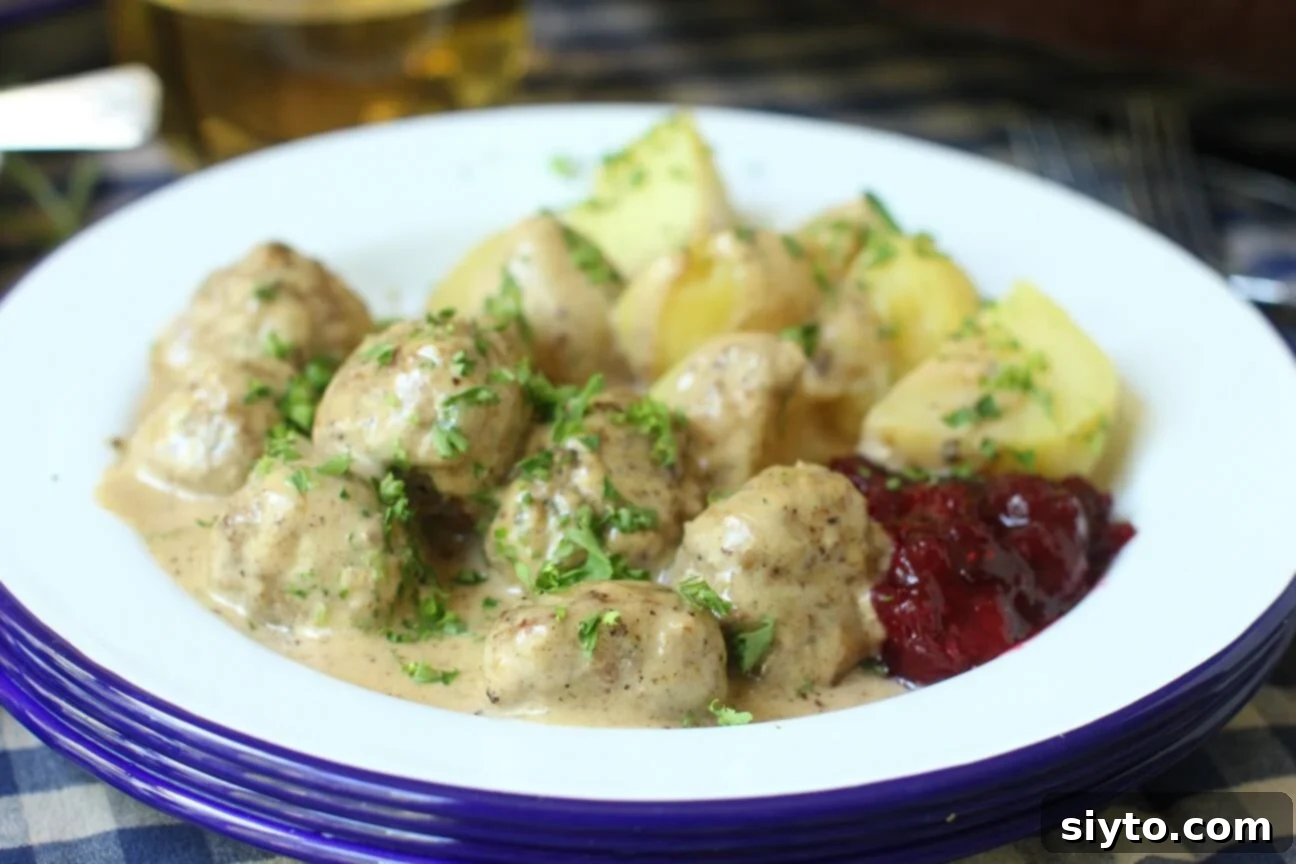
Authentic Swedish Meatballs with Cream Gravy: A Culinary Journey to Köttbullar Perfection
Swedish meatballs are truly a culinary delight – tender, flavorful bites enveloped in a rich, silky cream sauce. Forget any preconceptions you might have from mass-produced versions; these homemade wonders are meltingly soft, generously spiced, and utterly decadent. The perfect balance is achieved with a dollop of sweet-tart lingonberry or cranberry jam, adding a burst of freshness that cuts through the richness. One taste and you’ll understand why this dish is a beloved staple, inspiring you to savor every mouthful.
Beyond the Store: Discovering the True Essence of Swedish Meatballs
For many across the globe, the phrase “Swedish meatballs” immediately conjures images of the famous, albeit somewhat uniform, little brown balls served at IKEA. And yes, I admit, they have a certain appeal. In my younger days, as a busy mother navigating the whirlwind of after-school activities – sports, music lessons, dance, and countless others – the convenience of a freezer full of prepared meatballs was an absolute lifesaver. It was a trade-off: a mother’s sanity for quick, ready-to-eat meals that could satiate four hungry children before they resorted to foraging through the pantry for anything edible.
However, I must confess, despite their convenience, those frozen, bagged meatballs never quite captured my heart. While their flavor was passable, it was their texture that always bothered me – distinctly rubbery, almost bouncy. I secretly suspected they could double as miniature rubber balls, though I never dared test that theory, knowing full well four mischievous children would quickly turn mealtime into a chaotic game of meatball bouncing, complete with “boing, boing, boing” sound effects.
The experience of tasting authentic, homemade Swedish meatballs (known as köttbullar in Sweden) is a revelation. Once you’ve sampled the real deal, those frozen alternatives simply won’t compare. Real Swedish meatballs are characterized by their exquisite softness, delicate texture, and tender, melt-in-your-mouth quality. There’s no bounciness here; just pure, yielding goodness. What sets them apart from Italian or Asian varieties is that distinctive hint of allspice, a warmth that gives them their unique character. And, of course, they are generously coated in a divinely silky, rich cream sauce that elevates them to an entirely different culinary plane.
A Culinary Expedition: Exploring Global Flavors with Eat the World
My excitement soared when Sweden was selected as this month’s featured country for our ongoing culinary adventure, Eat the World. I had long harbored a desire to master the art of making authentic Swedish meatballs, and this presented the perfect opportunity. My research began in earnest, delving into traditional recipes and techniques. Soon after, I found myself in the kitchen, meticulously crafting batches of meatballs, each attempt bringing me closer to perfection. It was a thoroughly enjoyable and, I must add, utterly delicious project. Now, my freezer is stocked not with those unloved commercial meatballs, but with bags of these homemade treasures, and I genuinely cannot wait to prepare them again.
The Surprising History of Swedish Meatballs: A Turkish Connection
During my research, I stumbled upon a fascinating piece of culinary history: Swedish meatballs are, in fact, not originally Swedish at all! This revelation might shock many, as it did me. The story traces back to the early 18th century, when King Charles XII of Sweden spent several years in exile within the Ottoman Empire. During his stay, he developed a profound appreciation for Turkish meatballs, known as köfte. Legend has it that upon his return to Sweden, he brought with him not only recipes for these delectable meatballs but also a fondness for stuffed cabbage and the burgeoning trend of coffee drinking. Thus began Sweden’s enduring love affair with both meatballs and coffee.
When you taste these meatballs, it becomes abundantly clear why a king, even in exile, would be so captivated by them. The Swedes, with their culinary ingenuity, took the Turkish köfte and imbued it with their own distinct flair. They incorporated pork into the meat mixture, creating a lighter, more tender texture, and, crucially, developed the rich, creamy gravy that has become synonymous with Swedish meatballs today. After centuries of refining and personalizing this dish, adding their unique touches and flavors, I believe it’s more than fair to allow Sweden to claim this particular version as their own national treasure. It’s a wonderful example of how cuisines evolve and blend, with dishes traveling across borders and adapting to local tastes and ingredients – a story that echoes across countless culinary traditions worldwide.
Crafting the Perfect Meatball: Ingredients and Techniques
The secret to the incredibly light and tender texture of these Swedish meatballs lies in the careful balance of ingredients. The use of half ground pork and half ground beef is a critical trick I also employ for a fabulous meatloaf. The pork contributes moisture and tenderness, while the beef provides a robust flavor foundation. Beyond the meat, several other elements are essential for their signature taste and consistency.
Generous amounts of finely minced onion are crucial; they don’t just add flavor but also keep the meatball mixture moist and succulent. The distinct warmth of allspice and nutmeg is an absolute must-have, providing the classic Swedish flavor profile that distinguishes them from other meatball varieties. If you’re new to these spices, you can start by reducing the allspice to ¼ teaspoon for your first batch, then adjust to your preference. While traditional Swedish meatballs often use white breadcrumbs, I’ve found that small-flaked oatmeal creates an even more delicate and soft meatball, enhancing its pillowy texture. These seemingly small details contribute immensely to the overall appeal of the dish.
The Essential Cream Gravy: A Decadent Embrace
Finally, and perhaps most importantly, the magic truly happens with the gravy. That luscious, irresistible gravy, made with a generous pour of rich, real heavy cream, is what truly defines Swedish meatballs. It’s not just an accompaniment; it’s an integral part of the experience, coating each meatball in a velvety embrace. You simply cannot have enough of this creamy goodness.
Traditionally, Swedish meatballs are served alongside boiled or mashed potatoes, which soak up the exquisite gravy beautifully. However, they are equally delicious over buttered noodles, offering another comforting carb option. The final, indispensable flourish is a side of lingonberry jam or preserves. You can often find authentic lingonberry jam at IKEA or other specialty import stores. Lingonberries, often referred to as mountain cranberries or partridge berries in North America, possess a unique sweet-tart flavor that perfectly complements the rich meatballs and creamy sauce. If lingonberry jam is difficult to source, a homemade cranberry sauce makes an excellent, equally delicious substitute, sharing a similar tart and fruity profile.
You could even explore other tangy jams or jellies, such as red currant jelly, for a similar effect. There’s an undeniable harmony in the combination of the lightly spiced meatball, the luxurious cream gravy, and the vibrant tartness of the jelly. This interplay of flavors creates a meal that is truly memorable, making it no surprise that Swedish meatballs are frequently featured as part of holiday dinners in Sweden. Yet, their comforting nature and relative ease of preparation also make them a fantastic choice for a decadent weeknight meal – a true comfort food masterpiece.
I, for one, am eternally grateful that Sweden’s King Charles XII developed such an intense fondness for these meatballs during his travels that he brought them back and introduced them to his people. The creative Swedish cooks then added their own distinctive touches, transforming them into a defining element of the country’s rich culinary landscape. It’s a beautiful testament to how sharing a meal can transcend cultural boundaries and bring the world a little closer together.
* * * * *
Kitchen Frau Notes: If you prefer, you can certainly use traditional breadcrumbs (or gluten-free breadcrumbs, if necessary) instead of oatmeal in this recipe. The oats lend a particularly delicate texture, but breadcrumbs work wonderfully too.
To prepare this recipe for freezing, first form and brown the meatballs as instructed. Once browned, arrange them in a single layer on a cookie sheet and freeze until solid. Afterward, transfer the frozen meatballs to a freezer-safe bag for long-term storage. When you’re ready to serve, begin by preparing the cream gravy, using ¼ cup (57gms) of butter. Add the frozen meatballs directly to the simmering gravy and cook for a few minutes longer than usual, ensuring they are fully thawed and heated through before serving. This method allows you to enjoy homemade Swedish meatballs even on the busiest of days.
Classic Swedish Meatballs with Cream Gravy Recipe
Ingredients for the Meatballs:
- ½ cup (50gms) small-flaked oats (quick oats), gluten-free if necessary
- ⅓ cup (80ml) milk
- 2 large eggs
- 1 tablespoon dijon mustard
- 1 teaspoon fine sea salt
- ½ teaspoon white or black pepper
- ½ teaspoon allspice
- ¼ teaspoon nutmeg
- 1 medium onion (about 1 cup, very finely chopped)
- 2 tablespoons fresh parsley, finely chopped (or 1 tablespoon dried)
- 1 lb (454gms) lean ground beef
- 1 lb (454gms) ground pork
- 1 tablespoon butter
- 1 tablespoon oil
Ingredients for the Cream Gravy:
- Pan drippings + enough butter to make 4 tablespoons (60ml) total
- ¼ cup sweet rice flour (or regular all-purpose flour for non-gluten-free)
- 2 cups (480ml) beef stock (a good quality concentrate works well)
- 1 cup (240 ml) heavy cream (whipping cream)
- 1 tablespoon tamari or gluten-free soy sauce
- 2 teaspoons dijon mustard
- ½ teaspoon fine sea salt
- ½ teaspoon white or black pepper
To Serve:
- Boiled potatoes, mashed potatoes, or buttered noodles
- Swedish lingonberry jam, red currant jelly, or homemade cranberry sauce (recipe below)
- Chopped fresh parsley for garnish
Instructions for Making the Meatballs:
- In a large bowl, combine the small-flaked oats with the milk. Allow the mixture to rest for about 10 minutes, giving the oats time to fully absorb the milk and soften.
- While the oats are soaking, dice the onion very finely. For an even more tender texture and to ensure the onion virtually disappears into the meatballs, chop it further after dicing. Alternatively, you can grate the onion, being sure to collect and incorporate any released juice for maximum flavor and moisture.
- To the soaked oats, add the eggs, mustard, salt, pepper, allspice, and nutmeg. Beat with a fork until all the ingredients are thoroughly combined and the eggs are well-mixed into the oat mixture.
- Add the finely chopped or grated onion, chopped parsley, ground beef, and ground pork to the bowl. Mix gently with your hands until the meat mixture is just combined. Be careful not to overmix, as this can lead to tough meatballs.
- Gently form the soft meat mixture into walnut-sized balls. The mixture will be quite delicate, so handle with care.
- Heat the butter and oil in a large sauté pan or skillet over medium heat. Fry the meatballs in two batches to avoid crowding the pan, which would steam them rather than brown them.
- Turn the meatballs over gently with tongs or a spatula to brown all sides evenly. Each batch should take approximately 7-8 minutes to brown beautifully. Once browned, remove the cooked meatballs from the pan and transfer them to a clean bowl, setting them aside while you prepare the gravy.
Instructions for Making the Cream Gravy:
- After removing the meatballs, assess the drippings left in the pan. You’ll want approximately ¼ cup (60ml) of pan drippings. If there isn’t enough, add butter to make up the difference. The browned bits of onion and meat left in the pan are full of flavor and will contribute wonderfully to the gravy. (If you’ve made the meatballs ahead of time and have no drippings, simply use ¼ cup (60ml) of melted butter instead.)
- Add the sweet rice flour (or regular flour) to the drippings in the pan. Cook and stir continuously over medium heat for 1-2 minutes until the flour is fully incorporated and begins to bubble, forming a roux.
- Gradually whisk in the beef stock, adding a little at a time, and continue whisking constantly to prevent lumps. Keep whisking until you have a smooth, thick gravy.
- Pour in the heavy cream, and add the tamari (or gluten-free soy sauce), dijon mustard, salt, and pepper. Whisk again until the gravy is smooth and comes to a gentle, bubbling simmer. At this point, it may seem a bit thin, but it will thicken beautifully as it simmers with the meatballs.
- Carefully add the browned meatballs back into the gravy, gently turning them to ensure all sides are coated in the rich sauce.
- Heat the meatballs in the gravy until the sauce returns to a bubbling simmer. Cook for just 1 minute more to allow the flavors to meld and the meatballs to warm through completely.
- Remove the pan from the heat and sprinkle with freshly chopped parsley for a final touch of color and freshness.
Serve your exquisite Swedish Meatballs immediately over hot boiled potatoes, mashed potatoes, or buttered noodles, with a side of lingonberry jam or homemade cranberry sauce to complement the rich flavors. This dish serves 6 to 8 people generously.
* * * * *
Homemade Cranberry Sauce
- 2 cups (6 oz/170gms) fresh or frozen cranberries
- ½ cup (100gms) sugar
- ½ cup (120ml) water
Combine all ingredients in a small saucepan. Bring the mixture to a boil over medium-high heat. Once boiling, reduce the heat to a simmer and cook for 8-10 minutes. During this time, the cranberries will burst and break down, and the sauce will begin to thicken slightly. Remove the saucepan from the heat and allow the sauce to cool completely. It will thicken further as it cools. If, after cooling, the sauce becomes too thick for your liking, simply stir in a splash of water to reach your desired consistency.
This recipe yields a generous cup (approximately 275ml) of delicious homemade cranberry sauce.
Guten Appetit! (Smaklig måltid!)
Don’t forget to explore all the other wonderful Swedish dishes crafted by fellow Eat the World members and share your culinary adventures using #eattheworld. Click here to discover how to join our gastronomic journey and have fun exploring a new country in your kitchen each month!
Wendy: Rabarberpaj (Rhubarb Crumble)
Camilla: Fläderblomsglass (Elderflower Ice Cream) for Midsommar
Tara: Våfflor (Swedish Waffles)
Heather: Korngryn och rotsaker (Pearl Barley with Roasted Root Vegetables)
Juli: Färskpotatis – Swedish Dill Potatoes
Evelyne: Swedish Egg Coffee recipe
Loreto and Nicoletta: Smörgåstårta – Swedish Sandwich Cake
Amy: Rödbetssallad med Getost (Grated Beetroot Salad with Goat Cheese)
Margaret: Swedish Meatballs with Cream Gravy
Sign up here to receive new Kitchen Frau recipes directly to your email inbox, along with a handy and useful kitchen tip with each recipe.
If you enjoy my recipes, make sure to follow me on Instagram, Pinterest, Twitter, and Facebook. Your support makes my day!
Don’t forget to PIN IT to save this delicious recipe for later:
Explore More “Eat the World” Recipe Challenge Posts:
(in alphabetical order)
- Argentina: Red Chimichurri Sauce
- Australia: Anzac Biscuits (Crispy Oatmeal Cookies)
- Bangladesh: Chingri Masala (Shrimp Curry)
- Bulgaria: Patatnik (Savoury Potato and Cheese Pie)
- Cambodia: Noum Kong (Cambodian Rice Flour Doughnuts)
- China: Kung Pao Chicken
- Colombia: Pan de Yuca (Warm Cheese Buns)
- Egypt: Fava Beans and Feta
- England: Gluten Free Fish and Chips and Mushy Peas
- Ethiopia: Four Ethiopian Recipes for a Fantastic Feast
- Fiji: Spiced Sweet Potato and Banana Salad
- Finland: Lohikeitto (Creamy Salmon, Potato, and Dill Soup)
- France: Axoa d’Espelette (A Simple Stew from the Basque Country)
- Georgia: Charkhlis Chogi (Beets with Sour Cherry Sauce)
- Greece: Moussaka
- Guyana: Fried Tilapia in Oil & Vinegar Sauce (fish dish)
- Hungary: Túrós Csusza (Pasta Scraps with Cottage Cheese)
- India: Kerala Upma (Fluffy, Kerala Style Breakfast Upma Recipe)
- Iraq: Tepsi Baytinijan (Eggplant & Meatball Casserole)
- Ireland: Dublin Coddle (A tasty Sausage and Potato Stew)
- Israel: Cucumber, Feta, and Watermelon Salad
- Jamaica: Rice and Peas (Coconut Rice and Red Beans)
- Japan: Chawanmushi (Steamed Savoury Egg Custard)
- Kenya:Maharagwe with Ugali (Red Beans with Cornmeal Slice)
- Laos: Ping Gai (Lao Grilled Chicken Wings)
- Lesotho: Chakalaka & Pap (Veggie & Bean Stew with Cornmeal Polenta)
- Luxembourg: Stäerzelen (Buckwheat Dumplings)
- Mexico: Cochinita Pibil Tacos (Pit Barbecued Pig to Make in Your Oven)
- Netherlands: Boerenkool Stamppot (Kale-Potato Mash with Sausages & Pears)
- New Zealand: Classic Pavlova
- Poland: Polish Honey Cake
- Portugal: Tuna and Sardine Pâtés
- Puerto Rico: Piña Colada Cocktail
- Scotland: Cranachan (Raspberry, Whisky & Oat Cream Parfaits)
- Senegal: Mafé (Beef and Peanut Stew)
- Sudan: Peanut Butter Creamed Spinach & Peanut Meringue Cookies
- Sweden: Swedish Meatballs with Cream Gravy
- Switzerland (Christmas): Basler Leckerli Cookies
- Thailand: Shrimp Laksa (Khung)
- Trinidad & Tobago: Peanut Butter Prunes
- Ukraine: Buckwheat Kasha with Beef
- United States (Soul Food): Smothered Pork Chops
- Uruguay: Torta de Fiambre (Baked Ham & Cheese Sandwiches)
- Vietnam: Caramelized Pork Rice Bowls