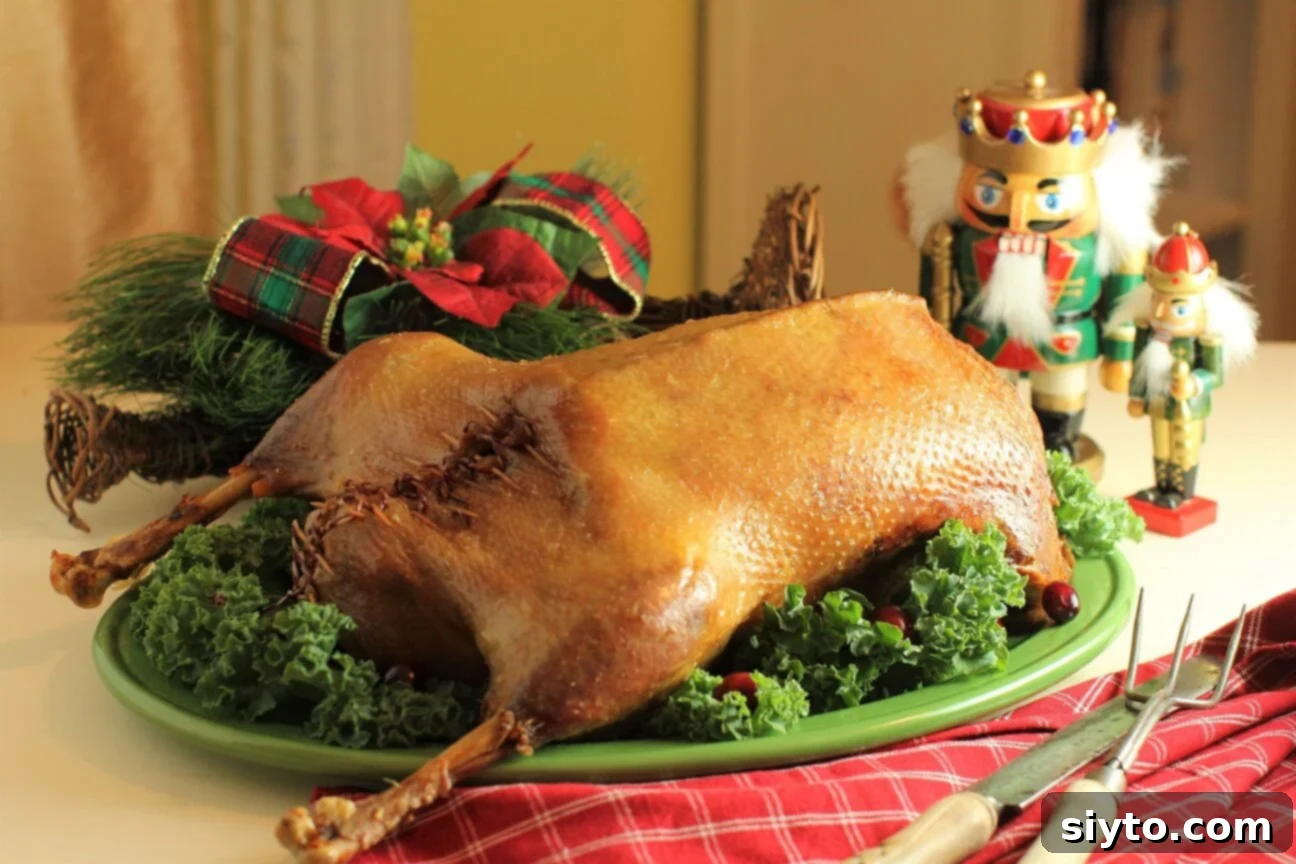
How to Roast a Goose for Tender, Crispy Perfection: The Ultimate German Method
For many, the thought of roasting a goose conjures images of a magnificent holiday feast. Yet, the reality of achieving that truly succulent, tender meat with irresistible crispy skin can often be elusive. After years of culinary trials and tribulations, I finally uncovered the secret to roasting a goose to absolute perfection. This isn’t just any roasting method; it’s a long, slow roasting technique, inspired by traditional German wisdom, that works pure magic on this majestic bird, transforming it into the centerpiece your festive table deserves. (Jump directly to the detailed recipe.)
Embracing the Holiday Spirit and the Perfect Christmas Goose
With Christmas Eve just a week away, our holiday preparations are in full swing. The goose has been ordered, alongside the meat for our traditional Rouladen. Decorations are slowly going up, shopping has just begun, and the perfect Christmas tree is still a quest. But amidst the festive flurry, one certainty brings immense joy: the aroma of the Christmas goose roasting in the oven, signaling that the kids are coming home.
Growing up, my mother was always the mastermind behind the Christmas goose. It was consistently delicious, though some years it was notably more tender than others. With such an abundance of other dishes on the table, these minor variations never seemed to matter much. However, a few years ago, the torch was passed, and the responsibility of preparing this significant holiday dish fell to me.
From Tough Birds to Tender Perfection: My Journey to a Flawless Roast Goose
My initial attempts at roasting a goose were, to put it mildly, disheartening. No matter what technique I employed, the goose consistently emerged from the oven as tough as old leather – albeit a beautifully bronzed and expensive piece of leather! The bird looked magnificent, gleaming golden, but chewing through it was a genuine workout for the jaw. I experimented with various methods: blasting it with intensely high heat, slow-roasting for a few hours, using both closed and open roasting pans, and trying it stuffed and unstuffed. Each time, the result was the same: undeniably tough.
Then, last year, a culinary revelation occurred. While browsing through a stack of vintage German magazines my aunt had given me, I stumbled upon an unusual and intriguing method for roasting a goose. Wunderbar! The technique involved an initial hour-long blast at very high heat, followed by an astounding seven hours – yes, a full seven hours! – at a very, very low temperature. The Germans, it seemed, truly knew their way around a goose. Intrigued, I decided to apply this unconventional method to our holiday goose.
The outcome was nothing short of perfection. The goose emerged from the oven bronzed to a gleaming polish, its skin wonderfully crisp. The meat beneath was incredibly moist, meltingly tender, and bursting with rich flavor. Every scrap of that magnificent bird was savored. I’m already eagerly anticipating roasting another one this year for our Christmas dinner. It will be served alongside creamy parsnip mashed potatoes or traditional dumplings, complemented by Brussels sprouts with mustard and bacon, delicate carrot ribbons with cream and nutmeg, and a fresh green salad. For dessert, there will be a special cake, as it’s our oldest son’s birthday on Christmas Day (a truly special guy!), and a generous platter of festive baking to enjoy later in the evening.
If roast goose is a cherished part of your Christmas tradition, consider yourself fortunate. And if you’ve always wished to roast a goose for a special feast but have been intimidated by the process, your search ends here.
Because now, you possess the secret to cooking the best goose ever.
Indeed, this method requires patience, as it takes a significant amount of time. However, its true beauty lies in the fact that you can place the goose into the oven in the morning, and then spend the entire day enjoying yourself – whether cavorting and playing, or simply relaxing and visiting with loved ones. When dinner time arrives, you’ll effortlessly pull a magnificent golden bird with irresistibly crispy skin and incredibly tender meat from the oven. Prepare to take a well-deserved bow when you hear the appreciative “oohs” and “ahhs” from your delighted guests.
The German Secret: How to Roast a Goose to Tender Perfection
This foolproof method, adapted from traditional German techniques, guarantees a succulent roast goose with crispy skin every time. Follow these steps for a memorable holiday centerpiece.
Preparing Your Goose for Roasting
The first step to a perfect roast goose begins with meticulous preparation. This ensures proper seasoning and allows the fat to render effectively, leading to that coveted crispy skin.
- **Rinse and Pat Dry:** Thoroughly rinse the goose, both inside and out, with cold water. Pat it completely dry with paper towels. A dry surface is crucial for crispy skin.
- **Season Generously:** Sprinkle salt generously all over the goose. If you’re using the onion and sage stuffing, also salt the inside of the cavity. If opting for the sauerkraut and prune stuffing, omit internal salting as the sauerkraut provides enough seasoning.
- **Prick the Skin:** Using the tip of a sharp knife or a metal skewer, carefully prick the skin all over the goose. Aim to pierce only the skin, avoiding the meat beneath. Pricking at an angle can be helpful. This crucial step creates channels for the abundant goose fat to render and drain out during roasting, resulting in exceptionally crispy skin.
Stuffing Options: Adding Flavor and Moisture
Stuffing the goose is not just about flavor; it also helps to keep the meat moist from the inside.
- **Traditional German Sauerkraut & Prune Stuffing:** For a truly authentic German flavor, drain a jar or can of sauerkraut, lightly squeezing out excess juice. Toss it with 12 prunes and loosely stuff this mixture into the goose cavity. This combination provides a delightful tangy and sweet contrast to the rich goose meat.
- **Aromatic Onion & Lemon Stuffing:** Alternatively, stuff the goose with large chunks of two medium onions, 4-5 slices of lemon, and 6-8 fresh sage leaves (optional). This classic stuffing adds a fragrant, zesty aroma that permeates the meat.
Trussing Your Goose: The Toothpick Method
A neatly trussed goose cooks more evenly and presents beautifully. This clever toothpick method makes trussing surprisingly simple.
First, poke round wooden toothpicks into the skin along both sides of the cavity opening, about ¾ inch (2cm) apart. The goal is to pull the two sides of the incision together snugly.
Next, take a piece of cotton kitchen string, about 3 feet long. Loop the center of the string around the top or bottom toothpick. Then, wrap the string around the toothpicks in a figure-eight pattern, criss-crossing it between each toothpick to pull the skin tightly together. Continue this method all the way to the end of the cavity.
Once you reach the last toothpick, tie off the string securely and trim any excess ends. Your goose is now perfectly trussed and ready for the oven.
The Roasting Process: High Heat Start, Long Slow Finish
This unique two-phase roasting method is key to achieving both crispy skin and incredibly tender meat. Place the trussed goose breast-side-down on a rack in a large roasting pan.
- **Initial High-Heat Blast (Phase 1):** Roast the goose, uncovered, at a high temperature of 425°F (220°C) for 30 minutes with the breast-side-down. This helps to render fat from the back and thighs.
- **Turn and Blast (Phase 2):** Carefully remove the roasting pan from the oven. Using two large meat forks (or sturdy tongs), carefully turn the goose over so it is now breast-side-up. Return it to the oven and roast for another 30 minutes at the same high heat. This initial hour of high heat renders a significant amount of fat and helps to achieve that beautiful golden-brown color.
- **The Long, Slow Roast (Phase 3):** This is where the magic happens for tenderness. Reduce the oven temperature drastically to 175°F (80°C). To help the oven cool down faster, open the oven door for two minutes before closing it again. Roast the goose at this low temperature, uncovered, for an additional 7 hours. This extended, gentle cooking breaks down connective tissues, resulting in unbelievably tender and moist meat. The goose is done when an internal temperature of 158°F (70°C) is reached in the thickest part of the thigh, away from the bone.
The result of your patience and this unique roasting method will be a gloriously golden bird.
Finishing Touches: Gravy, Crispy Skin, and Carving
Once your goose is roasted to perfection, it’s time to make a rich gravy and prepare for carving.
- **Make Your Gravy:** Follow the detailed gravy instructions below. This is an essential accompaniment to your tender goose.
- **Crisp Up the Skin (Final Step):** After making the gravy, return the goose to the oven, which should now be preheated back to 425°F (220°C). Roast for another 10 minutes to ensure the skin is exceptionally crisp.
- **Rest and Carve:** Remove the goose from the oven, tent it loosely with foil, and let it rest for 10-15 minutes. This resting period allows the juices to redistribute, ensuring even more succulent meat. Before carving, carefully pull out all the toothpicks and remove the string.
Now, slice into that moist, tender bird and prepare to impress your guests!
Enjoy your unforgettable holiday feast.
* * * * *
Kitchen Frau Notes: Essential Tips for Roasting Your Goose
A few practical considerations will ensure your goose roasting experience is smooth and successful:
- **Defrosting:** Remember to defrost your goose in the refrigerator for at least a day, or even two for a larger bird, before you plan to roast it.
- **Timing:** Because this roasting method takes a significant amount of time (approximately 8 hours total roasting time), it’s ideal for a late afternoon or evening dinner. Plan to start prepping and placing your goose in the oven first thing in the morning.
- **Side Dishes:** Since the goose will occupy your oven for most of the day, consider preparing side dishes that can be cooked on the stovetop or made ahead of time. This minimizes last-minute stress.
- **Save the Goose Fat:** Do NOT discard the glorious fat that accumulates in your roasting pan! Pour it off and strain it into a clean jar. Store it in the refrigerator. Goose fat is an incredibly healthy and flavorful cooking fat, perfect for roasting potatoes or other root vegetables, making them exceptionally crisp and delicious. It adds an unparalleled richness to anything it touches.
How to Roast a Goose to Perfection: The German Method Recipe
(Adapted from Liebes Land magazine, Nr. 11/ November 2013, Germany)
Total Time: Approximately 9 hours (including goose prep, 8 hours total roasting time, resting, and carving)
Ingredients:
- 1 large goose, 8 to 10 lbs (3.6 to 4.5 kgs)
- Salt, for seasoning
For the Stuffing (Choose One Option):
Option 1: Sauerkraut & Prune Stuffing
- 1 jar or can (900ml / 32 oz) sauerkraut
- 12 prunes
OR
Option 2: Onion, Lemon & Sage Stuffing
- 2 medium onions
- 4 to 5 slices of lemon
- 6 to 8 fresh sage leaves (optional)
Extra Supplies Needed:
- Round wooden toothpicks
- Cotton kitchen twine
- Large roasting pan with a rack
For the Gravy:
- 2 tablespoons oil (or reserved goose fat)
- Reserved goose neck and wing tips
- 1 onion, chopped
- 1 carrot, chopped
- 2 stalks of celery or ½ of a small celery root, chopped
- 1 leek, white and light green parts, chopped
- 1 liter (4 cups) water
- Flour, sweet rice flour, cornstarch, or gravy thickener (for slurry)
- Gluten-free soy sauce or salt (soy sauce adds a nice brown color and depth of flavor)
- Freshly ground black pepper, to taste
Instructions:
1. Prepare the Goose:
- Preheat oven to 425°F (220°C).
- Remove the neck and any giblets (innards) from inside the goose. Trim any large fat deposits from the inside cavity of the goose and save them for the gravy.
- Rinse the goose thoroughly, inside and out, with cold water. Pat it completely dry with paper towels.
- Cut off the wing tips and set them aside for the gravy. Cut off and remove the pope’s nose (tail) or push it into the goose’s cavity.
- Generously sprinkle salt all over the exterior of the goose. If you are using the onion + lemon + sage stuffing, also salt the inside of the goose cavity. If using the sauerkraut + prune stuffing, omit salting the inside of the goose.
2. Stuff the Goose (Choose Your Option):
- **If using Sauerkraut & Prune Stuffing:** Drain the sauerkraut, lightly squeezing out excess juice. Toss the sauerkraut with the prunes. Loosely stuff this mixture into the cavity of the goose.
- **If using Onion, Lemon & Sage Stuffing:** Peel the onions and cut them into quarters, then halve each quarter crosswise to form large chunks. Tear the sage leaves into smaller pieces. Stuff the goose cavity with the onions, lemon slices, and sage leaves.
3. Truss the Goose:
- Close the goose cavity by poking round wooden toothpicks through the skin on both sides of the opening, pulling the two sides of the incision together. Place toothpicks approximately ¾ inch (2cm) apart, from the bottom to the top of the incision.
- Cut a piece of kitchen twine about 3 feet long. Loop the center of the string around the top or bottom toothpick. Criss-cross the ends of the string and bring them up around the next toothpick, forming a figure-eight pattern. Repeat this process until you reach the last toothpick at the other end. Tie the string off securely and trim any excess. (Refer to images in the article above for a visual guide).
4. Prick the Skin:
Poke the skin of the goose all over with the tip of a small, sharp knife or a metal skewer. Try to pierce only the skin, without penetrating the meat. Poking at an angle works well. This step is vital to allow the fat to render and drain out as the goose roasts, ensuring a wonderfully crisp skin.
5. Roast the Goose (The Two-Phase Method):
- Place the goose breast-side-down on a rack in a large roasting pan, ensuring it fits comfortably.
- Roast the goose in the preheated 425°F (220°C) oven for **30 minutes**, uncovered.
- Carefully remove the roasting pan from the oven. Using two large meat forks or sturdy tongs, turn the goose over so it is now breast-side-up.
- Return to the oven and roast for **30 more minutes** at high heat (425°F/220°C), uncovered.
- **Reduce the heat** to 175°F (80°C). To help the oven cool down quickly, open the oven door for about two minutes before closing it again.
- Roast the goose for an additional **7 hours** at this low temperature, uncovered. The goose is fully cooked when an internal meat thermometer inserted into the thickest part of the thigh (avoiding the bone) registers 158°F (70°C).
6. Prepare the Gravy (While Goose Finishes Roasting):
Approximately 1½ hours before the goose is finished roasting:
- In a large saucepan, heat 2 tablespoons of oil. If you trimmed large chunks of fat from the goose, you can render and use some of that fat instead of oil for even richer flavor.
- Add the reserved goose neck and wing tips (and pope’s nose, if you removed it). Sauté until they are a nice deep brown, about 10-15 minutes.
- While the goose parts are browning, peel and chop the onion, clean and chop the carrot, celery (or celery root), and leek.
- Add the chopped vegetables to the browned goose parts and fry for another 5 minutes.
- Add 1 liter (4 cups) of water, bring to a boil, then reduce the heat to low. Simmer the meat and vegetables, uncovered, for about an hour, allowing the liquid to reduce by half.
- Drain the gravy stock through a fine-mesh sieve into a clean saucepan, discarding the solids.
7. Final Crisping and Gravy Completion:
- Remove the roasted goose from the oven and transfer it to a platter. Immediately increase the oven heat back to 425°F (220°C).
- Carefully pour the rendered goose fat from the roasting pan into a heatproof jar (stop pouring once you reach the roasting juices at the bottom). Save this fat for future cooking!
- Scrape any crispy brown bits (fond) from the bottom of the roasting pan into the saucepan with your prepared gravy stock.
- Bring the gravy stock to a boil. In a separate jar or bowl, whisk together several tablespoons of flour, sweet rice flour, cornstarch, or your preferred gravy thickener with about ¼ cup (or more) of cold water until smooth. This is your slurry.
- Gradually pour the slurry into the boiling gravy stock, whisking constantly, until the gravy reaches your desired thickness.
- Season the gravy to taste with freshly ground black pepper and gluten-free soy sauce or salt. The soy sauce enhances both color and flavor.
- Return the goose to the roasting pan and place it back into the reheated 425°F (220°C) oven for **10 more minutes** to crisp up the skin one last time.
8. Rest and Carve:
- Remove the goose from the oven, tent it loosely with aluminum foil, and let it rest for 10 to 15 minutes before carving. This allows the juices to redistribute throughout the meat, ensuring maximum tenderness and moisture.
- Before carving, remember to carefully pull out all the toothpicks and remove the kitchen string.
Serves 6 people generously.
Guten Appetit!
Want to receive new Kitchen Frau recipes directly to your email? Sign up here and you’ll get a handy and useful kitchen tip along with each recipe, too. (No spam ever.)
If you like my recipes, follow me on Instagram, Pinterest, Twitter, and Facebook. You’d make my day!
Don’t forget to PIN IT to save the recipe:
You might also like these festive roasts and main courses:
Roast Turkey with a Maple and Mustard Glaze and a Killer Gravy
Sauerbraten – Marinated German Roast Beef
Magic Method for Tender Roast Beef or Bison
My Best Meatloaf Recipe for a Flavorful Family Meal