Mastering Smoky Venison Stew: A Campfire Recipe Paired with Zesty German Pickled Pumpkin
A rich and hearty venison stew isn’t just a meal; it’s an experience, especially when cooked over an open campfire. This lean, healthy meat transforms into an incredibly flavorful dish, imbued with a subtle smokiness that can’t be replicated on a stove. But whether you choose the rustic charm of outdoor cooking or the comfort of your kitchen, the result will be a truly memorable culinary delight. To elevate this classic stew, serve it alongside sweet-sour pickled pumpkin, a zesty German-style condiment that cuts through the richness and adds an unforgettable burst of flavor. (Jump straight to the recipes.)
Our little corner of the world has recently been enveloped by winter with an abruptness that caught us all by surprise. One moment, we were basking in the gentle embrace of a lingering late fall, enjoying crisp air and colorful leaves. The next, we were digging out from under mountains of snow, a sudden, dramatic shift into the heart of the cold season. There was no gradual transition, just a full-force arrival of snow and freezing temperatures.
It feels like just a few weeks ago, Sabina and I were relishing a glorious autumn day, engaged in one of our cherished Campfire Dinners. The sun was warm, the leaves were golden, and the scent of woodsmoke mingled with the aroma of delicious food – a perfect day for outdoor cooking.
Now, however, our beloved campfire spot presents a starkly different scene. What was once an inviting hearth for open-air culinary adventures is now buried deep under a thick blanket of pristine white snow.
It’s safe to say it will be a considerable time before we can rekindle those flames for another Campfire Cooking dinner. The landscape is transformed, with spruce trees heavily laden with snow, creating a picturesque but distinctly frigid scene across the Alberta countryside.
Yet, amidst the winter wonderland, our chickens seem to be thriving, finding joy and intrigue in their snowy domain. They scratch and peck, exploring the unfamiliar landscape with an endearing curiosity that makes us smile.
While the snow reigns supreme, I’ll find solace and warmth by reminiscing, poring over the photographs of our last Campfire Cooking adventure. It brings back the warmth of the fire, the laughter of friends, and the incredible flavors we created together.
Our October Campfire Cooking menu embraced the theme ‘Into the Wild’ – a celebration of autumn’s bounty, featuring rich, hearty meals crafted from natural and foraged ingredients. It was designed to connect us with nature, both through the act of cooking outdoors and the flavors on our plates.
Campfire Cooking: ‘Into the Wild’ Menu
First Course
Queso Fundido with Wild Mushrooms, Fiddleheads, and Black Garlic
Campfire Baked Focaccia with Rosemary and Grapes
Entrée
Smoky Venison Stew
German Pickled Pumpkin
Dessert
Grilled Pears with Hazelnuts and Chocolate Sauce
Sabina and I poured our hearts into creating a truly exceptional menu, one that proudly showcased a selection of fantastic wild and foraged foods. Every dish was a testament to the flavors that nature provides.
First Course: Campfire Queso Fundido with fresh Focaccia Bread. This appetizer was an undeniable triumph, a dish so incredibly delicious that the four of us had to exercise serious restraint to avoid gorging ourselves entirely before the main course! We began the preparations with Sabina expertly baking a loaf of Mark Bittman’s Skillet Focaccia with Grapes, a recipe from his renowned ‘How to Grill Everything’ cookbook (p. 497). She used a cast iron bread baker, nestled directly into the glowing embers of the fire. The focaccia emerged from the fire light, heavenly, with a wonderfully springy texture and an irresistibly holey structure. Even a slight char around the edges only added to its rustic charm, making it a resounding campfire success.
For the queso fundido, we drew inspiration from a classic Mexican version, though we omitted the salsa to let the wild flavors shine. Using a large griddle placed directly over the campfire, we sautéed onions, an assortment of wild honey mushrooms, and fiddlehead ferns – preserved from the summer’s bounty – in a generous dollop of rich bear fat. This special ingredient, graciously provided by my sister Ingrid, an avid hunter and trapper, added an incredible depth of flavor. A handful of fresh garden herbs, including parsley, chives, thyme, marjoram, and sage, contributed bright, aromatic notes. The secret weapon, however, was about eight bulbs of chopped black garlic. Its addition created an unbelievably rich, complex, and umami-packed flavor that truly transformed the dish into something extraordinary.
We then crowned this glorious medley of sautéed wild vegetables with a generous mound of grated cheese – a decadent blend of havarti, aged cheddar, and gruyère. As the cheese slowly melted over the campfire’s heat, it cascaded down, enveloping the smoky vegetables in a blanket of creamy, savory deliciousness. A liberal grinding of fresh black pepper finished it off perfectly. We eagerly scooped up every luscious bite with pieces of that wonderful focaccia, still warm from its time in the embers. It was truly a sensational start to our ‘Into the Wild’ feast, a perfect marriage of robust flavors and gooey indulgence.
Entrée: Smoky Venison Stew with Pickled Pumpkin. For our main course, I had the privilege of using a magnificent venison sirloin roast from my sister’s freezer. This was no ordinary meat; it was incredibly lean, exceptionally tender, and boasted a deep, rich, almost purple hue – the hallmark of high-quality wild game. Five days prior to our campfire cookout, I meticulously cut the venison into generous chunks and began the crucial marination process. The meat soaked in a robust red wine and spice mixture, allowing the flavors to meld and deepen over time. By the time our cooking day arrived, the venison was permeated with a rich, complex flavor, perfectly poised for our stew.
To infuse maximum smoky flavor, we tossed the marinated venison chunks in a bit of bear fat before browning them directly on a grill rack suspended over the dancing flames of the campfire. This crucial step not only seared the meat, locking in its juices, but also imparted that characteristic smokiness we were after. Once beautifully browned, the venison went into a large stew pot, where it was joined by the reserved marinade and an additional splash of red wine, setting the stage for a slow, tenderizing simmer.
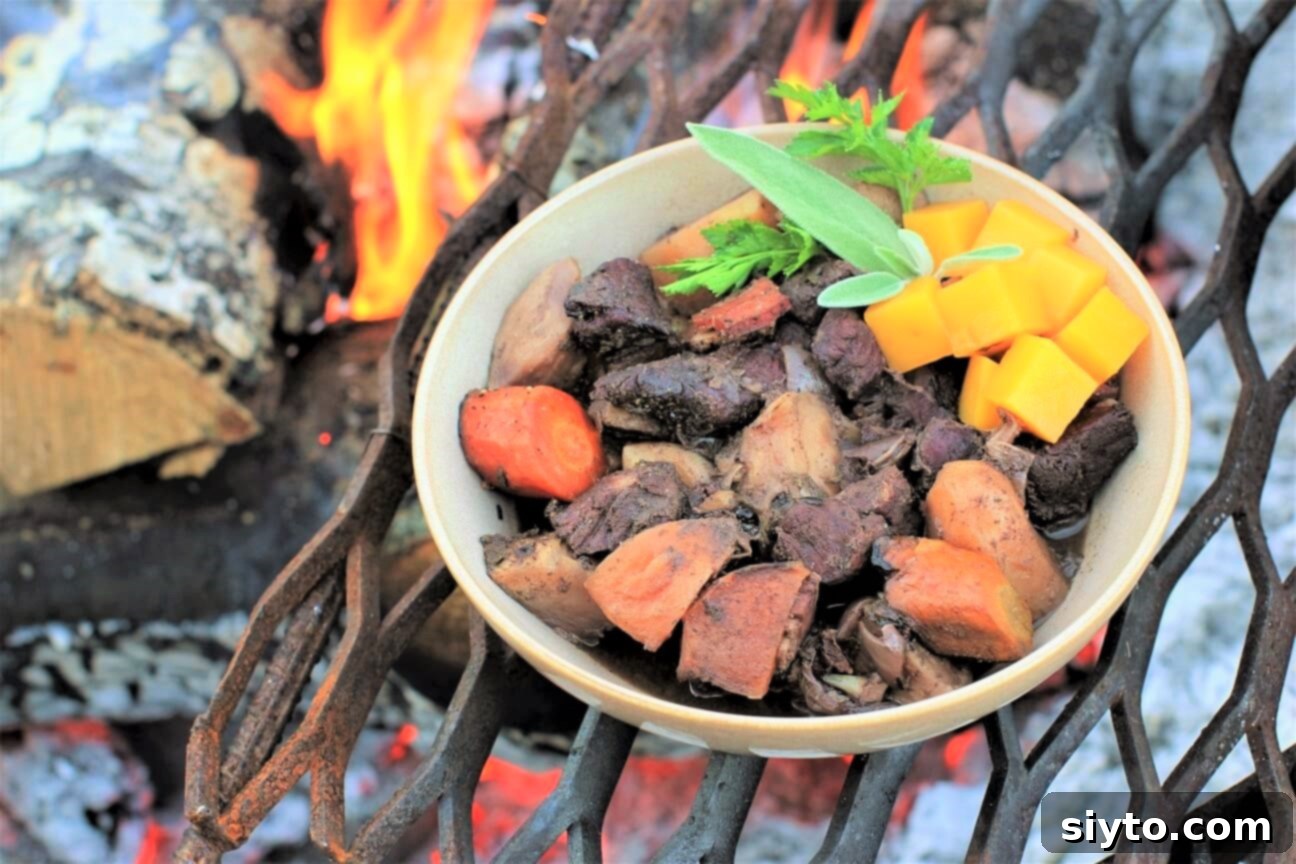
In a similar vein, we grilled all the accompanying vegetables separately – chunky potatoes, earthy celery root, vibrant orange and purple carrots, and tender leeks. This dedicated grilling step was essential for imparting maximum smoky flavor and delightful char marks to each vegetable. (Of course, if you’re cooking on a stovetop and prefer to simplify, you can skip this step and add the vegetables directly to the pot without pre-charring them.) Once grilled, the vegetables, along with some savory bacon and fresh sage, were added to the pot with the simmering venison. We topped it up with enough water to just cover the ingredients, allowing the flavors to meld and deepen over a slow simmer on the campfire. After a generous cooking time, that venison stew emerged rich, aromatic, and utterly irresistible. The venison was incredibly tender and flavorful, while the vegetables and broth combined to create a hearty explosion of taste that warmed us from the inside out.
The perfect counterpoint to the deep, smoky richness of the venison stew was the puckery tang of freshly prepared butternut squash, pickled in the delightful sweet-sour German style (you’ll find the recipe below). We had prepared it that very morning, ensuring its vibrant flavors were at their peak. A handful of these piquant, spicy squash cubes finished off each bowl of stew deliciously, brightening the hearty flavors with a punchy pizzazz that made every spoonful an exciting contrast. Lips were smacked, and satisfied sighs were heard constantly as we savored our venison stew, perfectly complemented by a glass of robust red wine. This pairing wasn’t just a meal; it was a symphony of flavors, a true highlight of our ‘Into the Wild’ menu.
Dessert: Grilled Pears with Hazelnuts and Chocolate Sauce. To conclude our magnificent feast, we indulged in a truly decadent dessert. Soft, buttery pears were carefully peeled, then given a generous splash of fragrant hazelnut liqueur before being grilled directly over the flames. This process caramelized their natural sugars, transforming them into exquisitely sweet and tender delights. Each warm pear half was then lavishly covered with a rich, silky chocolate ganache, adorned with a cloud of freshly whipped cream, and finished with a scattering of crunchy, toasted hazelnuts. The combination was utterly luscious – a symphony of textures and flavors that danced on the palate. By the time we gathered around the dwindling campfire to enjoy this exquisite treat, it was already quite dark, making photography challenging. However, the lack of perfect lighting did nothing to diminish the sheer delight of its taste, a truly unforgettable end to our outdoor dining adventure.
As the last embers glowed and the night air grew chillier, we lingered by the campfire, warming our fingers around mugs of our new favorite post-dinner indulgence: Hot Pear Toddies. This comforting drink was the perfect conclusion to an unforgettable evening of outdoor culinary adventures.
How to Make a Hot Pear Toddy
Crafting this wonderfully warm and comforting Hot Pear Toddy is delightfully simple. Begin by pouring a shot of Pear Williams (a clear pear brandy) into your favorite cup or mug. Next, add a small spoonful of rich butter and an equally small spoonful of sweet honey. For an extra touch of aromatic freshness, we often tuck a fresh sprig of thyme into each mug. You might also consider adding a few small chunks of fresh peeled pear for additional flavor and texture. Finally, top up the mug with steaming hot boiling water and give it a good stir until everything is wonderfully combined and fragrant. This concoction creates an absolutely divine hot drink, perfect for sipping when the night turns chilly and you yearn for a warm, comforting embrace from the inside out! It’s the ideal way to unwind after a hearty meal under the stars.
Explore More Campfire Cooking Adventures: Our Favorite Outdoor Meals
Spicy Ribs for Grilling or Oven-Roasting, Canadian-Style
Garlic Herb Butter and a Campfire Cooking Venison Dinner
A Herb-Themed Dinner with Artichoke Chicken
A Grilled Steak & Corn Dinner with Zucchini Stack Appetizers
A Mexican Campfire Fiesta with Carnitas Caseras Tacos
A Summer Solstice Menu with Bison Burgers and Bannock Buns
A Spring Menu with Creamy Fiddlehead Soup, Grilled Halibut with Herb Butter, and an Aperol Spritz Cocktail
A Winter Dinner (And a Recipe for Glazed Chestnuts)
Harvest Feast: Lamb Kebabs, Roasted Beet Salad
Local Alberta Menu: Porterhouse Steak Cooked on the Coals, Kombucha Cocktail
Want to receive new Kitchen Frau recipes directly to your email as soon as they’re posted? Sign up here and you’ll get bits of news updates on what’s happening in my kitchen and garden, plus a handy and useful kitchen tip along with each recipe, too. (No spam ever.)
If you like my recipes, follow me on Instagram, Pinterest, X, and Facebook. You’d make my day. 😊
Guten Appetit!
Kitchen Frau Notes: This smoky venison stew recipe emphasizes intensified flavors by grilling both the meat and vegetables before they are added to the pot. This step imparts a distinctive smoky depth that truly elevates the dish. However, if you prefer to simplify the cooking process or are cooking indoors, you can certainly skip the grilling step for the vegetables. In this case, simply brown the venison meat first, then add the vegetables directly to the pot without charring them. It’s important to still include the 2 tablespoons of lard or oil, as venison is an exceptionally lean meat. This added fat contributes crucial richness and flavor to the broth, ensuring a truly hearty stew. This adaptable recipe can also be prepared with other lean wild game meats such as moose, elk, or bison, or even with beef, for a similarly robust and satisfying meal.
Smoky Venison Stew
- 1 kg (2.2 lbs) venison stew meat, trimmed and cubed
- 1 tablespoon juniper berries
- 2 cloves garlic
- 1 medium onion, diced in 1-inch cubes
- 2 bay leaves
- 2 cups (480ml) red wine
- 2 tablespoons melted lard or ghee, or olive oil
- 4 thick slices (100gms) bacon
- 4 carrots
- 1 small celery root
- 4 medium potatoes
- 1 medium rutabaga
- 2 medium leeks, white and light green part only
- 1 tablespoon fresh sage (or 1 teaspoon dried)
- 2 teaspoons fine sea salt (plus more to taste if needed)
- ½ teaspoon pepper
- 2 to 4 cups water
Begin by meticulously trimming any fat or sinew from the venison meat, then cut it into uniform 1½-inch (4cm) cubes. Place the cubed meat into a sturdy bowl or a heavy-duty ziptop plastic bag. Next, prepare the aromatics: crush the juniper berries by laying them on a cutting board and pressing down firmly with the bottom of a glass. Use the same technique to crush the two garlic cloves. Add the crushed juniper berries, garlic, diced onion, and the bay leaves to the stew meat. Pour the red wine over the ingredients. If using a bag, seal it tightly, squeezing out any excess air; if using a bowl, ensure all the meat is submerged in the liquid and cover it with plastic food wrap or a lid. Allow the venison to marinate in the refrigerator for a minimum of 6 hours, or up to 5 days, turning it daily to ensure even flavoring if marinating for an extended period.
When ready to cook, strain the marinated meat and onions through a colander. Carefully pick out all the venison cubes, setting them aside. Return the strained onions and seasonings to the liquid marinade and reserve this flavorful liquid for later use. Arrange the meat cubes on a plate and pat them thoroughly dry with paper towel or a clean dish cloth; this ensures a better sear.
Cut the bacon into 1-inch (2.5cm) pieces and fry it in a skillet until it is beautifully golden and crispy. Scoop out the cooked bacon pieces and set them aside, reserving the rendered bacon fat. Drizzle half of this reserved bacon fat over the dried venison meat chunks and toss them gently to ensure each piece is lightly coated; this adds another layer of flavor and helps with browning.
Prepare the vegetables by cutting the carrots, celery root, potato, rutabaga, and leeks into substantial 1½-inch (4cm) chunks, similar in size to the venison. Place all the cut vegetables into a large bowl and toss them thoroughly with the melted lard, ghee, or olive oil. This coating aids in grilling and enhances flavor.
Now, it’s time to impart that signature smoky flavor. Grill the venison meat on a grate set over a roaring campfire, on a barbecue grill, or, if cooking indoors, brown the pieces in a heavy skillet or an enameled cast iron Dutch oven on a stovetop. Grill or brown the meat pieces on all sides until they develop a rich crust, then transfer them to a large stew pot or heavy Dutch oven. Pour over the reserved marinade, which now contains the onions and seasonings. Add the fresh or dried sage, salt, and pepper. Finally, add enough water to just cover the stew ingredients.
Position the pot onto a grate over the campfire, onto the barbecue grill, or onto a stovetop burner set to medium heat. Cover the pot securely and allow the meat to simmer gently in the wine mixture for 1½ to 2 hours, or until the venison is wonderfully tender. This slow cooking allows the flavors to meld and the meat to become exceptionally succulent.
While the venison meat is simmering to perfection, take the opportunity to grill the prepared vegetables using the same method as the meat. Cook them just until they acquire some inviting smoky char marks. At this stage, they will only be partially cooked. Set them aside until the venison is fully tender.
Once the venison is tender, add the crispy bacon pieces, the remaining bacon fat, and the grilled vegetables to the pot. Top up the stew with more water, ensuring the liquid comes up just under the top of the stew ingredients. Cover the pot once again, and continue to simmer the stew for an additional 45 minutes to 1 hour, or until all the vegetables are tender. Check periodically and add more water as needed if the stew begins to dry out, keeping it wonderfully moist and flavorful.
Serve this magnificent venison stew piping hot in large, shallow bowls. It’s absolutely divine when accompanied by the bright, zesty Sweet & Sour Pickled Pumpkin (recipe below) and plenty of crusty bread to sop up every drop of the rich, flavorful juices. This hearty stew is designed to comfort and satisfy.
Serves 6.
Süβ Sauer Kürbis (German Sweet & Sour Pickled Pumpkin)
- ¾ cup (180ml) white vinegar
- ½ cup (120ml) water
- ½ cup (170gms) honey
- 1 teaspoon salt
- 500 gms (~4 cups) peeled, diced butternut squash, in ¾inch/2cm cubes
- 1 cinnamon stick (3 inches/8cm)
- 1 tablespoon pickling spice
- 1 teaspoon whole black peppercorns
To create a convenient spice sachet, tie up the pickling spice and whole black peppercorns in a double square of cheesecloth, securing it tightly with a piece of cotton kitchen twine or thread. This will form a small, permeable bundle that can easily be removed later.
In a large saucepan, combine the white vinegar, water, honey, and salt, stirring well until the honey and salt are fully dissolved. Add the prepared spice bundle, the cinnamon stick, and the cubed butternut squash to the liquid. Bring the mixture to a full boil over medium-high heat, then immediately reduce the heat to low. Cover the saucepan and allow the squash to simmer gently for approximately 30 minutes, or until it is tender yet still holds its shape. Once cooked, remove the saucepan from the heat and let the squash cool to lukewarm in the liquid. Then, carefully transfer the squash and its flavorful pickling liquid to a clean jar or bowl. Cover tightly and refrigerate for a minimum of 4 to 5 hours, or ideally, for a full day or two, to allow the flavors to deepen and meld. Just before serving, remember to remove the cinnamon stick and the spice bundle. This delightful pickled squash will keep wonderfully in the refrigerator for 2 months or even longer, ready to add a zesty kick to any meal.
Guten Appetit!
PIN IT HERE to save the recipe for later: