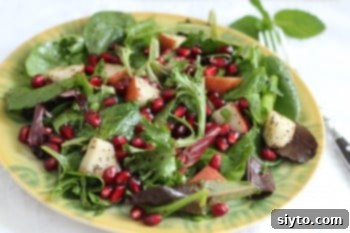
Festive Pomegranate & Pear Salad with Poppy Seed Dressing: A Sparkling Addition to Your Holiday Table
As the holiday season twinkles into full swing, bringing with it a symphony of festive sights and flavors, this vibrant Pomegranate and Pear Salad emerges as a true star. It’s a light, bright, and utterly delicious addition to any celebratory meal, featuring the crisp sweetness of juicy pears, the delightful crunch of ruby-red pomegranate seeds, and fresh, tender greens, all harmoniously united by a sweet and tangy poppyseed dressing. Beyond the simple recipe, we’ll guide you through the effortless art of deseeding a pomegranate, ensuring every glistening aril makes it to your plate.
Embracing the Holiday Spirit with Seasonal Flavors
The arrival of December unfailingly ushers in a cascade of festive colors and cherished traditions. Everywhere you look, the classic hues of red and green adorn landscapes and homes, signaling the joyous arrival of Christmas. From towering Christmas trees awaiting new homes to lampposts draped with cheerful red bows, the world transforms. Among the most evocative heralds of this season, however, are the fruits themselves: the humble mandarin orange and the majestic pomegranate, piled high and gleaming brightly in grocery store bins.
Pomegranates, with their perfectly round, crimson exteriors, feel like nature’s own little Christmas presents. Break one open, and you’re rewarded with a treasure trove of hundreds of glistening ruby jewels, each bursting with an invigorating sweet-tart flavor. This particular salad masterfully showcases their inherent beauty and satisfying crunch, making it an undoubtedly worthy centerpiece for any holiday gathering. Its vibrant red and green palette speaks volumes, instantly elevating your festive table with natural elegance and cheer.
A Childhood Memory: The Allure of Pomegranates
My first encounter with a pomegranate, at the tender age of ten, remains etched in my memory. It was an experience so profound, I felt I had stumbled upon a little piece of heaven. I was in grade five, attending a small country school nestled in a tiny village in southern Alberta. My entire grade consisted of just twelve students—nine girls and three boys. Our school sat on the very edge of this quaint hamlet, and the bustling “metropolis” of the country store was a mere two blocks away. Lunch recess often saw us embarking on an adventurous stroll to this hub of commerce, where sweets could be had for mere pennies and nickels. A quarter in hand promised a truly impressive haul of candy.
Yet, every so often, the storekeeper would introduce a batch of truly exotic red fruits. Labeled “pomegranates,” these wonders commanded a steep price: a whole quarter each! A classmate, decidedly more worldly than the rest of us, recognized these mysterious fruits. With admirable conviction, she pooled her candy money to acquire one. We gathered behind the caragana bushes that lined our playground, a clandestine meeting spot where she deftly broke open the fruit. As we each bit into the crunchy little seeds, experiencing that delightful burst of tangy juice on our tongues, we were utterly captivated. From that day forward, whenever the storekeeper restocked pomegranates, word would spread like wildfire. We’d quickly pool our meager funds, rush to the store, and secure a precious pomegranate to share in our secret hideaway behind the hedge. Decades later, my love for them remains nearly as strong, a sentiment happily passed down to my own children.
Mastering the Art of Deseeding a Pomegranate: A Simple Guide
While the allure of the pomegranate is undeniable, many find the task of extracting its precious arils a daunting one. There are numerous methods championed by enthusiasts – from submerging the entire fruit in water to violently beating a halved pomegranate with a wooden spoon. I’ve experimented with them all, and through trial and error, I’ve settled on a simple, low-mess technique that relies on the natural structure of the fruit and the dexterity of your fingers. It’s surprisingly quick and far less messy than you might imagine, especially with a few handy tricks.
Before you begin your pomegranate adventure, a few essential tips:
- **Wear an apron!** This is non-negotiable. Pomegranate juice, while delicious, is notoriously good at leaving vibrant pink freckles on your favorite clothes.
- **Crank up the music!** Transform this task into a meditative, enjoyable process. There’s immense satisfaction in watching that pile of glowing, ruby-red seeds grow.
- **Crunch a few seeds as you work.** It’s simply self-evident. A little taste test ensures quality control and pure enjoyment!
Now, let’s get to the simple steps for deseeding your pomegranate:
Step-by-Step Deseeding Process:
First, prepare the pomegranate by cutting a shallow cone out of the top. Then, take a flat slice off the very bottom of the fruit. Next, score the peel from the top (where you removed the cone) to the bottom (where you sliced) in quarters. You’re aiming to cut just through the skin, not deeply into the arils themselves.
Once scored, gently hold the fruit in both hands. Position your thumbs into the indent you made at the top, and carefully pull the sections apart. The pomegranate should easily break into halves along your scores, and then each half will effortlessly yield into quarters, following its natural internal membranes.
Now, holding a section over a bowl, gently pry the seeds (known as arils) loose. Use your thumbs to push and gently roll them out. A tender touch here is key – it minimizes juice squirting and prevents bruising the delicate arils. Discard any bitter white membranes that separate the sections. Continue this process until all sections are clean. Collect the glistening seeds in a bowl, giving them a quick once-over to remove any stray bits of membrane, and ta-da!
You’ll be left with a beautiful bowl of edible rubies, ready to transform your salad.
Kitchen Frau Notes for the Perfect Salad: Tips & Substitutions
The dressing for this exquisite salad is truly special, featuring pomegranate molasses. This ingredient is a thick, dark, and intensely concentrated syrup derived from pomegranates, offering a unique sweet-sour profile. It’s a staple in Persian and Turkish cuisines and is becoming increasingly available in international food stores and larger supermarkets. If you find yourself unable to locate pomegranate molasses, a decent substitute can be made by combining an extra ½ tablespoon of white wine vinegar with ½ tablespoon of liquid honey. While the dressing won’t quite replicate the deep, complex tang of the molasses, it will still yield a very tasty result. (Yes, I admit, this is a sweet dressing, despite my usual preference for savory. However, this salad is absolutely worth making an exception for! The inherent tang of the fruit truly benefits from a touch of sweetness to achieve perfect balance.)
For an extra touch of visual appeal, consider using red pears if you can find them, though Bosc or Anjou pears work wonderfully too. Any type of small-leaved greens will serve as an excellent base. I particularly love a combination of half baby spinach and half mixed baby greens for varied texture and flavor. Straight spinach is also a great option, as is some torn romaine, or a blend of spinach and romaine.
Fresh mint adds a wonderfully bright, refreshing note that beautifully complements the other flavors. If fresh mint is hard to find during the winter months, fresh parsley makes a lovely substitute, or you can simply omit it without compromising the salad’s overall deliciousness.
This recipe is designed to yield a generous amount of dressing. You’ll likely use about half for the salad itself. The remaining dressing can be stored in the refrigerator for future use. It’s fantastic drizzled over a simple bowl of mixed fresh fruit for a light dessert or breakfast, or even as a marinade! If you’re preparing this salad for a larger crowd, simply double the salad ingredients while keeping the dressing recipe as is – you’ll have plenty.
*Pro Tip: If any pomegranate juice happens to stain your light-colored countertops, don’t despair! Sprinkle baking soda liberally onto a wet cloth and scrub the stained area. With a little elbow grease, those vibrant pink marks will disappear like magic!
Poppyseed, Pomegranate and Pear Salad Recipe
This recipe serves 4 as an elegant first course or 6 as a delightful side salad.
Salad Ingredients:
- 5 oz (142gms) washed salad greens (a mix of half baby spinach and half mixed baby greens works beautifully, or use your favorite. This amounts to about 4 generous handfuls, or 4 cups loosely packed.)
- 1 ripe pear (red or Bosc pears are excellent choices for their texture and flavor)
- 2 green onions (scallions), thinly sliced
- 2 tablespoons thinly sliced fresh mint leaves (or fresh parsley for a milder note, or omit)
- ½ cup (120mls) pomegranate seeds (freshly deseeded arils)
Poppyseed Dressing Ingredients:
- ¼ cup (4 tablespoons / 60ml) extra virgin olive oil
- 1 tablespoon (15ml) white wine vinegar
- 1 tablespoon (15ml) pomegranate molasses (see notes for substitution)
- 1 tablespoon (15ml) liquid honey
- 1 tablespoon (15ml) poppy seeds
- ¼ teaspoon (1.25ml) salt
- ¼ teaspoon (1.25ml) black pepper
Instructions:
- **Prepare the Dressing:** In a small jar with a tight-fitting lid or a small bowl, combine all the dressing ingredients: extra virgin olive oil, white wine vinegar, pomegranate molasses, liquid honey, poppy seeds, salt, and pepper. Whisk vigorously or shake the jar until the dressing is smooth and well emulsified. Set aside to allow the flavors to meld.
- **Prepare the Fruit and Aromatics:** Wash and prepare the pear by cutting it lengthwise into eighths, then slicing each eighth crosswise into half-inch pieces. Thinly slice the green onions. Stack the fresh mint leaves, roll them up tightly, and then slice them thinly to create delicate ribbons.
- **Assemble the Salad Base:** In a large mixing bowl, gently combine the washed salad greens, sliced pears, sliced green onions, and fresh mint.
- **Dress the Salad:** Add about half of the prepared dressing to the salad ingredients (you can start with slightly less than half and add more to taste). The goal is a light coating on the leaves, allowing the fresh flavors to shine through without being overwhelmed. Gently toss the ingredients until everything is evenly coated. Reserve the remaining dressing in the refrigerator for another delicious purpose.
- **Plate and Garnish:** Arrange the dressed salad on 4 individual salad plates or present it beautifully in a large serving bowl. For maximum visual impact and to ensure every bite includes a burst of flavor, sprinkle the vibrant pomegranate seeds generously over the top of the salad just before serving. (Mixing them in too early can cause them to sink to the bottom of the bowl, diminishing their stunning effect.)
- **Serve Immediately:** This salad is best enjoyed fresh to appreciate the crisp textures and bright flavors.
Guten Appetit!
We hope this Festive Pomegranate and Pear Salad becomes a cherished part of your holiday culinary traditions. Its dazzling appearance and refreshing taste are sure to be a crowd-pleaser!
Want to receive new Kitchen Frau recipes directly to your email? Sign up here and you’ll get a handy and useful kitchen tip along with each recipe, too. (No spam ever.)
If you like my recipes, follow me on Instagram, Pinterest, Twitter, and Facebook. You’d make my day!
You might also like these other delightful salad creations:
Roasted Red Pepper Salad
Fennel and Beet Salad
Purple Salad
Mango Salad with Mango Chipotle Dressing