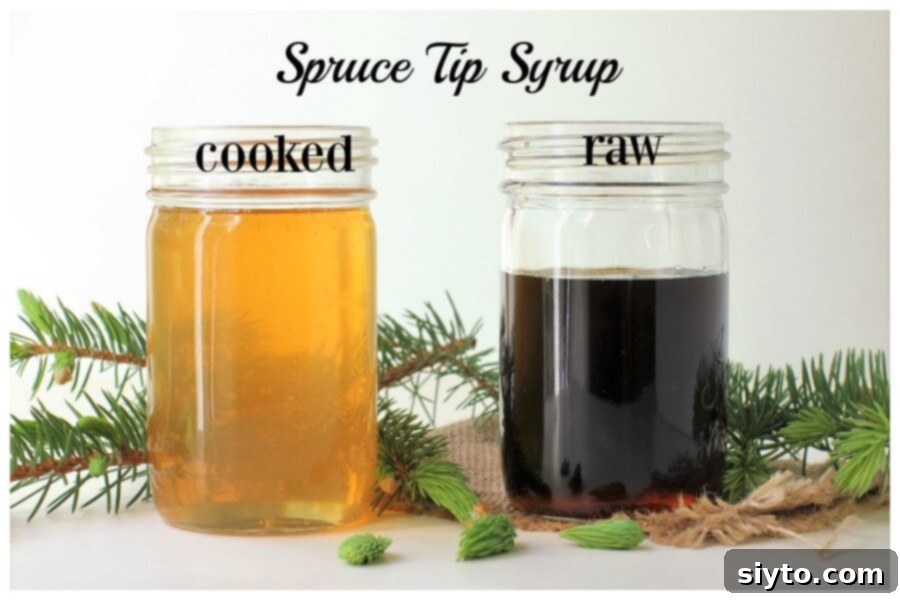
Forager’s Delight: Crafting Exquisite Homemade Spruce Tip Syrup (Cooked & Raw)
Imagine capturing the essence of a vibrant spring forest in a jar – bright, citrusy, and uniquely aromatic. If you have the opportunity to gather the tender new-growth tips of spruce trees nearby, you can transform them into an extraordinary spruce tip syrup. This forager’s delight offers a taste of the wild, allowing you to create either a lusciously intense raw syrup or a lighter, elegantly herbal cooked syrup. Whichever method you choose, you’ll be able to savor this sweet, woodland-inspired flavor for months to come. (Jump to recipes.)

In many northern climates, spring arrives with a subtle, gradual awakening. While the garden might still be bracing against late frosts and patiently awaiting the sun’s consistent warmth, one of the most delightful harbingers of the season appears at the tips of spruce branches. These glowing emerald green nubs unfurl, adorning the trees like a whimsical spring decoration. For the keen observer and enthusiastic forager, they signal a unique culinary opportunity.
Year after year, as I embark on countryside drives, these tender, chartreuse-colored tips become impossible to miss. They represent a fleeting window of opportunity for a truly special harvest. While my own yard’s spruce trees typically lag a few weeks behind the general area, I know their arrival is imminent. For several seasons now, I’ve been transforming these wonderfully citrusy, pine-scented spruce tips into a phenomenal syrup – a liquid essence that conjures the vibrant fragrance of a deep forest walk in springtime. This fresh and gloriously flavorful syrup is an exquisite way to elevate everyday dishes, from fluffy pancakes and crisp waffles to elegant French toast, creamy ice creams, and various desserts. It also lends an unexpected and sophisticated twist to your favorite cocktails, offering a truly unique flavor profile.
Sustainable Spruce Tip Foraging Guidelines
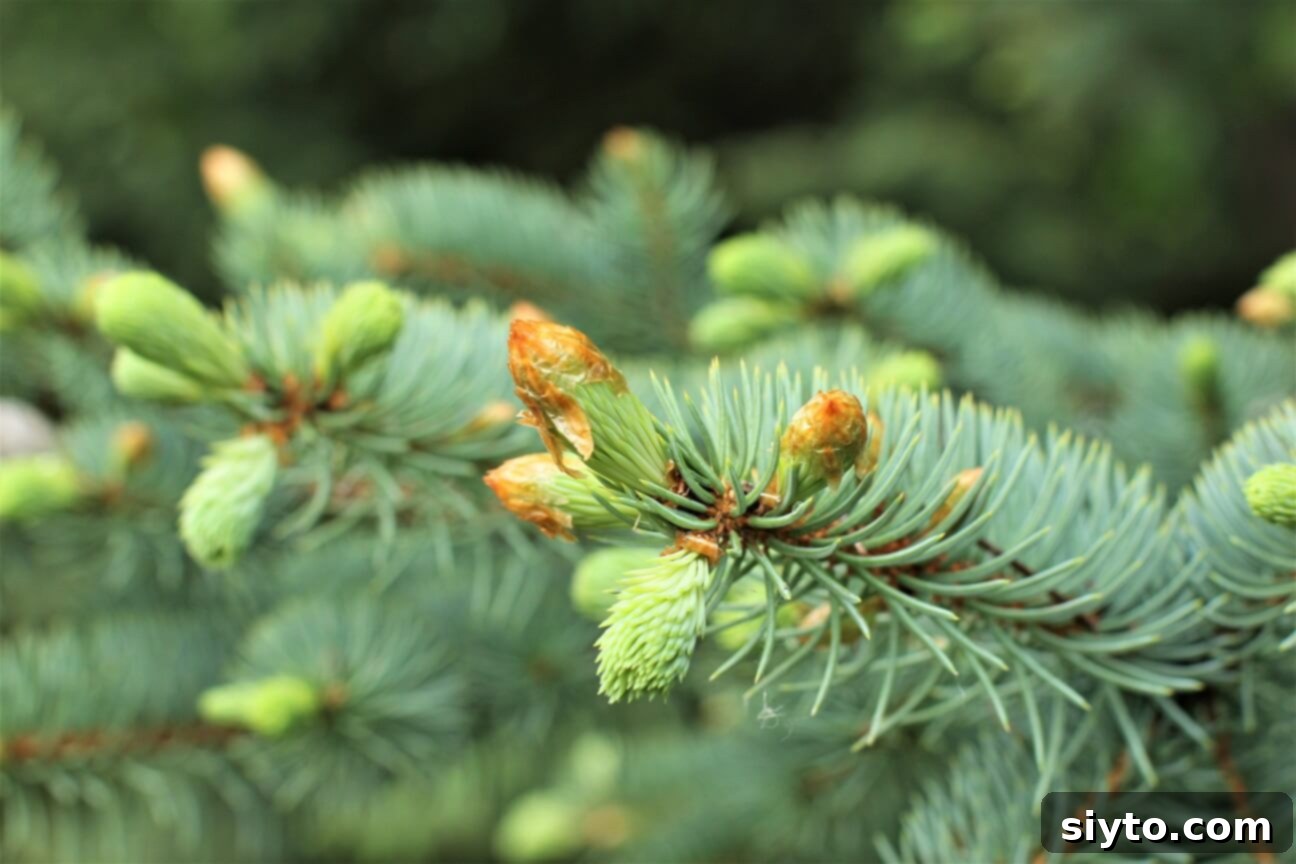
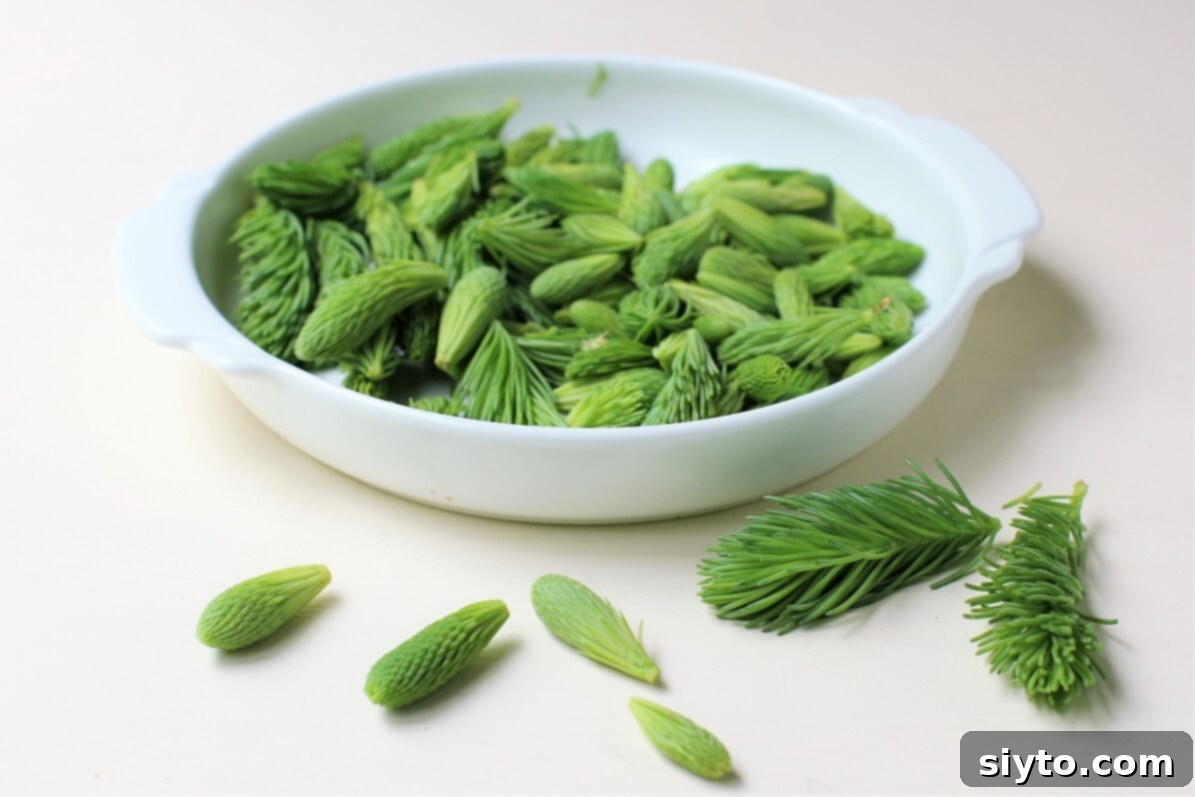
Spruce tips are among the easiest and most rewarding wild edibles to forage in the spring, making them an excellent choice for beginners. To harvest them, simply twist off the tight, bright green new buds that emerge at the ends of spruce tree branches. Often, these delicate tips are initially protected by a papery, slightly sticky brown cap, which you’ll gently remove and discard. You can also use spruce tips that have already begun to feather out, as long as they remain soft and flexible, typically measuring one to two inches in length. It’s a common misconception that picking tips harms the tree; in fact, harvesting the tips often encourages the tree to produce more new growth and become bushier along its branches, contributing to its overall health and density.
To ensure a sustainable and respectful harvest, please follow these important foraging rules:
- **Always Seek Permission:** Before you begin, confirm that you have permission to forage from the trees, especially if they are on private land. Respect property boundaries and regulations.
- **Choose Clean Locations:** Select foraging areas away from busy roadsides, industrial zones, or agricultural fields. This ensures your spruce tips are free from dust, vehicle exhaust fumes, and potential chemical contaminants.
- **Practice Selective Harvesting:** Never strip all the spruce tips from a single tree. Instead, spread out your picking among several different trees, taking only a small percentage (no more than 10-20%) from each. This allows the trees to continue their healthy growth cycle and ensures future harvests.
- **Preserve the Leader Tip:** Crucially, never pick the topmost tip of the main trunk of a tree. This central bud is vital for the tree’s upward growth. Removing it can stunt the tree’s vertical development and cause it to branch out excessively near the top, altering its natural shape and strength.
Preparing freshly harvested spruce tips for use is remarkably simple. Once collected, gently pull off any remaining papery brown husks and inspect the tips for any signs of insect damage, discarding those that appear chewed. Usually, spruce tips do not require rinsing, as their protective husks keep them quite clean. For storage, place the unrinsed tips in a sealed bag or airtight container and refrigerate them. They will remain fresh and vibrant for up to two weeks, ready for your culinary creations.
Creative Recipes for Using Fresh Spruce Tips
Think of spruce tips as you would any fresh, fragrant herb, but with a unique, invigorating twist. Their bright, citrusy, and slightly resinous flavor makes them incredibly versatile in the kitchen. They are excellent when finely chopped and tossed into fresh salads, adding a zesty crunch and aromatic depth. Stir them into hearty soups or comforting casseroles for an unexpected herbal note. Incorporate them into baking for a subtle, woodsy aroma, or sprinkle them as a garnish over cooked savory dishes to brighten the plate. The possibilities are truly endless. For more inspiration, explore some of these delightful recipes:
- Stuffed Pork Tenderloin with Spruce Tips and Orange Glaze
- Buttery Sautéed Mushrooms with Spruce Tips and Chives
- Potatoes with Spruce Tips and Cream
- Roasted Asparagus with Garlic and Spruce Tips
- Spring Green Salad with Spruce Tips
- Citrus Spruce Tip Salad
- Rhubarb and Spruce Tip Galette
- Spruce Tip & Rhubarb Compote over Swedish Cream
- Pickled Spruce Tips
- Spruce Tip Liqueur
- Spruce Tip Cocktails
Cooked vs. Sun-Steeped Spruce Tip Syrup: Which is Best?
When it comes to making spruce tip syrup, you have two distinct approaches, each yielding a unique and delightful product. Both methods have their devoted fans and offer specific advantages in terms of flavor, texture, and preservation. We adore both variations, finding them equally fantastic for different culinary applications.
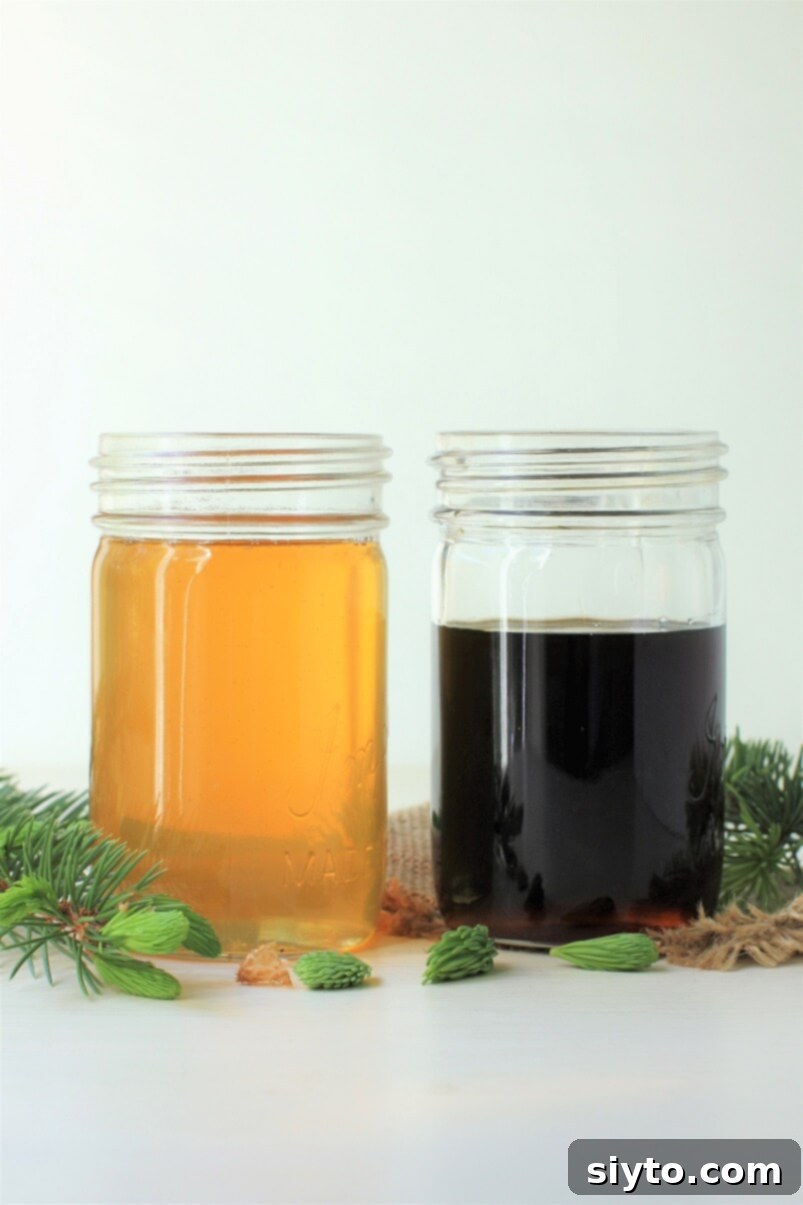
The **Cooked Spruce Tip Syrup** is recognizable by its beautiful, luminous honey color. It boasts a thicker, more traditional syrup texture, similar to maple syrup. Flavor-wise, it’s lighter and more delicate, with prominent citrus notes dancing alongside the characteristic spruce essence. It’s tangy, subtly herbal, and incredibly delicious. This method offers a quicker preparation time and typically produces a larger volume of finished syrup. A significant benefit of the cooked version is its excellent shelf stability: it can be sealed and processed in a boiling water bath (canned) for long-term storage at room temperature, lasting for several years. Once a jar is opened, refrigeration is required.
Conversely, the **Sun-Steeped Raw Spruce Tip Syrup** is much darker, often resembling a deep amber or mahogany hue. Its texture is generally thinner, more fluid like a true raw infusion. This syrup offers a remarkably complex and robust flavor profile – rich, caramelly, and intensely imbued with the pure, strong essence of spruce. While it requires a longer steeping period, typically 14 days or more, the absence of heat preserves the natural vitamin C content of the spruce tips, making it a wonderful natural remedy. Many find it soothing for sore throats and coughs. This raw syrup must be refrigerated, where it will maintain its quality for an extended period.
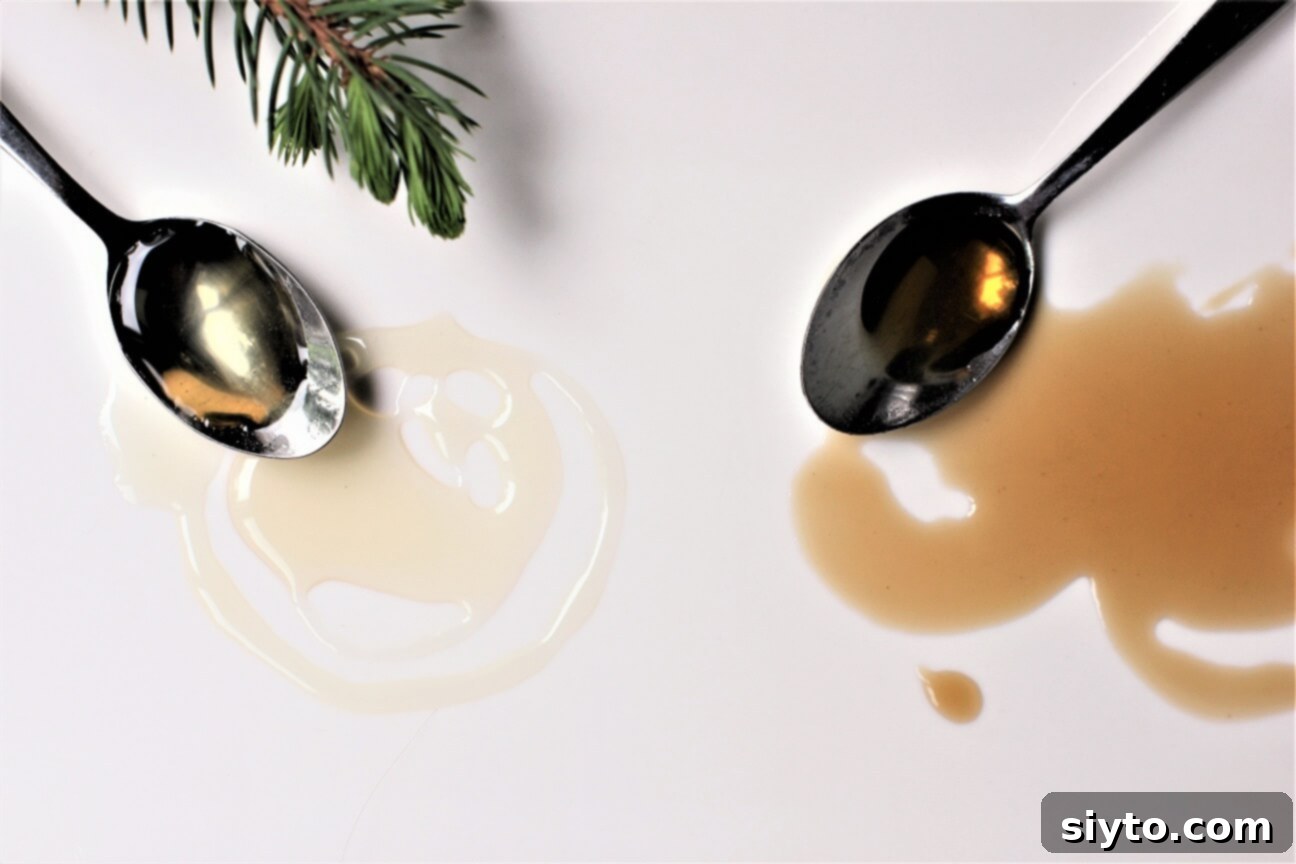
Regardless of your chosen method, both types of spruce tip syrup will keep beautifully in the refrigerator for up to 12 months. Should your syrup crystallize over time – a natural occurrence with sugar-based syrups – simply reheat it gently in a saucepan or microwave until the sugar crystals re-dissolve, and it will be as good as new.
Simple Steps to Making Your Own Spruce Tip Syrup
Crafting homemade spruce tip syrup is a rewarding and surprisingly straightforward process, whether you opt for the quick cooked method or the slow, sun-steeped approach.
For the Cooked Syrup:
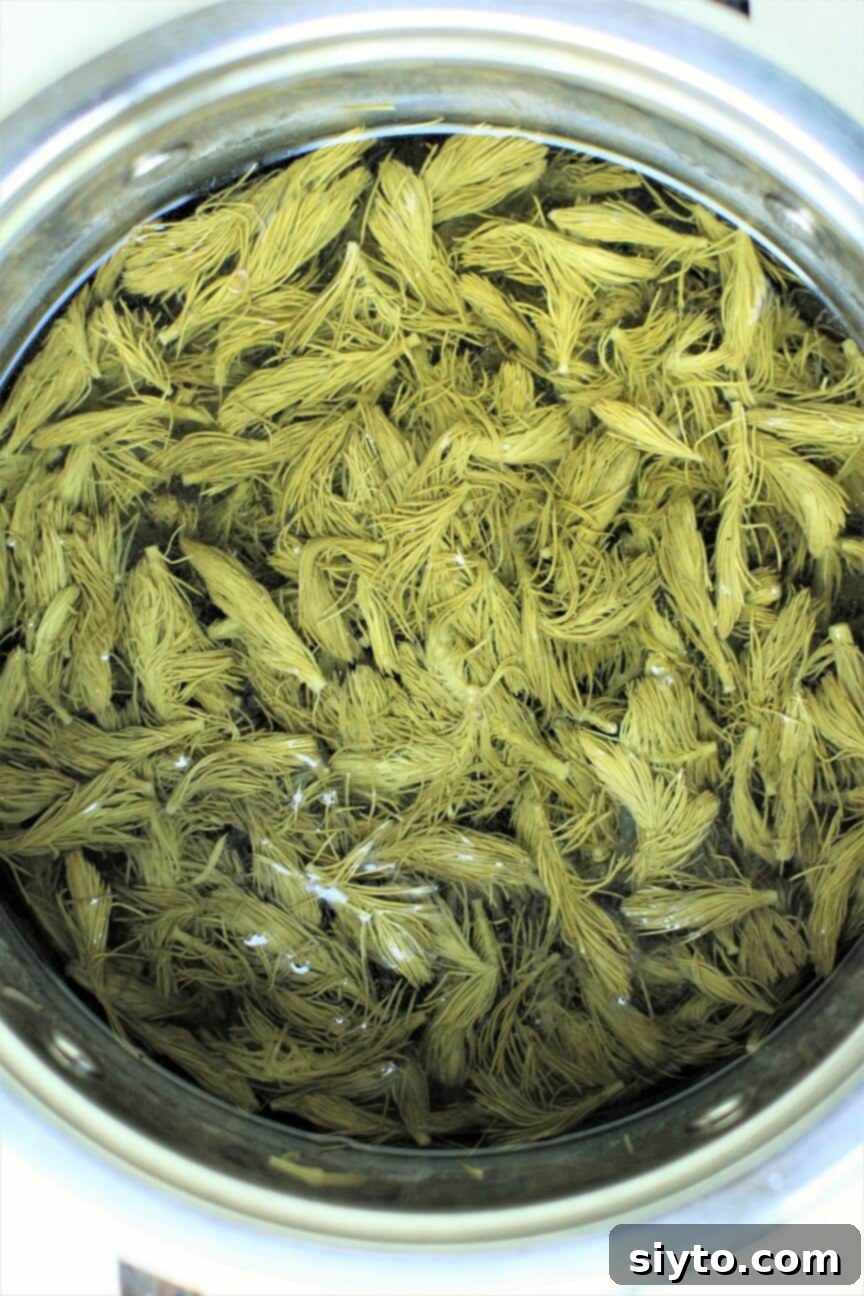
The cooked syrup method involves a simple infusion and reduction. You’ll begin by gently simmering spruce tips with sugar and water. This initial cooking phase allows the tips to release their precious essential oils and flavors into the liquid. After a brief boil, the mixture is allowed to steep overnight, deepening the infusion. The next day, you simply strain out the spruce tips – which can be reserved for candying, as a delightful bonus treat – and then return the aromatic liquid to the saucepan. The syrup is then boiled uncovered to reduce it, concentrating its flavor and thickening it to your desired consistency. Remember, it will thicken considerably more as it cools, so aim for a slightly thinner consistency than your final goal.
For the Raw, Sun-Steeped Syrup:
The raw syrup method is even simpler in terms of active preparation, relying on time and the sun’s gentle warmth. You’ll start by layering fresh spruce tips alternately with brown sugar in a clean glass jar. The key is to pack these layers down firmly to encourage the sugar to draw out the moisture and flavors from the spruce tips.
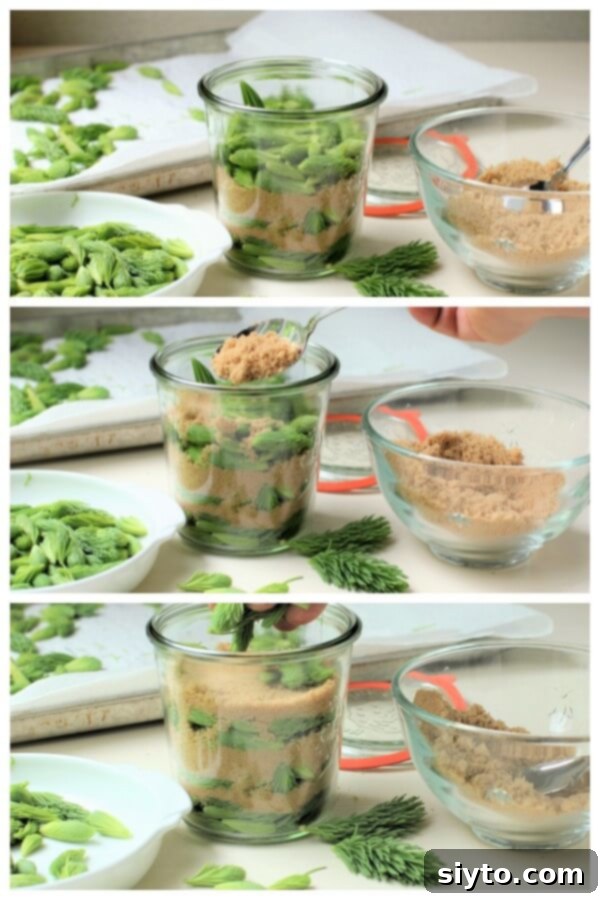
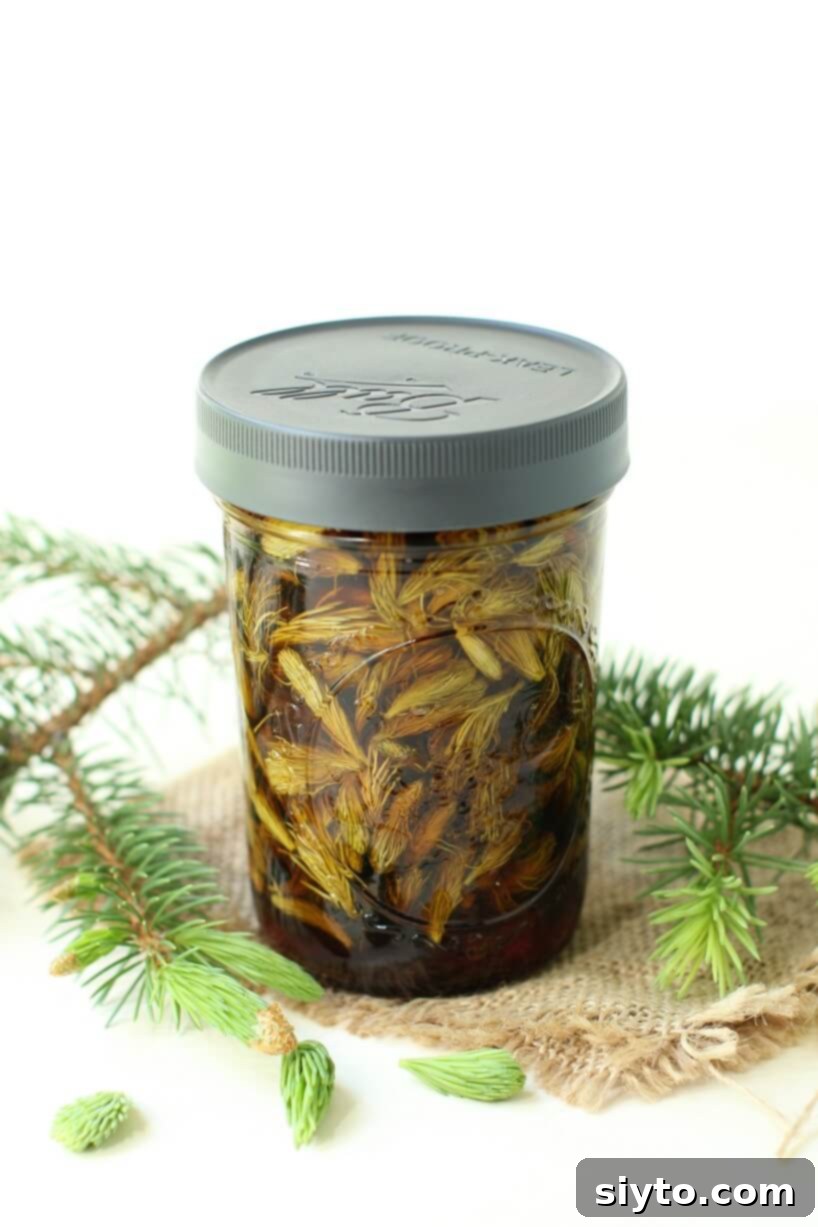
Once the jar is filled, seal it and place it in a sunny window. Over the next two weeks, the sugar will gradually dissolve, extracting the intense flavors and vibrant color from the spruce tips to form a rich syrup. To ensure an even infusion, remember to gently tip the jar daily, alternating between an upright and upside-down position. This simple action helps distribute the developing syrup throughout the layers. After about two weeks, or once all the sugar has completely dissolved, you’ll be left with a dark, beautifully intense syrup. A quick strain to remove the spruce tips, and voilà – a jar of exquisite, sun-infused spruce tip syrup is ready to enjoy.
And for an extra special bonus treat, don’t discard those strained spruce tips from either syrup method! You can easily candy them for a delightful, chewy snack. These candied tips are also fantastic to toss into salads for a unique texture and flavor, or to use as a rustic, elegant decoration for cakes, pastries, and other desserts. Their subtle piney sweetness adds an unexpected gourmet touch.
If you’ve never ventured into the world of spruce tip foraging before, perhaps this spring is your perfect opportunity to discover this delightful wild ingredient and create something truly unique in your kitchen!
Embrace the delicious results of your foraging adventure!
* * * * *
Kitchen Frau Notes: Remember to prepare your spruce tips by removing the papery brown husks. Store the unwashed tips in a tightly sealed bag or container in your refrigerator; they will keep well for up to two weeks. These fresh tips can be used just like any other fresh herb: chop them finely and incorporate them into salads, sauces, or use them as an aromatic garnish to enhance a variety of spring dishes.
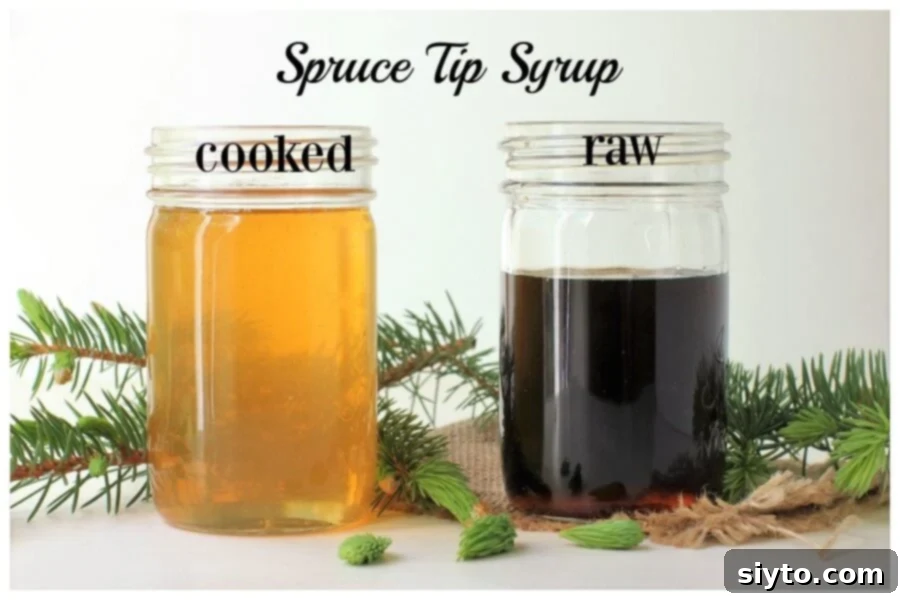
Quick Cooked Spruce Tip Syrup (Light, Golden, and Citrus-Spruce Flavoured)
- 2 cups spruce tips, lightly packed (approx. 200g)
- 2 cups (400g) granulated sugar (preferably natural organic cane sugar)
- 2 cups (480ml) water
Combine the prepared spruce tips, sugar, and water in a medium saucepan. Bring the mixture to a rolling boil over medium-high heat and allow it to boil vigorously for 5 minutes. Remove the saucepan from the heat, cover it tightly with a lid, and let the spruce tips steep in the hot syrup overnight, allowing the flavors to fully infuse. The next day, strain out the spruce tips (you can save them for candying, see recipe below, or simply discard them). Return the infused syrup to the saucepan. Boil the syrup, uncovered, for an additional 15 to 20 minutes, or until it has reduced slightly and is just a bit thinner than your desired final consistency. The syrup will thicken considerably as it cools. This recipe yields approximately 1¾ cups of delicious syrup.
For longer-term storage, the cooked syrup can be water-bath processed: Carefully pour the hot syrup into hot, meticulously cleaned and sterilized canning jars, leaving ½ inch (1cm) of headspace from the rim. Wipe the rims clean to ensure a good seal. Place clean, hot lids on top and secure with bands to finger-tight. Process the jars in a boiling water bath for 10 minutes for half-pint or pint jars. After processing, carefully remove the jars and allow them to cool completely on a counter. Once cooled and sealed, store them in a cool, dark place for up to 2 to 3 years. Refrigerate after opening.
* * * * *
Sun-Steeped Raw Spruce Tip Syrup (Dark, Intense, and Caramel-Spruce Flavoured)
- About 2 cups spruce tips, lightly packed (approx. 200g)
- About 2 cups brown sugar, lightly packed (approx. 400g)
Begin by placing a ½-inch layer of prepared spruce tips into the bottom of a clean, wide-mouthed pint jar. Follow with a ½-inch layer of brown sugar, pressing it down firmly to create a compact layer. Continue layering and firmly packing the spruce tips and brown sugar until the jar is completely filled to the top. Seal the jar tightly with a lid. Place the sealed jar in a sunny window where it will receive direct sunlight. Allow it to steep for two weeks. During this time, the sugar and spruce tips will gradually combine to form a rich syrup. To ensure an even infusion, gently tip the jar daily, alternating between an upright position one day and an upside-down position the next. As the contents settle and the sugar dissolves, you may find space to add more layers of spruce tips and sugar to fill the jar completely (if you add more, allow it to steep for an additional 4 to 5 days). Once all the sugar has fully dissolved and a dark, intense syrup has formed, strain out the spruce tips (these can also be candied, see below, or discarded). Pour the finished syrup into a clean jar for storage. This recipe makes approximately 1¼ cups of raw syrup. Store the raw spruce tip syrup in the refrigerator for up to 1 year.
* * * * *
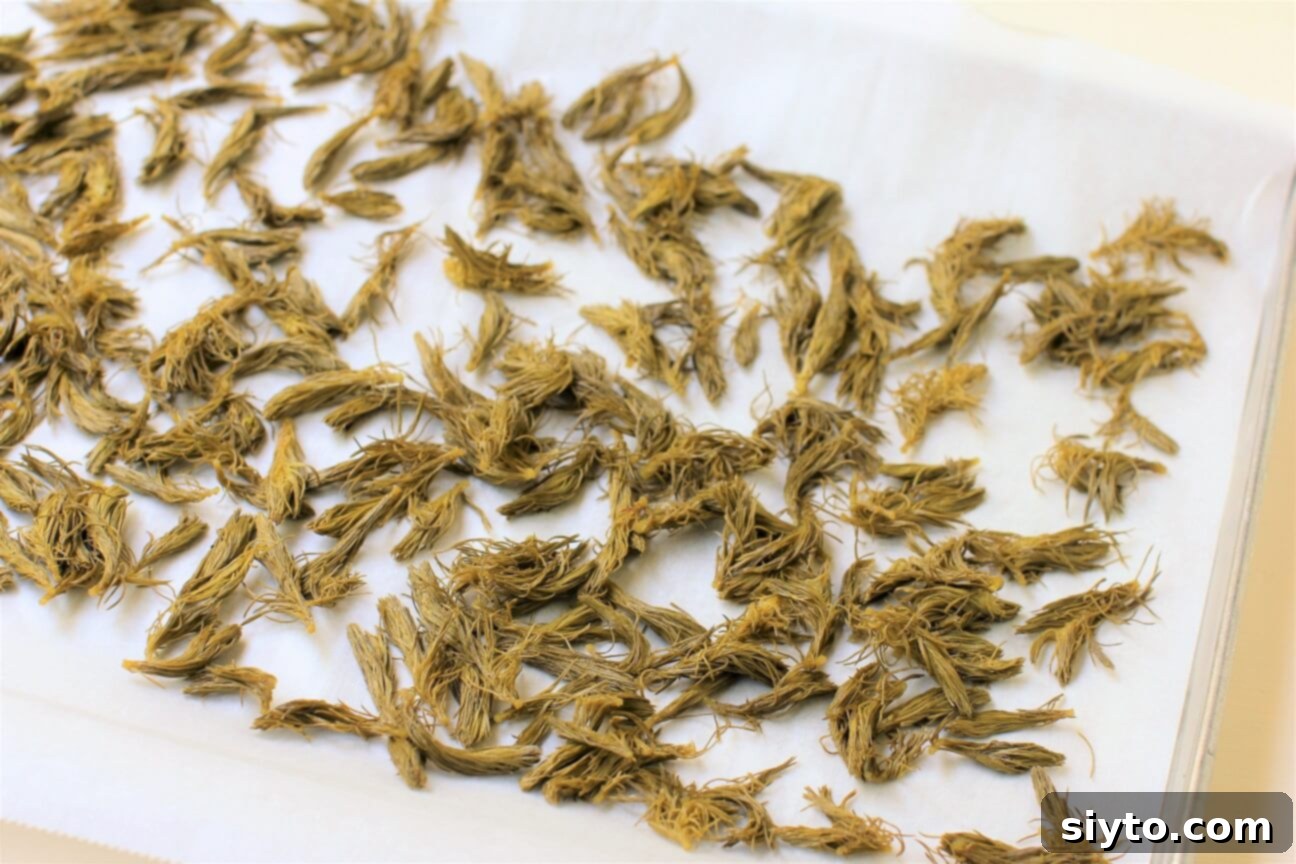
Delightful Candied Spruce Tips
Don’t let the flavorful spruce tips go to waste after making your syrup! Save the drained spruce tips from either the cooked or raw syrup methods. Spread them out in a single, even layer on a parchment paper-lined baking sheet or in a dehydrator tray. Dehydrate them using a food dehydrator, or dry them in your oven at its absolute lowest setting, ideally 150°F (65°C) or even lower if your oven allows. Continue drying for 6 to 8 hours, or until the tips are completely dry, crisp, and slightly chewy. (Mine typically take about 7 hours). These candied spruce tips are a fantastic and unique snack on their own. They can also be tossed into salads for an unexpected burst of flavor and texture, or used to beautifully decorate cakes, tarts, and other desserts, adding a rustic and gourmet touch.
Guten Appetit!
Want to receive new Kitchen Frau recipes directly to your email? Sign up here and you’ll get a handy and useful kitchen tip along with each recipe, too. (No spam ever.)
If you like my recipes, follow me on Instagram, Pinterest, Twitter, and Facebook. You’d make my day!
PIN IT HERE to save the recipe for later:

You might also like these delicious pancake recipes:
Thick Fluffy Oat Flour Pancakes
High Protein, Low Carb Blender Pancakes
3-Ingredient Quinoa Pancakes
Banana Buckwheat Pancakes