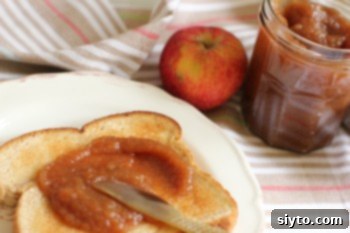
Homemade Sweet & Spicy Apple Butter: Capture the Essence of Autumn
Slowly simmered apple butter, sweet with rich spices, is a quintessential taste of the fall harvest that you can savor all year long. This thick, luscious, and creamy spread is more than just a condiment; it’s a comforting treat that embodies the spirit of autumn. (Jump straight to the recipe here!)
Embracing the Season: The Art of Preserving
There’s something uniquely magical about the transition from summer’s vibrant energy to the cozy embrace of autumn. Just last week, I found myself longing for the endless days of sunshine, yet here I am now, thoroughly revelling in the crisp, cool air, the stunning fall colours, and even the occasional cold, misty morning. Those early frosts, though beautiful in their sparkling blanket across the garden, are a stark reminder of the changing seasons and the bounty that needs to be gathered before winter fully settles in.
Perhaps it’s the primal instinct of a former squirrel life, but the act of harvesting and preserving fills me with immense satisfaction. There’s a quiet thrill in gathering the season’s fruits, preparing them for storage, and knowing that these precious flavors will sustain us through the leaner months. This deep connection to the land and its cycles resonates strongly within me, a sentiment I believe is rooted in my upbringing.
My parents, having lived through a war, a depression, and the experience of being refugees before relocating to a new country, instilled in us a profound appreciation for everything we had and a firm belief in never wasting anything. This sense of thriftiness and resourcefulness was a cornerstone of our farm life, deeply ingrained in me and my sisters. While I may no longer wash and reuse plastic sandwich wrap or hoard every twist tie, the fundamental principle of making the most of nature’s bounty remains a vital part of who I am.
My mother, an extraordinary cook and a master canner and preserver, was my first and most influential teacher. I often recount the teenage years spent helping her tirelessly peel, cut, stir, and pack over 800 jars of preserves each fall. Back then, I admit, the “thrill” of it all often felt like a chore, perhaps even met with some moody teenage resistance. My younger self would be utterly astounded to see me now, just as passionate about preserving as I once thought my mother was “crazy” for being.
A Family Legacy of Home Canning and Preserving
The satisfaction derived from gazing upon rows of colourful jars – brimming with fruits, pickles, juices, and condiments, all meticulously made by my own hands – is truly immeasurable. It’s a tangible testament to hard work and dedication, a wonderful pick-me-up on days when you feel you haven’t accomplished much. Each gleaming jar is visible proof of industriousness, a small victory against the modern pace of life.
Historically, preserving food was not merely a hobby but a crucial necessity for survival, particularly for those in colder climates or far from urban centers. Our ancestors mastered techniques like drying, salting, storing in fat, or using brine to ensure their families had sustenance through long, harsh winters. Fermenting, curing, smoking, and pickling were not just methods of preservation but also creative ways to enhance flavors and expand culinary possibilities.
In our modern world, while the urgency of survival has diminished, the reasons for preserving food have evolved. Today, canning and preserving allow us to lock in the fresh, vibrant flavors of our gardens, steer clear of highly processed store-bought alternatives, and save money by “putting up” homegrown or foraged foods. It’s also a powerful way to reconnect with simpler times, honoring the traditions of our ancestors and feeling a sense of continuity with the past. Or, sometimes, it’s simply for the pure joy of seeing those beautiful, gleaming jars lined up on the pantry shelf.
A Bountiful Harvest: Our Apple Abundance
This year, our apple trees have been incredibly generous, despite a couple of summer hailstorms that left some fruit delightfully pock-marked. Many of our apple varieties are so naturally sweet and crisp that it’s nearly impossible not to eat my fill – and then some! After a good frost, their flavors seem to deepen, becoming even sweeter and tangier, a testament to nature’s perfect timing. Just yesterday, I made 24 pints of applesauce without needing to add a single granule of sugar. Last week, I prepared a triple batch of my mom’s renowned apple butter recipe, using a generous 18 cups of apple puree, and our trees still have countless pails of apples patiently waiting to be transformed.
This cherished apple butter recipe, passed down from my mom, is a family favourite that now delights my own children as much as it did me. Its versatility is remarkable. It’s absolutely divine slathered on warm, buttered toast, but its charms extend far beyond. Try stirring it into creamy yogurt, spreading it on muffins or pancakes, or rolling it up in delicate crepes for a delightful breakfast. For a more decadent treat, dollop it into tart shells and bake, or use it to fill squares of pie pastry, folded over and baked as rustic hand pies or classic apple turnovers. Keeping a jar of this homemade apple butter in your fridge is a guaranteed way to elevate your everyday meals and bring a touch of comforting sweetness to any occasion.
How to Make Sweet and Spicy Apple Butter from Scratch
For the most complex and satisfying apple butter flavor, I highly recommend using a combination of apple varieties. Aim for at least three different kinds of apples if possible. I am fortunate enough now to have my own mature apple trees, providing a wonderful mix right from my backyard.
The first step to making this incredible apple butter is to prepare apple puree, or unsweetened applesauce. You have two excellent methods for achieving this:
Method 1: Peel, Core, Slice, and Blend
Begin by peeling, coring, and slicing your chosen apples. Place the apple chunks in a large pot with a small amount of water – about half a cup for every 10 to 12 cups of apples. Bring the mixture to a boil, then reduce the heat to low, cover the pot, and let the apples simmer gently until they are wonderfully tender and begin to fall apart. The cooking time will vary depending on the apple variety and the size of your chunks, so test them with a fork for softness. Once cooked, puree the apples directly in the pot using an immersion blender, or transfer them to a regular blender until smooth.
Method 2: Easy Food Mill Method (Skins and Cores Removed Automatically)
For a quicker approach, cut your apples into quarters or halves if they are smaller. There’s no need to peel or core at this stage. Simply remove the stem and cut a small ‘v’ into the blossom end to eliminate the tiny strands that can make applesauce less appealing. Place the apples in a large pot with approximately half a cup of water for every 10 to 12 cups of apple chunks. Cook them until they are very tender and falling apart. Then, pass the cooked apples through the fine blade of a food mill. This ingenious tool will effortlessly separate the cooked apple pulp from the skins and cores, leaving you with a perfectly smooth puree.
Once you have your smooth apple puree, it can be canned as applesauce, or, as we’re doing today, measured out and transformed into this truly wonderful apple butter.
Kitchen Frau Notes: This delectable apple butter can also be safely preserved by freezing it in freezer-safe containers or zip-top freezer bags. It will maintain its exquisite flavor and texture for up to a year in the freezer.
Sweet ‘n Spicy Apple Butter Recipe
- 6 cups (1.45 liters) puréed cooked apples
- 1½ cups (300 g) granulated sugar (cane sugar preferred)
- Juice and finely grated rind of 1 organic orange (if possible)
- 1 teaspoon ground cinnamon
- ½ teaspoon ground cloves
- ½ teaspoon ground ginger
- ¼ teaspoon ground nutmeg
In a large, heavy-bottomed pot or Dutch oven, combine the apple puree, sugar, orange juice, orange rind, cinnamon, cloves, ginger, and nutmeg. It’s best to choose a pot that is large enough to be no more than half full. This generous space will help contain the enthusiastic splatters and bubbles as the apple butter cooks and thickens.
Bring the mixture to a boil over medium-high heat, stirring frequently. Once boiling, reduce the heat to a gentle simmer and continue to cook, uncovered, stirring often, until the apple butter reaches your desired thickness and develops a deep, rich caramel color. This simmering process will take at least one hour for a single batch. If you’ve doubled or tripled the recipe, as I often do, it could take 2 to 3 hours, as the ratio of surface area to liquid is smaller, requiring more time for evaporation. Regular stirring is essential to prevent sticking or burning on the bottom of the pot.
The consistency is a matter of personal preference and also depends on the natural juiciness of your apples. I typically simmer mine until I have about 4 cups, or a little more, remaining, ensuring a spreadable yet firm texture.
Once thickened, carefully ladle the hot apple butter into clean, sterilized half-pint jars. Wipe the rims thoroughly to ensure a good seal, then secure them with sterilized lids and bands. Process the jars in a boiling water bath for 10 minutes (adjusting for altitude if necessary). Alternatively, for easy storage, the apple butter can be cooled and then frozen in freezer-safe containers. This recipe yields approximately 4 cups, or 4 half-pint jars, of this delectable spread.
There’s truly nothing quite like pulling a jar of this homemade apple butter from your pantry or freezer in the depths of winter. Each spoonful, each spread on your toast, feels like a generous dollop of warmth, comfort, and love, bringing the vibrant flavors of autumn directly to your table.
Guten Appetit! Enjoy Your Homemade Creation!
Want to receive new Kitchen Frau recipes directly to your email? Sign up here and you’ll get a handy and useful kitchen tip along with each recipe, too. (No spam ever.)
If you like my recipes, follow me on Instagram, Pinterest, Twitter, and Facebook. You’d make my day!
* * * * *
Explore More Seasonal Recipes & Preserving Traditions
Dive deeper into the world of seasonal cooking and preserving with these cherished recipes and insights:
Buttery Sautéed Mushrooms with Spruce Tips and Chives: My First Authentic Canadian Food Memory
Saskatoon Roll or Saskatoon Cobbler and How to Freeze Saskatoon Berries: A Regional Canadian Food
Mabel Johnson’s Pickled Beets and Creamed Vegetables: A Canadian Food Hero in Northern Alberta
Evans Sour Cherries Preserved in Brandy: My Cherished Canadian Recipe