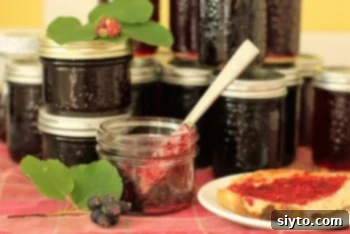
Homemade Saskatoon Jelly Recipe: Capturing Summer’s Sweetness with a Floral Whisper
There’s an undeniable joy in preserving the ephemeral bounty of summer, and few fruits capture that essence quite like the beloved saskatoon berry. Imagine opening a jar of glistening, deep purple saskatoon jelly on a chilly winter morning, instantly transporting yourself back to sun-drenched fields and the sweet taste of summer. This recipe guides you through creating exquisite homemade saskatoon jelly, enhanced by a special, subtle ingredient that elevates the berries’ unique natural flavour to an unforgettable experience.
For many years, my personal canning ventures were minimal, largely due to the generosity of my mother-in-law. Her pantry was a veritable treasure chest, brimming with jewel-toned jars of every conceivable jam and jelly. From the golden hues of apricot to the ruby glow of raspberry, and the deep amethyst-black of saskatoon preserves, she ensured our family was always well-stocked. Her dedication to preserving the harvest was truly inspiring.
However, circumstances change, and now with Granny enjoying a well-deserved rest off the farm, indulging in her passions for painting and crafting, it’s my turn to step into the role of chief jam-maker. While I might not be musically inclined enough for a traditional “jam session,” my kitchen certainly buzzes with a different kind of sweet harmony – the delightful art of transforming fruit and sugar into delectable preserves. This year, our saskatoon harvest has been exceptionally abundant, providing the perfect opportunity to dive into jelly making.
As the jelly kettle bubbles gently on the stove, filling the kitchen with its sweet, fragrant steam, I find myself humming along – usually when no one’s around to hear, except perhaps the dog, who is, thankfully, a non-judgmental audience. There’s a profound satisfaction in watching the raw ingredients transform into something magical, a feeling that truly connects one to the rhythm of the seasons and the bounty of nature.
Understanding the Unique Charm of Saskatoon Berries
Saskatoon berries are truly a luscious delight, often described as a taste unique to the Canadian prairies. They offer a wonderfully complex flavour profile that defies simple categorization. You’ll find notes of sweetness balanced by a delicate nuttiness, reminiscent of almonds, with faint floral undertones. Trying to compare them to other berries often falls short, as their distinct taste stands in a category all its own.
What makes saskatoons even more fascinating is their botanical background. Scientifically classified, they belong to the same botanical order (Rosales) and family (Rosaceae) as roses. Discovering this fact was a genuine “aha!” moment for me. Of course! This genetic link beautifully explains the subtle, inherent floral quality in the berries’ flavour. Visually, they even bear a resemblance to tiny purple rosehips, and like rosehips, they are full of seeds, though considerably juicier.
This botanical connection sparked an idea: what if we amplified that natural floral essence? Adding just a touch of rosewater to homemade saskatoon jelly proves to be a magical flavour enhancer. It’s a natural pairing that brings out the very best in these wonderful berries. This subtle hint of rosy flavour elevates the jelly from merely fruity to truly fantastic, creating a sophisticated and deeply satisfying preserve that’s perfect for gourmet toast or a special dessert ingredient.
Don’t Be Afraid of Making Jelly: A Step-by-Step Guide to Perfection
Many people find the idea of making jelly daunting, but I promise you, it’s an incredibly rewarding and surprisingly straightforward process. Once you understand the basic steps, you’ll be making sparkling, wibbly-wobbly saskatoon jelly with confidence. Here’s how easy it truly is:
- **Cook the Berries:** Begin by gently cooking your fresh saskatoon berries with a small amount of water. This helps them release their precious juices, which are the foundation of your jelly.
- **Strain the Juice:** This is a crucial step for clear, sparkling jelly. Once the berries are cooked, transfer them into a jelly bag, or a makeshift one using a clean, damp tea towel or several layers of cheesecloth set inside a colander. Position this setup over a large bowl to catch the dripping juice.
Tie up the jelly bag securely around a wooden spoon. This creates a convenient bundle that can be suspended to allow the juice to drip freely. For an easy, unorthodox setup, place a bowl on the floor between two chairs and rest the ends of the spoon on the chair seats. This allows the bag to hang perfectly, ensuring a clean drip.
Leave the bundle to drip, undisturbed, for a good 3 to 4 hours. Patience is key here – resist the urge to squeeze the fruit! Squeezing will force pulp through the bag, resulting in cloudy jelly, which, while still delicious, won’t have that beautiful, clear sparkle we’re aiming for.
And voilà! After the waiting period, you’ll be rewarded with a beautiful, clear juice. This vibrant liquid is now ready to be cooked with sugar and pectin to create your sparkling, wibbly, wobbly saskatoon jelly. The anticipation builds with each step, culminating in a product that is not just food, but a homemade work of art.
The Joy of Preserving and Enjoying Your Jelly
The culinary possibilities with homemade saskatoon jelly are endless. Your morning toast and saskatoon jelly experience will be transformed from a simple breakfast into a gourmet treat. The rich, fruity flavour, accented by that delicate rose whisper, elevates even the humblest slice of bread.
Beyond breakfast, saskatoon jelly can be a versatile ingredient in your kitchen. Imagine swirling it into a creamy yogurt parfait, using it as a glaze for roast pork or chicken, or even incorporating it into homemade salad dressings. One of my favorite uses is to make an amazing creamy, fruity saskatoon ice cream. The unique flavour of saskatoons truly shines through in this dessert, offering a taste you simply can’t find in any store-bought variety. It’s a testament to the fact that sometimes, the best things come from your own kitchen.
* * * * *
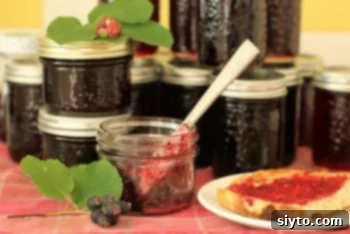
Saskatoon Jelly: Rosewater Enhanced Recipe
Margaret Bose Johnson
Save to Pinterest
Ingredients
- 2 kg (4lb, 6oz) fresh saskatoon berries (approx. 14 cups/3½ quarts)
- ½ cup water
- ¼ cup + 2 tablespoons (6 tablespoons/90ml) bottled reconstituted lemon juice
- 1 tablespoon rosewater (optional, but highly recommended for enhanced flavor)
- 7½ cups (1.5kg) granulated sugar
- 2 pouches (85ml each) liquid pectin
Instructions
- Before measuring, carefully pick over the saskatoons, removing any stems, leaves, or bruised berries. Rinse them thoroughly under cold water and drain them well. (For an easy saskatoon cleaning technique, see more details here.)
- Combine the cleaned berries and the ½ cup of water in a large, heavy-bottomed saucepan. Bring the mixture to a boil over medium-high heat, then reduce the heat to low, cover the saucepan, and simmer for 15 minutes. This gentle cooking will help release the berries’ juices.
- To strain the juice, carefully pour the cooked berries into a jelly bag suspended over a large bowl. If you don’t have a specialized jelly bag, you can improvise by lining a colander with a clean, damp tea towel (be aware it may stain) or 3-4 layers of cheesecloth. Moisten the cloth, add the berries, gather up the corners, and tie them into a bundle. Leave the fruit to drip for 3 to 4 hours – or until you have collected approximately 3½ cups (860ml) of clear saskatoon juice. It is crucial NOT to squeeze the fruit, as this will result in cloudy jelly. If you yield slightly less than 3½ cups of juice, you can top it up with a small amount of water to reach the required volume.
- While the juice is straining, prepare and sterilize your canning jars. Run clean jars through the hottest setting in your dishwasher and leave them in there to stay hot until you are ready to fill them. Place the metal lids in a small saucepan, cover them with water, and bring them to a gentle simmer. Keep them simmering on low heat so they are hot and ready to use immediately when sealing the jars.
- In a separate very large saucepan (ensure it’s no more than half full to allow for vigorous boiling), combine the 3½ cups of prepared saskatoon berry juice, the lemon juice, the rosewater (if you are using it), and the granulated sugar. Stir well to combine. Bring this mixture to a full rolling boil over high heat, stirring constantly to prevent scorching. A full rolling boil is one that cannot be stirred down.
- Once at a full rolling boil, stir in both pouches of liquid pectin, squeezing all the pectin out. Continue to boil hard for exactly one minute, stirring constantly and vigorously to ensure the pectin is fully incorporated and the jelly sets properly.
- Remove the saucepan from the heat immediately. Using a clean spoon, quickly skim off any foam that has accumulated on the surface of the jelly. This ensures a beautifully clear final product.
- Working quickly and carefully, ladle or pour the hot jelly into the warm, sterilized jam jars, filling them to within ¼ inch (0.5 cm) of the top rim. Use a clean, damp cloth to wipe away any drips or stickiness from the rims of the jars. Place a sterilized lid onto each jar, then screw on the bands finger-tight.
- Let the filled jars cool undisturbed on a counter for 12-24 hours. As they cool, you should hear the lids “pop” as a vacuum seal forms. You’ll also notice the center of the lid pulling downwards. Do not press the lids until the jars are completely cooled to test the seal. A properly sealed lid will not move when pressed with a finger.
- If any jars did not seal (the lid will still bulge slightly upward and move when pressed), store those jars in the refrigerator and use their contents within a few months. Sealed jars can be stored in a cool, dark pantry for up to a year.
- This recipe yields approximately 8 cups, or 8 half-pint (250ml) jars, of delicious saskatoon jelly.
Notes
* While the rosewater adds a wonderful, sophisticated twist, you can certainly omit it and still create a delicious, simple saskatoon jelly with a full-bodied fruit flavor.
* Rosewater is a pure and simple edible rose essence, created by steeping rose petals in water. It can typically be found in specialty import stores, Middle Eastern grocery stores, or the international aisle of larger supermarkets.
* Using bottled, reconstituted lemon juice is recommended for jelly making. Its acidity levels are standardized and consistent, making it more reliable for ensuring proper gelling and preventing spoilage compared to fresh lemon juice, which can vary significantly in acidity. A specific pH level is essential for successful jelly formation.
Guten Appetit!
There’s nothing quite like the satisfaction of creating something delicious and beautiful from scratch. Each jar of saskatoon jelly you make isn’t just a sweet spread; it’s a taste of summer, a labour of love, and a delightful piece of culinary heritage. Enjoy the process, and savor the spectacular results!
If you’re eager to discover more delightful recipes and handy kitchen tips, don’t forget to sign up for the Kitchen Frau newsletter here. You’ll receive new recipes directly to your email inbox, along with a useful kitchen insight every time.
For more culinary inspiration and to stay connected with our community, please follow me on Instagram, Pinterest, Twitter, and Facebook. Your support truly brightens my day!
Don’t forget to PIN IT to save this amazing saskatoon jelly recipe for later:
Explore more delicious saskatoon recipes to make the most of your berry harvest:
Fluffy Gluten-Free Saskatoon Scones
An Easy Method for Cleaning Saskatoon Berries
Mastering How to Freeze Saskatoons for Later Use
A Comprehensive Guide to Canning Saskatoons and Making Saskatoon Preserves
Indulgent Saskatoon Ice Cream (and more uses for Saskatoon Jelly!)
Classic Saskatoon Roll or Comforting Saskatoon Cobbler
Hearty Saskatoon Slump, a Homestyle Dessert
‘Prairie Mess’: A Delectable Dessert with Saskatoons and Rhubarb
Refreshing Homemade Saskatoon Juice
Delicious and Easy Saskatoon Muffins
Gourmet Pork Chops with Saskatoon and Green Apple Chutney