Authentic Kerala Style Upma: A Fluffy, Savoury South Indian Breakfast Delight
Experience the vibrant flavours of South India with this delightful Kerala-style upma. This fluffy, savoury breakfast dish, made from finely ground rice or semolina, is a beloved staple in Kerala and across southern India. It’s incredibly flavourful, satisfying, and remarkably quick to prepare, offering a wonderful change from your everyday porridge, toast, or cereal. Discover a delicious new way to bring variety and excitement to your mornings.
This month, our culinary journey with the Eat the World recipe project takes us on an armchair adventure to the enchanting and culturally rich land of India. My imagination has always been captivated by India – its kaleidoscope of exotic colours, the aromatic spices of its cuisine, the bustling sights, and the symphony of sounds. It’s a destination that sits proudly at the top of my travel bucket list, and I eagerly anticipate the day I can immerse myself in its vibrant sensory tapestry.
Until that dream trip becomes a reality, I find immense joy and satisfaction in exploring India’s incredible culinary landscape right from my own kitchen. The sheer diversity of Indian food is astounding, ranging from rich curries to delicate sweets, and hearty breakfast dishes. This exploration began quite serendipitously a few weeks ago during a shopping trip to Walmart, where I stumbled upon a bag in the import foods section labelled Idli/Rava Flour. Its texture was strikingly similar to Cream of Wheat cereal, but the label confirmed its sole ingredient: finely ground rice grains. Growing up with Cream of Wheat porridge, this discovery instantly evoked a wave of nostalgia. I immediately envisioned taking it home and preparing it as a comforting breakfast porridge.
As I reached the checkout, I struck up a conversation with the sales clerk, who happened to be from India. She noticed the bag of rava in my cart and curiously asked about my plans for it. I sheepishly mumbled something about making porridge. Her face lit up with a warm smile as she explained that in Kerala, her home state in southern India, rava is primarily used to prepare Uppuma (or Upma), a wonderfully fluffy and savoury rice dish that is an incredibly popular breakfast staple. She described how they simply sauté onions, ginger, and green chilies, then add the rava with water, and enjoy it with fresh banana slices. Her enthusiasm was infectious, and her detailed description painted a vivid picture of this beloved dish. Before I left, she kindly jotted down the name on the back of my receipt, assuring me I’d find countless recipes online.
Her words sparked an immediate culinary quest. Intrigued and inspired, I rushed home and plunged into an internet search, unearthing a treasure trove of recipes for upma (and indeed, a fascinating array of spellings for it!). My kitchen quickly transformed into a laboratory of flavours as I began experimenting. That initial bag of rava is long gone, having been meticulously transformed into numerous batches of upma, each iteration refining my technique and deepening my appreciation for this humble yet exquisite dish. I am, without a doubt, completely hooked.
Through my extensive experimentation, I’ve developed a preferred method that combines the best techniques from various recipes. A key step I’ve adopted is adding the dry rava to the cooked vegetables and spices before introducing water. This ensures that each individual grain of rava is thoroughly coated with fat, which is crucial for preventing the clumping often associated with upma. This simple trick yields a wonderfully fluffy, non-sticky texture. You can tailor your upma to your preference: keep it classic and simple with just mustard seeds, ginger, onion, and chili, or elevate it with a few handfuls of finely chopped vegetables, a spoonful of lentils, or a sprinkle of cashews or shredded coconut for added crunch and richness. The truly fun and authentic way to enjoy it, as my Walmart friend taught me, is by pairing it with fresh banana slices!
Upma is an undeniably delicious and wholesome breakfast. I could easily enjoy a bowl of this savoury goodness every single morning! For convenience, I often prepare a double batch on the weekend, making weekday breakfasts a breeze with a quick reheat. It’s a truly refreshing departure from the usual routine of toast or cereal, offering a satisfying and flavourful start to the day that nourishes both body and soul. Its unique texture and blend of subtle spices make it a delightful experience.
Mastering Your Upma: Essential Ingredients and Preparation
To embark on your upma-making journey, you’ll need rava flour. Rava, also known as semolina, is a coarse flour typically made from durum wheat. However, for those following a gluten-free diet, rice rava is an excellent alternative and widely available in Indian grocery stores or the international aisle of larger supermarkets. It’s essentially finely ground rice grains, offering a similar texture and versatility. The choice between wheat-based semolina and rice rava allows you to customize the dish to dietary needs without compromising on authenticity.
Many upma recipes debate the merits of toasting rava versus using it untoasted. I’ve personally experimented with both approaches and found the flavour difference to be subtle. However, my informal family taste-testers often leaned towards the toasted version, noting a slightly more complex and nutty flavour profile. While the sales clerk who introduced me to uppuma didn’t mention toasting (and omitting this step does make for a quicker preparation), lightly toasting a larger batch beforehand means it’s ready for quick use whenever you crave upma. Just be careful not to over-toast, as it can turn bitter. The goal is a gentle, ivory hue.
Once your rava is ready (whether plain or lightly toasted), set it aside. The magic begins with tempering the spices. Heat butter, ghee, or coconut oil in a skillet, then add mustard seeds. Cook them until they begin to sputter and pop, releasing their distinctive aroma. This crucial step is known as “tempering” or “tadka” and forms the flavour base of many Indian dishes. Next, introduce minced ginger, finely diced onion, and your choice of chili flakes or fresh chopped green chilies. Sauté these aromatics for a few minutes until the onions soften and become translucent, allowing their sweet and pungent notes to meld beautifully. Now, it’s time to incorporate the rava, stirring it into the fragrant mixture until every grain is evenly coated with the fat and spices. This prevents clumping and ensures a fluffy upma. Finally, pour in the water, bring it to a gentle simmer, cover, and let it cook.
Allow the upma to cook gently, covered, for about 3 to 4 minutes. During this time, the rava will absorb the water and swell, transforming into a light and airy consistency. Once cooked, remove from heat and use a fork to gently fluff the grains. This final step enhances the fluffy texture that upma is renowned for, ensuring it’s not dense or sticky. The result is a wonderfully comforting and flavourful dish, perfect for any morning.
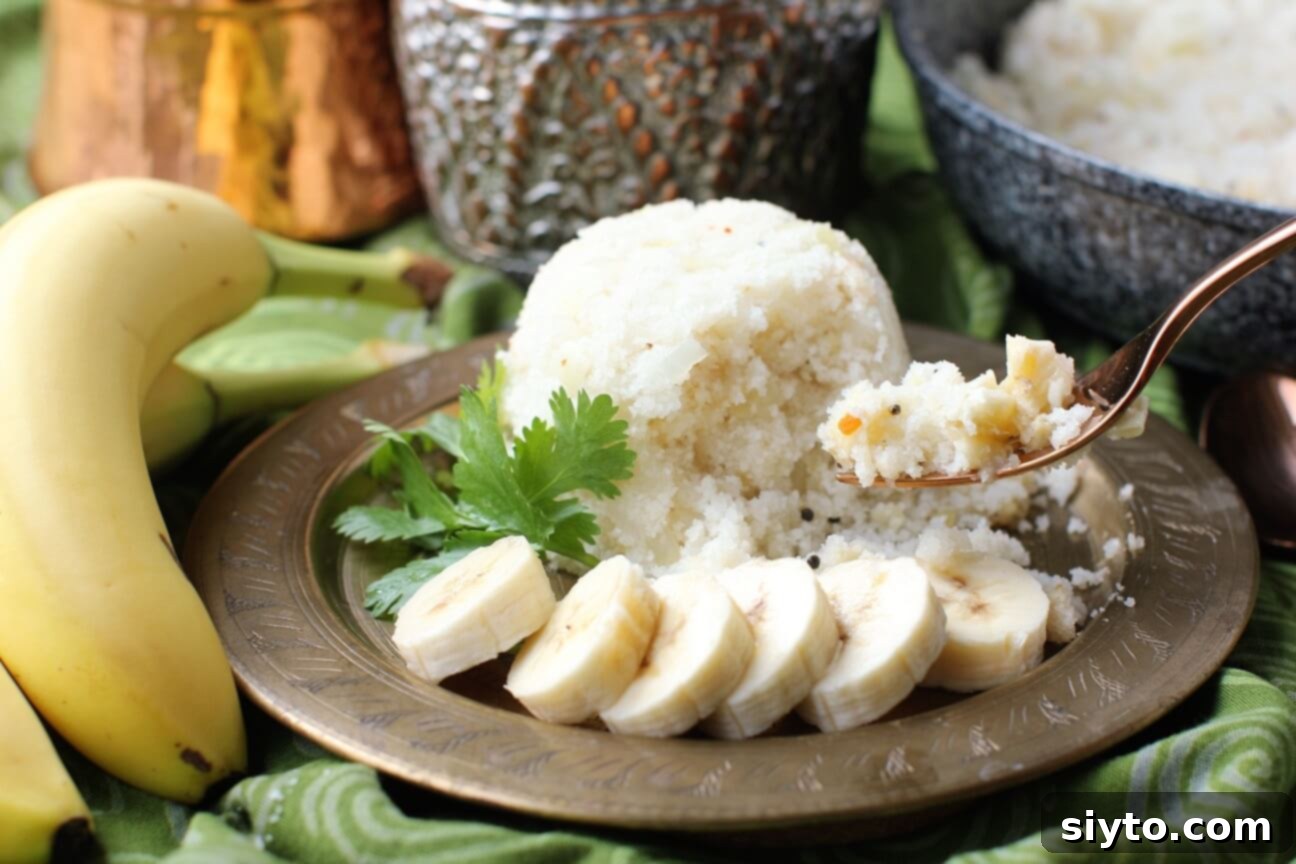
To serve your freshly made upma, you have a couple of presentation options. For a neat, restaurant-style presentation, gently pack the warm upma into a small bowl or cup, then invert it onto a plate. This creates an attractive mound that looks appealing. Alternatively, simply spoon the fluffy upma directly onto plates. The traditional and most delightful way to enjoy Kerala-style upma is with slices of fresh banana. The sweetness and creamy texture of the banana provide a perfect counterpoint to the savoury, spicy upma. To eat, gently mash the banana slices with your fork and enjoy them alongside each bite of upma. This combination is a truly unique and delicious experience that promises to make your breakfast memorable. Breakfast will truly never be the same again!
This simple yet satisfying dish is also remarkably healthy. Made primarily from semolina or rice rava, it offers complex carbohydrates for sustained energy. When enhanced with vegetables, it becomes a wholesome meal rich in vitamins, minerals, and fiber. The use of healthy fats like ghee or coconut oil further adds to its nutritional profile, making it a fantastic choice for a balanced start to your day. Moreover, its quick cooking time makes it an ideal option for busy mornings, proving that healthy and delicious breakfasts don’t have to be complicated.
* * * * *
Upma, Kerala Style: A Favourite South Indian Breakfast Dish (also called Uppuma)
Margaret Bose Johnson
Save to Pinterest
Ingredients
- 1 cup (200gms) rava or coarse semolina (use rice rava for gluten-free)
- 2 tablespoons butter, ghee, or coconut oil (use coconut oil for vegan)
- 1 teaspoon mustard seeds
- 1 tablespoon ginger, minced
- 1 medium or large onion, diced
- ¼ teaspoon crushed red pepper flakes or 1 – 2 small green chilis, chopped
- ¾ teaspoon fine sea salt
- 1¼ cups (300ml) water
Optional add-ins:
- 1 tablespoon urad dal skinned and split black lentils
- 1 carrot, finely diced (about ⅓ cup) plus a handful of frozen peas or sliced green beans (about ⅓ cup)
- 2 tablespoons cashew nuts, coarsely chopped, or shredded coconut
Instructions
- You can use the rava either toasted or plain. To toast it, pour the rava into a dry skillet and cook it over medium heat, stirring constantly, for 5 to 8 minutes, until it turns a light ivory colour but does not brown. This enhances its nutty flavour. Pour it into another bowl and set it aside.
- In the same skillet, melt the butter, ghee, or coconut oil over medium heat. Add the mustard seeds and cook them until they begin to pop and crackle, releasing their fragrant oils. Then, add the minced ginger, diced onion, chili flakes (or chopped fresh green chilis), and salt. Sauté for a few minutes until the onions soften.
- *If you are using any of the optional add-ins (urad dal, carrots, peas, green beans, cashew nuts, or shredded coconut), incorporate them into the skillet now. Continue to cook for another 2-3 minutes, ensuring they are lightly softened (except nuts/coconut). If preferring plain upma, proceed without these additions, just enjoying the foundational spice blend.
- Add the rava (whether plain or pre-toasted) to the skillet with the sautéed aromatics and optional add-ins. Stir well, ensuring every grain of rava is thoroughly coated with the fat and spices. This crucial step helps prevent the upma from becoming lumpy.
- Pour in the measured water and stir briefly to combine. Lower the heat to medium-low, cover the skillet tightly, and cook for 3 to 4 minutes. Stir once halfway through cooking to ensure even absorption. Once cooked, remove from heat and let it rest for a minute, then fluff the upma grains gently with a fork or spatula until light and airy.
- To serve, you can pack the upma into a teacup or small bowl and invert it onto a plate for an elegant presentation, or simply spoon it directly onto plates. Traditionally, each portion is served with half a banana, sliced. To enjoy, use a fork to gently squish the banana slices into rough chunks and eat them along with spoonfuls of upma. Alternatively, serve your upma with your favourite Indian chutney for an extra burst of flavour.
- This recipe typically yields 3 to 4 servings.
Notes
Guten Appetit!
Join us on a culinary exploration around the globe! Check out all the wonderful Indian dishes, prepared in honour of Diwali, by our fellow Eat the World members and share your creations with #eattheworld. Click here to find out how to join our gastronomic adventure and have fun discovering a new country’s cuisine each month from your own kitchen!
- Juli: Gulab Jamun
- Evelyne: Soan Papdi Indian sweet
- Loreto and Nicoletta: Indian-Inspired Cauliflower Kadhai
- Syama: Almond Puri
- Camilla: Keema Matar
- Wendy: Samosas
- Amy: Spiced Golden Milk (Turmeric Milk)
- Margaret: Upma, Kerala Style – A Southern Indian Savoury Breakfast Dish
Sign up here to receive new Kitchen Frau recipes directly to your email inbox, and get a handy and useful kitchen tip with each recipe.
If you like my recipes, follow me on Instagram, Pinterest, Twitter, and Facebook. You’d make my day!
Don’t forget to PIN IT to save this delicious recipe for later:
Explore More ‘Eat the World’ Recipes from My Culinary Adventures:
(in alphabetical order)
- Argentina: Red Chimichurri Sauce
- Australia: Anzac Biscuits (Crispy Oatmeal Cookies)
- Bangladesh: Chingri Masala (Shrimp Curry)
- Bulgaria: Patatnik (Savoury Potato and Cheese Pie)
- Cambodia: Noum Kong (Cambodian Rice Flour Doughnuts)
- China: Kung Pao Chicken
- Colombia: Pan de Yuca (Warm Cheese Buns)
- Egypt: Fava Beans and Feta
- England: Gluten Free Fish and Chips and Mushy Peas
- Ethiopia: Four Ethiopian Recipes for a Fantastic Feast
- Fiji: Spiced Sweet Potato and Banana Salad
- Finland: Lohikeitto (Creamy Salmon, Potato, and Dill Soup)
- France: Axoa d’Espelette (A Simple Stew from the Basque Country)
- Georgia: Charkhlis Chogi (Beets with Sour Cherry Sauce)
- Greece: Moussaka
- Guyana: Fried Tilapia in Oil & Vinegar Sauce (fish dish)
- Hungary: Túrós Csusza (Pasta Scraps with Cottage Cheese)
- India: Kerala Upma (Fluffy, Kerala Style Breakfast Upma Recipe)
- Iraq: Tepsi Baytinijan (Eggplant & Meatball Casserole)
- Ireland: Dublin Coddle (A tasty Sausage and Potato Stew)
- Israel: Cucumber, Feta, and Watermelon Salad
- Jamaica: Rice and Peas (Coconut Rice and Red Beans)
- Japan: Chawanmushi (Steamed Savoury Egg Custard)
- Kenya:Maharagwe with Ugali (Red Beans with Cornmeal Slice)
- Laos: Ping Gai (Lao Grilled Chicken Wings)
- Lesotho: Chakalaka & Pap (Veggie & Bean Stew with Cornmeal Polenta)
- Luxembourg: Stäerzelen (Buckwheat Dumplings)
- Mexico: Cochinita Pibil Tacos (Pit Barbecued Pig to Make in Your Oven)
- Netherlands: Boerenkool Stamppot (Kale-Potato Mash with Sausages & Pears)
- New Zealand: Classic Pavlova
- Poland: Polish Honey Cake
- Portugal: Tuna and Sardine Pâtés
- Puerto Rico: Piña Colada Cocktail
- Scotland: Cranachan (Raspberry, Whisky & Oat Cream Parfaits)
- Senegal: Mafé (Beef and Peanut Stew)
- Sudan: Peanut Butter Creamed Spinach & Peanut Meringue Cookies
- Sweden: Swedish Meatballs with Cream Gravy
- Switzerland (Christmas): Basler Leckerli Cookies
- Thailand: Shrimp Laksa (Khung)
- Trinidad & Tobago: Peanut Butter Prunes
- Ukraine: Buckwheat Kasha with Beef
- United States (Soul Food): Smothered Pork Chops
- Uruguay: Torta de Fiambre (Baked Ham & Cheese Sandwiches)
- Vietnam: Caramelized Pork Rice Bowls